
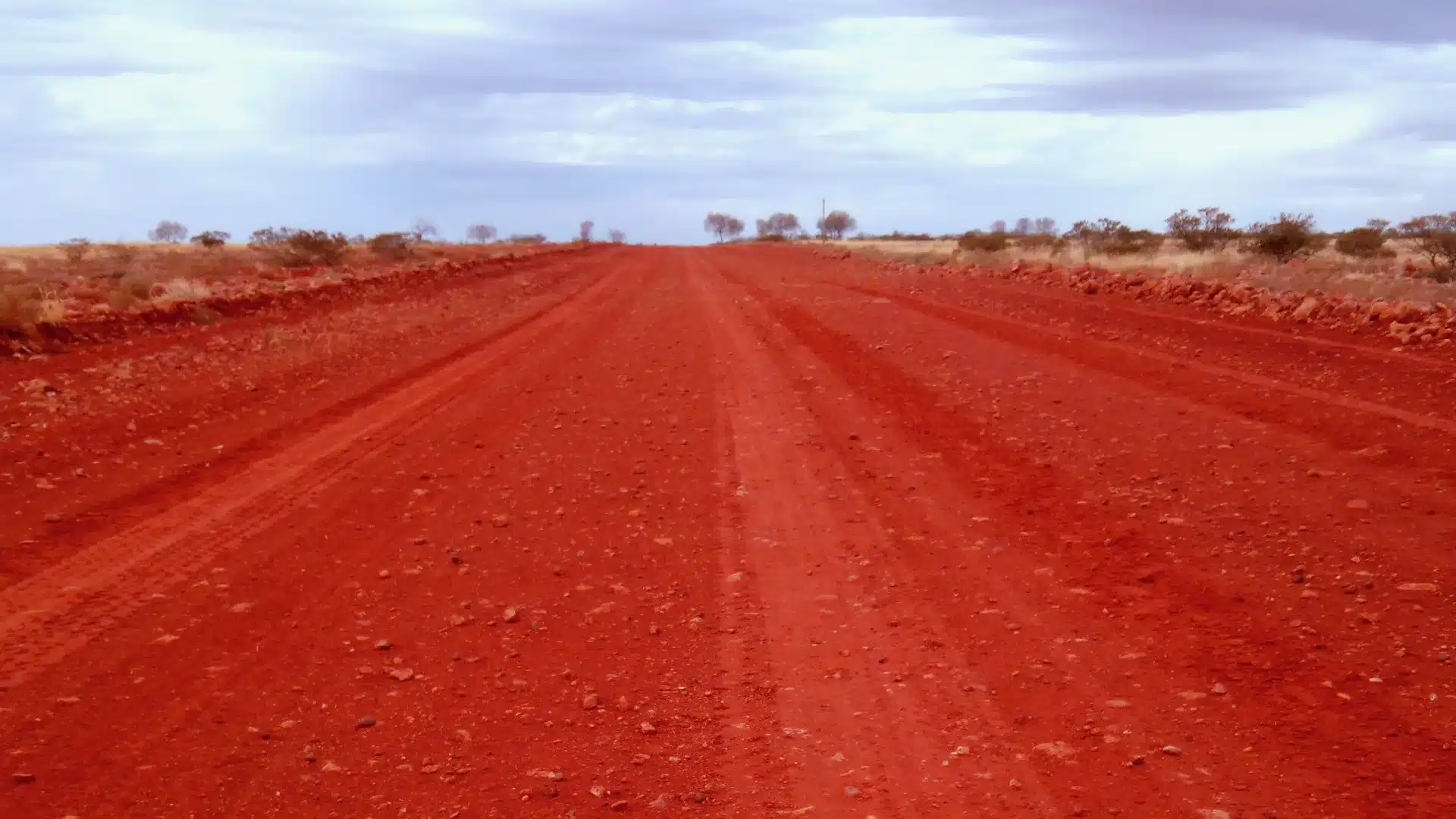

At 60km/h on a corrugated road, each caravan wheel crosses roughly 1,000 to 2,000 ridges a minute, or 4,000 to 8,000 across a tandem van’s four wheels. The damage is fatigue and loosening, not one big break, and one chassis maker’s handbook names what fails when owners push too hard: springs, shock absorbers and A-frames.
That is why corrugation damage rarely announces itself. A wheel nut backs off a fraction, a weld grows a crack too fine to see, a drawer runner works loose. Below, we explain how corrugations form and what speed really changes, then walk the van from the hitch to the rear bumper: what the vibration does in each zone, the warning sign to look for, and what helps.
How corrugations form, and what speed actually changes
Corrugations are ripples across an unsealed road, typically 0.5 to 1m apart with an amplitude of up to 50mm, figures cited by physicists at Lehigh University and North Dakota State University in a model of how they form (Both, Hong and Kurtze, Physica A, 2001). Their model found the ripples grow once traffic passes above a critical speed, and that this critical speed falls as traffic increases.
A 2020 study from the University of Yamanashi and Hokkaido University put the mechanism plainly: the vertical bounce of passing vehicles, set off by small irregularities in the surface, plays a key role (Matsuyama and colleagues). It also noted that roads with more traffic corrugate more often. In laboratory tests, physicists in Lyon, Cambridge and Toronto found ripples appear even under a wheel with no suspension at all (Bitbol and colleagues). Corrugations are what traffic does to gravel, not just a sign of a neglected road.
For a caravan, the useful number is how often those ridges arrive. Divide speed by spacing and you get hits per second at each wheel.
| Speed | Hits a second, per wheel | Hits a minute, per wheel |
|---|---|---|
| 20km/h | 5.6 to 11.1 | 333 to 667 |
| 40km/h | 11.1 to 22.2 | 667 to 1,333 |
| 60km/h | 16.7 to 33.3 | 1,000 to 2,000 |
| 80km/h | 22.2 to 44.4 | 1,333 to 2,667 |
| 100km/h | 27.8 to 55.6 | 1,667 to 3,333 |
Ranges cover corrugations 1m apart (the lower figure) to 0.5m apart (the higher). Our calculation.
Here is the part most drivers miss. The number of hits does not change with speed. Every wheel crosses every ridge, so 100km of corrugations is 100,000 to 200,000 hits per wheel whether you sit on 30 or 80km/h. Speed changes how fast they arrive, and that matters because of resonance.
Published figures for road vehicles put body bounce at about 1.3 to 2.2 cycles a second, and wheel hop (the wheel bouncing on its tyre) at about 10.5 to 15.2. Those figures come from the model settings of the reference car used to calculate the international roughness index and from two instrumented vehicles (Bridgelall, 2014). Corrugations at touring speeds arrive far faster than body bounce. They do overlap the wheel-hop band, on our numbers between about 19 and 55km/h, depending on spacing.
A 1989 study of vehicles on corrugated roads found most travel above both resonances, and that the peak contact force lands on or near the crest of each ridge (Misoi and Carson). We could not find published wheel-hop figures for caravans, whose axles and tyres differ from a car’s, so treat the band as a guide to why a rig can shake worse at one speed than another, not as a magic number.
WUDU analysis: corrugations
100,000 to 200,000 hits per wheel, every 100km
The count is set by distance, not speed. Speed decides how fast the hits arrive, and whether they land near the frequency where a wheel shakes hardest.
Where it shows, hitch to bumper
Hits per second: try your speed
22.2
Hits per second at each wheel
5,333
Hits per minute across a tandem van’s four wheels
133,333
Hits per wheel every 100km, at any speed
Above the typical wheel-hop band. Every ridge still counts, just faster. Research has found peak contact force lands on or near each crest, and that corrugations reduce the tyre’s contact with the road.
How we worked it out: hits per second at one wheel = speed in metres per second divided by corrugation spacing. Spacing of 0.5 to 1m from published corrugation research (Both, Hong and Kurtze, Physica A, 2001; Matsuyama and colleagues, 2020). Resonance bands are published figures for road vehicles, not caravans: the model settings of the international roughness index reference car (1.27 and 10.50 Hz) and two measured vehicles (up to 2.19 and 15.18 Hz), from Bridgelall, 2014. We could not find published wheel-hop figures for caravans, so treat the bands as a guide. A hit is one wheel crossing one ridge. Our analysis.
1. Coupling and drawbar
What the vibration does. The coupling is where every jolt between van and car changes direction. Jayco's owner information and service book says the bolts holding the coupling to the chassis "are always under a lot of strain" and should be checked regularly for tightness. Dust adds wear: Jayco advises against greasing the ball, because grease collects dust that abrades it, and suggests a silicone spray or light machine oil instead.
Warning signs. A clunk as you take off or brake, a missing locknut, fresh rust or a shiny ring around a bolt head, and safety chain links worn from dragging. The G&S Chassis warranty and service handbook, published on AL-KO's Australian site, lists the same first checks: locknuts present and tight, coupling and lock working, chains free of road-contact damage.
Fix or prevent. Check the coupling bolts after any long corrugated run. G&S sets a coupling bolt check every 6 months or 5,000km for "off-road" use, which it defines to include rough and unmade roads.
2. A-frame, gas bottles and anything mounted up front
What the vibration does. The A-frame often carries gas bottles, a toolbox, the jockey wheel and sometimes a generator or jerry cans, each on its own bracket ahead of the van body. Every bracket shakes at the full hit rate, and G&S lists A-frame failure among the results of trying to "float" a van over corrugations.
Warning signs. Cracked or bent brackets, a jockey wheel clamp that has crept, gas hoses that have rubbed through their cover, and any smell of gas. G&S asks owners to check the A-frame for "permanent distortion, cracks or separation of components", and the jockey wheel bracket for damage.
Fix or prevent. Resources Safety and Health Queensland's holiday gas checklist says to secure gas bottles firmly in transit, check hoses for fading, fraying, cracking or splitting, look for missing O-ring seals, and brush soapy water over connections: bubbles mean a leak. Repairs go to a licensed gas fitter. Weight matters here too. RAC WA warns that overloading the drawbar can damage the car's suspension and usually reduces braking effectiveness. If you are adding a toolbox, read our guide to toolbox gas and weight rules first, and stone guards protect what sits up front from flying gravel.
3. Chassis and welds
What the vibration does. This is where fatigue lives. The Welding Institute (TWI) describes fatigue as failure under a load too small to break a part in one go, removed and reapplied repeatedly, with each cycle extending a crack by a tiny amount. Corrugations are about as pure a source of repeated loads as a caravan will meet. Welds are the weak point: TWI says the allowable fatigue stress range for a typical fillet-welded detail in mild steel is roughly one third of that for unwelded plate.
Warning signs. Fine cracks at the edge of welds, spring hangers, crossmembers and where the A-frame meets the main rails, plus a cracked paint line or a rust stain bleeding from a joint. Do not expect them to be obvious. TWI notes fatigue cracks are often very fine and stay tightly closed, which makes them hard to find by eye.
Fix or prevent. G&S tells owners to check the main bearers and A-frame for "corrosion, cracking, deformation or separation of components" every 6 months or 5,000km in off-road use. Wash the dust off, use a torch, and if you find a crack, have a chassis or trailer workshop assess it before the next rough road. Load counts as well: G&S notes that stress and wear on suspension and structural parts rise with the load, so check your payload before packing for the dirt.
4. Suspension and shock absorbers
What the vibration does. Shock absorbers turn movement into heat. Over corrugations each stroke is short but they come in their thousands, so the heat concentrates. Safiery, which sells shock temperature monitors, says that above 170°C even high-temperature Viton seals fail and the oil and nitrogen are lost. G&S takes it seriously enough to exclude shock damage from overheating from its warranty, and recommends a minimum rest of 45 minutes per 2 hours of travel. Springs, shackles and U-bolts take the same hammering.
Warning signs. Oil on the shock body: G&S says minor staining or seepage is acceptable, but formed droplets are not. A van that keeps bouncing when you rock it suggests lost damping. On independent suspension, cracked bump stops or over-travel chains can point to overinflated tyres, overloading, excess speed or, for the chains, worn shocks, according to G&S. RACQ's trailer maintenance advice says springs, shackles and U-bolts should be checked regularly for damage and security.
Fix or prevent. Take the rest breaks on long rough sections. Have suspension and shock mounting bolts torque-checked at service; Cruisemaster includes this in its schedule and notes that correct bolt pre-load "resists the effects of fatigue". Replace shocks in pairs on each axle, as G&S specifies.
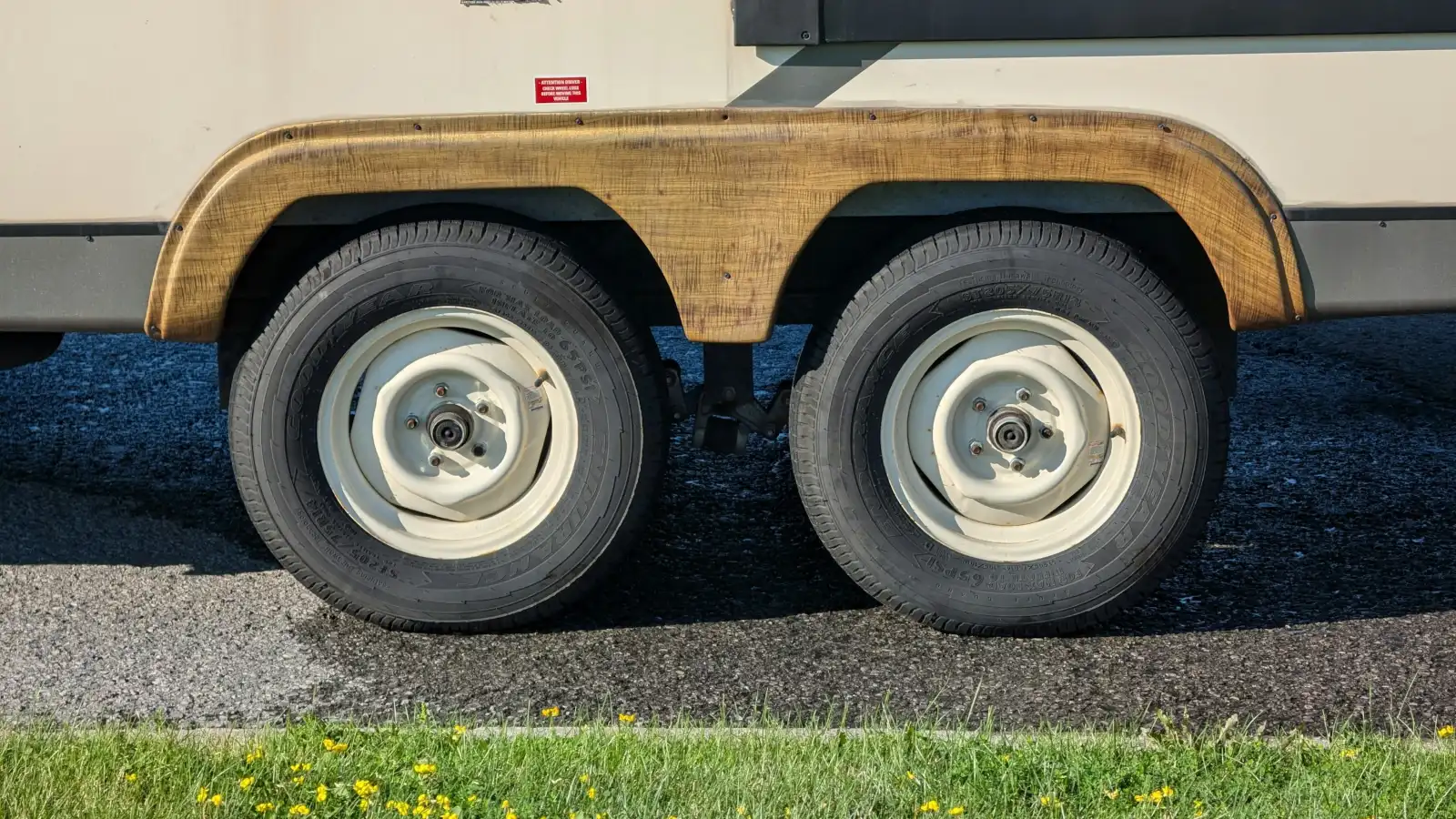
5. Wheel bearings, wheel nuts and tyres
What the vibration does. Hubs, bearings and tyres sit below the springs, so they meet every ridge with only the tyre to soften it. Tyres also heat up: Cooper Tires says corrugated roads "generate heat quickly due to increased tyre flexing", and G&S warns that long stretches of gravel shorten tyre life.
Warning signs. A hub that feels much hotter than the others. RAC WA suggests putting a hand on the hubs and tyres every time you stop. Then play in the wheel: G&S's check is to lift it clear of the ground, rock the top of the tyre in and out, then spin it and listen for abnormal sounds. Look for chipped tread, sidewall cuts and uneven wear.
Fix or prevent. Shorten the bearing interval. G&S halves it to 6 months or 5,000km for off-road use, and our wheel bearing guide compares the intervals across makers. Check wheel nut torque before each day of off-road towing (G&S says each use), and on a new G&S chassis, every 100km for the first 500km. Cruisemaster adds that nuts settle after any wheel is fitted or removed and need re-tightening. For pressures, see our tyre pressures guide and the myth below.
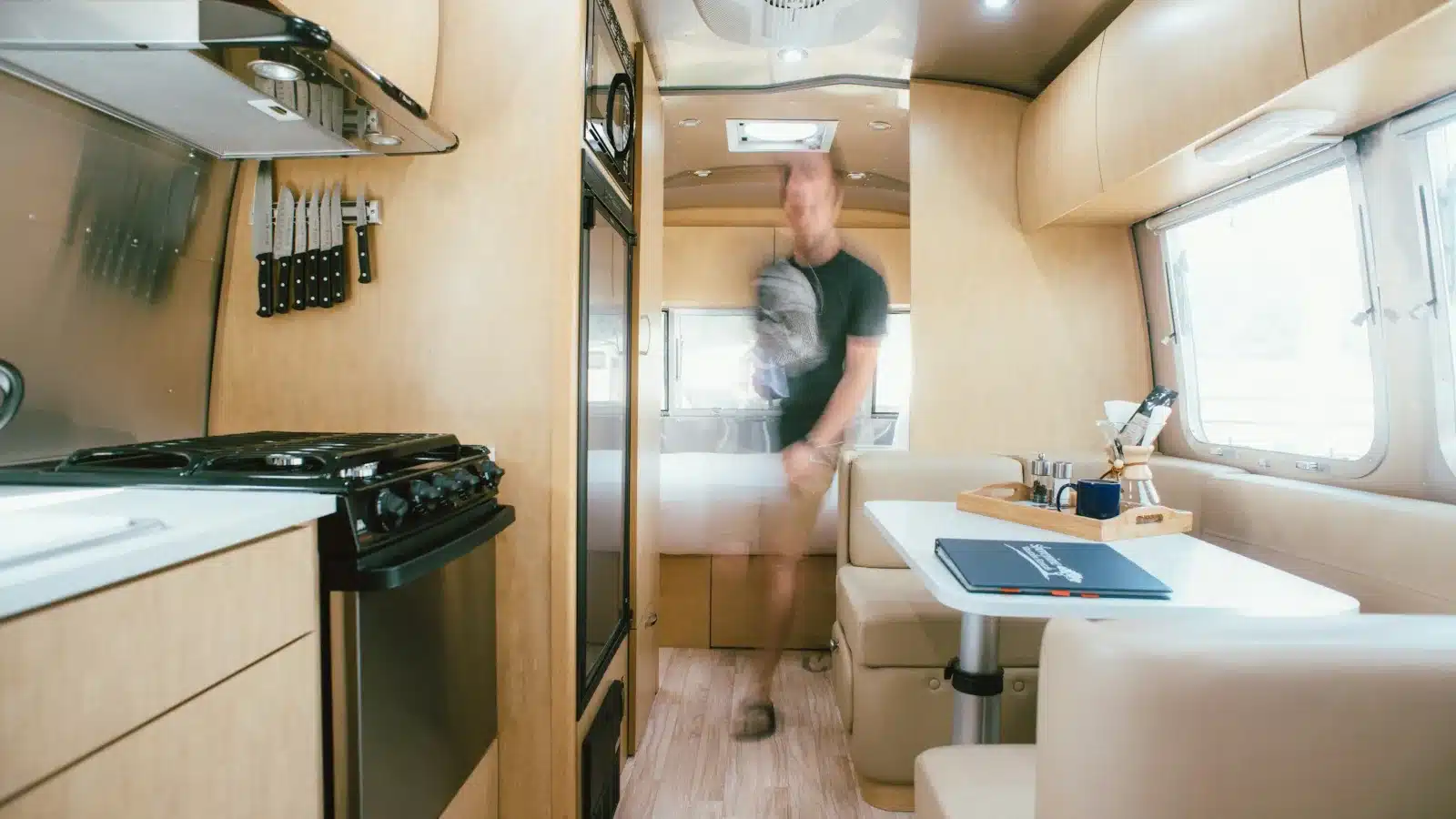
6. Inside the van: cabinetry, hinges, screws and drawers
What the vibration does. Inside, the buzz works on every screw driven into a panel, every hinge and every drawer runner. Jayco's pre-departure checklist asks owners to close all cupboard doors and drawers with the locks engaged, secure loose items with non-slip matting, and stow heavy items low, over or slightly forward of the axle. Its first service includes adjusting cupboard latches, hinges, drawer faces and runners, which tells you they move in ordinary use.
Warning signs. Doors that no longer line up, a drawer that opened in transit, screws or hinge pins on the floor, and new rattles. Fine dust through the cabin is a separate problem; our piece on why caravans get so dusty explains where it gets in.
Fix or prevent. Use every latch the builder fitted, and pack so nothing can slide. Once parked, tighten what has backed off, gently, because a screw that has been over-tightened into a panel has less to grip next time.
7. Fridge, appliances and electrics
What the vibration does. Appliances are heavy, boxy and held by a handful of fixings. Jayco's warranty, in the section covering its Outback and limited off-road models, excludes "damage caused by dislodgement of appliances and fittings resulting from use on corrugated or uneven surfaces". Wiring suffers too: connections loosen and cables chafe where they pass through the floor or chassis.
Warning signs. A fridge door open on arrival, a fridge or microwave sitting differently in its cavity, flickering lights, a battery monitor alarm, or a brake controller fault that comes and goes. G&S says vans used over rugged terrain should have the wires between the chassis and brake backing plates checked for breaks or loose connections each use.
Fix or prevent. Jayco's pre-departure checklist covers the fridge (packed securely, door locked) and the microwave (cooking plate removed), and its steps for connecting to 12V power include checking that battery terminal connections are not loose. Tyre pressure plays a part here as well. G&S warns that over-inflation increases stress on fittings including plumbing, electrical, air conditioning, refrigerator and gas equipment.
8. Water tanks and plumbing
What the vibration does. Full tanks are heavy and hang from straps or brackets under the floor, and every fitting between them and the taps is a joint that can work loose. Jayco says it plainly: "The effects of towing and use can loosen connections causing water to escape without warning."
Warning signs. Damp carpet or cupboards near the pump, a pump that cycles with all taps off, drips under the van, and tank straps that have slackened or chafed. Jayco's first service includes checking the water tanks for leaks and security.
Fix or prevent. Check the straps and the fittings you can reach after each rough run. G&S points out that water weighs 1kg a litre and that it is often unnecessary to fill tanks to capacity, so carry what you need for the next stretch rather than a full load over the worst of it.
9. Rear bumper, spare wheel and bike racks
What the vibration does. The rear bumper sits well behind the axles, so anything hung from it swings through a bigger arc each time the van pitches. Jayco says that where a bumper is fitted to carry extra load, it is designed for a spare wheel, with a maximum capacity of 30kg, and that a spare wheel weighs about 27kg. It does not recommend adding any other weight to its rear bumper bars. Those are Jayco's figures for its own vans; check your builder's rating for yours.
Warning signs. Cracks around bumper mounts, a rack that has started to sag, bikes rubbing on each other or the van, and loose spare wheel carrier bolts.
Fix or prevent. Jayco says spare wheel and bike rack mountings should be checked at least annually. After a corrugated run, check them that day. If your bumper is not rated for the bikes, carry them somewhere that is.
Tip: our post-trip inspection checklist, in the same order as the tour.
- Coupling bolts and locknuts tight, coupling lock working, safety chains undamaged.
- A-frame brackets uncracked, gas bottles secure, hoses unchafed, soapy-water test if you smell gas.
- Chassis rails, welds and spring hangers washed and checked with a torch for fine cracks.
- Shock bodies free of oil droplets, U-bolts and shackles tight, bump stops intact.
- Hubs no hotter than each other, no play when you rock the wheel, wheel nuts torqued, tyres unchipped.
- Cupboard doors aligned, drawers shut, no screws or hinge pins on the floor.
- Fridge in place and door shut, battery terminals tight, brake wiring intact.
- No damp near the pump, tank straps tight, no drips underneath.
- Bumper mounts, spare wheel carrier and bike rack secure.
Three corrugation myths worth dropping
Going faster lets you float over them
G&S addresses this one directly: increasing speed to make the van "float" over corrugations "can result in failure of springs, shock absorbers, A-frames and other structural and non-structural components". The float is not the van gliding. Speed does not reduce the number of hits, it raises their rate, and the Misoi and Carson research found peak contact force lands on or near each crest. Matsuyama and colleagues add that corrugations reduce the tyre's contact area with the road, raising crash risk. Authorities agree on the direction: Transport for NSW says to slow down on bumpy or unsealed roads, and South Australia's desert parks guide says to reduce speed where corrugations may cause vehicle damage and accidents.
Lower tyre pressure always fixes it
Lower pressure helps, but not on its own. RAC WA says dropping pressures on rough roads avoids a great deal of damage and helps the sidewalls absorb the shocks. G&S warns that under-inflation, "while appearing to improve ride quality", makes tyres more prone to impact damage and overheating. Cooper Tires says that whenever pressures are lowered, speed must come down too, and that tyres should be re-inflated before returning to sealed roads or higher speeds.
Published numbers also disagree. RAC WA says dropping below 20psi on really rough roads "won't be a problem", while Cooper's rocky-terrain guidance, which assumes very slow driving, often in low range, says pressures below around 20psi raise the risk of pushing the tyre off the rim and treats 22psi as a practical minimum for most vehicles. Cooper's ranges are for light truck tyres only, and it tells drivers to consult a stockist for their vehicle's weight and tyre size. The right pressure is the one set for the actual load on each tyre, paired with a lower speed.
An off-road van does not need the extra checks
Stronger chassis and better suspension raise the limit; they do not remove the maintenance. G&S says off-road caravans require more frequent servicing, and that owners should stop to inspect more often as the terrain gets rougher. Warranties can be narrower than buyers assume. Jayco's excludes dislodged appliances and fittings on corrugated surfaces even for its Outback and limited off-road models, and the G&S handbook says a standard chassis used on unsealed roads in poor condition, such as corrugations, beyond short distances at low speed, will void its warranty.
Consumer guarantees under the Australian Consumer Law still apply alongside any warranty. What your van's warranty and insurance cover depends on the exact wording, so read both before a big dirt trip; our guide to what caravan insurance covers is a start. Heading for Cape York or the Top End next dry season? Check before you leave.
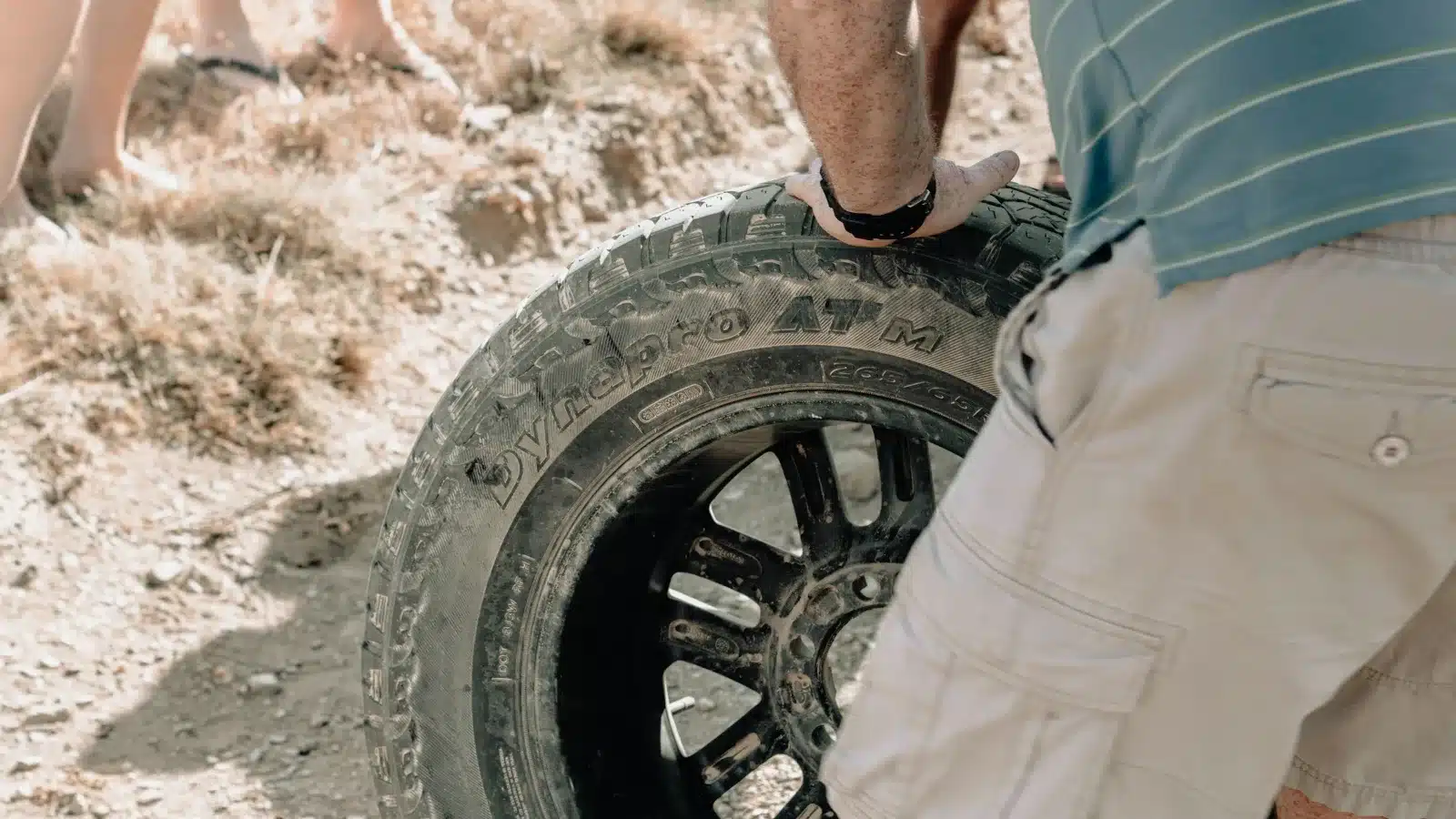
The first 20 minutes after you get off the dirt
Do this before the tyres go back up and the speed comes back. Pull into a safe, level spot clear of the road.
Minutes 0 to 5: touch and look. A hand on each hub and tyre tells you whether a bearing or tyre is running hot. Then look underneath for anything hanging, dripping or rubbed; South Australia's parks service advises looking under the vehicle for leaks and damage to cables and hoses.
Minutes 5 to 10: wheels and the front end. Check wheel nut torque. Check the coupling bolts, safety chains and gas bottle restraints. If you smell gas, turn the bottles off and do the soapy-water test before using any gas appliance.
Minutes 10 to 15: inside. Open the door slowly, because things may have shifted against it. Check the fridge, drawers and cupboard latches, look under the sink and near the pump for water, and glance at the battery monitor.
Minutes 15 to 20: pressures back up. Re-inflate to your bitumen pressures for the load before you rejoin a sealed road. If you have been on the dirt for two hours, these 20 minutes are a start on the 45-minute rest G&S recommends for shock absorbers.
Then book the service. On the G&S schedule, off-road use brings the major service forward to 6 months or 5,000km. Corrugations rarely break a van on the spot. They loosen and crack it quietly, and the trouble often surfaces later. RAC WA notes that a failed bearing can, at worst, mean losing a wheel while towing. Twenty minutes at the end of the gravel is when you catch it, before highway speed does the rest.
Images: GoldenRing via Wikimedia Commons (CC BY-SA 4.0); Jaykumar Bherwani, Blake Wisz and Sincerely Media on Unsplash.


