
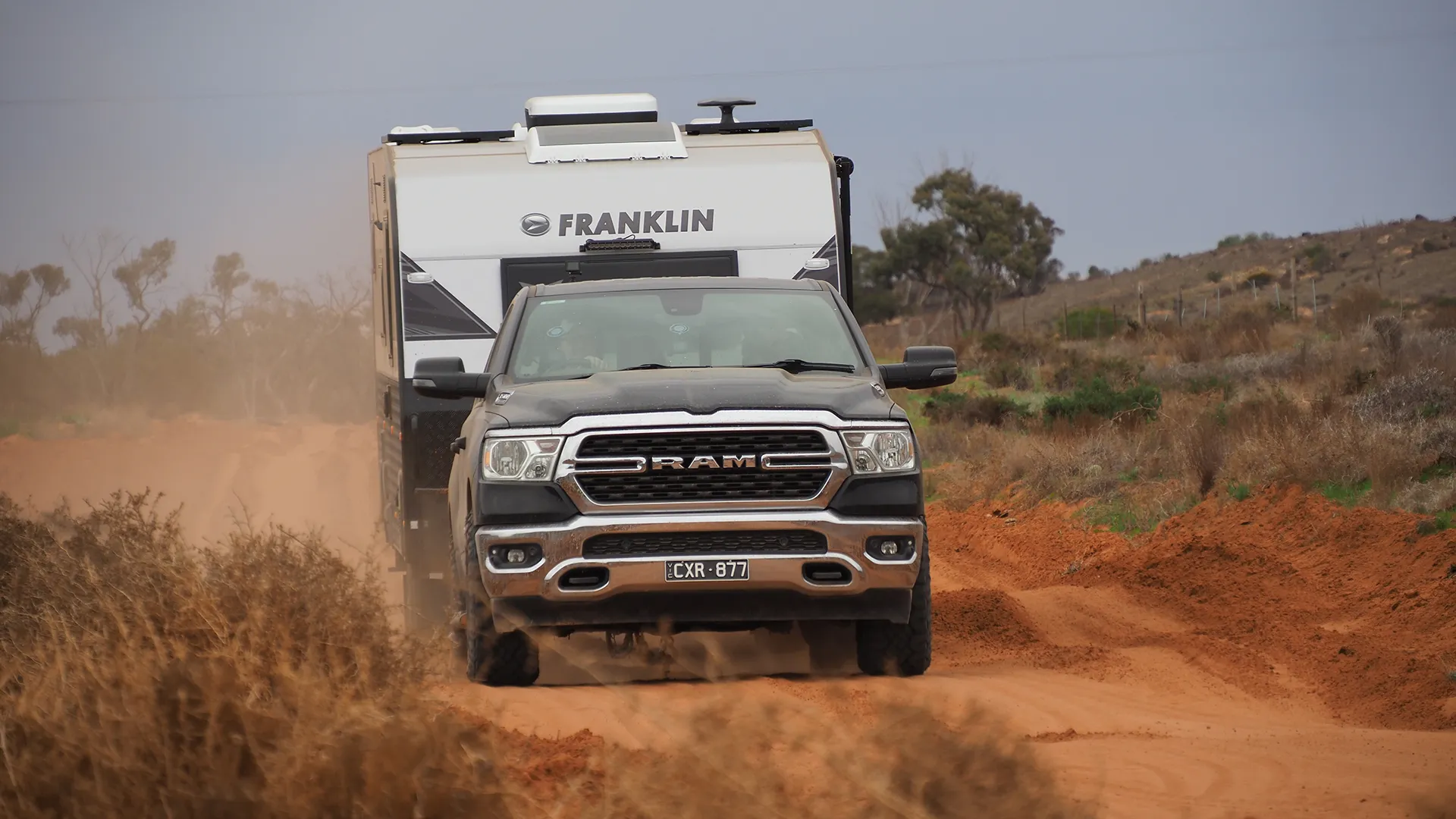


You cleaned the van before you left. Every window was shut. The door seals looked fine.|
So how did the dust get inside?
The first instinct is usually to blame the door seals. Sometimes that’s true. But even a well-maintained caravan with good seals can still collect surprising amounts of dust after travelling on gravel roads, station tracks or outback highways.
The real culprit is often something you can’t see. It’s pressure.
Why Dust Gets Pulled Inside Your Caravan
As your caravan travels down the road, air flows around the body, underneath the chassis and across roof vents, doors and hatches.
This movement creates changing air pressures around the van. In many situations, the pressure inside the caravan becomes slightly lower than the pressure outside.
Nature wants to equalise that pressure.
As it does, outside air is drawn through tiny openings around doors, windows, plumbing penetrations, cable entries, storage hatches and other gaps that are impossible to make completely airtight.
If you’re travelling on dusty roads, that incoming air carries fine dust with it.
Instead of one obvious leak, dust is often entering through dozens of tiny openings all at once.
That is why replacing a door seal doesn’t always solve the problem.
Australian Conditions Make It Worse
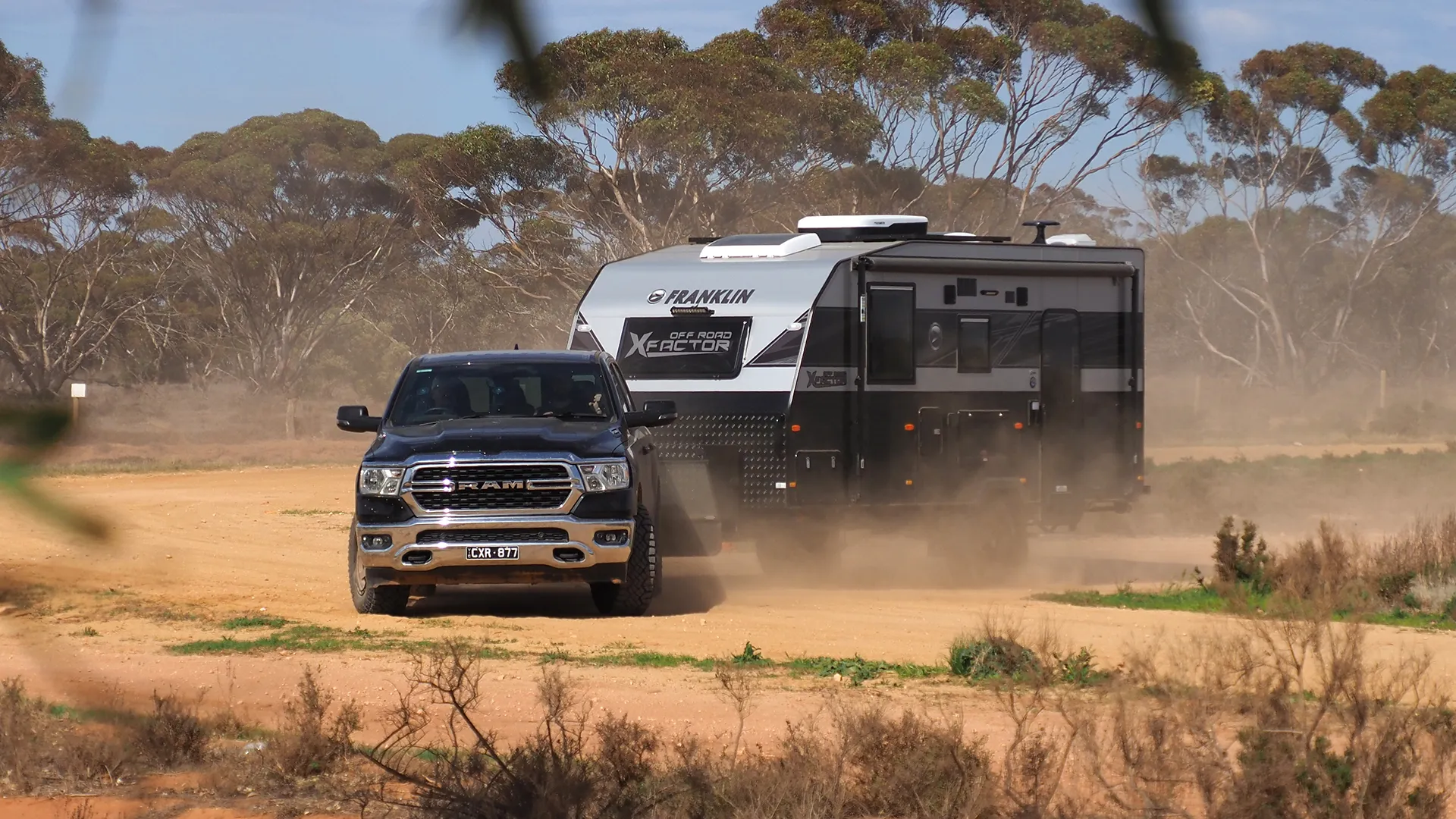
Australia presents some of the harshest touring conditions in the world.
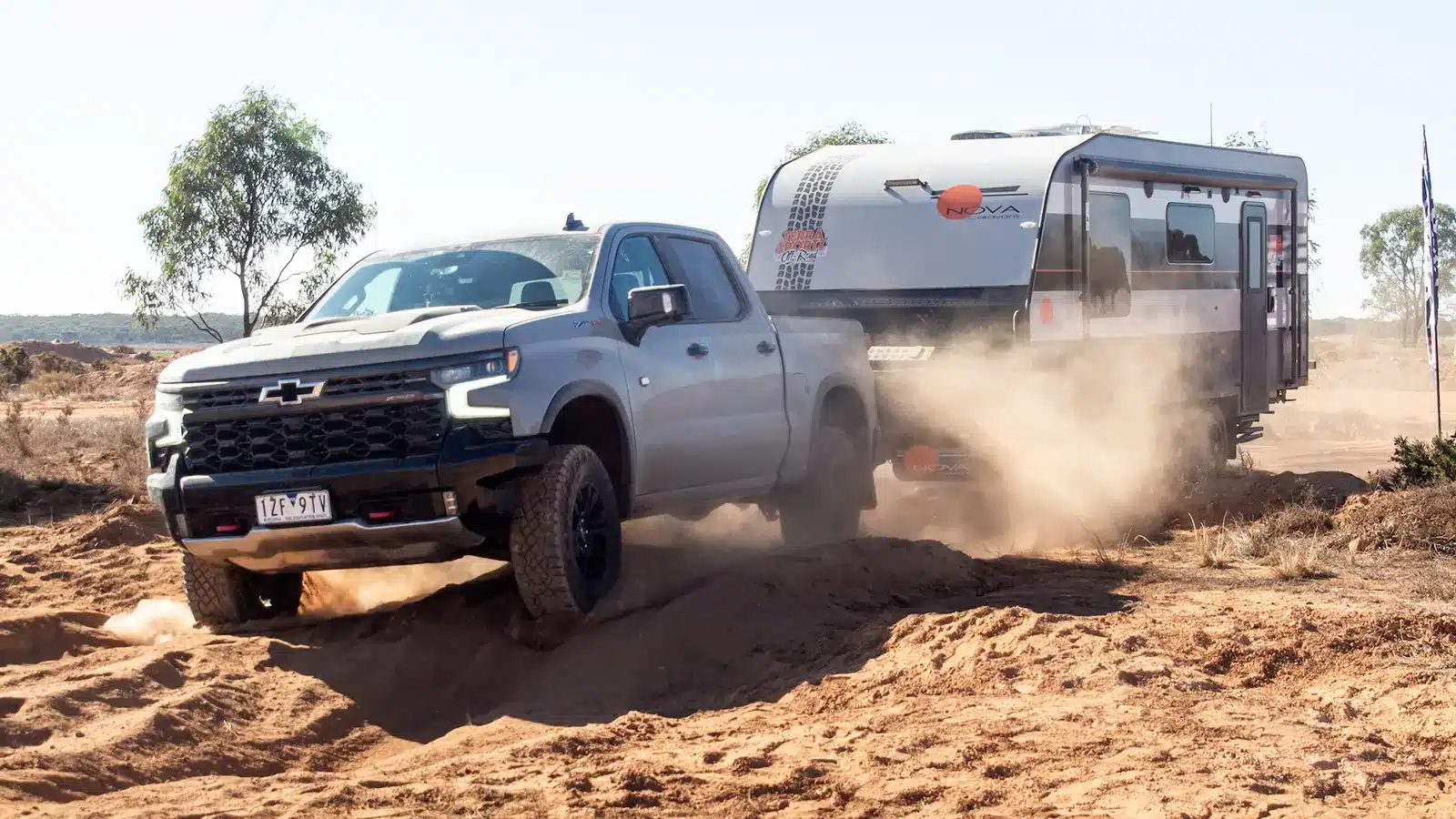
Fine bulldust, dry gravel roads, station tracks and corrugated outback highways create incredibly small airborne particles that remain suspended behind your tow vehicle for kilometres.
Unlike heavier dirt, these fine particles stay airborne long enough to be drawn into the caravan through the smallest openings.
Corrugations make matters even worse by constantly flexing the caravan while it travels.
After a few hours on dusty roads, it’s common to find dust on kitchen benches, bedding, clothes, cupboards and drawers, window tracks, bathroom surfaces.
For many travellers, cleaning the caravan after every dirt road becomes part of every trip.
It doesn’t have to be.
Why More Sealant Isn’t Always the Answer
Good seals are still essential. Damaged door seals, loose windows, worn hatch seals and poorly sealed cable entries should always be repaired.
However, adding more silicone isn’t always the solution.
Caravans are designed with ventilation requirements for safety, appliances and moisture management. Blocking or sealing everything can actually create other problems.
Instead of trying to make a caravan completely airtight, many owners now focus on controlling the airflow itself.
That’s where a caravan dust reduction system comes in.
How a Caravan Dust Reduction System Works
A caravan dust reduction system introduces filtered outside air into the caravan while you’re travelling.
Rather than allowing dusty air to be sucked through dozens of tiny gaps, the system creates slight positive pressure inside the van.
Think of gently inflating a balloon.
When the air pressure inside becomes slightly higher than outside, air naturally wants to move out instead of in.
Dust reduction comparison
HTP Dust Reduction
System Comparison
Compare the HTP dust reduction system range by caravan size, airflow, filter type and the kind of touring each model is best suited to.
| Model | Recommended caravan size | Maximum airflow | Filter | Best suited to |
|---|---|---|---|---|
| HTP Dust Reduction System CPU | 16–20ft | 696 CFM | High-efficiency paper filter | Couples, smaller touring caravans and weekend travellers |
| HTP ST12 Dust Reduction System CPU-ST12 | 20–24ft | Up to 847 CFM | Washable aluminium filter | Mid-size caravans and frequent touring |
| HTP HP12 Dust Reduction System CPU-HP12 | 24ft+ | Up to 1,250 CFM | Washable aluminium filter | Large family caravans, luxury vans and extended outback touring |
HTP Dust Reduction System
CPUHTP ST12 Dust Reduction System
CPU-ST12HTP HP12 Dust Reduction System
CPU-HP12Choosing the Right HTP Dust Reduction System
Not every caravan requires the same airflow.
NCE now offers three HTP Dust Reduction Systems, each designed for different caravan sizes while operating on the same positive pressure principle.
Choosing the correct model helps ensure enough filtered air is supplied to maintain positive pressure throughout the caravan.
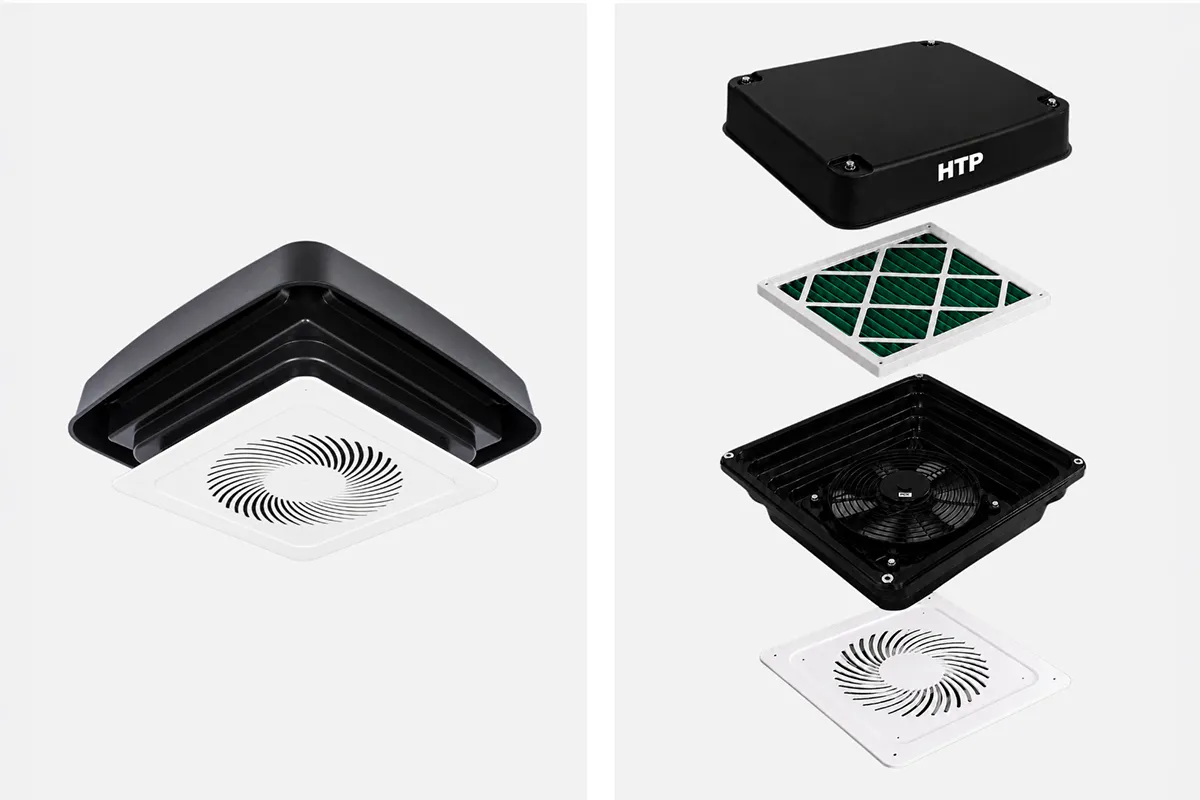
Explore the Range
HTP Dust Reduction System (CPU)
Recommended for caravans between 16 and 20 feet, this model delivers 696 CFM through a high-efficiency paper filter. It is well suited to smaller touring caravans and owners who regularly encounter dusty regional roads.
HTP ST12 Dust Reduction System (CPU-ST12)
Designed for 20 to 24-foot caravans, the ST12 increases airflow to up to 847 CFM while using a durable washable aluminium filter. It offers a practical balance for medium-sized caravans used on regular touring adventures.
HTP HP12 Dust Reduction System (CPU-HP12)
Built for caravans over 24 feet, the HP12 provides up to 1,250 CFM of airflow, making it the highest-capacity model in the range. Combined with its washable aluminium filter, it is designed for larger vans where greater internal volume requires increased airflow.
Choosing the Right Size System
One of the biggest misconceptions is that the largest dust reduction system is always the best choice.
The system should be matched to the size of your caravan.
Smaller caravans require less airflow to achieve positive pressure, while larger family vans need more air movement because of their greater internal volume.
Selecting a system that’s correctly sized helps it operate efficiently while avoiding unnecessary cost.
If you’re unsure which model suits your caravan, measure the body length (excluding the drawbar) and compare it with the manufacturer’s recommended size guide.
Can a Dust Reduction System Stop Every Speck of Dust?
No.
No caravan can be made completely dustproof. Performance depends on several factors, the condition of existing door and window seals, installation quality, filter maintenance, travelling conditions and overall caravan design.
A dust reduction system should be viewed as one part of a complete dust management strategy rather than a magic fix.
What to Check Before Buying
Before choosing a caravan dust reduction system, consider more than just the model.
Is your caravan already in good condition?
Repair damaged seals, loose hatches and obvious gaps first.
How often do you travel on unsealed roads?
If your trips regularly include gravel roads, station tracks or national parks, you’ll likely benefit more from a positive pressure system.
Is the filter easy to maintain?
Filters need regular inspection, especially after dusty trips.
The CPU uses a high-efficiency paper filter, while the ST12 and HP12 feature washable aluminium filters that can be cleaned and reused.
Will it fit your caravan?
Professional installers can recommend the most suitable mounting location while considering roof space, solar panels, air conditioners and other accessories.
Installation Matters
Even the best dust reduction system can underperform if it’s installed incorrectly.
Professional installation helps ensure the system performs as intended.
Filter Maintenance
Like any filtration system, maintenance is important. Over time the filter captures dust and debris.
If it becomes heavily clogged, airflow may reduce, affecting the system’s ability to maintain positive pressure.
Inspect filters regularly, particularly after outback touring, corrugated roads, convoy travel and very dry conditions.
Is a Caravan Dust Reduction System Worth It?
If you rarely leave sealed roads, you may never notice significant dust problems.
But for Australians who regularly explore regional Australia, national parks, station tracks or remote destinations, a caravan dust reduction system can quickly become one of the most appreciated upgrades.
Arriving at camp with cleaner bedding, cupboards and kitchen surfaces means less time cleaning and more time enjoying your destination.
Final Word
Dust inside a caravan isn’t always caused by faulty door seals.
Often, it’s the pressure difference created while travelling that draws dusty air inside through dozens of tiny openings.
Modern caravan dust reduction systems address the problem differently.
Whether you choose the HTP Dust Reduction System (CPU) for a smaller caravan, the HTP ST12 for medium-sized vans or the high-capacity HTP HP12 for larger family caravans, each system works on the same principle: introducing filtered air to create positive pressure and help reduce dust entering the caravan while you’re on the move.
For many Australian caravanners, it’s a smarter solution than simply chasing dust leaks one seal at a time.
Frequently Asked Questions
What is a caravan dust reduction system?
A caravan dust reduction system supplies filtered outside air into the caravan while travelling, helping create positive pressure that reduces dusty air entering through small gaps.
Which HTP model should I choose?
Generally:
- CPU suits caravans 16–20ft
- CPU-ST12 suits caravans 20–24ft
- CPU-HP12 suits caravans 24ft and larger
Will it stop all dust?
No. It is designed to significantly reduce dust ingress, but performance also depends on seal condition, installation quality and road conditions.
Can it be fitted to an older caravan?
In many cases, yes. A professional installer can assess whether your caravan is suitable and recommend the best installation location.
Do I still need to maintain my caravan seals?
Absolutely. A dust reduction system works best alongside properly maintained seals, hatches and windows.