
The chairs are out, lunch is in the fridge and there’s nowhere you need to be for the next few hours. It’s the kind of stop that makes a road trip – and having power close by helps you settle in and enjoy it.
A portable power station gives you a rechargeable supply for the everyday gear that comes along on holiday. Think charging the phone after a morning of beach photos, keeping compatible camping lights on over dinner or powering a suitable portable fridge beside your outdoor setup.
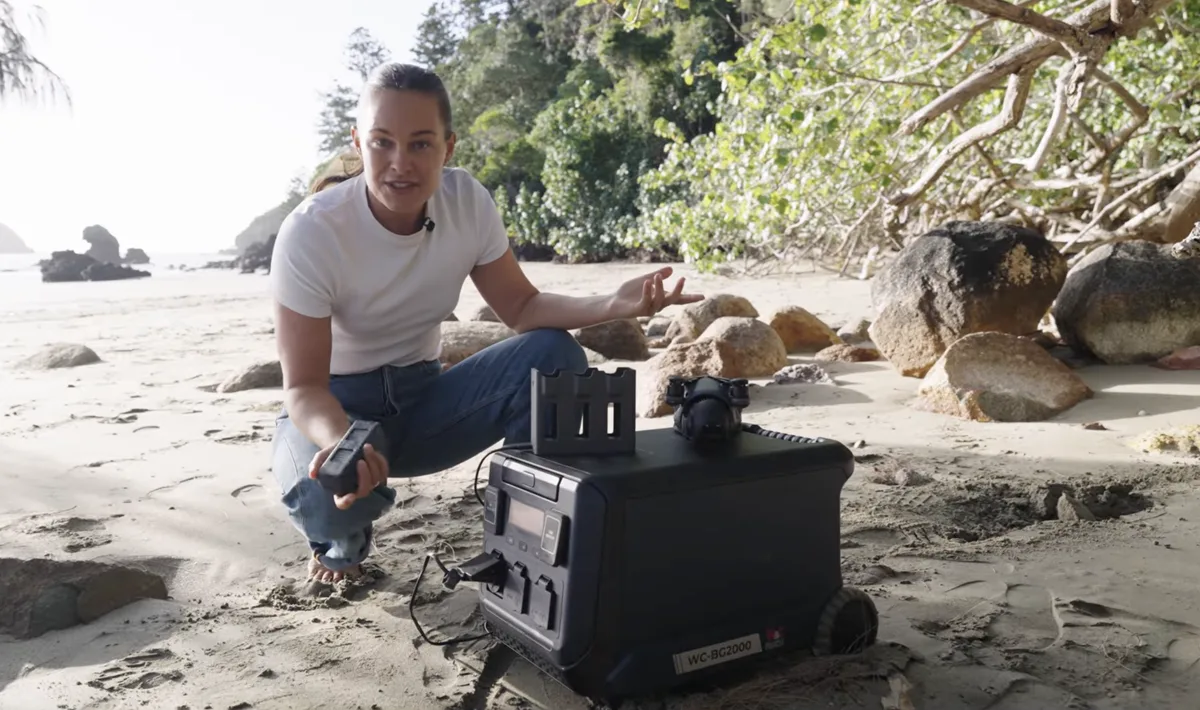
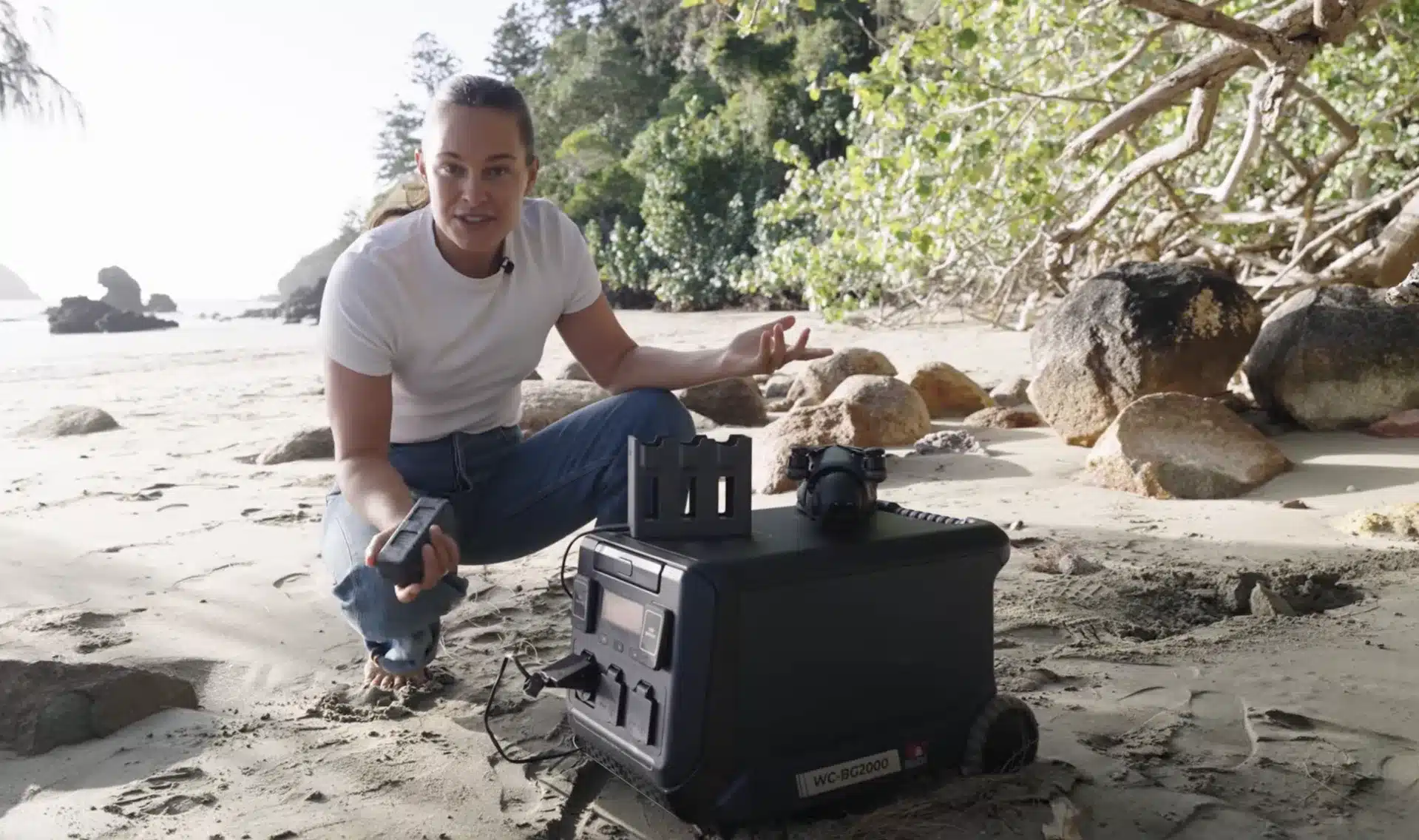
The WC-BG2000 operates silently, offering a quiet source of power around camp without running a conventional generator.
Featured on What’s Up Downunder, the Welling & Crossley WC-BG2000 has a 2000W rated output and 1843Wh battery capacity. On a journey taking in beach stops, waterfalls, holiday parks and off-grid moments, it offers a separate source of electricity for life between destinations.
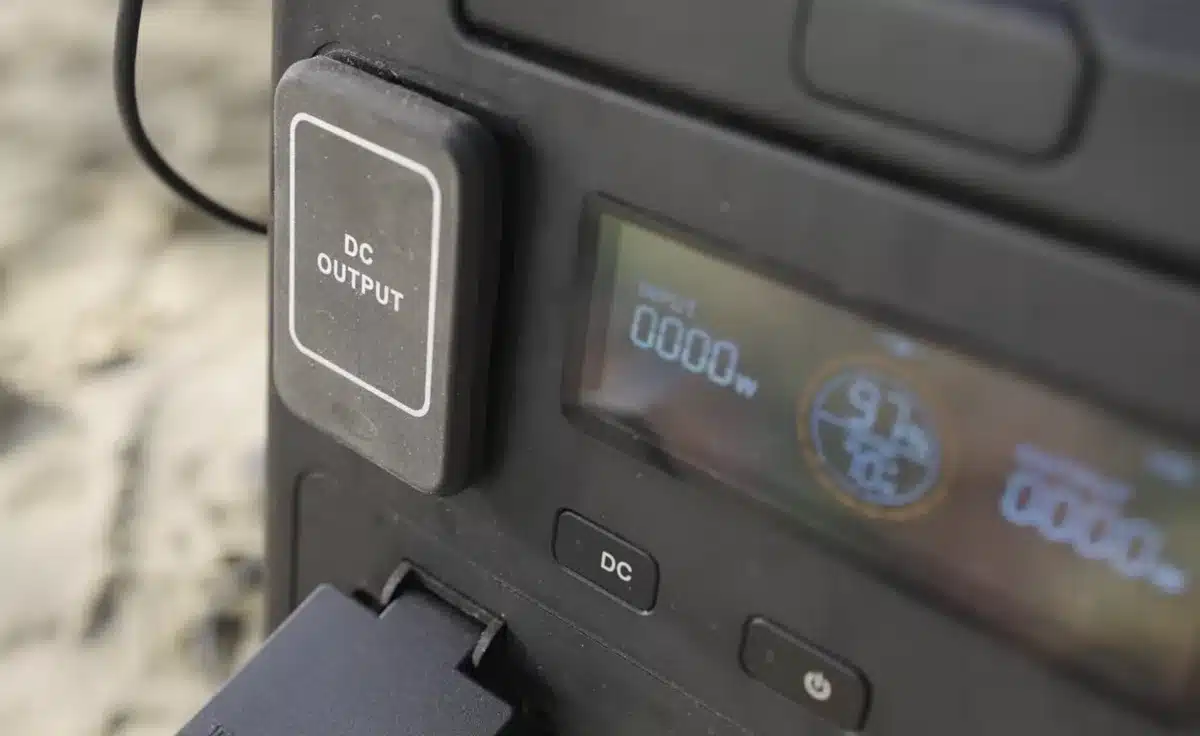
Ready for tomorrow’s adventure
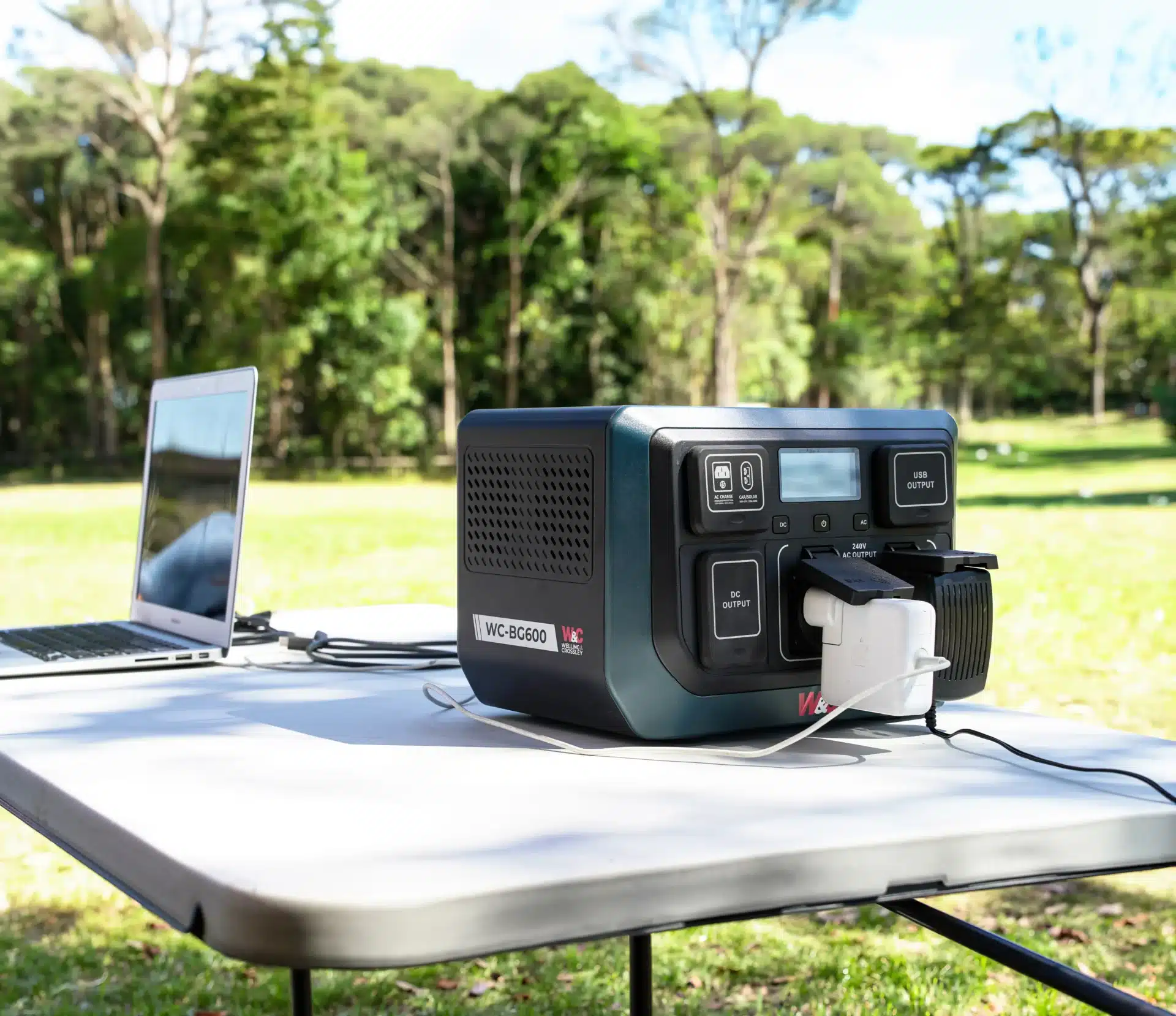
Back at camp after a day exploring, it’s a chance to recharge your gear as well as yourself. Plug in compatible phones, camera chargers or a laptop while you sort through the day’s photos and plan tomorrow’s stops.
Three AC outlets, two USB-A outputs, a USB-C input/output rated up to 100W, a 12V car charger output and two DC5521 outputs give the WC-BG2000 a useful mix of connections. Charge a compatible laptop while another device tops up, keeping the combined load within the unit’s limits.
Put your phone down and power up
Back from the beach, place a compatible phone on one of the two wireless charging pads while you settle in for lunch. With wireless charging rated up to 15W, it’s a convenient way to top up without hunting through the van for a cable. Actual charging speed depends on the device.
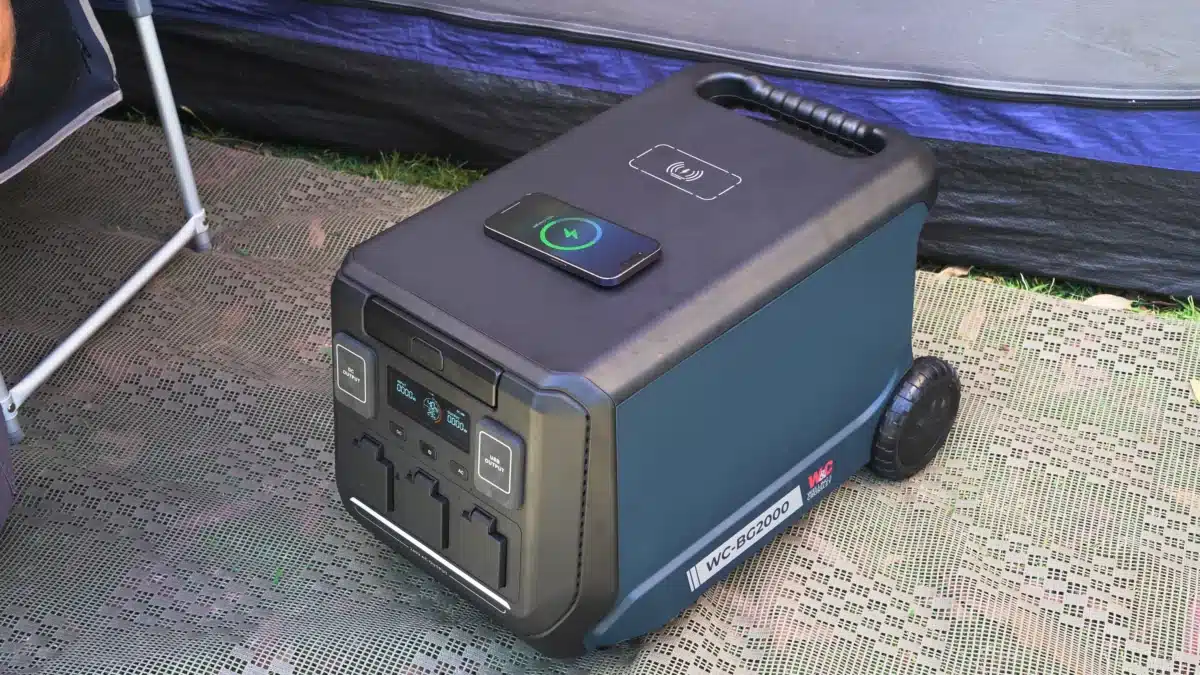
There’s room for some kitchen comforts too. A suitable coffee machine or other cooking appliance can bring a familiar routine to an unpowered stop. Match the appliance to the 2000W continuous output and keep the combined demand within the unit’s limits, allowing for starting surges.
What 2000W and 1843Wh Mean at Camp
Understanding output, battery capacity and starting power helps you work out what you can plug in and how to plan your portable power use.
Common Appliance Power Requirements
These average wattages show why it is important to consider both running power and starting demand.
| Common device | Running | Starting |
|---|---|---|
| Smartphone charger | 10W | 10W |
| Camping LED lantern | 10W | 10W |
| Portable fridge/cooler | 50W | 90W |
| Laptop computer | 125W | 325W |
| RV refrigerator | 500W | 700W |
| Coffee maker | 700W | 900W |
| Microwave | 700W | 1100W |
| Electric kettle | 1150W | 1550W |
| Induction cooktop | 1150W | 1650W |
A constant 50W load uses 100Wh over two hours. Actual runtime will be affected by conversion losses, the power station’s own consumption and operating conditions. Always allow some reserve.
Source note: Appliance figures are averages supplied by Welling & Crossley, not measured power station runtimes. Actual requirements vary by appliance.
An outdoor fridge can make the space under the awning feel like a proper living area. Lunch ingredients and cold drinks are close at hand, whether you’re making sandwiches after a walk or settling in for a relaxed afternoon.
The WC-BG2000 can supply a compatible portable fridge through a suitable connection, giving it a separate source of power from the van. Match voltage, connection and power needs, then plan around the fridge’s energy consumption over time. Temperature, ventilation and how often the lid opens all affect runtime.
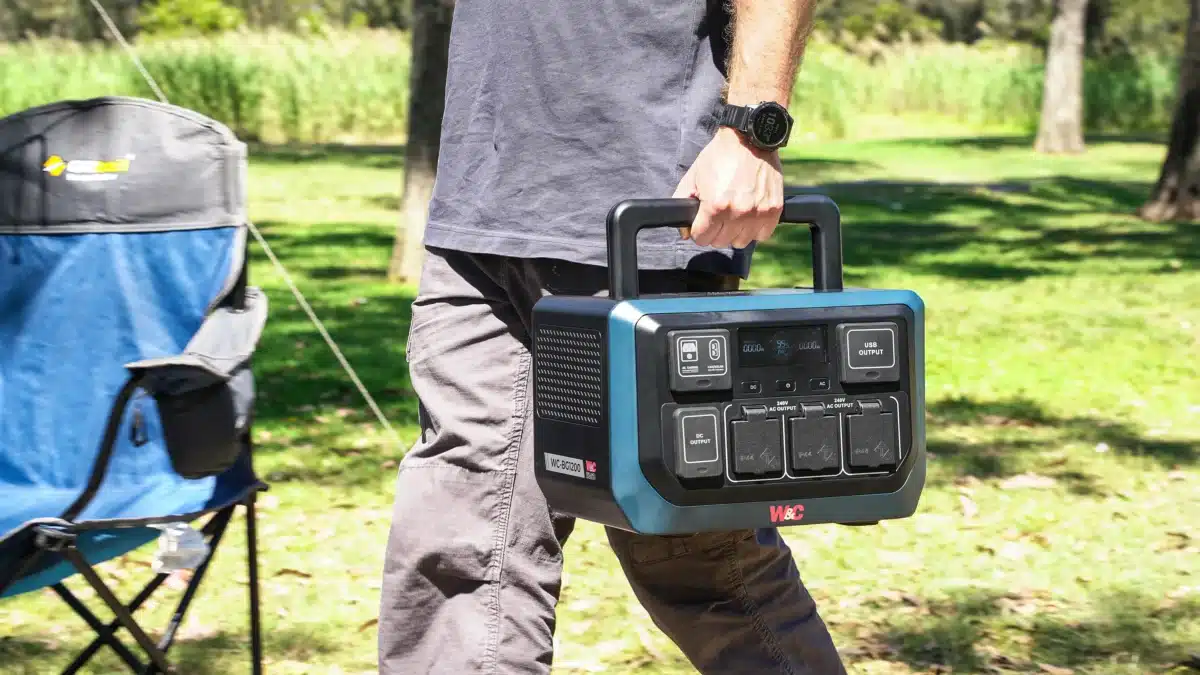
Make more of your outdoor setup
As daylight fades, a compatible camping light over the table can keep dinner and a game of cards going. Having a separate supply nearby gives you flexibility in how you arrange your outdoor space, especially at an unpowered campsite.
It’s useful even when your caravan already has batteries. The installed system stays with the van, while the power station can supply selected devices separately wherever you set up at camp. Think of it as another option for the way you like to spend time outside.
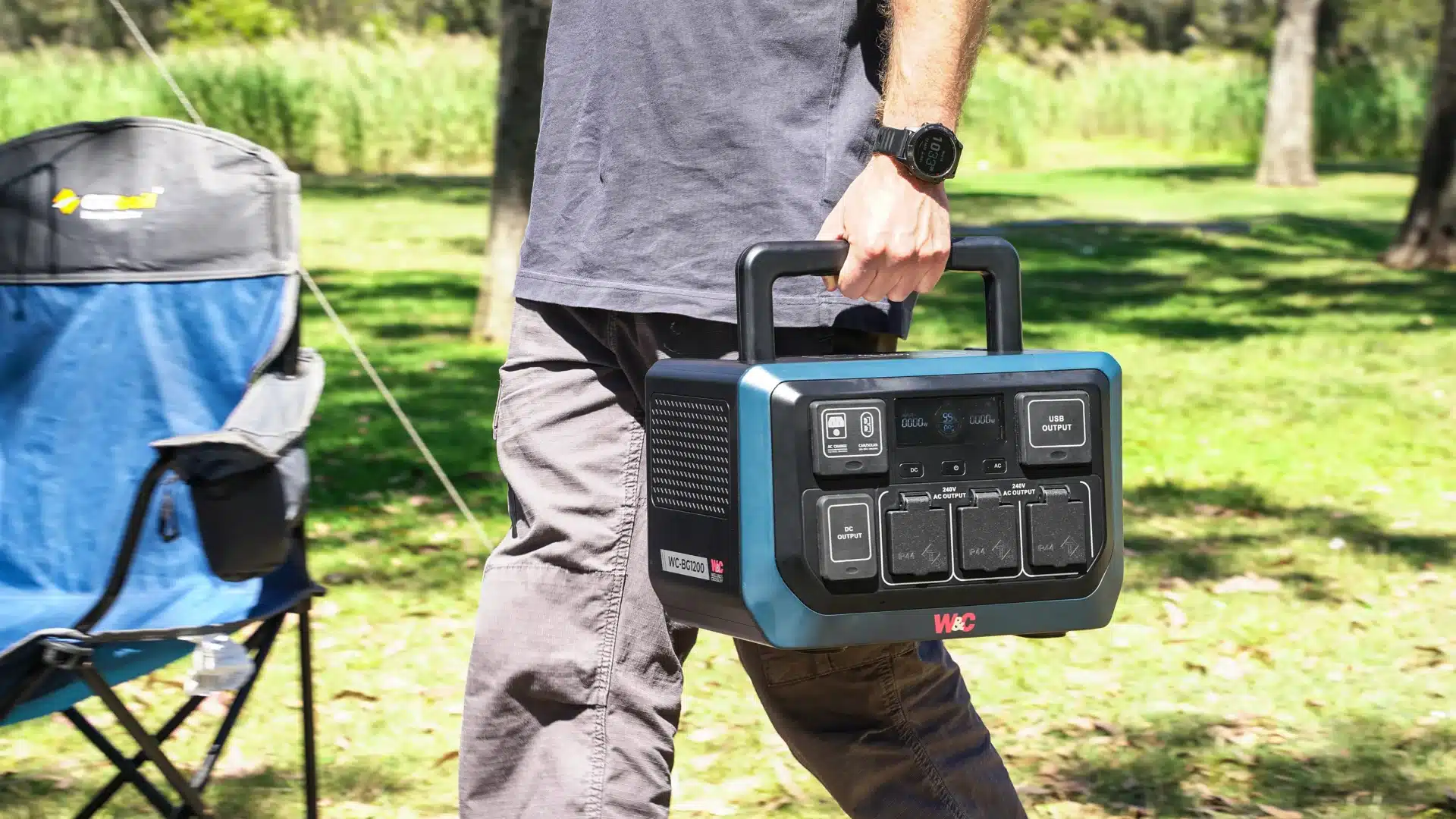
Its LiFePO4 battery is rated for 3000-plus cycles to 80% capacity, with a two-year Welling & Crossley warranty. At 30kg, plan an accessible storage spot and how you will lift and move it, and include it in your payload calculations.
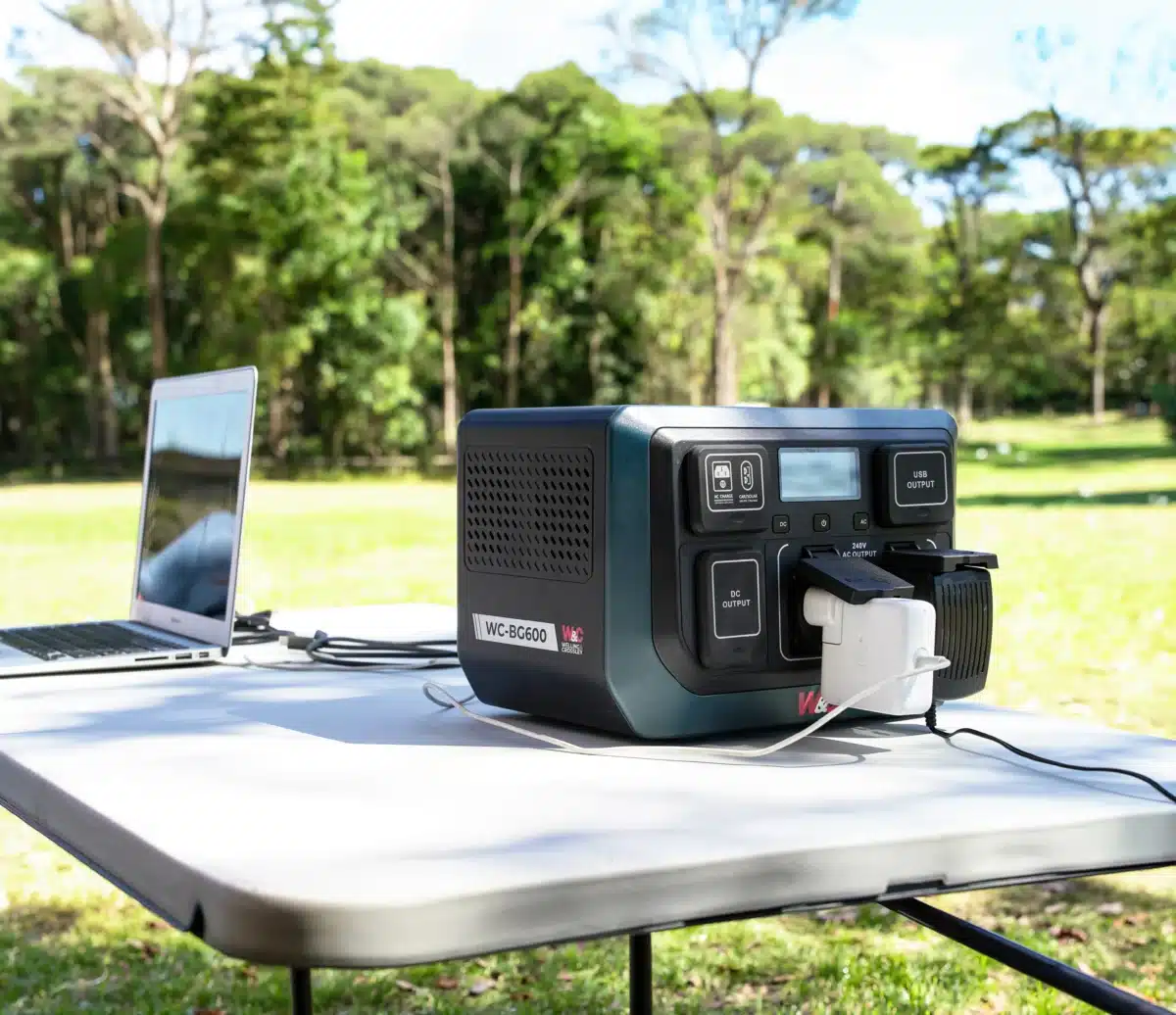
Recharge between stops
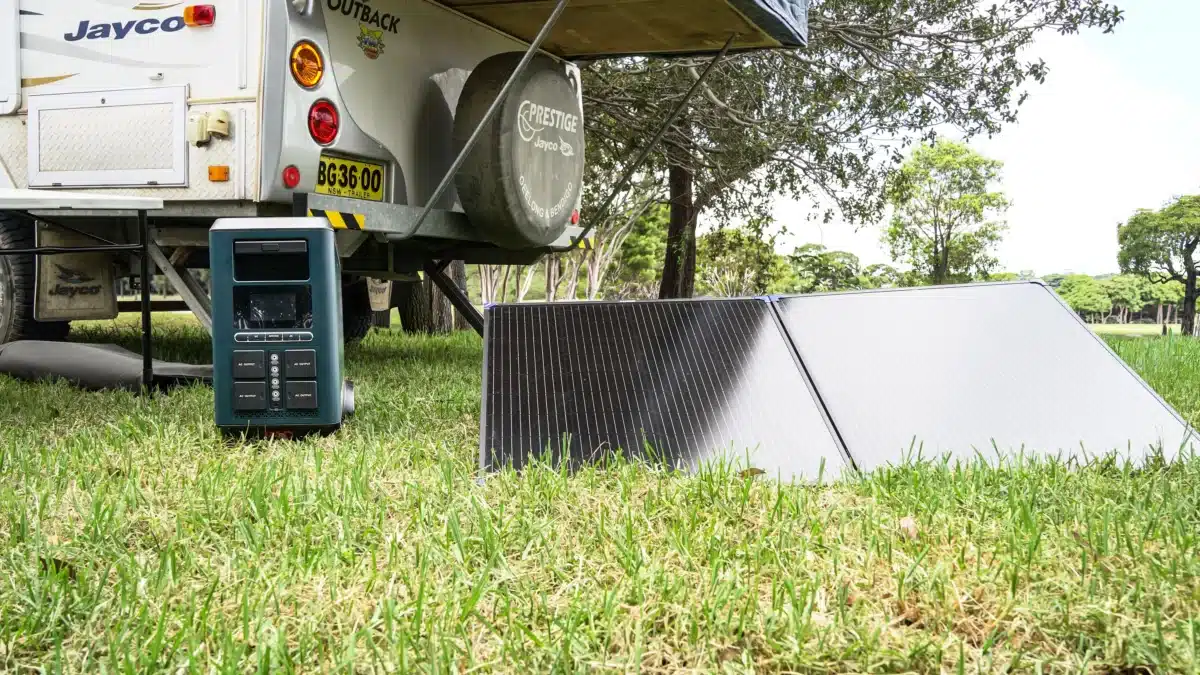
A holiday park stop is a useful opportunity to recharge from mains before the next leg. Welling & Crossley lists charging to 80% in 70 minutes, with AC input rated up to 1200W. Charging times depend on conditions. Solar input up to 1200W, with MPPT support, also allows recharging with compatible panels.
At camp, suitable panels can collect energy while you relax or prepare lunch. Actual charging depends on sunlight, shade and the panels you connect. Welling & Crossley can advise on compatible panels, input requirements, vehicle charging and the accessories suited to your setup.
Useful between holidays too
Once you’re home, the built-in UPS (Uninterrupted Power Supply) function offers another use: switching connected, compatible equipment to battery power if mains power drops out. Check transfer-time requirements for the equipment you intend to use.
Power for the way you travel
The appeal is in the everyday moments: camera batteries ready for a scenic walk, a compatible fridge beside the chairs and a light over the table when dinner runs into the evening.
With 2000W rated output and 1843Wh capacity, the WC-BG2000 gives travellers a separate power supply to build into those routines. Match it to your appliances and recharge plan, and it can become a useful part of your camping setup.
Explore the WC-BG2000 and the wider range at www.wellcross.com.au. For help choosing a size, try Welling & Crossley’s Portable Power Selector or call the technical team on 1300 656 276 to discuss your appliances.