
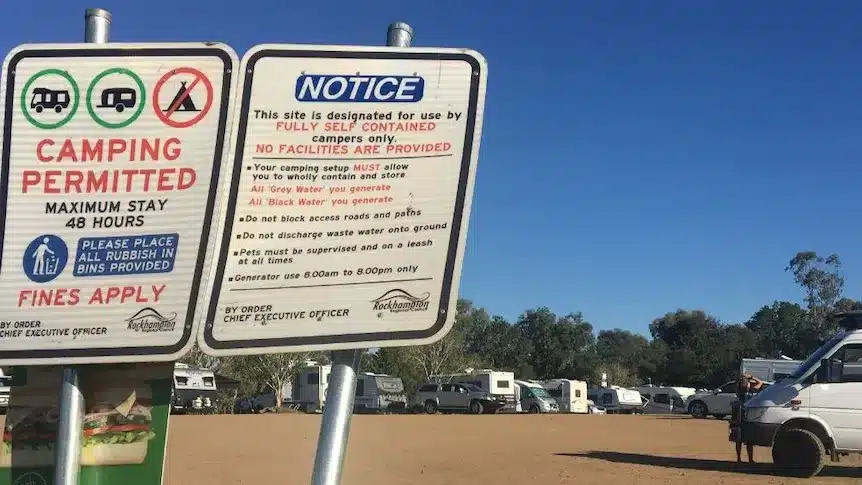
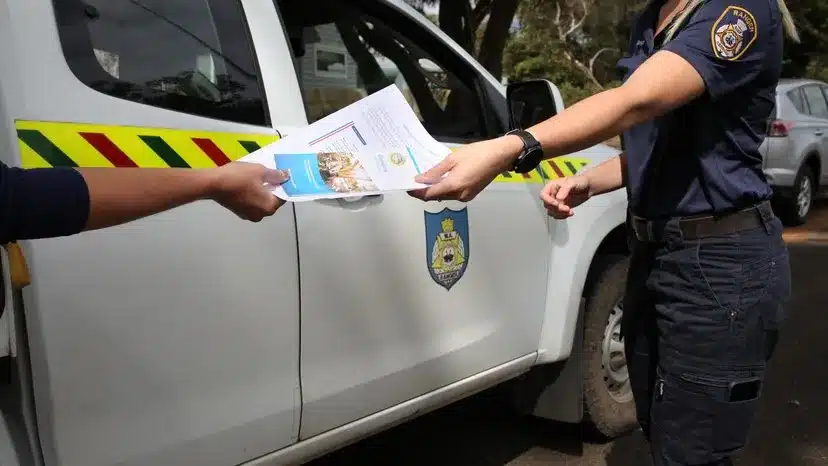

“Probably.” and “We should.” – Would be most Australians response – but the reality is that the rules around how to free camping legally are changing faster than most people are keeping up with, they vary significantly from state to state and council to council, and the fines for getting it wrong are no longer small.
What was a grey area two years ago now carries an on-the-spot fine. Sites that were free and unregulated now require a permit and self-containment certification. And the single biggest mistake people are making is assuming the rules that applied to their last trip still apply today.
They don’t.
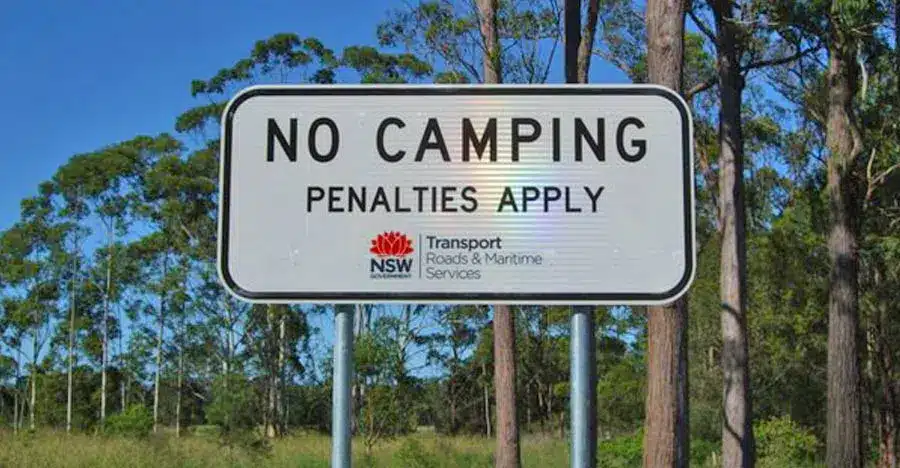
With enforcement ramping up across the country, we’re seeing a new wave of permit systems, fee structures, and self-containment requirements coming into effect through 2026, this is the year to actually know where you stand.
Let’s break it down.
What “Self-Contained” Actually Means in Australia
Self-containment is the standard most free camping rules in Australia hinge on – and it’s not just about having a toilet. The working definition used by most councils and land managers is this: your rig must be able to manage all waste internally and leave absolutely no trace when you leave.
Unlike New Zealand, which has a nationally standardised self-containment certification system, Australia has no single federal standard.
What counts as self-contained is defined at the state, territory, or local council level – and it varies more than most people expect.
The general working definition, which most councils and land managers apply, is this: a self-contained rig must be able to manage all of your waste internally and leave no trace when you leave.
That typically means:
Free camping Legally – What’s Changed – And Why It Matters Now
Australia has more than 800,000 registered caravans and recreational vehicles on the road today. A decade ago it was under half a million. That doubling in numbers has put enormous pressure on free camping areas – environmental damage, waste issues, long-term squatters, and genuine community impact around popular sites.
The response from state governments, councils, and land managers has been consistent: more permits, tighter self-containment rules, higher fines, and more enforcement. The trend is not reversing. If anything, 2026 is the year it accelerates.
The caravanners who are getting caught out often aren’t reckless or dishonest – they just haven’t checked the rules recently. That’s fixable. Here’s the current situation, state by state.
State-by-State – Free Camping Legally
Understanding where you stand means knowing what the self-containment and free camping rules are in each state. We’ve linked the official source for each so you can check current conditions before you leave.
New South Wales
NSW has no single statewide self-containment mandate, but that’s becoming less relevant as individual councils and land managers apply their own rules faster than ever.
National parks require full self-containment.
Most council-managed coastal areas – the Central Coast, Byron Shire, greater Sydney surrounds – actively enforce self-containment and are increasing fines. The base penalty for illegal camping runs from $110 to $2,200 per offence; repeat offenders face up to $110,000.
Book National Park sites through the iParks system – fees typically $6-$18 per person per night. Council areas charge $0-$10 per vehicle per night where camping is still permitted. Official link: nationalparks.nsw.gov.au/passes-and-fees
Victoria
VIC has more than 250 free camping areas across its state forests where no self-containment certification is required – but conditions apply at each site and enforcement has increased.
Parks Victoria-managed campgrounds now run $10-$45 per night. Full self-containment is required at all Parks Victoria sites. State forest areas are less prescriptive, but enforcement has increased and high-use sites are beginning to apply self-containment conditions. The distinction that matters: know whether your site is Parks Victoria or state forest before you arrive. The Parks Vic app shows both.
Official link: parks.vic.gov.au/about-us/fees-and-charges
Tasmania
TAS requires a National Parks Pass for Parks Wildlife Services (PWS)-managed areas – $35.40 per vehicle per day, or an annual pass for longer trips. Campground fees run $5-$30 per night on top. Self-containment requirements vary by site – many bush camps rely on leave-no-trace principles.
But rules are tightening fast at council level. From February 2026, Central Coast Council introduced a $15-per-night permit with self-contained vehicles only and a three-night maximum stay across all council-managed sites, including Forth Recreation Ground, Midway Point, Sulphur Creek, and Bannons Park at Gunns Plains. This is the model other Tasmanian councils are watching.
Check the permit system and self-containment requirements before you go.
Official link: parks.tas.gov.au
Queensland
QLD has no single statewide self-containment mandate for free camping, but rules vary significantly by council and location.
They’re non-negotiable on permits. You must purchase a permit before you camp at any QPWS site – it must be displayed at your site, and you cannot leave it unattended for more than 24 hours. Fees run $6.75-$25 per person per night for QPWS sites. Full self-containment applies at all national park sites. Coastal areas – Gold Coast, Sunshine Coast, island sites – are most heavily enforced, with $834 on-the-spot fines and ranger patrols seven days a week.
Official link: parks.qld.gov.au/camping
Western Australia
WA is the strictest state in the country on this front.
Camping is only legal in designated campgrounds within WA’s national parks and reserves – freedom camping outside these areas is not permitted. There is no grey area here.
All DBCA-managed sites require full self-containment.
Seasonal closures apply across the Kimberley from around November to April, and high-demand areas like the Ningaloo Coast have moved to a monthly block booking system.
If you’re planning to free camp in WA, you need to be in an approved designated site.
Official link: exploreparks.dbca.wa.gov.au
South Australia
SA allows crown land camping in many areas, but conditions vary significantly by location and council.
Some areas – particularly around the Yorke Peninsula and popular coastal regions – restrict access to self-contained vehicles only, with council-managed permit conditions covering maximum stays, fire restrictions, and waste management.
National Parks and Wildlife SA campgrounds charge $10-$36 per night and require full self-containment. Outback and station areas operate largely on an honour system at little or no cost – less formally enforced on self-containment, but sealed waste storage and leave-no-trace principles are always expected. The Yorke Peninsula, Flinders Ranges, and coastal areas are tightening requirements each season.
Check requirements for your destination before you travel.
Official link: environment.sa.gov.au/parks/visit/camping
Northern Territory
NT is the most relaxed jurisdiction in Australia for free camping – but relaxed enforcement is not the same as no rules, and the NT is uniquely unforgiving if your rig isn’t genuinely self-sufficient.
NT Parks campgrounds run $10-$35 per night. Crown land camping is available via NT Government permit. Station camping is by private arrangement.
Self-containment is not universally mandated.
Official link: nt.gov.au/parks
Australian Capital Territory
ACT has very limited free camping, and what exists requires full self-containment and online booking through ACT Parks and Conservation Service. Namadgi National Park and Tidbinbilla Nature Reserve are the primary options, at $10-$20 per night. Most people passing through the ACT access camping in adjacent NSW.
Official link: environment.act.gov.au
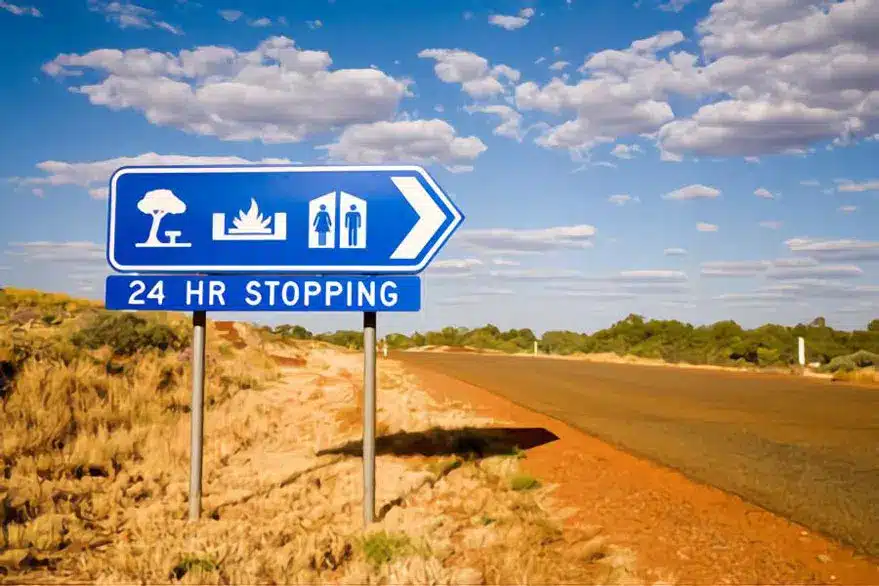
How to Know If You Actually Qualify to Free Camp
Check what the specific location requires.
Before you stop for the night, look up the land manager – whether that’s a national park, state forest, council reserve, or road reserve – and check their specific conditions. Apps like WikiCamps, Camps Australia Wide, and Campermate publish user-reported and council-confirmed requirements for individual sites, this is the best way to see if you can free camp legally.
Know your grey water situation.
This is the most commonly overlooked element. A lot of older vans route grey water straight out a drain underneath the van – that doesn’t qualify as self-contained under most council definitions. If you’re not sure how your van manages grey water, check underneath or ask your dealer.
Consider CMCA membership.
The Campervan and Motorhome Club of Australia runs a Leave No Trace self-containment scheme with a compliance sticker recognised at many free camping locations. It’s not a universal pass, but it demonstrates your rig meets a recognised standard and can help in grey areas. More at members.cmca.net.au.
When in doubt, pick a paid site. Free camping is great, but the cost of a $40 powered site is considerably less than an $834 fine – and a lot less stressful than a ranger knock at 10pm.
Why This Is Only Going to Get More Important?
The free camping trend is consistent across every state: casual, unregulated free camping is shrinking. The reasons are a combination of growing demand from record numbers of caravanners, environmental pressure from overuse of popular sites, waste management issues left by non-compliant campers, and the legitimate interests of caravan park operators.
None of those pressures are going away. As more Australians take to the road, the sites that remain available for free camping will face more scrutiny, more permit requirements, and more enforcement. The caravanners who will be best placed are the ones who understand the rules, have a rig that genuinely meets self-containment requirements, and do the five minutes of research before they stop.
The bottom line, we’re just as confused as you are.
Legal, illegal, relying on apps and websites to check rules when you probably don’t even have reception? It all sounds a little grey and we’re pushing for a National standard to help clear things up.
But until then, heres a quick checklist before you pull up for the night.
Free Camping Checklist
- Does this location permit free camping?
(Check WikiCamps, Camps Australia Wide, or the official land manager website) - Is self-containment required here?
- Does my rig have a sealed toilet waste system?
- Does my rig have a grey water holding tank – not just a drain pipe underneath?
- Have I checked the maximum stay limit?
- Do I know what the fine is if I get this wrong?
If you can’t answer all of those with confidence, it’s worth ten minutes of research before you commit to the night, because this is the difference between free camping legally, and free camping illegally.
Official Links – Check Before You Go
- NSW National Parks – www.nationalparks.nsw.gov.au/passes-and-fees
- Parks Victoria – www.parks.vic.gov.au/about-us/fees-and-charges
- Tasmania Central Coast permit system – www.centralcoast.tas.gov.au
- Queensland national parks camping – www.parks.qld.gov.au/camping
- Western Australia Explore Parks – www.exploreparks.dbca.wa.gov.au
- South Australia national parks – www.environment.sa.gov.au/parks/visit/camping
- CMCA self-containment scheme – www.members.cmca.net.au/content/scvlnt
Planning a camping trip? Check out our Holiday Parks and Travel Guides