

For a lot of Australians, the dream is simple. Hook up the van, hit the road and take your own bed, kitchen and little slice of home with you.
But a recent traveller raised a fair question after completing an east coast trip without towing a caravan. Instead, they stayed in cabins along the way, many around the $220-a-night mark. Some were cheaper, some were harder to find because they were travelling with a dog, but the overall experience made them wonder: once you factor in the cost of the caravan, tow vehicle setup, fuel, powered sites and the stress of towing, is caravanning always the best-value way to travel?
It is a question worth asking, especially as Australian travellers become more value-conscious. Caravan Industry Association of Australia’s 2026 State of the Industry report noted that registered RV ownership continued to grow, while holiday parks saw stronger revenue across cabins, powered sites and unpowered sites.
So, is it cheaper to tow the van, or easier to drive light and book cabins?
The honest answer is: it depends on how often you travel, where you stay and what kind of holiday you want.
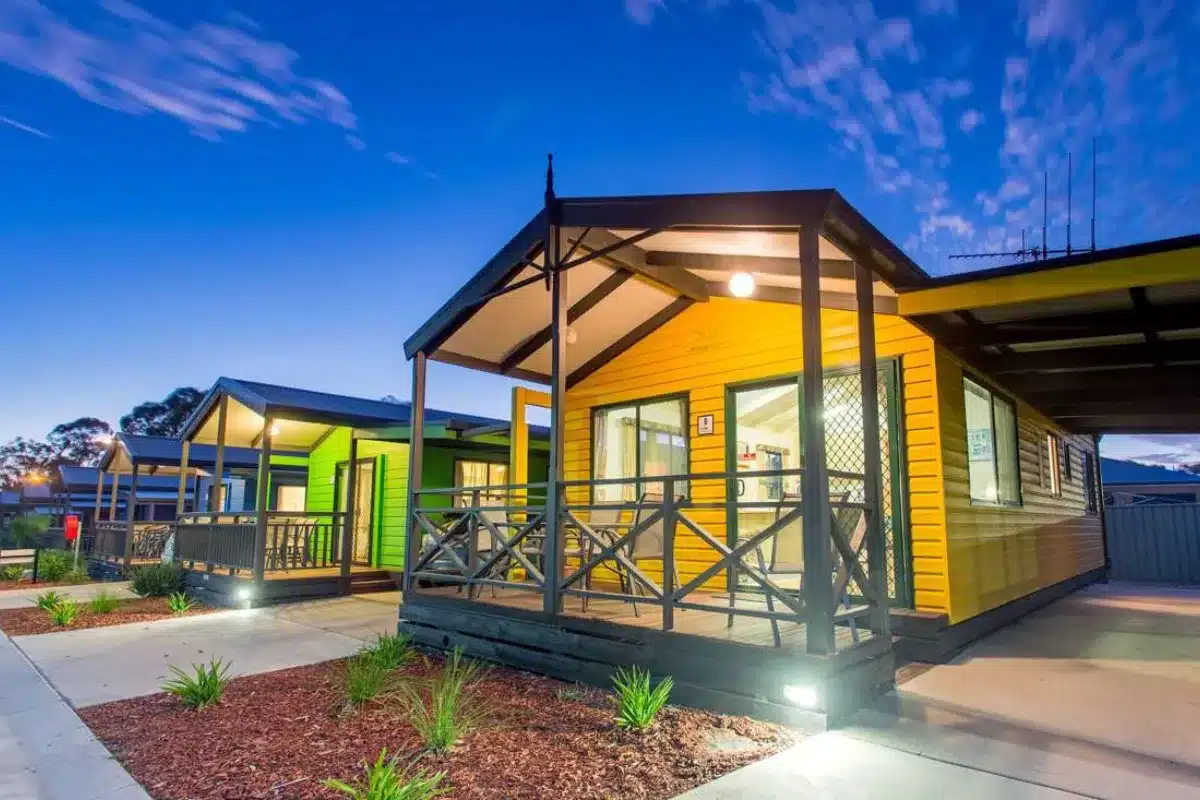
The cabin argument
Cabin travel has a few big advantages.
You are not towing, so the drive is usually easier, less stressful and more fuel-efficient. You can park more easily, travel through towns without worrying about van length, and change plans quickly if the weather turns or the road gets rough.
For travellers with pets, options can be more limited, but pet-friendly cabins are becoming easier to find across Australia. The trade-off is that you may pay more, book earlier or have fewer parks to choose from.
Cabins can also make sense for shorter trips. If you are doing one or two holidays a year, spending $180 to $250 a night on cabins may still be cheaper than owning, insuring, storing, maintaining and upgrading a caravan.
For example, a week of cabins at $220 a night comes to $1,540. That sounds like a lot until you compare it with the cost of buying a caravan, setting up a tow vehicle and paying for powered sites anyway.
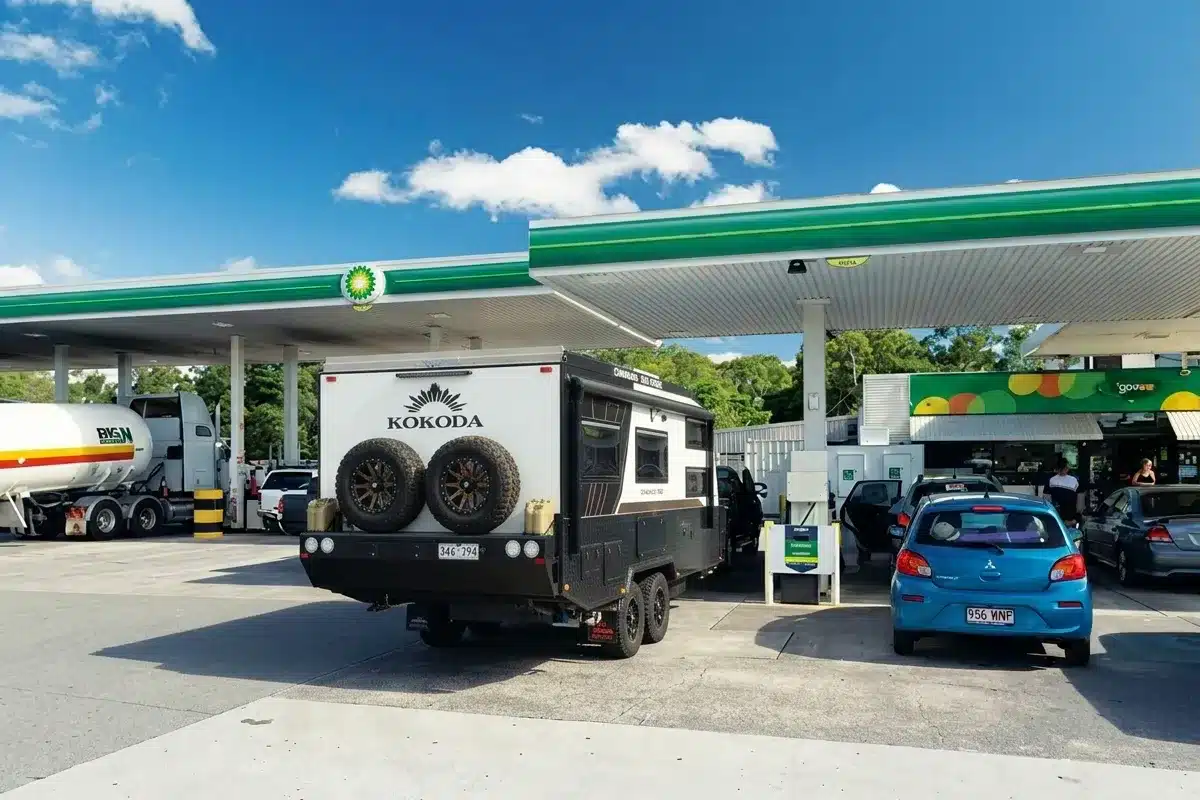
The caravan argument
Caravanning still has a lot going for it.
You have your own bed, your own gear and your own setup. You know where everything is. You can cook your own meals, pack the dog’s bed, bring the camp chairs and settle into a routine that feels familiar no matter where you stop.
For longer trips, the numbers can start to swing back towards caravanning. Powered sites may commonly sit well below cabin prices, although they vary by park, season, location and demand. The difference between a $60 powered site and a $220 cabin is $160 a night. Over a long trip, that adds up quickly.
Caravanning also gives travellers more control. You can stay in caravan parks, farm stays, low-cost camps, national park campgrounds or free camps where permitted. Cabins are more fixed. You stay where there is availability.
For retirees or frequent travellers, the caravan may not just be a holiday expense. It can become a lifestyle.
But the upfront cost changes the equation
This is where the comparison gets interesting.
A modern caravan can cost anywhere from tens of thousands of dollars to well over $100,000, depending on the size, brand, build and off-grid setup. Many buyers also spend extra on tow vehicle upgrades, towing mirrors, brake controllers, suspension, GVM upgrades, electrical work, weight checks, storage solutions and accessories.
Then there are ongoing costs: registration, insurance, servicing, tyres, storage, repairs, park fees and depreciation.
The reader’s point about investing the money instead of buying a caravan is worth considering, although everyone should get independent financial advice for their own situation. The Reserve Bank of Australia’s cash rate was 4.35 per cent after its June 2026 meeting, so savings and investment returns are a real part of the conversation.
Put simply, if someone spent $100,000 on a caravan, that money is tied up in an asset that may depreciate. If that same money was invested or kept in interest-bearing savings, it could potentially contribute to future holidays instead. The exact result would depend on interest rates, tax, fees, inflation and personal circumstances.
Fuel is one of the biggest differences
Fuel is one of the most obvious places where towing changes the cost of a trip.
A tow vehicle that might be reasonably efficient when driven solo can use far more fuel with a large caravan behind it. Real-world figures vary depending on the vehicle, van weight, wind, terrain, tyre pressures, speed and driving style.
RACQ’s review of the Chevrolet Silverado 2500HD noted about 12.5L/100km on the highway and 23.4L/100km when towing, based on the vehicle trip computer. WhichCar has also noted that fuel use with around 3000kg behind a large SUV can reach about 17.0L/100km.
That lines up with what many caravanners report in the real world. Towing can easily push a vehicle into the high teens or beyond, especially with a heavy, tall van.
On a short trip, the extra fuel may not matter much. On a long east coast run, it can become a major line item.
A simple comparison
Cabin Stay vs Caravan Trip
What Really Costs Less?
On accommodation alone, the caravan can look cheaper. But once you add ownership, towing, maintenance and depreciation, the answer becomes less clear.
Seven nights in cabins
$1,540 Based on $220 per night- Lower fuel use because there is no caravan to tow.
- No towing stress on the road.
- Less gear to maintain between trips.
- Less flexibility if cabins are booked out.
- Can be harder if you need pet-friendly accommodation.
Seven nights on powered sites
$350–$490 Based on $50 to $70 per night- Higher fuel use while towing.
- Caravan ownership costs still apply.
- More setup and pack-down at each stop.
- More maintenance, storage and insurance to consider.
- More flexibility once the van is paid for and set up.
On accommodation alone, the caravan looks cheaper. But the bigger picture includes the purchase price, tow vehicle setup, higher fuel use, maintenance, storage, insurance and depreciation.
Do not just ask, “What is cheaper per night?”
Ask, “How many nights a year do we actually use the van?”
The break-even question
For someone who uses their caravan for 60, 90 or 120 nights a year, the value can make sense. The more nights you use it, the more the upfront cost is spread out.
For someone who only travels two or three times a year, cabins may be a smarter financial choice.
That does not mean cabins are better. It simply means the value depends on usage.
A caravan that sits in the driveway for most of the year is an expensive asset. A caravan that is used regularly, cared for properly and enjoyed often can be one of the best lifestyle purchases a traveller ever makes.
It is not just about money
This is the part spreadsheets cannot fully measure.
Some people love towing. They enjoy the setup, the gear, the planning and the feeling of being self-contained. Others find towing stressful, especially in traffic, wind, tight fuel stations or busy holiday parks.
Some travellers want their own mattress, their own bathroom and their own kitchen. Others are happy to arrive at a cabin, unlock the door and be done.
Some want the freedom of changing campsites. Others want the simplicity of booking ahead.
Neither version is wrong.
The best way to travel is the one that suits your budget, confidence, vehicle, pet situation, travel style and stage of life.
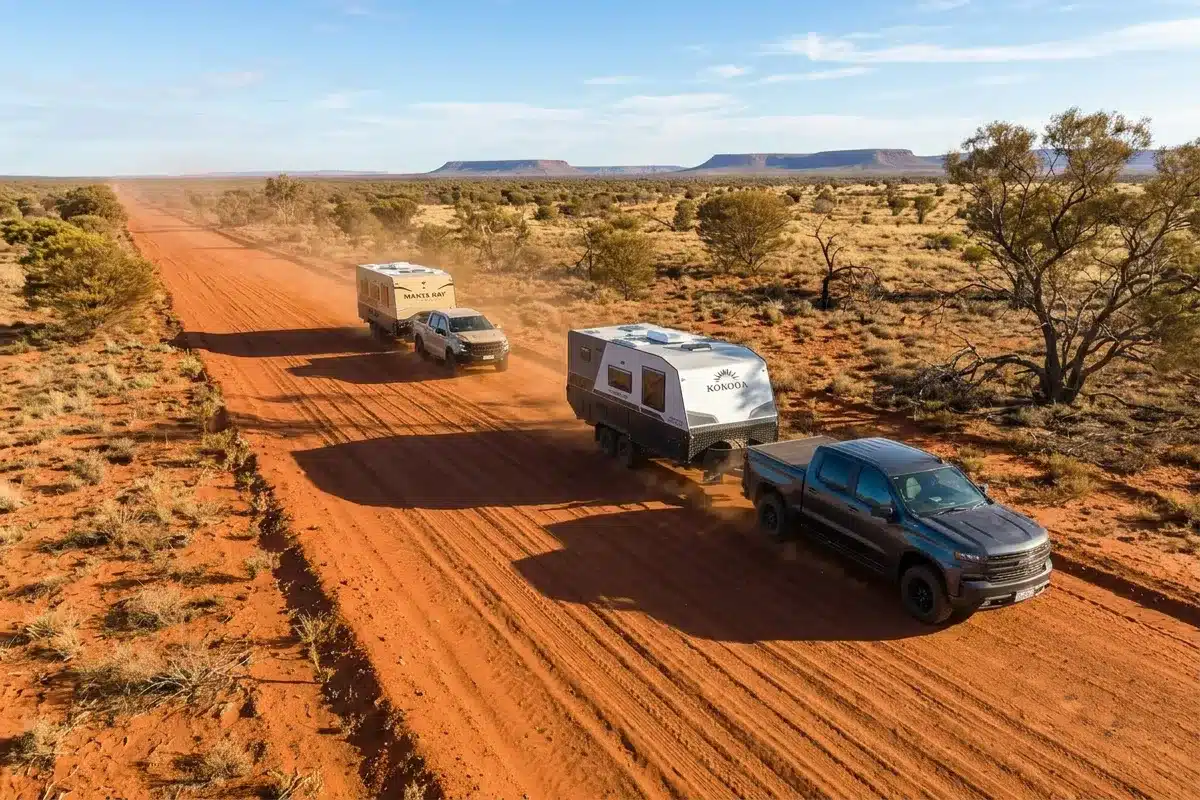
Should we do a comparison trip?
This would make a great real-world test.
One team could tow a caravan and stay in caravan parks. Another could drive without towing and stay in cabins at the same parks or in the same towns.
The comparison could track:
- Fuel used
- Accommodation cost
- Setup and pack-down time
- Driving stress
- Pet-friendly options
- Food costs
- Comfort
- Flexibility
- Overall enjoyment
The result may not crown one winner. It may show that caravanning suits some trips, while cabins suit others.
And that would be the most useful answer of all.
The takeaway
Caravanning is still one of Australia’s great ways to travel. It gives you freedom, familiarity and a home on wheels.
But it is not the only way to enjoy the road.
For some travellers, especially those who do shorter trips, travel with pets, dislike towing or do not want to invest heavily in a van and tow vehicle setup, cabins can be a very sensible option.
For others, the caravan lifestyle is worth every dollar because it is not just transport and accommodation. It is part of the holiday itself.
Before buying a van, do the maths honestly. Work out how many nights a year you will use it, how far you plan to tow, what your vehicle can safely handle and whether you enjoy the process of towing and setting up.
Because the best travel setup is not always the most expensive one.
It is the one that gets you out there more often, with less stress and more enjoyment.