
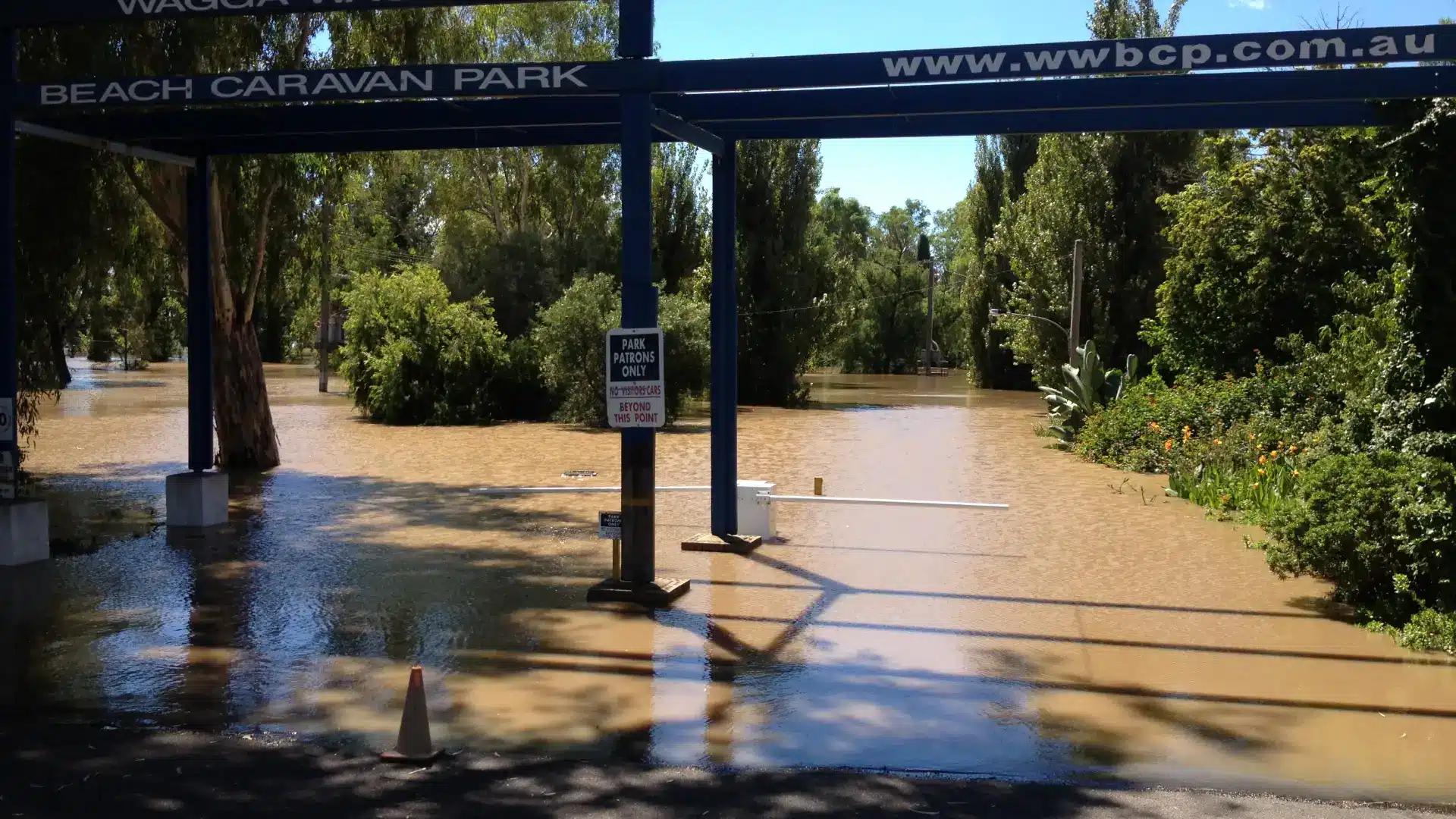

Two couples buy the same new caravan on the same day for $90,000. Just under three years later, a flood goes through the riverside park where both are staying, and both vans are written off. One couple insured for agreed value, the other for market value.
This is an illustrative example, not a real claim. On our middle assumption that a van loses 10 per cent of its value a year, the market value couple might be offered something like $65,600, less their excess. If their claim is accepted, the agreed value couple would generally be paid the figure on their certificate, less their excess. If that figure was still $90,000, they come out about $24,400 ahead. If their insurer had lowered it at each renewal, as insurers can, the lead shrinks to about $7,300.
The plain answer: agreed value pays a figure fixed before the loss; market value pays what the insurer assesses the van was worth just before it. Agreed value usually pays more on a van a few years old, but how much more depends on what happens to that figure at each renewal.
What agreed value and market value mean in the policy wording
These definitions come from the product disclosure statements (PDSs) we read on 27 October 2026.
- RACV covers caravans for an agreed value, which its PDS defines as “the amount we agree to insure” the van for. That amount includes any applicable GST, registration and compulsory third party (CTP) insurance, and “other on-road costs”.
- RACQ also pays the agreed value on a total loss. Its PDS calls it “the amount that we agree to insure your caravan or trailer for”, including “all relevant statutory charges, GST and taxes”.
- Allianz SureCover offers either, as shown on your schedule. Its PDS defines market value as “the value of your caravan or trailer immediately prior to any loss or damage”, excluding registration, CTP, stamp duty transfer, dealer warranty costs and transfer fees.
- Youi asks you to choose an “insured value”, but its PDS says that on a total loss “we will pay you the lesser of the market value or the insured value”. Its assessors set market value using “industry pricing guides”, and it leaves out warranty costs, future stamp duty, transfer fees and dealer profit.
The Insurance Council of Australia puts the difference simply. Market value is worked out when you claim, and “can go down over time”. Agreed value is “a fixed dollar amount you and your insurer set when you take out or renew your policy”. Its guide is about cars; the logic carries across.
How big the gap gets in years one, three and five
We modelled our $90,000 van written off just before renewal at the end of years one, three and five, with market value falling 10 per cent of current value a year. Agreed value is shown two ways: held at the purchase price (its best case), and reset to market value at every renewal.
| Written off at end of | Market value payout | Agreed value payout |
|---|---|---|
| Year 1 | $81,000 | $90,000 (no renewal yet) |
| Year 3 | $65,610 | $90,000 if held, $72,900 if reset |
| Year 5 | $53,144 | $90,000 if held, $59,049 if reset |
Payouts are before the excess. At 5 per cent a year, the year-five gap with an agreed value held at $90,000 is about $20,400. At about 16.7 per cent it is about $53,800.
We found no published caravan resale index, so we use a range. An insurer told Caravan World in 2010 that it depreciated vans at five per cent a year, which the magazine said “seems to be the industry standard”. At the other end, the ATO’s effective life determination gives caravans and camper trailers in rental and hire a 12-year life, about 16.7 per cent a year under the tax law‘s diminishing value formula (200 per cent divided by 12 years). Our 10 per cent middle figure matches the real case below, where an insurer cut an agreed value by 10 per cent at one renewal.
Year one has a twist: several policies replace a van written off early with a new one, under either cover type. Inside that window, the new-for-old clause can matter more than the label.
Written off: what a $90,000 van pays, year by year
Agreed value held at the purchase price, against market value falling 10% a year. The red box is the gap; the blue line under it is the gap if the agreed value is reset at each renewal.
Payout if written off just before renewal, before excess
Inside the 24-month new-for-old window some policies offer, which can apply under either cover type.
Reset at renewal: $8,100 gap. Still inside a 24-month window if the claim lands before the second anniversary.
Reset at renewal: $7,290 gap. The renewal notice decides $17,100 of the difference.
Reset at renewal: $6,561 gap.
Reset at renewal: $5,905 gap.
Year-five gap if held, at three depreciation rates
Run your own van
If the agreed value is reset to market value at each renewal, the gap at the end of a policy year is nearer $7,290.
Assumptions: illustrative example only, not a prediction of any claim. Van bought new for $90,000. Market value falls by a fixed share of its current value each year: 10% is our middle figure, with 5% (an insurer quoted by Caravan World, 2010) and about 16.7% (200% divided by 12 years: the ATO’s 12-year effective life for caravans in rental and hire, on the tax law’s diminishing value formula) as the range. Claim made just before the policy renews. “Held” means the agreed value stays at $90,000 at every renewal; “reset” means the insurer revalues it to market value at each renewal. Excess, unpaid premium and other deductions are ignored. Real payouts depend on the policy wording, the insurer’s assessment and the circumstances. Policy wording checked 27 October 2026.
The catches in agreed value
- The insurer has to agree. Every definition we read says so; Allianz's reads “the amount which we agree to insure your caravan or trailer up to”.
- It can be reviewed at renewal. In a case reported by insuranceNEWS in June 2023, an owner first insured his van in February 2021 at an agreed value of $60,000. In January 2022, RACQ's renewal notice “revalued” it to $54,000 for age and condition. Floods wrote the van off in March 2022, RACQ paid $54,000 less the $650 excess, and the Australian Financial Complaints Authority (AFCA) dismissed his case for more.
- It can sit below market value. The Insurance Council notes that after Covid, used car prices “in many instances significantly exceeded the agreed value policyholders had selected”. The RACQ owner argued his van was worth $80,000, but an agreed value pays the agreed figure.
- ‘Insured value’ is not always agreed value. Youi pays the lesser of market value and the insured value. The 2021 RACQ policy in the AFCA case was written as $60,000 “or the market value if it had been lower”. Read the total loss clause.
- Contents and accessories. RACV and Youi both cover contents to $1,000 as standard. Youi asks for an insured value reflecting replacement cost “including any accessories and modifications”, so count the solar and batteries you added.
- Deductions still apply. On a total loss, RACV deducts excesses, unpaid premium and the unused registration and CTP, and the policy ends with no premium refund.
- The premium. The Insurance Council says an agreed value above market value “will likely be reflected in the premium”. None of the four PDSs we read publishes the difference, so quote both ways where you can.
Watch out: find your policy's total loss clause and look for the word “lesser”. If it pays the lesser of market value and the amount on your certificate, a higher insured value buys a higher ceiling, not a guaranteed higher payout.
How to choose between them
- Agreed value suits owners who want the number known in advance and will check it at every renewal.
- Market value can make sense on an older van where the gap is small and the premium saving is real.
- In the first two years, compare new-for-old clauses before cover types.
- If your model is in demand, an agreed value set too low can cost you. Our caravan price guide shows what new vans cost today.
The fine print, in four questions
Can my insurer lower my agreed value at renewal?
It can offer renewal on a new figure. In the RACQ case, AFCA found the first page of the renewal notice “clearly stated the policy terms had changed”. Read the value on every notice and query it before you pay.
Will I get a new van if mine is written off in the first two years?
Some policies offer it, with conditions. RACV may choose to replace a van bought new or as a demonstrator within 24 months of purchase. Allianz SureCover replaces a van bought new that is a total loss within two years of original registration. Youi's applies within 24 months for the first owner, capped at the insured value plus 20 per cent. Whether it applies depends on the policy wording and circumstances.
What can I do if a market value offer looks too low?
The Insurance Council suggests giving the insurer evidence, such as recent sale prices for comparable vehicles or an independent valuation, then using its internal complaints process, then AFCA. It says valuation disputes rank among AFCA's most common complaints.
Does agreed value include on-road costs?
RACV's agreed value includes “other on-road costs”; RACQ's includes “all relevant statutory charges, GST and taxes”. Allianz's market value excludes registration, compulsory third party insurance and stamp duty transfer. Check your own PDS.
Before your next renewal, check three lines
- The basis. Agreed value, market value, or an insured value paid on a “lesser of” basis.
- The dollar figure. Compare it with asking prices for the same model and year, plus your add-ons. Our buying guide covers deposits, contracts and choosing new or used.
- The new-for-old date. Review the cover type at the renewal after it passes.
If the figure looks wrong, ring before you pay, not after a flood. Our guide to what caravan insurance covers explains the rest of the policy, and our extreme weather guide helps lower the risk of a claim.
This is general information only, not advice, and it does not take into account your objectives, financial situation or needs. Read the PDS and Target Market Determination (TMD) for any policy you are considering, and consider speaking to a licensed adviser. Policy wording checked on 27 October 2026.
Images: Bidgee via Wikimedia Commons (CC BY-SA 3.0 AU); 2H Media on Unsplash.


