

We checked fifteen popular utes and four-wheel drive wagons with a 3,500kg braked towing rating. Put four adults and 100kg of gear inside, hitch a caravan loaded to a full 3,500kg, and only seven of the variants we checked stay within both their gross combination mass and their gross vehicle mass. Five go over the first. Three more stay inside GCM but go over GVM.
None of that shows up in the towing figure on the brochure. It shows up in two numbers further down the spec sheet, and in what you put in the car. Here is how every model works out, and how to check your own.
What a 3,500kg towing rating actually means
Braked towing capacity is the heaviest trailer the manufacturer allows the vehicle to pull. It is a ceiling, not a promise, because two other limits apply at the same time.
- Gross vehicle mass (GVM) is the most the tow vehicle itself may weigh, including people, luggage, accessories and the towball download pressing on the back of it.
- Gross combination mass (GCM) is the most the vehicle and trailer may weigh together. As Western Australia’s Department of Transport towing guide puts it, this may be less than the GVM and the towing capacity added together.
That last point is the whole story. On most of these vehicles, GVM plus 3,500kg comes to more than the GCM, so you cannot max out both at once. Every kilogram you carry in the vehicle comes off what you can tow, and the other way round. Transport for NSW is blunt about it. Its Caravan Safety guide states: “It is illegal to exceed your vehicle’s GVM, your caravan’s ATM and the combined GCM.” Its towing page adds that towing illegally can bring fines and demerit points.
“Fully loaded” here means a van at its 3,500kg aggregate trailer mass (ATM). If your van weighs less on the road, you have more room. Our caravan payload guide explains how tare, ATM and payload fit together, and The Weight Trap covers how to match a van to a vehicle before you buy.
How we ran the numbers
We took one representative dual-cab or wagon variant of each model and used the masses in its maker’s current Australian specifications. Then we loaded every vehicle the same way (theoretically):
- four adults at 80kg each, or 320kg
- 100kg of gear in the vehicle
- a caravan at 3,500kg, with 350kg on the towball
- no accessories beyond what the published kerb mass includes
Two checks follow. GCM headroom is the GCM, minus the vehicle’s kerb mass and the 420kg load, minus the 3,500kg van. GVM headroom is the GVM, minus the kerb mass, the load and the towball download. A negative number means the combination is over that limit.
Most of these manufacturers publish a 350kg maximum towball download. Ford, for the Ranger and Everest, and Toyota, for the HiLux and LandCruiser 300, do not list one in the specification sheets we checked (Toyota refers owners to the owner’s manual and its towing guide), so we used 350kg for them too, which is 10 per cent of the van’s mass.
The results, model by model
| Vehicle | GCM headroom | GVM headroom |
|---|---|---|
| Ford Ranger XLT V6 4×4 double cab pick-up | 229kg spare | 329kg spare |
| Toyota HiLux SR5 double cab pick-up 4X4 auto | 250kg spare | 220kg spare |
| Mitsubishi Triton GLS double cab pick-up (1.0t) | 201kg spare | 301kg spare |
| Nissan Navara ST-X 4WD dual cab pick-up | 159kg spare | 249kg spare |
| Kia Tasman SX+ 4×4 dual cab pick-up | 55kg spare | 255kg spare |
| GWM Cannon Alpha Lux 3.0 TD | 85kg spare | 175kg spare |
| Volkswagen Amarok Style V6 | 58kg spare | 158kg spare |
| Isuzu D-Max LS-U 4×4 crew cab ute 3.0 | 25kg over | 225kg spare |
| Mazda BT-50 GT 4×4 dual cab pickup | 22kg over | 228kg spare |
| BYD Shark 6 Performance | 45kg over | 45kg over |
| Toyota LandCruiser 300 GXL | 285kg spare | 35kg over |
| Nissan Patrol Ti | 294kg spare | 56kg over |
| Toyota Prado 250 GXL 7-seat | 150kg spare | 150kg over |
| Ford Everest Sport V6 | 86kg over | 36kg over |
| Isuzu MU-X LS-T 4×4 3.0 | 205kg over | 155kg over |
| Chevrolet Silverado 1500 LTZ Premium | 677kg spare | 172kg spare |
Four adults, 100kg of gear, a 3,500kg van and a 350kg towball. Masses from each manufacturer’s current Australian specifications, checked on 14 October 2026. The Silverado is shown as a contrast and is not counted in our fifteen: it is rated to tow 4,500kg with a 70mm ball and 3,500kg with a 50mm ball. Other variants of the same models have different masses and results.
Seven of the fifteen variants pass both checks: the Ranger, HiLux, Triton, Navara, Tasman, Cannon Alpha and Amarok. Three of those, the Tasman, Amarok and Cannon Alpha, have less than 100kg of GCM headroom, which a bullbar and a set of drawers would use up.
Five are over GCM before anything is added: the D-Max LS-U, BT-50 GT, Shark 6 Performance, Everest Sport V6 and MU-X LS-T. Three more, the LandCruiser 300 GXL, Patrol Ti and Prado GXL, have GCM to spare but go over GVM, because the people, the gear and the towball all sit on the vehicle.
Rated to tow 3,500kg is not the same as legal at 3,500kg
Four adults, 100kg of gear and a caravan at its full 3,500kg ATM, checked against each vehicle’s published gross combination mass.
GCM headroom with a full 3,500kg van
What the fifteen variants add up to
Pass both limits
7 of 15
Ranger XLT V6, HiLux SR5, Triton GLS, Navara ST-X, Tasman SX+, Cannon Alpha Lux and Amarok Style V6.
Over GCM
5
D-Max LS-U, BT-50 GT, Shark 6 Performance, Everest Sport V6 and MU-X LS-T, before any accessories.
Over GVM only
3
LandCruiser 300 GXL, Patrol Ti and Prado GXL: the people and towball overload the wagon.
Lowest GCM
5,900kg
Isuzu MU-X. Even with two adults aboard, the LS-T is 45kg over at a full 3,500kg.
Assumptions: four adults at 80kg, 100kg of gear, caravan at 3,500kg with 350kg towball download, kerb mass as published, no accessories. GCM headroom = GCM − kerb − 420kg − 3,500kg. Ford (Ranger, Everest) and Toyota (HiLux, LandCruiser 300) list no maximum towball in the specifications we checked, so 350kg was used. Sources: manufacturers’ Australian 2026 specifications, checked 14 October 2026.
The utes: seven of ten pass, and two only just miss
Utes do well here because they are built to carry. The Ranger XLT V6 has a published payload of 1,099kg and a GCM of 6,400kg, which leaves 229kg of GCM headroom and 329kg of GVM headroom with our family aboard. The new-generation HiLux SR5 automatic is slightly ahead on GCM at 250kg, though Toyota publishes its kerb weight as a minimum, so a real vehicle will likely have a little less room.
The D-Max and BT-50 are the near misses. Both have a 6,000kg GCM, the lowest of the utes, and the variants we checked come out a little over it: 25kg for the D-Max LS-U 4×4 crew cab ute and 22kg for the BT-50 GT dual cab pickup. Lighter grades of both have room: on the same numbers, the D-Max SX 4×4 crew cab ute with the 2.2-litre engine has about 100kg of GCM headroom (about 45kg with the 3.0) and the BT-50 XT 4×4 dual cab pickup about 65kg. And with two adults instead of four, the LS-U and GT pass too, with about 135kg to spare. Isuzu also notes that its 3,500kg rating applies when the vehicle is fitted with a genuine Isuzu UTE tow bar kit or tow tongue kit and an electronic brake controller.
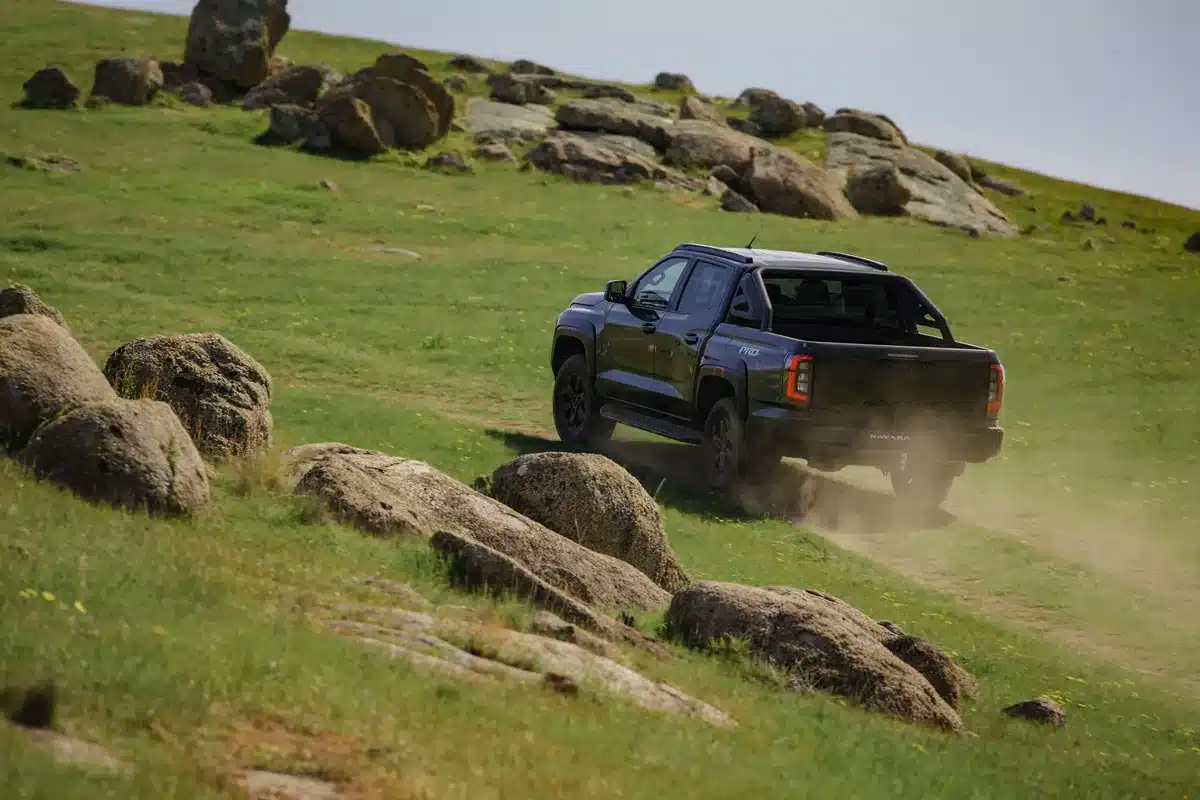
BYD’s Shark 6 needs a closer look at the variant. The Premium and Dynamic models are rated to tow 2,500kg. The new Performance model is rated at 3,500kg, but at 2,775kg kerb it is the heaviest ute here, and with our load it goes 45kg over both GCM and GVM.
The big wagons: inside GCM, over GVM
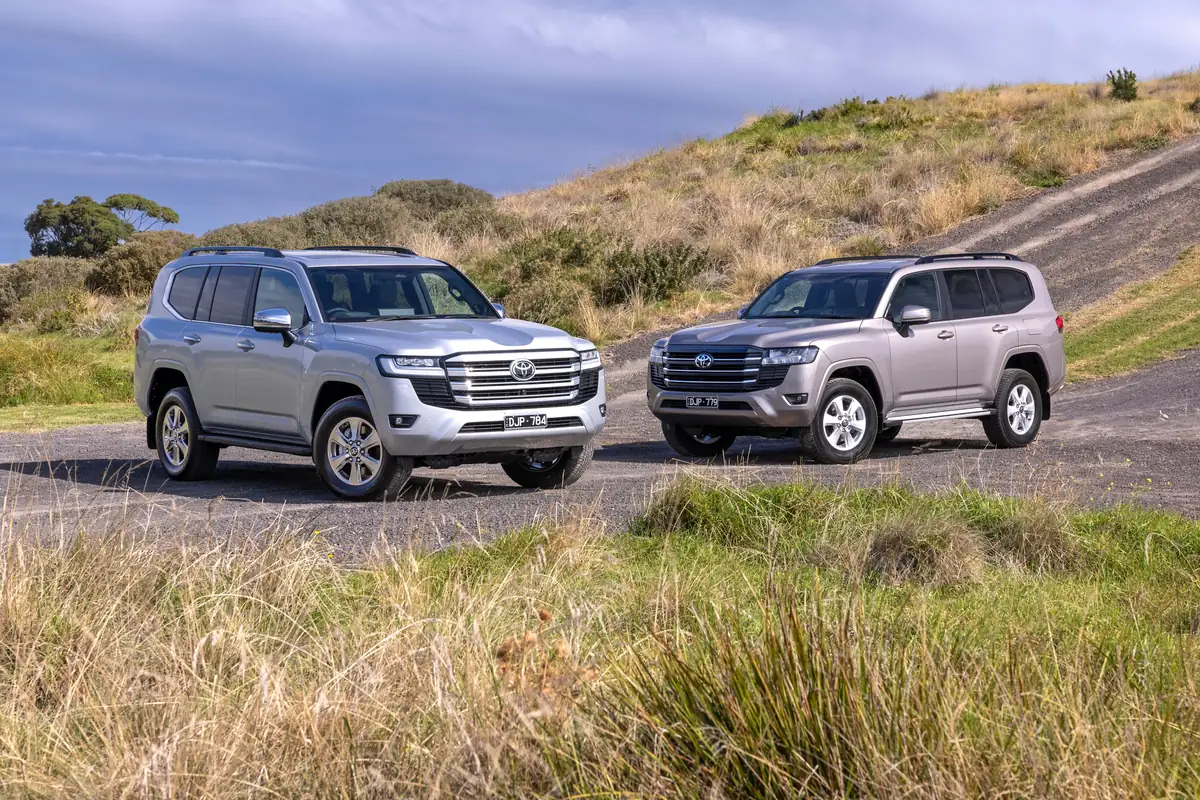
The large four-wheel drive wagons fail the other way. The LandCruiser 300 GXL has a 6,750kg GCM and the Patrol Ti 7,000kg, so both have plenty of combination headroom. The problem is that a seven- or eight-seat wagon carries its passengers on the same chassis that takes the towball.
With four adults, 100kg of gear and 350kg on the ball, the seven-seat Prado GXL is 150kg over its 3,150kg GVM, the Patrol 56kg over and the LandCruiser 300 35kg over. To stay within GVM with the same people and gear aboard, the Prado could carry only about 200kg on the towball, well short of the 350kg Toyota allows. As a couple with 100kg of gear, the Prado gets back under its GVM with just 10kg to spare.
The Everest Sport V6 and MU-X LS-T fail both checks. The Everest is 86kg over GCM and the MU-X LS-T is 205kg over its 5,900kg GCM, the lowest of any vehicle here. Even with only two adults aboard, the MU-X is still 45kg over GCM at a full 3,500kg. Ford’s Everest specifications warn that “occupants and / or luggage may need to be restricted to not exceed the GCM and GVM limits”.
Worth knowing: a GVM upgrade raises how much the vehicle may weigh, but unless the GCM rises too, every extra kilogram you carry comes straight off what you can tow.
Toyota’s new factory GVM upgrade for the HiLux, offered on selected 4×4 grades including the SR5 from August 2026, adds 372 to 435kg of payload depending on the variant; Toyota’s announcement does not say whether GCM changes. Check both numbers on any upgrade, including aftermarket kits like the Pedders Prado 250 package.
Why the Silverado clears it
The Chevrolet Silverado 1500 is in a different class. Its GCM is 7,160kg, so with our family, their gear and a 3,500kg van it still has 677kg of combination headroom and 172kg of GVM headroom. GM Specialty Vehicles rates it to tow 4,500kg with a 70mm ball and 3,500kg with a 50mm ball.
That headroom comes with a much bigger and dearer vehicle, and it changes the conversation from “can it tow 3.5t” to “how much more could it tow”. If that is the question you are asking, our look at the Ford Ranger Super Duty and what 4,500kg actually tows is the next read.
Accessories come off the headroom, kilo for kilo
Our numbers are a best case. The published kerb mass is the vehicle as it leaves the showroom, and makers do not even agree on what that includes. Ford’s Ranger figure includes a full tank of fuel and the lightest factory equipment you can order, and its Everest figure a full tank and all standard equipment. Nissan, Isuzu and Mazda also state a full tank. Toyota publishes a minimum kerb weight for the HiLux. Volkswagen quotes a maximum kerb mass for the Amarok. Mitsubishi, Kia, GWM and BYD do not say.
What is certain is that everything added after the showroom counts against GCM and GVM: the towbar if it is not standard, a bullbar, roof racks, a canopy, drawers, a second battery, a fridge and the water you carry in the car. Those items add up quickly, and none of them is in the brochure figure. On the Tasman, Amarok or Cannon Alpha, with less than 100kg of GCM headroom, even a modest set of accessories puts a fully loaded 3,500kg combination over.
Check your own vehicle
Pick your vehicle, then change the numbers to match how you actually travel. The calculator starts with our family load and a full 3,500kg van.
GCM and GVM check
GCM headroom
229kg
Spare inside the combination limit.
GVM headroom
329kg
Spare inside the vehicle limit.
Inside both limits. The heaviest van this load allows inside GCM is 3,500kg.
How it works: GCM headroom = GCM − (kerb + people + gear) − loaded van. GVM headroom = GVM − (kerb + people + gear + towball). Published kerb masses rarely include accessories, so add them to gear. Confirm every figure on your compliance plate, owner’s manual and a weighbridge.
The only figures that count in the end are the ones on a weighbridge. Weigh the vehicle on its own, then hitched, then the van on its own, all loaded for a real trip. Our guides to towball leverage and weight distribution hitches explain what to do once you know the numbers.
How to get a combination back inside the limits
- Weigh it first. Do not guess. A public weighbridge visit costs far less than a fine.
- Lighten the vehicle. Every kilogram out of the car is a kilogram more you can tow inside GCM. Heavy recovery gear, tools and spare fuel add up fast.
- Choose a lighter van. If your combination only works with a half-empty caravan, the van is too heavy for the vehicle. A van that weighs 3,000kg loaded adds 500kg of GCM headroom to every vehicle here.
- Watch the towball download. On the big wagons it is GVM, not GCM, that bites, and the towball is part of it. Do not cut it below what the van needs to tow safely; reduce the load inside the vehicle instead.
- Read the GCM before buying an upgrade. A GVM upgrade without a GCM increase helps you carry more, not tow more.
Questions caravanners ask
Does a 3,500kg towing capacity mean I can tow a 3,500kg caravan?
Only if the vehicle's own load leaves room inside its GCM, and the towball, people and gear fit inside its GVM. On five of the fifteen variants we checked, four adults and 100kg of gear are enough to rule out a fully loaded 3,500kg van.
Does towball download count towards GVM or GCM?
Both, in different ways. The towball download is weight the vehicle carries, so it counts towards GVM and payload. For GCM it makes no difference, because GCM counts the vehicle and trailer together, wherever the weight sits.
Is kerb mass the same as tare?
Not always. Several makers publish both, and the difference is mostly fuel. Volkswagen, for example, publishes an Amarok tare that includes only 10 litres of fuel. Use kerb mass with a full tank, or better still a weighbridge reading.
Which of these vehicles has the most headroom at 3,500kg?
Of the fifteen 3,500kg-rated variants we checked, the Patrol Ti and LandCruiser 300 GXL have the most GCM headroom, at 294kg and 285kg, but both are slightly over GVM with our family load. Of the vehicles that pass both checks, the HiLux SR5 and Ranger XLT V6 lead on GCM headroom at 250kg and 229kg.
The WUDU takeaway
A 3,500kg towing rating tells you the most a vehicle can pull, not what it can pull with your family in it. The number that decides whether your combination is legal is the GCM minus everything in the vehicle, and on a third of the variants we checked, a family and their gear leave less than 3,500kg.
If you are buying a vehicle to tow a heavy van, read the GCM and the payload before the towing figure. If you are buying a van for the vehicle you already own, do the sum in reverse. Either way, finish at a weighbridge. Our guide to whether to buy the van or the vehicle first walks through the order.
How we checked these figures
Every mass comes from the manufacturer's current Australian brochure, specification sheet, website or official media release, read on 14 October 2026. Those documents range from 2025.5 to 2027 model year, and Toyota's Prado GCM and towball limit come from its launch specifications. Where a maker publishes a range, we used the variant named. Figures change with model updates and options, so confirm against your own vehicle's compliance plate and owner's manual. This is a paper exercise, not a weighbridge test, and it covers each vehicle with the stated load only.
A few popular names are missing for a reason. We left out the LandCruiser 70 Series and the Ram 1500 because we could not confirm a complete, current set of GVM, GCM and kerb figures from the makers' own Australian specifications. The Mitsubishi Pajero Sport is no longer listed on Mitsubishi Australia's website. Its replacement, the All-New Pajero, launches in December 2026, and its brochure gives a 6,340kg GCM, a 3,215kg GVM and a 350kg towball limit. On our numbers the five-seat GLS would just pass both checks, with 23kg of GCM headroom, while the heavier seven-seat GLS, Exceed and GSR would go over GCM. We will add it properly once it is on sale.
Images: Bahnfrend, CC BY-SA 4.0, via Wikimedia Commons (featured image, cropped); Toyota Australia (HiLux, Prado, LandCruiser 300); Nissan Australia (Navara).