

There’s a quiet revolution happening at the top end of Australian caravanning. While the rest of the market debates fuel prices and argues over Chinese imports, a small group of manufacturers has been locked in something else entirely: an arms race to build the most capable, most self-sufficient, most technologically extraordinary caravan ever rolled out of an Australian factory.
We’re talking about vehicles priced between $350,000 and $400,000. Caravans with their own power stations, their own water factories, and toilets that incinerate waste at 600 degrees. Rigs that can park in the Simpson Desert for a month and never need a dump point, a tap, or a powered site.
The question isn’t just whether they can do it. The question is: who on earth is buying them, and why?
How We Got Here
The pandemic years supercharged a boom that was already underway. More Australians than ever were hitting remote dirt roads, venturing deep into national parks, and spending weeks beyond the reach of powered sites.
But the demand changed in character too. Travellers who cut their teeth on basic campsites began expecting more. Baby boomers entering retirement with substantial super savings wanted proper beds, proper kitchens, proper bathrooms. Remote touring had to accommodate laptops, work calls, and a decent coffee.
The industry responded by iterating upward. Better batteries led to bigger batteries. Bigger batteries enabled more appliances. More appliances demanded more solar. Somewhere in that feedback loop, a handful of manufacturers stopped asking how good they could make a caravan and started asking what the actual limits were.
The answer starts at around $385,000.
The Contenders
Bruder EXP-10: Queensland’s Expedition-Grade Flagship
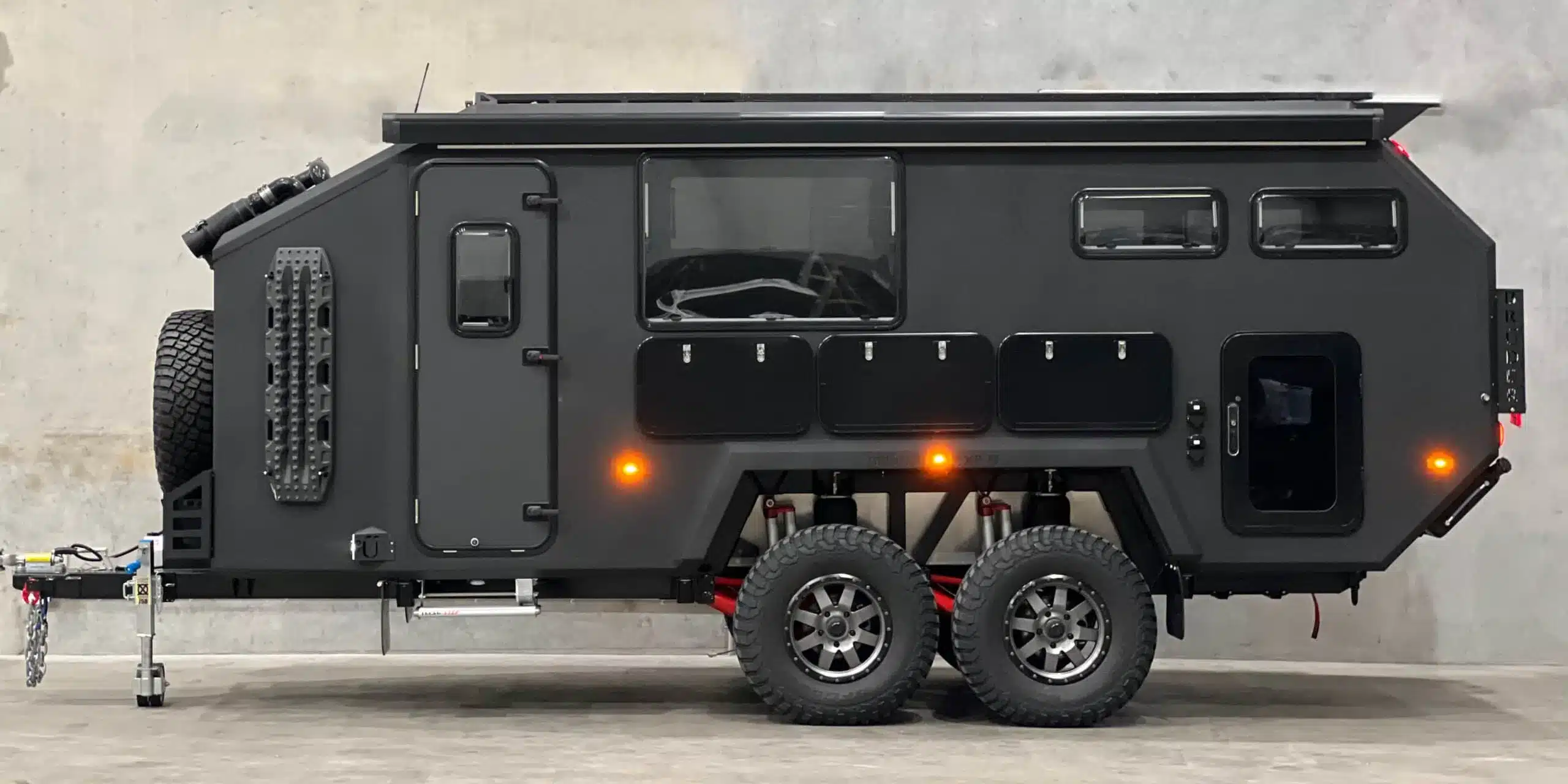
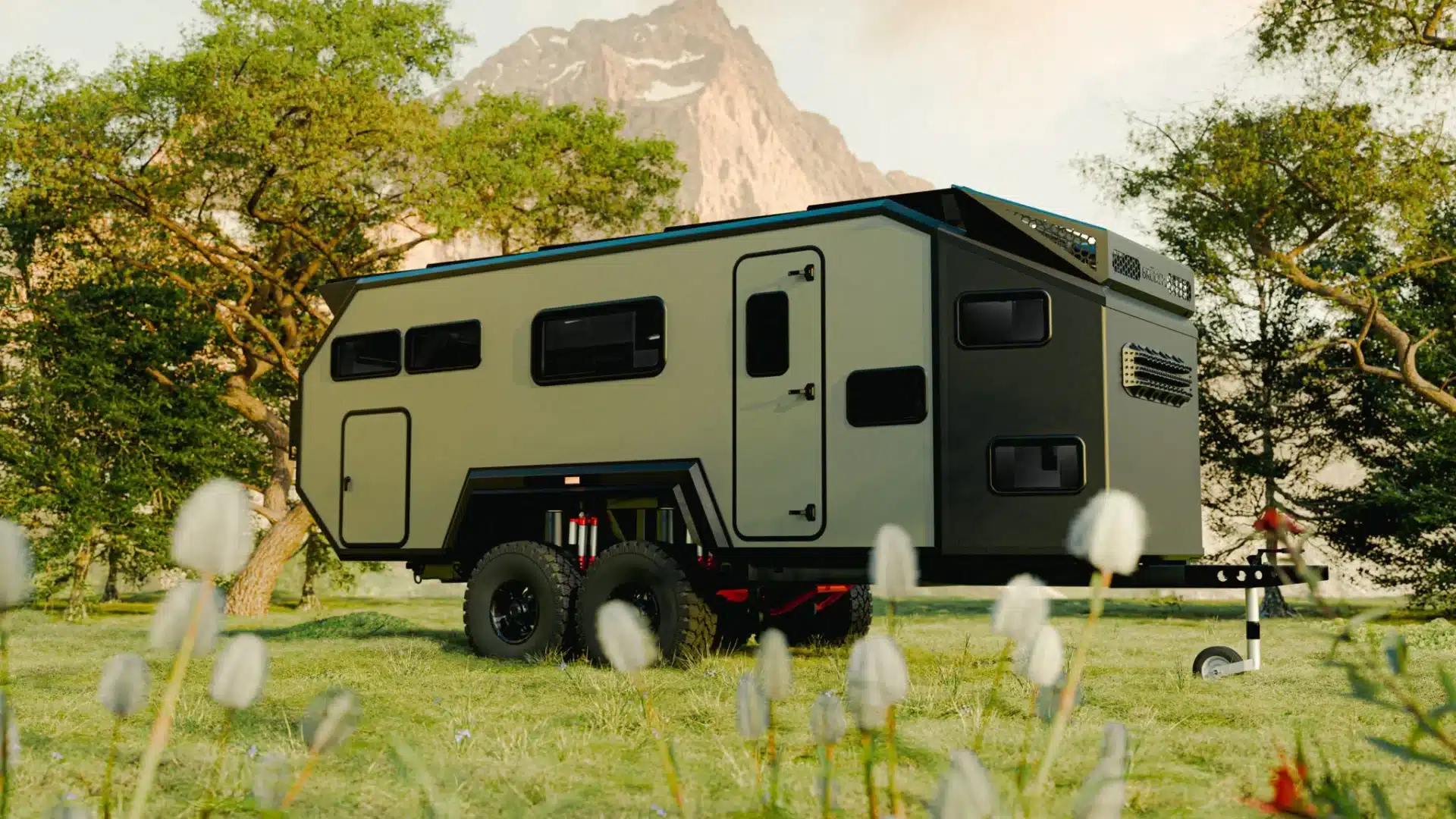
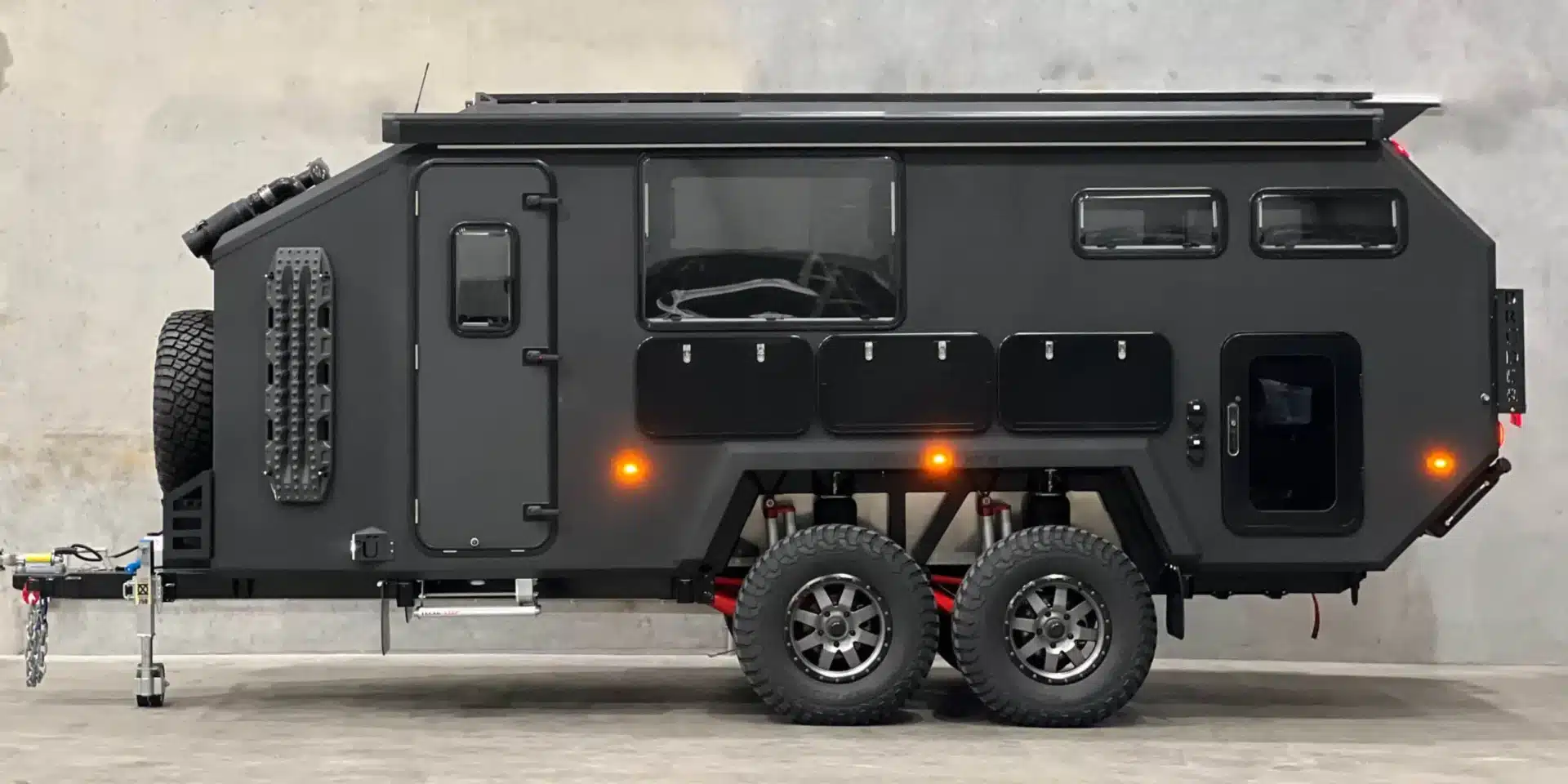
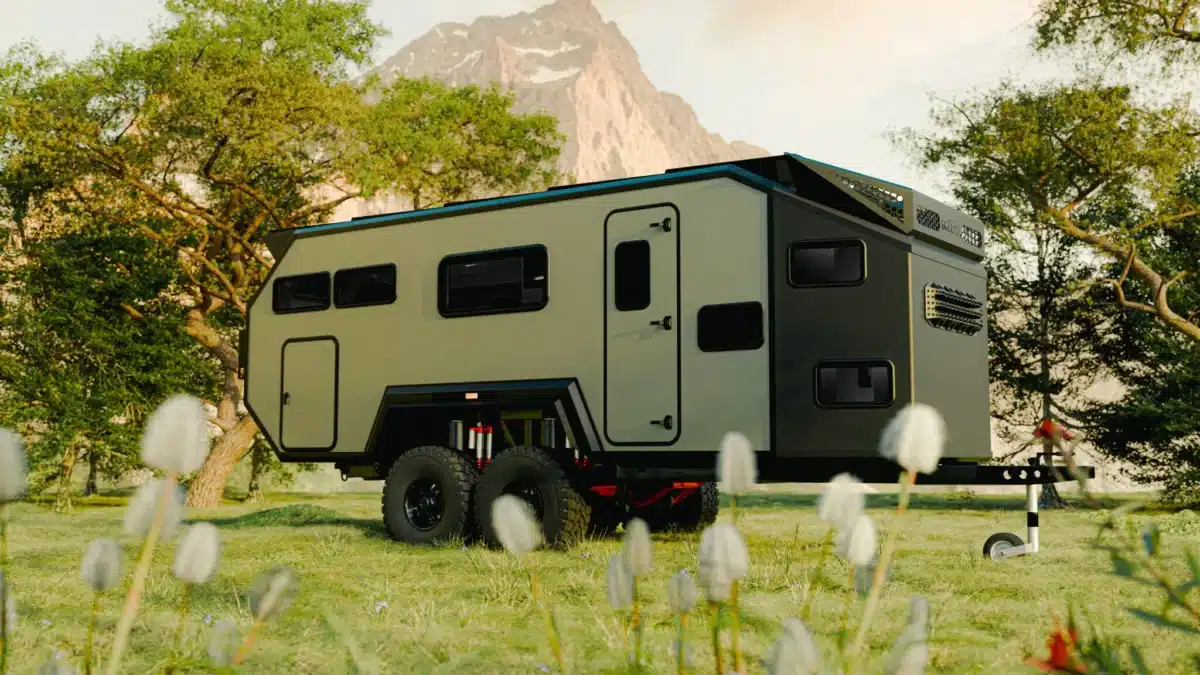
Brisbane-based Bruder has spent ten years building a global reputation for expedition-grade caravans. Its latest flagship, the EXP-10, starts at AUD$385,000 and is built around a 48V electrical system with a 20kWh lithium phosphate battery bank, a Victron 8,000W inverter, more than 2,000W of rooftop solar, and a touchscreen power management system.
Despite its 20ft body length and 4,000kg ATM, Bruder says the EXP-10 is designed to reach ultra-remote locations, aided by patented auto-levelling airbag suspension delivering up to 300mm of travel via eight tuned remote-canister shock absorbers. The body is full composite construction with no timber framing to rot or steel to rust.
Inside, the couples floorplan features a north-south queen bed, 188L fridge-freezer, dual-burner induction cooktop, convection microwave, and a heated wet room. Tick a few option boxes and you’ll comfortably exceed $400,000.
Kokoda Counterstrike Vincere: The Van That Makes Its Own Water
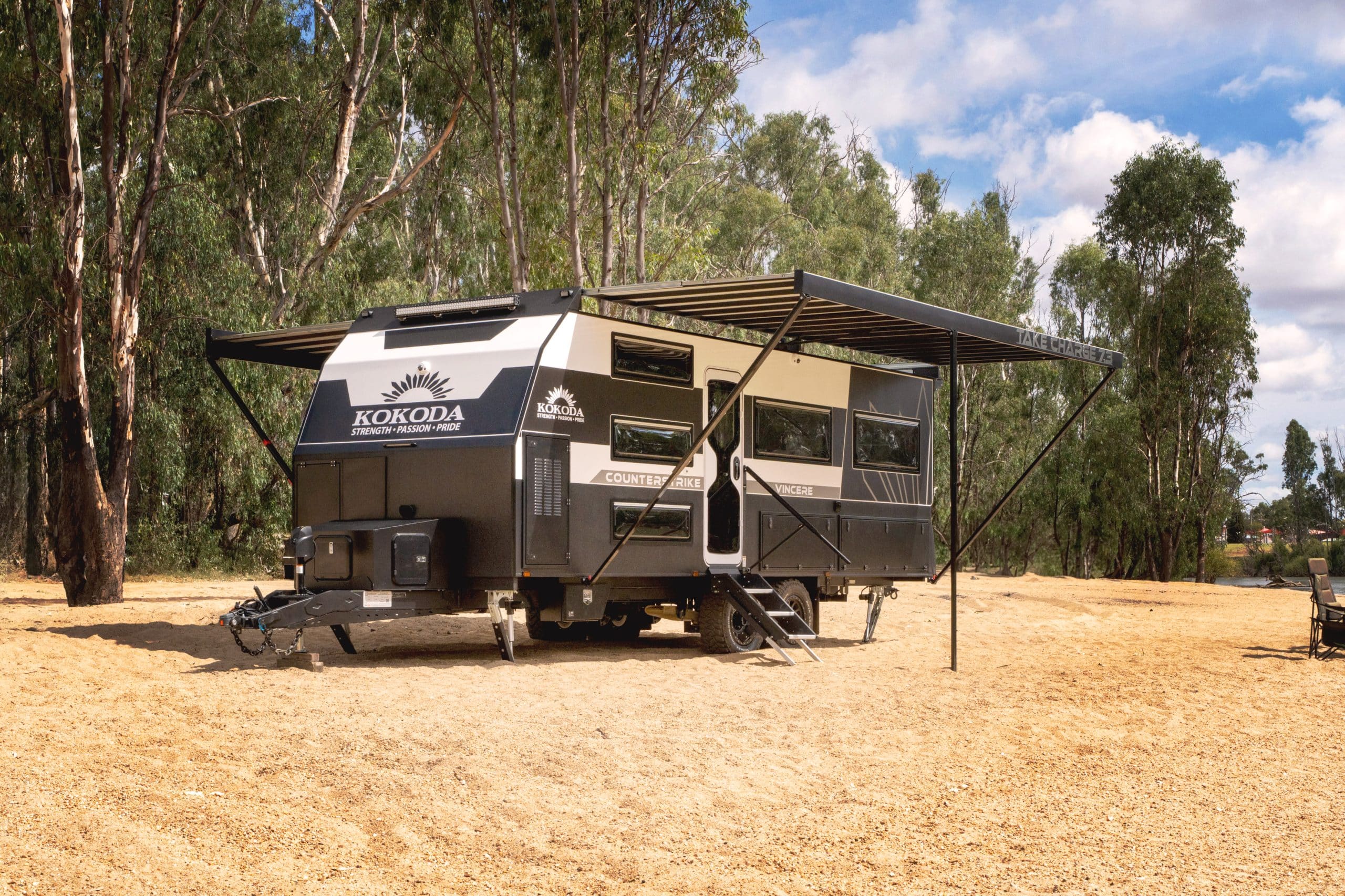
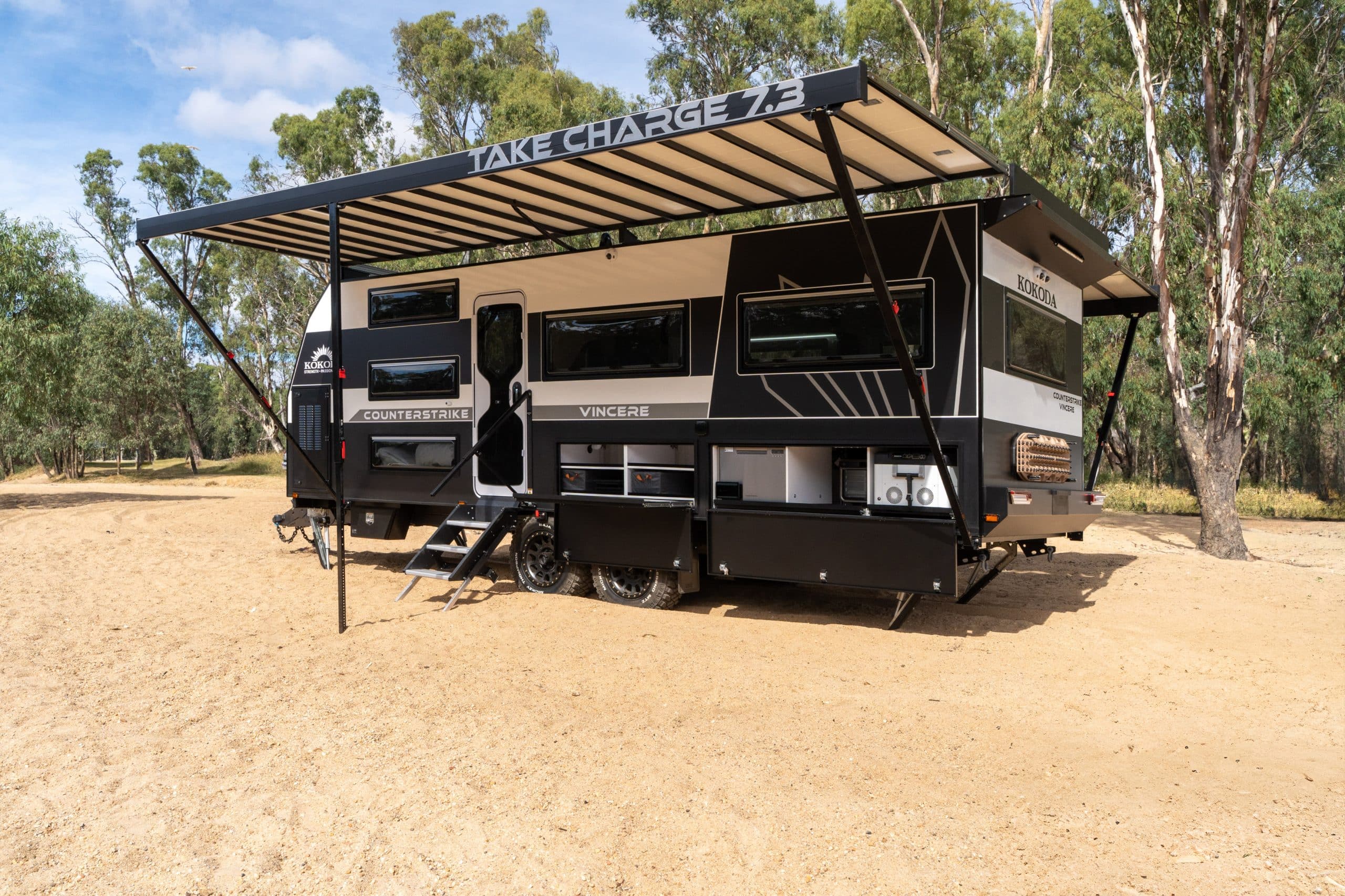
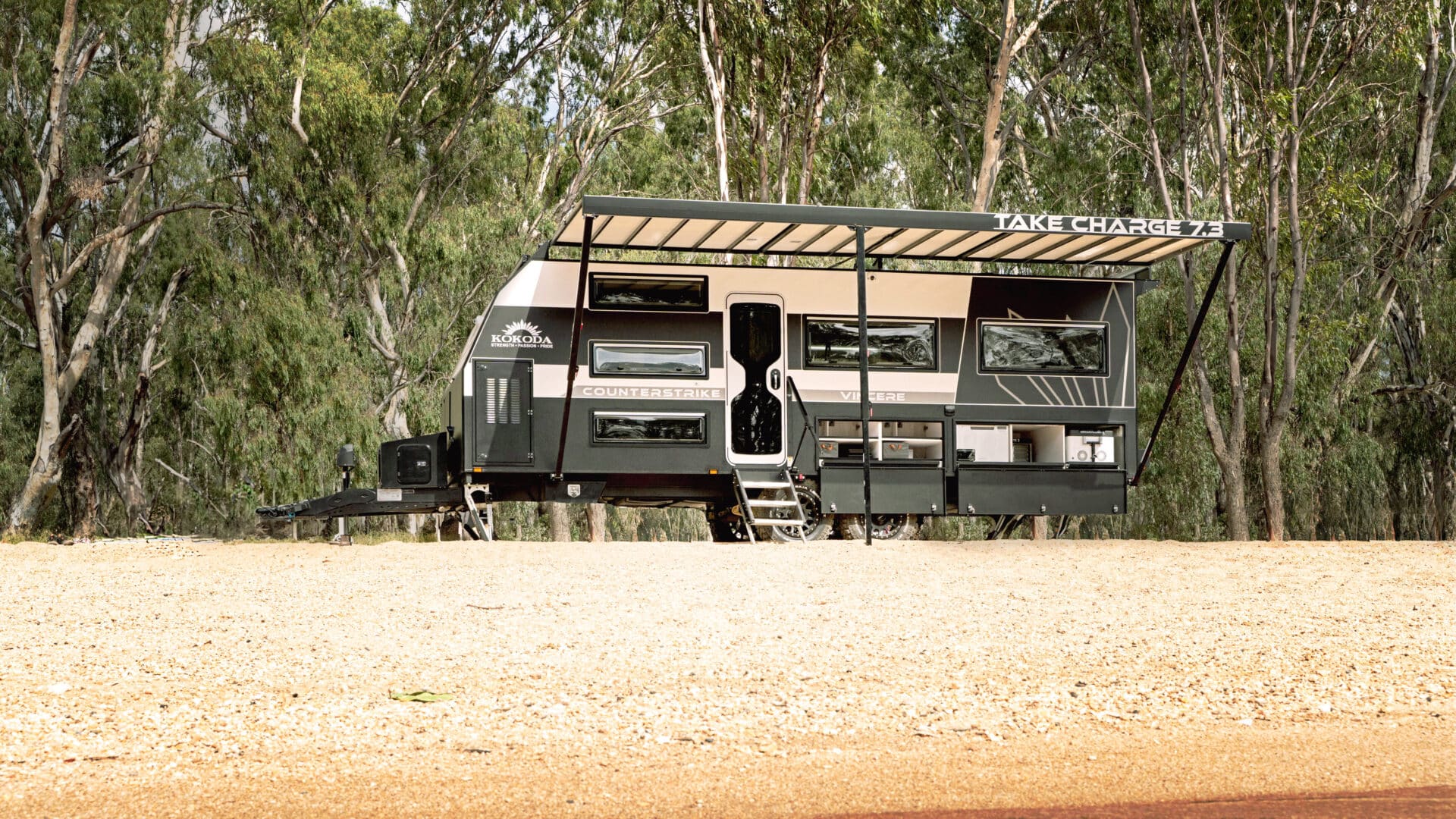
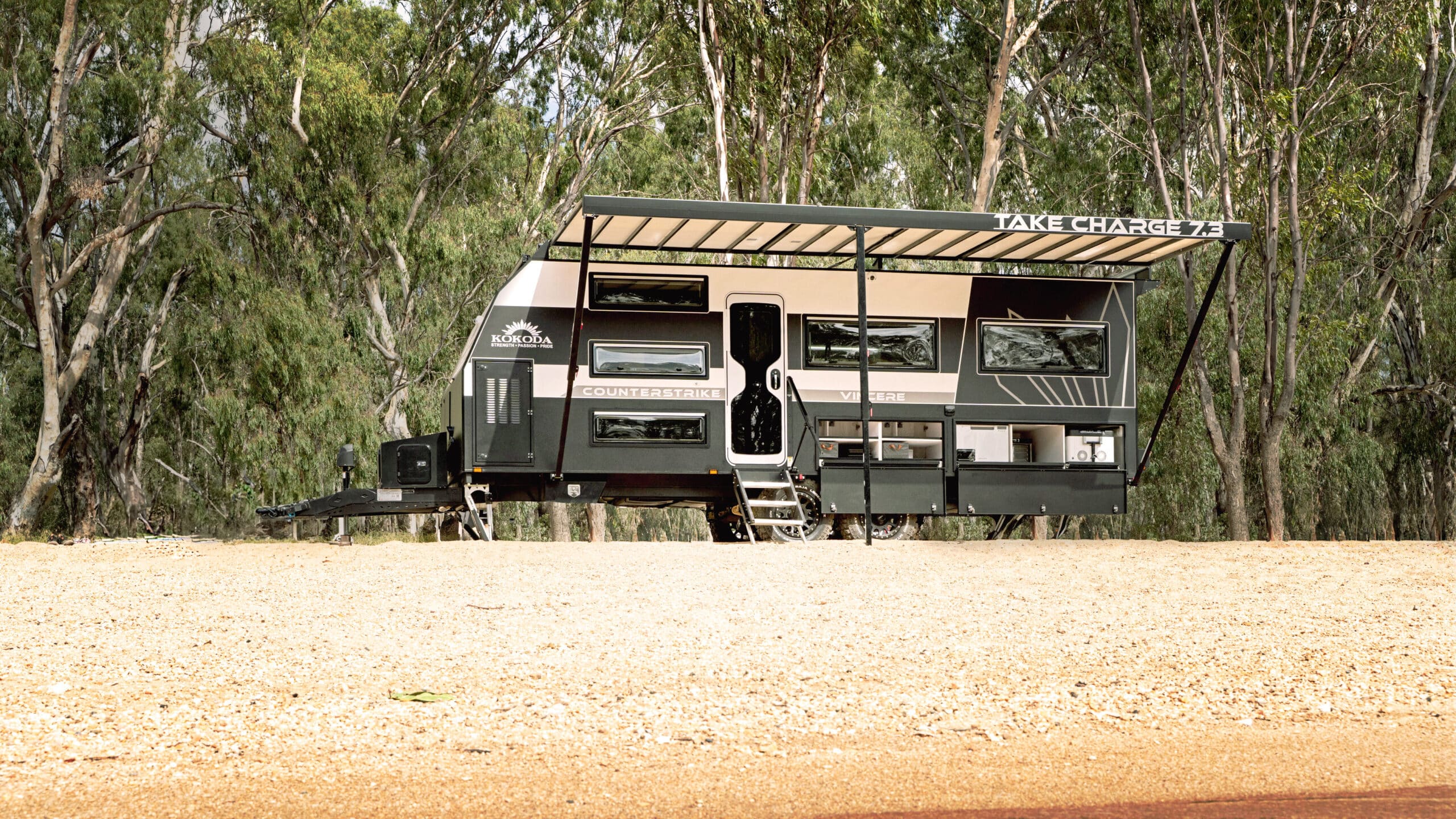
The Kokoda Counterstrike Vincere is described as the most advanced off-road caravan ever built. The Melbourne-made, limited-edition family van comes priced just under $400,000 and is loaded with features including an atmospheric water generator, an electric incinerator toilet, 7.3kW of solar, and a 10kW inverter with up to 18kW boost capability.
The atmospheric water generator continuously replenishes a 150L onboard fresh water tank by drawing humidity directly from the air, while a reverse osmosis system recycles grey water into clean water. Combined, the two systems effectively eliminate the need to find a tap. The incinerator toilet, installed at around $15,000, reduces waste to a small amount of ash every few weeks. No dump points required.
Inside, it’s five-star from floor to ceiling: king-size reclining massage bed, surround-sound cinema projector, Corian stone benchtops, external slide-out kitchen with dishwasher and air fryer, and SoundShield acoustic interior panels.
Only five units were ever planned for production. At the time of publication, it had essentially sold out.
For a full breakdown of what the Vincere delivers in the real world, read our hands-on review: Kokoda Counterstrike Vincere Review: Luxury Off-Grid Independence
The Technology Driving It All
The shift to 48V electrical architecture is the engineering change enabling everything else at this tier. Higher voltage means the same power moves through smaller cables with less heat and less waste, making 20kWh battery banks and 8,000W inverters genuinely practical. The result is a van that can run ducted air conditioning all day, operate a washing machine, keep a 240L fridge cold, and still have battery reserves overnight.
If you’re assessing your own power needs before upgrading, our guide on whether 1kWh is enough for caravan touring puts the numbers in perspective and explains why the top-tier builds have gone 20x past that benchmark.
Composite construction completes the picture. Foam-core panels bonded into a frameless shell deliver superior insulation, eliminate rot and rust, and handle the kind of corrugation and rock impacts that destroy conventional builds. Critically, the weight savings are what allow engineers to add enormous battery systems without blowing out the ATM.
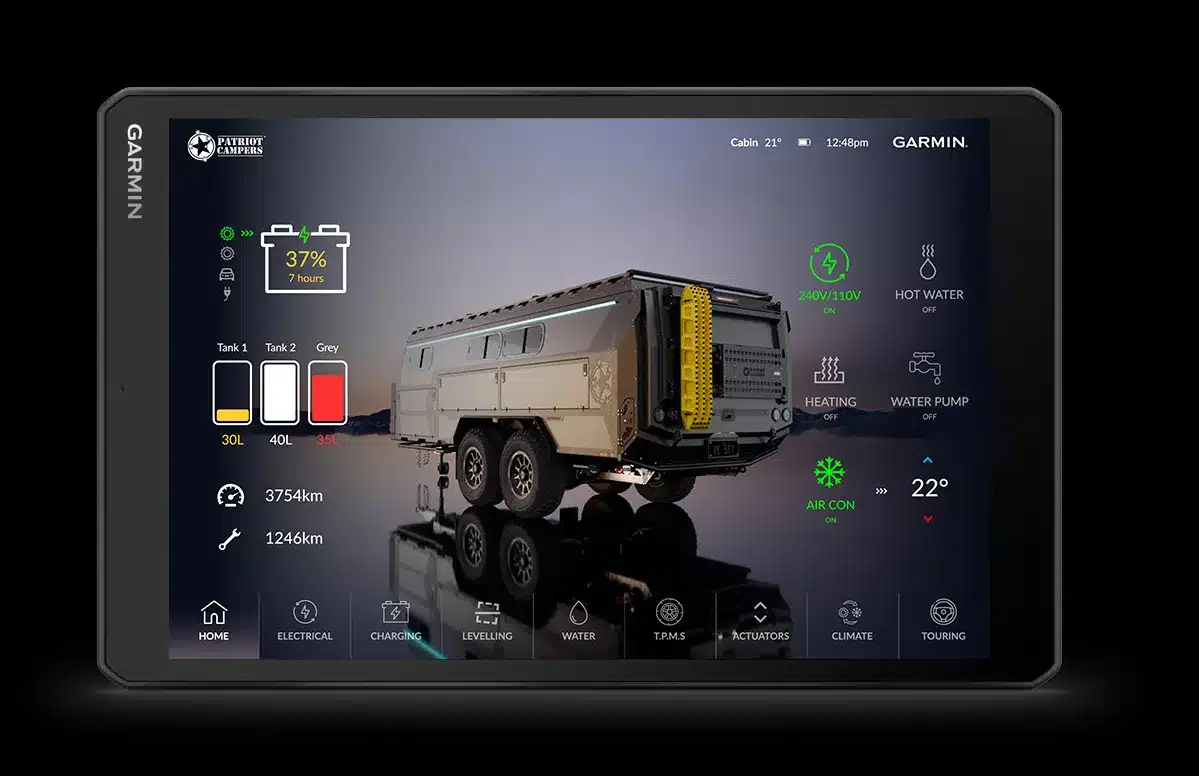
Smart automation rounds it out. Garmin-integrated systems manage tyre pressures, airbag suspension, and self-levelling at camp. Five Wi-Fi cameras give 360-degree views around the van. Setup that would have taken two people 20 minutes now takes one person about two minutes, with a few taps on a screen.
Who’s Actually Buying Them?
The profile is more specific than most people expect: late 50s to mid-60s, professional background, entering retirement with serious super assets, and planning extended long-term travel. Often they’ve done one or two laps in a more conventional van, identified the limitations, and decided to solve them all at once.
The maths, while confronting at first glance, is not entirely irrational. A $380,000 caravan sounds extreme until you consider that the same buyer might otherwise purchase a holiday property, fund multiple international trips, or sink money into a boat. For someone planning 18 months of continuous remote touring, a self-sufficient rig that eliminates site fees, generator costs, and constant power and water budgeting has genuine economic logic.
There’s also the factor of what it enables. Serious remote Australia becomes genuinely accessible when you’re not constrained by infrastructure. Trevor Price, owner and designer of the Vincere, tested his own build on a 12-day shakedown in remote South Australia before releasing it to market. The philosophy is about removing limitations, not displaying status.
What Flows Downhill
Perhaps the most interesting aspect of these flagships isn’t the vans themselves. It’s what they signal about where the broader market is heading.
Kokoda’s General Manager of Operations Michael Richards noted there are around 30 innovations within the Vincere that will find a home across the broader Kokoda range in coming years, just as XCore panel construction and the walk-in robe from earlier Counterstrike models already have.
Technologies that debut at $400,000 tend to reach $150,000 builds within three to five years. The atmospheric water generator, the incinerator toilet, the Garmin smart systems: buyers of mainstream premium vans in 2029 will likely be choosing these as standard options. Someone paid a lot to be first. Everyone else benefits eventually.
The One Problem Still to Solve
These vans have solved almost every infrastructure dependency that limits remote travel. Power, water, waste: covered. What they haven’t solved is the fuel required to tow 4,000kg across the country.
In a 2026 environment where diesel is topping $3.46 a litre in parts of NSW and some outback towns have seen sustained shortages for the first time in decades, the economics of towing a near-four-tonne van look very different to when these builds were conceived.
The manufacturers building gasless, self-sufficient caravans have answered almost every question. Except the one at the front of the tow hitch.
That’s the next frontier. And given the pace of innovation in this space, it probably won’t stay unanswered for long.
Want to go deeper on the Vincere’s technology? Read our full review: Kokoda Counterstrike Vincere Review: Luxury Off-Grid Independence
Wondering what vehicles can actually tow these vans? Start here: Ford Ranger Super Duty 2026