

Buying a caravan is one of the biggest purchases most Australians make outside a house or a car. Most buyers spend weeks comparing floor plans, layouts and finishes. Far fewer spend the same energy checking whether their tow vehicle can legally carry what they are about to buy.
That gap is what we call the weight trap. It is not about overloading your van on a trip. It is about buying a van and a tow vehicle combination that was never going to be legal together in the first place.
Why This Matters More Than Ever
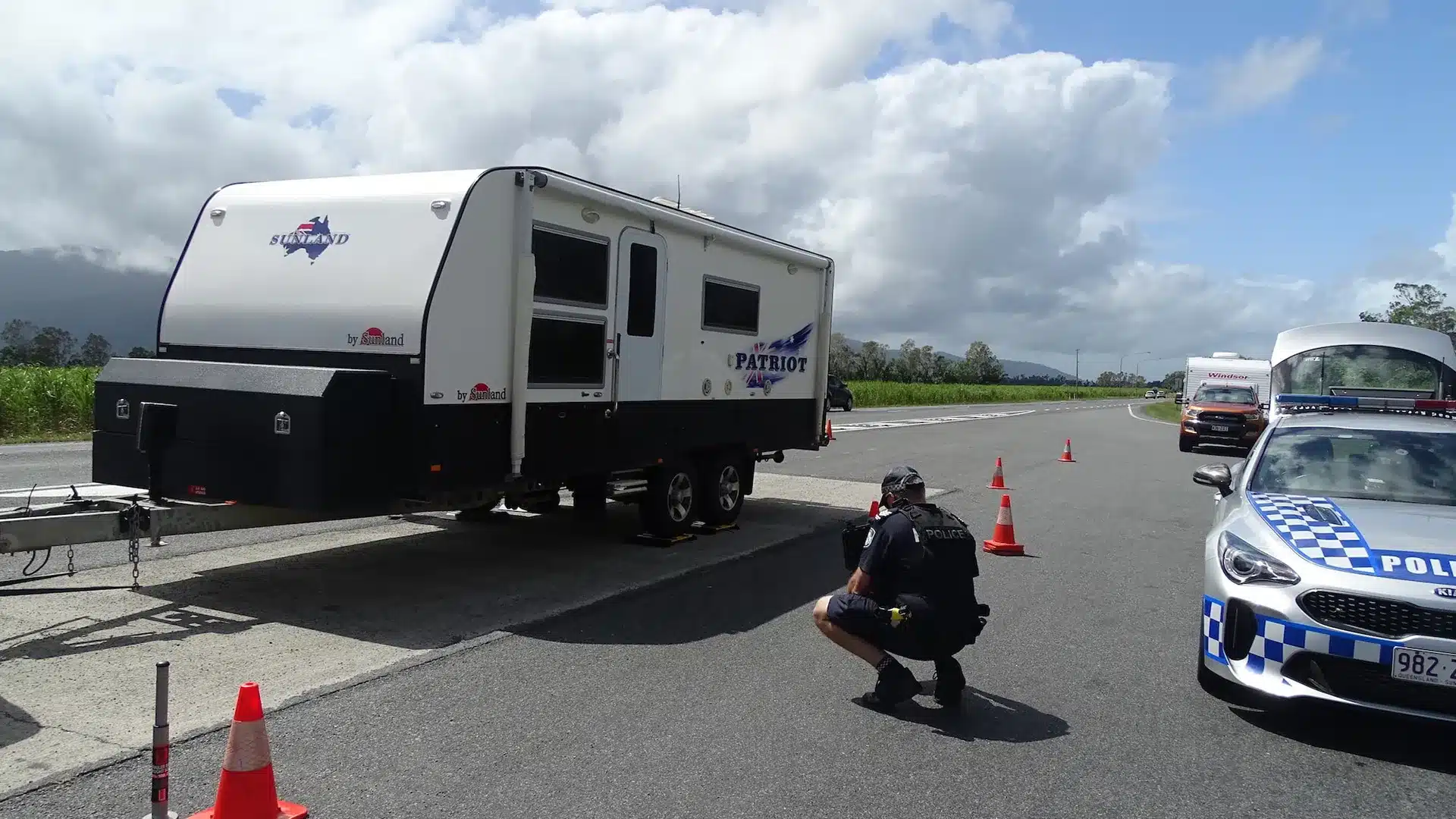
Roadside enforcement has stepped up right across the country in 2026. Police in several states now carry portable scales to weigh-check caravan combinations on the spot, not just hand out warnings.
The numbers behind that trend are stark. A Macarthur Highway Patrol education event weighed 44 caravan and tow vehicle combinations near Appin, NSW, and found 17 caravans over their ATM (Aggregate Trailer Mass, the maximum legal weight of a loaded caravan) and 16 tow vehicles over GVM (Gross Vehicle Mass, the maximum legal weight of the loaded vehicle). Eight combinations, close to one in five, were over GCM (Gross Combination Mass, the maximum legal weight of vehicle and van combined), with one rig almost 700kg over the limit.
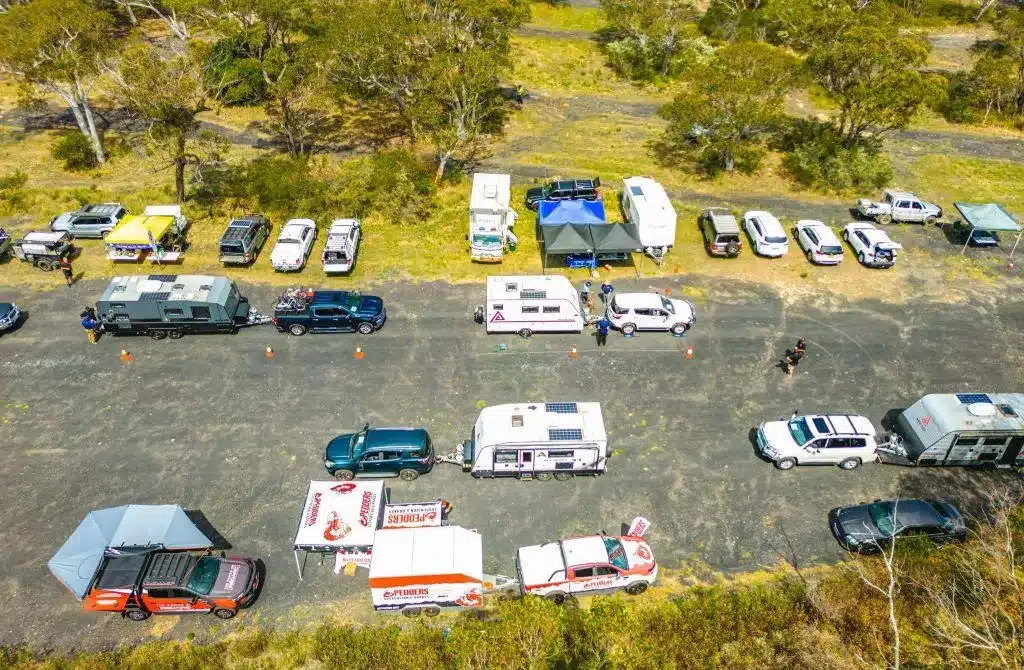
If close to half the vans at a single check can come back overweight, the problem usually starts at the dealership, not the campsite. These are not obscure numbers reserved for full-timers with heavy setups. They reflect ordinary buyers who picked a van based on layout and price, then discovered too late that their vehicle, or their van, could never carry it legally.
The Four Numbers You Need Before You Even Look at Layouts
Every caravan and tow vehicle has a set of weight ratings stamped on a compliance plate. Understanding four terms will save you from the most common and most expensive buying mistake in the industry.
Tare weight is the weight of the van as it left the factory, empty, with no gas, water or personal gear. It is not what the van weighs when you tow it.
ATM (Aggregate Trailer Mass) is the maximum legal weight of the van fully loaded, including water, gas, batteries and everything you pack. This is the number that matters on the road, not the tare weight in the brochure.
GVM (Gross Vehicle Mass) is the maximum legal loaded weight of your tow vehicle, including passengers, fuel, accessories and the tow-ball download from the van.
GCM (Gross Combination Mass) is the maximum legal combined weight of your tow vehicle and van together, fully loaded. This is often the number buyers forget entirely, and it can be lower than simply adding GVM and ATM together.
If you want the official version, Transport for NSW publishes a plain-English breakdown of all four ratings.
Where the Trap Actually Gets Set
Dealership tare weights are usually accurate at the point the compliance plate is stamped. The trap is what happens after that.
Dealer-fitted extras, upgraded suspension, second batteries, awnings and larger water tanks are commonly added after the van is built. Every kilogram of those additions eats directly into your payload, the gap between tare and ATM that you actually get to use for your own gear.
Tow-ball download is the other silent budget killer. A loaded caravan typically puts 8 to 12 percent of its total weight onto the tow-ball, and that download counts against your tow vehicle’s GVM, not the van’s ATM.
Ask for the actual tare weight with every option fitted, in writing, then subtract that figure and your tow-ball download from your vehicle’s GVM to see the payload you genuinely have left. Transport WA’s official towing guide walks through this exact calculation if you want a second reference point.
The Weight-Matching Checklist Before You Sign
Work through this before you commit to a deposit, not after delivery.
- Confirm the van’s actual tare weight with every factory and dealer-fitted option installed, in writing
- Calculate realistic ATM usage: water, gas, batteries, clothes, food, tools and outdoor gear all add up faster than expected
- Check your tow vehicle’s GVM and subtract likely tow-ball download, passengers and fuel
- Confirm GCM for the specific vehicle and van combination, not just each rating separately
- Ask whether a GVM upgrade is available and legal for your vehicle if the margin is tight
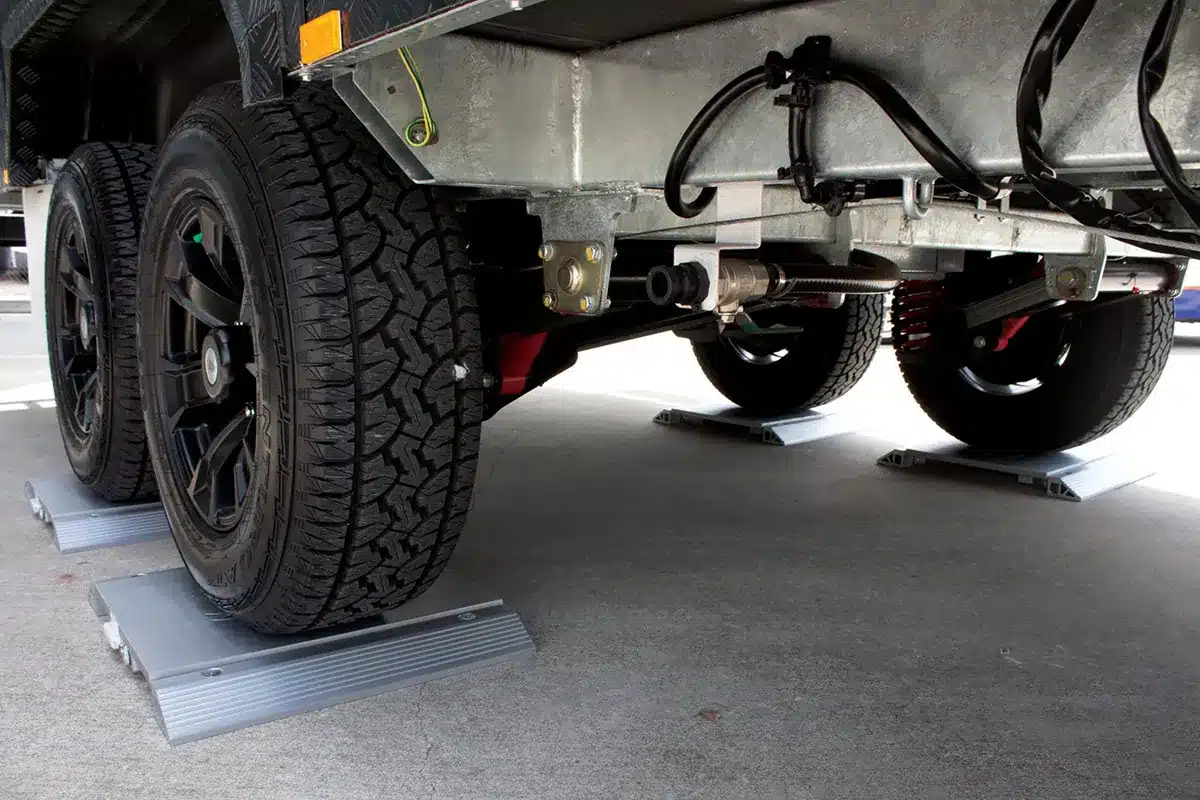
- Get the whole rig weighed on a public weighbridge once loaded for a real trip, before your first long tour
Know Your Numbers Before You Sign
The four weight ratings that decide if your rig is even legal
Weigh loaded, not empty. A public weighbridge visit before your first big trip is the cheapest insurance you will ever buy.
The Insurance Sting Nobody Mentions at the Dealership
An overweight combination is not just a fine risk. It can void your cover entirely.
Most caravan insurance policies exclude damage or liability while the van is over its ATM, or while it is towed by a vehicle over its GVM or GCM. If you are involved in an accident overweight, insurers can and do decline the claim as a breach of policy conditions.
“Roadworthy at all times” in your policy usually means legally weighted at all times, not just serviced and registered. Moneysmart’s plain-English explainer on reading a PDS is a useful five-minute check before you sign for anything.
Fines Vary, But the Direction Is the Same
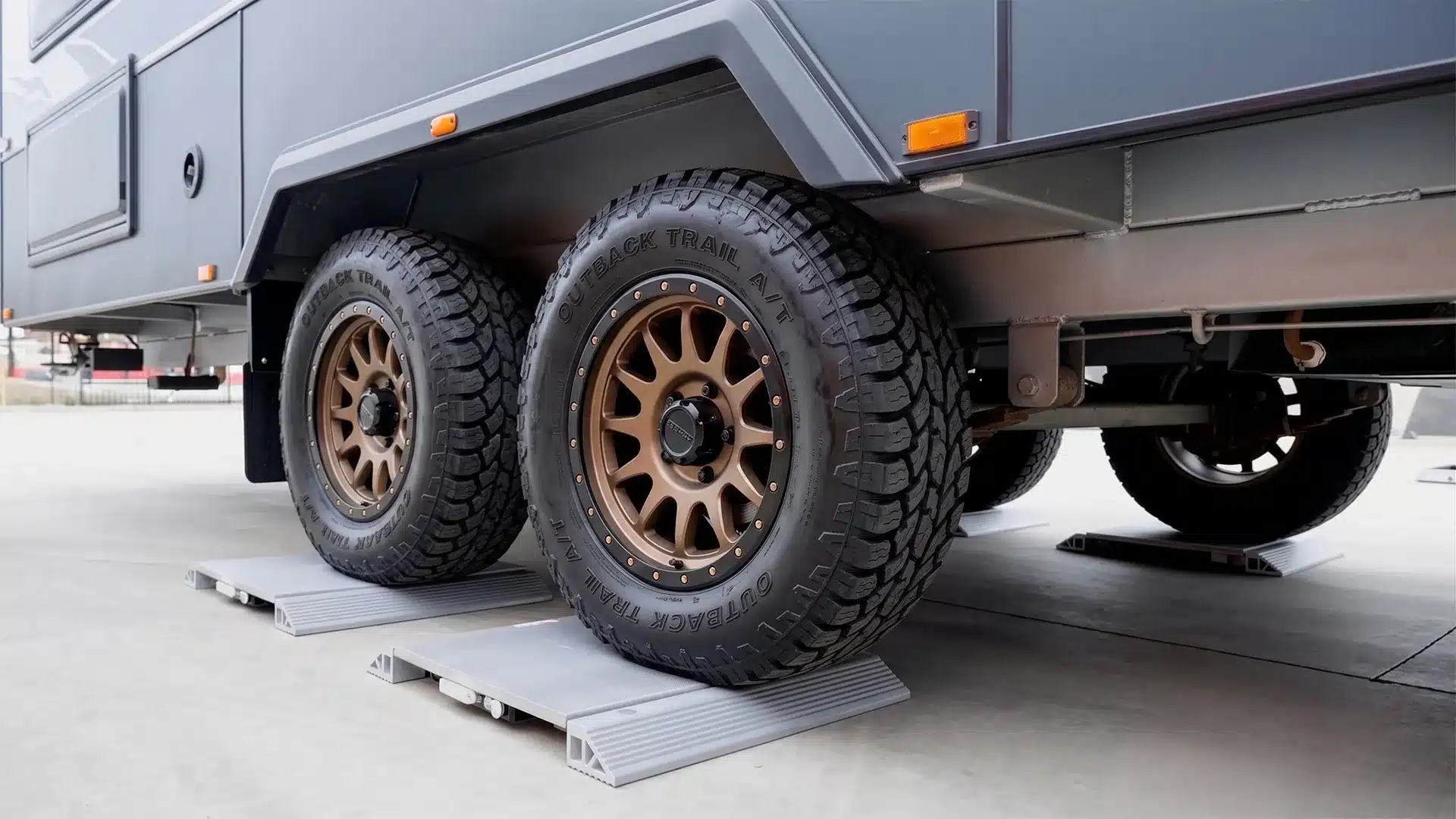
Overweight fines differ by state, but every jurisdiction has been tightening enforcement through 2026. Penalties generally range from around $130 in Tasmania to more than $1,500 in Victoria for the most serious breaches, alongside demerit points in most states.
The fine is rarely the real cost. A voided insurance claim after an accident, or a caravan that can never be safely upgraded to fit your family’s gear, is the expense that actually hurts.
Buying Weight-Safe: The Practical Approach
Choose your tow vehicle’s realistic GVM and GCM limits first, then shop for vans that comfortably fit inside them with payload to spare. This is the opposite of how most buyers approach the process, but it is the order that actually works.
Build in a genuine safety margin, not just a technical pass. A van that scrapes in at 98 percent of ATM when empty leaves almost nothing for real-world packing.
If your dream layout does not fit your current vehicle’s numbers, a GVM upgrade or a different tow vehicle is a cheaper fix than discovering the mismatch on a weighbridge with a fine in hand and a voided policy behind it.
The weight trap catches good, careful buyers every year, not just corner-cutters. Knowing these four numbers before you fall in love with a layout is the difference between a van that fits your life and one that fits a fine.