
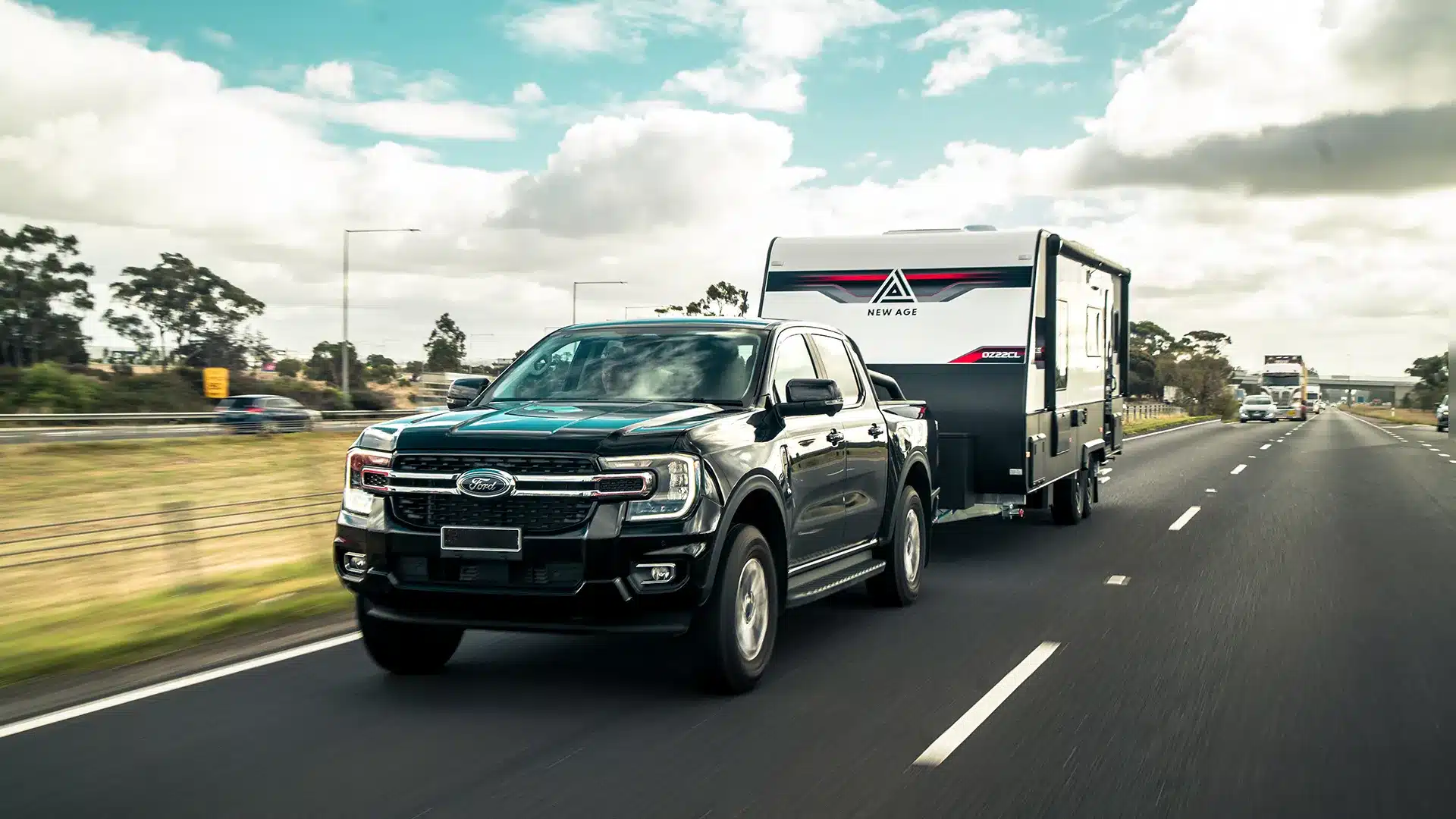
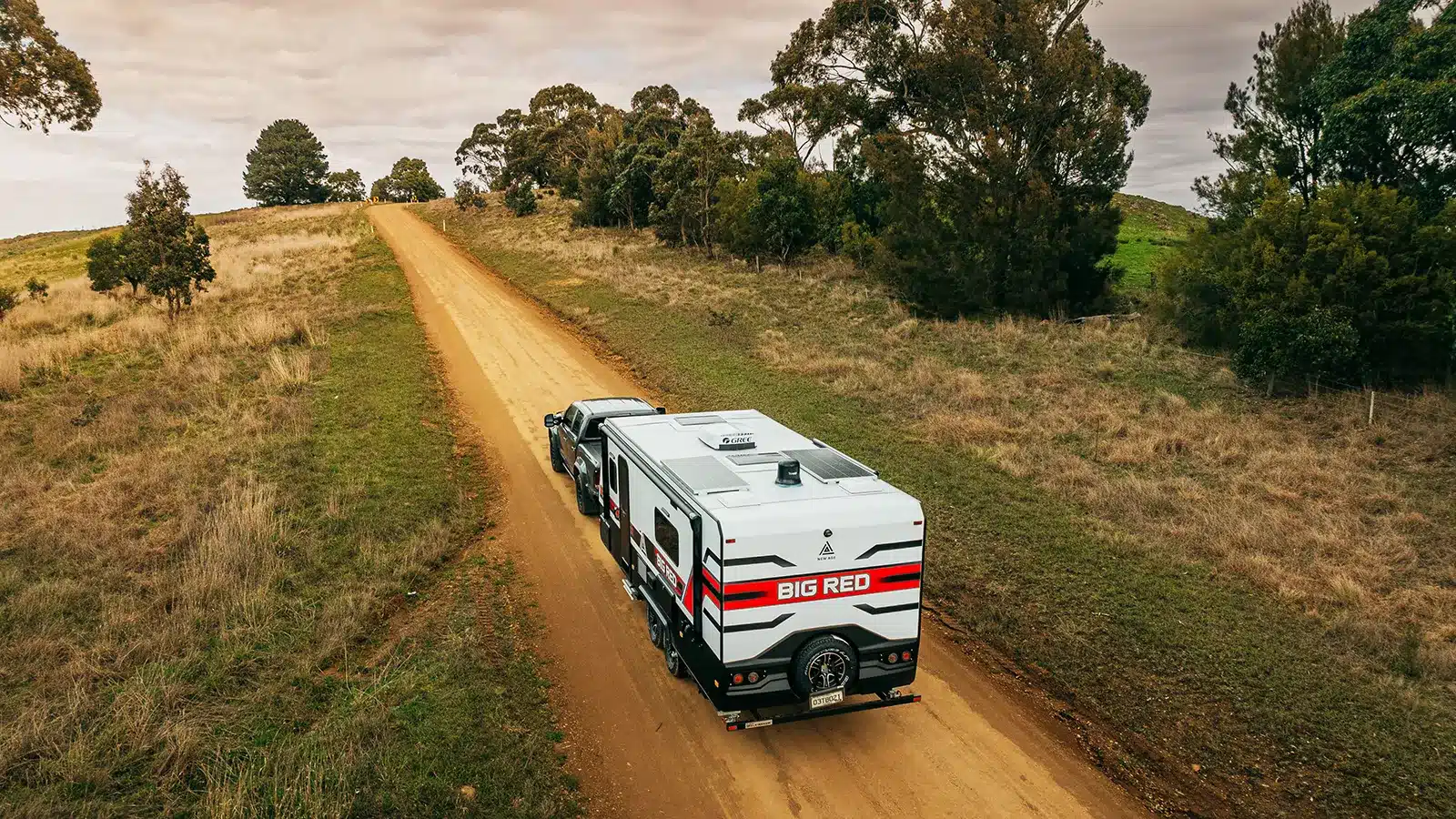

What comes first – the van or the vehicle?
Do you buy a van to suit the vehicle you already own?
Or do you choose the caravan you really want, then upgrade the vehicle to suit it?
The honest answer is this:
Start with the caravan lifestyle you actually want, then check whether your current vehicle can safely and legally tow it.
That does not mean you should rush out and buy the biggest van on the lot. It means you need to work backwards from how you want to travel, then make the van and vehicle match on paper before money changes hands.
Because the worst order is this:
– Buy the van you love.
– Assume your vehicle will handle it.
– Load the family, fridge, tools, water, bikes and gear.
– Then discover you are overweight, underpowered or uncomfortable on the road.
That is where caravan buying gets expensive.
The simple answer
If your current vehicle is reliable, suitable for towing and already paid for, it makes sense to look at caravans that genuinely suit it.
But if your dream trip involves long-term touring, off-grid camping, rougher roads, a full ensuite, bigger tanks, lithium power, more storage and room to move, then the van you want may quickly outgrow the vehicle you have.
In that case, you are not really shopping for a caravan. You are shopping for a complete touring setup.
That setup includes: The caravan, the tow vehicle, payload, tow ball weight, GVM, GCM, fuel range, suspension, storage, comfort, safety margins.
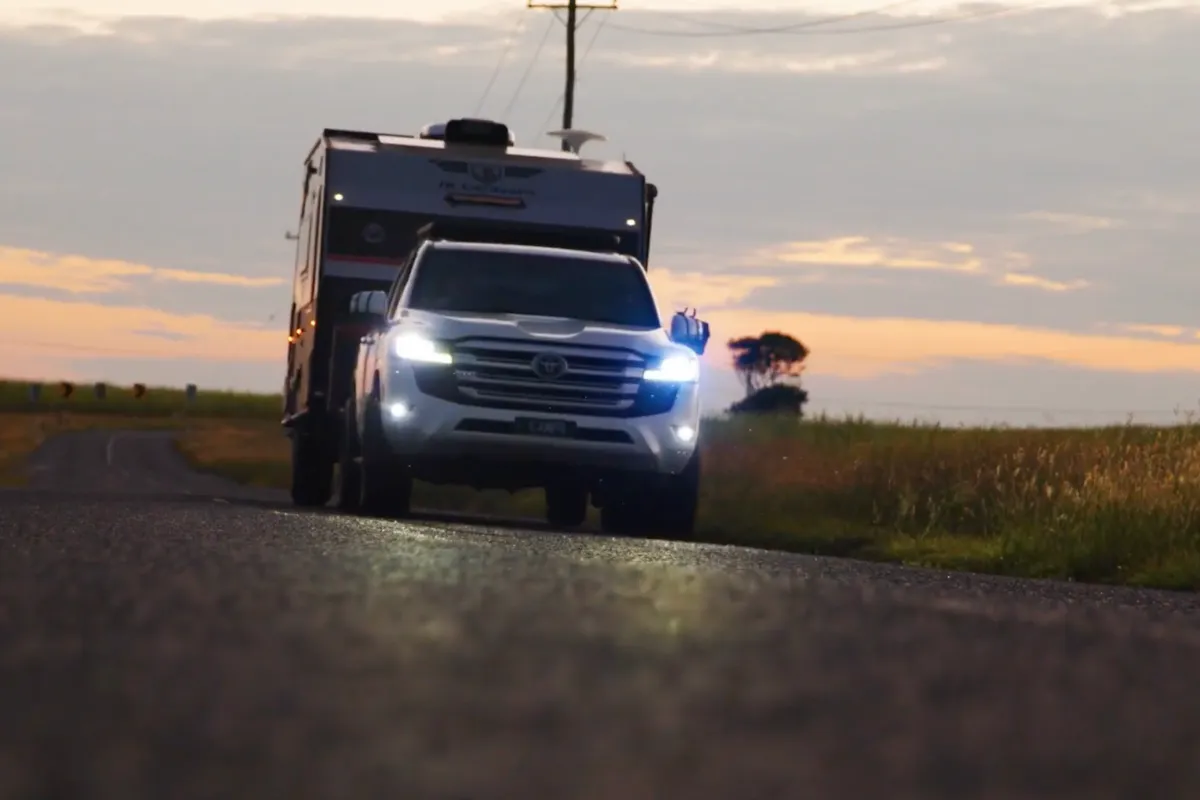
Why “my car can tow 3.5 tonne” is not the full story
This is where many buyers get caught.
A vehicle may be advertised with a 3,500kg braked towing capacity, but that does not automatically mean it can tow a 3.5-tonne caravan once the vehicle is loaded for a real trip.
You still need to account for passengers, fuel, tools, canopy, bull bar, fridge, drawers, recovery gear, luggage and the caravan’s tow ball weight.
Tow ball mass is part of the load carried by the vehicle, which means it eats into the vehicle’s available payload.
So the better question is not:
“Can my car tow it?”
It is:
“Can my car tow it, loaded, with my family, gear, accessories and a safety margin?”
That is a very different answer.
Step 1: decide how you really travel
Before looking at numbers, be honest about the trip you are building for.
Are you doing:
Weekend caravan park trips?
You may not need a huge off-grid van or heavy-duty tow vehicle. A smaller caravan, hybrid or lightweight touring van may suit your current vehicle well.
School holiday touring?
You will need more payload. Kids, food, bikes, bedding, chairs, tools and extra water add up quickly.
Long-term lap of Australia?
This is where the vehicle-first approach often falls apart. Long-term travellers usually want more water, more solar, more battery capacity, better suspension, more storage and more comfort. All of that adds weight.
Off-grid and dirt-road travel?
The van may need stronger construction, larger tanks, bigger tyres, independent suspension, lithium, solar and more clearance. Again, that often means more weight.
Downsizing from towing a big van?
For older travellers, the decision may go the other way. A smaller van or motorhome may be the smarter move if comfort, ease of driving and less stress are the priority.
The right answer depends on the travel style first. The numbers come next.
Step 2: choose the type of van that suits that travel
Once you know how you want to travel, shortlist the type of caravan that fits.
For example:
- Lightweight pop-top
- Compact touring caravan
- Family bunk van
- Semi off-road caravan
- Full off-road caravan
- Hybrid caravan
- Large luxury touring van
- Motorhome or campervan alternative
At this stage, do not just look at layout and finishes. Look at weight.
You need to know:
- Tare weight – the van’s empty weight, usually before personal gear and sometimes before dealer-fitted extras
- ATM – Aggregate Trailer Mass, the maximum loaded weight of the caravan
- GTM – Gross Trailer Mass, the weight carried by the van’s wheels when hitched
- Tow ball mass – the downward weight placed on the tow ball
- Payload – how much you can legally add to the van
A good-looking layout means very little if the van does not have enough payload for the way you actually travel.
Step 3: check your current vehicle properly
Now look at your vehicle.
You need:
- Braked towing capacity
- Maximum tow ball download
- GVM
- GCM
- Kerb weight
- Payload
- Rear axle limit
- Towbar rating
- Tyre and suspension suitability
This is where a proper towing calculator or weighbridge check can be valuable.
Do not rely only on the brochure towing number.
The golden rule: match the van to the real loaded vehicle, not the showroom number
A caravan is rarely towed empty. A vehicle is rarely driven empty. So the only numbers that matter are the real-world loaded numbers.
That means allowing for:
- People in the car
- Fuel
- Water
- Food
- Clothes
- Tools
- Spare parts
- Generator, if carried
- Bikes, kayaks or boards
- Bull bar
- Tow bar
- Canopy
- Roof rack
- Drawers
- Fridge
- Recovery gear
- Caravan accessories added after manufacture
A van that looks fine on paper can become a problem once the full travel setup is loaded.
When it makes sense to buy the van to suit your current vehicle
This is usually the smarter option when:
- Your current vehicle is already a capable tow vehicle
- You are not planning to upgrade soon
- You mainly do short trips or caravan park stays
- You want to keep costs under control
- You do not need a large off-grid setup
- You are happy to compromise on size, tanks, storage or luxury
- Your vehicle still has comfortable payload after tow ball weight is included
This approach can save serious money.
Instead of spending on a new vehicle, you can put the budget into a better-quality van, better touring accessories, safety upgrades, insurance, tyres, servicing and travel itself.
It also reduces the risk of overcapitalising.
There is no point buying a huge tow vehicle if the caravan you love is actually light, compact and easy to manage.
When it makes sense to choose the van first and upgrade the vehicle
This makes sense when the caravan is central to your future plans.
For example:
- You are planning a lap of Australia
- You want to free camp regularly
- You need a family bunk van
- You want a full ensuite and internal comfort
- You want large water capacity
- You want lithium, solar and off-grid capability
- You want to travel for months at a time
- You are buying your “next ten years” setup
- Your current vehicle is already close to its limits
In this case, buying a van to suit your current car can be false economy.
You may end up with a caravan that does not suit the way you want to travel. Then, a year later, you upgrade both anyway.
That is the expensive path.
The trap: buying the van you want and hoping the vehicle will cope
This is the one to avoid.
A salesperson may tell you the van is “within 3.5 tonne”. A mate may say your ute will tow it. A Facebook group may say they have “never had an issue”.
But towing safely is not about opinions. It is about numbers.
You need to stay within the ratings for the vehicle, caravan, towbar, axles, tyres and combination. Staying within towing limits is what keeps the setup legal, and explains that GVM upgrades do not usually improve the overall towing situation if GCM or braked towing capacity remain unchanged.
That matters because a GVM upgrade may give the vehicle more carrying capacity, but it does not automatically let you tow a heavier van.
What buyers often forget: payload disappears fast
Payload is one of the most misunderstood parts of caravan buying.
On the vehicle side, payload is eaten up by passengers, accessories, luggage and tow ball mass.
On the caravan side, payload is eaten up by water, gas, food, clothes, bedding, hoses, chairs, tools, annex walls, barbecue gear, batteries and aftermarket accessories.
A van with a beautiful layout but poor payload may be frustrating in real life.
For example, if a caravan has limited payload, you may not be able to travel with full water tanks, extra batteries, a second spare wheel, tools and personal gear without exceeding its ATM.
That is why the right buying order is not simply “vehicle first” or “van first”.
It is:
Lifestyle first.
Weights second.
Van and vehicle together.

A practical buying order for caravan shoppers
1. Decide your travel style
Be honest about whether you are a weekend traveller, school holiday traveller, off-grid traveller or long-term tourer.
2. Shortlist the van category
Look at the size, layout, construction, water capacity, battery setup and storage you actually need.
3. Check the van’s real weights
Do not stop at tare. Look at ATM, GTM, payload and tow ball mass.
4. Check your vehicle’s real limits
Look at towing capacity, payload, GVM, GCM, tow ball limit and axle loads.
5. Add your real gear
Include people, fuel, accessories, water, food and touring gear.
6. Leave a safety margin
Do not aim to run on the limit every day. A setup that is legal by a few kilos on paper may still feel unpleasant to tow.
7. Weigh the setup
Once purchased and loaded, use a weighbridge or mobile weighing service to check the real numbers.
Questions to ask before buying the van
Before signing anything, ask the dealer or manufacturer:
- What is the van’s tare weight as displayed?
- Does the tare include fitted options?
- What is the ATM?
- What is the payload?
- What is the estimated tow ball weight?
- How does tow ball weight change with full water tanks?
- Can the van legally carry full water, gas, food and gear?
- Are batteries, solar, toolboxes or extra spares included in the listed weight?
- Has the van been weighed after options were fitted?
- Can I get the weight figures in writing?
That final point matters.
Get it in writing.
Questions to ask before relying on your current vehicle
Ask yourself:
- What is my vehicle’s braked towing capacity?
- What is the maximum tow ball download?
- What is the GVM?
- What is the GCM?
- What is the payload after accessories?
- How much weight is already added by bull bar, canopy, drawers, fridge, roof rack and tools?
- How many passengers will usually be in the vehicle?
- Will the rear axle be overloaded?
- Will I need suspension work?
- Will I need a weight distribution hitch?
- Will the vehicle feel comfortable towing in hills, wind and heat?
A vehicle that technically tows a van may still be the wrong vehicle if it is working hard all the time.
If you already own a capable tow vehicle and your travel plans are realistic, start there. Choose a van that suits the vehicle and leaves room in the numbers.
But if you are buying a caravan for a bigger future – longer trips, more comfort, more off-grid capability and more time on the road – then choose the type of van that genuinely suits that life, and be prepared to match the vehicle to it.
Do not buy either in isolation.
A caravan and tow vehicle are a pair. Get one wrong and the other becomes a compromise.
The smartest buyers do not ask, “What can my car tow?”
They ask:
“What do I want this setup to do, and what combination will do it safely, legally and comfortably?”
That is the order that makes sense.