

Follow the Murray River from Albury to Goolwa and you cover about 1,100km of road through three states, crossing a river that, by the Murray-Darling Basin Authority‘s figures, runs roughly 2,200km between the same two points. The drive is easy. The camping rules are not, because they change with the bank you park on.
On the Victorian side, Parks Victoria’s riverside camps are free with no booking. On the NSW side, the national park campgrounds charge no camping fee but make you book, for a $6 fee. Cross into South Australia and the national park campgrounds on the river charge by the night. Same water, three rulebooks.
This guide is built around that split. We break the trip into three legs, show where the free and paid camping sits on each, and cover the two things that catch caravanners out at the South Australian border: fruit and ferries.
Three states, three camping rulebooks
The Murray forms most of the border between NSW and Victoria, so for the first two legs you can choose your state by choosing your bank. That choice matters more for your budget than almost anything else on this trip.
| State | Official river camping | What you pay |
|---|---|---|
| VIC | Hundreds of bush sites along the River Murray Reserve, plus Barmah, Gunbower, Hattah-Kulkyne and Murray-Sunset | Free, no booking |
| NSW | More than 100 named NPWS campgrounds, mostly in Murray Valley National Park and Regional Park | No camping fee, booking required, $6 booking fee |
| SA | NPWS campgrounds on or beside the river, including Katarapko and Lyrup Flats | From $15.40 a night per site, paid before entry |
The sources are the land managers themselves. Parks Victoria says of its Murray frontage that all riverside campsites are free and need no booking. The NSW National Parks campground pages for the Murray Valley parks list no camping fee and a $6 booking fee, with bookings required. National Parks South Australia lists its Murray River campgrounds from $15.40 a night, and says fees must be paid before you enter the park.
Our counts are of official camping areas only. Council reserves, state forests, private river properties and caravan parks sit on top of these numbers, and many of them are excellent. For a wider look at what camping costs in parks around the country, see what one night in a national park costs, state by state.
One river, three camping bills
Camping on the national park and reserve land beside the Murray costs a different amount depending on which bank you are on. Here is a week on the river in each state.
Seven riverside nights in official camping areas
$0
Parks Victoria river camps: no fee, no booking.
Free$6
NPWS Murray campgrounds: no camping fee, but a booking is required.
Booking fee$107.80
NPWS riverfront campgrounds: fee per site, per night.
PaidWork out your own trip
$73.60
9 nights in Victorian and SA camps plus 2 NSW bookings. Victoria $0, NSW $12, South Australia $61.60.
Fees checked 20 October 2026 on the Parks Victoria, NSW National Parks and SA National Parks websites. Victoria: Parks Victoria states its Murray riverside campsites are free with no bookings. NSW: NPWS Murray Valley campgrounds list no camping fee and a $6 booking fee, with bookings required; we assume one booking covers one stay. SA: NPWS lists its riverfront campgrounds in Murray River National Park and Chowilla Game Reserve from $15.40 per night per site, the lowest listed price. Seven nights in SA is 7 x $15.40. Council camping areas, state forests and caravan parks are not included.
The route in three legs
We measured the road distance through the main river towns with OpenStreetMap routing. Your number will move with every detour to a camp, a winery or a lock, so treat these as the spine of the trip, not the total on your odometer.
| Leg | Road distance | Character |
|---|---|---|
| Albury to Echuca | About 270km | Forest bends, river beaches, NSW and VIC camps facing each other |
| Echuca to Mildura | About 380km | Paddle steamers, red gum islands, the river widening into mallee country |
| Mildura to Goolwa | About 450km | Riverland cliffs, paid SA park camps, free cable ferries, the sea |
Strung end to end, that is about 1,100km, or two long days of towing. Nobody does it that way. Two weeks is a comfortable minimum if you want to camp on the water rather than just look at it, and three or four weeks lets the river set the pace.
Leg one: Albury to Echuca, the forest reach
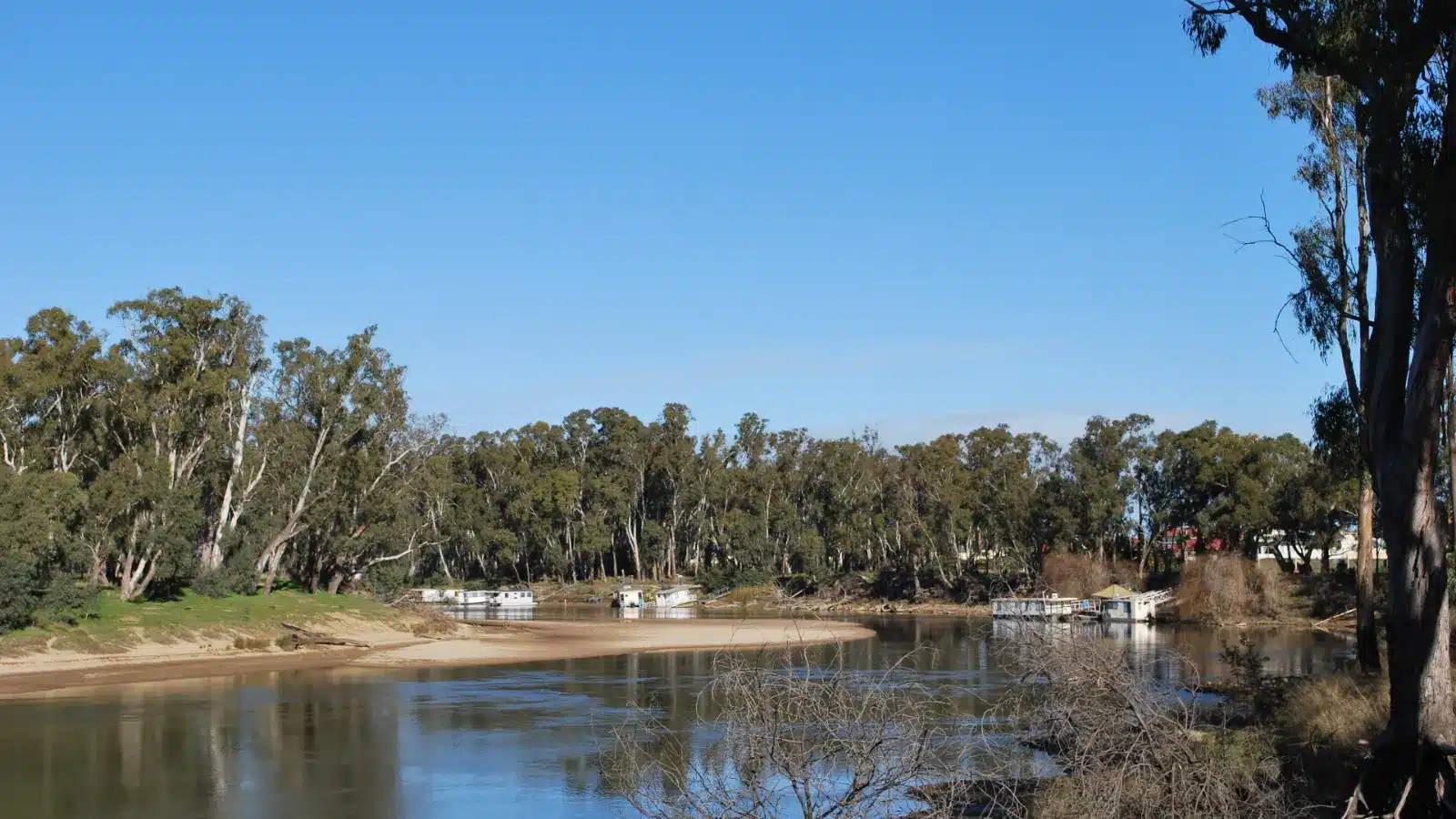
Below the Hume Weir the Murray is still relatively narrow, winding through stands of river red gum with sandy beaches on the inside of the bends. Corowa, Yarrawonga-Mulwala, Tocumwal and Cobram are all small enough to drive through in minutes and big enough to restock.
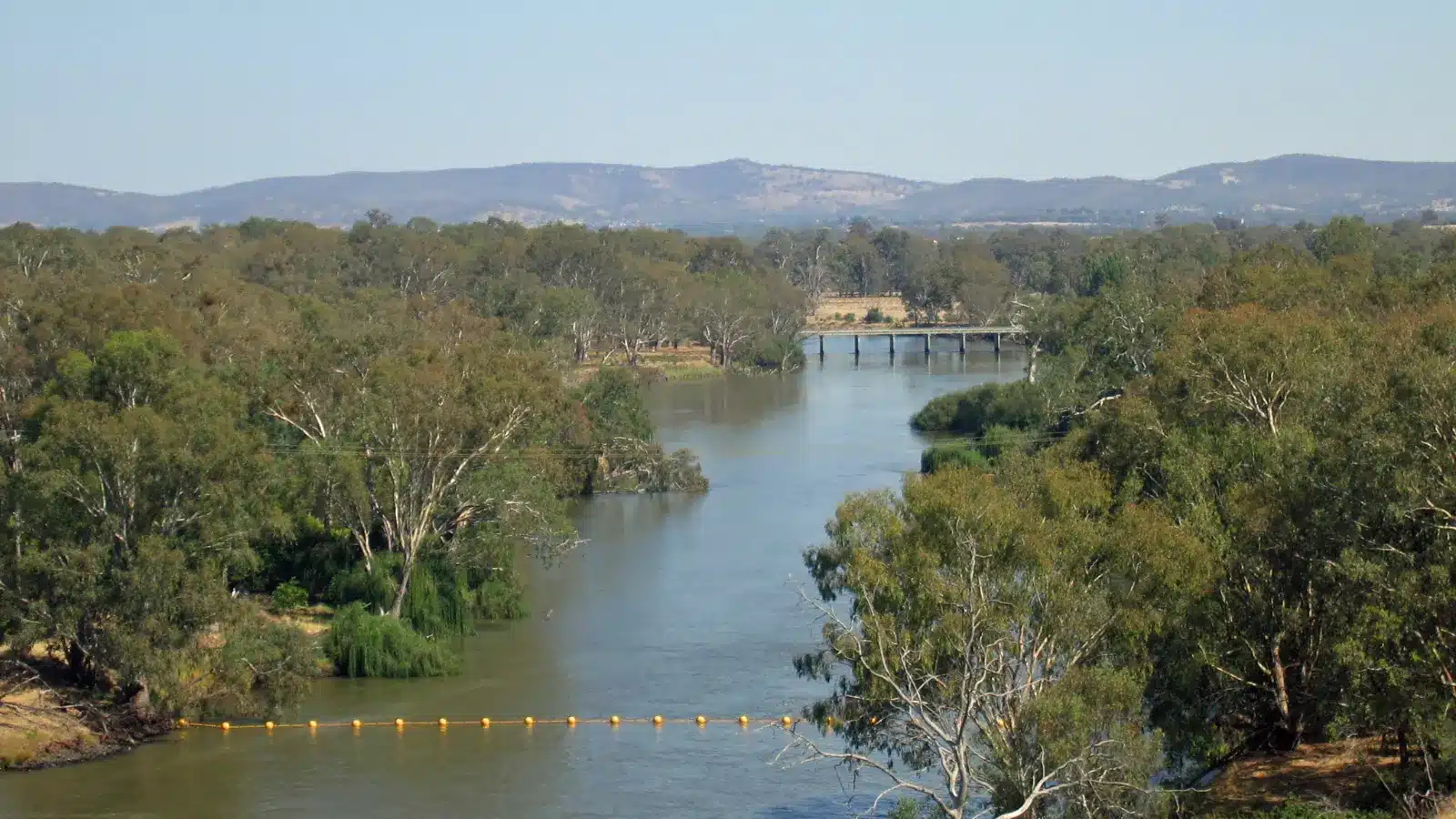
This is the stretch where the two banks offer the clearest choice. On the NSW side, Murray Valley National Park and Regional Park hold most of the more than 100 named NPWS campgrounds we counted, grouped into precincts such as Mulwala, Barooga, Moira and Millewa. Read the access notes before you commit a big van. Several precincts are marked RVs or motorhomes not recommended, and many roads are unsealed, with 4WD recommended when wet. At Kerrs Beach, NPWS says the campground is better suited to caravans smaller than 19 feet, about 5.8 metres.
On the Victorian side, the River Murray Reserve runs bush camp after bush camp along the bends, free and unbooked. Further downstream, Barmah National Park has more than 90 named camping areas, also with no fees or bookings. The trade-off is facilities. Most Victorian river camps have few or none, and Parks Victoria recommends 4WD vehicles with good ground clearance in Barmah. Self-contained vans do best here.
Tip: the NSW booking fee applies to each booking, so if you plan to move every couple of nights, budget $6 per stay rather than per trip. Book the next one before you lose phone signal on the bends.
The leg ends at Echuca-Moama, the twin towns where many Murray trips slow down for a few nights. We have a full guide to Echuca Moama for caravanners if you want to base yourself there.
Leg two: Echuca to Mildura, paddle steamers and mallee
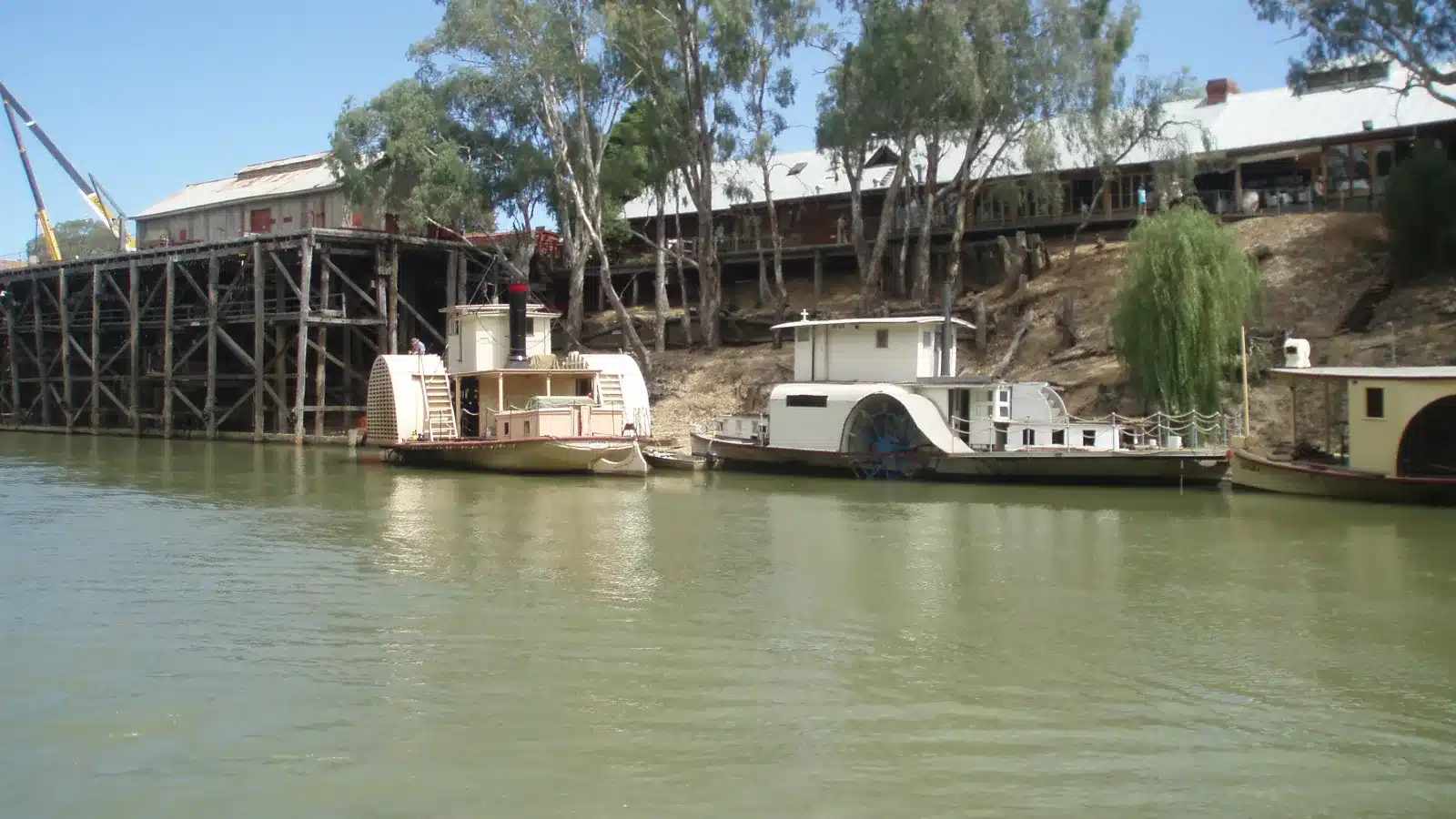
Echuca's riverfront is the reason many people do this trip at all. Visit Echuca Moama bills the town as home to the world's largest operating paddlesteamer fleet, and the Port of Echuca has free entry to the heritage-listed wharf, open 9am to 5pm daily. Book a cruise, then walk the wharf at dusk when the crowds have gone.
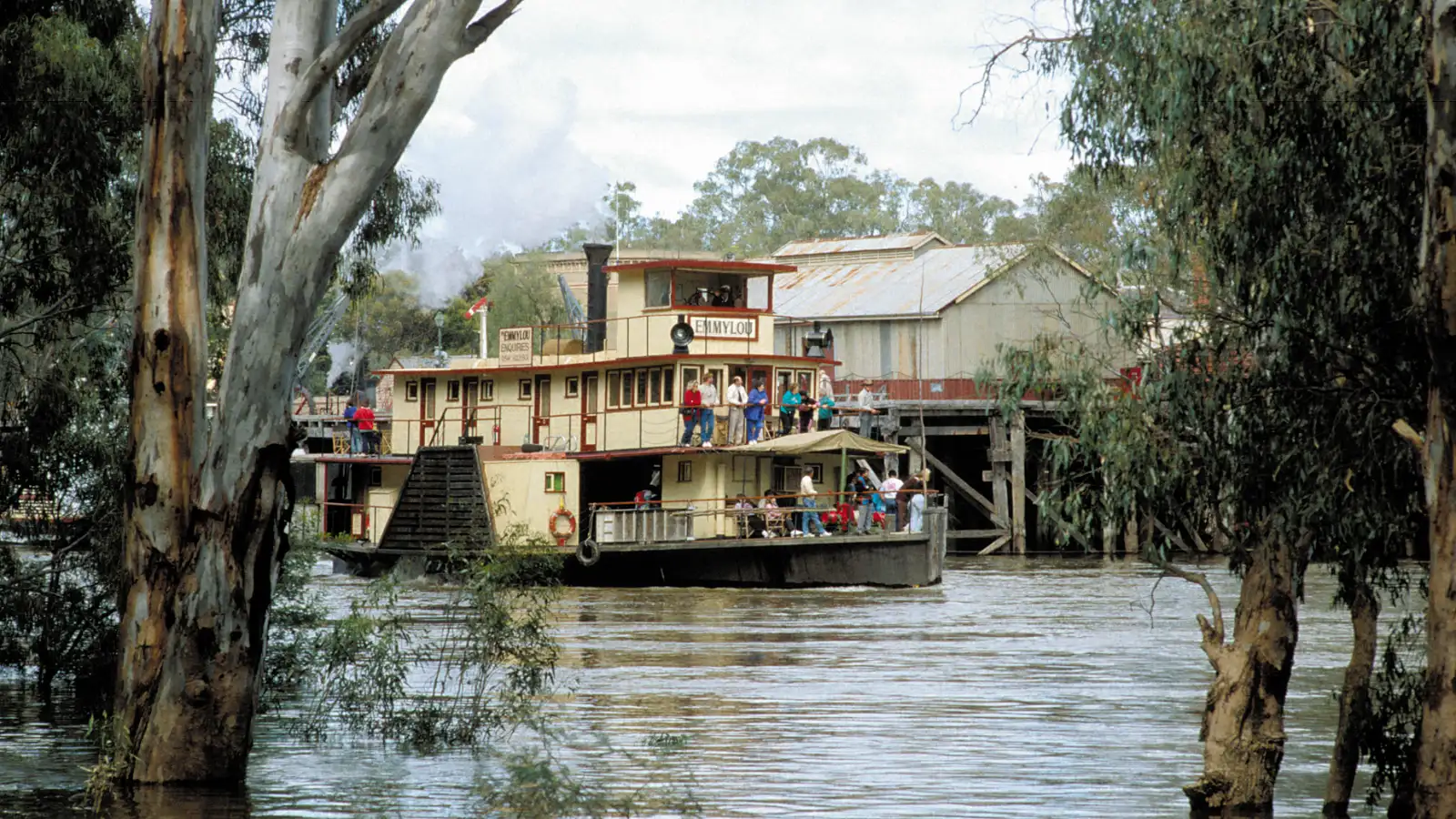
Downstream of Echuca, the Victorian bank keeps its free camping. Gunbower Island, downstream towards Koondrook, is dispersed bush camping with no fees or bookings, although Parks Victoria says access suits 2WD vehicles in dry weather only and recommends a 4WD. Swan Hill is the natural midpoint for a powered night, a laundry and a supermarket run; BIG4 Swan Hill featured on the TV show.
Past Robinvale the country dries out and the river swings north towards Mildura. Hattah-Kulkyne National Park has three river camps at Ki Bend, Firemans Bend and Jinkers Bend with no booking or fees, and no facilities either. West of Mildura, the river camps in Murray-Sunset National Park are free too, but Parks Victoria says access is by 4WD in dry weather only. That is not caravan country after rain.
Mildura is your last big Victorian town and the place to reset before South Australia. Use it: fuel up, empty the fridge of fresh fruit and vegetables (more on that below), and check your tyres and bearings before the long run into the Riverland. Our guides to touring tyre pressures and wheel bearing service intervals are worth ten minutes here.
Before you cross into South Australia
South Australia guards its fruit industry hard, and the Riverland is a declared pest free area within the state. Primary Industries and Regions SA (PIRSA) is blunt about the rule: you must eat or dispose of fruit and vegetables at risk from fruit fly before entering South Australia or the Riverland.
- Fresh fruit is out. From Victoria and NSW, fresh fruit, avocados, tomatoes, capsicum, chilli and eggplant cannot come in.
- Cooked, frozen, canned and dried produce is fine. Cook it the night before at Mildura or Wentworth if you want to keep it.
- There is no disposal bin at the Yamba station. PIRSA says you cannot dump produce at the Sturt Highway quarantine station between Mildura and Renmark, and you will be fined if you are caught with restricted items there.
- Use the bins before the border. PIRSA lists disposal bin locations, including one on the Old Wentworth Road at the state border.
- The fine is real. PIRSA warned in December 2025 that travellers risk a $420 fine at a random roadblock or quarantine station.
Watch out: buying fruit in Adelaide or the Barossa does not get you a pass into the Riverland. PIRSA says the old bring-a-receipt rule ended in 2021. A Queensland fruit fly outbreak is also listed across Riverland towns including Renmark, Berri, Loxton and Waikerie until 6 January 2027, so buy local and eat local while you are there.
Leg three: the Riverland to Goolwa
Over the border the river changes character. Ochre cliffs rise straight out of the water, the irrigation towns of Renmark, Berri, Loxton and Waikerie sit on the bends, and the camping costs money.
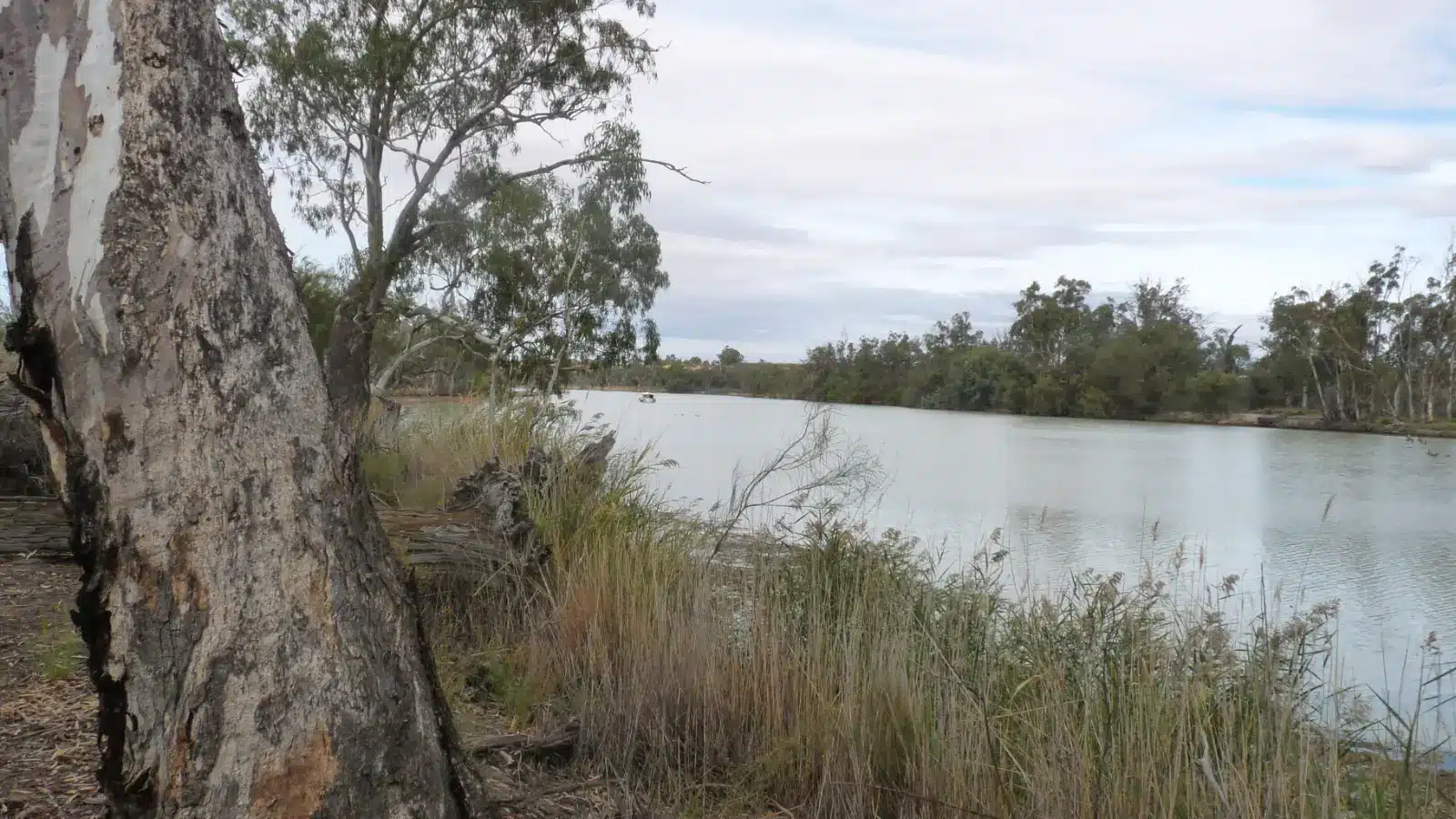
The best of the SA park camping is in Murray River National Park. National Parks SA lists Katarapko with 55 sites and Lyrup Flats with 32, both noted as suitable for caravans, plus a small four-site camp at Kingston-on-Murray. Near the border, Chowilla Game Reserve has Border Cliffs, where caravans must use the car park area and cannot reach the river front, and Chowilla Creekside on an anabranch. Sites are listed from $15.40 a night, and fees must be paid before you enter the park.
The Riverland councils also run riverfront reserves and RV parks, some free and some paid, and the rules differ from council to council. Check the council website for the town you are aiming at, and expect some sites to be limited to fully self-contained vehicles.
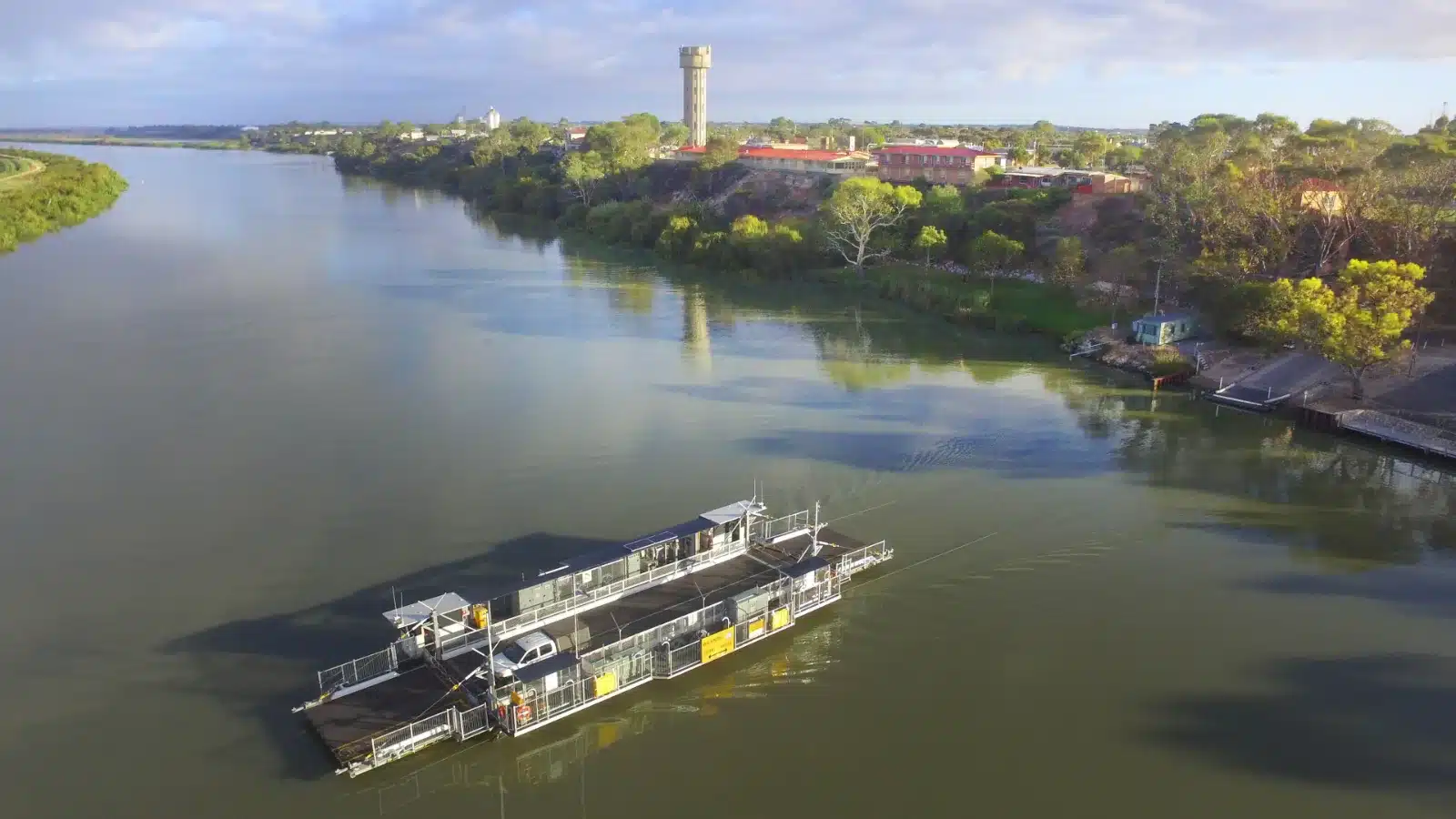
From Lyrup downstream, the free ferries take over. The SA Government runs 12 free ferries at 11 crossings, 24 hours a day, seven days a week, from Cadell and Lyrup down to Mannum, Tailem Bend and Wellington. The published limits are for the whole vehicle combination: deck lengths of 22 to 30 metres, a 5-metre crossing width and a 42.5 or 45.5 tonne mass limit depending on the ferry. Those are comfortably above a typical car and caravan, but the ramps are tight and there is a 10km/h speed limit on the ramp and ferry. Ferries do close for maintenance, so check the operational status page on the morning you plan to cross.
From Mannum the river runs past Murray Bridge and Wellington into Lake Alexandrina, and the trip ends at Goolwa, near the Murray Mouth. The Murray-Darling Basin Authority puts the whole river at about 2,500km, from near Mount Kosciuszko to the Southern Ocean at Goolwa. Standing at the end of it with the van parked behind you is the payoff.
When to go, and what the river is doing
Spring and autumn are the sweet spots. The Bureau of Meteorology's long-term averages put the mean January maximum at 32.6°C at Mildura and 33.9°C at Renmark, and summer days regularly run hotter. July maximums of about 15.5°C and 16.5°C are pleasant for driving, but river camps get cold and damp overnight.
The river itself changes week to week. South Australia's Department for Environment and Water reported in its River Murray Flow Report of 16 October 2026 that an unregulated flow event that began on 8 July had ended and the river was back to regulated conditions, with low to mid-level blue-green algae alerts current from Boundary Bend to Lock 9. Some Barmah, Gunbower, Chowilla and Katarapko camping areas also close for flooding or environmental watering. Check the flow report, the park alerts page and any algae warnings the week you travel.
Questions caravanners ask about the Murray
Can you free camp along the Murray in a caravan?
Yes, mostly on the Victorian bank, where Parks Victoria's river camps are free and unbooked. Access is the limit, not the rules: many sites are on dirt tracks that suit 4WDs and smaller vans, and few have toilets. In NSW the national park camps are free to camp but require a booked spot. It is worth reading whether you qualify to free camp legally if your van is not fully self-contained.
Do caravans fit on the South Australian Murray ferries?
Car and caravan combinations use them every day. The published limits are for the whole combination, with decks of 22 to 30 metres and a 5-metre width restriction at every crossing. Big rigs should still approach slowly and follow the operator's directions on the ramp.
Can I take fruit into the Riverland?
Not fresh fruit or fruiting vegetables from interstate, and not from elsewhere in South Australia either. Eat it, cook it or bin it before you reach the border or the Riverland, and remember there is no bin at the Yamba quarantine station.
How long should you allow?
The road distance alone is two long days, but that is not the trip. Two weeks gives you time to camp on the water on each leg and stop at Echuca, Swan Hill, Mildura and the Riverland towns. Three to four weeks lets you sit still for a few nights at a time, which is what the river is best at. Plan the SA leg with a little slack, because the riverfront park camps are popular in school holidays and need to be paid for before you arrive.
What do free river camps not have?
Usually toilets, drinking water, bins and phone signal. Fill your tanks in town, carry a portable toilet if your van does not have one, take all your rubbish out with you, and keep generators and lights considerate at camps shared with tents. River water is not drinking water, and with algae alerts current on some reaches, check before you swim or wash in it.
Where should a big van stay?
Leave the tight bush camps to smaller rigs and base yourself in caravan parks at Echuca, Swan Hill, Mildura and Renmark, with day trips to the river. Our list of caravan parks that fit vans over 10 metres includes parks at Echuca and Mildura, and holiday parks versus free camping weighs up the trade-offs.
So which bank should you camp on?
Pick your bank before you pick your town. For the first two thirds of the trip, crossing a bridge can be the difference between a free bush camp and a booked one, and the free camps reward smaller, self-contained vans. Once you are in South Australia, budget for paid riverfront nights, empty the fruit bowl before Yamba, and let the ferries do the rest. The Murray is one river, but it is three trips.
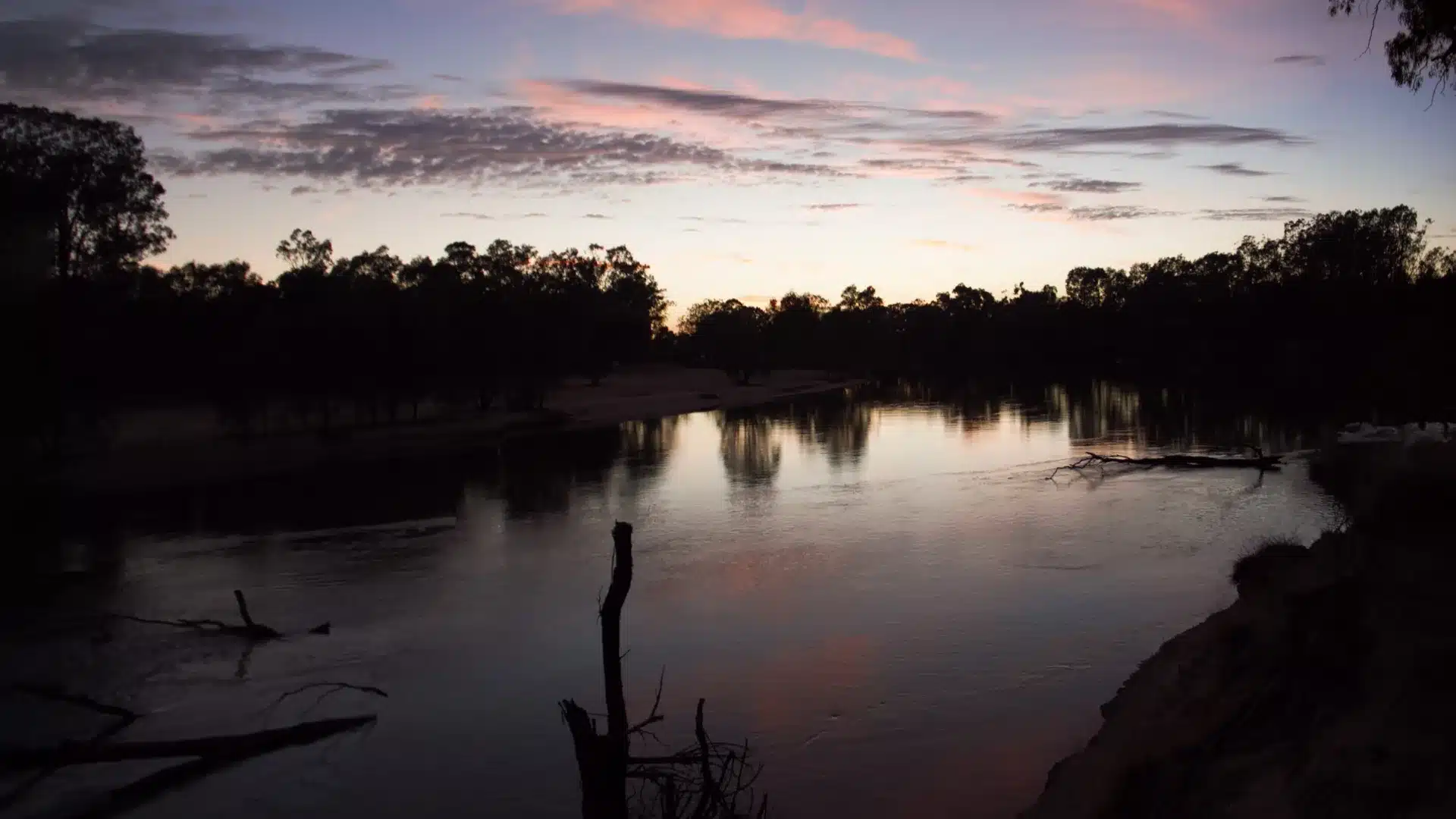
Images via Wikimedia Commons, cropped and resized: Ulupna Island sunset, Gypsy Denise, CC BY-SA 4.0; Echuca Wharf, sv1ambo, CC BY 2.0; Tailem Bend ferry, Dawsonreefer, CC BY 3.0; Cobram, Mattinbgn, CC BY-SA 3.0; PS Emmylou, Willem van Aken, CSIRO, CC BY 3.0; Hume Weir, Tim, CC BY-SA 2.0; Renmark, Feral Arts, CC BY 2.0.


