
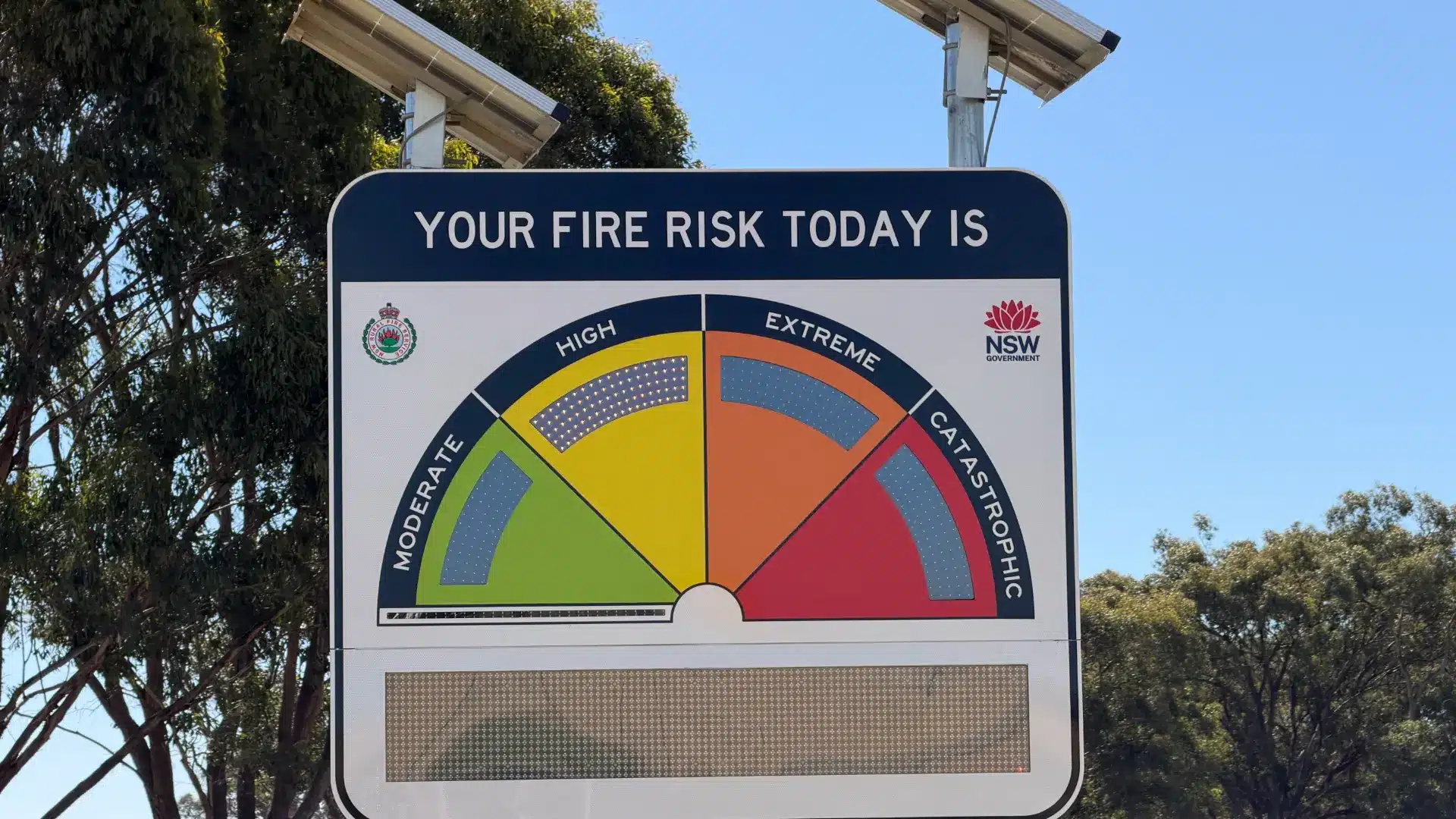

On Friday 9 January 2026, four Victorian fire districts, the Wimmera, Northern Country, North Central and South West, were forecast to hit Catastrophic, with Extreme everywhere else. The whole state was under a Total Fire Ban. Parks Victoria closed every park in the Catastrophic districts, cancelled camping bookings for the day and refunded them.
Most days look nothing like that. But the word on the fire danger sign at the park gate decides what you should be doing on your site. Here is each rung of the ladder, from the bottom up: what the authorities say, what it means in a caravan park, and what to sort out before bed.
First, the basics. The same rating system is used across Australia. A rating describes how bad a fire would be if one started, not the chance of one starting, as the ACT Emergency Services Agency puts it. And ratings are forecast up to four days in advance for different parts of each state, so check the area you are staying in, not the one you live in.
Below the first rung sits No Rating, the white wedge on the sign: an ‘off’ level for days when no proactive action is required. The CFA adds that it does not mean fires cannot happen.
Moderate: plan and prepare
What the authority says: “Plan and prepare.” Most fires can be controlled. The advice on NSW Government and CFA pages is to stay up to date and be ready to act if there is a fire.
In a caravan park, that means: an ordinary day, and the best one for homework. Find the park’s emergency information (Victorian parks must keep a site-specific emergency management plan, the CFA says). Learn both ways out of the park.
Before you go to bed: check tomorrow’s forecast rating, and set up alerts in the state’s emergency app (listed below).
High: be ready to act
What the authority says: “Be ready to act.” Fires can be dangerous. Decide what you will do if a fire starts. Then a line worth reading twice: “The safest option is to avoid bushfire risk areas.”
In a caravan park, that means: decide your trigger now, not when you smell smoke: what will make you leave, and where you will go. Pick somewhere well away from bush and grass, and know the route.
Before you go to bed: put keys, wallet, phone, charger and medicines in one bag by the door, and park the tow vehicle so nothing blocks it. Our packing list covers the extinguisher.
Extreme: take action now
What the authority says: “Take action now to protect your life and property.” The CFA says that if you and your property are not prepared to the highest level, go to a safer location well before the fire impacts. It also says to reconsider travel through bushfire risk areas, and that leaving them early in the day is your safest option.
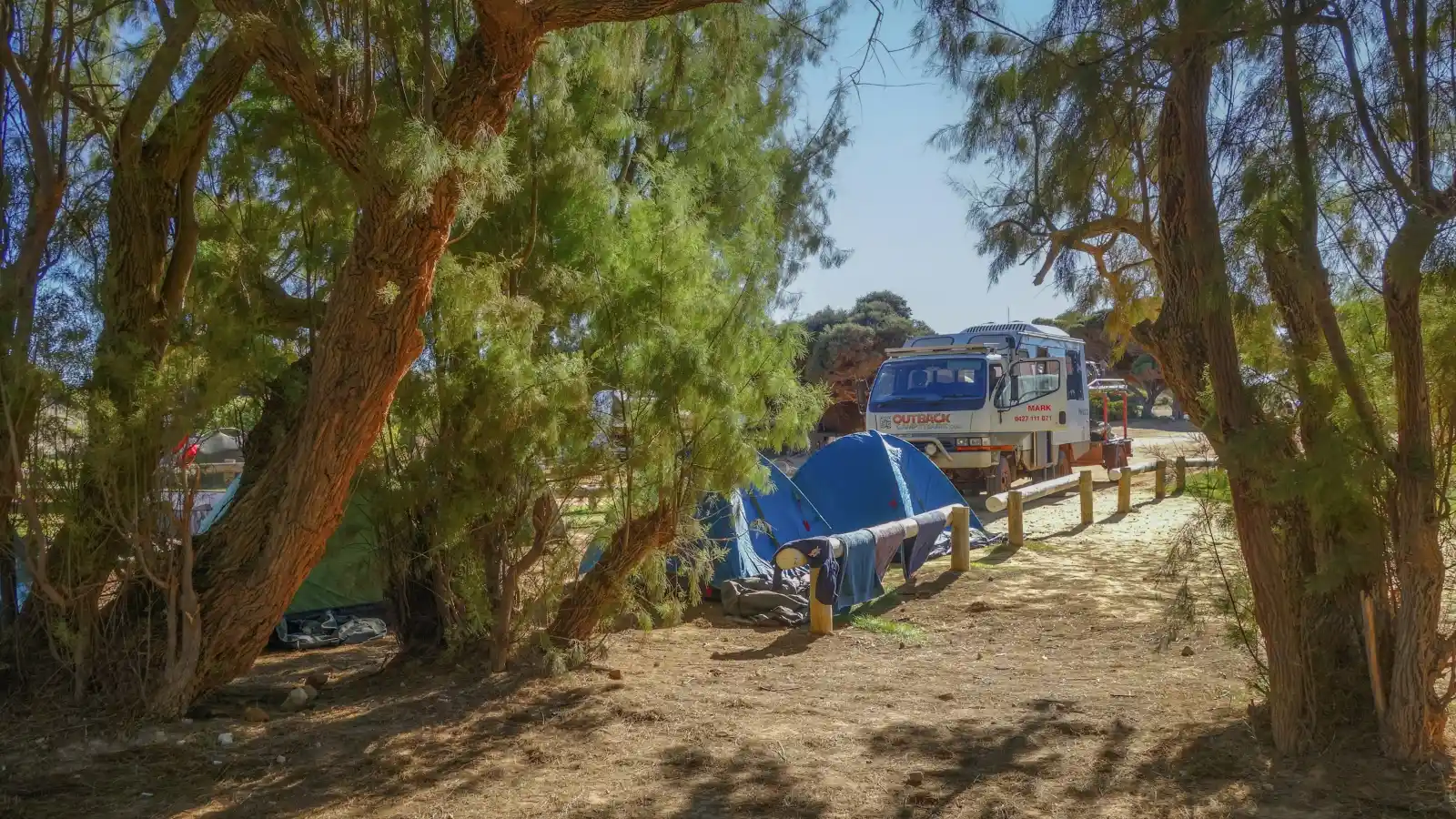
In a caravan park, that means: be honest about the van. The CFA describes caravans as small, enclosed spaces made from lightweight materials, where fire spreads more quickly than in a building. We would not call any caravan prepared to the highest level, so if your park is in or beside bush or grass, the advice points to leaving early. Parks Victoria says some parks and picnic areas are regularly closed on Total Fire Ban or forecast Extreme days. On a moving day, rethink any tow through bush country (our guide to planning routes around fire helps).
Before you go to bed: pack away everything you will not need overnight, bring the annex down, and work out when you would need to start packing to leave at first light. The countdown below does the sum.
Catastrophic: leave bushfire risk areas
What the authority says: “For your survival, leave bushfire risk areas.” If a fire starts and takes hold, lives are likely to be lost. Go to a safer location early in the morning or the night before. Homes cannot withstand fires in these conditions, the CFA and NSW Government warn, and help may not be available.
In a caravan park, that means: if a home cannot withstand a fire in these conditions, a caravan, awning and annex will not either. If your park is in a bushfire risk area, the advice is not to be there. In Victoria, DEECA and Parks Victoria close parks and forests, including national parks, on days of forecast Catastrophic fire danger. Privately run parks set their own policies, so ring the park, and never read an open office as advice to stay. Unsure if your park is in a risk area? Ask the local fire service before the day.
Before you go to bed: ideally, you are already gone. The forecast gives you time to book a night away from bush and grass.
Total Fire Ban days are separate
A rating is a warning. A Total Fire Ban is the law, declared by the fire authority, and it often lands on the same days. The NSW RFS says bans are usually declared when the rating is Extreme or Catastrophic, and ACT ESA says they typically apply at Extreme and above. Fire permits are suspended. Queensland uses local fire bans, and can declare a State of Fire Emergency, rather than Total Fire Bans.
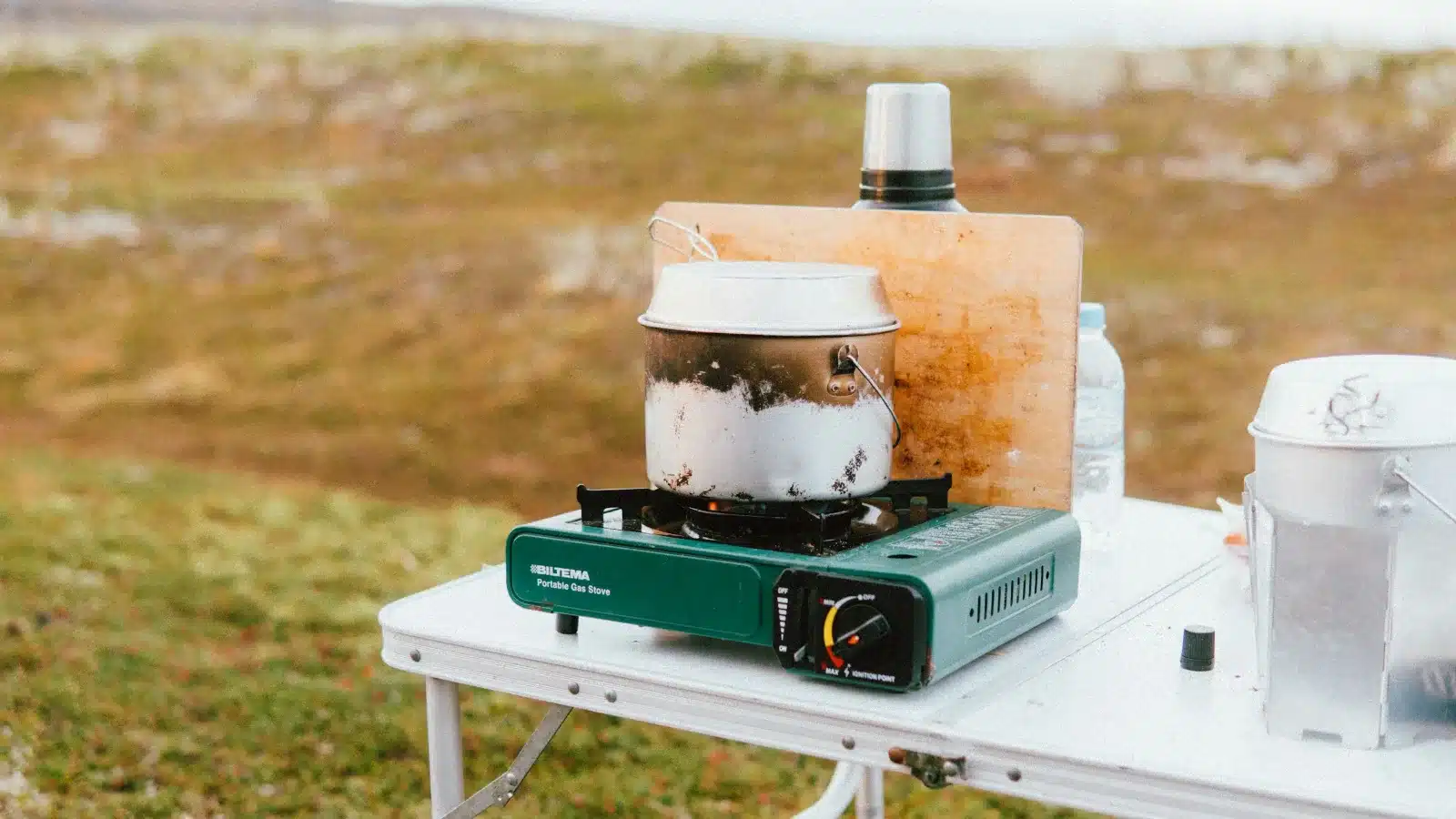
Campfires are off in every state and territory on these days (the Northern Territory allows only a small, attended cooking fire under strict conditions). Gas barbecue and stove rules differ:
- NSW (RFS): a gas barbecue is allowed only if a responsible adult is present at all times, nothing combustible is within two metres, you have an immediate and continuous supply of water, and the barbecue is within 20 metres of a permanent private dwelling such as a home, or in a designated picnic area with an appliance approved by the council, National Parks or State Forest. Solid fuel barbecues and pizza ovens are banned outdoors. Lighting a fire carries a $2,200 on-the-spot fine.
- Victoria (CFA): cooking inside a caravan is permitted, because the CFA treats a caravan as a permanent structure, not the open air (a tent does not count). Outside, a commercially made gas or electric barbecue or stove must sit in a stable position, with everything that can burn cleared for three metres above and around it, including awnings and annexes. You need 10 litres of water or a connected hose ready, an adult there the whole time, and the fire completely out before the adult leaves. Solid fuels and liquid fuels such as methylated spirits are banned outdoors.
- Queensland (QFD): during a local fire ban, gas and electric barbecues, including gas and spirit stoves, can be used if they cannot make embers or ignite nearby vegetation, are not left unattended and are suitably contained.
- South Australia (CFS): on a Total Fire Ban day, a gas or electric barbecue can be used within 15 metres of a domestic or commercial premises, or on a coastal foreshore, with four metres cleared of flammable vegetation, a person present and an extinguisher at hand. Some councils allow them in caravan parks, the CFS says.
- Western Australia (DFES): a gas barbecue is allowed only if it has an enclosed flame and is used at your home or in an authorised area, with five metres cleared. Barbecues with exposed flames cannot be used, and solid or liquid fuel cookers are banned anywhere not fully enclosed.
- Tasmania (TFS): electric or LPG (butane or propane) cookers and stoves are allowed with flammable material cleared for at least one metre. Liquid and solid fuel stoves are banned.
- ACT (ESA): gas or electric cooking appliances are allowed under constant adult supervision, clear of anything that could burn, with an extinguisher or continuous water supply. Park gas barbecues are turned off.
- Northern Territory: NT Police, Fire and Emergency Services says there can be no fires in the open air during a total fire ban. The NT Government’s fire ban page says a gas or coal barbecue may still be used, and a small cooking fire is allowed only under strict conditions (4m cleared, someone always present, put out straight after cooking); check the ban notice on SecureNT before you cook outside.
If a park site’s status is unclear, ask the park or local fire service first. On ordinary days, our campfire tips still apply.
Watch out: a Total Fire Ban is not a reason to cook under the awning. The CFA says not to use barbecues inside annexes, under awnings or in tents, because of the fire and carbon monoxide risk.
How fast can you pack up?
On Extreme and Catastrophic days the advice comes down to timing: leave early, or the night before. So one number matters, and no fire service publishes it: how long you take to go from set up to rolling.
These are our estimates, not authority advice, for two practised adults with a touring van on a level powered site in calm weather. Without an annex, we put a full pack-up at 50 to 80 minutes. With an annex, it is 80 to 140 minutes.
| Job | Our estimate |
|---|---|
| Wind in the awning | 5 to 10 min |
| Take down an annex | 30 to 60 min |
| Pack chairs, mat and outdoor gear | 10 to 15 min |
| Stow and latch inside | 10 to 15 min |
| Disconnect power, water and hoses | 5 to 10 min |
| Wind up stabiliser legs | 5 to 10 min |
| Hitch up: coupling, chains, plug, breakaway | 10 to 15 min |
| Lights check and walk-around | 5 min |
Hot, gusty wind slows any awning or annex, and an unpractised hitch-up with a weight distribution hitch takes longer. Time your own setup at home, then use the countdown below.
WUDU FIRE SEASON GUIDE
Four ratings, four decisions on a caravan site
The official action phrase at each level of the Australian Fire Danger Rating System, then what it means for your van tonight. Below that, time your own pack-up.
THE LADDER, MOST DANGEROUS AT THE TOP
For your survival, leave bushfire risk areas.
On site: if the park is in a bushfire risk area, do not be there. Leave the night before or early in the morning.
Take action now to protect your life and property.
On site: pack the night before, reconsider towing through bush country, and leave early if the park sits in or beside bush or grass.
Be ready to act.
On site: decide your trigger to leave and where you would go, and keep keys, phone and medicines in one bag.
Plan and prepare.
On site: learn the way out, read the park’s emergency information and check tomorrow’s forecast rating.
No proactive action required. Fires can still happen.
Ratings can be forecast up to four days ahead, so check the district you are staying in, not the one you live in.
PACK-UP COUNTDOWN: UNTICK WHAT YOU DO NOT HAVE, CHANGE THE MINUTES TO YOURS
68 min
Your pack-up, as ticked
4:52am
Start packing by, to roll out on time
Then add a buffer. On Catastrophic days, fire authorities advise going to a safer location the night before or early in the morning. If a fire starts near you, act immediately: gear can be replaced.
Sources: action phrases from CFA Victoria and the NSW Government; No Rating wording from CFA Victoria. Checked 11 November 2026. Rating colours are the on-screen hex values in AFAC’s Australian Fire Danger Rating System Style Guidelines.
Assumptions: pack-up minutes are WUDU estimates (the middle of our ranges) for two practised adults with a touring van on a level powered site in calm conditions. They are not authority advice. Time your own setup at home.
Always follow official warnings and the directions of emergency services. In an emergency, call Triple Zero (000).
Where to check the rating
The RFS warns travellers not to rely on one source, because phones may not work in remote areas. Use the official source for the state you are in, plus a battery radio for ABC local radio.
- NSW: the Fires Near Me map on the RFS website, and the Hazards Near Me app, which the RFS tells travellers to download and set a Watch Zone in. Bush Fire Information Line: 1800 679 737.
- Victoria: the VicEmergency app and website, and the CFA website for ratings and Total Fire Bans. VicEmergency Hotline: 1800 226 226.
- Queensland: the Queensland Fire Department website, for ratings, warnings and fire bans.
- South Australia: the CFS website and the Alert SA app.
- Western Australia: Emergency WA, which lists every declared Total Fire Ban.
- Tasmania: TasALERT and the Tasmania Fire Service website.
- ACT: the ACT ESA website.
- Northern Territory: the SecureNT website for fire bans.
Always follow official warnings and the directions of emergency services. In an emergency, call Triple Zero (000).
Planning trips around the fire season
To see how often the worst days land, we counted every Total Fire Ban day in the CFA's published history for Victoria's last two fire seasons (1 July to 30 June). The 2024-25 season had 14 days, which matches the state's own bushfire report card. The 2025-26 season had 28, double that, including 5 days when the ban covered the whole state.
| Month | 2024-25 | 2025-26 |
|---|---|---|
| October | 0 | 1 |
| November | 4 | 1 |
| December | 4 | 6 |
| January | 3 | 11 |
| February | 3 | 8 |
| March | 0 | 1 |
| Total | 14 | 28 |
December to February carried 25 of the 28 days in 2025-26, or 89 per cent, across the summer holidays. The season can start early: the first ban of 2025-26 came on 16 October, in the Mallee. The north-west is the most consistent: the Mallee and the Wimmera were each under a ban on at least 10 days in both seasons, while the North East jumped from 1 day to 16.
Our count covers Total Fire Ban days, not ratings, and only Victoria; other states run their own bans and calendars. Book refundable sites for summer trips into bush country, keep a plan B night in a town for the hottest forecasts, and check the four-day outlook before you hitch up. Our guides to touring in extreme weather and heat and bushfire risk cover the rest.
Images: Bidgee via Wikimedia Commons (CC BY-SA 3.0 AU); snap wander and Ivan Shemereko on Unsplash.


