
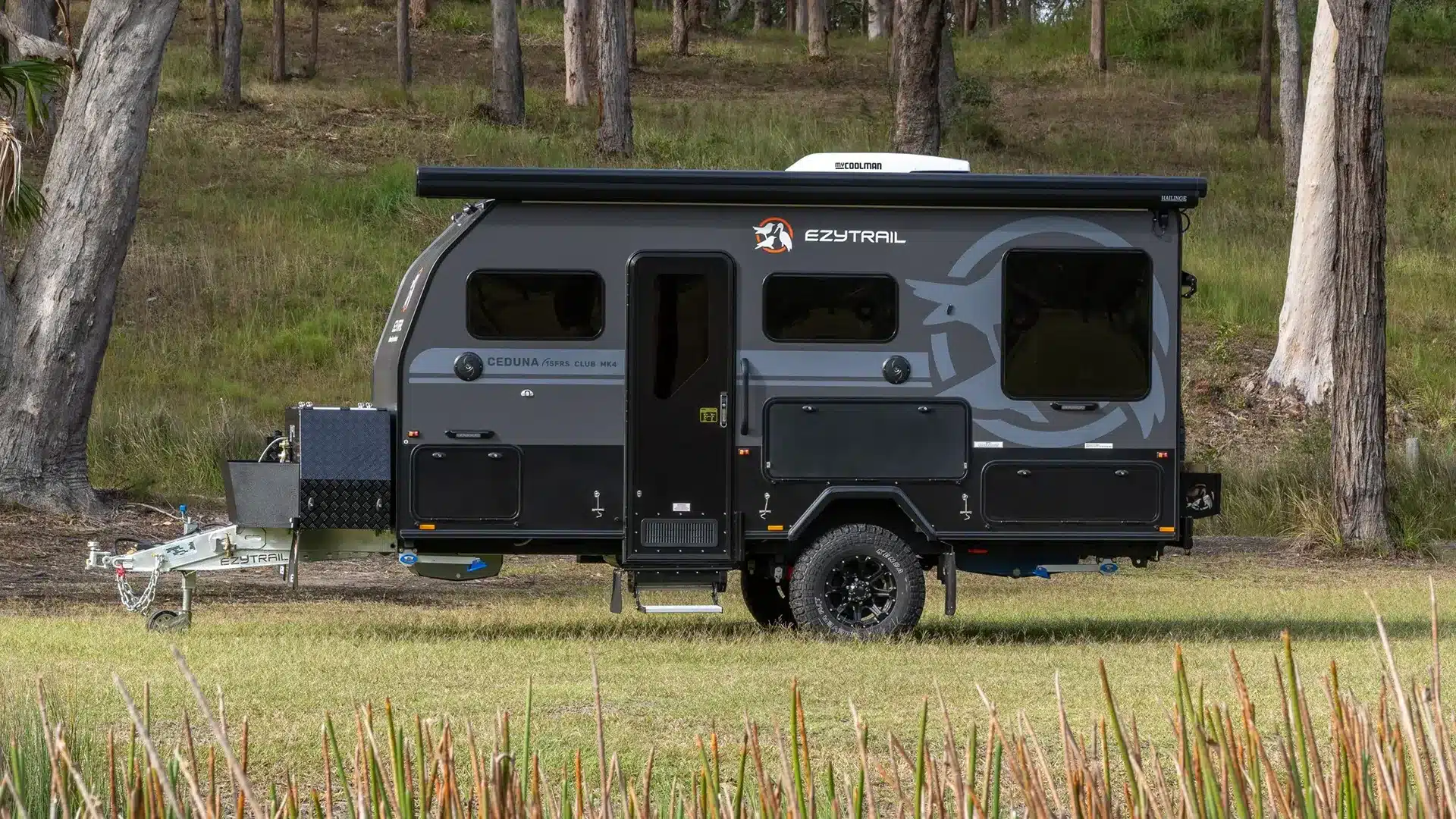

Imported caravans are taking a bigger slice of buyer attention every quarter, while a handful of Australian builders have closed their doors. If you are about to spend tens of thousands of dollars, that is unsettling.
The picture underneath the headlines is healthier than the headlines themselves. Here is what the numbers say, and the checks that matter more than where your van was welded together.
What the numbers actually show
Retain Media’s Q2 2026 RV Market Brand Consideration Report tracked more than 2.2 million searches across 139 RV brands. Imported brands lifted to 27.8 per cent of total search share, up from 26.7 per cent in Q1, and that is now three consecutive quarters of gains. Jayco eased to 23.1 per cent, down 1.1 percentage points. Winnebago was the quarter’s clearest gainer.
On the manufacturing side, the Caravan Industry Association of Australia’s State of the Industry 2026 recorded 23,963 RVs built locally in 2025, down 4.9 per cent on 2024 but still around 12 per cent above 2019 levels. Caravan trailer and component imports rose 16 per cent to 23,244 units. Three manufacturers closed during 2026: Network RV and Sunland entered voluntary administration, and Starvision shut its Melbourne showroom.
Now the part the doom headlines leave out. Australians took a record 17.3 million caravan and camping trips in 2025, up 14 per cent, spending $12.6 billion against $10.2 billion pre-COVID, according to Tourism Research Australia. Registrations hit roughly 938,000, a 32 per cent rise since 2019 and an all-time high.
So participation is at a record. What has softened is the decision to buy new. That is a correction, not a collapse, as we covered in our look at the caravan industry after the pandemic boom.
Why buyers are moving
Three things. Price, with imported stock often landing below comparable local builds. Availability, because a van on the yard beats a nine-month build slot when you want to travel this summer. And confidence, because buyers who watched a builder fold are wary of long custom build queues.
Average trip length has fallen to 3.4 nights, and the traveller has changed too. Our piece on the end of the grey nomad era covers that shift.
Worth knowing: Retain Media’s own read is that Australian shoppers are recalibrating rather than opting out. Buyers are taking longer between enquiry and purchase, not walking away.
What local building still buys you
Service network depth is the big one. A repairer you can reach from the Nullarbor matters more than a spec sheet. Parts chains are shorter, warranty pathways are usually simpler, and builders working to Australian Design Rules daily tend to have fewer compliance surprises.
None of that makes imported vans a poor choice. It means the trade-offs are real, and our guide to what launched in 2026 walks through where imported models stack up.
Seven checks before you sign
- Confirm the legal entity on your contract, invoice and deposit receipt, not just the brand name on the van.
- Check the deposit structure. How much, when, and what happens to it if the build stops. See our buying with confidence guide.
- Ask who honours the warranty, the builder, the importer or the dealer, and get it in writing.
- Map the nearest service point to where you actually travel, not to where you live.
- Test parts availability by asking for a lead time on a common item like a door seal or a fridge vent.
- Match the weights to your tow vehicle before you fall in love with a layout. Our lightweight caravan guide covers the maths.
- Pay by a method with a chargeback path where you can, and keep every receipt.
Tip: Arrange finance before you walk in. Our caravan show buying guide explains why pre-approval changes the conversation.
Imported vs Australian Made: The 2026 Caravan Snapshot
Buyer attention is shifting, local output has softened, and travel is at a record high. Here is what the data says, and what to check before you sign.
The market in numbers
Of total Australian RV brand search in Q2 2026, up from 26.7% in Q1.
3rd quarter of gainsStill the most considered brand nationally, easing 1.1 percentage points.
Down on Q1 2026Locally built in 2025. Down 4.9% year on year, but around 12% above 2019.
Correction, not collapseUnits imported in 2025, a 16% increase on the previous year.
Up 16%Taken by Australians in 2025, up 14%, worth $12.6 billion in spend.
All-time recordCaravans and campervans registered nationally, up 32% since 2019.
Highest on recordWhat RVMAP does and does not cover
What RVMAP covers, and what it does not
The Recreational Vehicle Manufacturing Accreditation Program is a voluntary program run by the Caravan Industry Association of Australia. Accredited businesses commit to supplying product that meets Australian Design Rules, and are inspected on a random sample basis. Licensing can take six to 24 months.
Here is the bit that matters and rarely gets said plainly. RVMAP does not guarantee the financial strength of a participating business, and it does not assess overall quality of workmanship. Both are stated in the program’s own disclaimer. Imported product can carry an RVMAP International badge, so the badge tells you about compliance intent, not about where the van was built or how solvent the builder is.
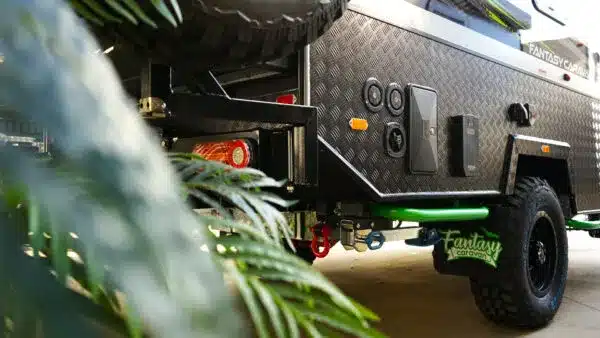
If your builder goes into administration
Voluntary administration is an assessment period, not the end. An independent administrator takes control and reports to creditors on the options. It is not liquidation.
The hard truth from the ACCC: consumers are usually unsecured creditors, paid only after secured creditors and priority creditors such as employees. You may recover some of your money, or none. If you paid by card, contact your bank about a chargeback straight away, because time limits apply.
Your consumer guarantees do not vanish, but the party who has to honour them may no longer exist. Sometimes a buyer steps in, as JB Group did with the Network RV brands, and a new owner generally chooses which liabilities it takes on. Our Network RV explainer has the step-by-step.
The WUDU takeaway
Australian-made versus imported is the wrong first question. The right one is whether the business behind the badge can still look after you in three years, on a Tuesday, 900km from home. Ask about entity, deposit, warranty holder and service reach before you ask about the kitchen splashback.