

For years, the answer was a polite “not yet.” But something has shifted in 2026. The electric and plug-in hybrid utes arriving in Australian showrooms right now are not science experiments. They have real towing numbers, real prices, and real trade-offs that every caravanner should understand before their next purchase.
Here is an honest look at where EV towing actually stands, what the new PHEV utes can and cannot do, and the one piece of infrastructure holding everything back.
EV & PHEV Towing in Australia | 2026 Quick Guide
What caravanners need to know right now
The towing numbers are finally there
The conversation used to be about whether an electrified ute could tow at all. That debate is over. The question now is how much and how far.
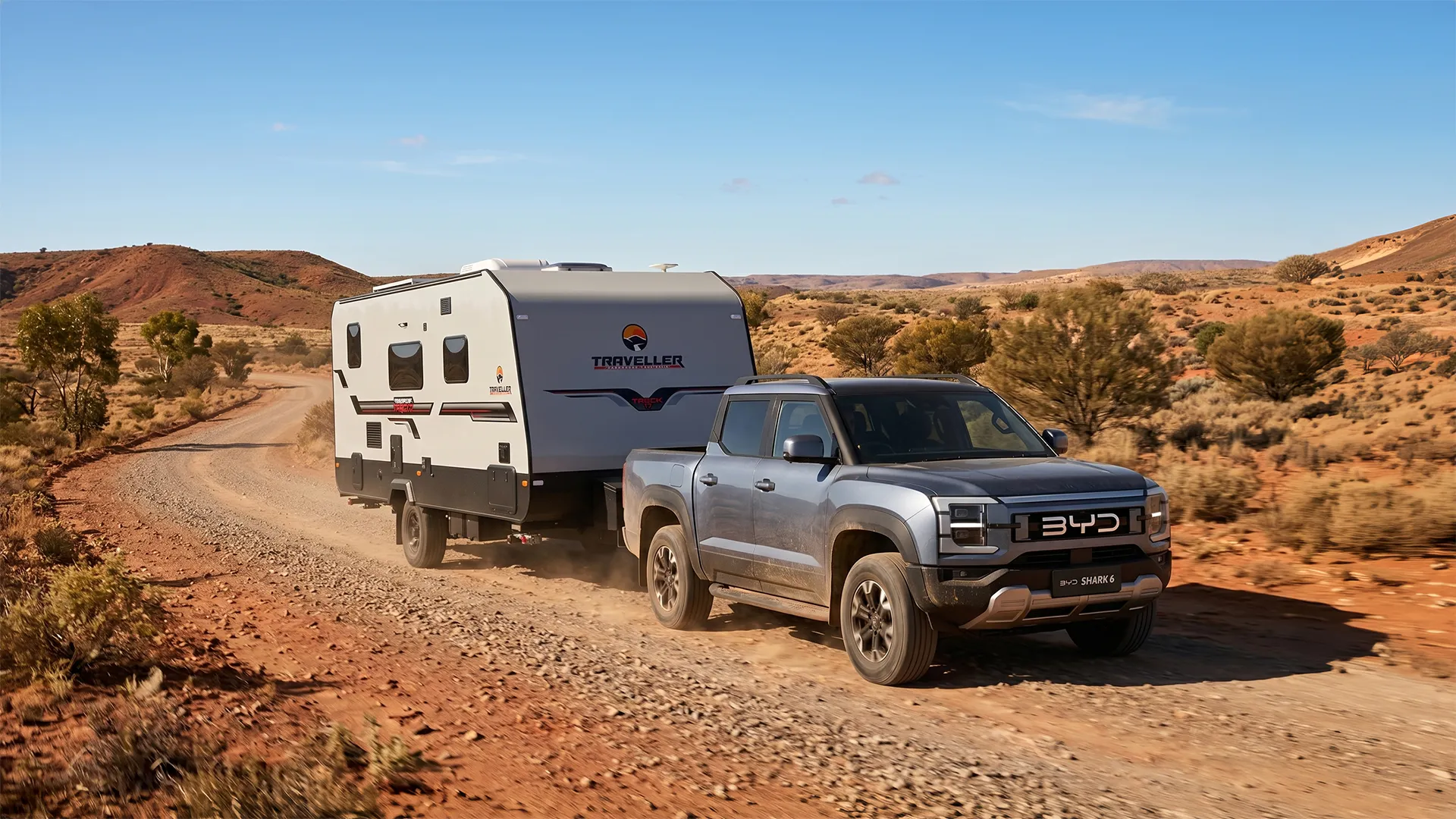
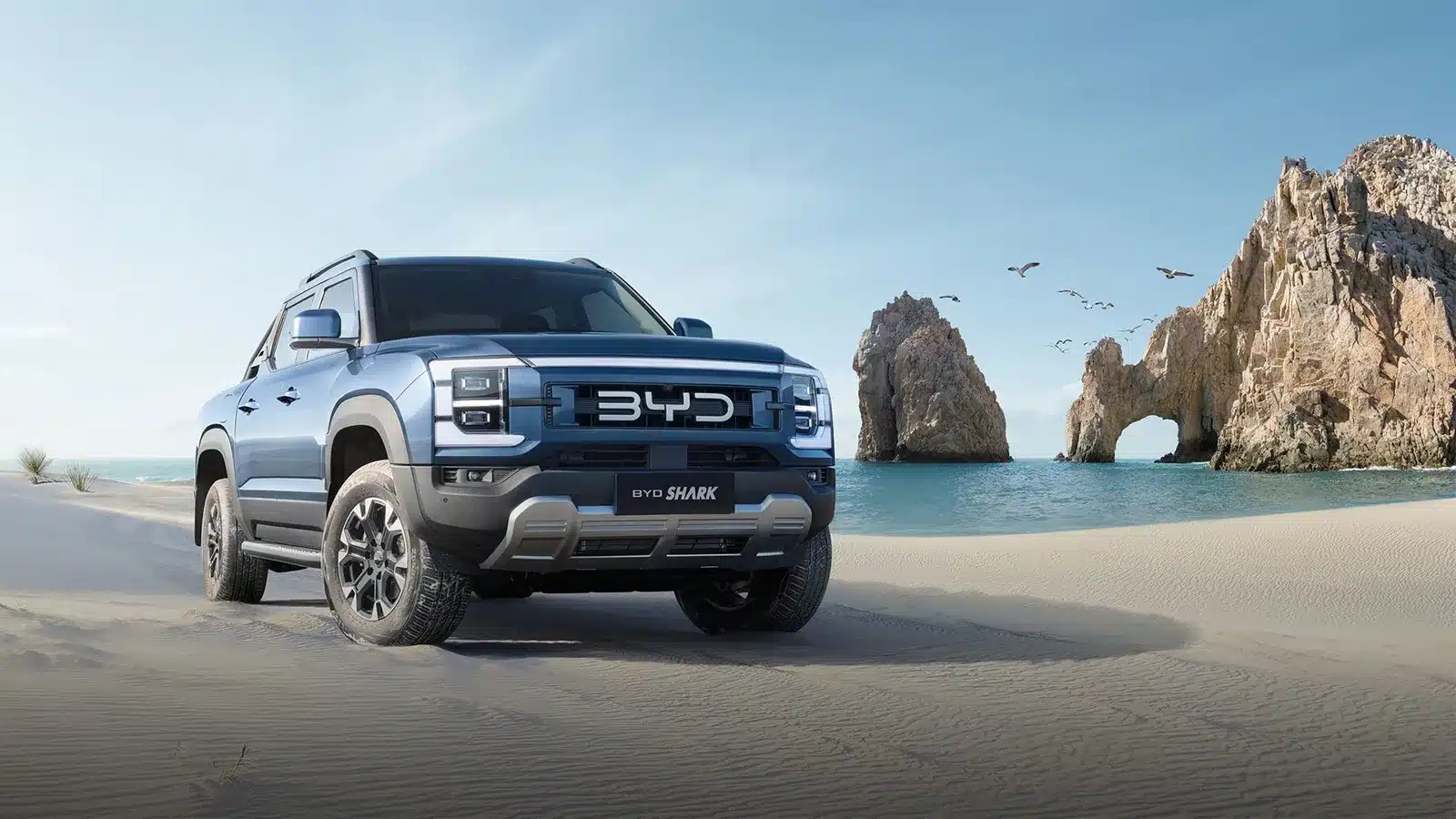
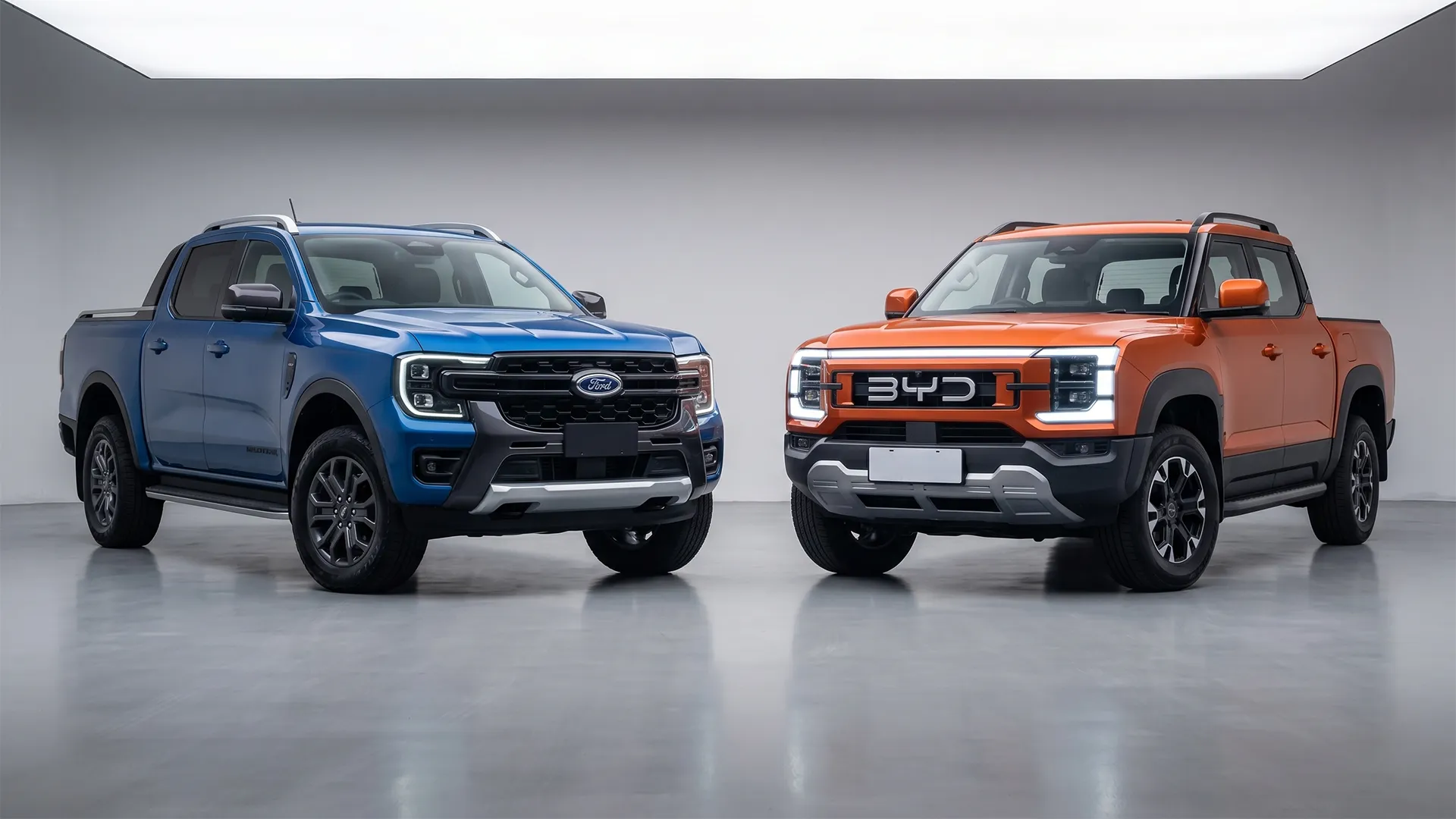
The BYD Shark 6 Performance, which arrived in Australian dealerships in May 2026, brings a 3,500kg braked towing capacity thanks to a new 2.0-litre turbocharged engine paired with two electric motors producing a combined 350kW and 700Nm. That puts it level with segment benchmarks like the Ford Ranger and Toyota HiLux. The carry-over Shark 6 Premium sits at 2,500kg, which covers a wide range of mid-size caravans and camper trailers comfortably.
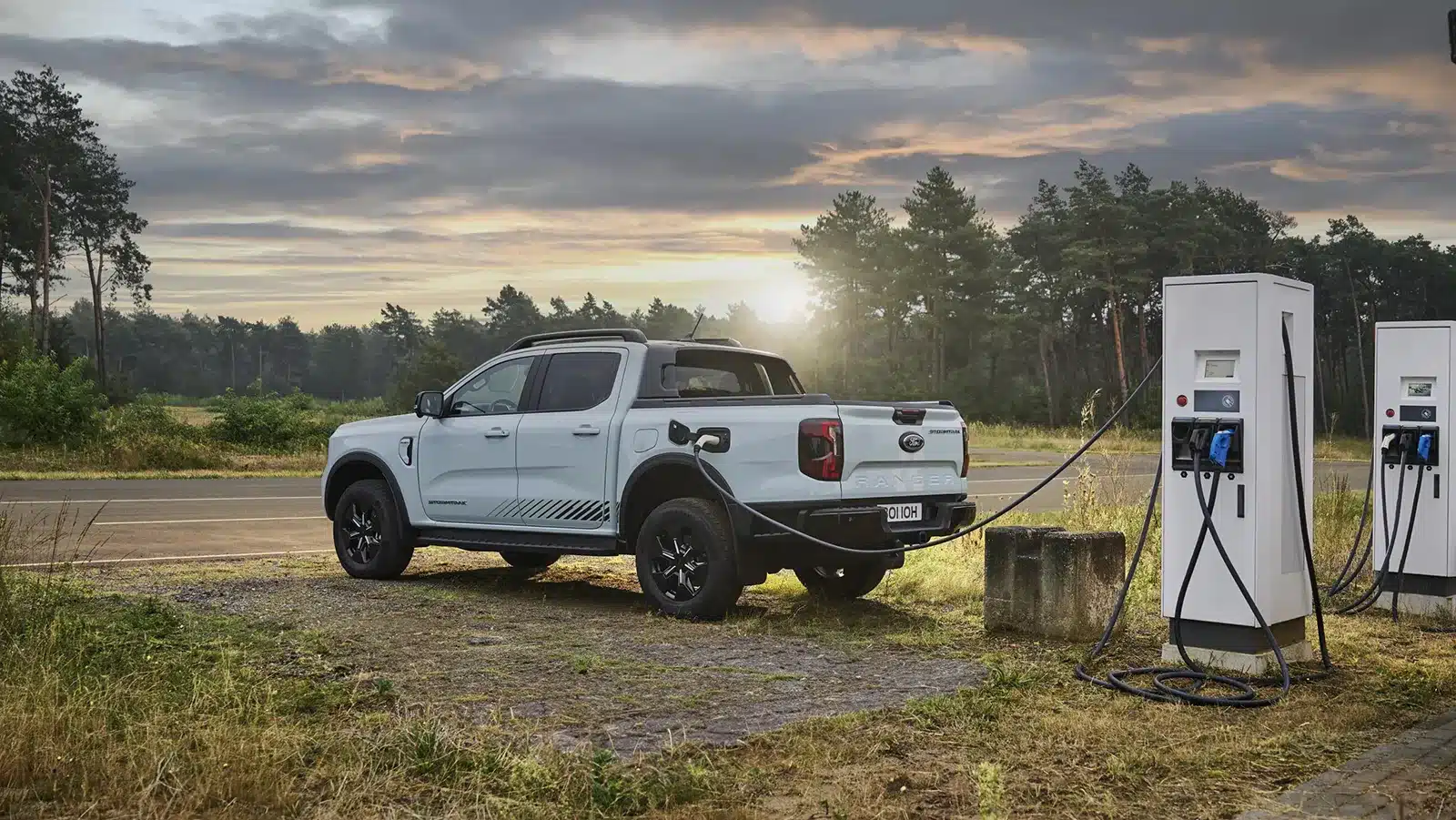
Ford’s Ranger PHEV, slated to arrive in Australia in Q3 2026, brings 3,500kg braked towing capacity alongside 6.9kW of Pro Power Onboard, useful for running gear at camp without a generator. It also offers around 45km of electric-only driving range before the petrol engine cuts in, which covers most town and suburban driving completely emission-free.
Both vehicles are plug-in hybrids rather than pure battery electrics. That distinction matters, and we will get to why.
Why PHEVs are winning the towing argument right now
A pure battery-electric vehicle towing a large, boxy caravan faces a physics problem. When you add a full-size van to the back of an EV, aerodynamic drag roughly doubles the energy consumption. A vehicle with 450km of range unladen might return 200km or less when towing at highway speeds. That means stops every 90 to 100km on a typical trip, and that is before you factor in where you can actually charge.
PHEVs sidestep this problem. When the battery drains, the petrol engine takes over, so range anxiety disappears on long hauls. You get the fuel efficiency benefits around town, cleaner camp running with the electric motor, and then conventional range once you hit the highway with a van on the back.
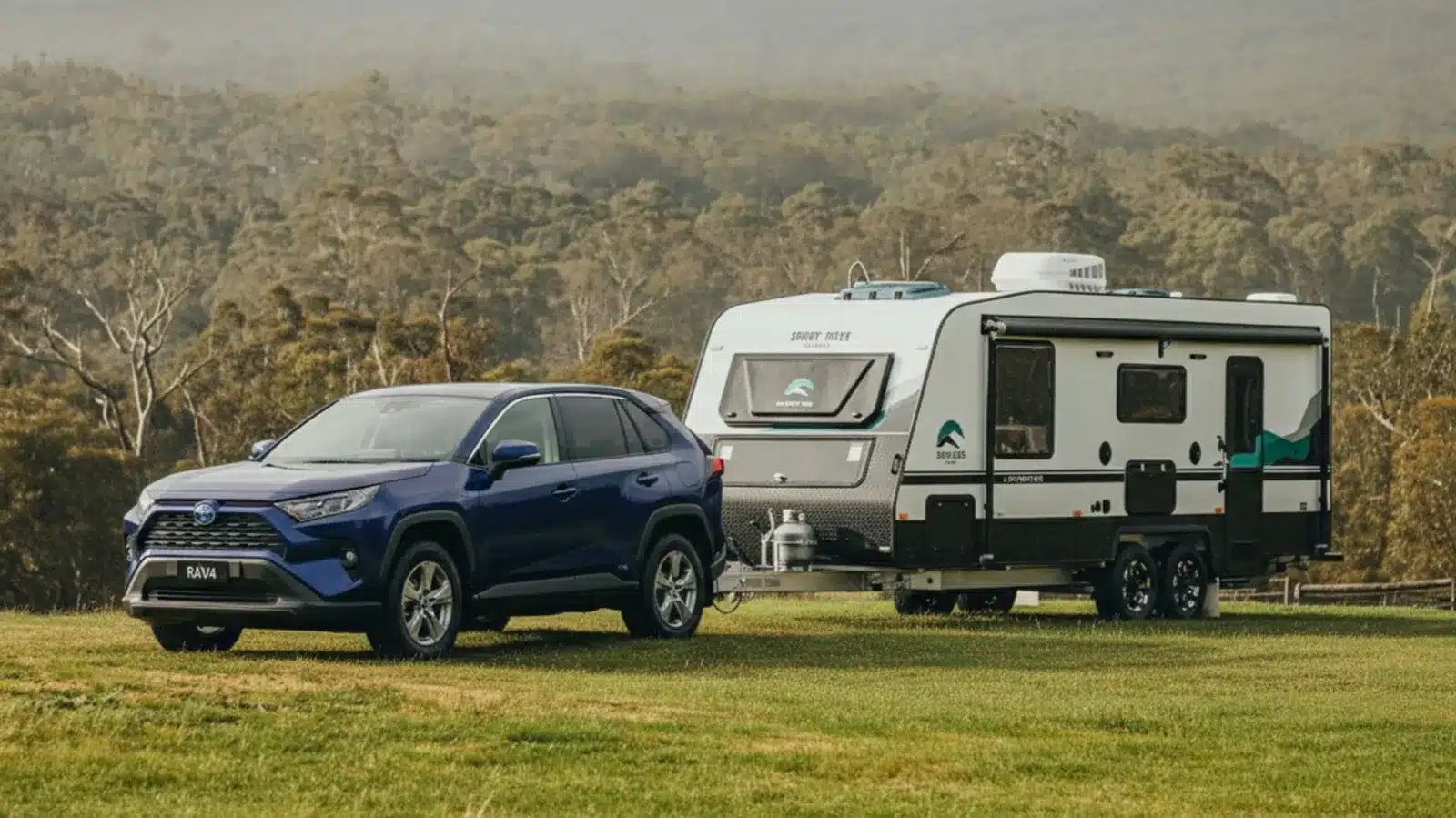
WUDU Tip: If you tow regularly over distances greater than 200km, a PHEV is the practical choice in 2026. If most of your towing is local and you can charge overnight at home, a pure EV with a modest van under 2,000kg ATM is workable, but you will need to plan carefully.
For most Australian caravanners, who do a mix of short weekend trips and longer seasonal runs, a PHEV currently makes more sense than waiting for pure-EV towing to mature.
The charging infrastructure gap
Here is the honest problem. Most public DC fast chargers in Australia, including Chargefox, Evie, and Tesla Supercharger, are nose-in bays. If you are towing a 20-foot caravan, you cannot access them without unhitching and parking the van somewhere else first. That turns a 30-minute charge stop into something much more inconvenient.
The good news is that this is changing. Major charging networks are actively rolling out pull-through bays designed specifically for towing combinations. Sites like the New Italy Supercharger in NSW have been flagged as models for what the network should look like nationally. But coverage is patchy, and for remote and regional touring routes it remains a real limitation.
If you are planning a Big Lap or extended outback run with a pure EV tow vehicle, do not assume the infrastructure will be there yet. Map every charge point for your specific route before you go, and plan for the unexpected.
What this means for buyers right now
The industry’s direction is clear. At last month’s Caravan Industry National Conference on the Gold Coast, BYD presented to 1,100 delegates on vehicle electrification and its implications for caravan travel in Australia, a clear signal of how seriously the sector is taking this shift.
But knowing the direction is different from being ready to make the leap. The honest advice for caravanners considering an EV or PHEV tow vehicle in 2026:
A PHEV makes sense if you want to reduce running costs, enjoy cleaner around-town driving, and still need full range flexibility for touring. The BYD Shark 6 Performance and the incoming Ford Ranger PHEV are both credible options at competitive price points.
A pure EV makes sense if your towing is mainly local or regional, your van is under 2,000kg ATM, you can charge at home overnight, and you are comfortable planning charge stops into every longer trip.
Stick with diesel if you do regular remote and outback touring with a heavy van, rely on unpredictable routes, or need absolute range and payload certainty. For a 3-tonne van on the Nullarbor or the Gibb River Road, diesel remains the practical choice in 2026.
The bottom line
EV and PHEV towing is no longer a conversation about the future. The vehicles are here, the specs are real, and for a large share of Australian caravanners, the numbers stack up. The gap is infrastructure, and that gap is closing.
If you are buying a new tow vehicle in the next twelve months, it is worth factoring in what your towing genuinely looks like: how far, how often, and how remote, before ruling electrification in or out. The right answer is different for a family doing school holiday runs to the coast and a grey nomad midway through a six-month national circuit.
The best buying decision is still the one matched to your actual life on the road.
For more on choosing the right tow vehicle for your setup, browse the WUDU Buying Guides section, or head to our Guides & Advice hub for practical help on tow weights, GVM, and payload calculations.