
The demand for reliable, long-lasting power has never been higher, pushing many to consider lithium batteries. These aren’t just a fancy upgrade; they’re a fundamental shift in how we power our travels.
Many Aussie caravanners want to understand the real benefits and practicalities of making the switch. This guide will cut through the marketing jargon and give you the ground-truth on lithium battery systems. We’ll cover everything from how they differ from traditional AGM batteries to what they can realistically power in your rig.
Why Lithium Batteries Matter for Caravanners
Lithium batteries offer caravanners significantly more usable power, faster charging, and a longer lifespan compared to traditional lead-acid options, making extended off-grid travel more practical and comfortable.
Gone are the days when a simple 12V setup was enough for a weekend away. Modern caravans, especially those built for off-grid touring, demand serious power. Lithium iron phosphate (LiFePO4) batteries, often just called lithium, provide a robust solution. They allow you to run more appliances for longer periods without constantly needing to plug into a powered site.
Lithium vs. AGM: What’s the Real Difference?
The core difference between lithium and AGM batteries lies in usable capacity, weight, charging efficiency, and lifespan, with lithium offering superior performance across almost all metrics for caravanning.
Traditional AGM (Absorbed Glass Mat) batteries have been the go-to for years. They’re reliable, relatively inexpensive upfront, and handle vibration well. However, you can only safely discharge an AGM battery to about 50% of its capacity without significantly shortening its life. This means a 100Ah AGM battery only gives you about 50Ah of usable power.
Lithium batteries, on the other hand, can be discharged to 80-90% or even 100% of their capacity without damage. A 100Ah lithium battery delivers nearly 100Ah of usable power. They also charge much faster, weigh considerably less, and boast a lifespan of 2,000 to 5,000 cycles compared to AGM’s 300-1,200 cycles. From a practical standpoint, this means more power for longer, with less weight in your rig.
Caravan Power Guide
AGM vs Lithium
Weight and Usable Capacity
A quick example showing why lithium upgrades appeal to caravanners. The big differences are usually usable power and overall weight.
100Ah AGM Battery
Usually heavier and typically only around half of the rated capacity is considered comfortably usable in regular touring use.
100Ah Lithium Battery
Usually much lighter and offers a far greater share of its rated capacity as usable power for real-world off-grid travel.
Typical Weight Comparison
Lower is better when you are managing payload and overall van balance.
Typical Usable Capacity Comparison
Higher is better when you are trying to stay off-grid longer.
Lithium can give you more usable power while taking less of your caravan’s payload.
A battery upgrade still needs the right charger, regulator, wiring and installation to work properly.
What Can Lithium Batteries Power in Your Caravan?
Lithium batteries can power almost any 12V or 240V appliance in your caravan, from fridges and lights to coffee machines and air conditioners, enabling a true home-away-from-home experience off the grid.
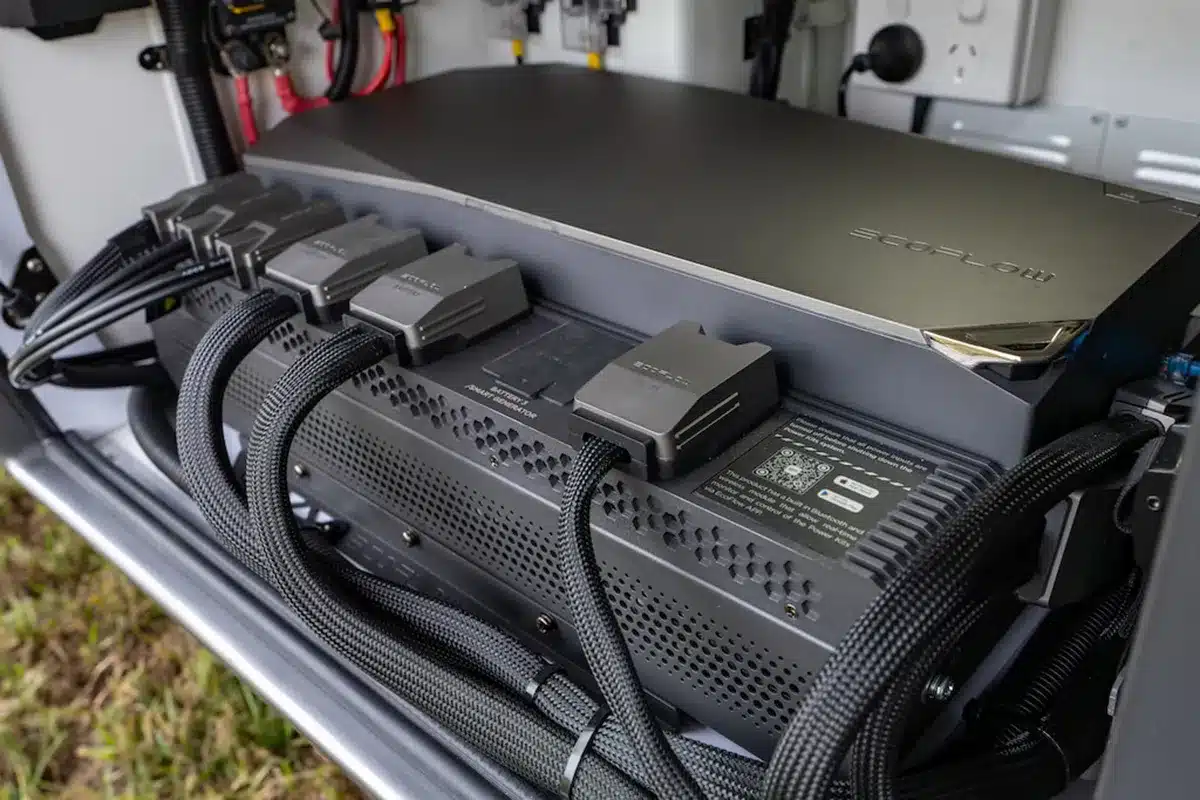
With a properly sized lithium system and inverter, your off-grid capabilities expand dramatically. You can run high-draw appliances like induction cooktops, microwaves, and even small air conditioners for short bursts. This level of power means you are no longer limited to basic camping, but can enjoy many of the comforts of home.
For example, a 200Ah lithium battery can easily run a compressor fridge 24/7, charge laptops, and power lights for several days. Add a 2000W inverter, and you can make toast or boil a kettle without needing shore power. This flexibility is a key reason many caravanners are making the switch.
Understanding Lithium Battery Capacity and Sizing
Sizing your lithium battery system correctly involves calculating your daily power consumption and then choosing a battery capacity that exceeds this demand, providing a buffer for cloudy days or extended stays.
The first step is to list every appliance you plan to run and its power draw in amps or watts. Multiply this by how many hours per day you’ll use it to get your total amp-hours (Ah) per day. For instance, a 50W fridge running for 24 hours draws about 4.2 amps per hour (50W / 12V = 4.17A), totalling 100Ah per day.
Once you have your total daily consumption, factor in a safety margin and how many days you want to go without charging. If you use 100Ah per day and want two days of autonomy, you’ll need at least 200Ah of usable capacity. Since lithium batteries offer almost 100% usable capacity, a 200Ah lithium battery would be a good starting point for this scenario.
Charging Your Lithium Battery System
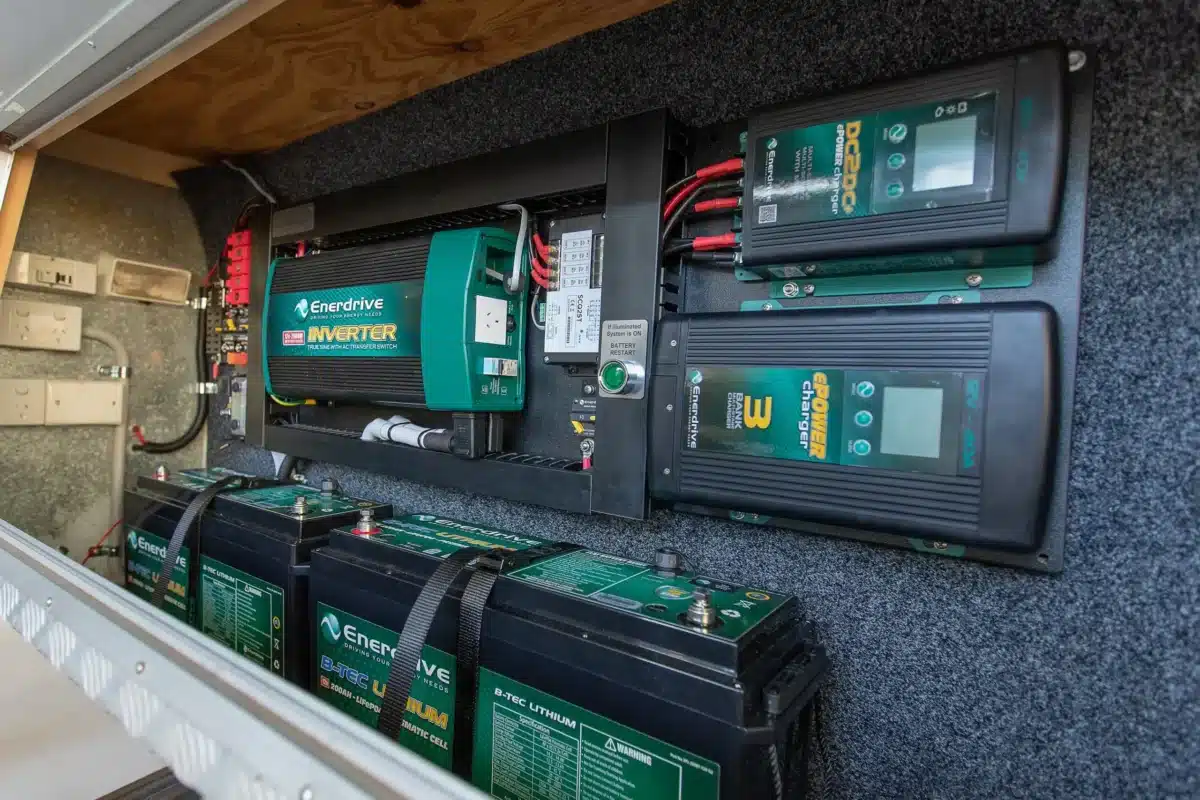
Lithium batteries require specific charging profiles, typically managed by a Battery Management System (BMS), and benefit from dedicated chargers like DC-DC, solar, and 240V chargers designed for their chemistry.
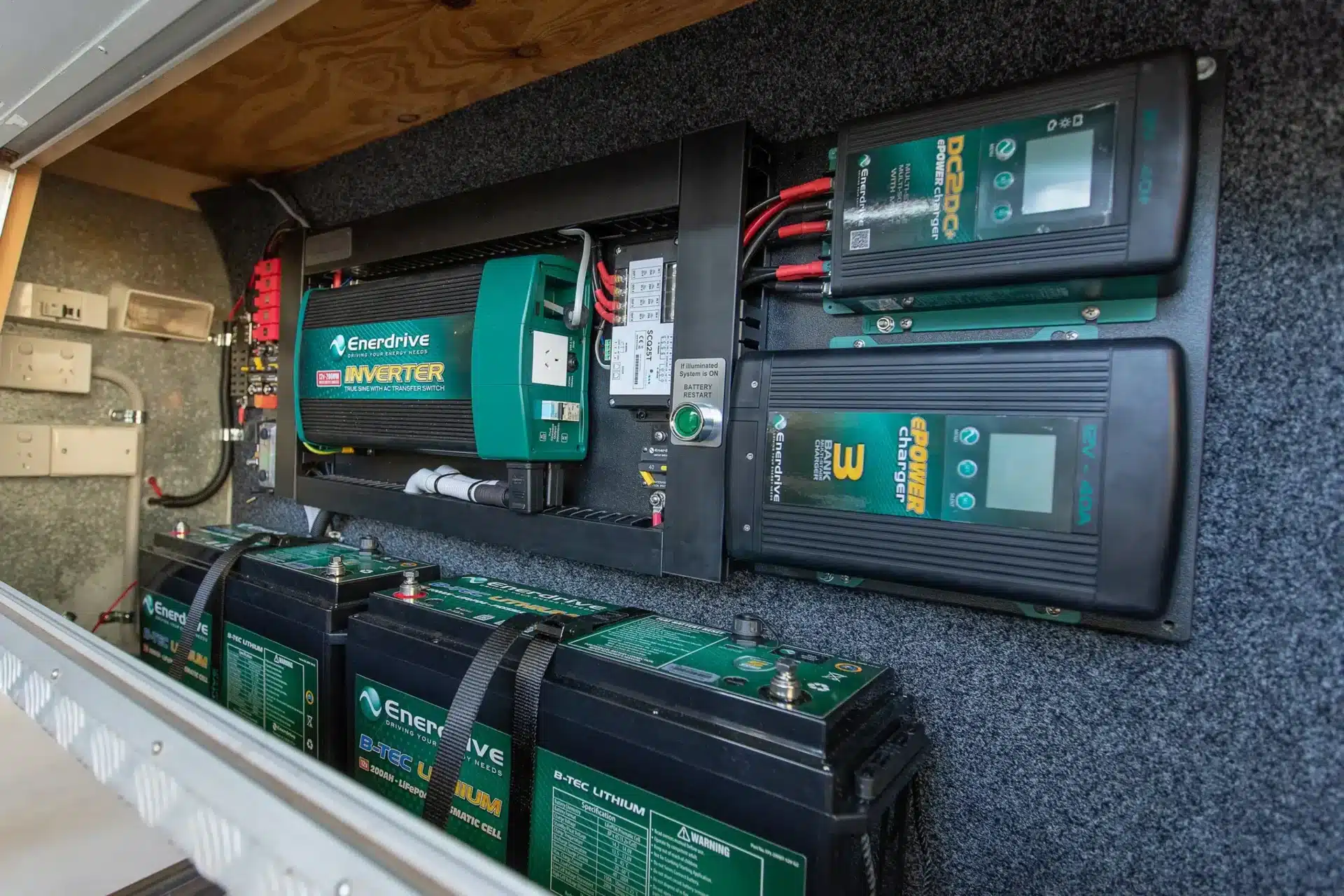
Unlike AGM batteries, lithium batteries need a charger that can deliver the correct voltage and current. Most modern caravan charging systems, including DC-DC chargers and solar regulators, now have a “lithium” setting. This ensures the battery charges efficiently and safely. A quality Battery Management System (BMS) is built into most lithium batteries. It protects against overcharging, over-discharging, and temperature extremes, which is critical for longevity.
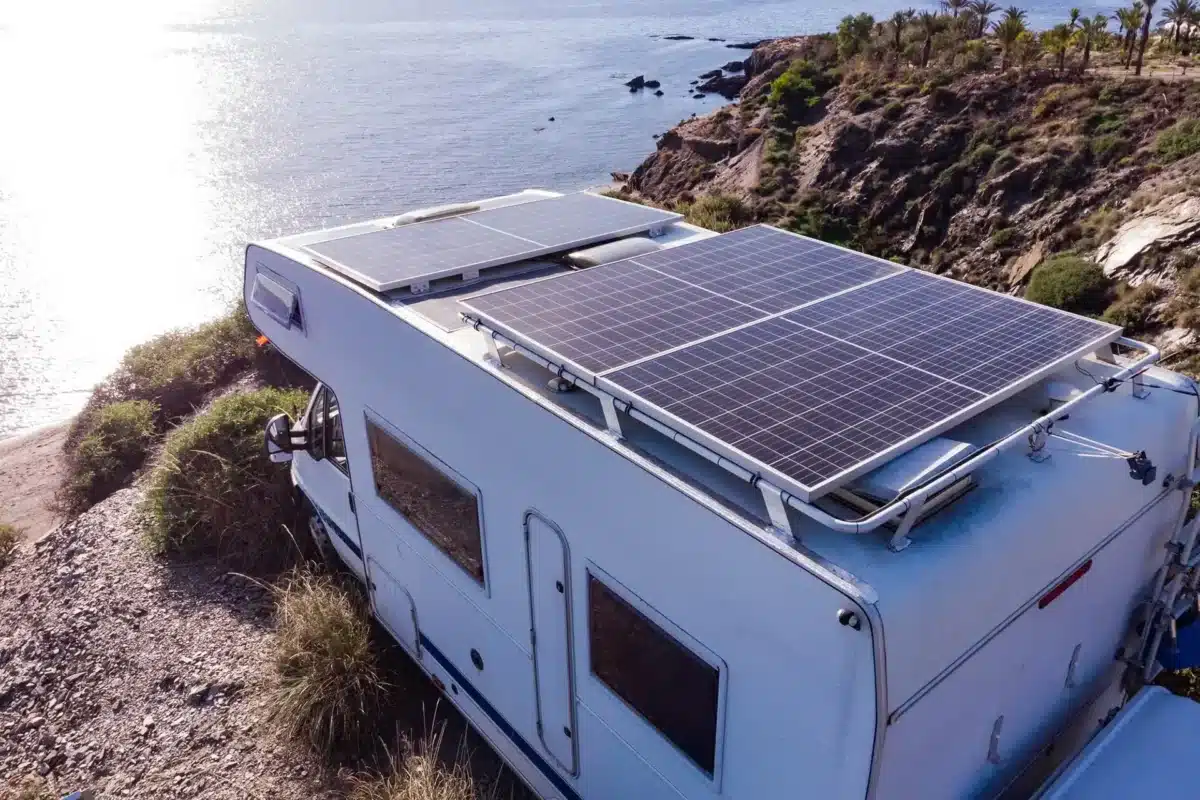
For optimal performance, consider a multi-stage charging setup: a DC-DC charger from your tow vehicle, a solar regulator for your panels, and a 240V charger for when you’re plugged in. This comprehensive approach ensures your batteries are always topped up, no matter your camping style. WUDU’s guide on a balanced caravan power system offers more detail on integrating these components.
Is Your Caravan “Lithium Ready”?
Upgrading to lithium often requires assessing and potentially upgrading existing components like chargers, inverters, and wiring to ensure compatibility and safe operation with the new battery technology.
Often, simply swapping out an AGM battery for a lithium one isn’t always enough. Your existing charging infrastructure might not be compatible. Older tow vehicles and caravan charging systems might not have the correct voltage output for lithium, or they might lack the ability to quickly deliver the higher current lithium batteries can accept.
Check your DC-DC charger, solar regulator, and 240V charger for a “lithium” setting. If they don’t have one, you’ll likely need to upgrade them. Additionally, ensure your wiring is thick enough to handle the higher current draw, especially if you plan to run a large inverter. Our comprehensive guide, Is It Lithium Ready?, provides a detailed breakdown of what to check.
Common Mistakes To Avoid When Upgrading to Lithium
- Ignoring existing component compatibility: Don’t assume your old chargers and wiring will work. Always check for lithium compatibility.
- Under-sizing your system: Calculating your power needs accurately is crucial. A system that’s too small will leave you short on power.
- Buying cheap, uncertified batteries: Invest in reputable brands with proper Battery Management Systems (BMS) for safety and longevity.
- Overlooking installation requirements: Lithium batteries, while lighter, still need secure mounting and proper ventilation.
- Not upgrading the inverter: If you want to run 240V appliances, ensure your inverter is correctly sized for your battery bank and appliance draw.
- Mixing battery types: Never mix lithium batteries with AGM or other lead-acid batteries in the same bank.
- Forgetting about temperature: While better than AGM, lithium batteries still have operating temperature ranges, especially for charging in cold weather.
Quick checklist
Your Lithium Upgrade
Before-You-Buy Checklist
Before upgrading your caravan battery system, check the whole power setup — not just the battery size.
A lithium upgrade is a full-system decision. The battery, chargers, solar, inverter, wiring and installation all need to work together.
Final Word
Upgrading to lithium caravan batteries is a significant investment, but for many Aussie caravanners, it’s one that pays dividends in freedom and comfort. The ability to stay off-grid for longer, run more appliances, and enjoy faster charging transforms the caravanning experience. It’s not just about having more power; it’s about having more options on the road.
By understanding the differences, planning your system carefully, and avoiding common mistakes, you can confidently make the switch. A well-designed lithium setup will open up new possibilities for your adventures, allowing you to explore more remote locations and enjoy the comforts of home wherever you pull up.