


Before replacing his AGM battery with lithium equivalents, electrician Elvin Pal did his homework first to ensure it was compliant.
Lithium batteries seem to be the preferred choice in most caravans and RVs nowadays and for good reason too. They are getting cheaper every year and easily justifiable for most users who use their RVs on a regular basis.
Their benefits are plentiful. In comparison to the same amp hour rated AGM variant, they are about half the weight or less. So, a great way to save weight when payloads are tight. They also have a much better usable capacity or depth of discharge. This means they can be used down to 20% of their usable capacity (80% DoD) and still maintain their charge cycles. Compared to AGM, they have a recommended depth of discharge of 50%. These figures can, of course, vary between different makes and models of batteries. However, they are about the ballpark for most batteries that I have researched.
Different Charge Rates
They also are generally much quicker to charge and have higher cycle rates. Accordingly, they can be charged, used, and recharged more times. Thus, they last for longer before needing replacing. For example, with a 2000 cycle rated lithium battery, if you were to use one cycle of recharging and discharging the battery every day, it should be good for over 5 years.
Hidden Costs
The biggest downside of lithium batteries over AGM so far has been cost. Not only the cost of the battery itself, which can be many times more than the cost of an equivalent rated AGM, but also the cost of changing the battery charger to be lithium compatible. There are also new wiring rules in regards to installing lithium batteries into RVs. Complying with them could mean extra work and extra costs, especially for RVs built before the new rules took effect in November 2023. This is because they may not have been made to comply, as it wasn’t law before then.
Ask a Professional
If you want to upgrade your RV from AGM to Lithium, I suggest doing the research first to find exactly what works may be required. If you are unfamiliar yourself with what’s required, then seek professional advice. Even as a qualified electrician, I had to seek the aid of others who are more familiar with the new regulations to ensure I knew what to do to be compliant.
Why We Did It
As we started going more off-grid, meaning going without power and water hook up, I found that the battery was draining a fair bit more than our previous caravan had. We used AGM batteries in our old van successfully for years. This did surprise me initially. However, upon further thinking, it made sense. We now had much more lighting and fans, and our boys were older and using more power to charge things and watch TV.
Future Proofing
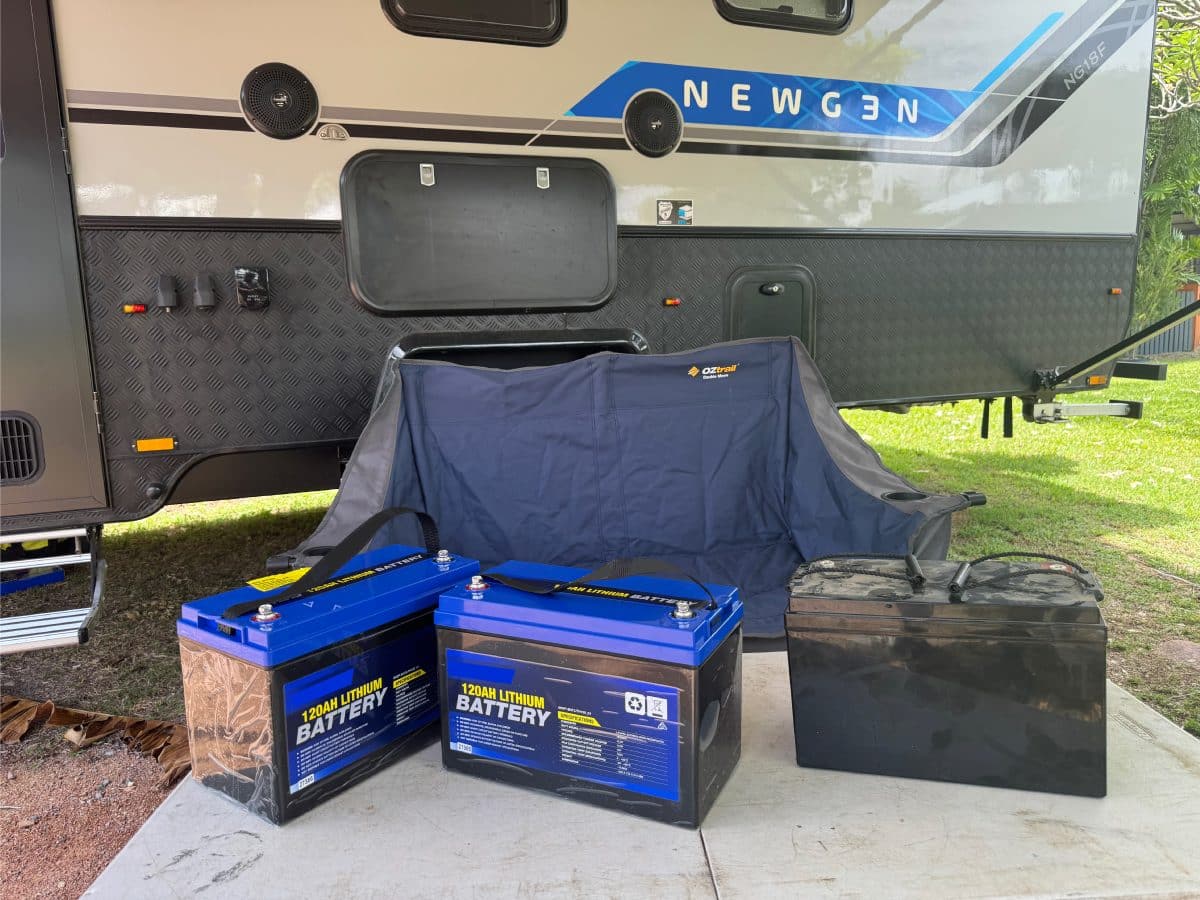
We decided to upgrade our 120Ah AGM to lithium. After all, at least for our setup, it was as simple as swapping the battery over and changing the settings on the battery charger from AGM to lithium. I did go a bit further and installed an extra battery at the same time. Consequently, we went up to 240Ah of lithium. It is well above our current usage. However, it will give us some extra power in case we decide to install an inverter in the future to run some 240 volt appliances.
Is It Lithium Ready?
With all that said, I was lucky with our new caravan. Even though it wasn’t fitted with a lithium battery from the factory, and it was built before November 2023, it was built lithium ready. This meant that the charger was lithium compatible and the battery housing was up to the new wiring standards. So, I could use it without any alterations. I even had an extra battery enclosure ready to use, which meant I could easily add an additional battery to my system with minimal work.
Words and Photos: The Adventuring Pals