

Our guide to the best lightweight caravans under 1,500kg ATM generated strong reader feedback, and one comment kept coming up: where are the Australian-made options?
Fair call. That guide focused on imported vans in a specific weight bracket. This one focuses on locally built options: full caravans, pop-tops, and hybrids, that sit comfortably under 2,000kg ATM and are built in Australia.
One thing worth saying upfront: the Australian-made small van market is smaller than it once was. Manufacturing economics have pushed many brands offshore over the past decade. The options that remain are genuinely good, but the list is shorter than most buyers expect.
We have also included one exception: the MDC Forte 9+. It is designed by an Australian company but built in China. It earns its place because it is the most popular competitor in this category and buyers deserve an honest comparison, but we have been clear about what it is.
Does Your Tow Vehicle Stack Up?
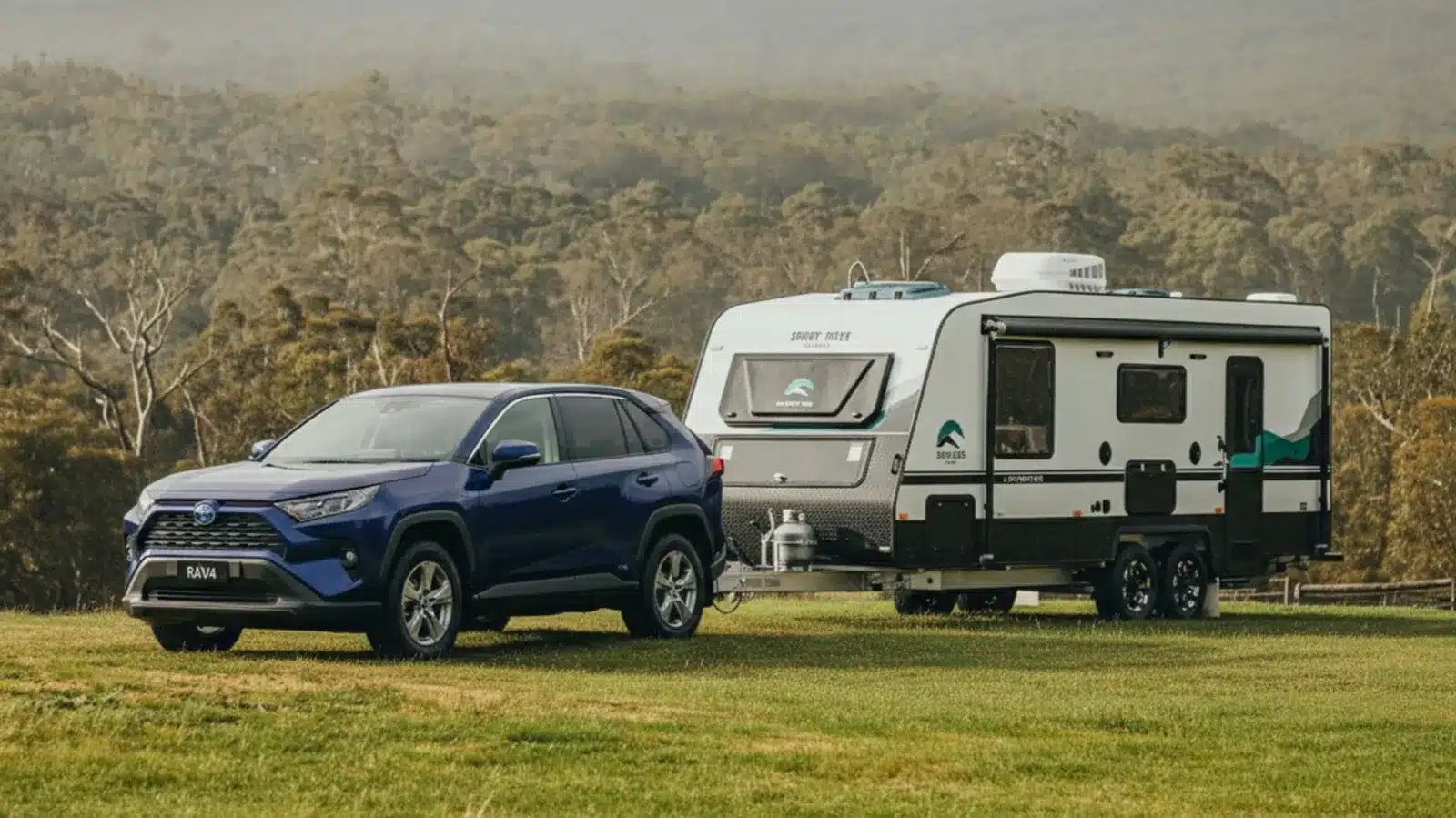
The vans in this guide sit between roughly 1,400kg and 2,000kg ATM fully loaded. That is the working range for large family SUVs. Here is how the most common ones compare on the numbers that actually matter.
Tip: Before you research a single van, pull out your owner’s manual and confirm three numbers: braked towing capacity, towball download limit, and Gross Combined Mass (GCM). All three matter. Towing capacity alone is not the full picture.
Strong tow rating; watch GCM and payload when fully loaded
Right at the ATM ceiling for this category; confirm GCM
Lower towball limit is the constraint; check your variant
Solid option often overlooked in this class
Strong family tow vehicle; confirm GCM on older variants
Always verify figures for your specific vehicle and variant using the owner’s manual. Numbers change between model years and drivetrain options, and the towball download limit is the number that catches buyers off guard most often.
What We Mean by “Small” Here
For this guide, small means a single-axle setup with an ATM under 2,000kg. That covers full-height caravans, pop-tops, and hybrid campers in the range most commonly paired with a large family SUV. If your tow vehicle has a capacity of 1,500kg or under, step back to the companion guide linked above. The vans here will push the limits of what you can legally tow.
The Australian-Made Options
Avan Aspire 402 Pop-Top
Avan has been building caravans in Victoria for over 50 years and is one of the few Australian manufacturers still operating at volume in the compact van segment. Their smooth panel construction gives the body strong strength-to-weight performance without heavy materials, which is why the Aspire 402 is the lightest full-height option in this guide.
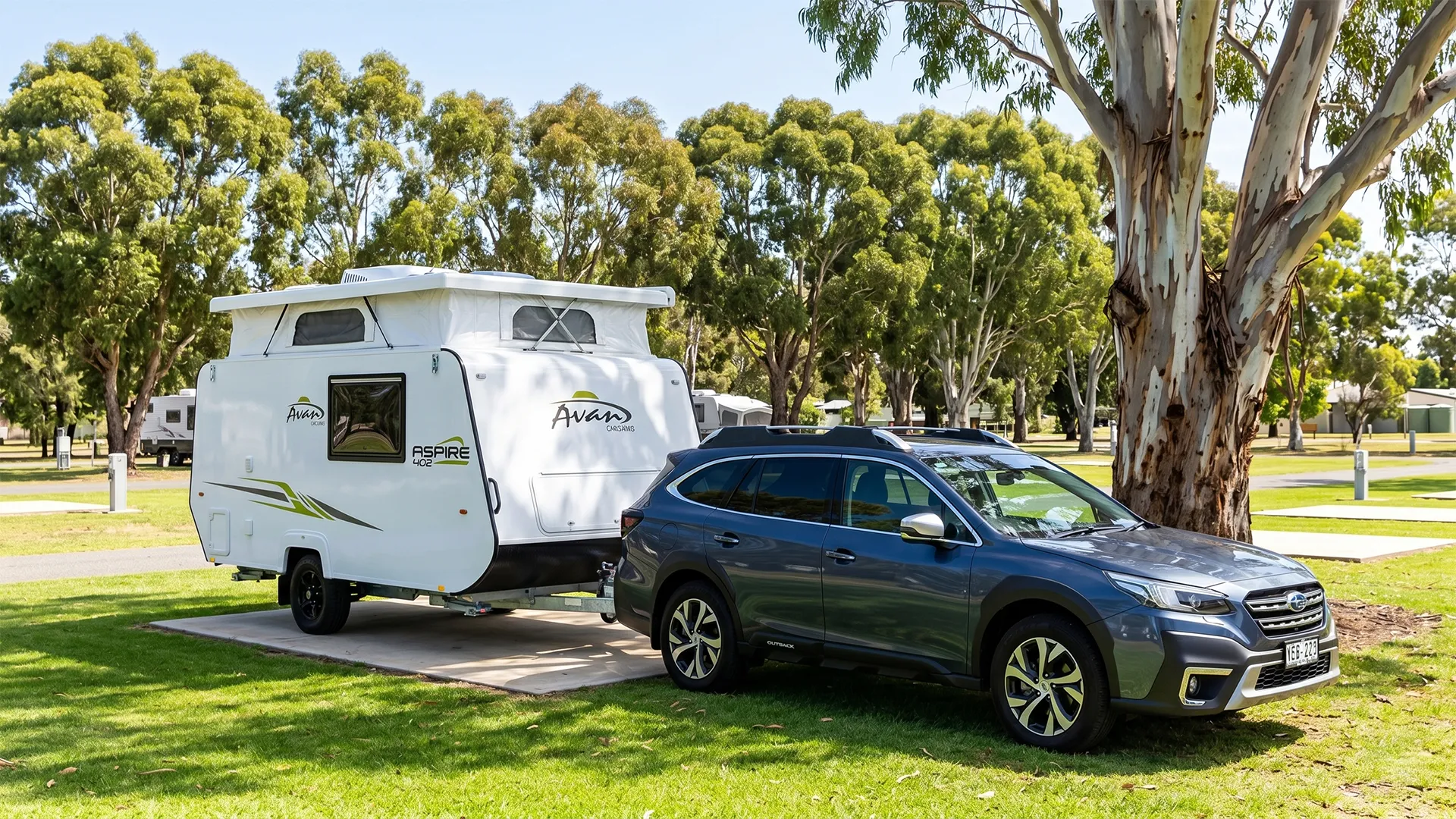
At around 1,040kg tare and an ATM of approximately 1,450kg, the Aspire 402 sits well within the towing capacity of any vehicle in the table above. The pop-top roof drops for travel and raises at camp, improving aerodynamics on the road and increasing interior headroom at the destination.
The 402 is a practical rather than luxury van. The combined wet bath ensuite is compact, the kitchen is basic, and the dinette converts to a sleeping configuration rather than offering a fixed permanent bed. For couples doing coastal and holiday park travel where most of the living happens outdoors, it is honest, well-built, and easy to tow.
Avan has a national dealer network across all states, which is one of the strongest service coverage advantages of any brand in this guide.
Buyers wanting the lightest Australian-made full-height van with national dealer support.
No fixed bed in the 402 layout. The ensuite is a combined wet bath rather than a separate shower and toilet.
Golf Savannah 402 Pop-Top
Golf Caravans designs and manufactures its vans in Australia and has been doing so for decades. The Savannah range is their compact pop-top line, built for couples and weekend tourers who want a practical, well-specified van without stepping up to a larger full-height model.
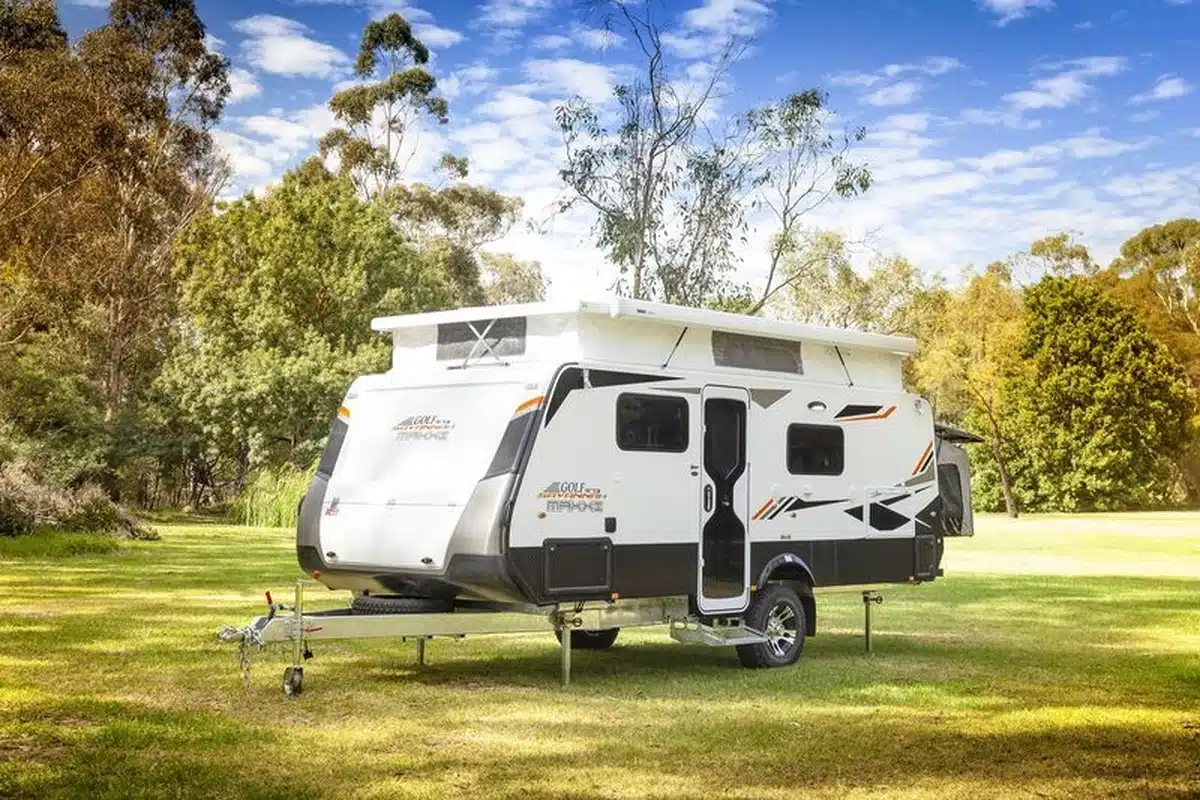
22Ft Model shown*
The Savannah 402 sits at around 1,250kg tare and 1,550kg ATM, which keeps it comfortably below the Kluger’s 2,000kg ceiling even when loaded. The interior packs in a queen bed and a convertible cafe-style lounge, a three-way fridge, diesel heater, microwave, and a combined ensuite with shower and toilet. For a van at this weight and price point, the inclusions list is strong.
Golf distributes through Avan’s dealer network nationally, which means the same broad service coverage that makes the Avan Aspire attractive applies here too. If you are comparing the two, the Golf Savannah generally offers a more complete standard fit-out and a slightly larger interior for a modest step up in tare weight.
Buyers who want more standard inclusions and interior space than the Aspire 402, still in an Australian-made pop-top format.
Convertible lounge rather than a fixed permanent bed. Confirm which layout variant you are looking at with the dealer.
Silversun Neptune 402
Silversun has been building caravans in Queensland since 2010 and is consistently the most recommended Australian-made compact van in owner communities. The company is Australian-owned, sells direct-to-consumer, and builds its vans locally with a national component supplier network. Buying direct from the manufacturer means you are dealing with the people who built it throughout ownership.
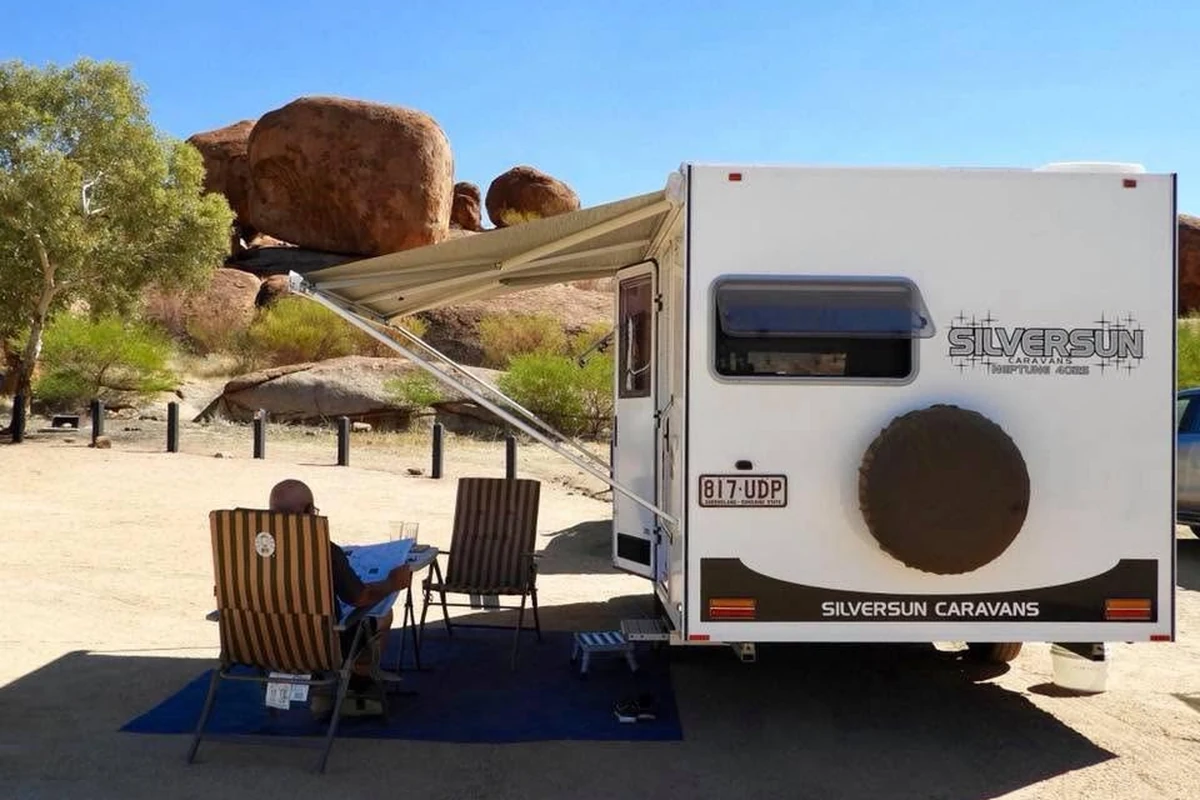
The Neptune 402 is their most popular model. Around 13 feet of body length, tare from 1,240kg, ATM around 1,600kg. The key point of difference from the pop-tops above is the ensuite: every Neptune comes with a full separate shower and toilet, not a combined wet bath.
In a van at this weight, that is genuinely unusual and worth paying attention to if an internal separate ensuite matters to you. Multiple layout variants are available including twin singles.
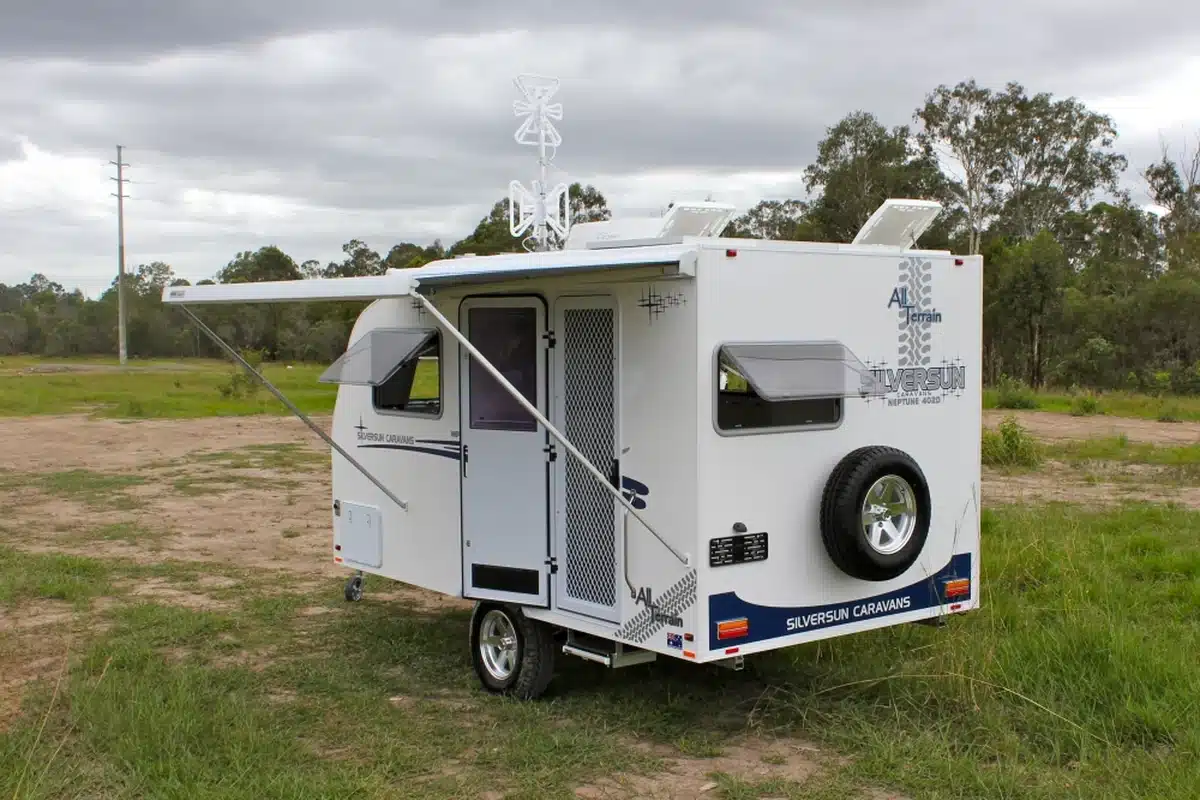
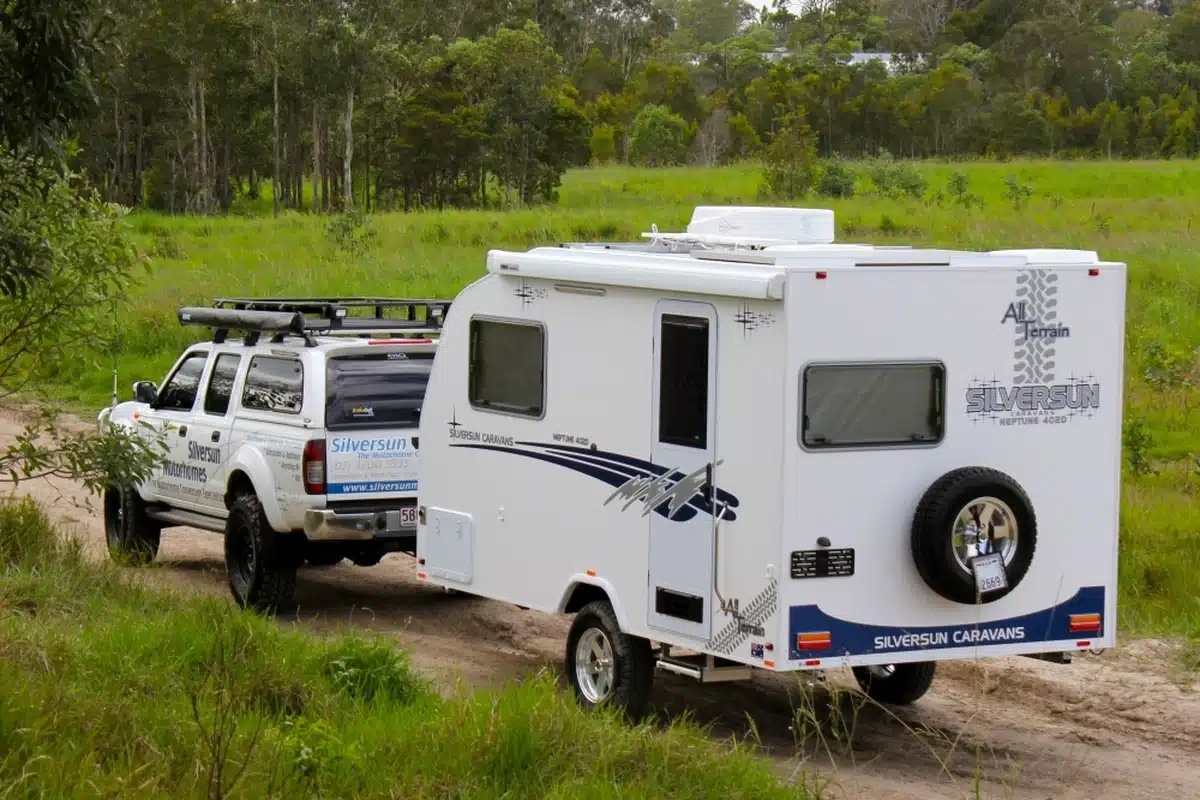
Silversun’s owner community is active and their after-sales reputation is consistently positive. That matters, given that warranty and service access is one of the weakest points in the caravan industry broadly.
Buyers who want a full-height van with a proper separate ensuite, built in Australia, bought direct from the manufacturer.
Silversun is a Queensland operation. Interstate buyers should discuss service arrangements before purchasing, particularly if based in WA or SA.
Jayco CrossTrak 13ft Hybrid
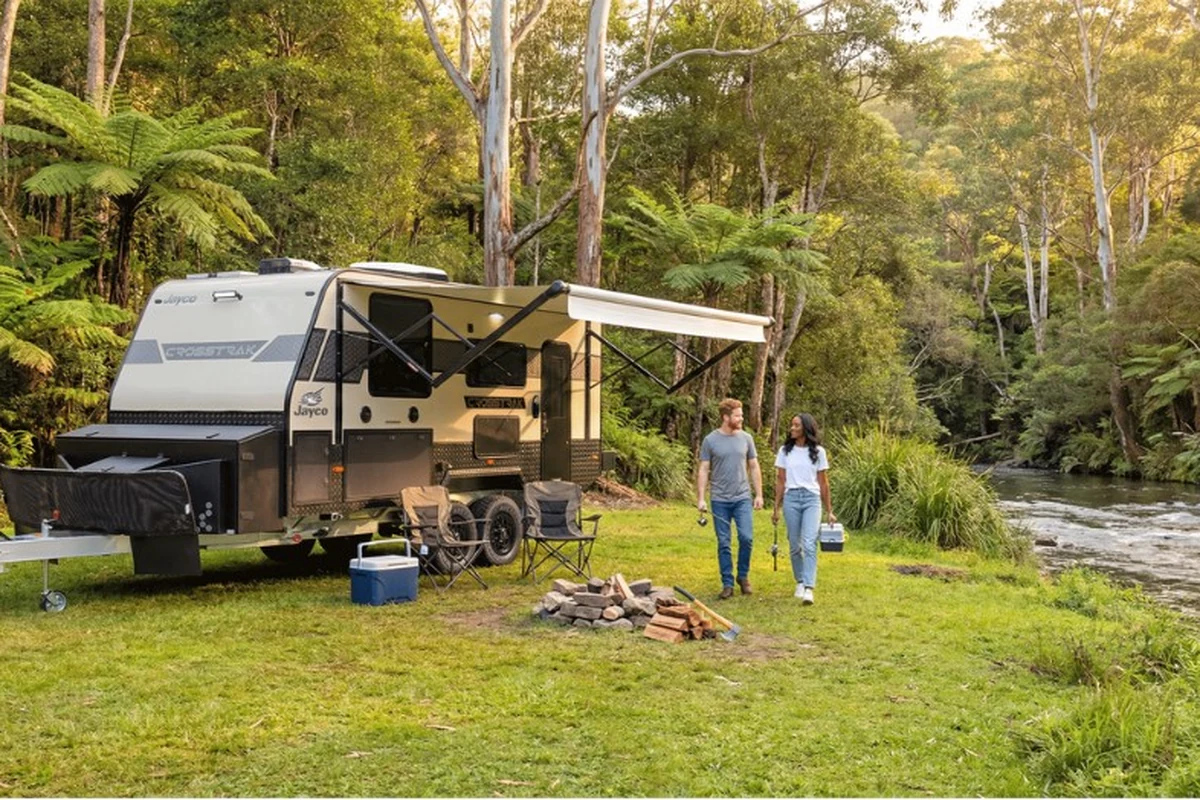
Jayco builds all of its RVs at its factory in Dandenong South, Victoria, and the CrossTrak is their answer to the growing market for compact off-road hybrids. At 1,350kg tare and 1,920kg ATM, it sits right at the top of this guide’s weight range and right at the practical ceiling of a Toyota Kluger.
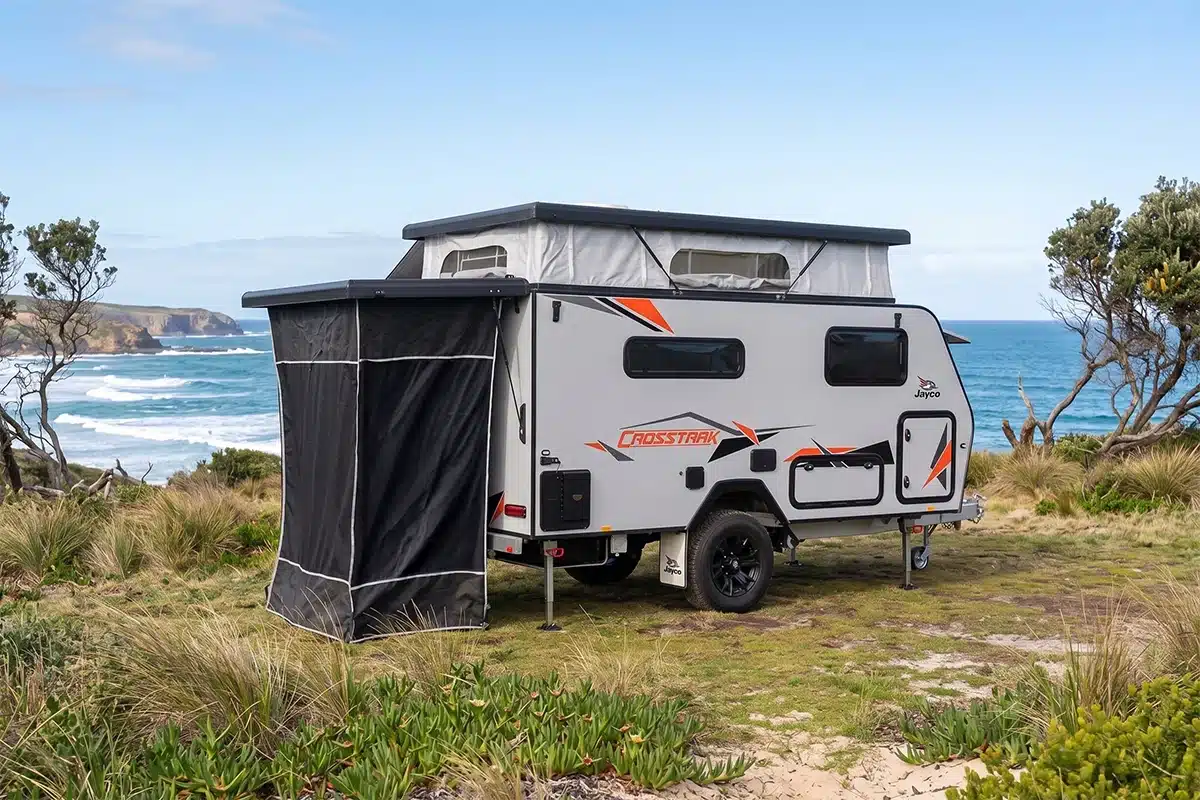
Construction uses vacuum-bonded quad-layer fibreglass walls on Jayco’s Endurance chassis with J-Tech independent coil suspension and a DO35 off-road hitch standard. The 570kg payload is generous for this weight class.
A 720L tunnel boot accessible from both sides handles storage well. Air conditioning, two 80L water tanks, solar, and a 60L fridge all come standard.
The CrossTrak is a hybrid, which means beds fold out and the kitchen and shower are external. If an internal ensuite and fixed bed are non-negotiables, this is not the right format. But for buyers who spend most of their time outdoors and want genuine off-road capability with Australian-made credentials, it is a strong package.
The most compelling practical advantage the CrossTrak has over any Chinese-built competitor is Jayco’s service network, which is the most extensive of any caravan brand in the country. Whatever goes wrong, wherever you are, there is a Jayco dealer within reasonable reach.
Buyers who want Australian-made off-road hybrid capability and the backing of the strongest service network in the country.
External shower and fold-out beds are not for everyone. If you move camp frequently or tour in wet weather regularly, a full-height van will suit you better.
MDC Forte 9+: The Exception Worth Knowing
The MDC Forte 9+ is not Australian-made. MDC is an Australian-owned company that designs and specifies its products here, but the vans are manufactured in China and imported. We have included it because it is the most direct competitor to the CrossTrak in this category, it came up specifically in reader comments on our previous guide, and buyers deserve an honest side-by-side view.
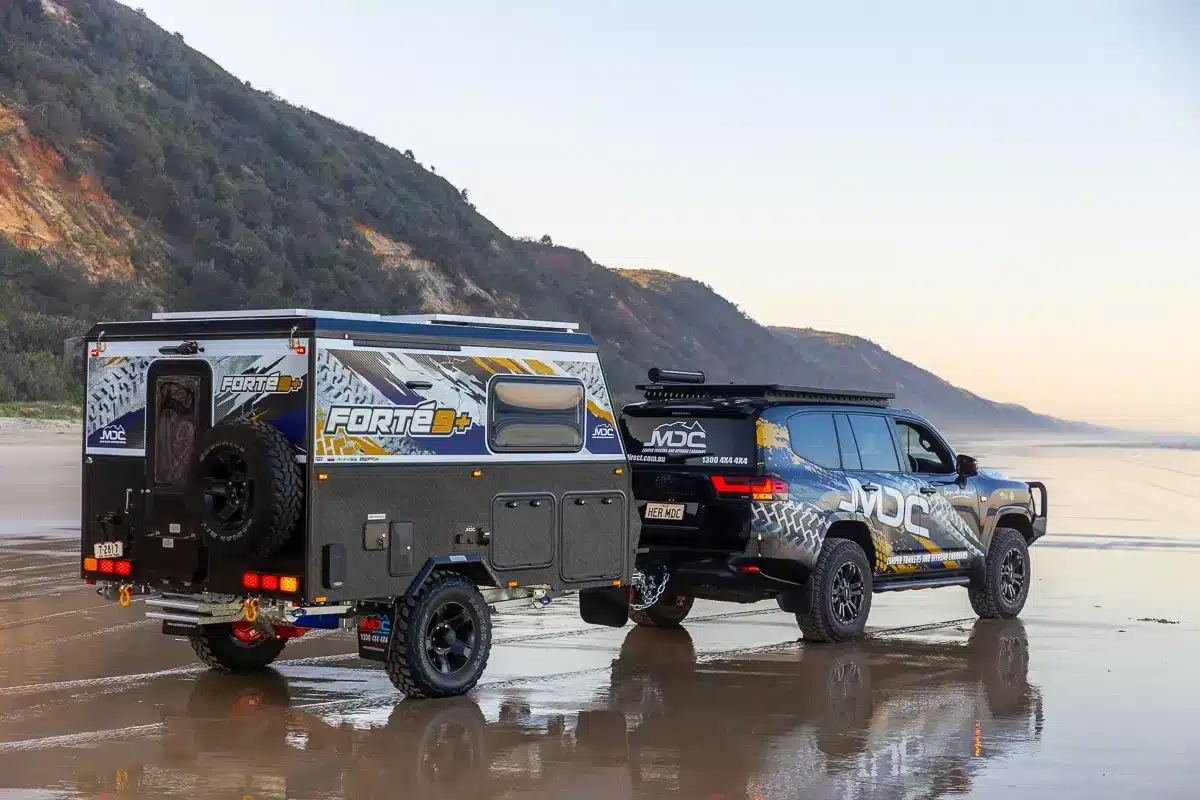
At around 1,400kg tare and 2,000kg ATM, it sits at the ATM ceiling of this guide. The spec sheet for the 2025 model is genuinely strong for the price: 525W of rooftop solar, 200Ah LiFePO4 lithium battery, 1,600W inverter, Cruisemaster DO35 hitch, 2kW diesel heater, 14L Truma hot water, external slide-out kitchen, 120L water capacity, and X-Track independent coil suspension with twin shock absorbers.
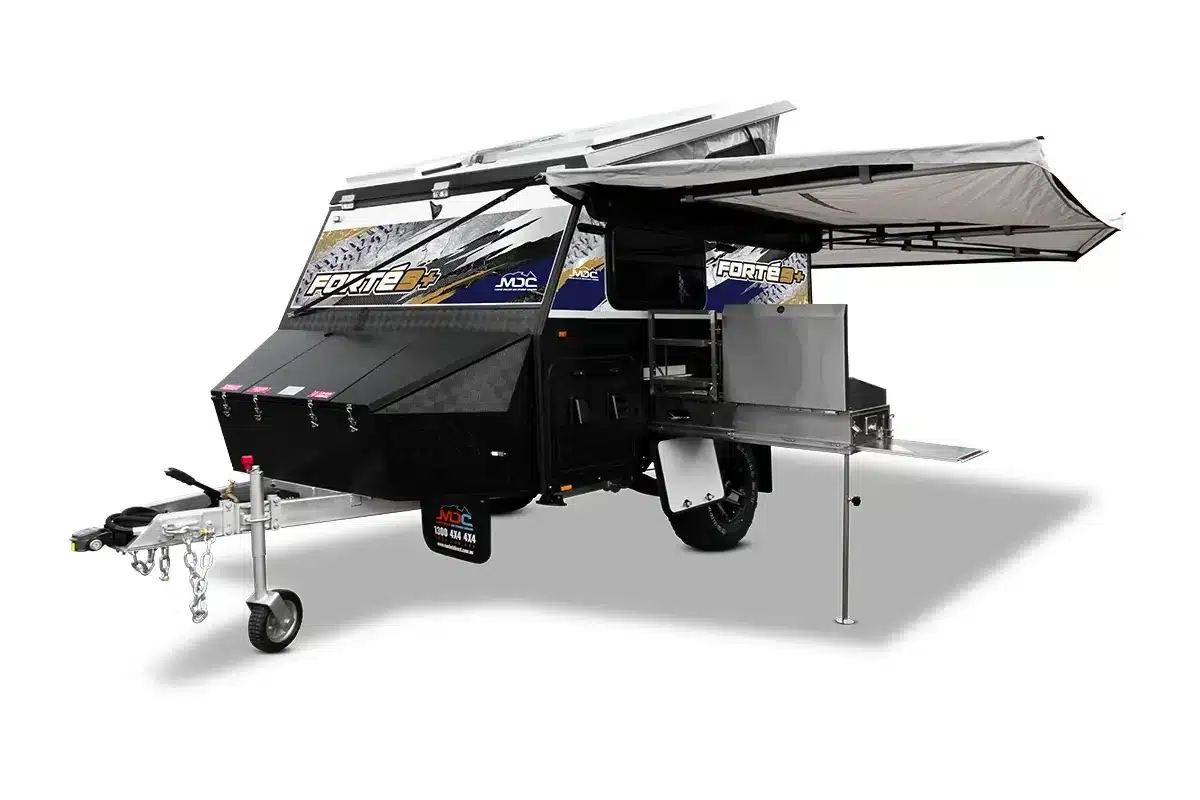
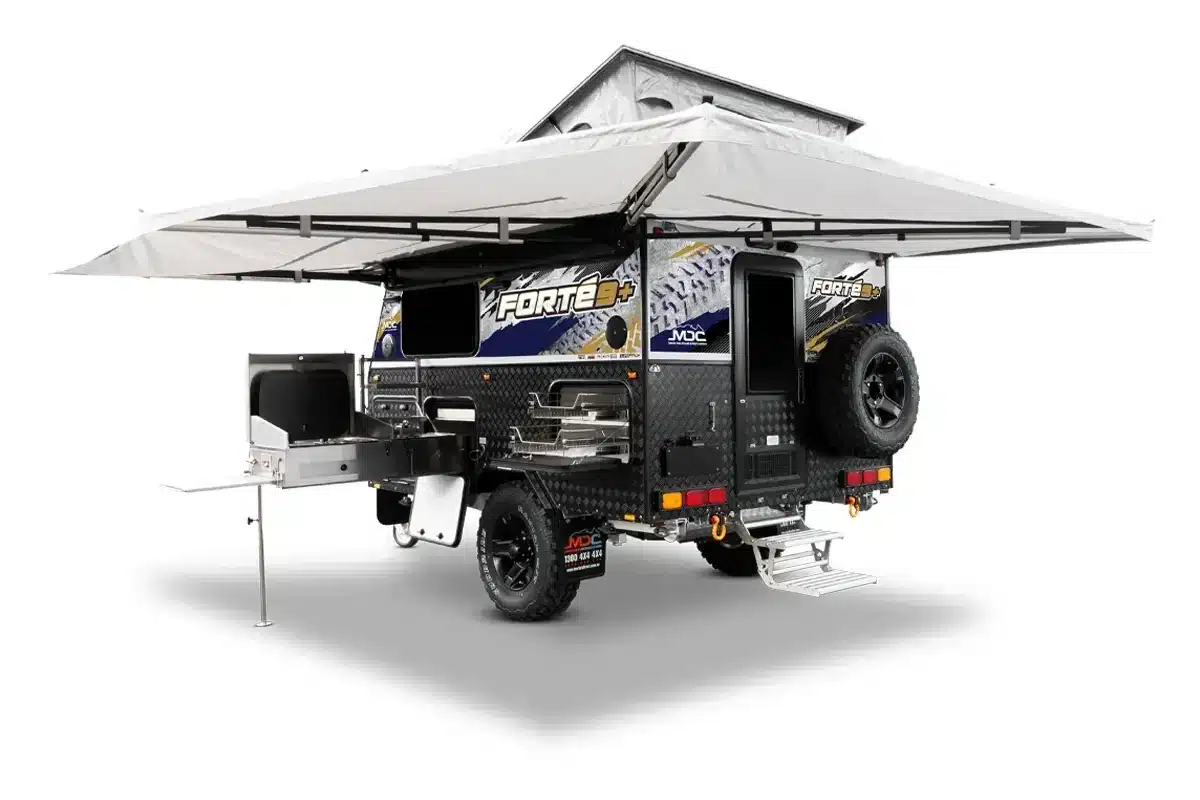
The trade-off compared to the Jayco CrossTrak is the service network. MDC has dealers in major centres but the Jayco footprint is significantly broader, particularly in regional and remote areas. The MDC owner community is active and helpful on YouTube and Facebook, which partially offsets this for mechanically confident owners.
The ensuite is external via an included shower tent, which is the same format as the CrossTrak.
Buyers who want maximum off-grid spec at a competitive price and are comfortable with the Chinese-built trade-off and external shower format.
Built in China, not Australia. Service network is thinner than Jayco outside major centres.
The Question That Cuts Through the List
Before comparing specs, answer one question honestly: how much time will you actually spend inside the van?
If most of your travel involves good weather, planned campsites, and days spent outdoors, the Jayco CrossTrak makes a strong argument. The external shower rarely matters when conditions are decent, and the off-grid spec and service network are genuinely impressive at the price.
If you tour through winter, travel in the tropics during wet season, move camp daily, or simply prefer the self-contained feel of a full-height van with everything inside, the Silversun Neptune is the right direction. The separate internal ensuite is not a luxury in those conditions. It is a practical necessity.
The Golf Savannah slots in for buyers who want more standard inclusions than the Avan Aspire, without the price jump of the Silversun, and are happy with a pop-top format and combined wet bath.
The MDC Forte 9+ competes directly with the CrossTrak on spec and price. The honest trade-off is build origin and service network. If those matter to you, the CrossTrak is the answer. If maximum off-grid spec per dollar is the priority and you are comfortable sorting minor issues yourself, the MDC is a serious contender.
Tip: If you are still weighing up whether a full caravan or a hybrid is right for your style of travel, our companion guide to hybrid, camper trailer, and full caravan trade-offs is worth reading before you visit any showrooms.
The Australian-made small van market is leaner than it once was, but the brands that remain are building product worth your attention. Silversun in particular is competing on quality and price in a way that makes the choice genuinely close against the imported alternatives, with the added benefit of buying directly from the manufacturer.
Confirm your tow vehicle numbers first. Then match the format to how you actually travel. Then get to a showroom or manufacturer and sit in one before you sign anything.