

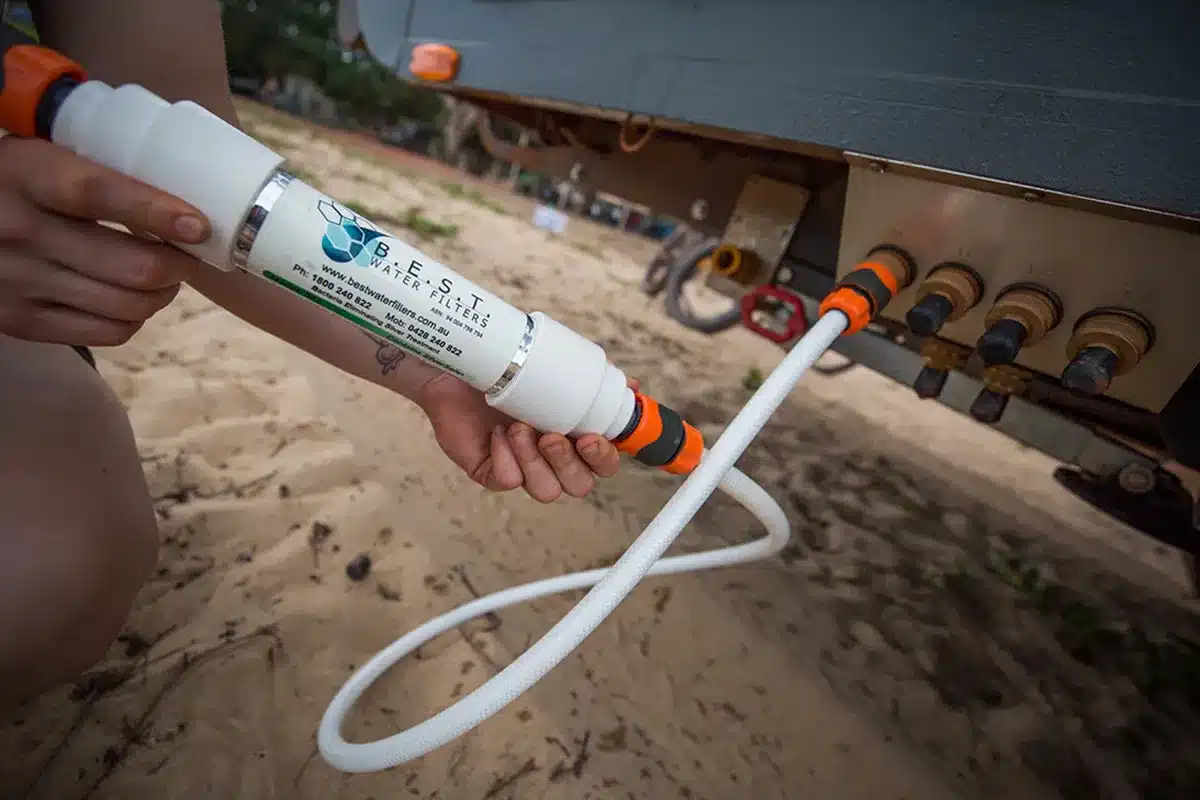
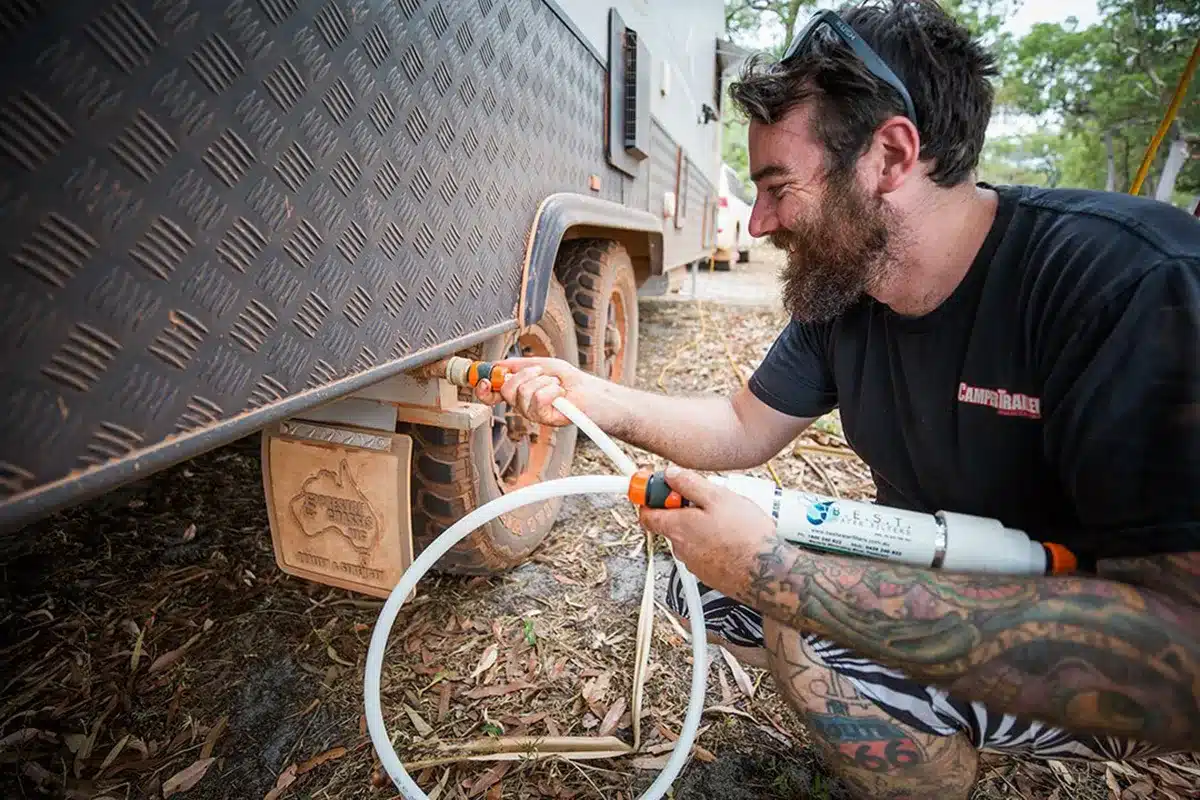
Inline water filters are the cheapest, simplest fix in the entire caravan accessory world. They sit between your filling hose and your tank inlet, treating the water as it goes in. No plumbing changes. No drilling. Two-minute install. And done well, they’ll save your appliances, your taste buds, and your gut.
The problem is that “done well” hides an enormous amount of variation. The cheap disposable filters at the petrol station are not the same product as the premium Australian-made units used by serious tourers. The good news is that, after looking hard at the market, there’s one inline filter that genuinely earns the “best” tag for Australian caravanning. Here’s the case for it, the honest trade-offs, and what else is worth knowing before you buy.
Here’s What We Reckon
For Australian caravanners refilling from a mix of caravan parks, town taps, rural taps, and the occasional bore or rainwater tank, the B.E.S.T. Inline Water Filter is the standout pick. It’s Australian-made, hand-assembled on the Gold Coast, designed specifically for Australian water conditions, and built around a genuinely different filtration approach than the disposable imports it competes against.
It’s not the cheapest and it’s not the most exotic. But it’s the one we’d buy, and the one most experienced full-timers eventually settle on after they’ve burnt through three or four cheaper alternatives.
If you’re filling exclusively from highly mineralised bore water in remote areas, you’ll want to step up to a multi-stage system like The Thirsty Nomad. We’ll cover that below. For everyone else, B.E.S.T. is the answer.
Why Inline Filtration Matters for Caravanners
A quick framing before we get into the product detail. Australian caravan touring exposes you to a wider variety of water sources than almost any other kind of travel. In a single trip you might fill from heavily chlorinated town water in one park, then a rural tap that hasn’t been tested in a decade, then a rainwater tank, then a bore. Each of those carries different risks.
- Town water is treated, but typically heavy with chlorine, which ruins the taste of tea and coffee and damages rubber seals over time.
- Rural taps can be inconsistent. Sediment, rust from old pipes, occasional bacterial issues.
- Rainwater tanks can be excellent, but only if the catchment and tank have been maintained. Many haven’t.
- Bore water varies wildly. High mineral content (calcium, iron, manganese) is common and will quickly clog standard carbon filters.
A good inline filter handles the first three categories without breaking a sweat. The fourth (heavy bore water) is the edge case where you may need something more.
The other thing worth knowing is that filters do more than improve taste. They protect your downstream gear too. Sediment that gets into your tanks will eventually find its way to your pump, your hot water service, and your taps. A $100 inline filter genuinely extends the life of every piece of plumbing it sits in front of.
Tip: Even if you’ve got an under-sink filter already plumbed into your van, an inline filter on your fill hose is still worth running. The under-sink unit is cleaning your drinking water. The inline unit is keeping the rest of your plumbing clean. They do different jobs.
What Sets the B.E.S.T. Apart
There are three things that genuinely separate the B.E.S.T. from the disposable filters that dominate the cheap end of the market.
1. SilverSafe® technology, not “silver impregnated”.
Most cheap inline filters claim some version of “silver technology”; usually a silver solution sprayed onto the carbon, or scattered granules. The B.E.S.T. uses a full bed of silver-coated crystals at each end of the unit, which all water has to physically pass through. The branded process is called SilverSafe®, and the brand name itself (B.E.S.T.) stands for Bacteria Eliminating Silver Treatment.
The practical implication is that the filter doesn’t grow bacteria internally during storage. That matters more than it sounds. Most disposable filters need to be replaced every 6 or 12 months not because the carbon has expired, but because bacteria have started colonising the inside of the unit. The B.E.S.T. eliminates that problem, which is why the recommended replacement isn’t time-based at all.
2. Replace it when it’s full, not by the calendar.
The B.E.S.T. carbon is rated to treat a minimum of 5,000 litres of chlorinated water. For a typical caravanner refilling 80-100L tanks every few days, that’s roughly 2-3 years of normal use. There’s no hard time limit. Run it slow, look after it, back-flush when needed, and many owners get four or five years out of a single unit.
3. Reversible and back-flushable.
Most inline filters have a single flow direction printed on the body. Once the membrane starts to clog with sediment, that’s it. The B.E.S.T. is symmetrical, with dual 5-micron then 1-micron membranes at each end. When the flow drops, you simply unscrew it, turn it around, run town pressure through in the opposite direction (flushed to the ground, not into your tanks), and the contaminants come out the other side.
That reversibility is the single biggest reason owners report multi-year service life out of the same unit. It’s also the reason the B.E.S.T. shrugs off bore water duty better than its competitors.
Verified Specs
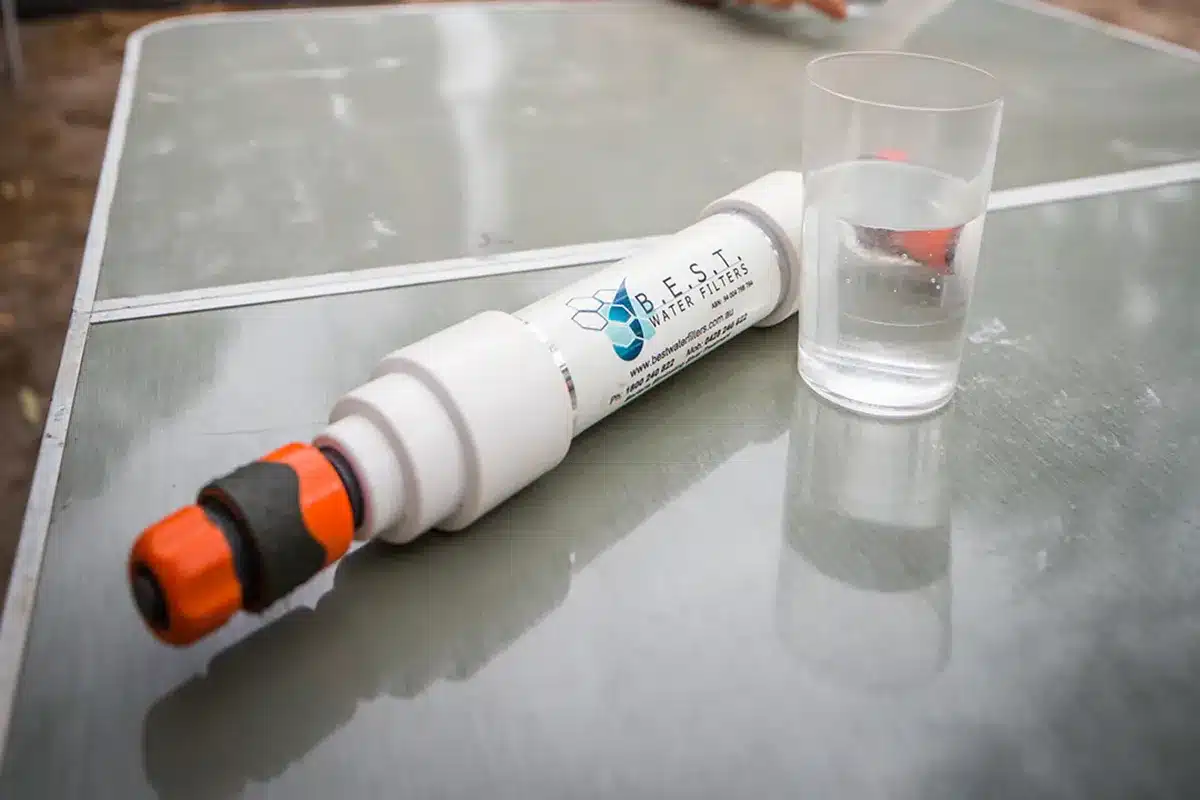
Pulled directly from B.E.S.T.’s own product data, current as of 2026.
- Dual membranes: 5 micron and 1 micron at both ends
- Flow rate: 0-15 litres per minute (depending on incoming pressure)
- Max pressure: 2,100 kPa over 15 minutes (compliant with Australian Standards)
- Minimum pump pressure required: 35 psi
- Operating temperature range: 1°C to 40°C
- Filter life: Minimum 5,000 litres of chlorinated water, no time-based replacement
- Construction: Hand-assembled in Australia, sealed unit, no replaceable cartridges
- Warranty: 12 months
The unit is compact (it’ll fit comfortably in your hose box), and weighs only a little more than a full water bottle. Installation is genuinely a 2-minute job.
Tip: Slower flow equals better filtration. If you’ve got the time, do a slow fill into your tanks rather than running the tap flat-out. The contaminant removal is significantly better at lower flow rates, and you’ll extend the carbon life noticeably.
Pick the Right Variant for Your Setup
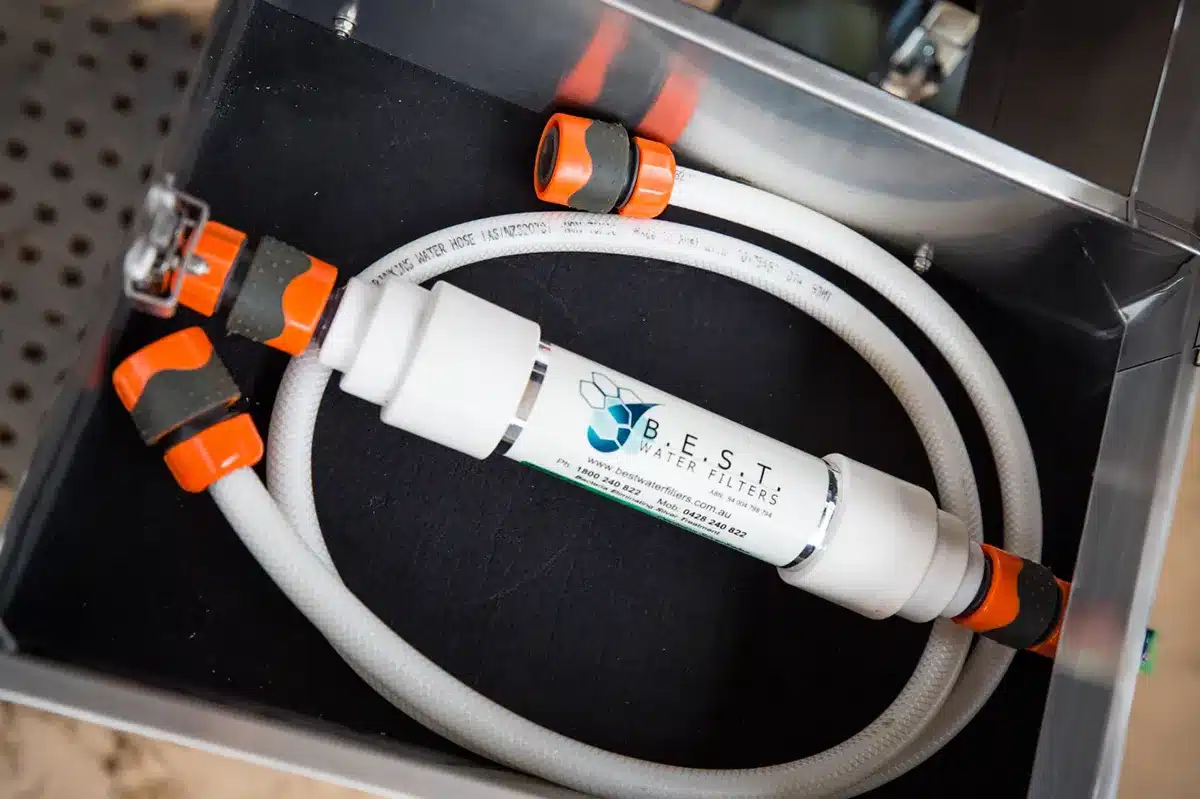
The B.E.S.T. comes in several configurations. The choice depends on what fittings you’re running. Pricing here is (AUD) RRP from the manufacturer’s site as of May 2026.
- 322H — Plastic hose fittings ($138): The most popular variant. Click-on fittings compatible with Gardena, Pope, Neta and similar brands. The default choice for most caravanners.
- 322HB — Brass hose fittings ($155): Same filter, brass click-on fittings. More durable for heavy use, slightly heavier in the hand.
- 322HL — Hoselink fittings ($113): Match for Hoselink hose users. Pick this if your existing setup is Hoselink-equipped.
- 322B (bare 3/4″ BSP threads, $129.95): No fittings. For users who want to run their own preferred connectors.
- 322 with 1/2″ BSP threaded fittings + mounting clips ($144): For semi-permanent installs with brackets.
For 90% of caravanners, the 322H is the right buy. The brass-fitting 322HB is worth the extra $12 if you’re a full-timer or you find yourself connecting and disconnecting the hose constantly.
If you want belt-and-braces protection, the dual-pack of a 322H (on the fill hose) plus a 322T (internal) gives you two-stage filtration: water is filtered going into the tanks, then polished again before it reaches your drinking tap.
Honest Limitations
No product is perfect, and the B.E.S.T. isn’t either. Here’s where it falls short.
Heavy bore water will overwhelm it. The B.E.S.T. handles average bore water fine, but if you’re filling regularly from highly mineralised outback bores (the kind with visible orange staining or strong sulphur smell), you’ll clog the carbon faster than the back-flush can recover from. For that use case, look at multi-stage systems like The Thirsty Nomad, which use a sediment pre-filter, a reversible bore-water cartridge, and a final 0.01 micron purifier.
No cartridge replacement option. The B.E.S.T. is a sealed unit. When the carbon is finally exhausted, you replace the whole filter. Some owners prefer cartridge-based systems where you can swap just the consumable element. It’s a design philosophy difference rather than a flaw.
Flow rate drops as it loads up. This is normal for any carbon filter, but it’s worth knowing. If you notice your fill time has crept up, that’s your prompt to back-flush. Don’t wait until the flow is genuinely poor.
Initial cost is higher than the petrol-station alternatives. A Camco TastePURE disposable will cost you around $35-45 and last a single season. The B.E.S.T. is roughly three times that upfront, but lasts ten times longer in real-world use. Math works strongly in B.E.S.T.’s favour over any meaningful timeframe.
Tip: When you back-flush, do it with town pressure water and let it run for at least 30 seconds. A quick reverse won’t shift much. You’re trying to physically dislodge the build-up on the membrane, not just rinse the surface.
How It Compares to the Alternatives
A quick honest scan of what else is out there.
- B.E.S.T. Inline (this review): $113-155, Australian-made, 5,000+ litre life, back-flushable, SilverSafe® bacterial control. The all-rounder.
- The Thirsty Nomad (Camec): $339+ for the inside & out kit, multi-stage, designed specifically for bore water, 0.01 micron final purification. Best for outback full-timers.
- Camco TastePURE: $20-45, disposable, US-made. Fine for one weekend, not for serious use.
- Aqua Plus inline: $119+, basic chlorine/sediment removal. Cheaper local alternative for park-only travellers.
- Puretec inline cartridge systems: $200-400, premium fixed installation, replaceable cartridges. Common in newer high-end caravans.
The pattern is clear. The B.E.S.T. is the value sweet spot for the way most Australian caravanners actually travel; a mix of parks, country taps, occasional bush stays, and the odd remote refill.
Who Should Buy It
The B.E.S.T. is the right inline filter if:
- You travel mostly through caravan parks and rural areas with mixed water sources
- You want clean, neutral-tasting water without the cost of a multi-stage system
- You’d rather buy once and keep it for years than replace cheap units annually
- You value Australian-made gear and direct manufacturer support
- You want a set-and-forget unit that doesn’t need calendar-based replacement
- You’d benefit from any small upgrade that pays for itself in convenience and peace of mind. Our roundup of 7 small camping upgrades that make a big difference on the road covers a handful of other under-the-radar additions worth considering alongside an inline filter.
Who Should Look Elsewhere
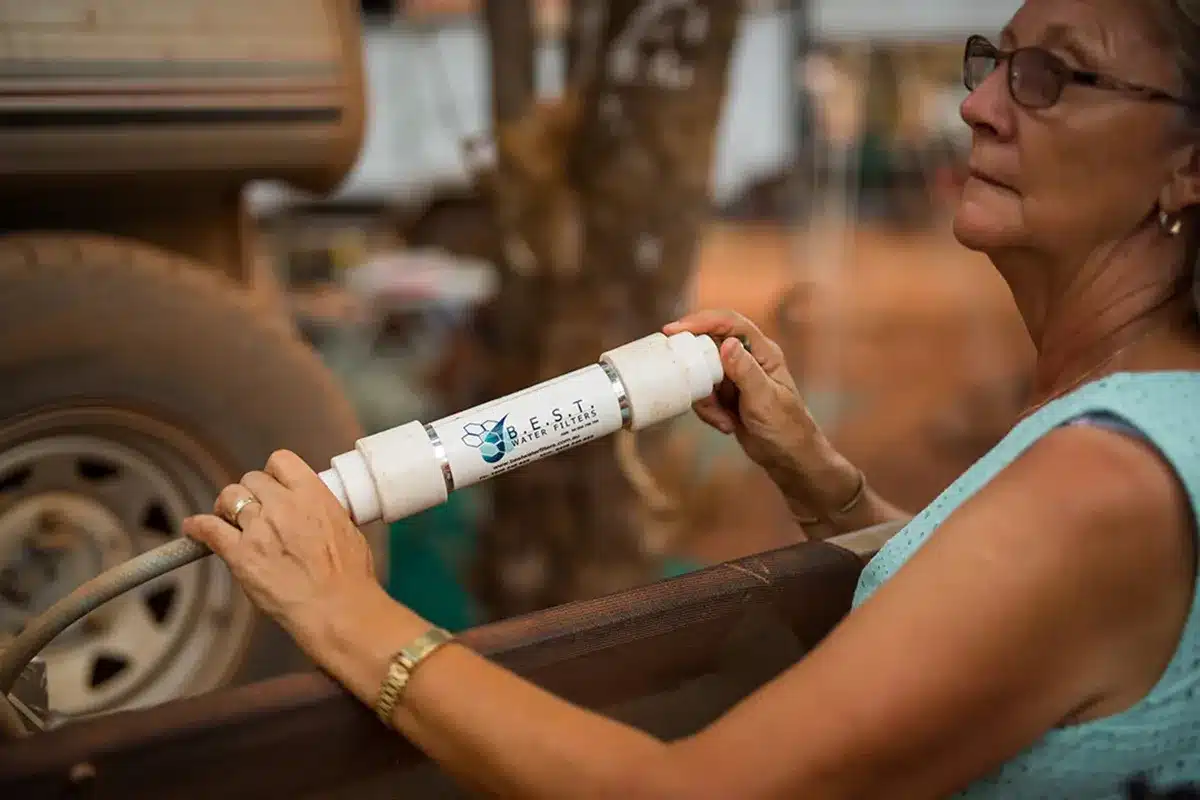
The B.E.S.T. isn’t quite the right call if:
- You spend the majority of your time in remote areas filling from heavily mineralised bore water (look at The Thirsty Nomad)
- You prefer a cartridge-based system where you can replace just the consumable element
- You’re only camping a handful of weekends a year and a $40 disposable will do (Camco TastePURE is honest value at that level)
- You already have a premium under-sink system fitted and you only need cheap pre-filtration
Worth noting: filtration is one piece of a wider water and comfort setup for caravanning. If you’re at the stage of building out reliable hot water alongside your filtration, our review of the Joolca HOTTAP V2 Essentials portable hot water kit is worth a read. The two products solve different problems but share an audience.
Care, Maintenance and Real-World Use
A few field-tested practices that will get you the maximum life out of your B.E.S.T.
- Always run the first 10-20 litres to waste when you first install it, or after any extended storage. This flushes any carbon dust out of the unit.
- Back-flush every 6-12 months, or earlier if you notice flow rate dropping. It takes 30 seconds and significantly extends carbon life.
- Do a slow fill into your tanks where you can. Better filtration, longer carbon life, both.
- Store it dry if you’re putting the van away for an extended period. Drain the unit and let it air for a few days before storage.
- Don’t let it freeze. The 1°C minimum is real. Frozen water expands and can crack the membranes.
- Watch for the “trickle” symptom. If your shower pressure suddenly drops, the filter is the first thing to check. A quick back-flush usually solves it before you start blaming the pump.
Pre-Purchase Checklist
- Confirmed which fitting type matches your existing hose setup (Gardena, Hoselink, brass, etc.)
- Decided whether you need just the 322H, or the 322H + 322T dual setup
- Checked whether you regularly fill from heavy bore water (if yes, consider The Thirsty Nomad)
- Confirmed you have somewhere in your hose box to store the unit between uses
- Understood the 12-month warranty terms direct from B.E.S.T.
Quick Verdict
The standout pick for Australian caravanners refilling from a mix of parks, country taps and the occasional bush stay. Australian-made and built to last.
Dual 5 then 1 micron membranes, 0-15 L/min flow, SilverSafe® bacterial control, 5,000+ litre carbon life, no time-based replacement.
Australian made and hand-assembled, fully back-flushable, no annual cartridge swaps, multi-year service life, two-minute install.
Sealed unit (no replaceable cartridges), heavy bore water can overwhelm the carbon, and upfront cost is higher than disposable alternatives.
Caravanners refilling from caravan parks, town water, country taps and rainwater tanks who want a single unit that lasts years, not months.
Slow fills give better filtration and longer carbon life. If you’ve got the time, run the tap at half-flow rather than flat-out when topping up the tanks.
What do we think?
Of all the small upgrades a caravanner can make, an inline water filter is one of the few that genuinely improves your trip from the very first fill. Better-tasting water. Less sediment in your tanks. Longer life on every piece of plumbing downstream. Cheap insurance against the variable quality of Australian water sources.
The B.E.S.T. Inline isn’t the only option, but it’s the one that gets the most things right for the most caravanners. Australian-made, Australian-designed, hand-assembled, sold for over two decades, and engineered around a smarter filtration philosophy than its disposable competitors. At a hundred bucks for a unit that lasts three to five years and protects your entire plumbing system, the value calculation is hard to argue with.
For most caravanners, this is the one. Buy it, install it, back-flush it occasionally, and forget it for the next few years. That’s exactly what good gear should do.
For more reviews of the gear Australian caravanners actually use, browse our full collection of accessory and gear reviews, or head to our buyers guides and ownership advice for help thinking through bigger setup decisions.