
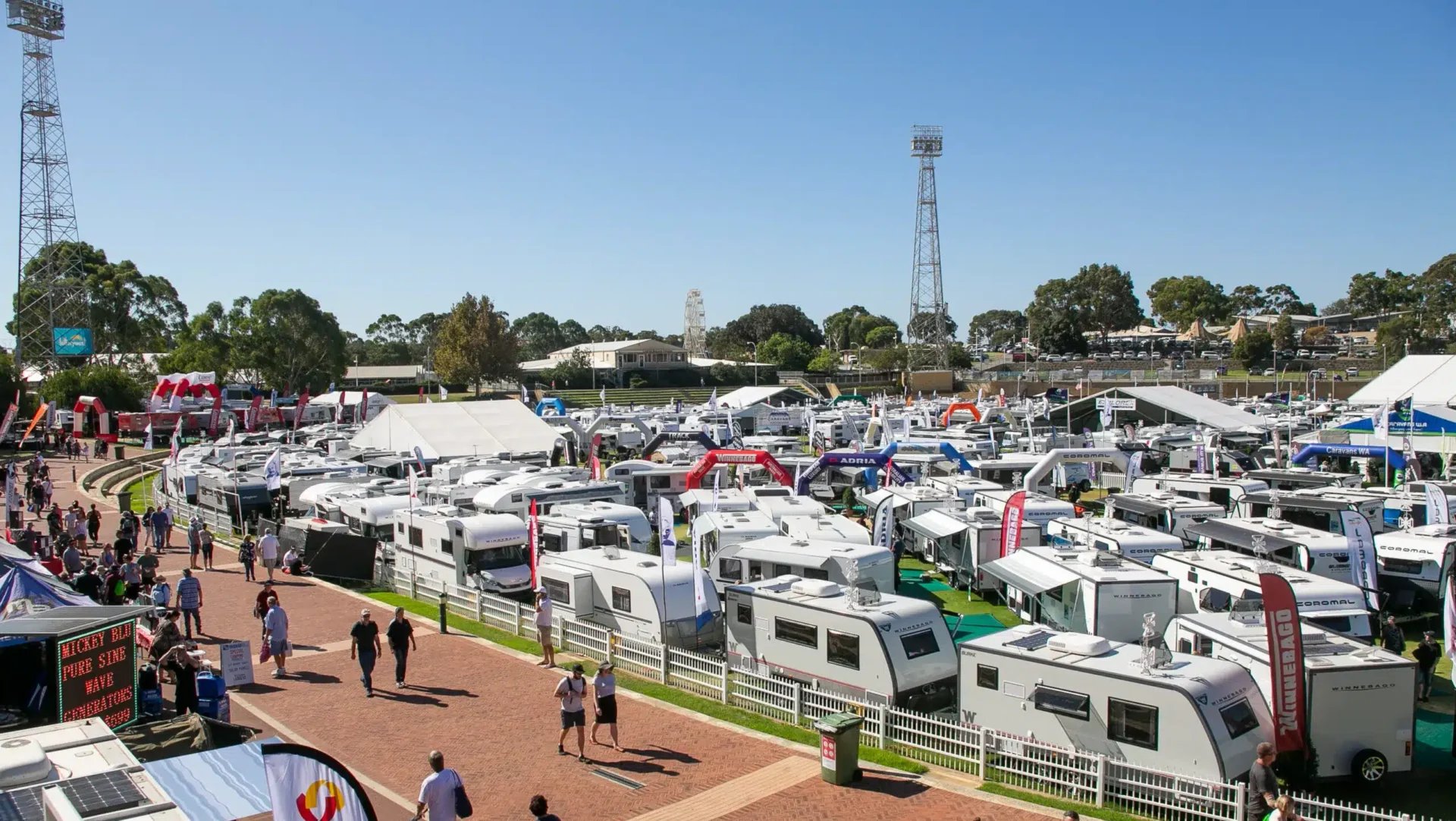

Australia now has 937,000 registered RVs. That is roughly one for every 29 Australians, making this country one of the highest per-capita RV ownership nations on earth. Not in the Asia-Pacific. On earth. And yet, if you’ve been on the road lately, or tried to buy a new van, or talked to a dealer, something feels different. Quieter. More cautious.
Both things are true. Here’s why.
The Big Numbers Are Real
Australia’s registered RV fleet hit 937,000 vehicles in 2025, up 4 per cent on the year before. That includes more than 817,000 towable RVs and 119,000 motorised vehicles. It’s the largest the fleet has ever been, and the mix of people driving that growth keeps shifting.
Caravan parks had their best year on record, generating $3.3 billion in revenue, up 7 per cent or around $207 million on the prior year. New South Wales crossed $1 billion in caravan park revenue for the first time. Occupancy improved across cabins, powered sites, and unpowered sites alike.
And 87 per cent of all those camping trips happened in regional Australia, which matters. Every time someone hooks up the van and heads out for the weekend, they’re spending in towns that depend on that foot traffic.
So What’s Changed
The shift isn’t in the size of the industry. It’s in behaviour.
Average trip length has fallen to 3.4 nights. People are still going, but they’re going for shorter stretches closer to home. And they’re making decisions later, leaving less lead time between planning and departure.
Dealers are feeling it differently. Buyers are taking longer to move from enquiry to purchase. Upgrades are being delayed. More people are holding onto their current van rather than trading up, and looking at the used market rather than new.
Manufacturing reflects it too. Australian manufacturers produced 23,963 RVs in 2025, down 5 per cent on the year before. That sounds like a contraction, but it’s still 12 per cent above 2019 levels. The pandemic travel surge inflated the baseline, and what’s happening now looks more like a correction than a collapse.
At the same time, imports rose 16 per cent to 23,244 units. Chinese-built caravans in particular are bringing more choice into the market at sharper price points, at exactly the moment buyers are watching their budgets more carefully.
Australian Caravan Industry: 2026 By the Numbers
Source: Caravan Industry Association of Australia — State of the Industry Report, June 2026
Signs of Cooling
- Average trip length fallen to 3.4 nights
- Buyers taking longer from enquiry to purchase
- Manufacturing down 5% to 23,963 units
- Cost-of-living pressure on discretionary spend
Still Strong
- Manufacturing still 12% above 2019 levels
- Caravan production up 7.3% to 18,438 units
- NSW caravan park revenue exceeded $1B first time
- Aftermarket & servicing demand growing
The import factor: Caravan trailer and component imports rose 16% to 23,244 units in 2025. More product is entering the market at sharper price points, increasing competition across the mid-range at exactly the moment buyers are watching their budgets.
What It Actually Means for You
If you own a van, the aftermarket is your friend right now. With buyers holding onto vehicles longer, demand for servicing, accessories, and parts is strong. It’s a good time to understand your true caravan ownership costs and invest in upgrading what you have rather than chasing a new build.
If you’re thinking about buying, the market is moving in your favour. Dealers are more negotiable than they were at the height of the boom. The used van supply is improving. And with imports adding more options across price points, the mid-range is more competitive than it’s been in years.
If you’re planning a trip, go regional and go off-peak where you can. The industry data is clear that regional destinations depend on this travel, and the 3.4-night average suggests a lot of trips are shorter than people would actually like.
The boom wasn’t a mirage. Nearly a million RVs on Australian roads, $12.6 billion in annual spend, and record caravan park revenue don’t lie. But the easy growth years are behind the industry now, and what’s ahead looks more like steady, value-driven caravanning than pandemic-era splurge.
That’s not a bad thing. It might actually be a more sustainable version of the thing we all fell in love with.