
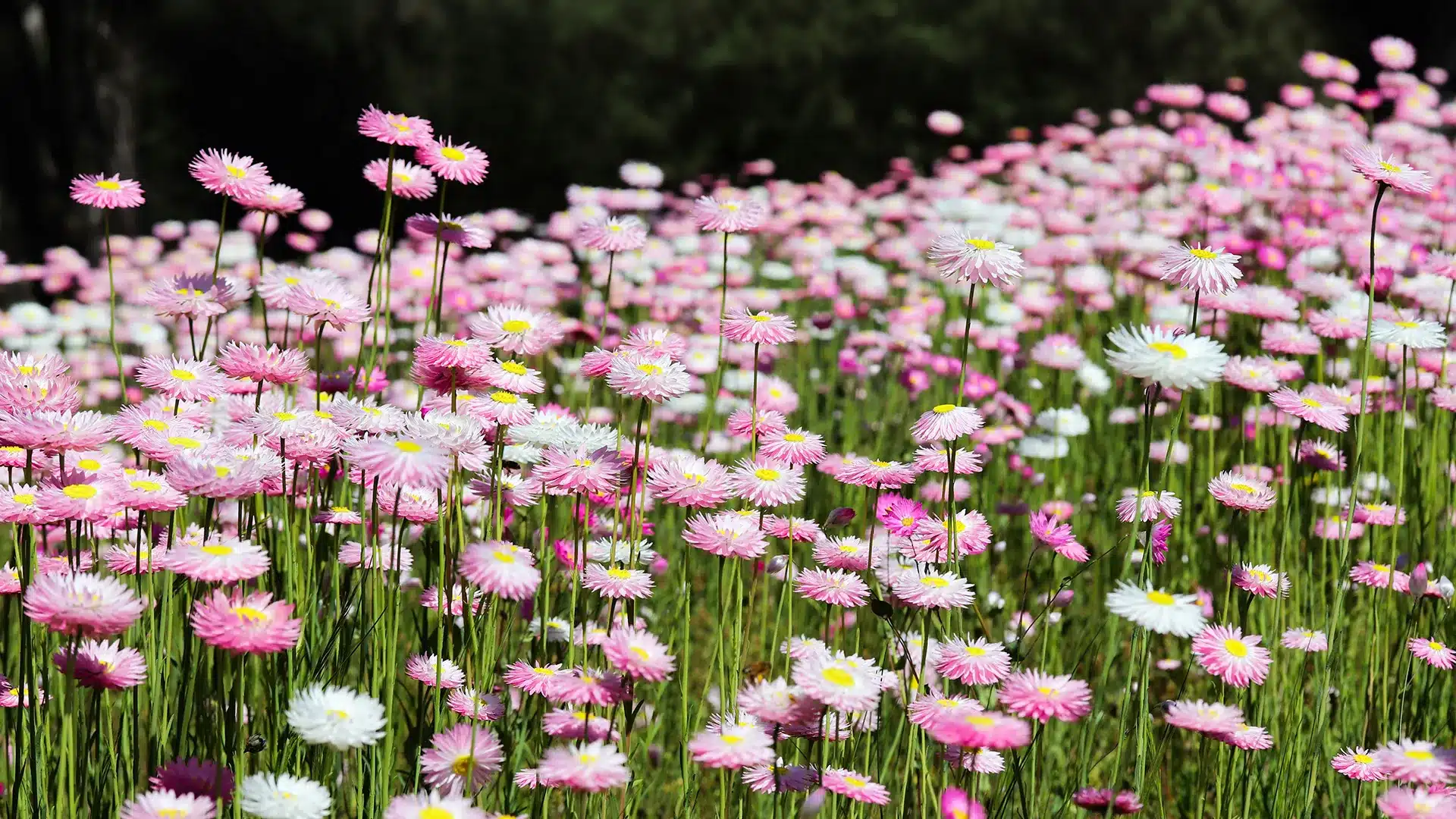

That matters if you were planning to time a trip around peak bloom. The Coral Coast season normally runs early August to early October, so an early start shifts the whole calculation and the best displays may come and go sooner than the brochures suggest.
Why the season lasts five months
WA has more than 12,000 wildflower species, and roughly two thirds grow nowhere else on earth. That diversity is why the season stretches from June to November instead of peaking in one short burst.
The bloom follows the warmth, starting in the Pilbara around June, sweeping through the Coral Coast and Wheatbelt from August, reaching Perth in September, then finishing in the South West and around Esperance in October and November. Time your run south correctly and you can follow peak bloom for months rather than catching a single window.
June and July: the Pilbara and north west
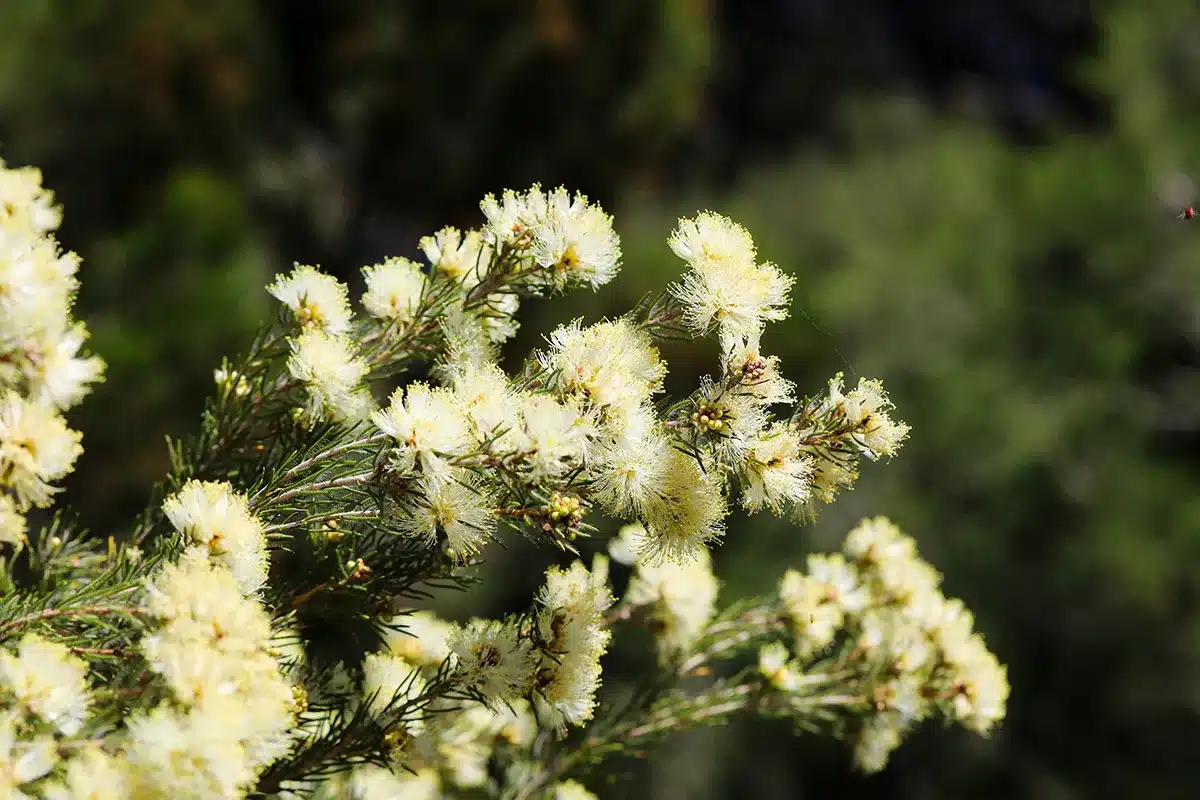
The season opens in the red country, with mulla mulla spreading white and yellow across the Carnarvon region. This window suits travellers already heading north for the dry season rather than being a destination in itself.
If you are working through the Pilbara, the Rio Tinto mine site tour at Tom Price is a good stop between flower hunts, and our guide to holiday parks across the Kimberley and Top End covers the accommodation side of that route.
August and September: the main event
This is the window most people mean when they talk about WA wildflowers, and it is where the carpets of everlastings live.
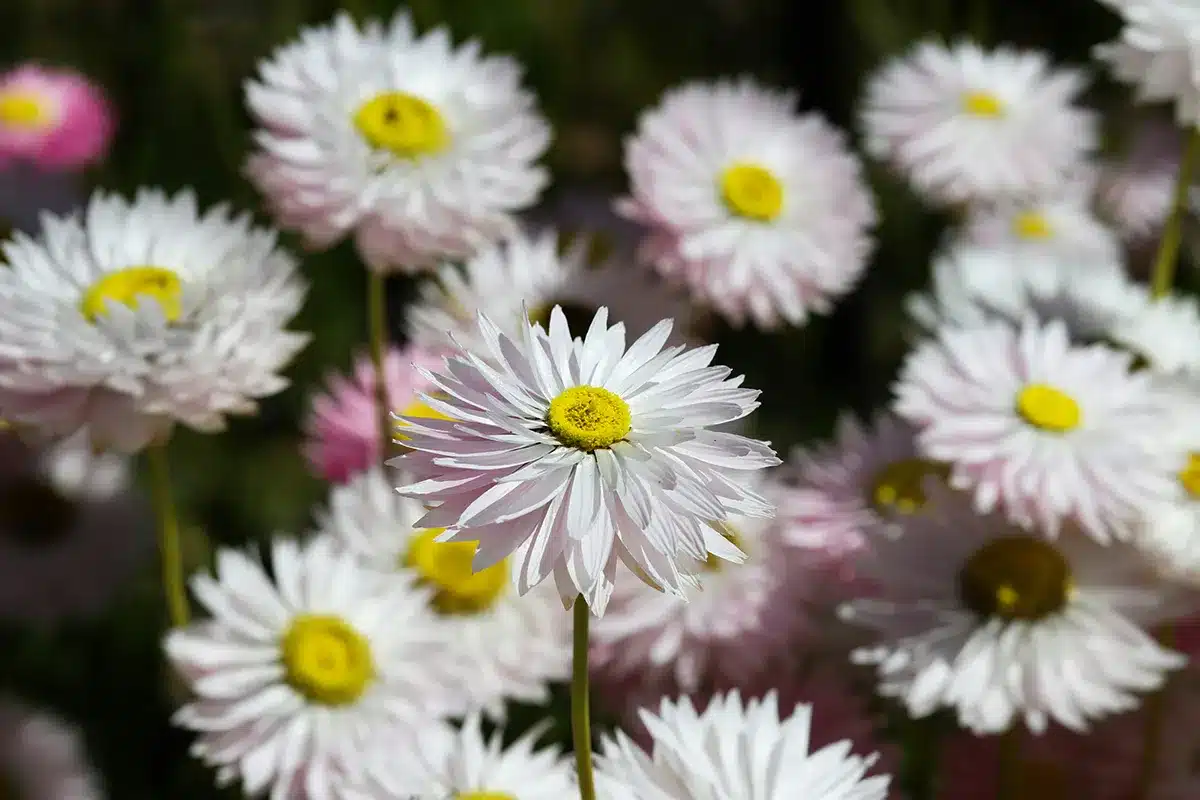
Coalseam Conservation Park is the reliable heavyweight. Sitting 33km north east of Mingenew on Coalseam Road, it delivers blankets of yellow and pink everlastings plus lookouts over coal seams recording 250 million years of geology. There are two campgrounds on site, Breakaway and Miners.
Mullewa is the other anchor town, and the drawcard is the wreath flower, Lechenaultia macrantha. It grows about five centimetres tall but spreads up to 50 centimetres wide, forming a natural ring, and flowers anywhere between July and October depending on rainfall.
Mingenew, Three Springs, Morawa and Perenjori round out WA’s Wildflower Country, a group of nine local government areas north of Perth.
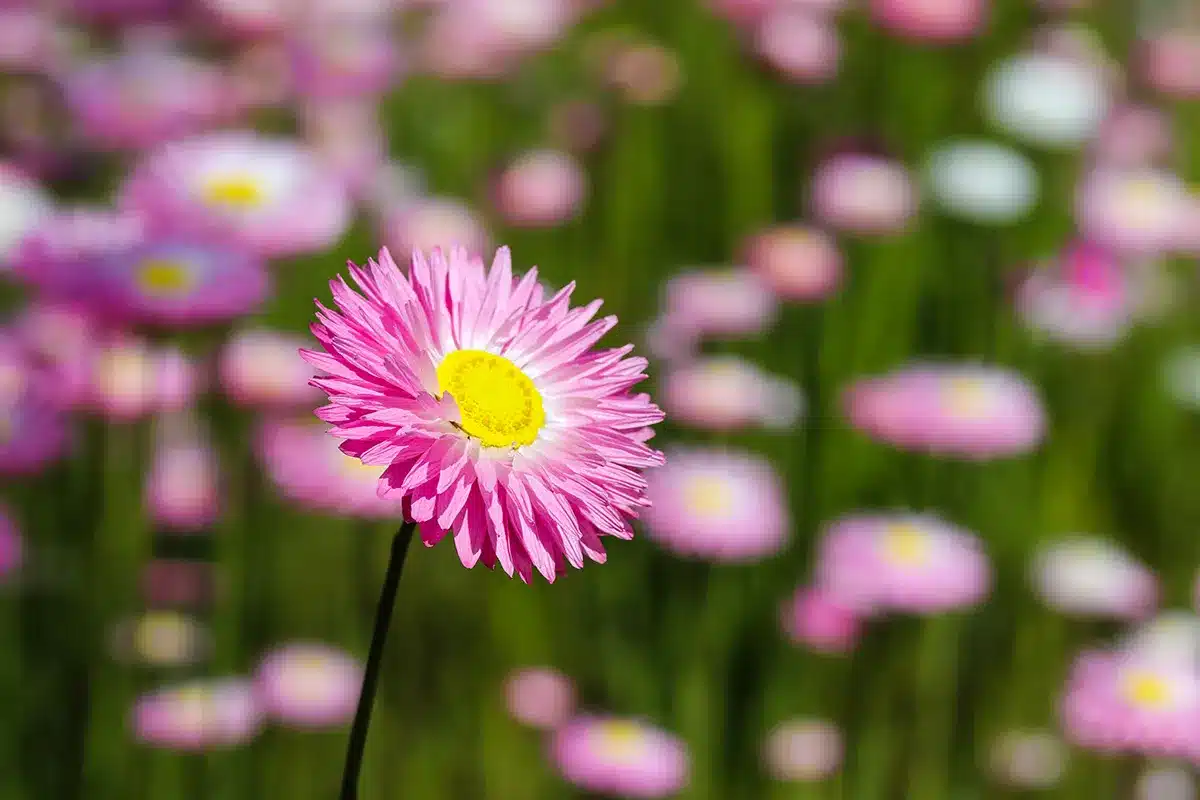
WA Wildflower Season 2026
Blooms arrived early this year. Here is where the season is at each stage, and the access changes to know before you plan a route.
September: Perth and Kings Park
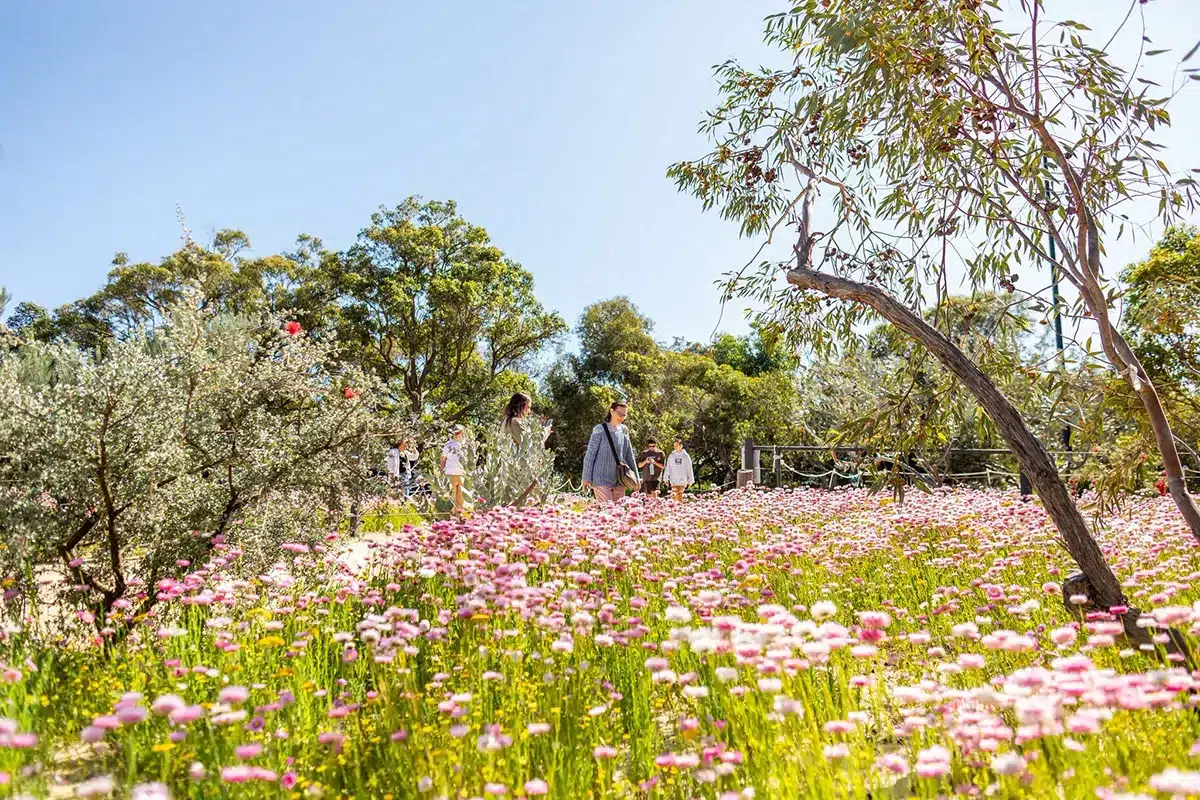
If you are basing yourself near the city, September is your month. The Everlasting Kings Park Festival runs from 18 September to 4 October 2026, and it is the largest wildflower celebration in the state.
The festival has been running since 1964, making it one of Australia’s longest running events of its kind, and it draws around half a million visitors each September. Expect guided walks, workshops, outdoor exhibitions and family activities, with many events free. More than 3,000 WA plant species are typically on display.
For caravanners, the practical question is where to park. Karrinyup Waters Resort is a solid northern suburbs base with easy access into the city, and we have covered it in our Perth and Karrinyup Waters review.
October and November: the South West and Esperance
As Perth winds down, the south comes alive. Australia’s South West is a recognised biodiversity hotspot with around 300 orchid species alone, spanning Margaret River through to Albany.
Esperance is the other late season reward, opening onto Cape Le Grand, Helms Arboretum and the coast east of town. Our guide to Duke of Orleans Bay east of Esperance covers one of the better beach camping options in that stretch.
This window also suits travellers who cannot get away in the winter school term. The south coast in late spring is mild, uncrowded and considerably easier towing than the inland gravel.
Two access changes for 2026
Depot Hill, the smaller everlastings site near Mingenew that many people visit alongside Coalseam, is closed for the 2026 season. If you had it on a route plan from a previous trip or an older guide, take it off.
The second is less a change than a warning. Roads into several Wheatbelt and Coral Coast sites are gravel and become badly corrugated as the season wears on and traffic builds. Coalseam is accessible by sealed and gravel roads from Mingenew and Mullewa, but conditions vary, so check locally rather than trusting a map.
The rule that catches people out
All Western Australian native flora is protected, and taking it without a licence is an offence under the Biodiversity Conservation Act 2016.
The penalties are not trivial. For threatened species and ecological communities, illegal take carries penalties of up to $500,000 for an individual and $2.5 million for a corporation, a substantial increase from the $10,000 maximum under the previous Wildlife Conservation Act.
You will still see older guides quoting a $2,000 fine. That figure predates the current legislation, which came into force on 1 January 2019. The practical advice has not changed: photograph them, do not pick them, and stay on formed tracks so you are not trampling next season’s display.
How to actually time it
Bloom timing swings by weeks from year to year, so no published calendar will beat a local report. In 2021 Coalseam peaked in mid August, in 2022 it was early September, and in 2023 early rains pushed it to mid September.
Use the live sources. Australia’s Coral Coast runs a Wildflower Watch with current bloom updates, the Central Wheatbelt Visitor Centre publishes seasonal updates, and there is a wildflower app that maps where things are flowering across the state. Local visitor centres remain the single best source.
One more practical note. Because peak bloom is unpredictable, build flexibility into your bookings rather than locking a fixed itinerary months out, and consider whether free camping options give you the agility to chase a bloom report. Our guide on whether you qualify to free camp legally is worth a read before you rely on it.
The short version
If you are already in WA or heading there now, August and September in the Coral Coast and Wheatbelt is where to be, with Coalseam and Mullewa as your anchors. If you are Perth based, September into early October gives you Kings Park. If you cannot travel until later in the year, the South West and Esperance in October and November are genuinely excellent rather than a fallback.
The blooms are early this year, so if you have been waiting for the right moment, this is it.
Image credit Megan Clarke | View their Unsplash profile at unsplash.com/@megmakesme