

For years, winter touring has usually meant one of two things: chasing warmer weather up north, or heading inland for a quieter campfire season.
But there is another kind of trip starting to catch the attention of Australian travellers.
It is called dark sky touring.
Instead of choosing a destination only for beaches, walking trails, wineries or caravan parks, more travellers are building trips around something much simpler: a night sky full of stars.
For caravanners, it makes a lot of sense. You already have your accommodation with you. You’re often travelling through regional towns and you are more likely to stay outside major city lights. And after a day on the road, there are few better rewards than sitting outside the van, turning the camp lights down and looking up.
This is not just an astronomy hobby anymore. Dark sky tourism is becoming a genuine travel category, and it is one of the more interesting niche trends for Australian caravanners to watch.
Why Is Dark Sky Touring Trending Now?
There are a few reasons this trend is starting to stand out.
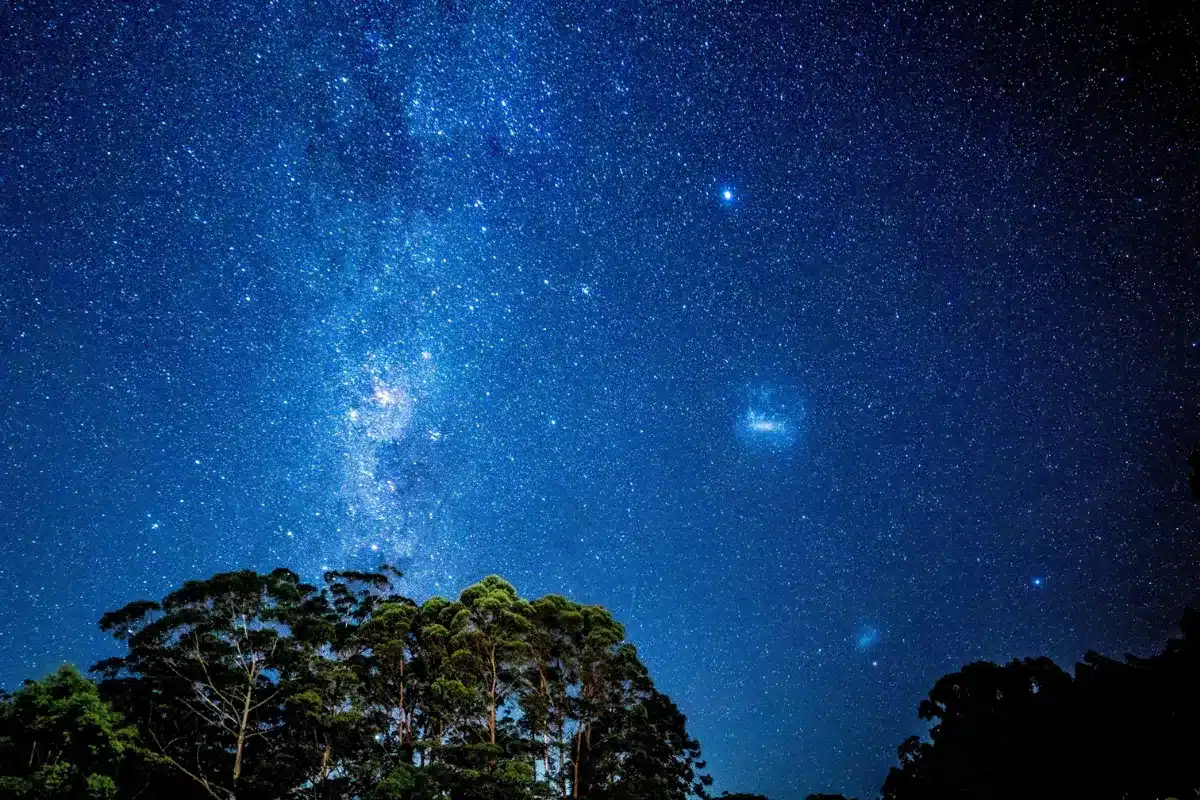
The first is the fresh news hook. The Sunshine Coast Hinterland has now been recognised as Queensland’s first internationally recognised Dark Sky Reserve, giving travellers a new reason to look beyond the beaches and into the hills.
The reserve takes in hinterland townships including Maleny, Mapleton, Montville, Witta, Flaxton, Kenilworth and Conondale. For travellers, that means a region already known for scenic drives, village stays, markets, lookouts and rainforest walks now has another reason to visit after dark.
The second reason is timing. Interest in stargazing, meteor showers, aurora activity and night-sky photography has grown as phone cameras have improved and more travellers look for quiet, low-cost experiences that feel special without needing a big-ticket attraction.
The third reason is that dark sky touring suits the way caravanners already travel. You do not need a luxury observatory stay to enjoy it. A good campsite, a clear night, warm clothes and a little planning can be enough.
What Is Dark Sky Touring?
Dark sky touring is travel built around places with low light pollution and good night-sky viewing.
That might mean visiting an official Dark Sky Reserve or Dark Sky Park. It might also mean choosing a country town, national park, station stay, farm stay or inland caravan park where the skies are darker than what you see at home.
The experience can be as simple as sitting outside after dinner and spotting the Milky Way. Or it can be more planned, with telescopes, photography, meteor shower dates, observatory visits or guided stargazing nights.
For WUDU travellers, the appeal is not only the stars. It is the whole style of trip: slower, quieter, regional and often a little bit hidden.
Dark Sky Touring Guide
Dark Sky Destinations
Worth Building A Trip Around
From newly recognised dark-sky regions to classic outback stargazing towns, these are the places giving caravanners a reason to slow down, stay longer and look up.
Sunshine Coast Hinterland
Best base angle: Maleny, Mapleton, Montville, Kenilworth and Conondale.
The freshest news hook. Queensland’s first International Dark Sky Reserve was officially designated in 2026, making the hinterland a timely “what’s changing” destination.
Reference note: The reserve includes towns such as Maleny, Mapleton, Montville, Witta, Flaxton, Kenilworth and Conondale.
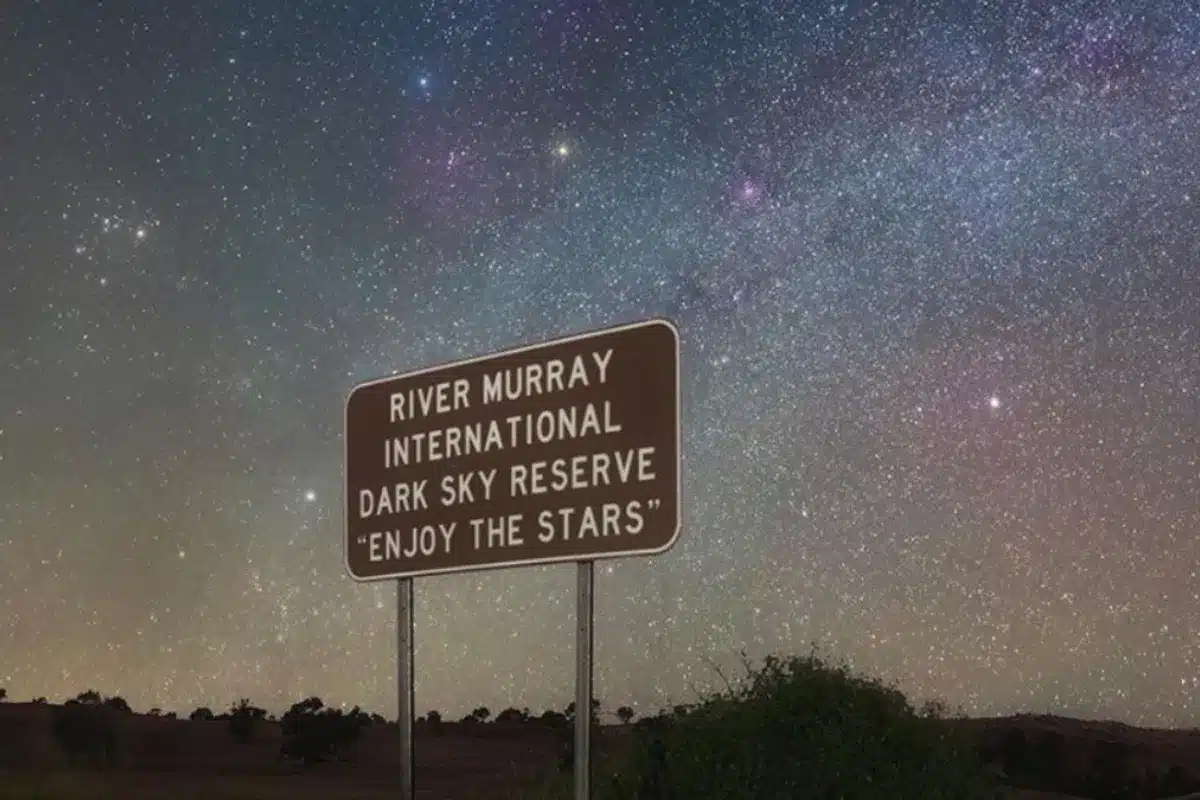
River Murray International Dark Sky Reserve
Best base angle: Murraylands, Swan Reach and Cambrai region.
A strong hidden regional touring angle, combining river camping, quiet towns and protected dark skies within reach of Adelaide.
Reference note: The reserve spans more than 3,200 square kilometres and is about 90 minutes north-east of Adelaide.
Swan Reach Conservation Park
Best base angle: 4WD-capable campers only, or stay nearby and visit the region.
A deeper reference point for readers who want the actual dark-sky core zone, not just a nearby town.
Reference note: Parks SA says Swan Reach Conservation Park forms the core zone of the River Murray International Dark Sky Reserve, but access is by 4WD only.
Warrumbungle National Park
Best base angle: Camp inside the national park or base at Coonabarabran.
The classic dark-sky destination. Great for the “Australia has had dark-sky touring for years, but now it’s becoming mainstream” section.
Reference note: NSW National Parks describes Warrumbungle National Park near Coonabarabran as Australia’s first Dark Sky Park.
Camp Pincham, Warrumbungle NP
Best base angle: Walk-in camping, not the main caravan base.
A useful side-note for adventurous readers, but not the main recommendation for caravan owners.
Reference note: NSW National Parks describes Camp Pincham as rustic walk-in camping in Warrumbungle National Park.
Charleville
Best base angle: Stay at a Charleville caravan park, then visit the Cosmos Centre.
The best outback stargazing stop for travellers who want an organised experience rather than just looking up from camp.
Reference note: The Charleville Cosmos Centre offers night experiences, outback stargazing and Queensland’s largest planetarium.
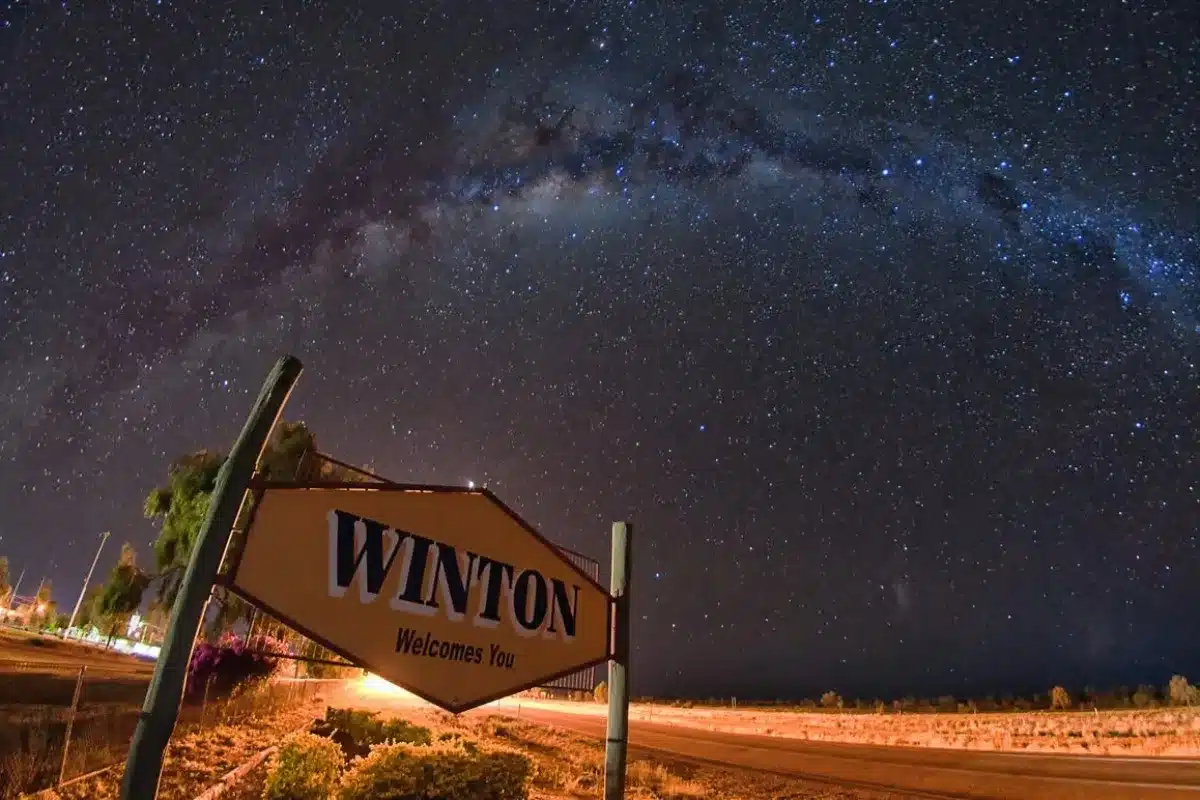
Winton
Best base angle: Winton town base or surrounding outback stays.
A strong “unofficial dark sky” example for big skies, long stays and classic outback touring.
Reference note: Use this as a supporting destination rather than a certified dark-sky claim.
How To Plan A Better Stargazing Road Trip
A good dark sky trip is not hard, but it does need a little planning.
Check The Moon Phase
A full moon can be beautiful, but it can also wash out the stars. For the darkest skies, plan your trip around a new moon or the days either side of it.
If you are hoping to see the Milky Way, meteor showers or fainter stars, moon phase matters.
Watch The Weather
Cloud cover can ruin a night-sky plan faster than almost anything else. Check the forecast before locking in a viewing night, especially if you are only staying one or two nights.
Winter can be excellent for clear skies in many inland areas, but it can also mean cold nights. Pack accordingly.
Get Away From Camp Lights
Even in a dark region, bright awning lights, head torches and nearby streetlights can affect the experience.
Look for viewing spots away from amenities blocks, cabins, road lighting and busy camp kitchens. Always stay safe, tell someone where you are going and avoid wandering into unfamiliar bushland at night.
Use Red Light Where Possible
A red torch or red-light setting helps preserve your night vision and is less disruptive to other people nearby.
It is a small thing, but it makes a big difference in a campground where others are also trying to enjoy the sky.
Give Your Eyes Time To Adjust
Do not expect the sky to reveal itself the second you step outside.
Turn off bright lights and give your eyes 15 to 20 minutes to adjust. The longer you sit quietly, the more you usually see.
Dark Sky Touring Checklist
What To Pack For
Dark Sky Touring
You do not need much gear to enjoy a night-sky trip, but a few simple items will make the experience warmer, safer and easier to enjoy.
If you are travelling remote, also carry the usual touring safety gear: extra water, food, first aid kit, charged phone, UHF if you use one, and a reliable way to call for help where mobile service is limited.
Campground Etiquette: Do Not Be The Person Lighting Up The Whole Park
This is where caravanners can make a real difference.
Dark sky touring works best when everyone respects the shared experience. That means turning off unnecessary outside lights, angling lights downward, closing blinds if your van is lit up inside, and avoiding bright torches around other people’s sites.
A little common sense goes a long way.
You do not have to sit in total darkness all night. But if you are in a known stargazing area, treat light the same way you would treat noise. Keep it reasonable, keep it directed, and remember that other travellers may have come for the same quiet sky.
Why Regional Towns Should Pay Attention
Dark sky touring is not just good for travellers. It could be a real opportunity for regional towns.
A town does not need a major theme park or expensive new attraction to benefit. It needs dark skies, good visitor information, caravan-friendly accommodation, safe viewing locations and local businesses that can build experiences around the night.
Think dinner under the stars, astronomy nights, guided photography sessions, winter stargazing weekends, observatory open nights, campfire-friendly stays and local produce evenings timed around new moon weekends.
For smaller towns, that is powerful. It gives travellers a reason to stay overnight instead of passing through.
The Take
Dark sky touring is one of those travel trends that feels fresh without being complicated.
It’s peaceful, it’s regional, it’s affordable. And it gives caravanners another reason to slow down and stay a little longer.
The best part is that you do not have to be an astronomy expert to enjoy it. You just need a clear night, a darker patch of sky and the patience to sit still for a while.
For travellers looking for something a little different this winter, the next great road trip may not be about chasing the sun.
It might be about chasing the stars.
FAQ: Dark Sky Touring Australia
What is dark sky touring?
Dark sky touring is travel planned around places with low light pollution and good night-sky viewing. It can include stargazing, astronomy events, night photography, observatory visits or simply camping somewhere with a clear view of the stars.
Where are the best dark sky destinations in Australia?
Some of the best-known dark sky destinations include the Sunshine Coast Hinterland, River Murray International Dark Sky Reserve, Warrumbungle National Park, Charleville and outback regions around western Queensland and inland NSW.
Do I need a telescope for stargazing?
No. You can enjoy stargazing with your eyes alone. Binoculars are a simple upgrade, while a telescope is optional for travellers who want to go deeper.
When is the best time to go stargazing?
The best time is usually around a new moon, when the sky is darkest. Clear weather, low cloud cover and minimal nearby lighting also make a big difference.
Is winter good for stargazing in Australia?
Winter can be excellent for stargazing in many parts of Australia because the nights are longer and inland skies can be clear. The trade-off is cold weather, so pack warm layers.
How can caravanners reduce light pollution at camp?
Turn off unnecessary awning lights, use red torches, angle lights downward, close blinds at night and avoid shining bright lights across other campsites.
Check out more winter camping ideas here