
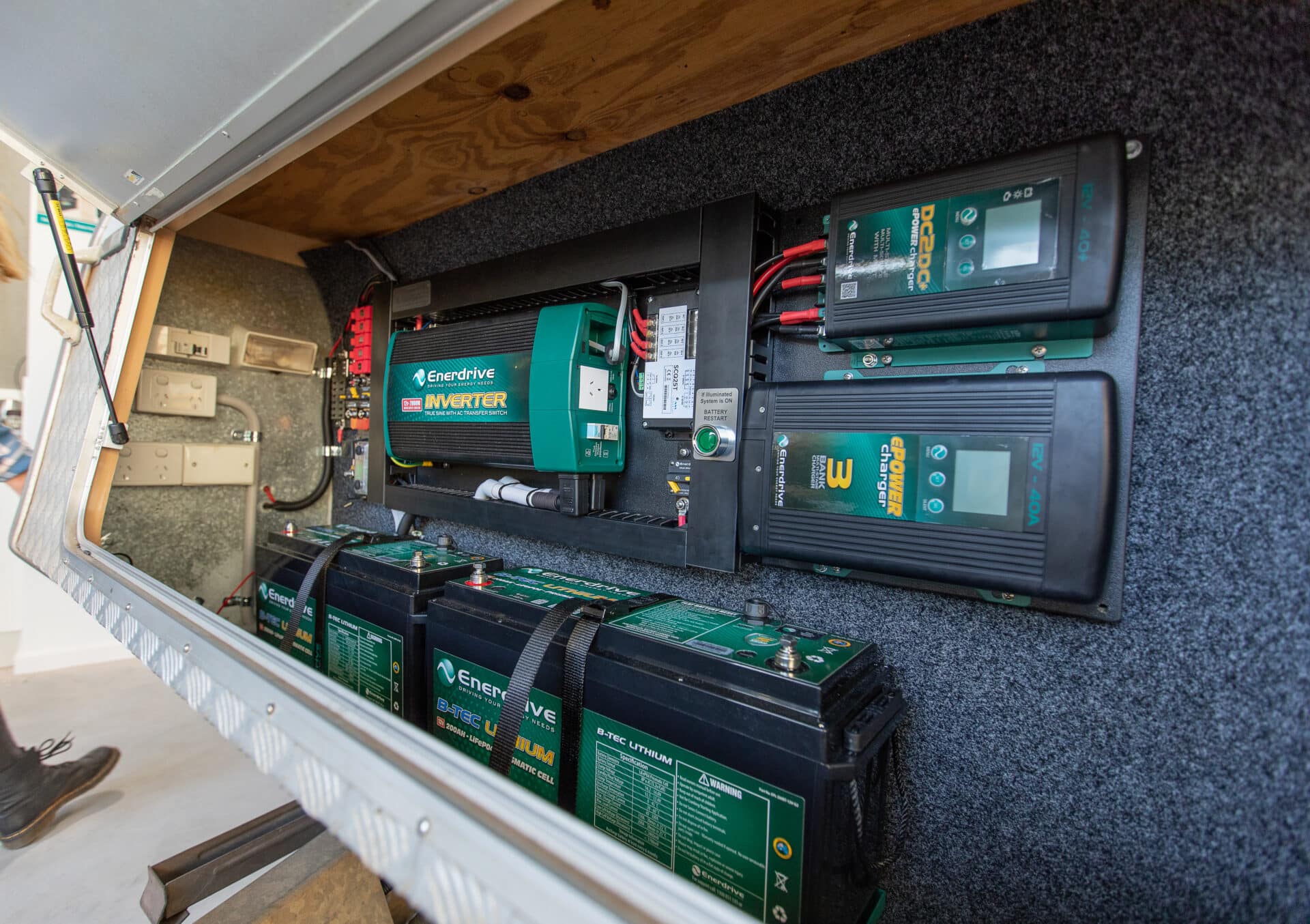


The right battery system can keep the fridge running. The right water setup can make free camping simpler. The right storage choices can make packing faster and the trip more enjoyable.
But not every caravan upgrade is automatically a good one.
Some gear adds more weight than owners realise. Some power upgrades are not matched to how the van is actually used. Some water systems can add load, complexity and extra points that need regular checking. Before adding new equipment, it pays to look at the whole setup – not just the product on its own.
That does not mean caravanners should avoid upgrading their vans. It means the best gear choices are the ones that suit the caravan, the tow vehicle and the way you travel.
Before buying the next accessory, it is worth asking a simple question:
Will this make the setup better, or just heavier, more complicated and harder to manage?
The gear trap: more is not always better
It is easy to build a wish list.
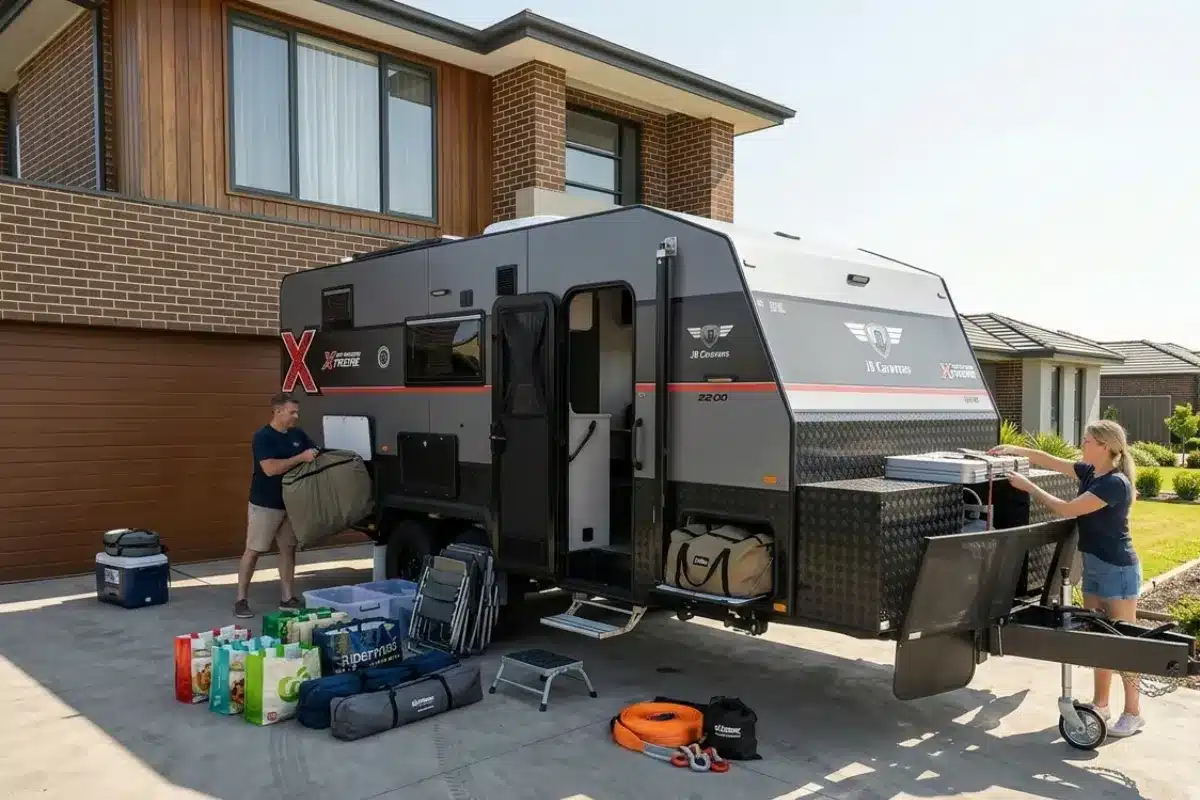
Lithium batteries. Extra solar. Larger water tanks. A second fridge. Toolboxes. Bike racks. Induction cooking. A bigger inverter. Starlink. Extra storage. Outdoor kitchens. Recovery gear. More comfortable chairs. More shade. More everything.
Individually, each item may make sense. Together, they can create problems.
A caravan only has so much payload. The tow vehicle only has so much capacity. The electrical system can only handle so much demand, and the plumbing system needs to stay reliable. Anything permanently fitted or regularly carried can also affect the van’s value, weight and overall setup.
The issue is rarely one single purchase. More often, it is the gradual build-up of gear over time. That is why gear choices need to be reviewed as part of the whole setup, not just judged on whether they look useful in isolation.
Power upgrades: check the whole system, not just the headline number
Power is one of the biggest upgrade areas in modern caravanning.
Many owners want to run more appliances for longer, especially when free camping. That can lead to upgrades such as lithium batteries, solar panels, larger chargers, bigger inverters and more 240V-style comforts.
Done properly, a good power system can transform the way a caravan is used.
Done poorly, it can create frustration, unnecessary weight and potential safety issues.
The first mistake is focusing only on battery size. A bigger battery is useful only if the rest of the system supports it. Solar input, charging capacity, inverter size, wiring, fusing, ventilation and appliance draw all need to work together.
The second mistake is assuming an inverter solves everything. An inverter may allow you to run certain 240V appliances, but high-draw items such as coffee machines, microwaves, induction cooktops and air fryers can place serious demand on the system.
The third mistake is forgetting documentation. If you add major electrical gear, keep receipts, photos, installation records and compliance paperwork where relevant.
A power upgrade should answer three questions:
- What do you want to run?
- How long do you want to run it for?
- Can the full system handle that safely and reliably?
If the answer is unclear, speak to a qualified caravan electrical specialist before installing or relying on the setup.
Water gear: comfort comes with weight
Water is one of the most useful things you can carry.
It gives you more flexibility, especially when free camping or travelling through areas where supply is limited. But water is also heavy.
One litre of water weighs about one kilogram. That means a 95-litre tank can add roughly 95 kilograms when full, before you count fittings, hoses, pumps, filters or extra storage.
Adding a second tank, larger tank, jerry cans or portable water bladders can quickly eat into payload.
That does not mean extra water capacity is a bad idea. For some travellers, it is essential. But it needs to be planned properly.
Think about:
- how much water you actually use each day
- whether you mostly stay in caravan parks or free camp
- whether extra water pushes the van close to its ATM
- where the tank weight sits in the van
- whether the tow ball mass changes when tanks are full or empty
- how grey water will be managed
- whether hoses, pumps and fittings are easy to inspect
A larger water setup should also be checked for leaks. A small leak hidden under a sink, behind a panel or inside a storage compartment can cause costly damage over time.
Good water gear should make travel easier without quietly creating weight, balance or maintenance problems.
Weight: the accessory most people forget to count
Every caravan owner talks about payload. Fewer owners track it closely.
Payload is the amount of weight you can add to the caravan after its tare mass. It includes water, gas, food, clothes, bedding, tools, cooking gear, outdoor furniture, batteries, solar panels, bike racks, annexes, personal items and accessories.
A simple way to think about it is: ATM – tare mass = caravan payload allowance
The problem is that gear does not feel heavy when it is added one item at a time.
A toolbox here. A second battery there. A few camp chairs. A portable fridge. A barbecue. A generator. A drawer full of tools. A bike rack. A few upgrades on the roof.
Before long, the van may be much closer to its limits than expected.
It is not only the total weight that matters. Where the weight sits matters too.
Heavy items should be stored low and secure. Too much weight at the rear can affect stability. Too much weight forward can increase tow ball load. Roof-mounted gear can affect the centre of gravity. External toolboxes and racks can change balance and handling.
The only way to know the real number is to weigh the caravan when it is packed for travel.
Brochure figures are a starting point. A loaded weighbridge result is reality.
Gear review
What To Ask
Before You Buy
Before adding new caravan gear, run it through this simple review so it suits your van, your travel style and your overall setup.
| Gear choice | What to check | Why it matters |
|---|---|---|
| Battery upgrade | Capacity, charger compatibility, weight, installation quality | A bigger battery only helps if the system supports it. |
| Solar panels | Roof space, output, regulator, shading, weight | More solar can help, but it still needs to match real use. |
| Inverter | Appliance draw, wiring, fusing, ventilation | High-draw appliances need more than just a large inverter. |
| Water tanks | Capacity, placement, plumbing, full-tank weight | Water adds weight quickly and can affect balance. |
| Toolboxes | Loaded weight, position, tow ball impact | Tools are useful, but they are often heavier than expected. |
| Bike racks | Load rating, rear weight, visibility, securing method | Rear-mounted weight can affect stability. |
| Outdoor gear | Storage, theft, weather exposure | Camp comfort gear still needs to be secured and recorded. |
| Appliances | Power draw, storage, weight, real use | Convenience items can create power and payload issues. |
Insurance and records: why gear choices should be documented
Many caravan owners add gear over time without updating their records.
That can make it harder to understand what the caravan is worth, what is permanently fitted, what is regularly carried and what may need to be discussed with an insurer.
Keep a simple file with receipts, photos, serial numbers and installation records. Photograph the van inside and out after major upgrades. Include external lockers, battery compartments, roof-mounted gear and outdoor equipment.
This is not just about insurance. It is also useful for resale, servicing, maintenance and trip planning.
Poor gear choices often show up on the road
A bad setup may look fine in the driveway.
The real test comes when the caravan is loaded, moving, parked off-grid or dealing with weather.
Poor gear choices can show up as:
- batteries running flat sooner than expected
- appliances cutting out
- water leaks inside cupboards
- excessive tow ball weight
- reduced towing stability
- cluttered storage
- overloaded drawers or lockers
- poor ventilation around electrical gear
- unsecured outdoor equipment
- difficulty packing up quickly in bad weather
Most of these problems are avoidable with better planning.
The key is to review gear as part of the full touring setup, not as individual purchases.
The Whats Up Downunder rule: useful, legal, safe and documented
Before adding anything to a caravan, ask four questions.
Is it useful?
Will you genuinely use it, or is it just nice to have?
Is it legal?
Will the caravan and tow vehicle still sit within their limits when fully loaded?
Is it safe?
Is it installed correctly, secured properly and suited to the way the van is used?
Is it documented?
Do you have receipts, photos, records and policy details where needed?
If a piece of gear passes all four, it is more likely to be a smart addition.
If it fails one, pause before buying.
The bottom line
Good caravan gear should make travel easier. It should not quietly create problems with power, water, weight, safety or insurance records.
The best upgrades are the ones chosen as part of a complete setup.
Before buying more gear, look at how you actually travel. Check your payload. Understand your power needs. Be realistic about water use. Think about where weight is going. Keep records of what is fitted and carried.
A well-equipped caravan is not the one with the most accessories. It is the one that works properly, tows safely, stays within its limits and gives you confidence when you head off on the next trip.
This article was produced with support from CIL Caravan Insurance. What’s Up Downunder maintains full editorial independence.
Disclaimer: This content has been prepared by CIL Insurance, a trading division of AAI Limited ABN 48 005 297 807 AFSL 230859, and is intended to provide general information only. It does not take into account your objectives, financial situation or needs. Before making any decision, consider whether the product is right for you and read the relevant Product Disclosure Statement. The Target Market Determination is also available.
The information is intended to be of a general nature only. Subject to any rights you may have under any law, we do not accept any legal responsibility for any loss or damage, including loss of business or profits or any other indirect loss, incurred as a result of reliance upon it – please make your own enquiries.