
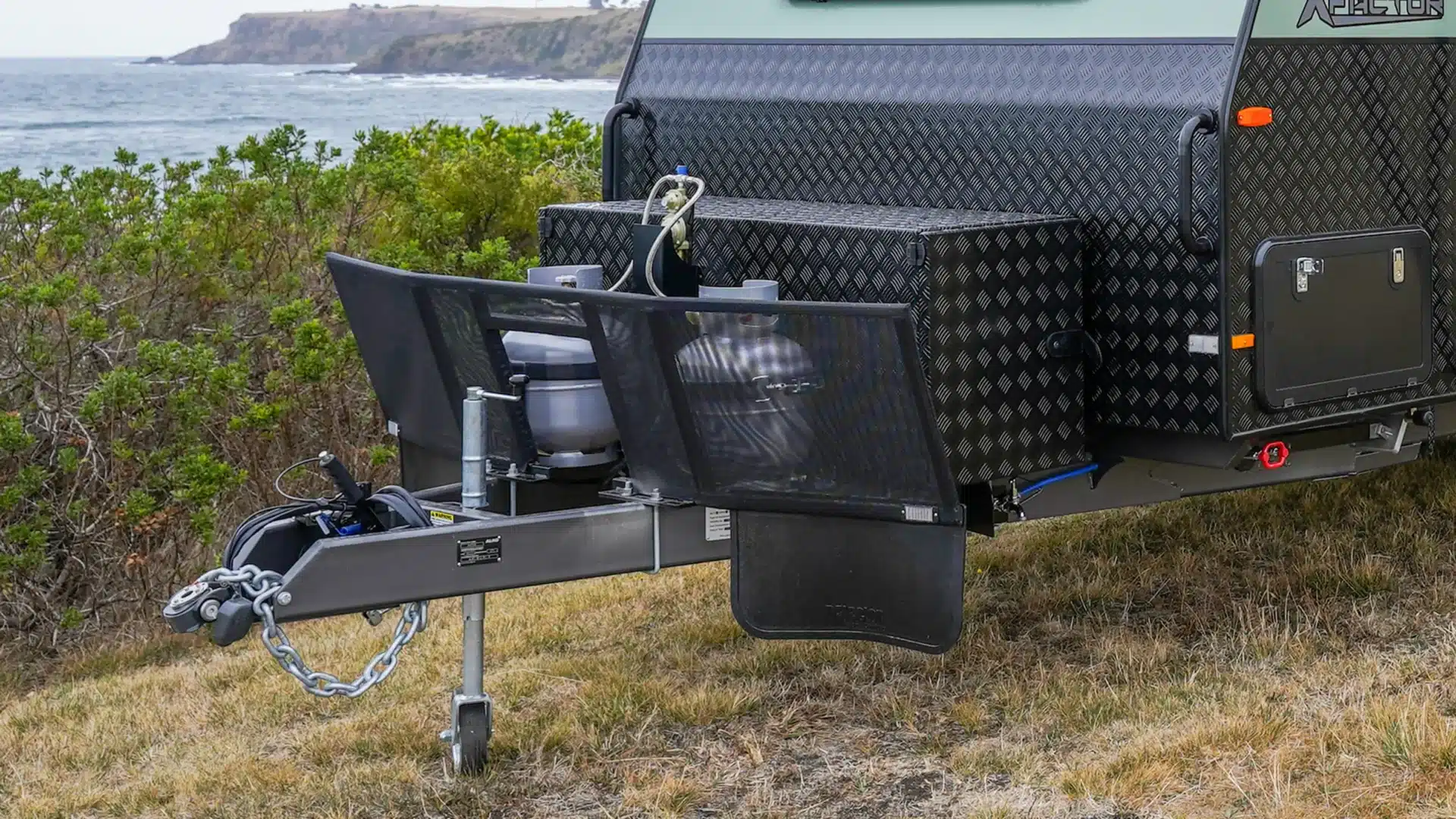

Adding a toolbox to your caravan’s A-frame is one of the most common upgrades owners make. It creates valuable storage space and can tidy up the drawbar area.
But once you start talking about putting a gas bottle inside that box, the rules change.
Before you drill into the A-frame or relocate your cylinders, it’s worth understanding how Australian standards treat toolboxes, what happens to your weight balance, and where owners often run into trouble.
Why This Matters
An A-frame toolbox is not just a storage accessory. It can affect:
- LPG compliance under AS/NZS 5601.2 (gas installations in caravans)
- Drawbar strength and trailer compliance under national trailer guidance
- Ball weight and towing stability
- Insurance disclosure requirements
If the toolbox houses a gas bottle, it is no longer just a box. It effectively becomes a cylinder compartment, and that brings specific design requirements.
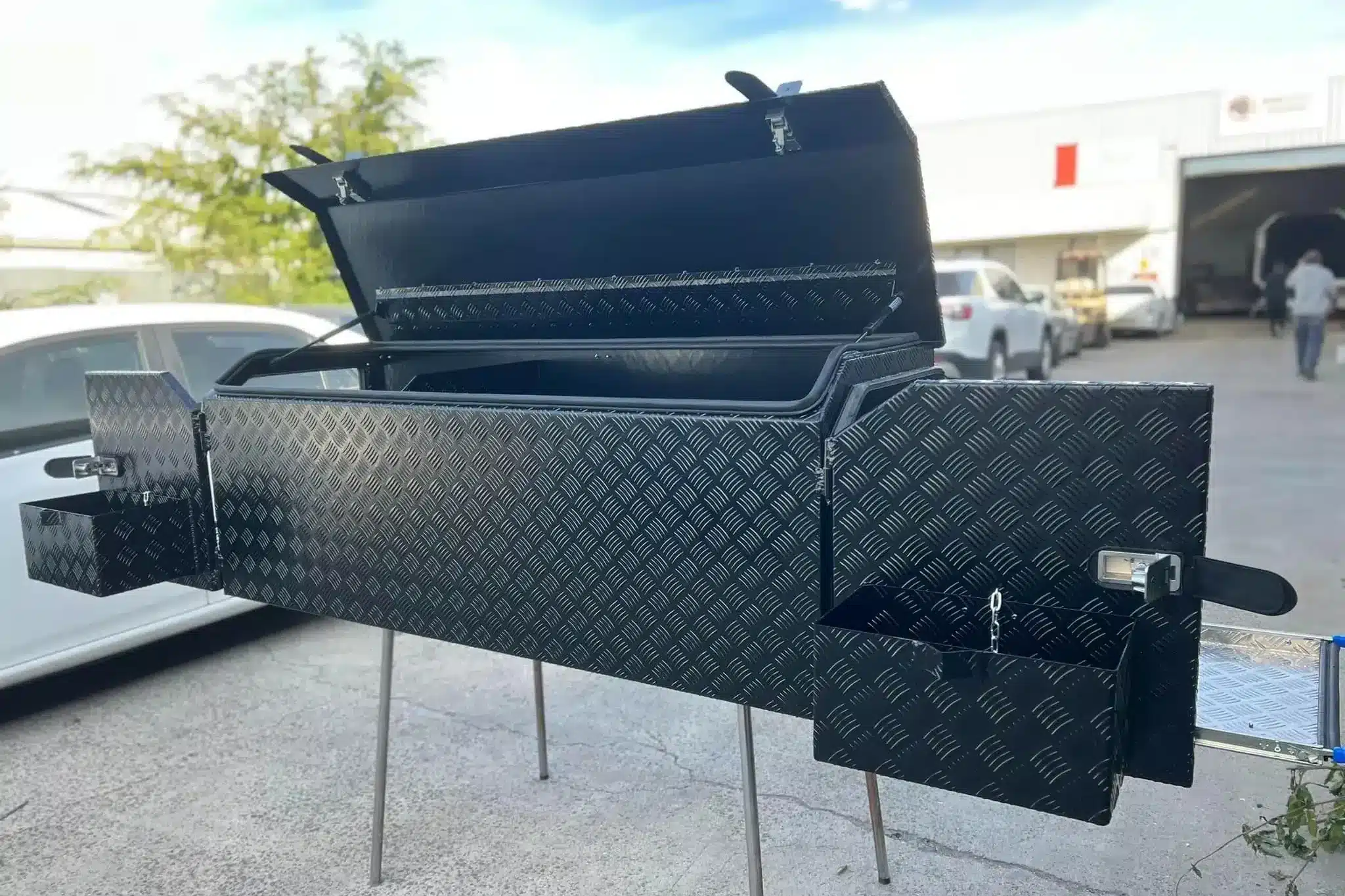
Storage Only vs Gas Storage: Two Very Different Setups
1. Toolbox for General Storage
If the box is used only for tools, hoses, chocks or general gear, the main considerations are:
- Structural mounting to the drawbar
- Added weight and its effect on ball weight
- Clearance around the handbrake, jockey wheel and breakaway switch
- Maintaining access to coupling and safety chains
The focus here is structural integrity and weight distribution.
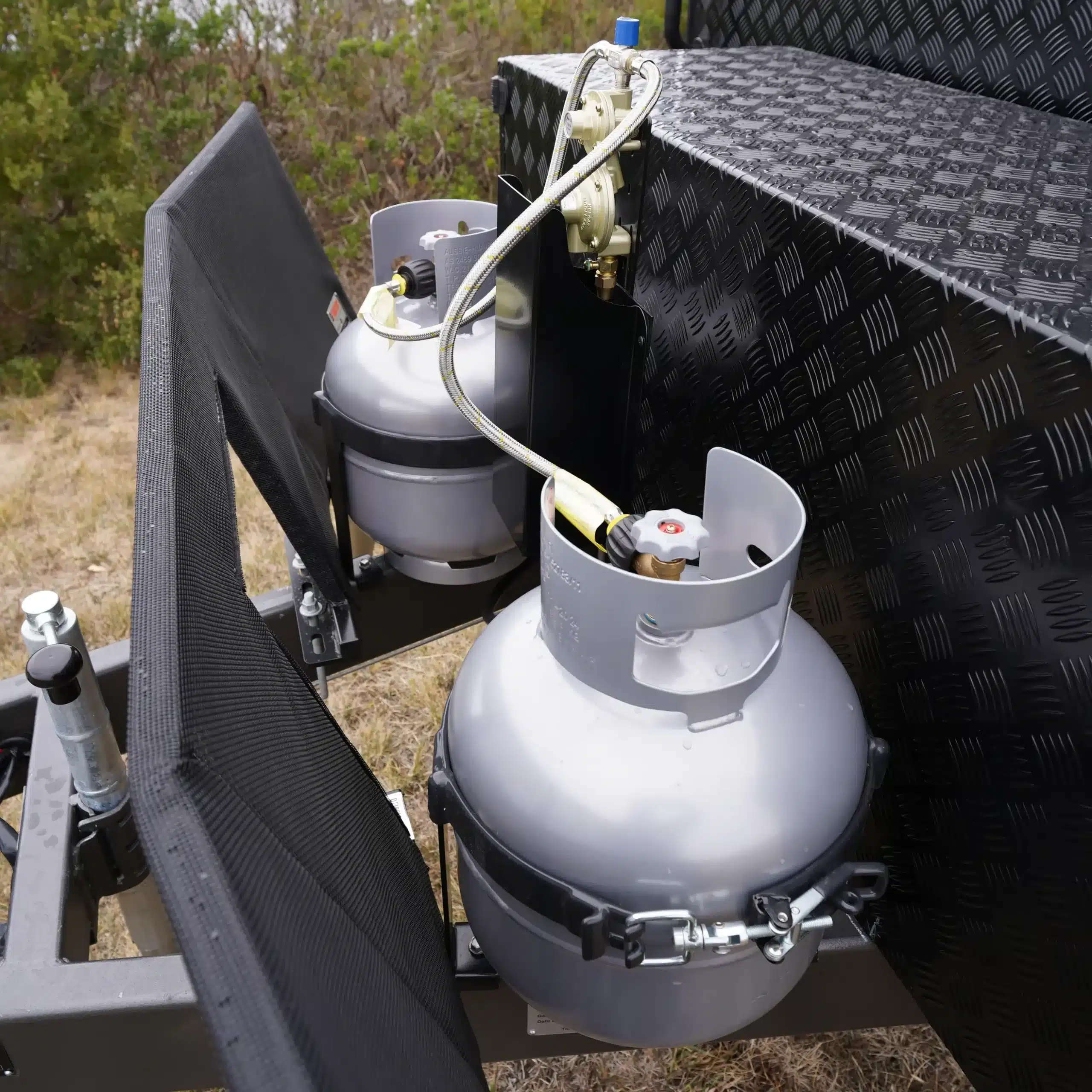
2. Toolbox That Houses an LPG Cylinder
If you install a gas bottle inside the toolbox, the situation changes.
Under AS/NZS 5601.2, a compartment containing an LPG cylinder must meet specific requirements. In practical terms, that means:
- The compartment must be sealed from the interior of the van
- It must allow gas to vent safely to the outside atmosphere
- Only cylinders and associated gas equipment are permitted inside
- Electrical equipment, batteries and ignition sources must not share that space
This is where many DIY installs become non-compliant. A single large box holding a gas bottle, battery, inverter and 12V wiring may seem practical, but it can breach separation requirements.
Ventilation and Sealing: What Owners Often Miss
LPG vapour is heavier than air. If a leak occurs, gas must be able to drain and vent safely outside the vehicle.
A compliant cylinder compartment typically requires:
- A sealed barrier between the cylinder space and the caravan interior
- Venting to the outside, including low-level drainage
- No gaps that allow vapour to enter enclosed spaces
Simply putting a gas bottle in a standard aluminium toolbox and shutting the lid does not automatically make it compliant.
Gas Bottle Compartments
Storing LPG in a toolbox? That space is legally treated as a gas compartment. Follow the “Gas Only” rule to ensure safety and compliance.
Approved Storage
- • LPG cylinder(s) & restraints
- • Approved regulators & pigtails
- • Changeover valves & fittings
- • Required LPG warning signage
Prohibited Items
- • Batteries or Battery Boxes
- • Chargers, DC-DC Units, Inverters
- • Anderson Plugs & Switches
- • Generators or Spare Fuel Cans
Vapour Ventilation Concept
Why Low-Level?
LPG vapour is heavier than air. In the event of a leak, gas will pool at the bottom of the compartment. Without a low-level drain or vent to the outside atmosphere, a dangerous, explosive concentration can build up.
Note: This visual is for conceptual understanding. Always verify your setup against current AS/NZS 5601.2 standards and ensure all gas work is performed by a licensed professional.
Weight and Ball Load: The Hidden Impact
A toolbox mounted to the A-frame adds weight forward of the axle. That increases ball weight.
In many cases, owners add:
- The toolbox itself
- Two full 9kg or 10kg cylinders
- Recovery gear
- A generator slide
- Additional hardware and mounting brackets
It adds up quickly.
Even a modest 25–30kg empty box can become 70kg or more once loaded. That weight sits at the very front of the van and can significantly change towing dynamics.
Key checks before installation:
- Confirm your caravan’s ATM and current ball weight
- Ensure the added weight does not exceed your vehicle’s tow ball rating
- Maintain a safe margin below maximum ratings
If you are already close to your limits, a front-mounted toolbox may push you over.
Don’t Forget the Tow Vehicle
It’s not just the caravan’s limits that matter.
Extra weight on the A-frame increases tow ball download, which counts toward your vehicle’s payload. If your vehicle is already carrying passengers, accessories or a loaded canopy, added ball weight can push you over GVM.
Too much forward weight can also reduce steering response and braking balance.
Before installing a toolbox, confirm:
- Your vehicle’s maximum tow ball rating
- Remaining vehicle payload
- Combined vehicle and van limits
Many owners check ATM but forget the vehicle side of the equation.
Drawbar Strength and Modifications
The A-frame is a structural component designed to meet trailer standards. It is not just a convenient mounting point.
Before installing a toolbox:
- Check the manufacturer’s advice on drilling or welding to the drawbar
- Avoid compromising structural members
- Use mounting methods that distribute load evenly
- Consider professional installation for heavy or full-width boxes
If structural modifications are made, some states may require engineering assessment or approval under vehicle modification schemes. When in doubt, seek advice from a recognised signatory or qualified professional.
Breakaway Switch and Safety Equipment
Another common issue is interference with safety components.
The breakaway switch must remain:
- Accessible
- Correctly mounted
- Free from obstruction
- Able to operate in a straight pull direction
Toolboxes that block the lanyard path or restrict access can create compliance and safety issues.
Before finalising the installation, simulate a full articulation of the hitch and confirm nothing binds or fouls.
Insurance and Disclosure
A structural modification or relocation of LPG cylinders may be considered a modification by your insurer.
It is good practice to:
- Notify your insurer of significant additions
- Keep documentation of professional installation if applicable
- Ensure gas work is carried out or certified where required
Failing to disclose major changes can complicate a future claim.
As compliance checks increase in some regions, more travellers are discovering issues only when stopped or during a claim. We explored this broader shift in Caravan and Camping Trips Are Being Disrupted More Often – Here’s Why.
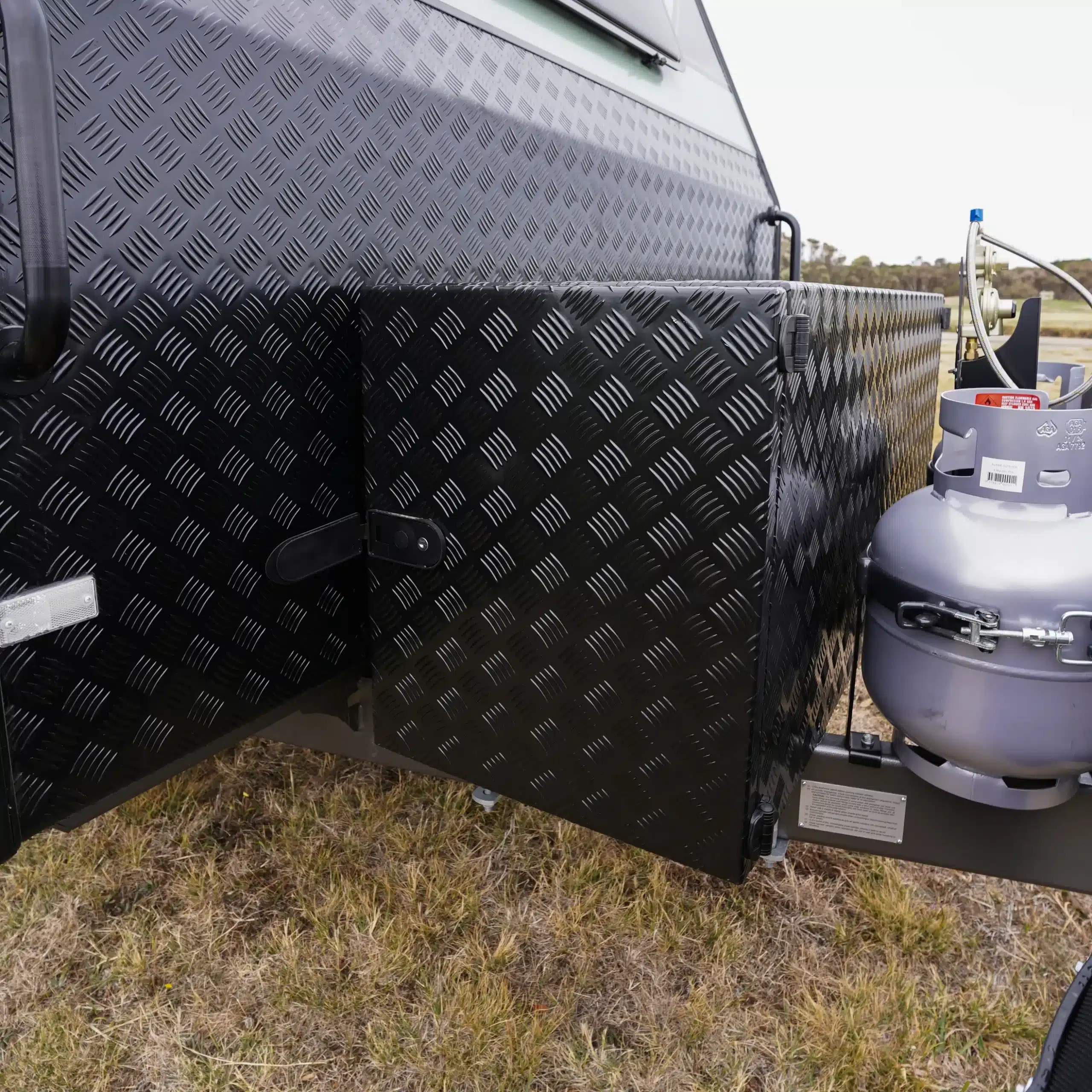
Common Mistakes to Avoid
From owner forums and installer feedback, the most frequent issues include:
- Mixing gas cylinders and electrical equipment in the same sealed box
- Blocking ventilation with stored gear
- Overloading the drawbar without rechecking ball weight
- Mounting too close to the coupling, limiting articulation
- Failing to secure cylinders properly inside the compartment
Most of these problems are preventable with planning.
Pre-Drill Checklist
Before installing a toolbox on your caravan, ask:
- Will this box contain LPG cylinders?
- If yes, does it meet cylinder compartment requirements under AS/NZS 5601.2?
- Have I recalculated ball weight and payload?
- Does the mounting method protect drawbar strength?
- Is the breakaway switch unobstructed?
- Have I considered insurance disclosure?
- If gas plumbing is altered, is licensed work required?
If you cannot confidently answer these questions, pause before proceeding.
The Bottom Line
An A-frame toolbox can be a practical upgrade. It adds storage, improves organisation and can clean up the front of the van.
But once gas bottles are involved, it becomes a compliance issue, not just a convenience decision.
Understanding the separation rules for LPG compartments, checking your weights, and protecting the structural integrity of the drawbar are essential steps.
Plan carefully, verify against current standards, and seek professional advice where needed. Done properly, a toolbox can improve your touring setup. Done poorly, it can create safety and legal headaches that are difficult to unwind later.