
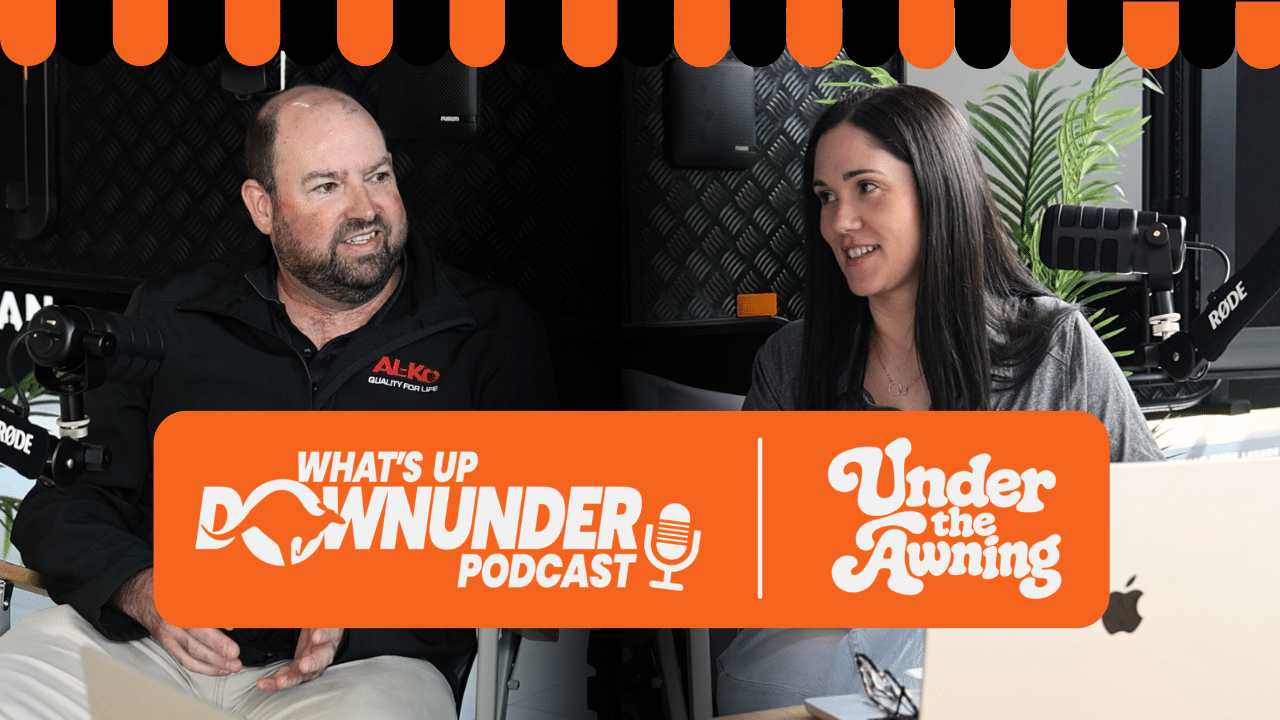
Are Modern Caravans Becoming Too Heavy?
Steph Pond speaks with Craig, a technical expert from AL-KO, about caravan weight, payload, towing combinations and who carries the responsibility when a van runs out of capacity.
Under the Awning
Episode 1
Watch or listen
In this episode
- Are Australian caravans becoming unnecessarily heavy?
- Is advertised payload realistic?
- Who is responsible when accessories reduce payload?
- Are buyers being properly informed?
- What is the difference between legal and safe towing?
- What should buyers check before signing a contract?
Key takeaways
- Know the weight of the van you’re buying. Ask for its completed weight and a clear list of fitted accessories, then work out how much payload remains for your usual touring gear.
- Check the whole towing combination. The caravan’s ATM is only one limit. The tow vehicle’s ratings and tow ball load matter too, and loading weight in the wrong place can affect stability.
- Weigh it as you travel. Once the car and caravan are packed with water, food and equipment, use a weighbridge to check the real figures. Craig also recommends getting familiar with the van and considering a towing course.
Guest information
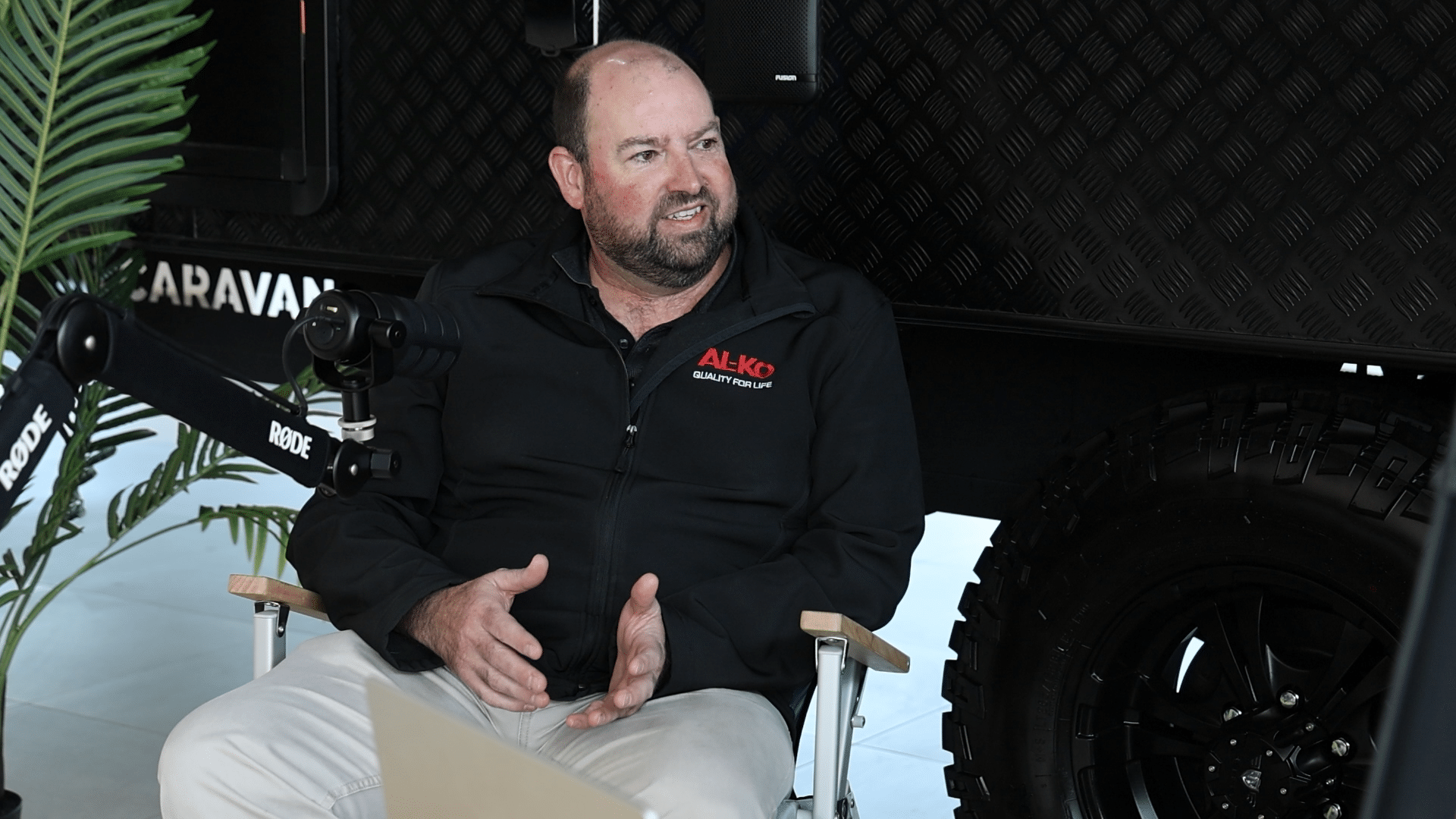
Craig Henry
Product Manager, AL-KO
Craig Henry has spent 29 years in the caravan industry, working across MTCS and AL-KO.Now Product Manager and part of AL-KO International’s leadership team, he brings both product knowledge and firsthand touring experience to Under the Awning.Craig joins Steph to talk caravan weights, payload and the questions buyers should ask before they tow away.
Visit website →Links and resources
Read the episode transcript
[00:16] Steph: Well, you’ve bought your dream caravan and you’ve loaded it with absolutely everything you need. Big batteries, solar panels, extra water, washing machine, fridge, microwave, maybe an air fryer. Then you add the kids, the bikes, the clothes, And all of a sudden, the caravan is overweight. Now whose responsibility is that? I’ve got Craig from AL-KO here, Craig. First of all, welcome.
[00:41] Craig: Thank you. Thanks for having me.
[00:42] Steph: Do you mind just quickly giving us a rundown for those who don’t know what what AL-KO is and what you guys do?
[00:47] Craig: Yeah. So AL-KO have been a long term supplier of chassis components, mainly undercarriage. So we’re talking suspensions. beam and leaf springs. We’re talking couplings. Corner steadies. Even up to the chassis, we build chassis for some of the guys in the market. Most of the local manufacturers would use some of our products. We’ve got the safety aspect of things covered as well.
[01:12] Steph: Amazing. So in terms of towing and trailers and caravans, you guys certainly have a lot of the ground covered. And you what’s your role there at AL-KO
[01:21] Craig: So my role currently is product manager. So I’m looking through the portfolio of products and just understanding where the markets are heading and what the what the consumers would like and what we need to do to cover and make things safer out in the market.
[01:36] Steph: Amazing, amazing. And what is it that we’re noticing sort of in the last, I don’t know, say five years, that the market is sort of moving towards.
[01:43] Craig: I think probably, the hybrid market is starting to, to lift a little bit. One of the bigger concerns is probably around the single axle variants, in my opinion. We’re getting heavier and heavier on a single axle. We’re not doing as much tandem as we used to. So.
[02:02] Steph: And why do you think why do you think that is?
[02:06] Craig: Maneuverability is obviously the easiest thing. A tandem is a bit harder to, to maneuver, in, in sort of small spaces. But if you look at typically what people are trying to do now, they’re traveling longer further. If you asked me what would be the safest thing to do would be the longer you travel than the further you’re going. If you’ve got a tandem axle, you’ve got more wheels holding the weight that you’re carrying.
[02:33] Steph: Absolutely, absolutely. So I suppose that was going to be my first question. So Craig, let’s make it really simple. Why are caravans getting heavier?
[02:42] Craig: I suppose as the technology, comes in, there’s a lot more that we can that can be offered in a caravan. It’s essentially a home on wheels. And the more and more you can put in, the more and more, you know, it’s, out there for people to enjoy. There are different lifestyles now. There’s a lot of people traveling. They’ve got Starlink and they’ll work from from the van anywhere they want. So, you probably see that more and more where people are trying to fit more and more of their home environment into the traveling lifestyle.
[03:19] Steph: Yeah. And I suppose a good conversation to have would be that, you know, our caravans getting heavier. Or are we asking them to do more. So we are putting more in vans. Obviously we’ve got new technologies that allow us to take things. You know, the power systems are different. The you know, we’re trying to make batteries lighter and fit them in different places.
[03:41] Steph: And then we’re adding things like air fryers and Starlink, like you said. But more to that, we’re then doing other things to try and compensate. So we’re then looking at, you know, composite paneling and, and things like that. So the industry, it’s trying to compromise. We’ve got a consumer saying I want all of these things. And then we’ve got manufacturers going, okay, but we’ve got certain regulations that we need to comply to.
[04:08] Craig: Yeah. So so what really drives that is the, the standards and, and the VSB-1 which came out, which is around the design rules of small trailers. There’s always sections where there’s a limit to what you do. And what seems to happen is as we take weight out, we find ways to top back up to that. You know, three and a half ton, which is, which is, you know, that’s where most of the couplings are rated to. So if you can get something down to three ton, all of a sudden we’re working out, what else can we put in to? Because we can go to three and a half ton. So we’re always running on that edge.
[04:52] Steph: Yeah. We take it out somewhere else, but we find somewhere to.
[04:55] Craig: Put it in.
[04:55] Steph: Can we just go back to that VSB- 1 that you were just mentioning? What is that? What is that for people that don’t know what that is.
[05:01] Craig: So, so it’s basically some design rules around how a trailer or caravan should be built. There are some some regulations around lighting, around braking. And there’s certain aspects around the weights that actually govern what sort of suspension and what sort of breaking you’re required to have as you go through those steps.
[05:23] Steph: Right. Okay. Cool.
[05:24] Craig: the big one, your small trailers are only 750 kilos, so they don’t need brakes. Anything over that? You need brakes. Once you go to the two ton mark you’ve got to have brakes on all of the wheels. And then you’ve got to have a breakaway system which most of the caravans all have now. And then you sort of get to the spot where the three and a half ton is really around the components related to it, to it. There’s nothing more around the braking other than the braking has to be sufficient. So basically from the three turn up to, from the two turn up to about four and a half ton, as long as you’ve got adequate braking and suspension carrying capacity, you can go all the way up. So then that bit becomes vehicle dependent.
[06:09] Steph: Yes. And that is another conversation we do want to have at another time because we we have obviously are compliance. And then we have what the vehicle can do. And then we have what the two can do together.
[06:22] Craig: Correct.
[06:22] Steph: Which is a whole, a whole other can of worms that we’re going to have to have to get into. one big question I do want to throw at you is, do you think that we have reached a point where luxury is starting to come at the expense of usability?
[06:37] Craig: I think, I think there’s a good balance. I do believe that some of the components that we’re trying to put in are getting lighter and making it easier for us. I suppose I’m an old school camper, so, you know, I like using the camp oven, cooking on a fire, all those sort of things. So I think being able to get back to. That’s good. But then you’ve got the other side where technology is, you know, used right throughout schooling and, and and whatnot. So basically, I think there’s a little bit of a mix and I think really it’s up to the individual to start them working out what is luxury. Yeah. And what isn’t.
[07:20] Steph: So yeah, I think I’m with you on that one. My, my background, which I suppose most people don’t know, is I’ve been I’ve grew up camping, whether it be a short wheelbase 40 series and, you know, and a tent in the back or, sometimes would, you know, borrow a camper trailer where you would, you know, fold that out. And, you know, dad was always like, you know, let’s cook on the fire, you know, let’s whether it’s a camp oven or a cast iron just to cook some steaks or, you know, you’d have tin peaches and custard for dessert. There wasn’t an air fryer to make your churros or, you know, whatever my son’s asking for now. So I think for for me, that’s that’s camping.
[07:52] Steph: But then, like you said, sometimes these are homes on wheels and they are working remotely, so they still need the conveniences to be able to, you know, heat something up. And we just did a two week trip in Perth, with a nine month old and an almost three year old. And the microwave was a godsend because there was leftovers that we could reheat. And, you know, all those sorts of things were creature comforts that you just you are so used to. So I think there is that. And then, as long as the van is equipped to be able to carry those things and the car is set up to be able to take that van, I suppose safety is one thing, but also like comfort is the other as well. You want it to feel nice if you’re moving around.
[08:32] Steph: So let’s say that I’m a regular buyer. I walk into a dealership just like we’re sitting here, and I’ve told that the caravan has an 800 kilo payload. and that sounds pretty good to me. So what does that actually mean when a when a sales person or someone in a dealership tells me that I’ve got 800 kilos to play with?
[08:48] Craig: Well, I think in most cases they should be explaining that, that that includes some of the extras that you would take for granted, maybe your water. Yeah, gas tanks that are full. There’s a couple of little things that you’re probably not and water tanks are getting bigger. So you got 200 liter water tanks. There’s, you know, 200 kilos straight up that you cannot use for anything other than water. Yeah. So if you’re not at a caravan park and you have to travel with water, you’re going to have to take that out of the list of things that you want to add in.
[09:25] Steph: Yeah. So very quickly 800 is now 600.
[09:27] Craig: Correct.
[09:28] Steph: Yeah. I suppose that doesn’t necessarily mean that that’s 800 kilos of stuff. We can just go and back in the van. Is that. Can you explain?
[09:37] Craig: Yes. So I suppose the key to is when you put that extra payload in, it’s about where you put it, where you put it in the van. So most people that have traveled a lot understand that over the axles is usually the best place. For, for stability. And basically you don’t want anything on their extremities that is too heavy because that’s going to that’s going to make the, caravan unstable. So as you, as you put stuff in, you’ll, you know, you need to see where you can. I’m of the opinion. There’s lots of cupboards in caravans, and the hard part is getting people not to fill them as much as they’d like to. I think it’s that mentality of, you know, the bigger, the bigger table you got, the bigger amount of stuff you put on it.
[10:25] Craig: It’s the same thing. If you’ve got room, you put it in and it’s not necessarily required. And I’ve done a lot of caravanning. So I know that if you’ve got room, you add some stuff in and then later on you’ve been away for two weeks and you’ve never used it, and you go, oh, I didn’t need that.
[10:41] Steph: So If I buy caravan from a dealer and I have a heap of accessories fitted, and suddenly I’ve lost a massive chunk of my available payload, who is responsible for making sure that I understand that?
[10:53] Craig: Well, the dealer who ever sold you, the sales person that would sell it to you should be should be telling you exactly what it is. Yep. The new, VTAs which are around the ADR rules, which is the extension of the VSB-1, actually has that a lot of the vans should have all their accessories as part of their VTA which is a vehicle type approval. So if you’ve got one spare wheel, that’s the VTA should say that. And then the variations, need to be added to say whether you got two spare wheels. So and then you can have more, I suppose, or you’re looking at tool boxes on the front. Things like that should be added in. So at the start you know what’s going on.
[11:41] Craig: So the van should be when you buy it. If there’s accessories on there that should be part of the build. It shouldn’t be added on later.
[11:50] Steph: we’re putting the responsibility on on the on the dealership there. Does that mean that the dealer is weighing it before we take delivery? So before we hand over.
[11:59] Craig: It should be. It should be weighed generally. If it’s at the manufacturer, they should wait when it’s finished. And then they’ll have a way bridge certificate, whether it’s a government one or whether they’ve got their own set of scales, a lot of them now are producing enough vans that they have their own equipment, which they can print out a little ticket that says this is what the weight is. So that should be done at the manufacturer. At the dealer, if something else goes on. I mean, those sort of things can be communicated, but they should be part of the should be part of the build.
[12:34] Steph: And let’s quickly go through we’ve mentioned a couple of acronyms for weights and stuff like that. I’m coming in to buy my first caravan. There’s a lot of numbers flying around. What do they all mean?
[12:44] Craig: probably the, the main ones you want to look at ATM, which is the aggregate trailer mass. So that’s the mass of the whole van sitting there by itself. So that’ll be if you’ve got it on a jockey wheel or a stand. And the axles, that’s the whole weight on the ground. So that’s the ATM. The team is actually, is similar to the axle load. So basically it’s what weight is transferred through the wheels. Okay. So that that’s the basic carrying capacity of the suspension. And then you’ve got your ball weight. So obviously your ball weight then becomes part of what goes on to the vehicle. So in some cases, your ball weight and your GTM or your gross trailer mass, should I equal your aggregate trailer mass. Because that’ll be the whole weight of the the together van.
[13:39] Steph: Yeah. And is it reasonable to expect a person coming in to buy their first van to understand all these numbers?
[13:47] Craig: No, it’s very difficult. And we train and we have new people. Start with us at AL-KO And, there’s a lot of training that goes into all of those acronyms to try and understand exactly what we’re trying to do. Because we supply the industry with suspension. People will say, this is what I want to do with it, and we have to be able to work out what, what weights, what the spring capacities, all those sort of things that we need to do. We need to be able to understand it as well. So it’s hard enough in the industry, and a lot of people in the industry will tell you this to understand it, let alone outside of, you know, the industry and coming from a different background.
[14:27] Steph: I think there’s lots of what we think we need. And then I think if we went and spoke to a lot of caravan owners, they’d probably say, I’ve had my time again. I wouldn’t do it like that.
[14:38] Craig: Yeah, it’s a bit that way. I suppose I’ve had probably in my history, I’ve started with a couple of camper trailers that I’ve built myself and then and then I’ve had. I think I’m on the number five caravan now, and when, when we’re sitting around, we work out what’s the next, what’s the next thing we want to add in. But at the same time, with experience we look at okay, so if we get that what are we going to take out. Yeah. And what haven’t we used and what can we use instead of that. Like a camp of and you could cook a stake in a camp oven if you had to. And you can do roasts in there and you could cook sausages in there. You can do lots of stuff
[15:18] Craig: we have so many different things, you know, pots and pans and things that we don’t use all the time. And, hey, this would be good if we do this this time. And then, yeah, you end up with three different sizes of parts, which you only use one.
[15:33] Steph: And we’ve got your favorite one, don’t you? You end up going to that one every time, generally.
[15:37] Craig: So. So to me it’s when you want something new to go in, what can you what can you take out at the same time? And I think similar on four wheel drives, there’s probably not as much understanding around how much weight you’re putting into a four wheel drive. Because if you add up the induction cooker, a fridge, a battery system, then all of a sudden you’re trying to put 350 kilos on the table. You might find you’re in a bit of trouble.
[16:07] Steph: Yeah. Yeah, definitely. And that is true. There’s a lot of people that are caravanning, and then they might leave the van and go off for a couple of nights just in their car, and they’re carrying double. They’ve got the batteries in the car and the fridge and then all of that again in the van. It’s it’s it’s quite a lot. So if my van is within its ATM, does it automatically mean that my tow vehicle can tow it legally?
[16:32] Craig: No. So it’s based on the on the vehicle specification. So the manufacturers, ratings on on what it can pull as well as what, tow ball down weight you can have. Yeah. And that was a big misconception early on. Because there are a lot of, there’s a lot of cars that could tow three and a half ton. Yeah, but not many. That could also have 350 kilos. And in the industry, you know, you’re looking around could be 7 to 12% of ball weight. So you’re almost needing 10%. So if you can’t get 350 kilos on your ball, you’re going to be in a bit of trouble
[17:12] Steph: the suspension myth. So people upgrade their suspension and then they assume that what they’ve increased, they can legally carry more. But is that actually true?
[17:22] Craig: Legally or physically?
[17:30] Steph: Legally
[13:32] Steph: So legally it it all comes back to the chassis component site. So if you upgrade a suspension, you need to make sure that all the other components are still capable of doing what the upgrade is to. Okay. So if you go over, say you’ve got a caravan now at three and a half ton, there’s a good chance that it’ll stay at three and a half ton. If you want to upgrade the suspension, you need to make sure the drawbar safety chains and the coupling are all capable of doing it, as well as the complete chassis being designed in a way that it’s capable of carrying the extra weight.
[18:02] Steph: And how would someone find that out? How where would they start if they wanted to increase their capacity on their van?
[18:11] Craig: I suppose at a service centre is probably the best place to go. Okay. And understand what they’ve currently got and then what they would like to go to, because we’re only talking about the van as well. We’re not talking about what the car, the tow vehicle could take as well.
[18:26] Steph: Yeah, absolutely.
[18:27] Craig: You need to make sure the tow vehicle is going to be able to take the upgrade of weight at the same time.
[18:32] Steph: And what would make someone want to be able to carry more? So we’ve got a little van and for some reason someone comes in and they want to be able to increase that capacity. Is it just because they’ve added more stuff?
[18:46] Craig: Yeah, generally it’s payload or or add ons and you probably find it on a lot of the older vans because as we as we evolve in the industry, we start tailoring the vans to actually what we want to start with and what is new. And the way the market’s going. So normally upgrades you would see on older vans, and a lot of them to when I say now we’re sort of building to the limits of what things can do.
[19:15] Craig: Years gone by we weren’t going that high. So in some cases, you know, you could change a pair of springs and go up a weight rating to get some more payload, and it wouldn’t affect too much if you’re down, you know, around the the two tarnish mark, right where most vehicles are comfortable. You could upgrade the suspension quite easily to go up to the three and a half ton, whether you needed that or not. But you could, you could add in an upgrade straight away.
[19:46] Steph: Yeah. Okay. So basically, yeah. So if someone does have a van that’s essentially not maxed out, they could take it to their service centre. Is there is there independent places they could go?
[19:57] Craig: There’s independent places around. There’s a there’s a lot that you can look at online or there’s a lot of social media posts and some you can get an idea of what they do. Or, or you, could you talk to your dealers, where you’ve bought the van or a a brand name that you’ve got a van and then they can probably point you in the right direction.
[20:21] Steph: Yeah. Well that’s, I mean that’s, that’s good to know because I think not everyone wants to go out and buy a new van. They just need to adjust because you said you’ve got on van number five.
[20:31] Craig: Yeah, yeah.
[20:32] Steph: And that’s, is that common for the industry?
[20:35] Craig: Do you think.
[20:36] Steph: Upsize, downsize in and out?
[20:38] Craig: Oh, I wouldn’t have thought so. The family grew and then. And you look at things that make life easier. So a tent trailer, with kids is good, but there’s a lot of work, and the kids have got to be occupied while you’re putting it up and down.
[20:54] Steph: And we’ve got that down to a science. The bikes go on last so that the bikes come off first. Yes. Yeah. And then the kids disappear. Well, you set up the camper. That’s the. Yeah, yeah.
[21:05] Craig: That’s so. So then just things that make life easier as you go through and as the family gets bigger, different, different things. Yeah. Bigger, more beds, all that sort of stuff. Yeah. Until you get them in swags and then you.
[21:19] Steph: Put them under the awning. Yeah. That’s it. Then you’ve got to put swags in the right spot in the van so that the van is nice and evenly distributed. Yep, yep. It’s, it’s a constant, constant game of where to put things, isn’t it?
[21:33] Craig: It is. Yeah.
[21:33] Steph: It is. but how do we actually check the weights if I’m sitting at home and I think I actually, I actually have absolutely no idea what my caravan ways. What do I do?
[21:44] Craig: The best thing to do. And I see a lot more people doing it. And it’s really good. There’s some way stations you can get online that are at some of the service stations and, and what have you. You can you can just go there. You swipe your credit card, they tell you that goes through a process of how to work. You can weigh the car at the same time. It’s a caravan in a combination. So you can get a full weight, receipt that tells you exactly where all the weights are. And, and you can work out. Then obviously from knowing what you should have to what you do have.
[22:21] Steph: Yeah.
[22:21] Craig: Okay. So so interestingly, when I got my last van, I loaded it up with everything that I thought I would take, on a trip. Yep. Because I had a wood box on the front, two water tanks, gas. So, so basically loaded it up as if I was going away and just went down to the local service station. I think it’s called go away and you can. And you just get a weight on it, make sure you’re all in check. And, you can be comfortable. And you could do that on any trip. Yeah, yeah. You do.
[22:58] Steph: And and how does that compare to, say, like a public weigh bridge that might just be open.
[23:02] Craig: Well it’s similar. It’s a, it’s basically the same setup. Yeah. You just get out yourself and do it at all. Technology nowadays just let you do it all yourself. You don’t need anyone there to help. Yeah. And they seem to be a lot of traction. Use them every now and then as well. But, there seems to be a lot. And they’re not being used a lot down in Victoria. it’s it’s easy to get into you. It’s pretty simple. Unhook the van. Different pressure pads for for all the suspension for where all the weights are distributed through the ground. And then basically, you can get your ticket and say, okay, well, I, you know, underweight.
[23:39] Craig: I’m comfortable. Then of course, the other thing is to make sure that the weights in the right spots. Yes. For the distribution so that you, you don’t have too many weights on the extremities of the, of the van.
[23:51] Steph: Yeah. Do you think the caravan industry needs to change the way that it talks about weight?
[23:56] Craig: think what’s difficult is trying to get the education and the right voice in the caravan industry. There’s a lot of people that are knowledgeable, but it’s how do you get it out there? And you would only have to look at a couple of things on, on social media that sort of say, hey, this is what you should do and shouldn’t do and, and what have you. I’ll sort of been in the industry for 30 years. And I look at some of the comments and I just go, okay, well who’s who’s the educating voice that can help these people? Yes. And the hard part is on social media. As a business, people are trying to get away from commenting on that sort of stuff because it’s it doesn’t necessarily become useful.
[24:40] Craig: No. And it gets lost in the noise. So, so for me, it’s about going back to the people, go back to the dealers, go back to the manufacturers and understand from them. They’re the source of knowledge that have put the van together, sold the van, to get their ideas rather than. And the hard part to is if you break down on the side of the road, you’re going to get straight on social media, because that’s where everyone that’s got time on their hands is spending. So they’re going to they’re going to respond with their thoughts on what’s going on. And it makes it very difficult for, dealers and manufacturers to help consumers in the background because they’re getting fed so much information to start with.
[25:21] Steph: Yeah. Where do you start?
[25:22] Craig: And and a lot of it, you know, they have to read a couple of posts and you can see conflicting arguments straight away. So, I think it’s about and the industry is trying to get more of that education out there and, and work with the, the consumers and try and give them, you know, the power to understand what’s going on. But like we said before, it’s very difficult with all these acronyms and to try and understand what we should be doing shouldn’t be doing. just need to be educated, but we need to be educated by the right people with the right information.
[25:52] Steph: Yeah, definitely. And I think there’s there is a responsibility from the industry. And who’s selling you the van? I mean, and this could be you could be buying a van, a marketplace. You know, it doesn’t necessarily mean it’s a van out of a dealership, but I think there is a level of responsibility from the person that’s then decided to go and tow a very heavy thing, potentially a very long distance, to have a comfortable understanding of.
[26:18] Steph: What might happen and how to react. If a kangaroo jumps in front of your car and you’re towing. Yeah. In that split second, you need to make a potentially life changing decision as to what to do. And there are, like we said, independent places that can help you with that. It doesn’t necessarily have to be the dealership. They’re not going to teach you how to tow.
[26:42] Craig: No. So there’s a there’s a lot of companies that do towing courses now. They explain a lot more of that and they will get into the detail of ATM. GTM what what are you looking at? What vehicle? What what van you’re towing. So they’re the guys that really they’re educated, they understand it and they’ve been in it. So they’re the types of people you want to speak to and get their thoughts and get their advice on how to tow, how, how to safely tow, how to work out what they can purchase or not purchase. They’re sort of the people that that will be able to help.
[27:21] Steph: Yeah. Because you could go there with your van. They would teach you where they think you should set everything up. Then they could then go through real world experiences on how to do x, y, z.
[27:31] Steph: Craig, if you could change one thing about how the caravan buying process happens tomorrow. What would you change?
[27:39] Craig: It’s just about trying to get some sort of consistency around how we would approach a hand over or a, a sale or an understanding of, to the consumer. This is what you’re getting. So it’s sort of here’s where it all is, warts and all. Here’s where you’ll be at. Yeah. And I think the hard part is to understand, how do you. We all want to get a sale. Yeah, but how do you get the sale that best suits the customer? At the end of the day, without, you know, without putting any anyone at risk. Of not having the right selection of van type.
[28:18] Steph: What do you think would create someone being led to potentially not the right van for them.
[28:26] Craig: I think it’s probably more the glitz and glam that you’re talking about before. It’s the I heard there’s a new air fryer microwave thing the other day. Yeah. You know, it’s an air fryer in a microwave and microwave in one. Yeah. It’s the things like that. It’s looking at a van and saying, hey, this is nice, but this is better. This has got a couple of extra things that I would like. You want to make sure that if you’re going to the thing that’s in most cases more, more accessories is going to cost you more. But can you actually tow that safely? Yeah. And understand that what you can, what you can do overall.
[29:06] Steph: Yeah. And what about the difference, I suppose. Say the semi offer a variant came with the microwave air fryer of the off road variant. Didn’t. Do you think maybe there’s a disconnect in, you know, the manufacturing. Who. How do we make sure that that if that customer potentially will need an off road van. How do we sort of safely say to them okay, well here’s a workaround for the internal component. We need to be focusing on where you’re taking this.
[29:35] Craig: I. Yeah. And and that’s to your point. The understanding of where you’re going to travel is is key. I think in some cases I always like to be overprepared. So, I’d like to have leeway, safety factor, all those sort of things when I’m traveling. Yeah. You know, hence the tandem over a single, if some sort of things from experience that I would that I would explain a little bit differently about where you’re going to travel, how far you’re going to travel. You don’t quite know if, if, if you’re going to get off the off the bitumen and you don’t quite know where you’re going. It’s very difficult to be able to say, I’ll send me off road will help you if you end up down a track, but you can’t turn around on. Yeah, you’re there for a while. Yeah.
[30:23] Craig: So I think to your point, depending where they’re going to travel, you would want to be equipped for the worst case scenario, in my opinion. And I think it’s best to try and let the consumer know that that’s, you know, because this could happen. Yeah. And this is what you best to be prepared for.
[30:43] Steph: Because there are travellers out there that are they might come in and they say, I want to travel Australia, and I am only going to stay in caravan parks. And that’s a certain type of buyer. Yeah. But then there’s the ones that are going are we’ve really new to this. We’re going to start in caravan parks and then we’re going to start venturing out. And that’s when we start going semi off road.
[31:04] Craig: Yeah.
[31:05] Steph: Or beyond.
[31:06] Craig: Yeah. So Sometimes it’s not actually about the suspension type. It’s actually and I’ll say this a fair bit. Driving to the conditions. So some of the roads that the vans are going on these days that are having problems in the old days, we used to do stuff with far less technology and with no issues. And I put that a lot down to the tow vehicle. Yeah. So the tow vehicle now can do a lot rougher terrain, a lot faster. More comfortable. And basically you end up in a situation where the on the van isn’t necessarily up to the technology on the vehicle, and therefore you can’t feel what’s going on in the back, but literally everything gets exaggerated. Yeah. And you could be there for long periods of time.
[32:00] Craig: Now, in the old days, you probably get out of the car and stretch and make sure you know your kidneys were.
[32:05] Steph: Up because the leaf springs in the back of the old Hilux, you couldn’t go and drive the Gibb at whatever speed you’re doing it at in your, you know, very big truck.
[32:15] Craig: Now driving to the conditions is. Yeah. And if you’ve done four wheel drive and you. Yeah. Well and truly understand it.
[32:21] Steph: Especially.
[32:22] Craig: When you start as fast as you can go sometimes.
[32:24] Steph: Yeah. And you start paying for your own four wheel drive and all of a sudden you get a lot of mechanical sympathy. And you’re very quickly learn that. Well I’m probably not going to do that. Yeah. Because it’s going to hurt the car or it’s going to hurt me. Or I was actually having a conversation with some of the, service techs. So just on the weekend we had the JB group gathering. Yep. And so we were walking around and we had a lot of, travellers and customers from a couple of different brands and just having a chat with just people in the industry. There’s full time travellers this weekend. Travellers. There was staff there, and, one of the service techs was actually saying to me that
[32:59] Steph: there’s a big industry in upgrading your four wheel drive or your tow vehicle to be able to carry certain things, do certain things, but there doesn’t seem to be a huge industry and upgrading your van. And that’s what we were just talking about. It doesn’t necessarily mean you know the van that you are buying. It doesn’t mean you can’t modify it. Yeah. And that’s not so commonly talked about when you could buy a certain van. And if it if your needs change you don’t have to go buy a new van. You could just update the one that you have to meet the requirements.
[33:36] Craig: Yeah. I suppose the, the bit that’s not quite like what the full drive is, is that nowadays we’re actually building to the extremes. We’re building to the limits of what they can actually do. Yeah. So they’re not just easier upgrades to go heavier and heavier. And I think, you know, we’ve got the, the Chevs and the Rams and that out there now that are that to go to some of the weights that they can carry. You almost need a new chassis. Yes. So where purpose built to a a certain spec.
[34:11] Steph: But even just to be more comfortable in terms of the vibrations coming up, you know, if you want to go drive a rougher corrugated road or something like that, you’ve.
[34:21] Craig: Yeah. So you can say I suppose. Yeah. To that point, it’s not so much about weights, it’s about comfort. Yeah.
[34:26] Steph: And preserving everything else that’s bolted in here.
[34:29] Craig: So there’s still, there’s still a few upgrades. The biggest upgrade we probably see, is probably to airbags now. Airbags in the vans. Starting to become more common. It’s a bit more comfortable.
[34:44] Steph: Auto leveling.
[34:45] Craig: Yeah. All that. All those. Yeah. Things you can get with their,
[34:53] Steph: Following on to that, though, I know we’ve had a separate conversation at AL-KO with a product that you guys offer that helps with the stability of a of a van when it’s towing. Can you maybe explain a little bit about that for us as well?
[35:08] Craig: So so we’ve got three different types. Okay. But basically for me, there’s enough out in the market that if you’ve got a van and you’re especially a novice, but even even still, I’ve towed for 30 years. Yeah. any vehicle that we can put sway control on would be beneficial. So we’ve got the AL-KO sway control, which basically monitors left and right. And if you, they function basically by putting the left brake on the right brake on to bring you back under control. So, so that’s that’s beneficial. Gusts of wind, all that sort of stuff. Same thing. Our ESC is similar.
[35:57] Craig: But it’s probably a little bit more, nurturing as in it activates all the brakes. Okay. So you’re washing speed off at the same time. So usually when you have one of those moments, you’re probably traveling a bit faster than you want to be. So to get all the brakes to come on at once is beneficial. And like I say, it takes it takes that sort of speed off and gets you under control. Both both work well. Yeah. The third we’ve got is the, ae toe assist, which is the next level up, which incorporates ABS braking. So that helps a little bit that, that does all the same features as the other two.
[36:39] Craig: What it does do is independent braking. So on a tandem you can have front or rear left and right. And what it does to is around when you’re traveling slower, you know, pulling up at a set of lights, you might have your brake controller turned up too high. It’s going to, kick the abs in and you’re not going to flat spot your tires. So that’s got a little bit of extra feature in in that as well. But basically, for anyone to have that on there, the split second you were talking about before is, you know, this thing reacts quicker than that. Yeah. It’s hard to explain sometimes because electronics you can say it does this, this, this, this and this, but it’s literally doing it in milliseconds.
[37:20] Craig: Yeah. So, the intervention of that, worth its weight in gold. It’s in an insurance policy. It I know now all the insurance companies will give you a discount on your premiums if you do have any form. Yep. There are some other forms out in the market. My recommendation is you should have at least one of them. Because there are times where even experienced drivers like myself have had the system kick in. Yeah. You may not be fully out of control, but you may not have known you were about to be out of control. So that’s.
[37:56] Steph: The preventative.
[37:56] Craig: That’s how quick it works.
[37:58] Steph: Yeah. Yeah. Wow. what’s your number one piece of advice for someone buying their first caravan?
[38:10] Craig: Probably just just educate yourself around what’s out in the market. What you can get and try and just understand what what combination you would be comfortable in. I think there’s a lot of vans nowadays that are really big. There’s a lot of people that are getting into, you know, 200,000 plus combinations. they’re just, you know, they haven’t been educated on how to travel, and, and how to get around. I think it’s just about. Yeah. Educate yourself as much as you can where possible. Test, see if you can do towing courses. See if you can test vans. You know, you can hire vans nowadays and things like that.
[38:57] Craig: Test what you like and understand what you like. In most cases, people only upgrade a van because they know what they want now. Yes. Not necessarily. Meaning they didn’t know what they wanted before, but what they wanted before was different to what they want. Yeah. Currently.
[39:13] Steph: I think you touched on a really good thing. We work a lot with Camplify at What’s Up Down Under, and obviously that’s a great platform if you want to, you know, go somewhere that and you don’t and you don’t have a van. But it’s another really good way to test different types of vans. You could take one away for the weekend.
[39:28] Steph: And like you said, you could understand the difference between a single or a or a dual axle. You know, you could start to feel those differences aside from the luxuries. Yeah. The different lengths of the van. How that’s going to feel on your tow vehicle. If I was in the market of of buying a new van, that’s probably something I would do is go and spend a couple of weekends away in different types of vans and, you know, like you said, hybrid or not, or, you know, all those options are now there to just, you know, for maybe a couple hundred or, you know, a couple thousand dollars for the, the week.
[40:04] Craig: Yeah, absolutely. If you can familiarise yourself with what you, what you would like and what you need. I’ve always started and worked my way up. So as my son told me the other day, you’ve got a very expensive caravan. And I said, well, I didn’t start with one. No. So, I think it’s just. Yeah, if you if you can test and understand what you, you would like, you can start basically. And you can always, you can always upgrade and, and in history, you know, caravans have always held their value. So they’ve been good to upgrade. And get, you know, newer people into the market. And then you find probably the more experience that’s starting to look at the luxury stuff and the even the ones that want to do a bit more travel, you know.
[40:53] Craig: Yeah. Yeah. Suspensions and things that are going to help you on the travel side of things.
[40:58] Steph: Craig, I’ve got one last question for you.
[41:01] Craig: Yeah.
[41:03] Steph: And I’m going to put you on the spot a little bit. If a family buys a van that appears to have plenty of payload, then they add the water, the food, the clothes, the camping gear, the swags for the bigger kids, the bikes and the normal equipment that you would expect to have a family take away on a week long trip and they immediately exceed the limits. Have they bought the wrong caravan?
[41:26] Craig: Not necessarily. They should actually, when the they bought the van or when they were looking at it, they should have been explained that, you know, the industry standard would be 600 kilos of payload. Anything that they exceed on that then is really up to them to, work out themselves. Yeah. And try and understand, you know, from their point of view. What do they want to get in the van after they’ve bought the van?
[41:54] Steph: Yes. Essentially it should be done and sort of nutted out before they’ve bought the van. Just because they’re over doesn’t mean that there isn’t ways to make cuts, essentially.
[42:03] Craig: you make a lightweight van or a light her van with less, less appliances or even less cupboards or whatever you can to take the weight out. You’re still, as we were talking about before, you can still be up on that upper limit, but you can give yourself more payload by taking the weight out at the front end to be able to accommodate the extra stuff that you would like to, to bring in later on. Yeah.
[42:27] Steph: last weekend on What’s Up Downunder, we had Felicity Palmateer actually pick up a motorhome and she’s traveling from Noosa up to the Whitsundays. So she’s just gone and shown us all there is to explore in Noosa before she continues heading north. So this week coming up, I believe she’s heading to Fraser Island. So we have a four week long journey heading, through Queensland in her motorhome. Just before that we had Tassie Jono took a caravan in a ram across the Spirit of Tasmania, which was exciting. He went and traveled Tassie for four weeks. So tune in this week at 10:30 on channel 10 to see everything that Felicity gets up to.
[43:12] Steph: So, guys, there you have it. I think the lesson is that caravans are probably not too heavy. We just really need to understand what it is that we’re buying and what the allowable limit is to be able to to add some more in there. So, Craig, thank you so much for joining us on our first episode of Under the Awning, and we hope that we can see you again soon. Hopefully.
[43:33] Steph: Happy to come back?
[43:34] Craig: Yes. Thanks for having me.
[43:35] Steph: No worries. And to everyone listening, we’ll see you next time. That’s Under the Awning from What’s Up Downunder.
Got your own tips to share?
Have you tried these ideas or discovered your own helpful tricks on the road? Share your advice with the What's Up Downunder community - your experience could make someone else’s journey even better!

Disclaimer: This content is for general informational purposes only. Any actions you take based on this information are at your own risk. Please conduct your own research and consider your individual circumstances before making travel, safety, or purchasing decisions. See our Terms & Conditions and Editorial Guidelines for more information.