
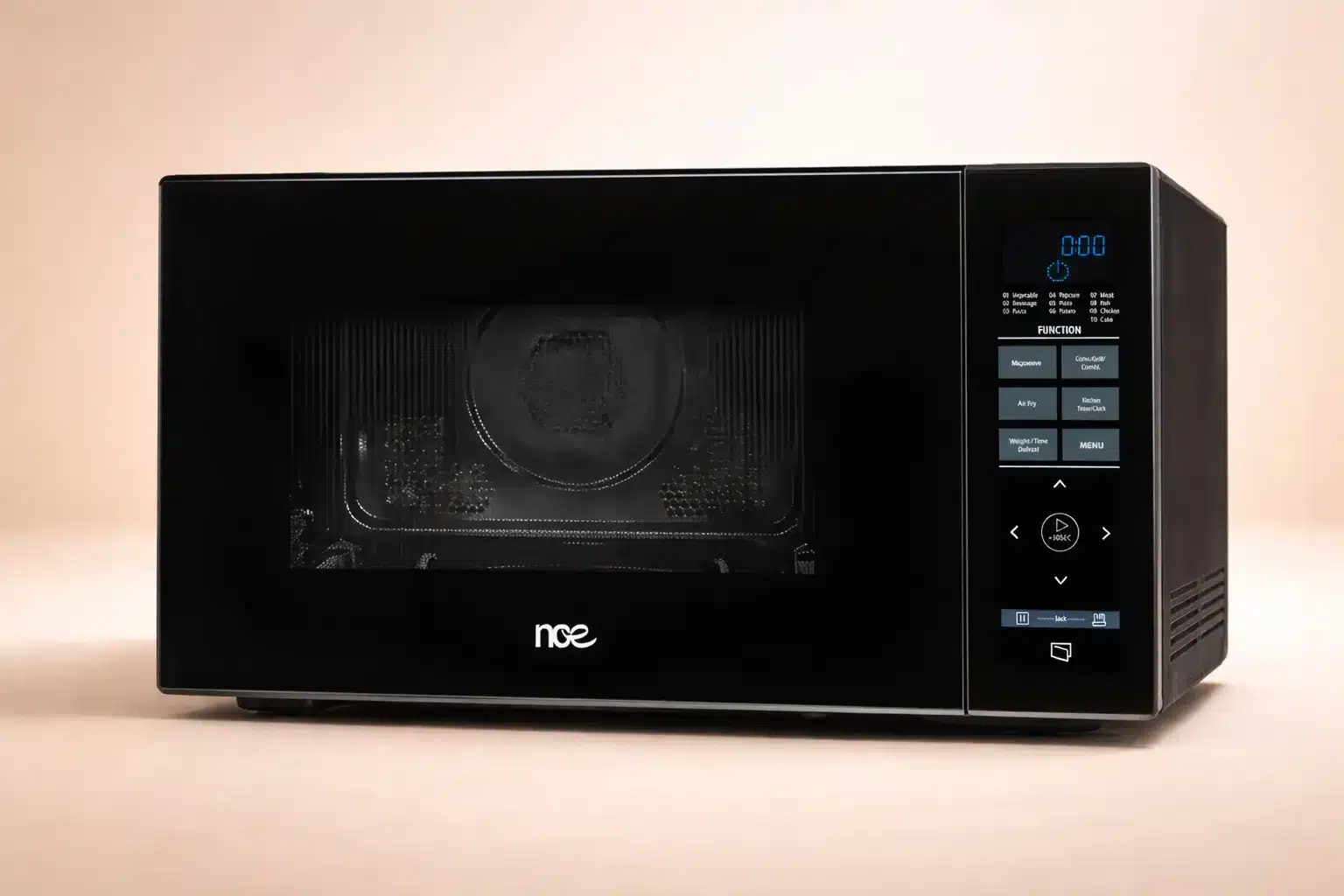
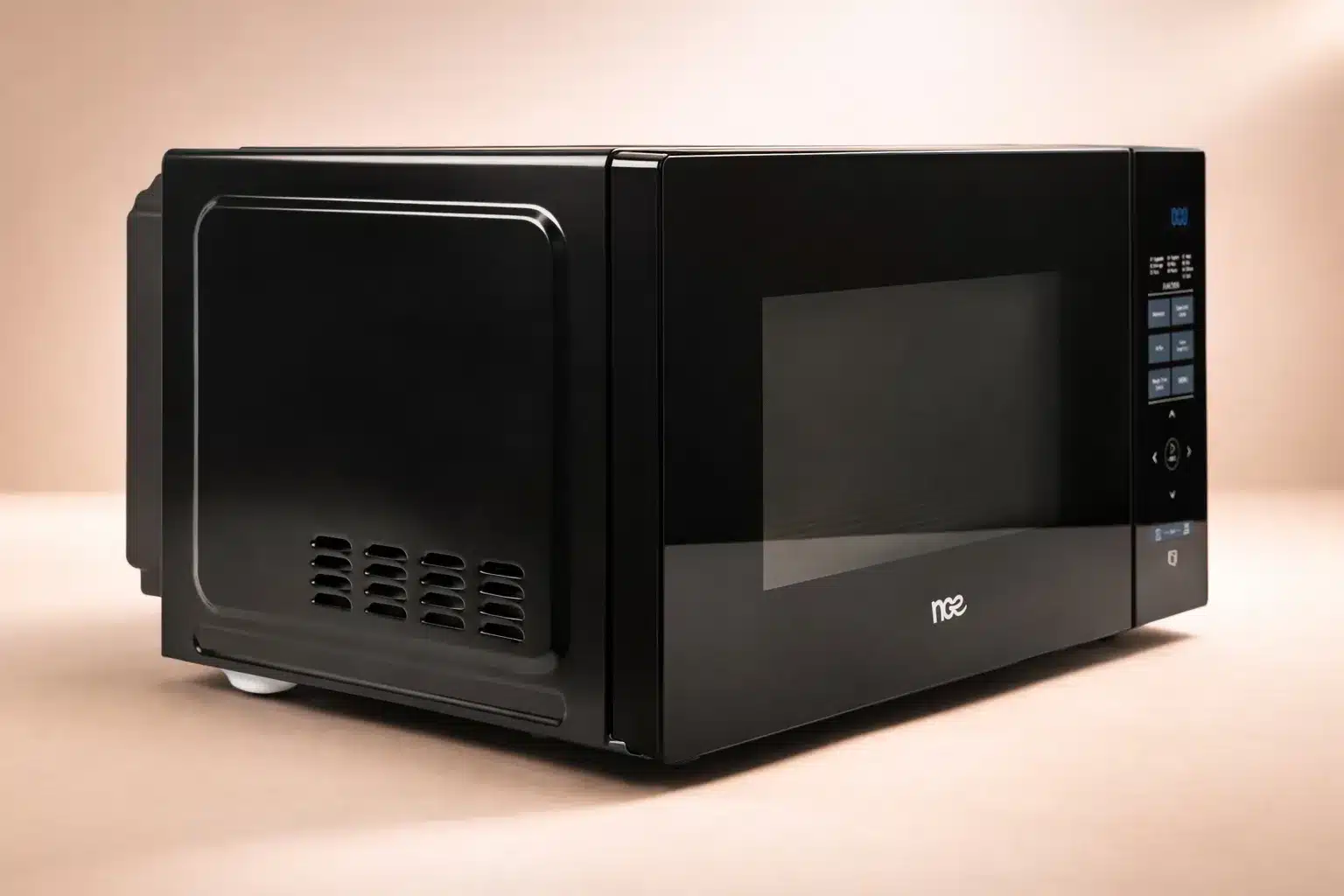
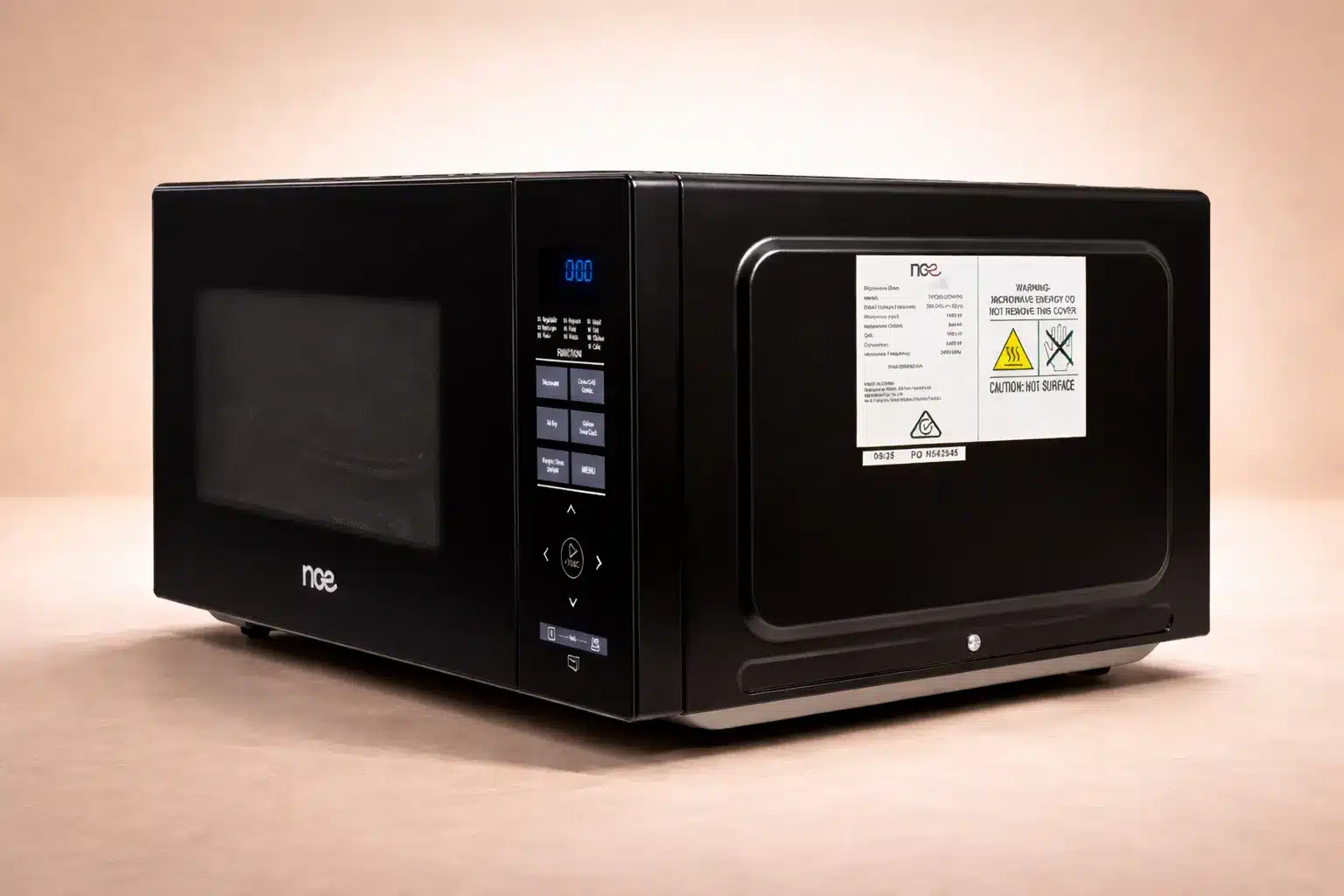


A built-in convection microwave can reduce clutter in a caravan kitchen by combining several cooking functions in one fixed appliance. The NCE 29L Convection Microwave is designed for RV installation and brings together microwave, convection oven, grill and air fryer functions in a single 240V unit.
For caravan owners fitting out a new van or replacing an ageing microwave, the practical questions matter most. Will it fit the cabinetry? Can the electrical system handle it? Can it replace separate appliances without introducing new compromises? This review focuses on installation, power requirements and real-world suitability in a caravan environment.
Product Overview
The NCE 29L Convection Microwave is a 240V built-in appliance with a 29 litre stainless steel cavity and 315mm glass turntable. It combines four cooking modes:
- Microwave
- Convection oven
- Grill
- Combination and air fry programs
It uses inverter microwave technology, meaning power is delivered more consistently rather than cycling on and off at full output. In practical terms, this can improve defrosting and reduce uneven reheating compared with traditional stop-start microwaves.
According to the official product manual:
| Electrical Specifications | Physical Specifications |
|---|---|
| Rated voltage: 230 to 240V AC, 50Hz | External dimensions: 523mm wide x 453mm deep x 300mm high |
| Microwave input power: 1400W | Minimum internal cabinet size required: 560mm wide, 380mm high, 550mm deep |
| Microwave output power: 900W | Minimum ventilation requirement: 252cm² combined open area |
| Grill and convection element: 2200W | Net weight: 13.6kg |
| 11 microwave power levels | Gross weight: 16.03kg |
| Convection temperature range: approximately 150°C to 240°C |
These figures are central to assessing inverter and off-grid compatibility. The 550mm cabinet depth requirement is a key limiting factor in some older vans.
TECHNICAL SPECS
View 29L Convection Details
Detailed dimensions, power ratings, and installation guides →Convection Microwave in a Caravan: Installation and Fitment
Fitment is the first consideration before performance.
The required 550mm internal cabinet depth will not suit every caravan, particularly older models with shallower overhead cupboards. Careful measurement is essential.
Ventilation must meet the specified 252cm² combined open area. This may require dedicated vent grilles to prevent heat build-up, especially when using convection or grill modes.
At 13.6kg net weight, the unit is heavier than a basic microwave. While manageable in most caravans, owners operating close to their Aggregate Trailer Mass should include this in payload calculations.
Professional installation is recommended to ensure secure mounting, compliant 240V wiring and adequate airflow.
Installation Fitment Guide
Before purchasing, match your caravan setup below to determine if a convection microwave is a viable upgrade for your specific cabinetry.
Modern Caravan / Dedicated Cavity
Designed specifically around modern built-in appliance dimensions. Usually a straight swap.
Deep Cabinets (≥550mm)
Meets the minimum depth and clearance requirements for safe rear-wall ventilation.
Older Vans / Shallow Cupboards
Depth is the main limiting factor. Often requires heavy modification to the door frames or rear wall.
DIY Cabinetry Modifications
Possible with the right skills, but requires a professional ventilation plan to manage high heat.
Zero / Limited Ventilation Space
High risk of appliance failure or fire due to extreme heat build-up during convection/grill use.
Expert Tip: Always measure the internal depth from the back wall, not the external door frame. Ensure you have accounted for the pigtail power plug clearance behind the unit.
Real-World Use and Performance
Microwave Mode
With 900W output and inverter control, the unit performs within the expected range for mid-size microwaves. The continuous power delivery may improve even heating during reheating and defrosting.
For routine tasks such as reheating meals, steaming vegetables or defrosting meat, performance aligns with comparable 900W units.
Convection Oven Mode
The convection setting allows baking and roasting between approximately 150°C and 240°C. In vans without a built-in gas oven, this function may reduce the need for a separate benchtop appliance.
However, convection mode uses the 2200W heating element. This is a substantial electrical load and will add heat inside the van during operation.
Grill and Air Fry Functions
The grill and air fry programs use radiant heat and circulating hot air to brown and crisp food. For owners currently carrying a separate air fryer, this may reduce bench clutter.
The 29 litre cavity limits cooking volume compared with larger domestic appliances, and batch size should be considered when cooking for families.
Power System Compatibility
The NCE 29L Convection Microwave operates on 230 to 240V AC only.
Power draw is the critical consideration:
- 1400W input during microwave use
- Up to 2200W when using grill or convection
Owners relying on an inverter system must confirm that their inverter can handle these loads. A 2000W inverter may be marginal for convection operation. Higher-capacity inverters and sufficient lithium battery reserves are advisable if convection cooking is expected to be used regularly off-grid.
This appliance is most practical in caravans frequently connected to mains power or equipped with robust inverter systems.
NCE 29L Convection Check
Measure twice, install once. Confirm your cabinetry depth and inverter capacity before committing to a built-in installation.
01 Cabinet & Ventilation
02 Power Consumption
Technical Tip: If you plan to use convection or grill modes off-grid, a 2000W inverter is considered marginal. For reliable performance and surge protection, a 3000W Pure Sine Wave inverter paired with a Lithium (LiFePO4) bank is recommended.
Key Considerations for Owners
Space vs flexibility
A built-in combination microwave can reduce bench clutter, but only if the van provides the required 560mm x 380mm x 550mm cabinet space and 252cm² of ventilation. Older vans may not have sufficient depth.
Electrical load
Microwave mode draws 1400W input. Convection and grill modes can draw up to 2200W. Off-grid setups must have an inverter and battery capacity suited to these loads. A 2000W inverter may be marginal for convection use.
Heat management
Convection and grill functions add heat inside the van. In warmer climates, this may increase reliance on ventilation or air conditioning.
Weight
At 13.6kg net, the unit should be included in payload calculations, particularly in vans close to ATM limits.
Maintenance
The stainless steel cavity is durable and easier to clean than painted interiors. Regular cleaning is important when using grill or air fry modes to prevent residue build-up.
Price and Market Position
At the time of writing, the NCE 29L Convection Microwave is listed at $499.99 through authorised retailers.
Within the caravan appliance category, this places it above basic microwave-only units and below many full built-in oven installations. Pricing reflects its combination functionality rather than simple reheating capability.
For caravan owners, the consideration is less about the purchase price alone and more about integration. If the appliance replaces a separate microwave and air fryer, and the van already supports the required cabinet depth and electrical load, the cost may align with that consolidation. If additional electrical upgrades or cabinetry modifications are required, total installation cost should be factored in.
Pricing may vary between retailers.
Who It Is Likely to Suit
This convection microwave is likely to suit:
- New caravan builds with compliant microwave cabinetry
- Owners who stay predominantly on powered sites
- Vans without a built-in gas oven
- Travellers wanting to consolidate microwave and air fryer functions into one fixed appliance
It may be less suitable for:
- Lightweight off-grid setups with modest inverter systems
- Older caravans with shallow cupboards
- Travellers who prefer portable outdoor cooking appliances
Closing Summary
The NCE 29L Convection Microwave is a built-in combination microwave designed for caravan integration. Its 900W inverter microwave output and 2200W convection element provide flexibility within a single cabinet footprint.
Its suitability depends on cabinet depth, ventilation compliance and electrical capacity rather than features alone. For caravans already designed around 240V infrastructure and adequate cabinetry, it can simplify kitchen layout and reduce appliance duplication. For off-grid or space-constrained setups, careful measurement and power assessment are essential before installation.
Pros and Limitations
| Strengths | Limitations |
|---|---|
| Multiple cooking modes in one unit | Requires deep cabinetry |
| Saves bench space | High power draw in convection mode |
| Even reheating with inverter control | Not ideal for small battery setups |
| Suitable for powered sites | Smaller than domestic ovens |
| Built-in installation | Ventilation requirements must be met |
Convection Microwave FAQs for Caravan Owners
A convection microwave combines standard microwave heating with a fan-forced heating element, allowing it to bake, roast and brown food rather than just reheat it.
It depends on your inverter and battery capacity. Microwave mode is often manageable on larger lithium systems, but convection and grill modes require significantly more power and are generally better suited to powered sites or high-capacity inverter setups.
Fitment depends on cabinet depth and ventilation. Vans designed for built-in appliances usually accommodate it, while older caravans with shallow cupboards may not meet the 550mm depth requirement.
For many setups it can replace both, particularly for baking, reheating and smaller batch cooking. However, capacity is smaller than a full oven, and electrical demand must be considered.