
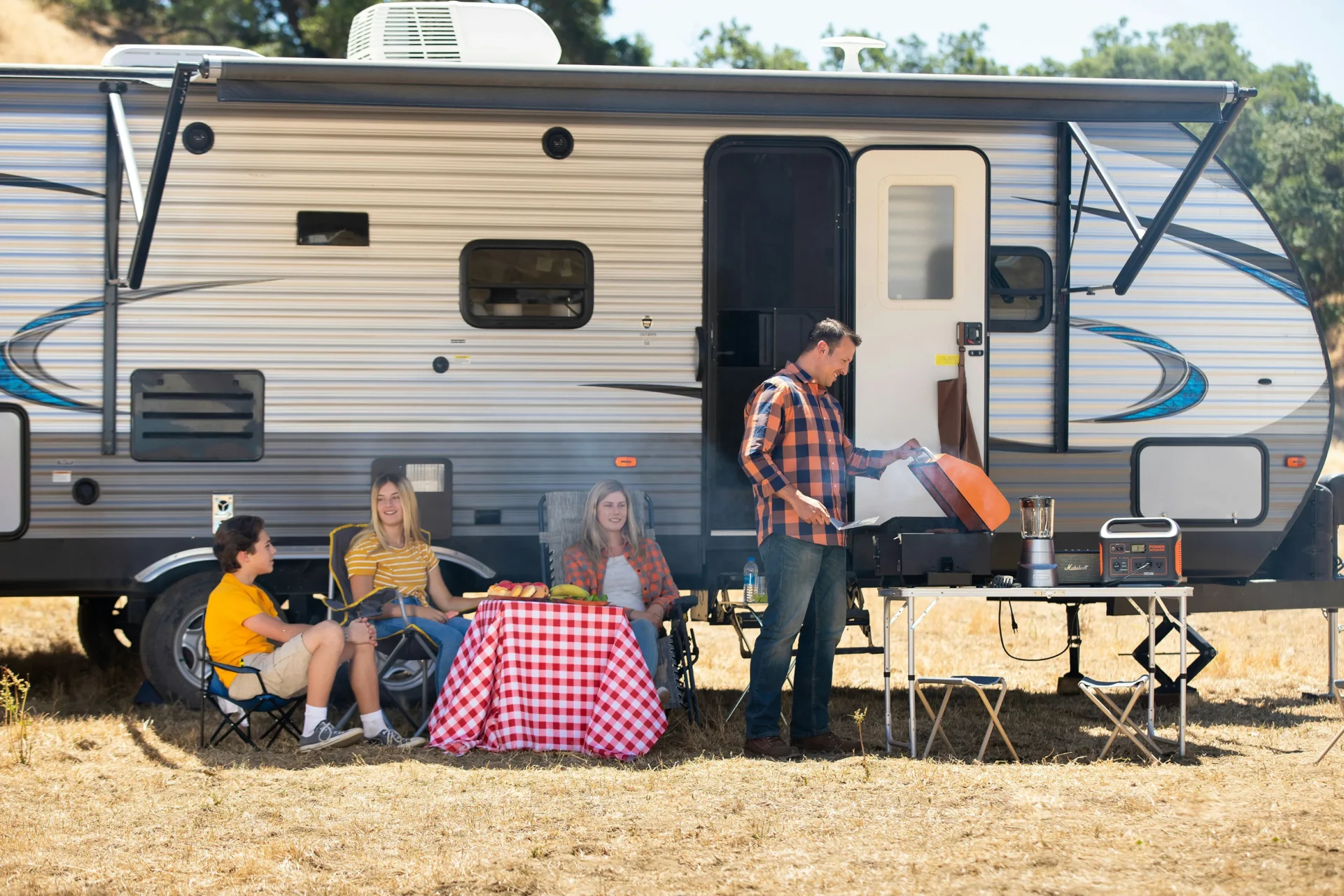
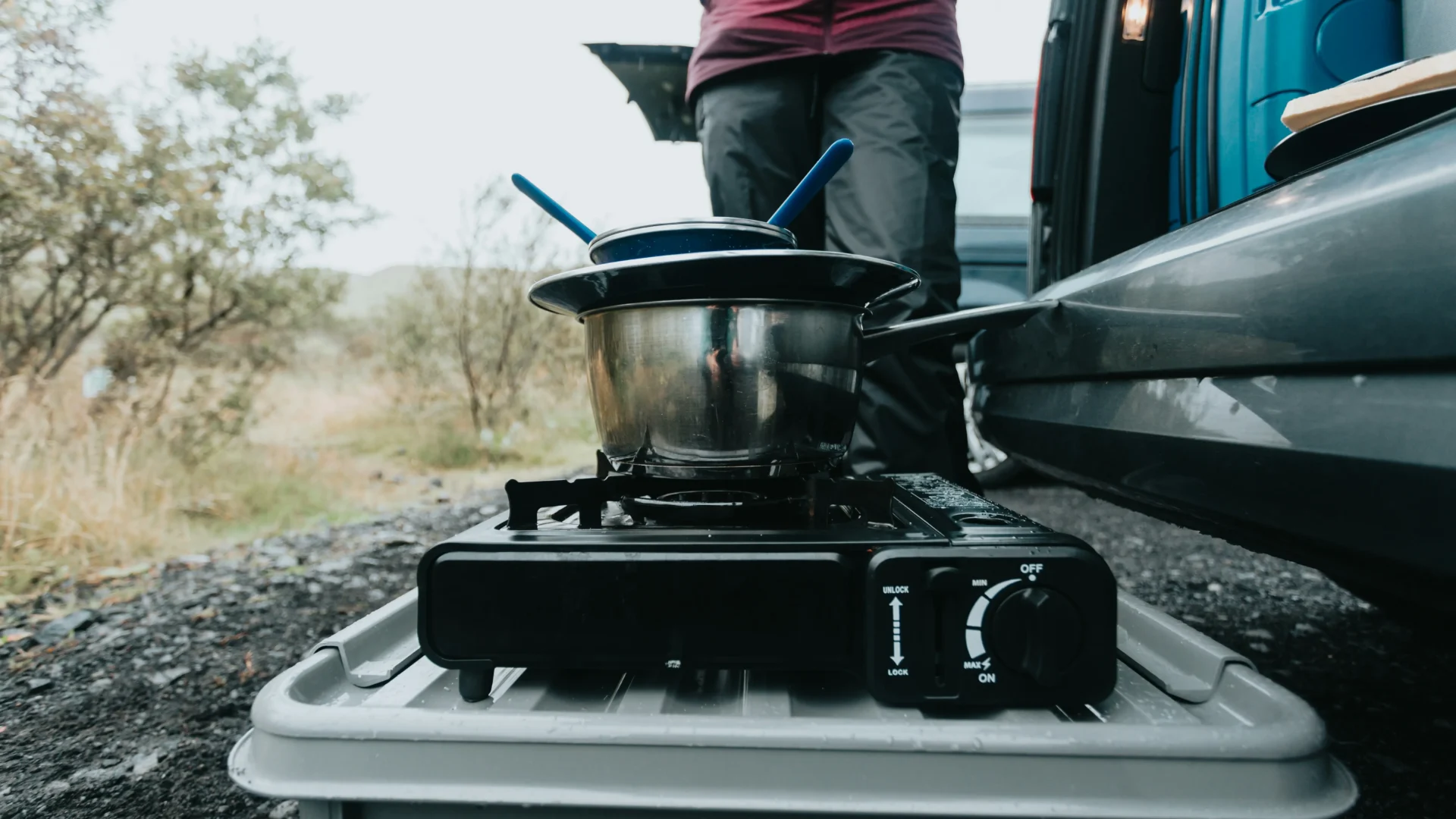

Dinner is often the first real test of a touring setup. Arrive late to a site, wind picking up and light fading, and it quickly becomes clear whether your camp cooking gear makes life easier or harder.
Across Australian caravan parks and free camps, three systems dominate: portable butane stoves, compact gas barbecues such as the Weber Baby Q class, and two-burner LPG camp cookers. They’re easy to buy and widely used. But the decision rarely sits on its own. It often happens alongside other practical choices, including choosing the right fridge for caravan travel, because kitchen gear is part of a broader setup.
Speak to experienced caravanners and a consistent theme emerges. Regret isn’t usually about brand. It’s about selecting a cooking system that doesn’t match how you actually travel.
Here’s what tends to work, and where travellers often get it wrong.
The Most Common Regret: Buying for the Brochure, Not the Road
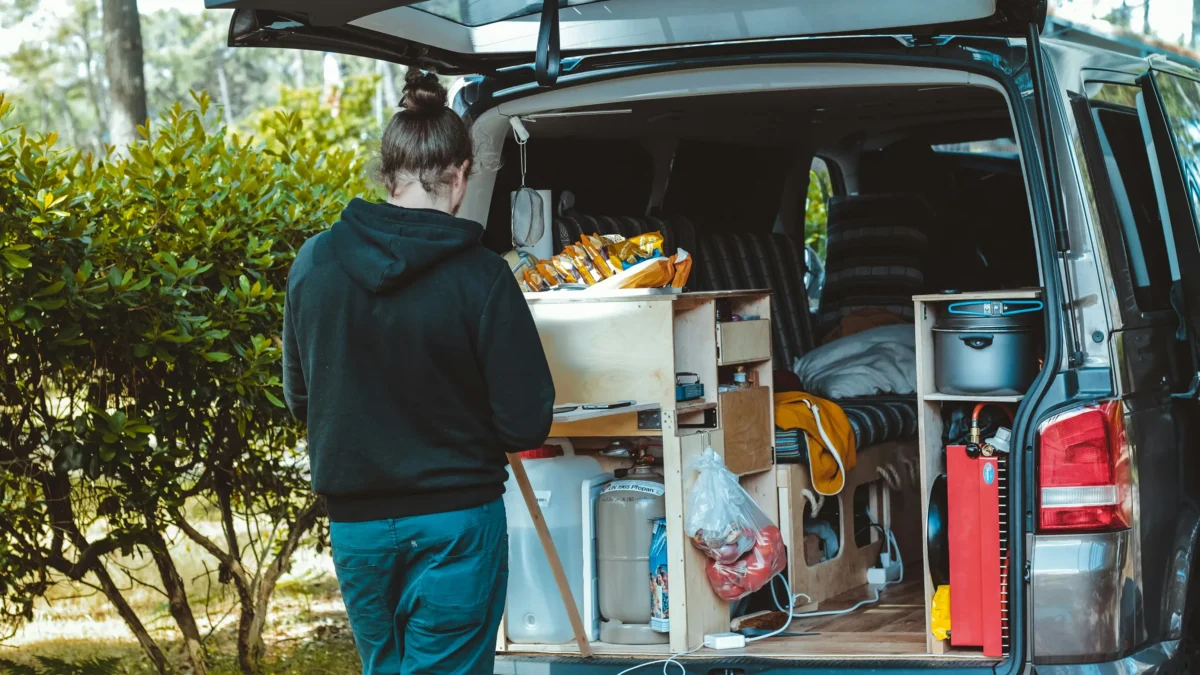
New caravanners often purchase a compact gas barbecue first. It looks versatile, feels like a safe choice, and it can grill, roast and bake.
For travellers staying mainly in powered caravan parks for extended periods, that decision often holds up.
Where regret creeps in is during frequent stopovers, overnight roadside stays or remote camps where:
- Storage space is tight
- Wind protection is limited
- Quick setup matters
- You are moving daily
In those situations, heavier BBQ units can become cumbersome. Lifting them in and out repeatedly, finding bench space and cleaning grease plates every night becomes less appealing.
The result? Many end up carrying a second, smaller cooker anyway.
The Three Setups Most Caravanners Use
1. Portable Butane Stove (Single Burner)
Fuel: 220g disposable butane canisters
Weight: Typically 2 to 3kg
Price range: Around $25 to $60
These suitcase-style stoves are compact and widely stocked across Australia.
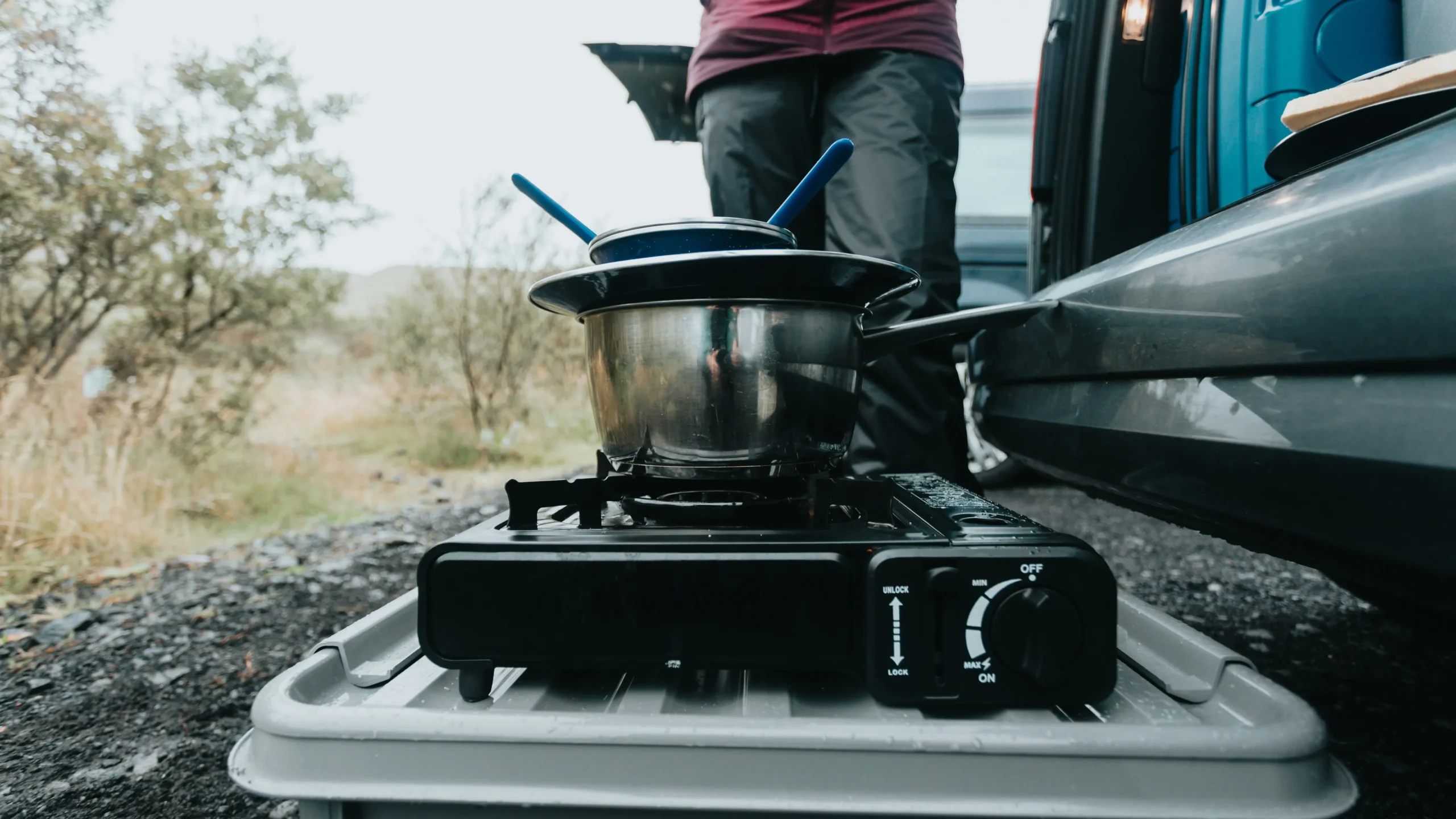
Where they work well:
- Overnight stops
- Quick roadside meals
- Boiling water or simple one-pan meals
- As a backup cooker
Where regret happens:
- Cooking for families
- Windy coastal camps
- Extended off-grid stays
- When relying on disposable canisters long-term
While cheap and convenient, ongoing cartridge costs and limited cooking flexibility catch some travellers off guard.
2. Portable Gas BBQ (Baby Q Style)
Fuel: LPG, usually 9kg cylinder
Weight: Often 10 to 18kg
Price range: Approximately $300 to $550
Compact gas barbecues are one of the most recognisable cooking systems in Australian caravan parks.
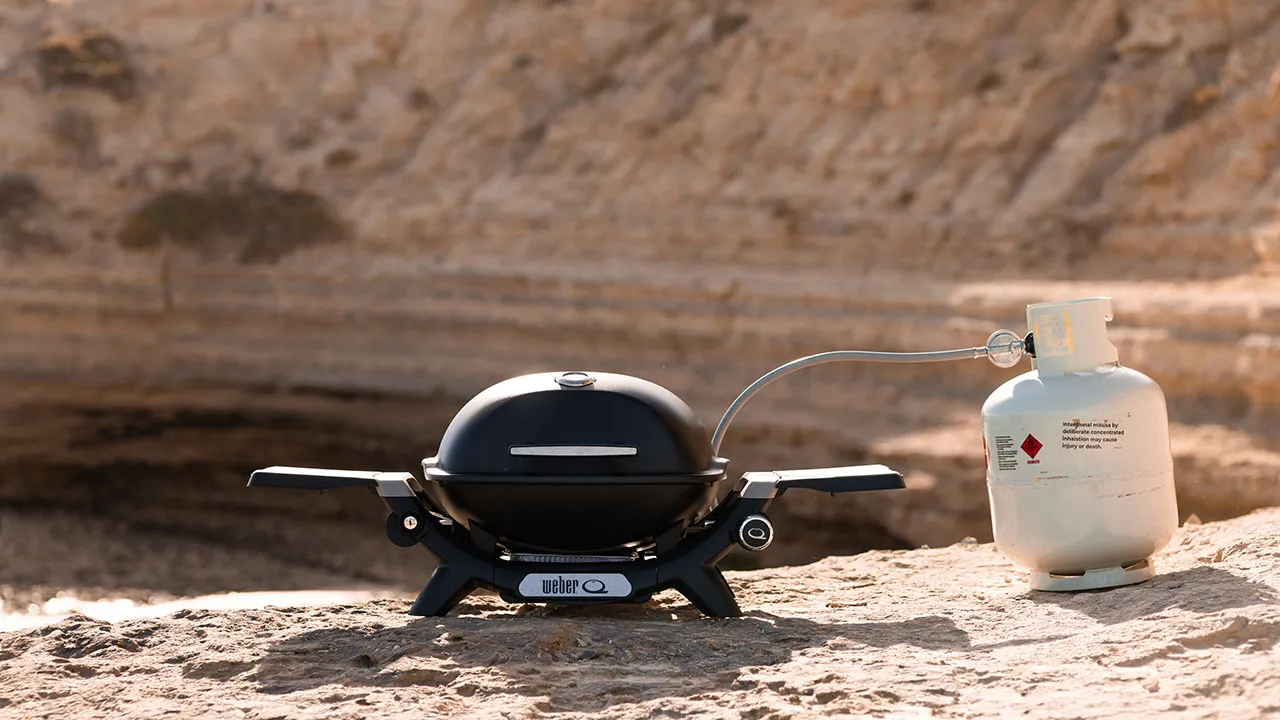
Strengths:
- Lid design improves wind resistance
- Good heat control
- Can grill, roast and bake
- Suitable for families
Where regret happens:
- Limited storage inside smaller vans
- Frequent packing and unpacking
- Moving camps daily
- Cleaning requirements on short stays
For travellers parked up for several days at a time, these units remain practical. For fast-moving itineraries, they can feel oversized.
3. Two-Burner LPG Camp Cookers
Fuel: LPG via hose or bayonet fitting
Weight: Usually 4 to 8kg
Price range: Roughly $150 to $300
Modern dual-burner units have become more common in recent years. Many fold flat for storage and connect directly to the caravan’s gas system.
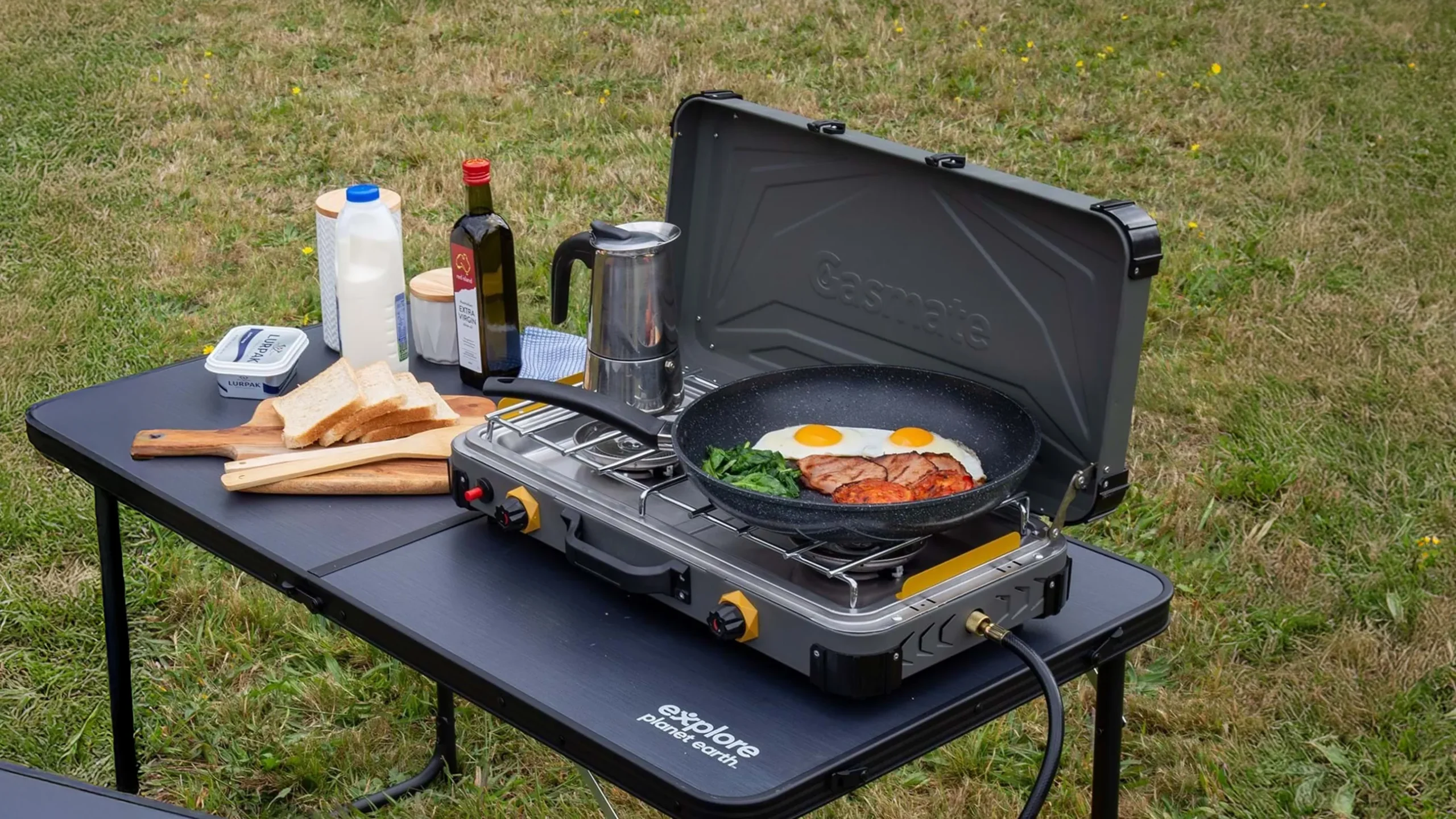
Strengths:
- Cook two dishes at once
- More compact than a BBQ
- Runs off existing LPG bottles
- Suitable for off-grid touring
Where regret happens:
- Limited wind shielding without accessories
- Less suited to roasting or baking
- Requires stable surface
For many long-term caravanners, this category ends up being the most versatile compromise.
Powered Sites vs Free Camping
Cooking gear decisions often shift once travellers start mixing park stays with free camping.
In caravan parks:
- Space is predictable
- Wind protection is often better
- Cleaning facilities are nearby
- Larger BBQ units are manageable
Free camping introduces different pressures:
- Uneven ground
- Wind exposure
- Limited water for cleaning
- Daily pack-down routines
Travellers who primarily free camp tend to prioritise weight, fuel efficiency and fast setup over cooking variety. Many also review their portable power setups for free camping to ensure fridges, lights and small appliances can run efficiently alongside LPG cooking systems.
Camp Cooking Setups
Which setup suits your travel style? From quick weekenders to remote off-grid touring.
Compact Gas BBQ
- • Versatile grill & bake
- • Superior wind control
- • Best for families
2-Burner LPG
- • Cook two dishes at once
- • Connects to van gas
- • More compact storage
Butane Stove
- • Near-instant setup
- • Tiny storage footprint
- • Ideal backup option
LPG Stove Kit
- • Efficient fuel usage
- • Easy refill management
- • Wind-shielding design
| Setup Type | Weight | Setup Time | Cleaning |
|---|---|---|---|
| Butane Stove | Ultra Light | Fastest | Minimal |
| Gas BBQ | Heavy | Moderate | High |
| Two-Burner LPG | Moderate | Fast | Low |
Check Local Restrictions: Fuel performance varies by connection type. Always check for Total Fire Bans or local park restrictions regarding open flames and gas appliances before your trip.
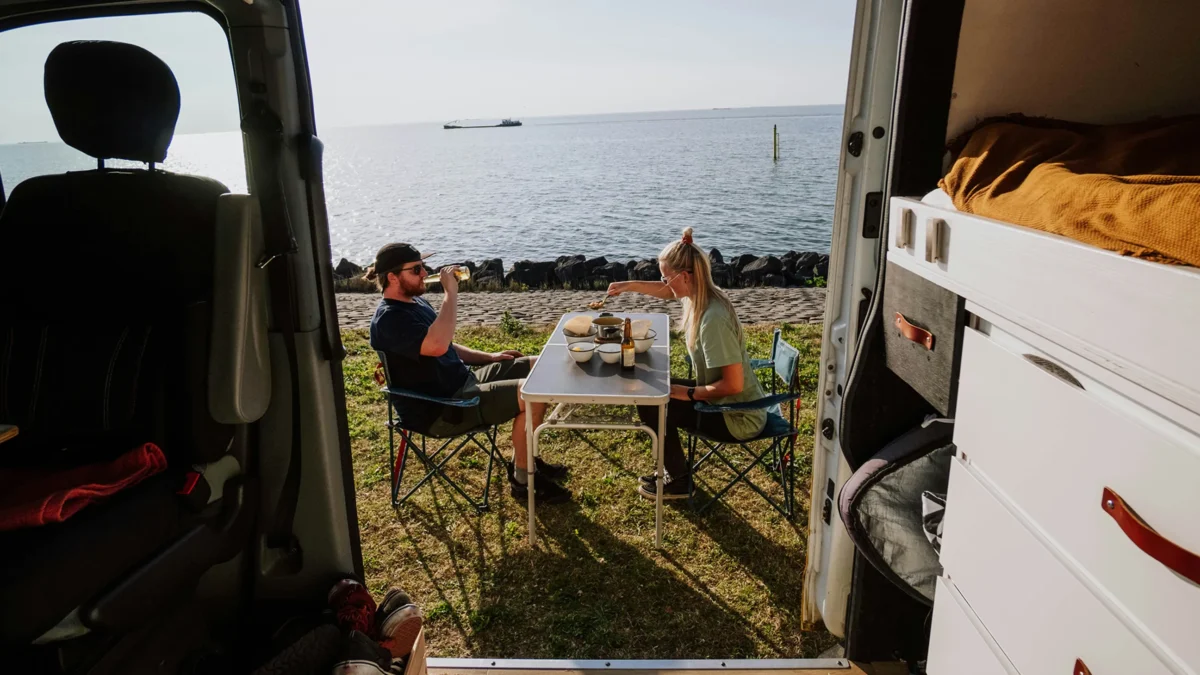
What Experienced Travellers Recommend
Many seasoned caravanners carry two systems:
- A compact stove for quick meals
- A larger cooker or BBQ for longer stays
This avoids relying on one system for every scenario.
The regret usually isn’t about spending too much. It is about not thinking through how often the gear will be lifted, cleaned and stored.
Practical Questions Before You Buy
Before choosing a setup, consider:
- How often will you move camps?
- How much external storage space do you have?
- Are you mostly in parks or free camping?
- Do you already carry LPG bottles?
- Are fire restrictions common in the regions you travel?
Cooking systems using gas appliances are generally permitted during many fire restrictions, but regulations vary by state. Always confirm local guidance.
The Bottom Line
There is no single best camp cooking system for caravans.
Portable butane stoves suit simplicity.
Gas BBQs suit longer park-based stays.
Two-burner LPG cookers often offer the best balance for mixed touring.
The setup most travellers regret buying is usually the one that doesn’t match how they actually travel.
Choose based on movement, storage and fuel practicality, not just versatility on paper.