
Would you still buy a caravan in 2026?
For some Australians, the answer is still an easy yes. A caravan means your own bed, your own setup, the freedom to stay longer and the comfort of knowing exactly what you are taking with you. Notably, the question “Would You Still Buy A Caravan In 2026” is becoming even more relevant as the year approaches.
But for others, the equation is starting to change.
Higher vehicle costs, towing stress, fuel use, insurance, storage, servicing, payload limits and the cost of setting up a tow vehicle have all become part of the modern caravan conversation.
Now, new industry data adds another layer to the debate. More than ever, people are thinking: Would You Still Buy A Caravan In 2026 under these changing circumstances?
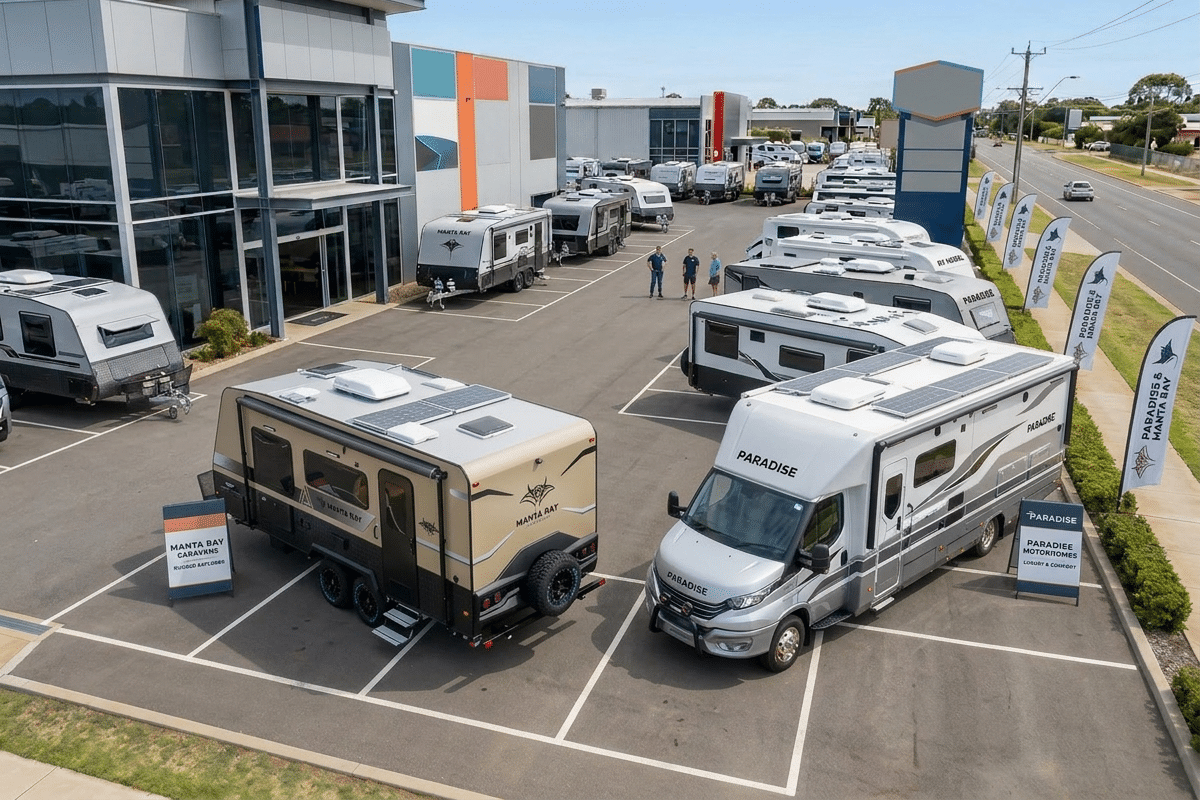
According to Caravan Industry Association of Australia’s (CIAA) RV Production IQ – May 2026 release, towable RV production is down year-on-year, while motorised RV production has jumped sharply.
So, is Australia’s caravan market cooling, or are travellers simply changing the way they want to hit the road?
Are Buyers Rethinking Big Caravans?
This does not mean Australians are suddenly walking away from caravans.
Far from it.
Towables still dominate RV production. They remain the backbone of the Australian touring lifestyle, especially for families, long-term travellers and anyone who wants to set up in one place for a while.
But the data does raise a fair question.
Are some buyers starting to think twice before committing to a large caravan?
A few years ago, the caravan decision often felt simple. Demand was high, waitlists were long and the idea of travelling Australia with your own home on wheels had enormous appeal.
In 2026, buyers are asking more practical questions.
Can my vehicle legally tow it?
What will it cost to fuel?
Where will I store it?
How much payload do I really have?
What happens when I add batteries, solar, water, bikes and toolboxes?
Do I want to tow every time I travel?
Is a caravan still the best fit for the way I actually holiday?
These are not anti-caravan questions. They are smart ownership questions.
Why Motorhomes May Be Having A Moment
The sharp rise in motorised RV production is interesting because it points to a different kind of touring appeal.
Motorhomes and campervans can suit travellers who want to keep things simple. There is no hitching up, no reversing a caravan into a tight site, no separate tow setup and no need to worry about whether the caravan and vehicle combination is properly matched.
For some travellers, especially couples, solo adventurers and shorter-stay tourers, that matters.
A motorhome can make travel feel more immediate. Pull in, park up, sleep, move on.
That does not make it better than a caravan. It simply makes it different.
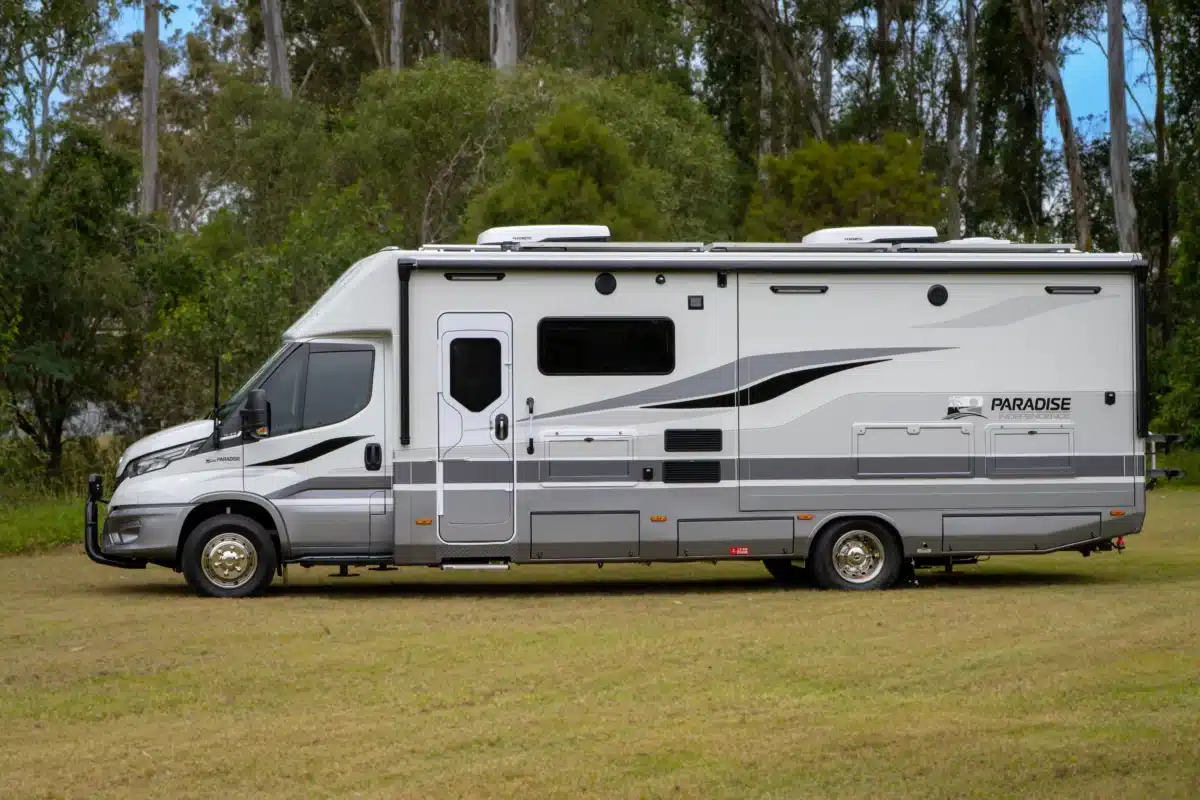
A caravan still gives you the advantage of unhitching and using your tow vehicle separately. It can offer more space, more storage and more comfort for longer stays. For many Australians, especially those doing extended touring, that is still the dream.
But the May 2026 data suggests motorised RVs are worth watching. However, would you still buy a caravan in 2026 if these trends continue?
Production Is Not The Same As Sales
There is an important detail in the RV Production IQ – May 2026 release.
The data represents RV production activity, including local manufacturing and international trade. It reflects vehicles entered into the Register of Approved Vehicles, known as the RAV, during a given month.
That means it is not the same as retail sales.
It does not show exactly what buyers purchased from dealerships in May.
It should not be interpreted as market share.
There can also be timing differences. If a business is delayed in submitting data, figures may be amended in the following month.
Make-level reporting can also vary depending on how vehicle makes are listed under type approvals. Some businesses may have makes reported separately, while others may be grouped together under one brand.
The data may not include every pathway to market, including certain specialised vehicle imports or vehicles built in Australia for overseas markets. Due to privacy requirements, only the largest vehicle categories and makes are presented, and model-level reporting is not currently available.
So the figures are useful, but they need to be read correctly. They show production activity, not every movement happening on the showroom floor.
So, Would You Still Buy A Caravan In 2026?
For many Australians, absolutely. A caravan still offers one of the best ways to explore the country. You can carry your own gear, sleep in your own bed, cook your own meals and create a setup that feels like home. This, after all, is why the question “Would You Still Buy A Caravan In 2026” is at the front of people’s minds as they look toward the future.
But the decision deserves more thought than it did during the boom years.
The latest CIAA RV Production IQ – May 2026 figures show a market that is shifting, not disappearing. Towable production is down, motorised production is up, and buyers appear to have more reasons than ever to compare their options carefully.
Caravans are still king.
But in 2026, the question is no longer just “Which caravan should I buy?”
It might be: “What kind of travel do I actually want?”
Data source: Caravan Industry Association of Australia, RV Production IQ – May 2026. Figures are based on RV production activity drawn from the Register of Approved Vehicles and should not be interpreted as retail sales or market share.