
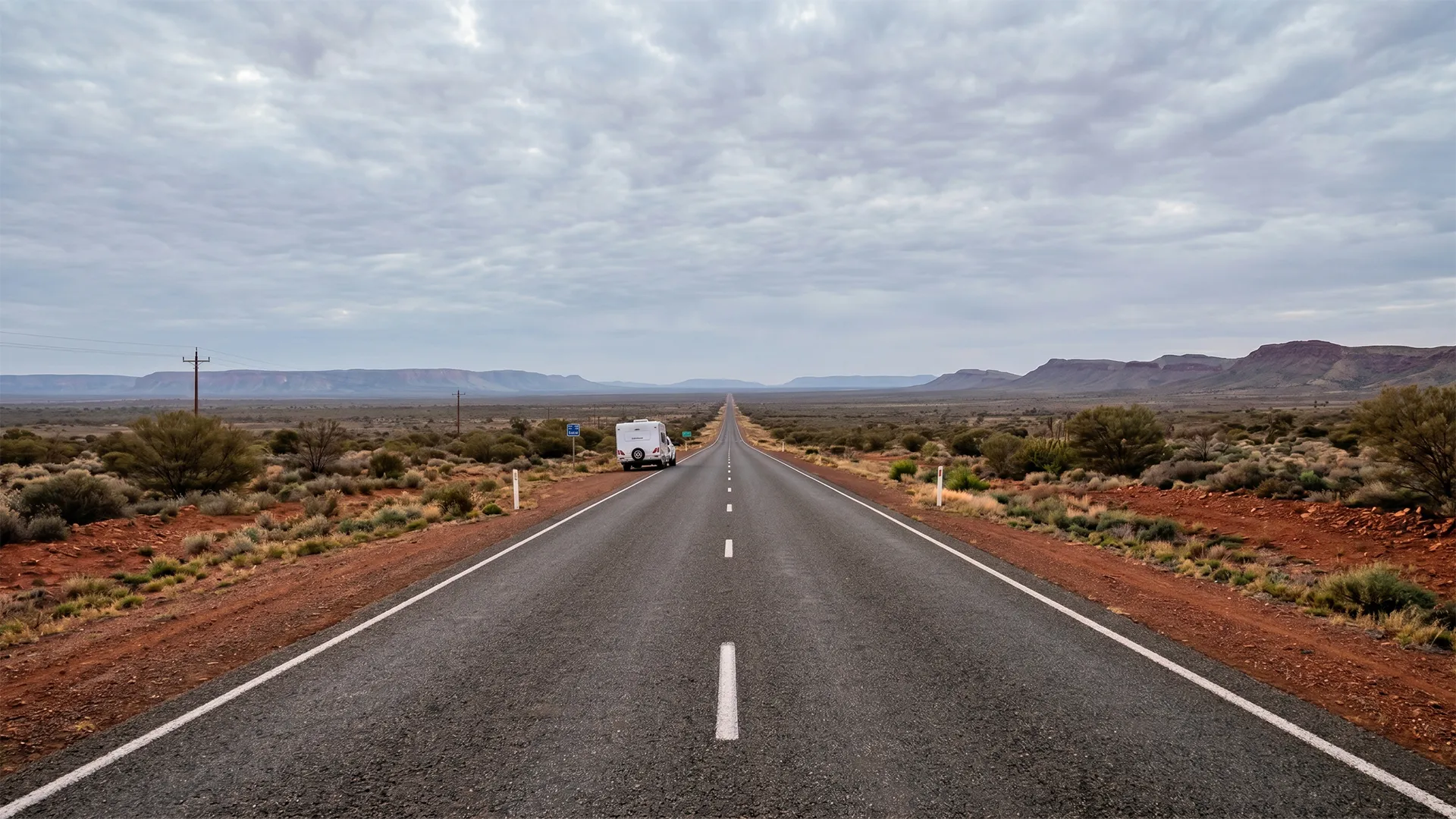

Here’s a figure almost nobody publishes: towing a mid-size caravan behind a diesel 4WD currently costs between 30 and 40 cents per kilometre in fuel alone. At current diesel prices of around $1.99 per litre and a real-world consumption of 15 to 20 litres per 100 kilometres, that’s the honest maths. A 500-kilometre travel day costs $150 to $200 just to move. A Big Lap of 25,000 to 30,000 kilometres works out to $7,500 to $12,000 in diesel before you’ve found a campsite.
That’s not a reason not to go. It’s just worth knowing before you budget.
What the 2026 Road Trip Really Costs
Real numbers for fuel, accommodation, food and the road trip buffer
Cost Per Kilometre When Towing
| Category | Range / week |
|---|---|
| Fuel (towing, average touring pace) | $250–$400 |
| Accommodation (mix of free + paid) | $200–$500 |
| Groceries and essentials | $200–$300 |
| Eating out, activities, data | $50–$150 |
| Maintenance and incidentals buffer | $50–$100 |
| Total (couple) | $750–$1,450 |
The accommodation lever: Three weeks, all caravan parks at $45/night = $945. The same trip with 12 free nights and 9 paid = $405. Mixing free camps and parks intelligently is the single biggest way to bring your weekly number down.
Fuel: The Real Numbers Right Now
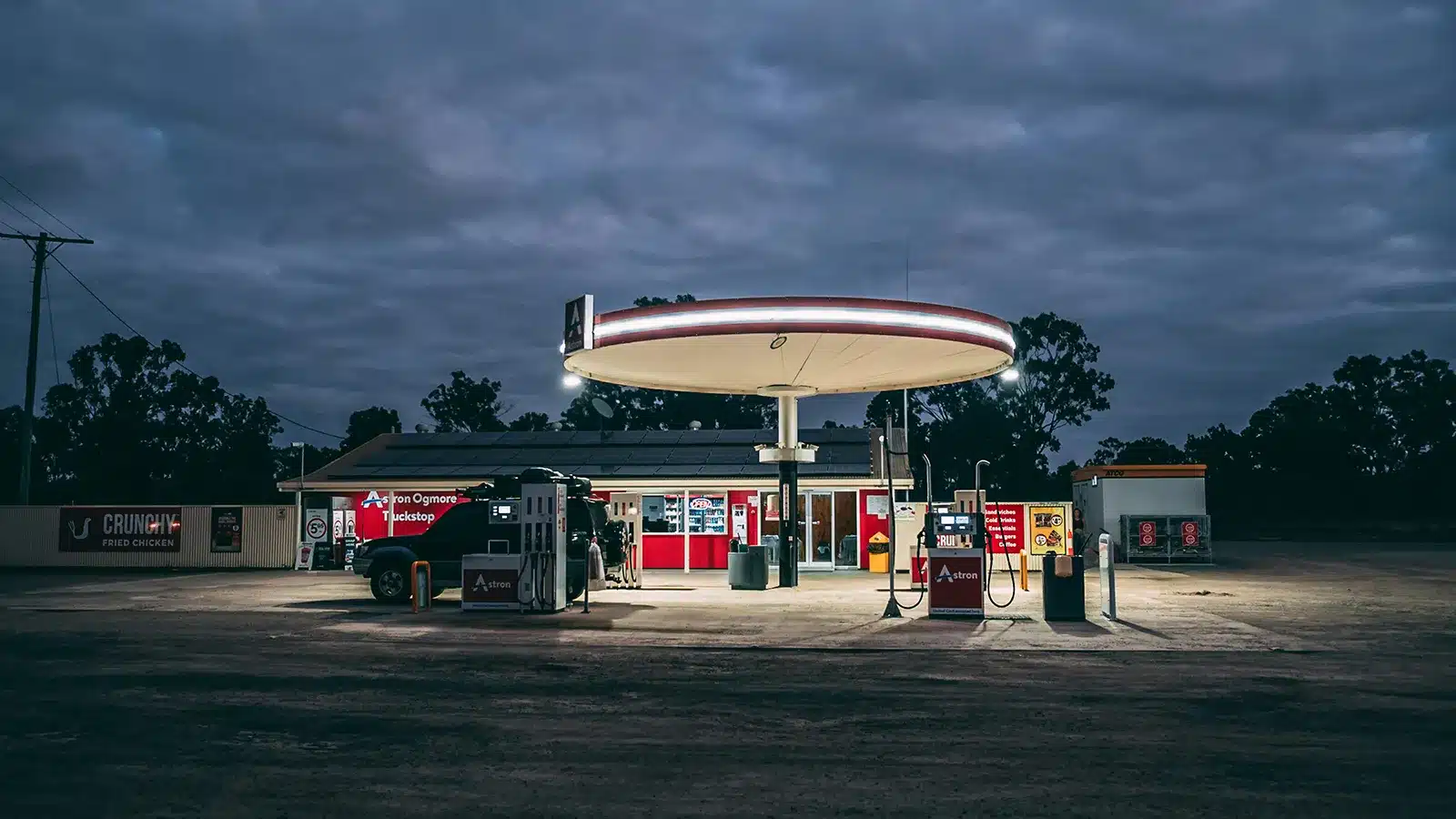
National diesel is averaging around $1.99 per litre as of late June 2026, with capital cities sitting slightly lower at $1.95 and regional areas tracking closer to $2.07. The further from a capital city you travel, the more you’ll pay. In the Northern Territory, diesel can reach $2.40 or more in regional NT towns and significantly higher in remote outback locations.
It’s also worth knowing that a temporary reduction in the fuel excise has been keeping prices lower than they would otherwise be for the past couple of months. That’s wrapping up very shortly, so if you’re departing on a winter trip, filling your tank before the change is a simple way to save.
Petrol is currently sitting around $1.68 per litre nationally, which is genuinely low by recent standards. Diesel hasn’t come down as much, and if your tow vehicle runs diesel, that’s the number that matters for your budget.
Accommodation: Where the Decisions Really Add Up
Caravan parks across Australia average around $40 to $50 per night for a powered site, with coastal parks and tourist hotspots pushing $60 to $80 during peak periods. That’s $280 to $350 a week just for powered accommodation.
Free camping changes the maths significantly. A three-week trip with 12 free nights and 9 paid nights at $45 costs around $405 in accommodation. The same trip staying in parks every night costs roughly $945. The difference, $540, is the equivalent of about 270 litres of diesel.
Most experienced travellers find their rhythm somewhere in between, using free camps and national parks for the quieter nights and jumping into a caravan park every few days to recharge batteries, do laundry, and get a proper shower. The mix is the strategy.
The Rest of the Budget
Food for two travelling in a van typically runs $150 to $250 per week on groceries, rising to $200 to $350 if you’re eating out occasionally or passing through regional towns where supermarkets charge more. It’s one of the easier costs to manage because you have a kitchen on wheels.
For maintenance, experienced long-haulers put aside $50 to $100 per week as a running contingency. Towing places extra load on brakes, tyres, and wheel bearings, and the cost of getting parts or a mechanic in a remote area can be significant. A dedicated buffer of $3,000 to $5,000 for a full-year trip isn’t excessive.
Caravan insurance currently averages around $630 per year for comprehensive cover on a mid-range van, up from around $560 in 2024. It’s not a cost that should be cut to save money on the road.
What a Week Actually Costs
Pull it together and a realistic weekly budget for a couple on the road in 2026 looks like this: fuel at $250 to $400, accommodation at $200 to $500 depending on how much free camping you do, groceries and essentials at $200 to $300, and incidentals at $50 to $150. That puts most couples at $700 to $1,350 per week.
The lower end is entirely achievable. It means travelling slowly, staying longer in each place, taking advantage of free camps, and cooking most of your own meals. The higher end tends to be faster travel, coastal parks, and more time spent in tourist areas.
The road trip is still one of the best-value ways to see Australia. You just go in with clear eyes and a full tank.
What to Do Before You Leave
Start with a realistic budget built on your actual rig, not a generic estimate. Work out your tow vehicle’s real-world fuel consumption towing your van and run the numbers for your planned route. Apps like PetrolSpy and FuelMap let you track prices along the road and plan refuels at cheaper stops rather than paying whatever the next servo charges.
For accommodation, download WikiCamps or Campermate before you go and identify the free camps along your route. Knowing where they are means you’re not scrambling for a site at 4pm. Set a weekly spending target, keep a simple running tally on your phone, and review it each Sunday. Most people who blow their road trip budget don’t do it in one big hit. They drift $100 over every week and don’t notice until month three.
The travellers who make the money last are the ones who slow down, cook more, and treat the free camps as a feature rather than a compromise. The planning takes an afternoon. The payoff is months on the road. And honestly, once you’re out there watching the sun go down over a campsite you found for nothing, the cost per kilometre is the last thing on your mind.