
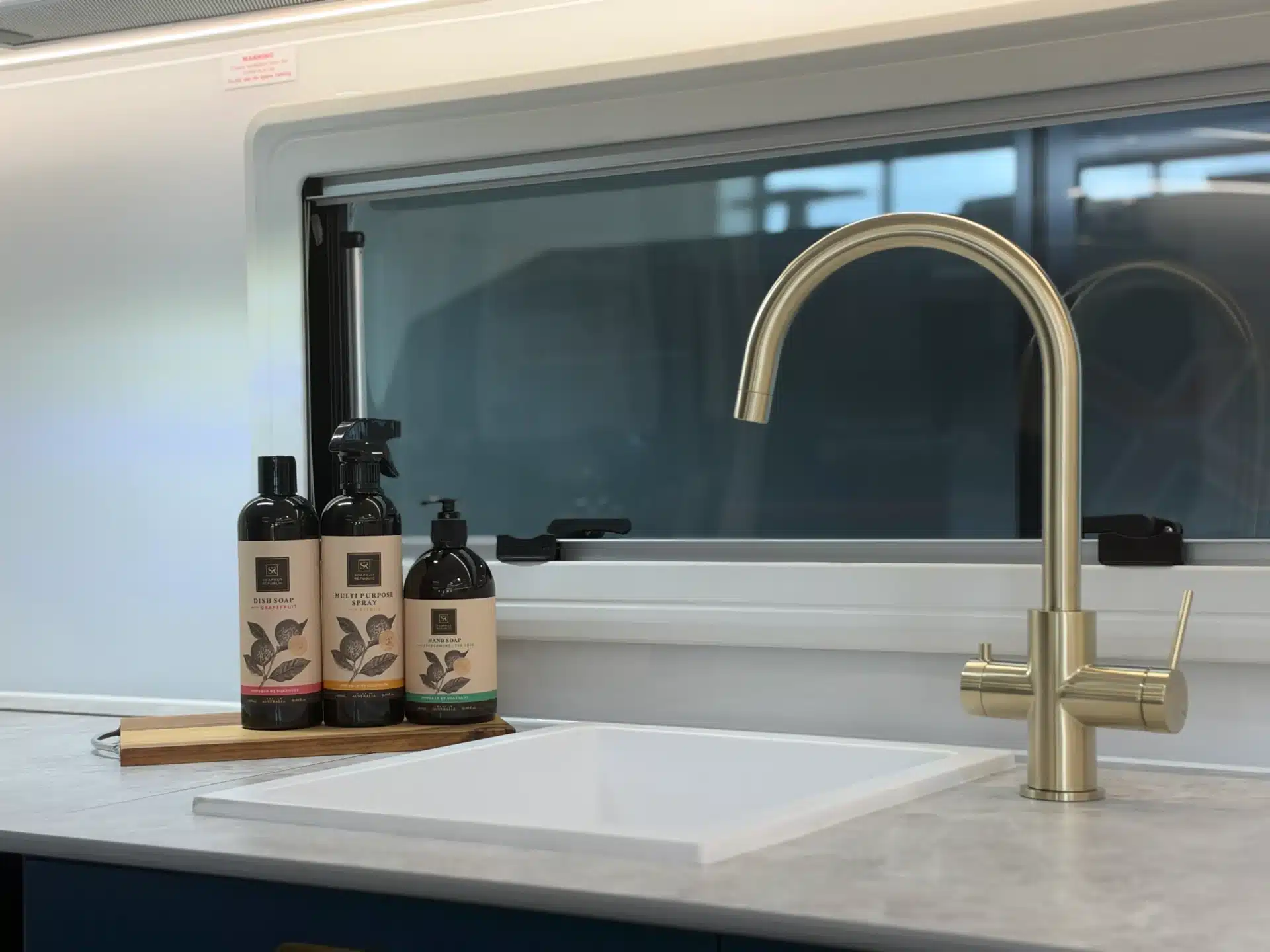

When you’re travelling in a caravan, the little things quickly become part of your daily routine. Cooking, washing up, wiping benches and keeping on top of the laundry all happen in a smaller space, often with a limited water supply. Using natural cleaning products like Soapnut Republic can make caravan life easier and more eco-friendly.
For Soapnut Republic founders Bobby Mitchell and Kim Gilliland, rethinking those everyday cleaning jobs began at home, long before their products reached Australian shelves.
From a family concern to a cleaning range
When Bobby was two years old, he accidentally drank bleach after getting into a bottle stored in a back storeroom. He was hospitalised and recovered, but the experience stayed with him.
Years later, when Kim was pregnant with the first of their three daughters, Bobby began looking for a different approach to household cleaning.
Working from the family’s kitchen in Shanghai, he started experimenting with soapnut berries. With a background in mechanical and chemical engineering, he spent two years developing the formulas that would become Soapnut Republic.
The couple launched the business in 2012, initially distributing products in Asia and Scandinavia before bringing the range to Australia.
Today, the range includes hand soap, dish soap, laundry liquid and multipurpose spray, all made in Melbourne using Bobby’s original formulas.
What are soapnuts?
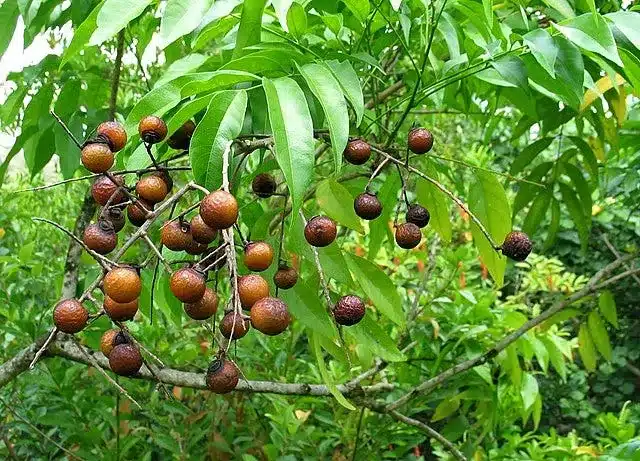
Despite their name, soapnuts are berries. Their extract forms the central ingredient in Soapnut Republic’s cleaning products.
The brand combines soapnut berry extract with plant-based ingredients and essential oils, describing its formulas as biodegradable and naturally low-sudsing.
For caravanners, that low-sudsing approach has a practical appeal. A sink full of foam can mean more rinsing, something you notice when you’re keeping an eye on the fresh-water tank.
The company says its formulas are designed to clean and degrease effectively while requiring less water for rinsing.
It is an everyday consideration that fits neatly into touring life: choosing products that do their job without making washing up a bigger task.
A cleaning range for everyday touring – Soapnut Republic
Soapnut Republic’s range covers four familiar cleaning jobs, making it easy to carry the same routine from home into the caravan. All four products are made in Melbourne using the brand’s soapnut berry formulas.
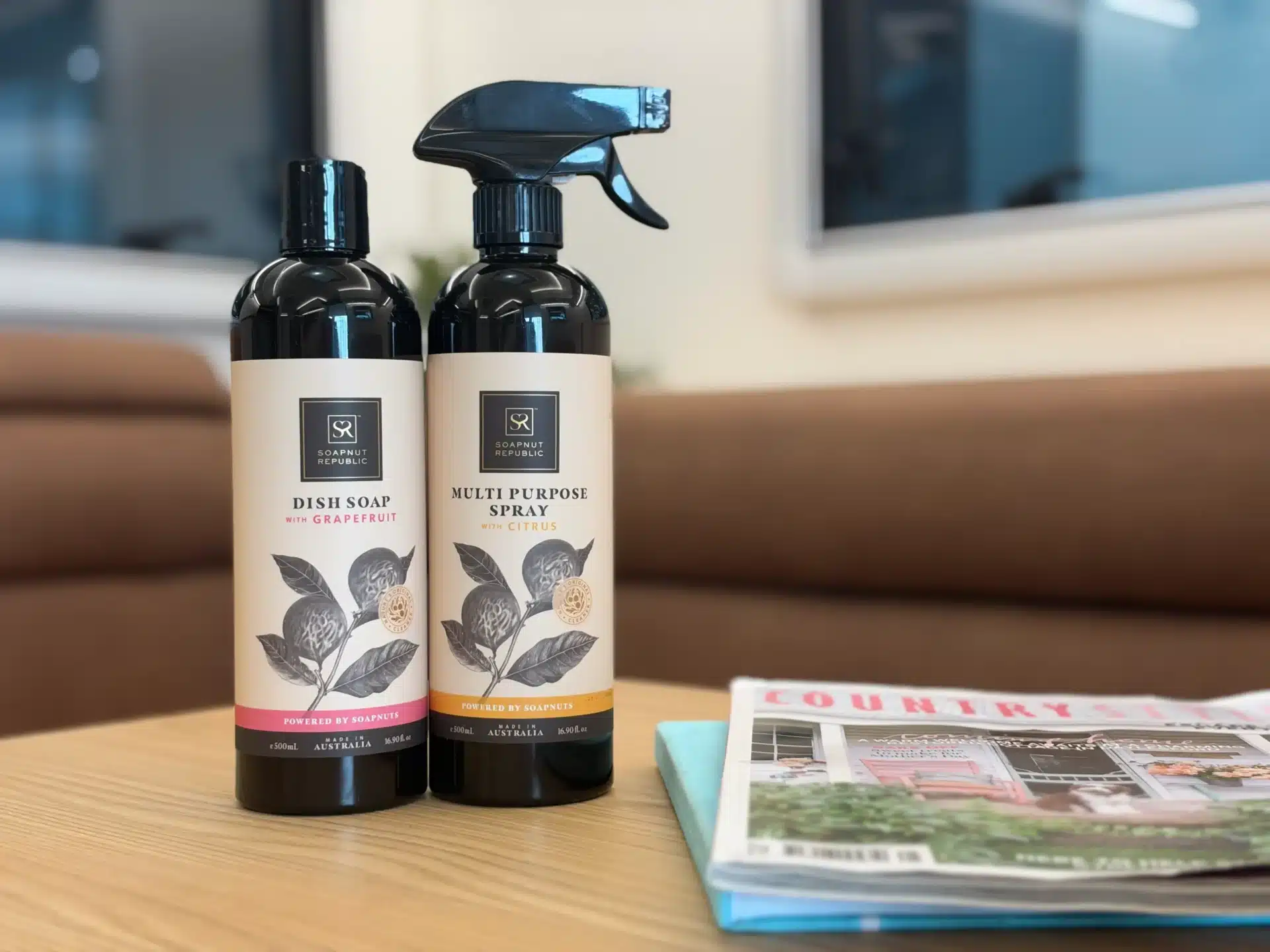
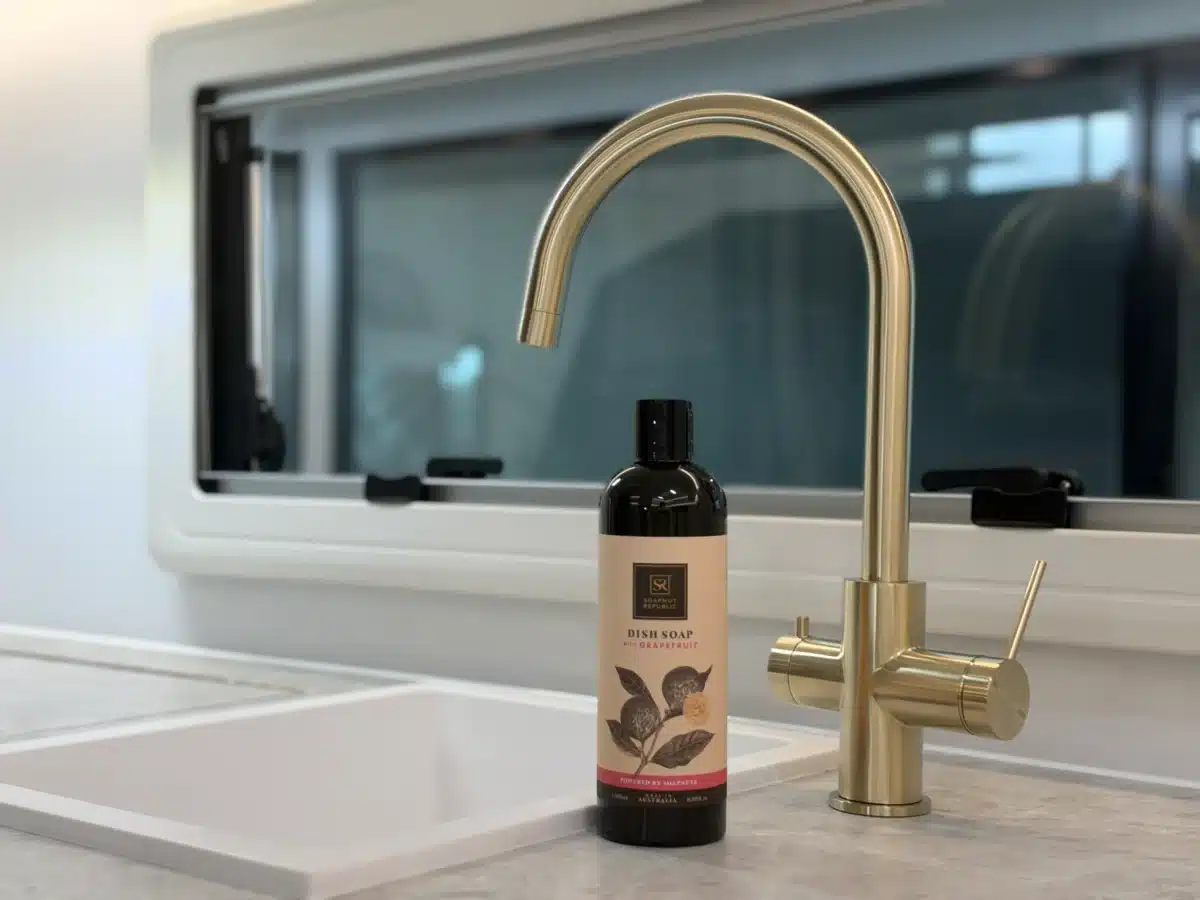
Soapnut Republic Dish Soap
For washing plates, cutlery, mugs and cookware after a meal at camp. The brand describes its formula as effective at cleaning and degreasing, with a naturally low-sudsing finish that requires less water for rinsing — a useful consideration when you’re working from the caravan’s fresh-water tank.
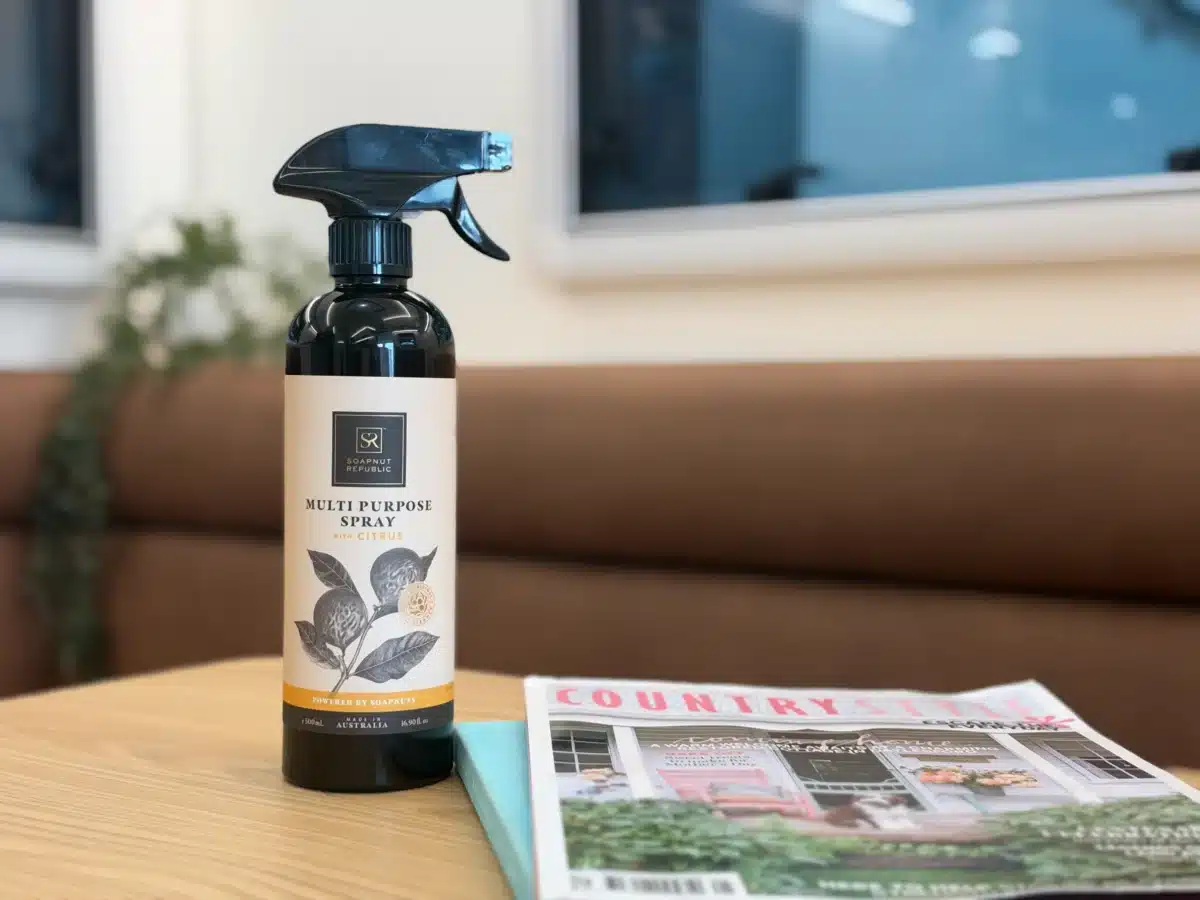
Soapnut Republic Multipurpose Spray
For everyday surface cleaning, from crumbs and cooking splashes around the kitchen to routine wipe-downs inside the van. Follow the label directions and check suitability for your caravan’s particular surfaces and finishes.
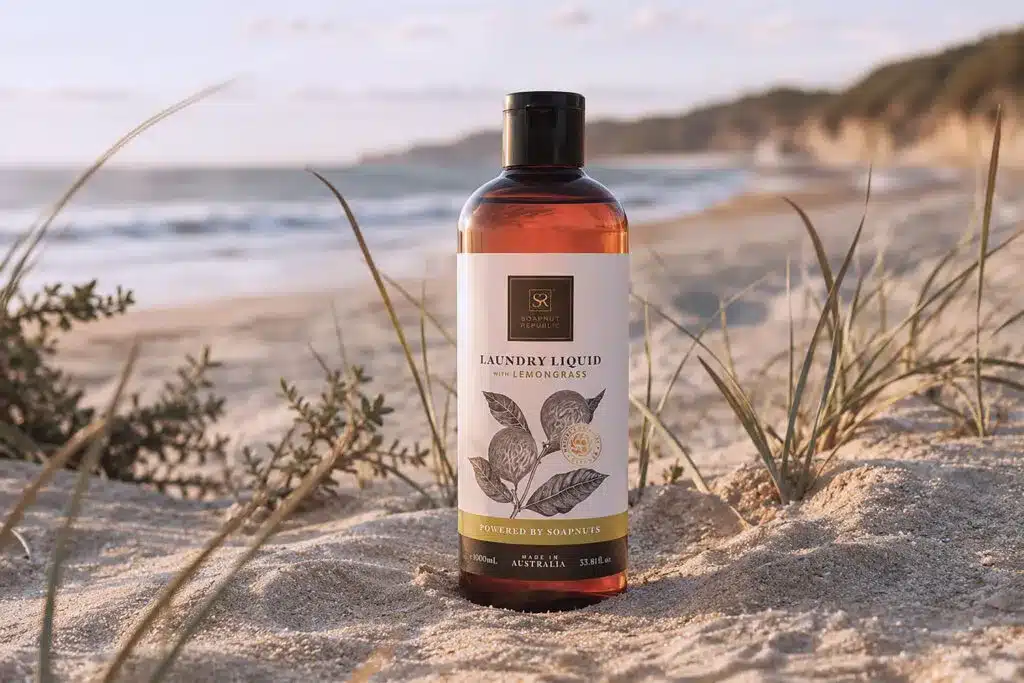
Soapnut Republic Laundry liquid
For keeping clothes, towels and bedding fresh during longer trips. The plant-based formula brings the soapnut approach to laundry day, whether you’re using a suitable onboard washing machine or the holiday park’s facilities. Follow the recommended dosage and machine instructions.
Also check out our article: Is a Caravan Washing Machine Worth It?
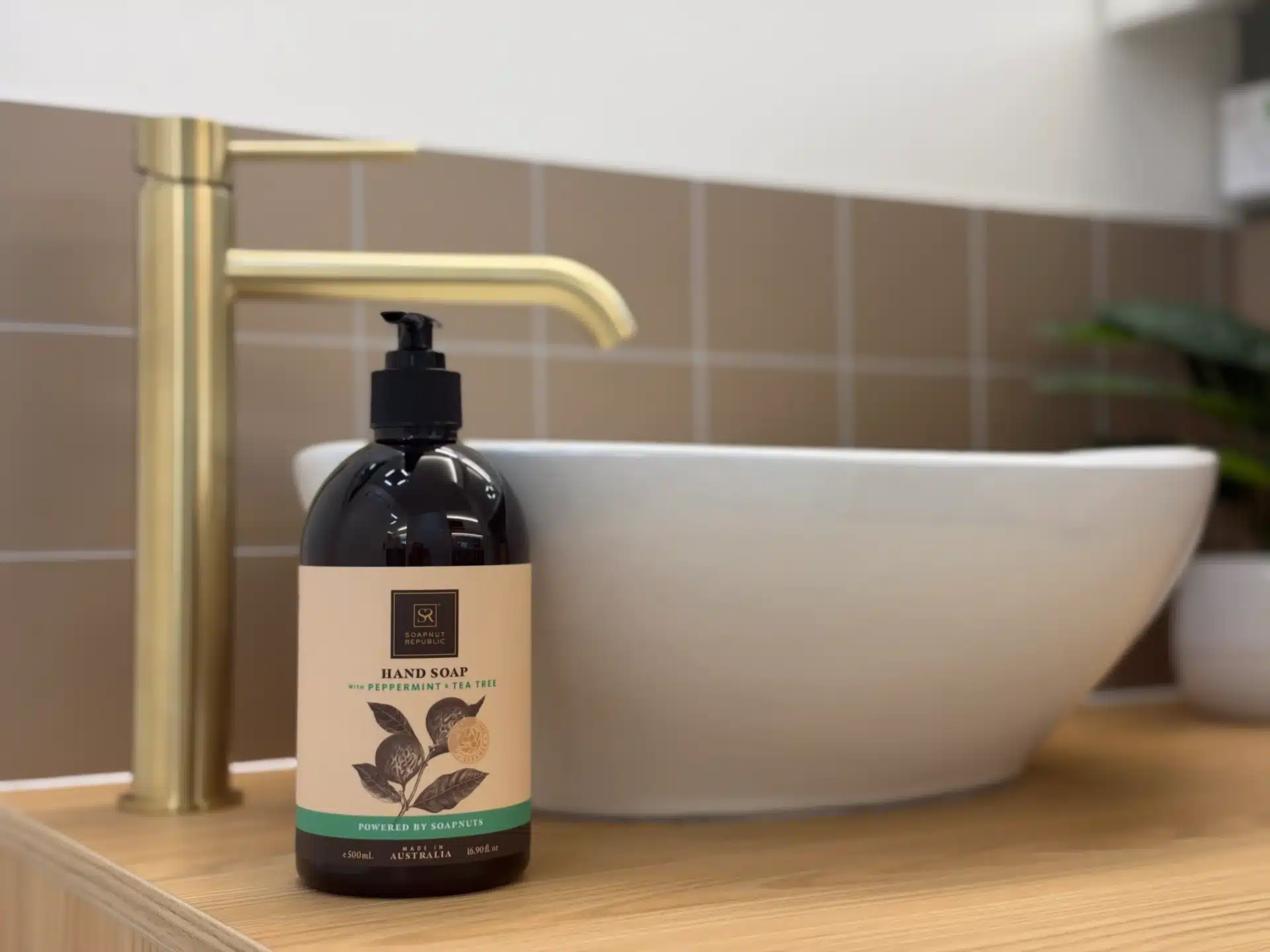
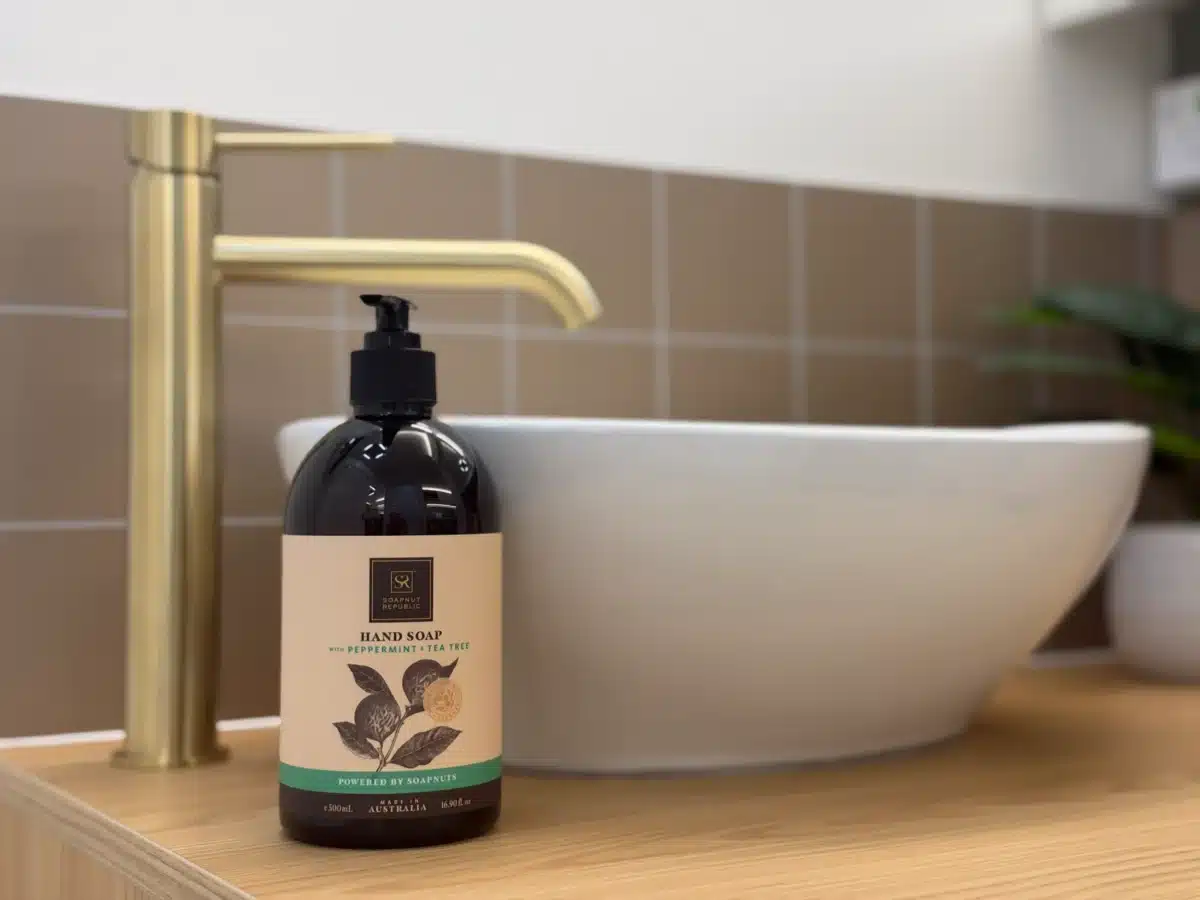
Soapnut Republic Hand soap
For regular handwashing at the caravan basin, whether you’re preparing lunch, returning from a day exploring or getting ready for dinner. Made with soapnut berry extract and essential oils, it rounds out the range’s focus on everyday cleaning.
The company describes the range as biodegradable and naturally low-sudsing. Whichever products you pack, follow the label directions and manage greywater according to the requirements of your campsite.
Thinking beyond the sink
Travelling through beaches, bushland and regional towns makes you more aware of what comes into camp — and what leaves it.
Cleaning products are one part of that picture. Food scraps, grease and detergent all contribute to the wastewater produced when washing dishes or doing the laundry.
Choosing a product described as biodegradable can form part of a more considered cleaning routine. However, that description should never be treated as permission to empty washing water onto the ground or into a creek.
Greywater still needs to be collected and disposed of in accordance with the requirements of the campground or destination. Where provided, use the designated facilities and keep wastewater away from waterways.
The product you choose matters, but so does the way you use it and manage the water afterwards.
Smarter Caravan Living
Small Habits for a Lighter Footprint
A few simple changes can help reduce water use and make cleaning easier around camp.
Scrape plates before washing
Put food scraps in the appropriate bin before they reach the sink.
Wipe greasy cookware first
Removing excess oil and food residue can reduce the amount of washing required.
Measure your cleaning products
Follow the label directions instead of adding an extra squeeze out of habit.
Wash up together
Cleaning a batch of dishes can help avoid repeatedly filling and emptying the sink.
Plan for greywater
Check the requirements at your next stop and allow enough holding capacity between disposal facilities.
Check out more Caravan & Campsite Hygiene Tips for Travellers
Australian-made, with coastal roots
After returning from Shanghai at the beginning of the pandemic, Bobby and Kim settled in Cape Paterson, Victoria.
The coastal town became both their family home and an influence on the brand, with its rugged landscape reflecting the simple approach they wanted to bring to everyday cleaning.
Their Australian-made range now covers several familiar household jobs, from washing hands and dishes to cleaning benches and doing the laundry.
For travellers, those are the same jobs that follow us wherever we pull up. A change of scenery doesn’t make the dishes disappear, but a thoughtful routine can help keep the caravan clean while making better use of the water on board.
Find out more about the range at:


