


Walk into any caravan and camping show in 2026 and the question hits you within five minutes. Hybrid, camper trailer, or full caravan? They all promise freedom. They all look great on the showroom floor. But the wrong choice might cost you thousands of dollars and a few testing weekends to figure out.
The good news is the decision is simpler than the showroom makes it feel. It comes down to three honest questions about how you actually travel. Where do you want to go, who is coming with you, and how much setup are you willing to do at the end of a long driving day.
This guide walks through the three main options, the kind of buyer each one suits, real 2026 price brackets, and the towing realities most salespeople gloss over. By the end, you will know which side of the fence you sit on before you sign anything.
The Three Categories at a Glance
Before we dig into details, here is the quick mental model.
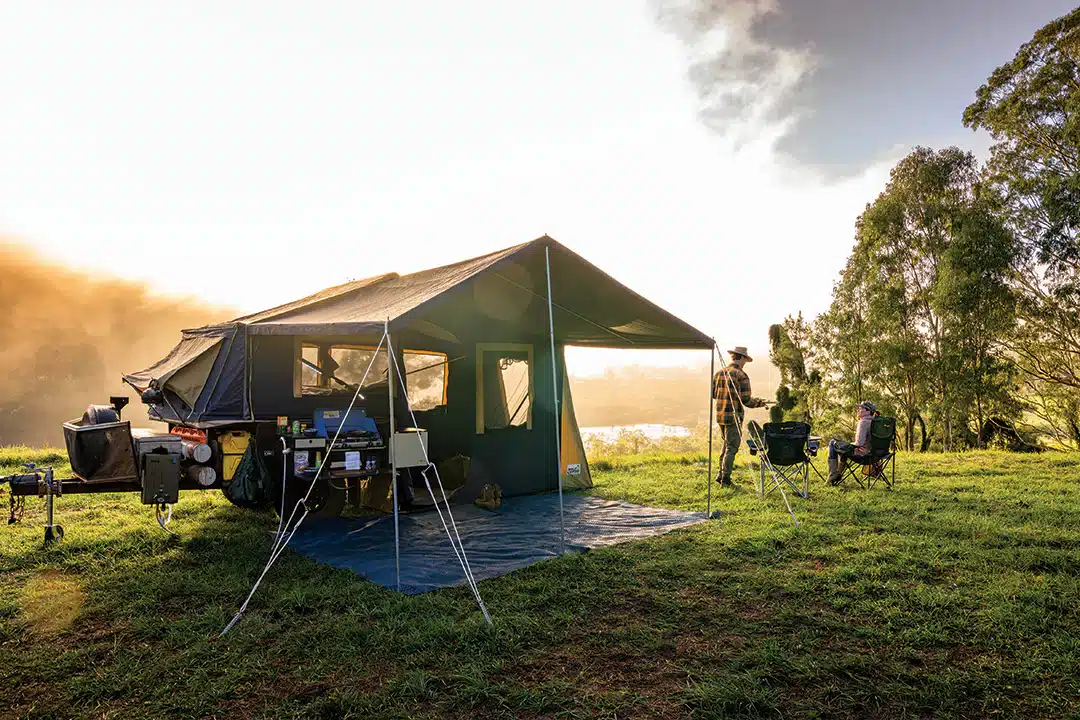
A camper trailer is the lightest and cheapest option. Canvas walls, outdoor kitchen, and a real camping feel with a bit more comfort than a swag. They are modular and super accessible layouts.
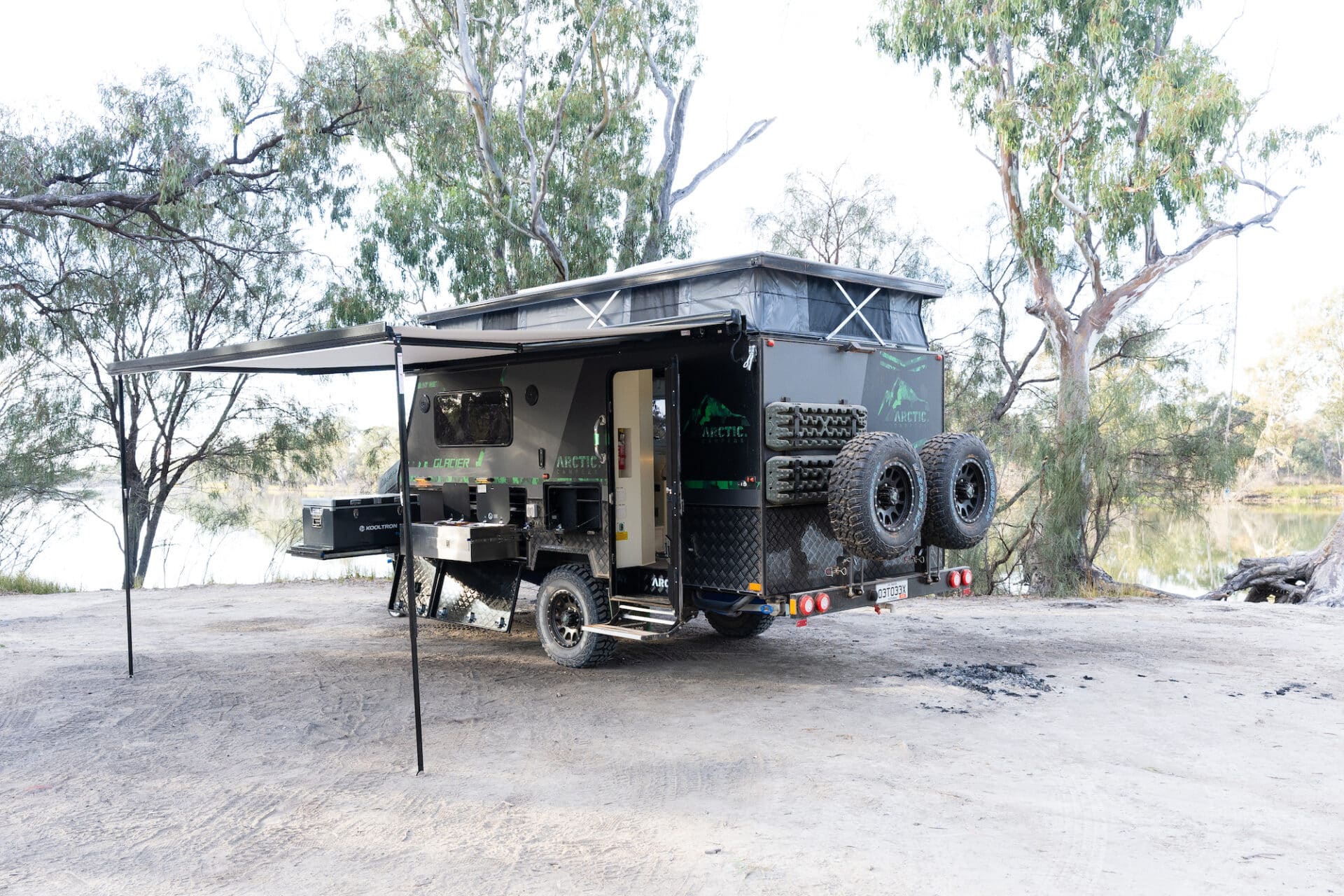
A hybrid caravan is the middle ground. Solid walls, often a pop-top roof, off-road suspension, and most have an internal bed and small ensuite. Lighter and narrower than a full van.
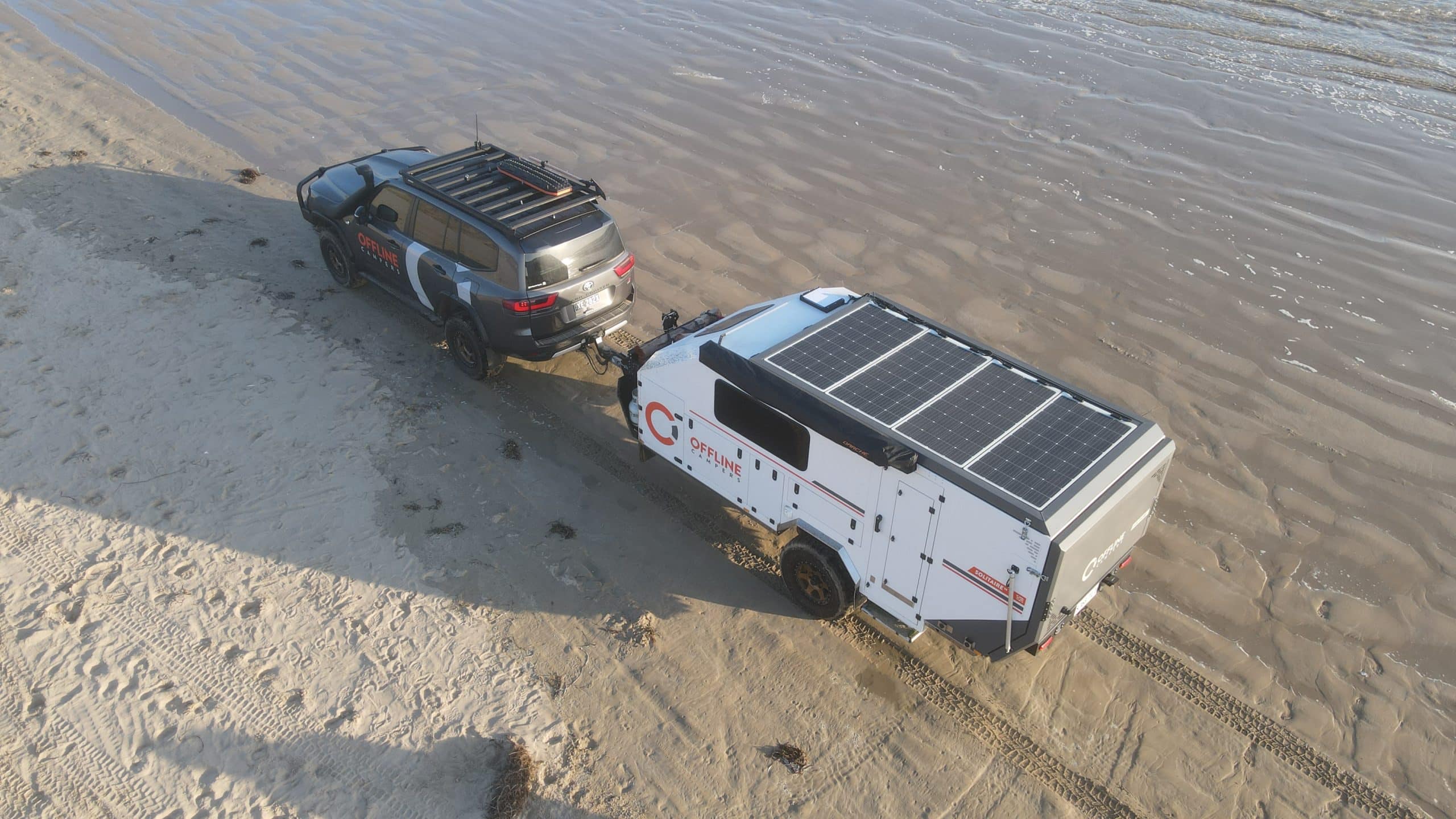
A full caravan is the home on wheels. Solid construction, internal kitchen, ensuite, lounge, and proper insulation. Heavier and wider, built for sealed roads and longer stays.
That covers the basics. Now let us look at where each one actually shines.
Camper Trailers: The Affordable Entry Point
Camper trailers are the most affordable way into towed touring. Hard-floor and forward-fold designs typically range from around $20,000 for budget models up to $55,000 for premium Australian-made off-road units. They are light enough to be towed by mid-size 4WDs and dual-cab utes without breaking a sweat, and most sit well within the towing capacity of vehicles like the Hilux, Ranger, or D-MAX.
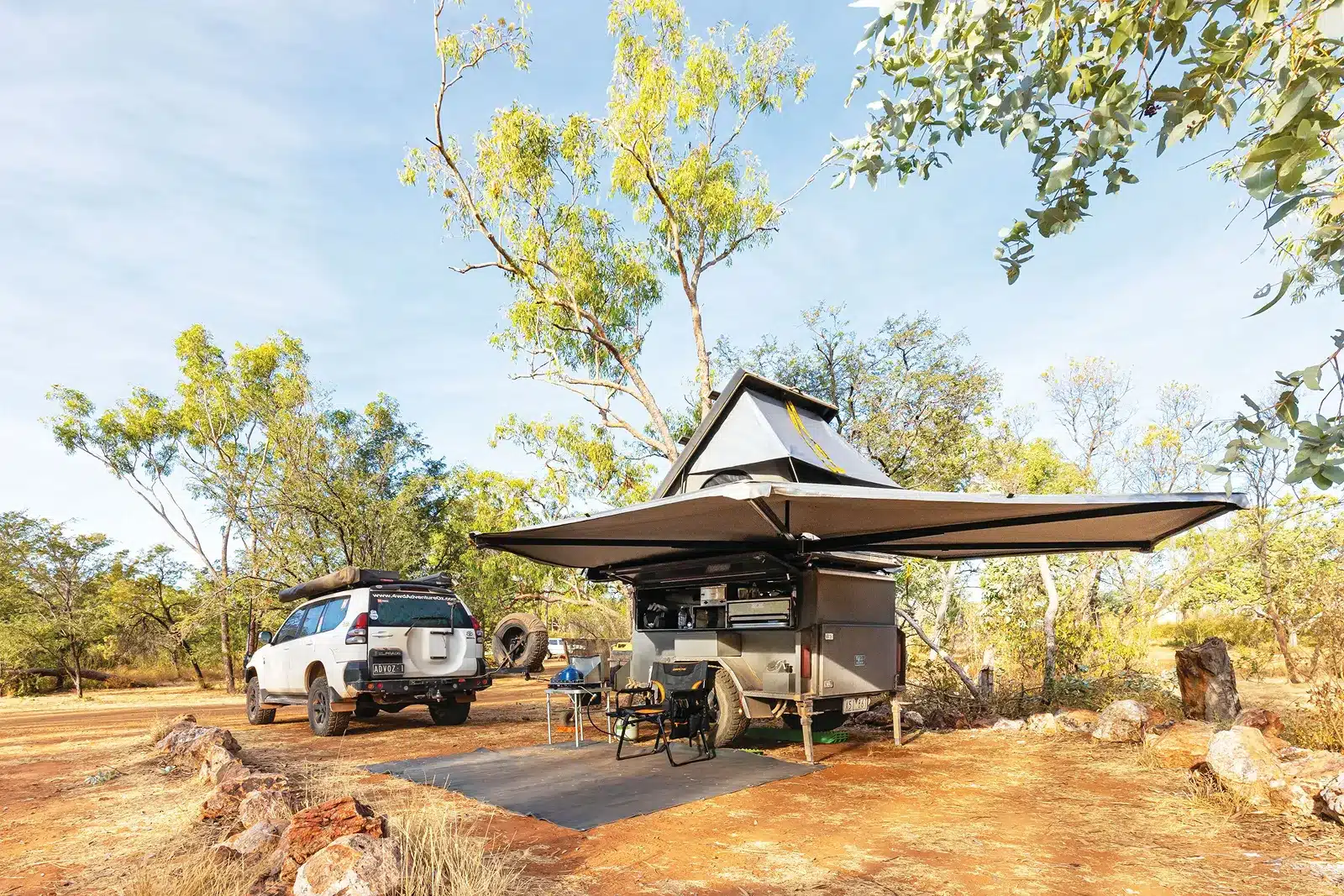
The real strength of a camper trailer is the outdoor experience. Most come with a fold-out canvas living area, an external kitchen, and an awning that turns your campsite into an outdoor lounge room. If you love sitting around a fire under the stars and you do not mind a setup time of 15 to 30 minutes, this is the most authentic camping experience you can buy with wheels under it.
Towing Capacity CheckMatch the camper to your tow vehicle, not the other way around. A 1,500kg camper behind a small 4WD sounds fine on paper, but factor in payload, water, gear, and a roof rack and you can hit the legal limit fast.
The trade-offs are real. Setup and pack-down take longer than a caravan, you are more exposed to weather, and the canvas needs maintenance and proper drying after wet trips. For families with young kids, the setup routine can feel like hard work after a long driving day.
Best for: Weekend warriors, first-time buyers on a budget, families who genuinely enjoy the outdoor camping experience, and anyone with a smaller tow vehicle.
Hybrid Caravans: The Sweet Spot for Many Aussies
Hybrid caravans have exploded in popularity for one simple reason. They sit in the sweet spot between camping and caravanning, and for a huge slice of Australian travellers, that is exactly where they want to be.
A hybrid is a solid-walled trailer that is narrower than a full caravan, usually following close to the track of the tow vehicle, often with a pop-top roof to keep travel height low and reduce wind drag. Most weigh in around 1,500kg to 2,000kg dry, with ATM ratings between 2,100kg and 2,800kg depending on the build. They typically feature an internal bed, small ensuite or wet bath, and an external slide-out kitchen.
Pricing in 2026 sits roughly between $45,000 and $85,000 for hybrid caravans, with premium Australian-made off-road models pushing higher.
The Hybrid DefinitionA genuine hybrid follows in the wheel tracks of your 4WD. If a sales rep is showing you something the same width as a full caravan and calling it a hybrid, it probably is not. Width and weight are what define this category.
The appeal is the balance. You get solid walls and a real bed, faster setup than a camper trailer, and enough off-road capability to reach the campsites a full caravan cannot touch. Independent suspension, higher ground clearance, and reinforced chassis are common. For couples or small families wanting to chase remote spots without sacrificing the basics, hybrids deliver.
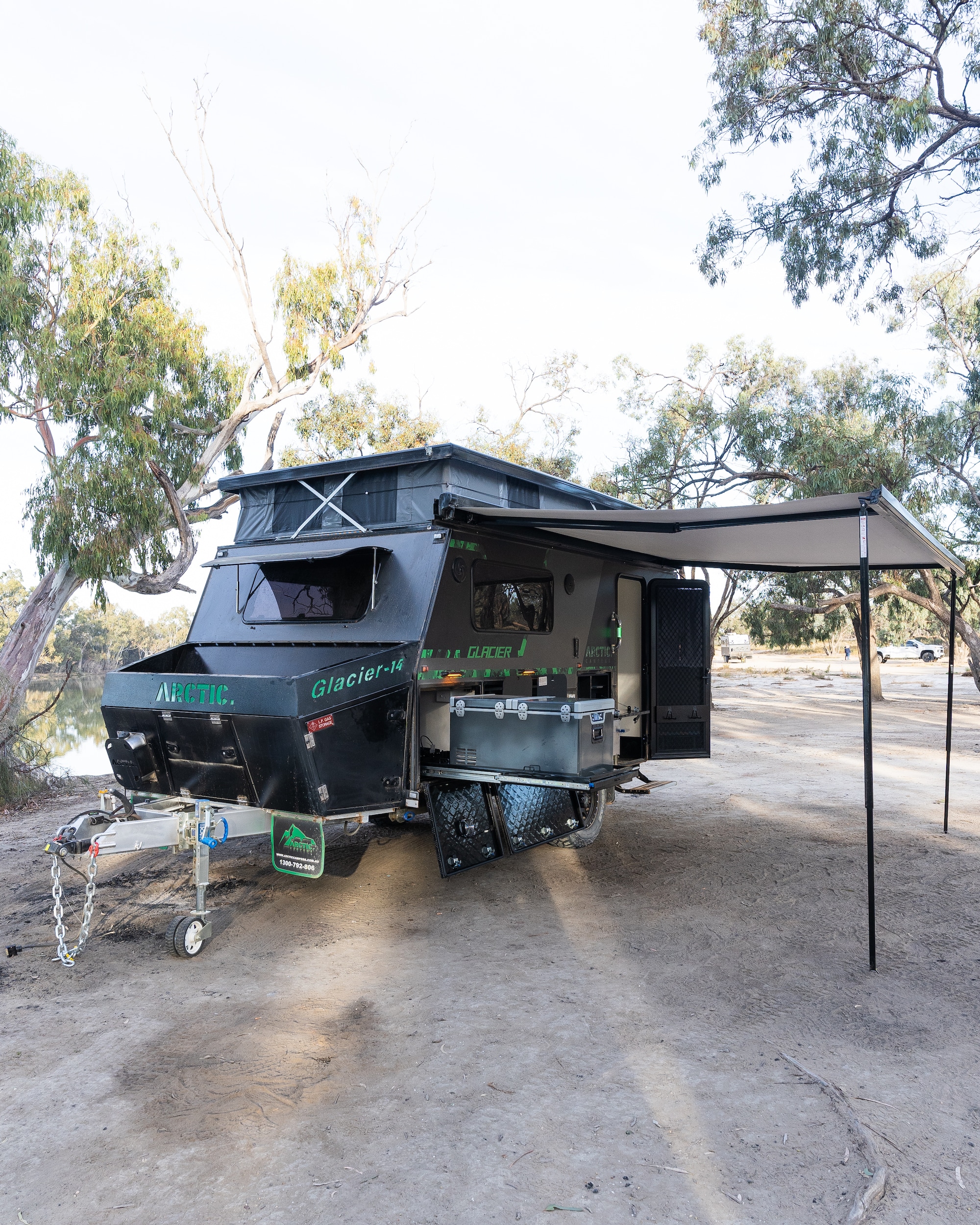
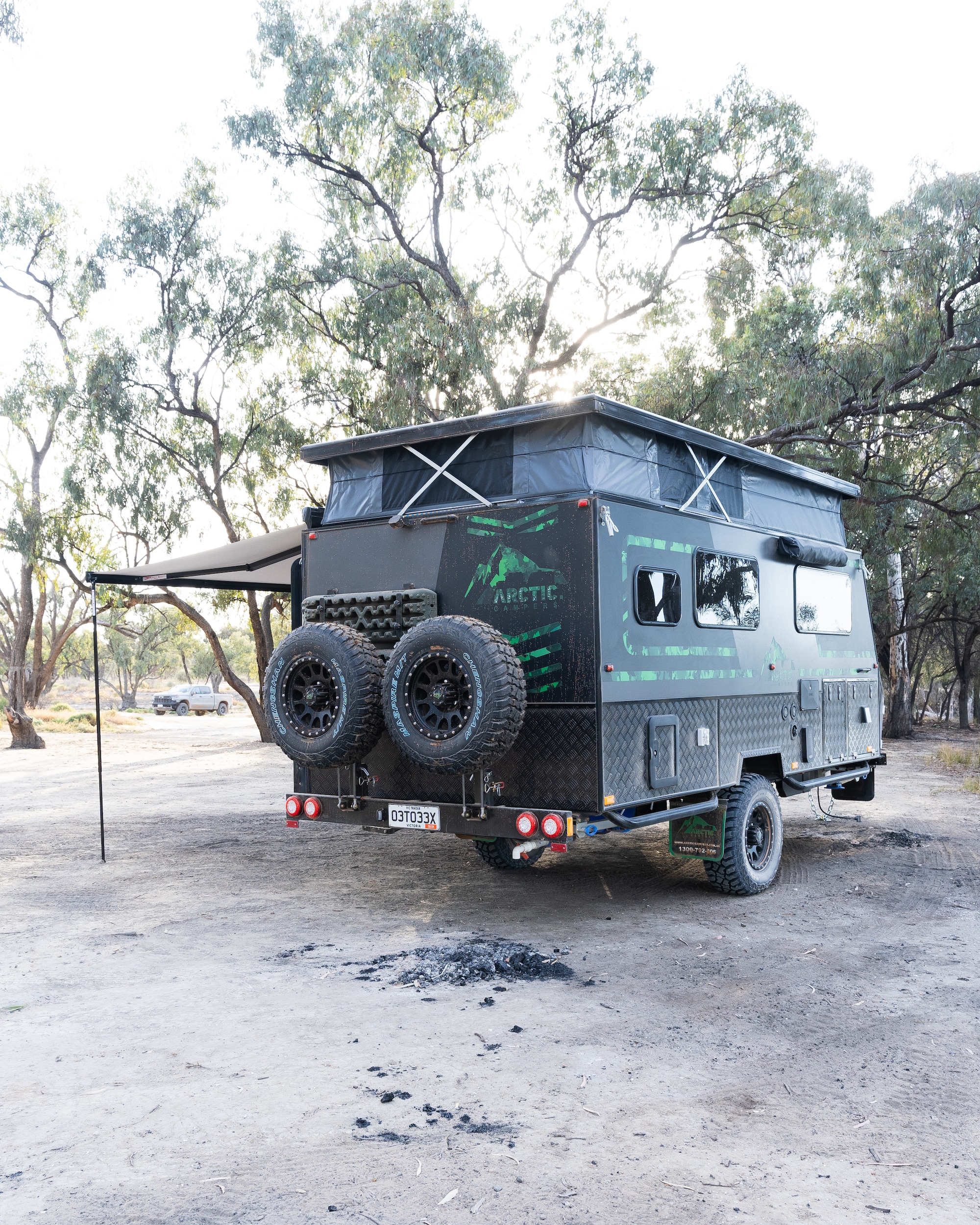
The downsides are interior space and weather. Living is still mostly outdoors, the kitchen is external, and a wet week of camping in a hybrid can feel cramped. They also cost meaningfully more than a comparable camper trailer.
Best for: Couples and small families chasing off-grid and off-road locations, upgraders moving on from a camper trailer, and travellers who want comfort without the compromise on where they can go.
Full Caravans: The Long-Haul Comfort Pick
A full caravan is what most people picture when they hear the word. Internal kitchen, dining area, lounge, queen bed, ensuite with a proper shower, and full insulation. Setup is fast. Pull in, level, hitch off, plug in, kettle on.
Pricing varies enormously. Family-friendly touring caravans typically start around $75,000 and run to $100,000 for off-road capable models, while full-size touring vans range from around $90,000 up past $250,000 for premium long-haul builds. Off-grid capability has shifted from optional upgrade to baseline expectation in the 2026 model year, so even mid-range vans now come with lithium batteries, decent solar, and proper inverters as standard.
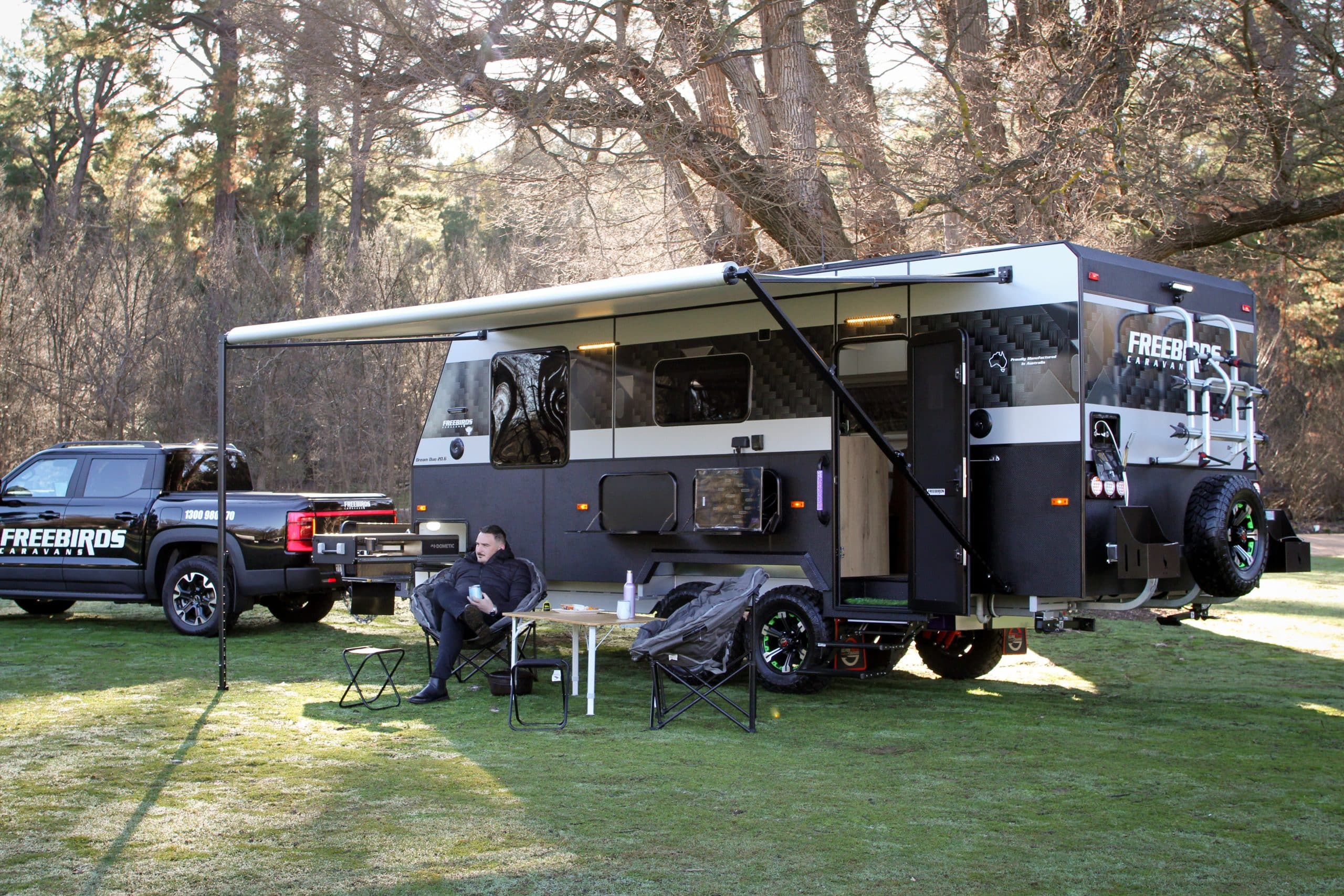
The strength of a full caravan is comfort over time. If you are planning a Big Lap, doing extended trips of two weeks or more, or travelling with kids who need their own space, nothing beats a proper van. Wet weather is a non-event. Cold nights are a non-event. You can cook, eat, sleep, and shower without ever stepping outside.
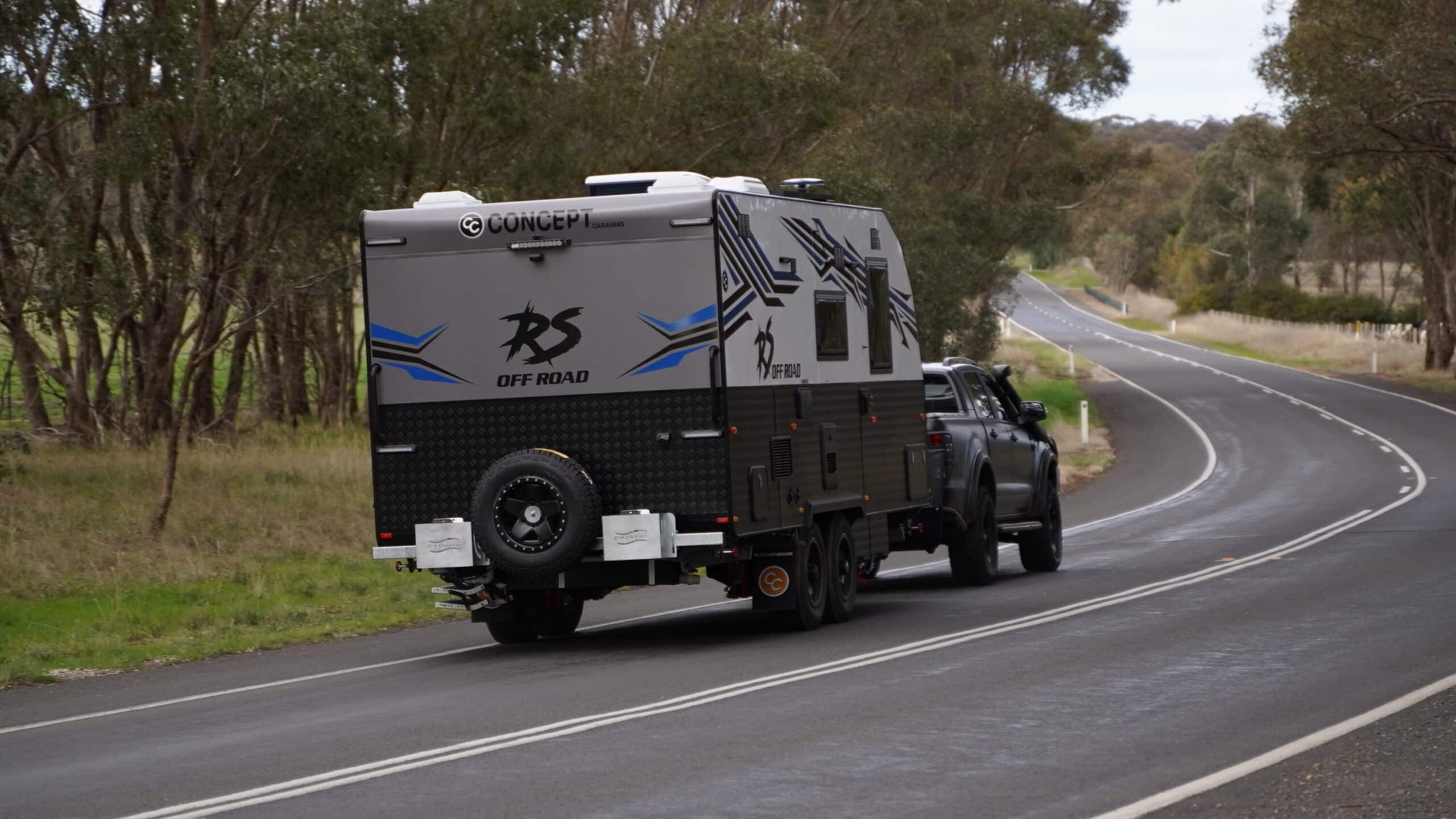
The trade-offs come down to size, weight, and where you can take it. A full caravan typically weighs between 2,500kg and 3,500kg loaded, which means a serious tow vehicle, usually a full-size 4WD or dual-cab ute at the upper end of its towing rating. Width and length make tight bush tracks off-limits, and fuel costs climb with the weight. Caravan parks and powered sites become your default rather than the exception.
THE 2026
TOURING GUIDE
A definitive field guide to modern rigs. Match your lifestyle to the right category.
Camper Trailer
- Ultra-lightweight towing
- Full outdoor living focus
- 15–30m Setup time
- Best for short getaways
Hybrid Caravan
- Slim width, solid walls
- True off-road capability
- 5–10m Setup time
- Best for off-grid travel
Full Caravan
- Full ensuite/climate control
- Internal kitchen setup
- Under 5m Setup time
- Best for long-haul touring
The Three Questions
Corrugated bush tracks demand a Hybrid or Camper. Bitumen tours favor the Full Caravan.
Couples can flex anywhere. Families generally need the hard-walled space of a Full Van.
If you move daily, prioritize setup speed (Van/Hybrid). Long stays make setup time less vital.
Towing Reality
Note: Always factor in “Wet Weight” (payload/water) before calculating towing capacity.
The Rain Test
Don’t buy based on showroom floor space. Stand inside with your family, imagine it’s pouring rain outside, and ask if you can still function comfortably. That’s the real test.
The Three Questions That Should Decide It
Forget brand loyalty, forget what your neighbour bought, and forget the model year hype. Three honest questions decide which category is right for you.
Where do you actually go? Be honest about this. If your weekends are spent at coastal holiday parks and powered sites, a full caravan is the obvious pick. If you are chasing free camps, station stays, and outback tracks, a hybrid or off-road camper trailer will get you in. A full caravan in those conditions becomes a stress test.
Who is travelling with you? Solo or as a couple, you can comfortably flex either way. Once you add kids, the calculus changes. Bunks need space, wet weather days need indoor room, and a small hybrid stops working when three damp kids and a dog are stuck inside. Most families end up in a full caravan or a larger family hybrid.
How much setup are you willing to do? This is the question buyers underestimate the most. A camper trailer at the end of a 600km driving day can feel like a chore. A hybrid takes about 5 to 10 minutes. A full caravan, less than 5. If your trips are short or you arrive late, fast setup matters more than you think.
A Quick Word on the 2026 Market
The Australian RV industry has been through a tough stretch. Several manufacturers have closed or gone into administration in the last twelve months, and consolidation is reshaping the market. None of that should stop you buying. It just means doing your homework matters more than ever.
Stick with established brands that have been around for at least five years. Look for membership of state caravan industry associations. Be cautious about deposit structures and avoid paying large progress payments before delivery. The current industry advice is to keep deposits to 10% of the final price where possible.
The flip side of the shake-up is that 2026 is one of the most competitive model years in a decade. Local manufacturers are sharpening pricing and standard specifications. Off-grid capability that used to be a $10,000 option is now baseline on most mid-range vans. If you are buying right now, the value on offer is genuinely good.
Crucial Safety CheckAlways weigh your loaded rig at a public weighbridge before you hit the road for the first time. Most people are overweight on at least one axis. It is the single biggest safety and legal issue in caravanning, and it is easy to fix once you know.
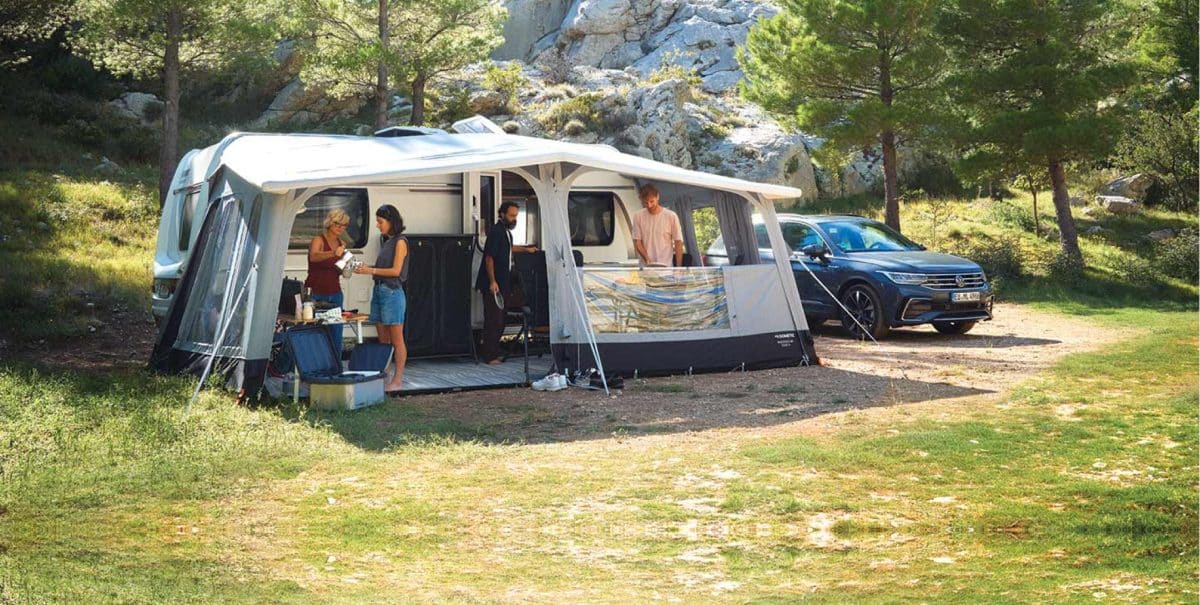
So, Which One Should You Buy?
Here is the honest summary. If you are early in your touring journey, want to keep costs down, and love the outdoor camping experience, start with a camper trailer. You can always upgrade later, and many of the best Aussie travellers we know still swear by them.
If you want off-grid capability without giving up a real bed and a hot shower, a hybrid caravan is hard to beat. They are the fastest-growing category in Australia for good reason.
If comfort, space, and long-haul touring are your priority, and your trips are mostly on sealed roads or in powered parks, a full caravan is the right call. It is a bigger commitment up front, but it is also the rig you will live in for weeks at a time.
The best advice we can give is also the simplest. Spend time inside each option at a show or dealership. Imagine yourself living in it for a wet weekend, not a sunny Saturday. Talk to people who already own one. And do not let anyone rush the decision.
The right rig is not the most expensive one. It is the one that matches the way you actually travel.
Heading to a show to compare the three for yourself? Have a read of our NSW Caravan Camping Supershow 2026 guide first. It will help you ask the right questions and walk away with the right rig.