

You’ve seen the ads. You’ve probably had a mate tell you their TPMS “saved their life” on the way to Broken Hill. So now you’re wondering if you actually need one, or if a good old-fashioned gauge and a bit of common sense will do the job just as well.
Here’s the honest answer. It depends on how you travel, what you’re towing, and how much you’re willing to gamble on noticing a problem before it becomes an expensive one.
What a TPMS Actually Does
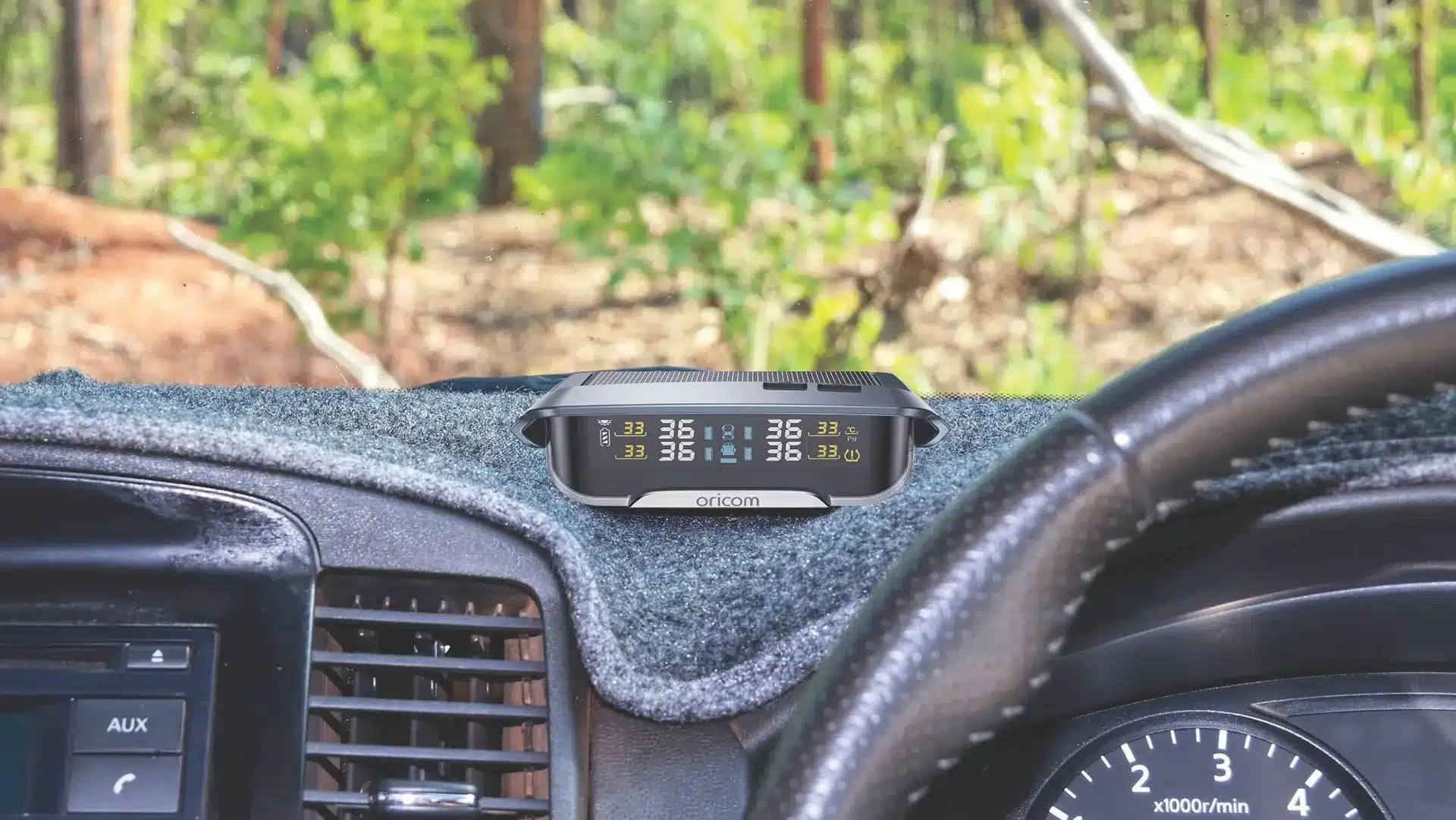
A tyre pressure monitoring system, or TPMS, is a set of small sensors that screw onto each tyre’s valve stem. They send live pressure and temperature readings to a display in your cab, usually every few minutes.
If a tyre starts losing pressure or overheating, the display flashes and beeps before you have any physical sign something’s wrong. That’s the whole appeal. It catches problems while they’re still small.
What a Manual Check Actually Catches
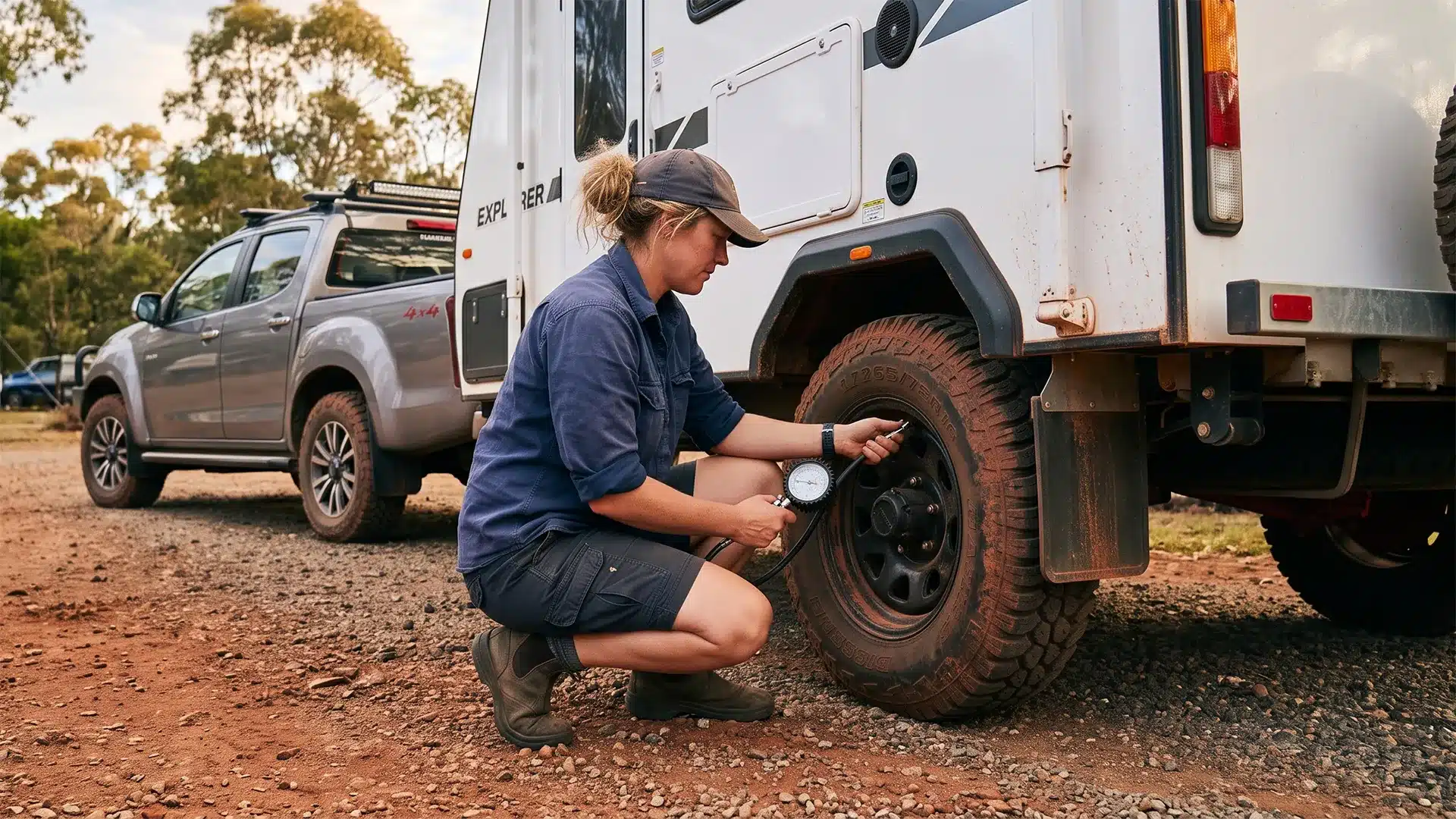
A manual check with a decent gauge is genuinely useful. Done properly before every trip, it will catch slow leaks, spot obvious wear, and confirm your pressures match the load you’re carrying.
The problem isn’t the check itself. It’s the gap between checks.
Once you’re on the road, your caravan tyres are sitting several metres behind you, out of sight and mostly out of mind. A slow leak that started fine at the servo can turn into a serious problem by the time you stop for lunch, and you won’t feel it happening.
Where This Gets Risky for Caravans Specifically
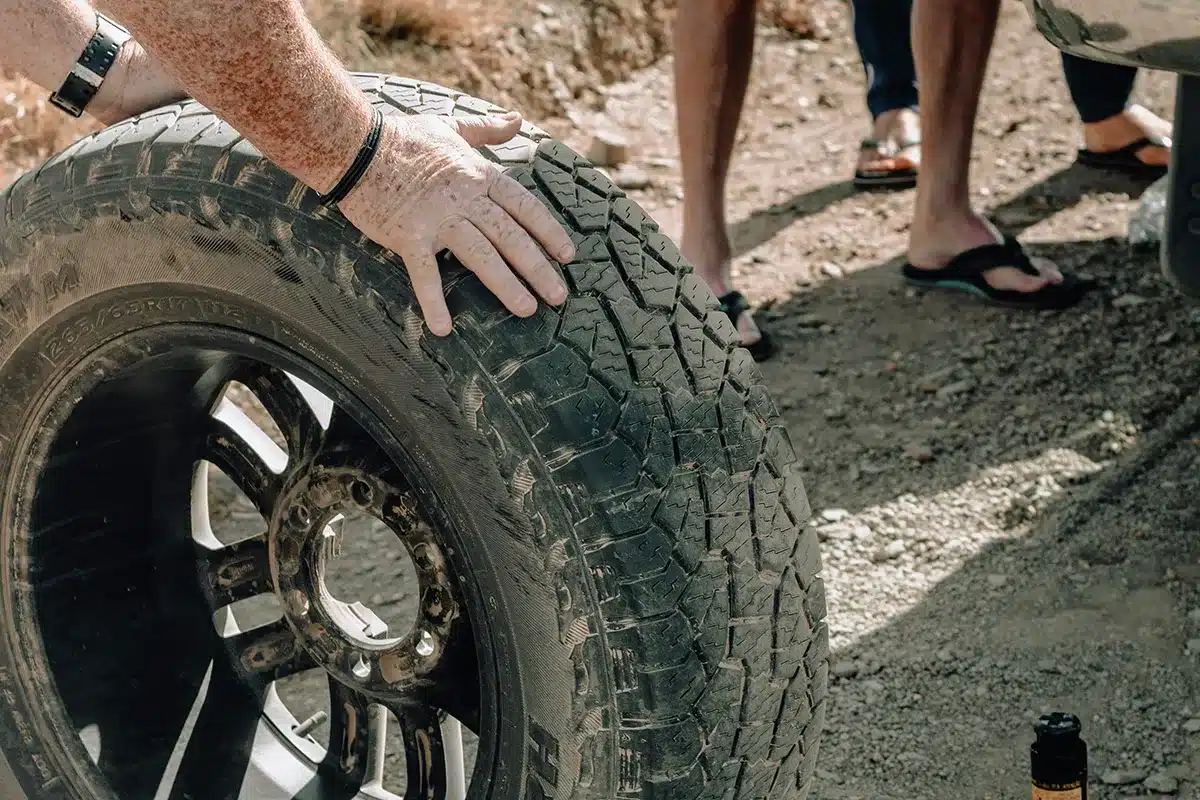
This is the bit that catches people out. On a single-axle trailer, a flat tyre usually makes itself known fast through sway or noise. On a dual-axle caravan, the second tyre on that axle can carry the load and mask the problem for a long time.
Caravanners have shared plenty of stories about towing for hours on a completely shredded tyre without realising, sometimes only finding out when another driver flags them down. By that point, the damage often extends past the tyre itself to the wheel arch, wiring, or mudguard.
Tyre condition and correct pressure aren’t just good habits either. They’re part of your legal obligation as a towing driver under state road safety towing standards, which require tyres to carry the correct load and speed rating and be maintained accordingly. For the full picture on staying compliant and safe while towing, see our Safety & Towing hub.
Tip: If you run a dual-axle van, treat this risk as the main reason to consider a TPMS, even if you skip one everywhere else.
Show Image Dual-axle setups can mask a flat tyre on the road
When a TPMS Earns Its Keep
A TPMS makes the most sense if any of these sound like you:
- You regularly tow long distances on highways at speed
- Your van has a dual-axle setup
- You free camp or travel remote routes where a blowout means real delay and risk
- You’re doing the Big Lap or extended touring for weeks at a time
- You’ve had a tyre issue before and don’t want a repeat
In these situations, a TPMS isn’t a luxury. It’s a genuinely practical safety upgrade that also tends to pay for itself through better fuel economy and less tyre wear, since correctly inflated tyres run cooler and last longer. Good tyre habits sit alongside the rest of your regular upkeep too, so it’s worth pairing this with our maintenance and servicing guides if you’re due a broader check-up.
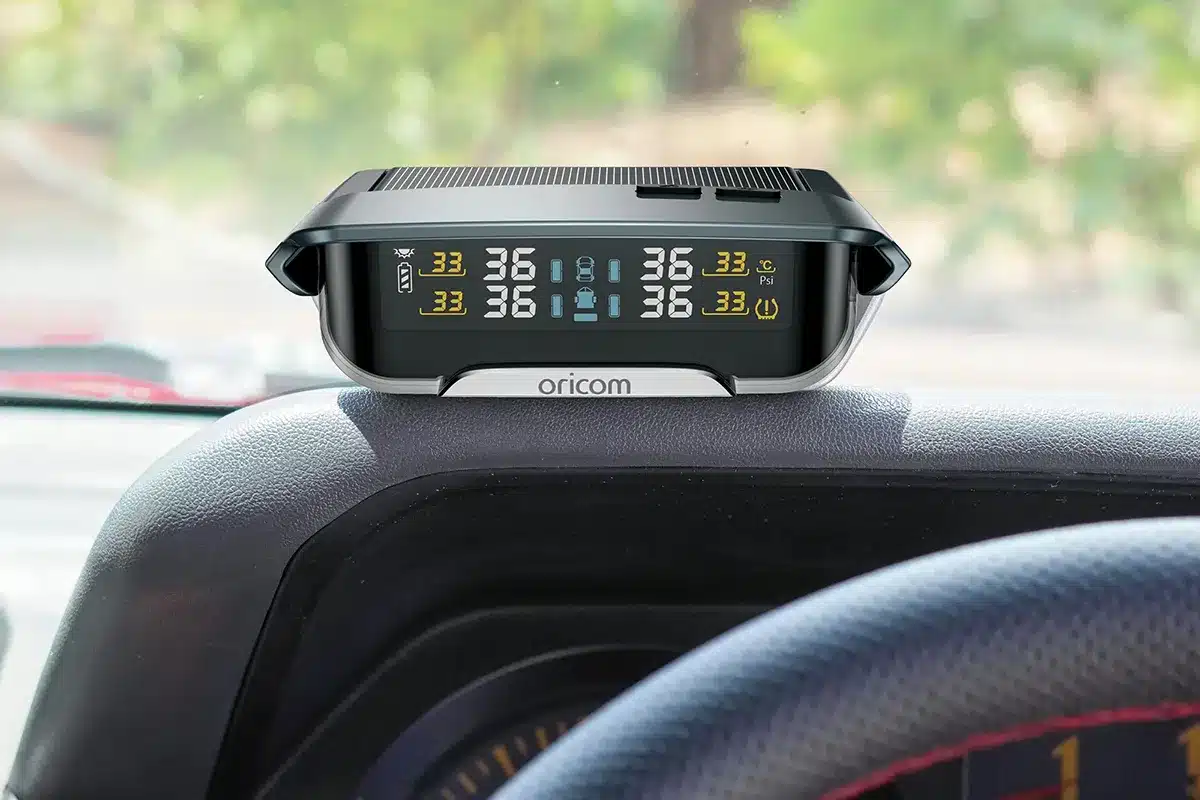
Tip: If you’re eyeing off a Bluetooth-based TPMS, check its rated range before you buy. Your caravan’s tyres sit metres behind the cab, and if the signal can’t comfortably cover that distance, you’ll get dropouts or a system that won’t connect at all. That’s an expensive way to end up with a “monitor” that doesn’t monitor anything. Longer vans and dual-axle setups should lean toward systems with a proven range buffer, or a dedicated signal booster.
When Manual Checks Are Probably Enough
If you’re a weekend warrior doing short trips to the coast or a local holiday park, and you’re diligent about checking pressures before you hitch up every time, a manual gauge might genuinely be all you need. Short trips mean less time for a slow leak to turn into a disaster, and you’re rarely far from help if something does go wrong.
The key word there is diligent. A manual check only works if you actually do it, every time, not just when you remember.
Here’s What We Reckon
If you tow a dual-axle van, travel long distances, or head remote, a TPMS is worth the investment. If you’re doing short, local trips and you’re disciplined about pre-trip checks, a good gauge and a bit of routine will carry you a long way.
Either way, the goal is the same: know what’s happening with your tyres before they tell you the hard way.
TPMS or Manual Checks? Quick Decision Guide
- Dual-axle caravan
- Long highway distances
- Remote or free camping
- Extended touring / Big Lap
- Short, local trips
- Single-axle trailer
- Disciplined pre-trip routine
- Rarely far from help
Whatever you land on, the real win is making tyre checks a habit rather than an afterthought. A TPMS makes that habit automatic. A gauge just means you have to be the one who remembers.