
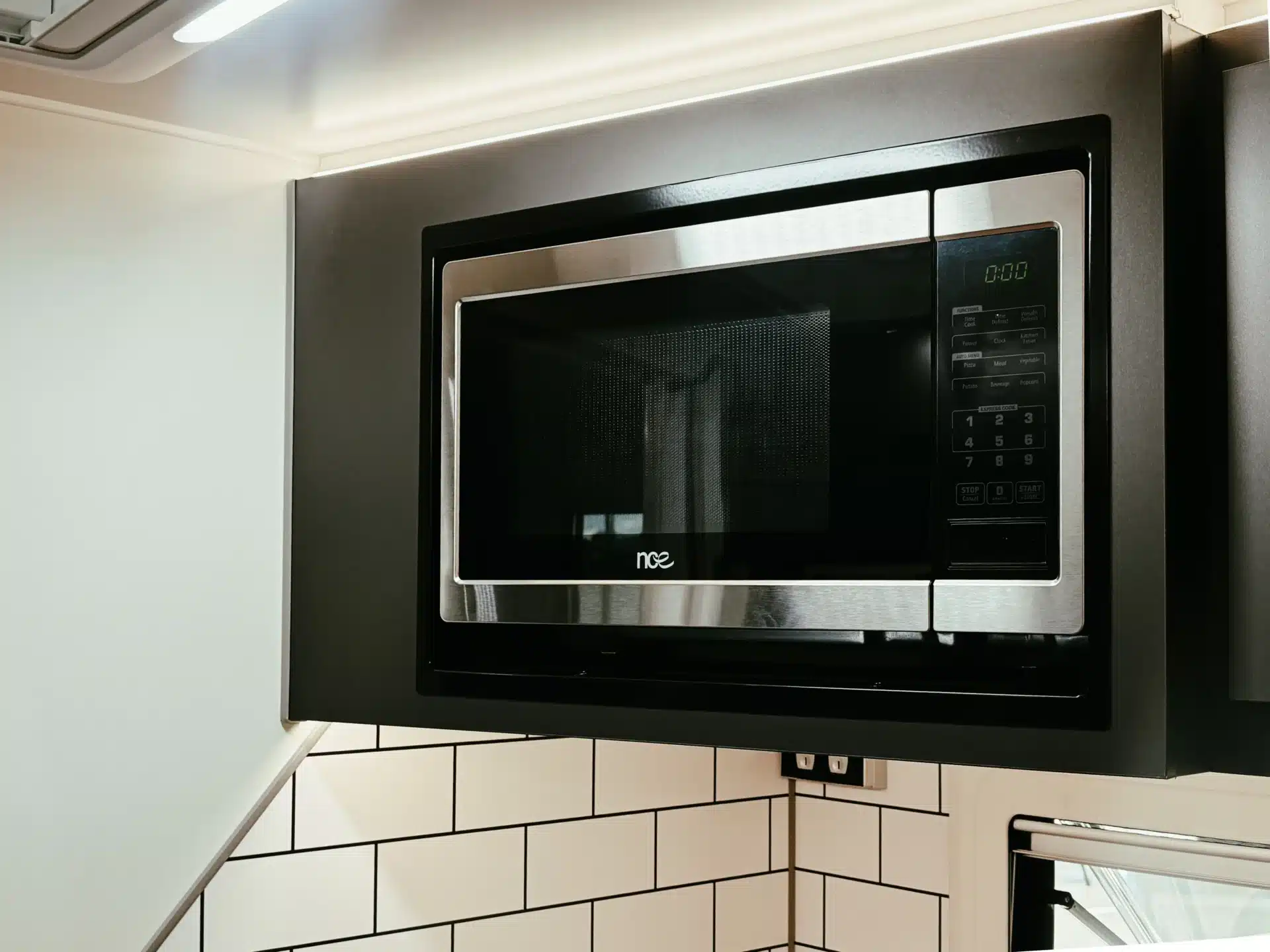
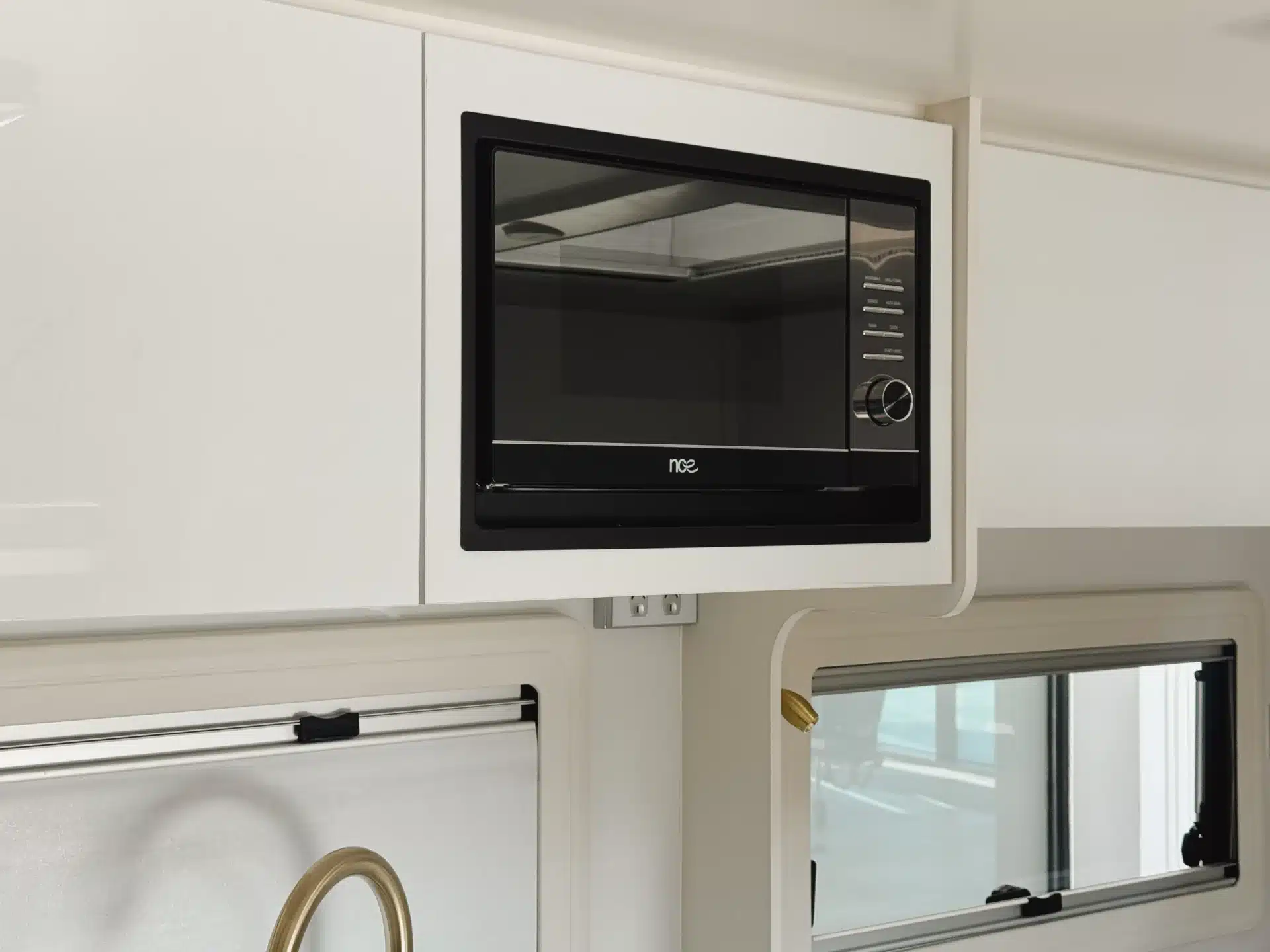


A caravan microwave can make touring easier, especially for quick meals, reheating leftovers, cooking simple meals or travelling with kids.
In a caravan, a microwave is not just a benchtop appliance. It needs to suit the space, the cabinetry, the electrical setup and the way the van moves on the road.
Choose the wrong one and you can run into problems with poor fit, blocked ventilation, rattling, overheating, power draw or a microwave that only works properly when you are plugged into 240V at a caravan park.
Here is what to check before you buy.
Quick checklist
What to Ask Before You Buy
a Caravan Microwave
Before choosing a caravan microwave, use this yes/no checklist to make sure it suits your cabinetry, power setup and travel conditions.
| Question to ask | Yes | No |
|---|---|---|
| Will it fit the existing cabinetry? | ||
| Is there enough ventilation around it? | ||
| Does it need a mounting bracket or trim kit? | ||
| Is it secure for travel? | ||
| Is the door latch suitable for movement on the road? | ||
| Do you know the cooking wattage and input power demand? | ||
| Will it run only on 240V mains power? | ||
| Can your inverter safely run it off-grid? | ||
| Is the internal capacity suitable for the meals you cook? | ||
| Are you better off with a flatbed or convection model? |
Why a Caravan Microwave Is Different to a Household Microwave
A microwave in a house sits on a bench, has plenty of surrounding space and does not need to handle corrugations, vibration, movement or tight cabinetry.
A caravan microwave has a harder job.
It needs to, fit securely into a compact kitchen, stay in place while travelling, have enough ventilation around it, match the available power supply, suit the van’s cabinetry and mounting setup and be practical for the meals you actually cook on the road.
That is why it is worth choosing a microwave designed with RV use in mind, rather than simply buying the cheapest household unit that fits the hole.
Inverter Microwave vs Standard Microwave: What Is the Difference?
One of the biggest things to understand is the difference between an inverter microwave and a standard microwave.
A standard microwave usually cycles power on and off to achieve lower heat settings. That means even when you select a lower power level, the microwave may still run at full power in bursts.
An inverter microwave is designed to deliver steadier, more controlled power. This can help with more even heating, gentler defrosting and better cooking consistency.
For caravan use, that can be helpful because you are often reheating smaller meals, defrosting food, cooking in stages or trying to manage appliance performance in a compact setup.
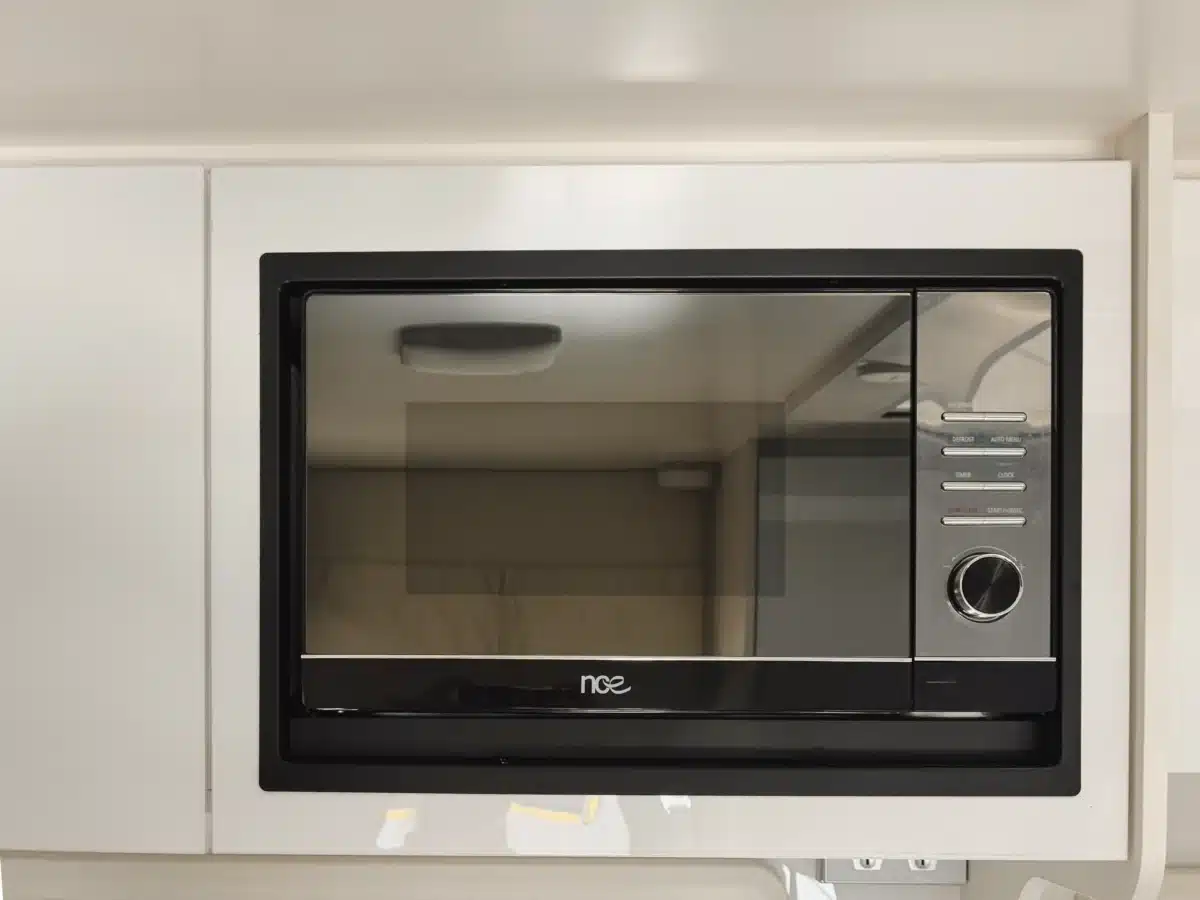
The NCE 29L Convection Microwave uses inverter technology and combines microwave, convection oven, grill and air fryer functions in one built-in unit.
When an inverter microwave makes sense
An inverter microwave is worth considering if you:
- Want more even heating
- Use the microwave for more than quick reheating
- Defrost meat, bread or pre-prepared meals
- Want a more flexible built-in cooking appliance
- Are trying to reduce the number of separate appliances in the van
Built-In Caravan Microwaves vs Portable Microwaves
The next decision is whether you want a built-in caravan microwave or a portable unit.
Built-in caravan microwave
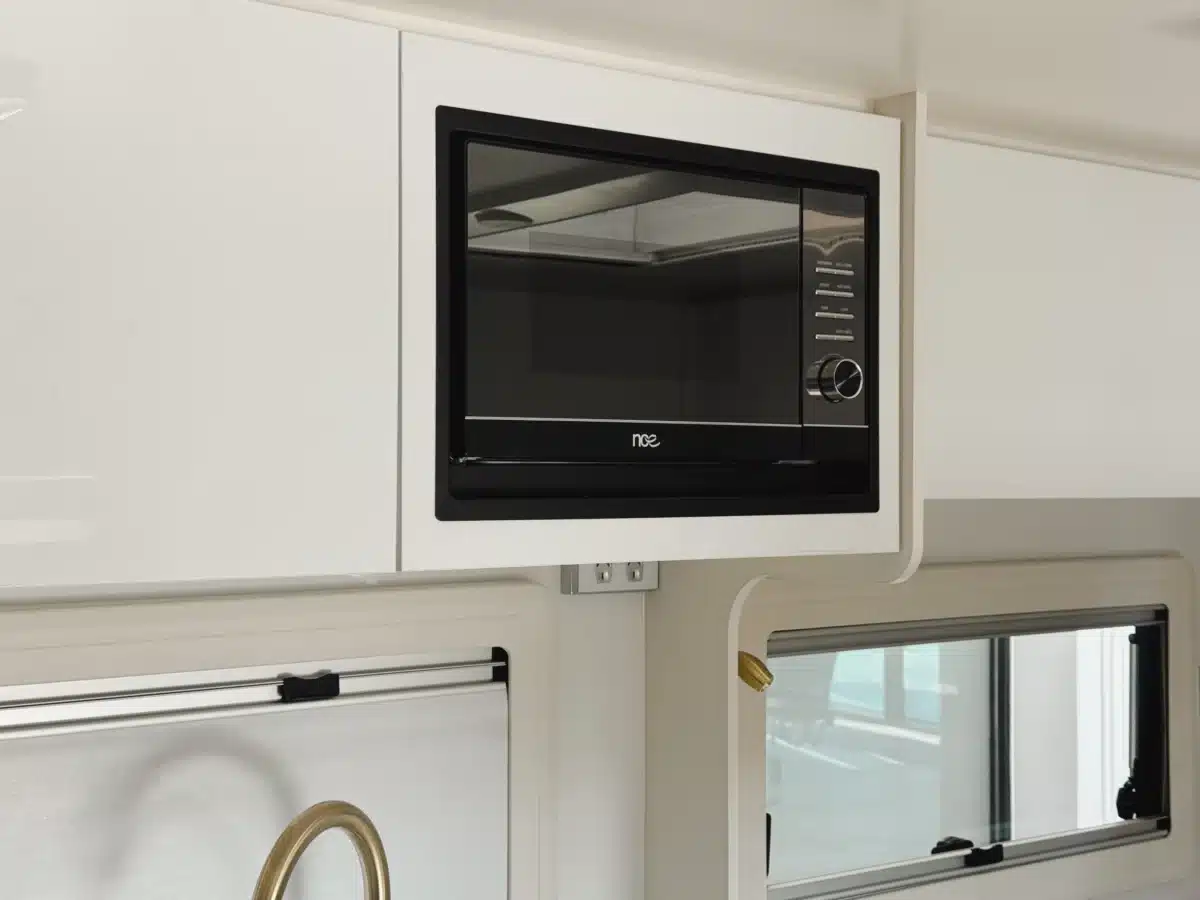
A built-in microwave is designed to sit neatly within caravan cabinetry. It gives the kitchen a cleaner finish and keeps the appliance in a dedicated position while travelling.
This is often the better option for:
- New caravan builds
- Renovations
- Permanent installations
- Families or long-term travellers
- People who want a tidy, integrated kitchen
The key is that the microwave must be mounted correctly and have suitable ventilation.
Portable microwave
A portable microwave may suit smaller vans, campers or occasional travellers. It can be moved, stored or removed when not needed.
However, portable setups can create problems if the microwave is not properly secured during travel. A microwave is a heavy appliance, and anything loose inside a caravan can become a safety risk on rough roads or during sudden braking.
If you choose a portable option, make sure it is stored safely before towing.
What Size Caravan Microwave Do You Need?
Microwave size is usually listed in litres, but litre capacity does not tell the whole story.
A 20L microwave may be enough for couples or light use. A 25L microwave gives more room for larger plates and family meals. A 29L convection microwave may suit travellers who want more of an oven-style cooking setup.
NCE’s range includes a 20L stainless steel microwave, a 23L flatbed microwave, a 25L black stainless steel microwave and a 29L convection microwave.
General size guide
Caravan Microwave
Size Guide
Use this quick guide to match microwave size with your travel style, available space and how often you actually cook on the road.
| Caravan microwave size | Best suited to | Things to consider |
|---|---|---|
| 20L | Couples, compact vans, light use | Good for reheating, drinks and simple meals. |
| 23L flatbed | Travellers wanting more usable internal space | No turntable can mean easier use of the cavity. |
| 25L | Families or regular microwave users | More room for plates, bowls and larger portions. |
| 29L convection | Long-term travellers and built-in kitchens | Can replace multiple appliances, but needs more space and correct installation. |
Why Flatbed Microwaves Can Work Well in Caravans
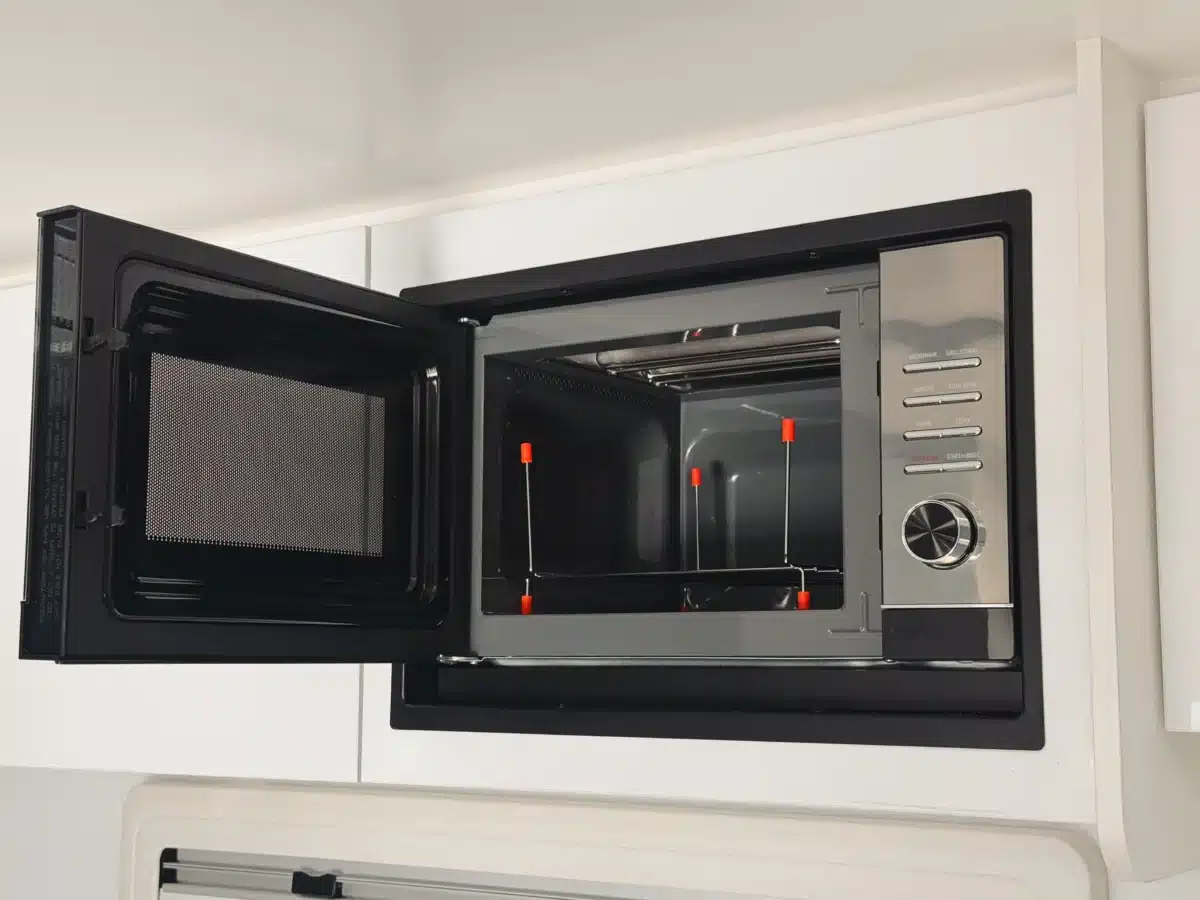
A flatbed microwave does not use a traditional turntable. Instead of needing a rotating glass plate, it has a flat internal base.
That can be useful in a caravan because internal space matters. You can often fit larger or less awkward dishes inside compared with a traditional turntable design.
The NCE 23L Flatbed Microwave is designed to provide 45% more usable cooking area than a standard turntable 23L microwave, according to the product information.
A flatbed design may suit you if you:
- Reheat larger plates
- Want easier cleaning
- Do not want a glass turntable moving around
- Need better use of a compact microwave cavity
Ventilation: The Part Buyers Often Forget
Ventilation is one of the most important parts of installing a caravan microwave.
Microwaves generate heat. If that heat cannot escape, the appliance may overheat, perform poorly or have a shorter working life.
This matters even more in caravans because microwaves are often installed inside tight cabinetry.
Before buying, check:
- Rear, sice & top clearance
- Ventilation path
- Whether the cabinet traps heat
- Whether the microwave requires a trim kit or bracket
- Manufacturer installation instructions
Do not assume that a microwave is suitable just because it physically fits the space.
A tight fit with poor ventilation is not a good fit.
Mounting Brackets and Trim Kits Matter
A caravan microwave needs to be secure. It should not slide, bounce forward or move around when the caravan is being towed.
This is where proper brackets and trim kits come in.
NCE offers purpose-built brackets for selected microwave models, including brackets for the 23L flatbed microwave and a trim kit designed to house the 29L convection microwave within caravan cabinetry.
A proper mounting setup can help:
- Secure the microwave in place
- Create a cleaner built-in finish
- Support the appliance inside cabinetry
- Reduce movement during travel
- Make installation easier for builders or fit-out specialists
This is especially important if you are upgrading an existing microwave. The new model may not match the old cut-out, bracket or trim.
Measure carefully before ordering.
Power Requirements: Can Your Caravan Run a Microwave?
A caravan microwave needs the right power supply.
Most caravan microwaves are designed to run on 240V power. That means they work easily when you are plugged into mains power at a caravan park.
If you want to run a microwave off-grid, the setup becomes more serious.
You may need:
- A suitable battery system
- A correctly sized inverter
- Appropriate cabling
- Proper fusing
- Enough solar or charging capacity
- Professional installation advice
A microwave can draw a lot of power in a short time. The cooking wattage listed on the front of the microwave is not always the same as the total input power required to run it.
For example, a 900W microwave may need more than 900W from the electrical system once real operating demand is considered.
That is why it is important to speak with a qualified caravan electrical specialist before assuming your inverter can run a microwave.
Can You Run a Caravan Microwave Off-Grid?
Yes, but only if your setup is designed for it.
A microwave is a high-draw appliance. Running one off-grid is very different to running lights, a water pump, phone chargers or a fridge.
Powered caravan park
This is the easiest setup. Plug into 240V mains power and use the microwave as intended.
Weekend touring with lithium and inverter
This can work if the inverter, battery capacity and wiring are suitable. Short microwave use may be fine, but it still needs to be planned properly.
Long-term off-grid touring
This needs a more serious power system. If you want to use a microwave regularly while free camping, your battery, inverter and charging system need to be matched to that lifestyle.
Basic AGM setup
This is usually not ideal for regular microwave use. High-draw appliances can place a heavy load on the system.
New caravan build
This is the best time to plan it properly. If you know you want a microwave, induction cooktop or other high-draw appliances, build the power system around your real usage from the start.
What to Check Before Replacing an Existing Caravan Microwave
Replacing a caravan microwave is not always as simple as swapping one box for another.
Before buying, check:
- Existing cavity width, height and depth
- Current bracket or trim setup
- Door clearance
- Power point location
- Ventilation space
- Microwave weight
- Whether the new model needs different supports
- Whether the cabinet needs modification
Also check whether the old microwave was installed correctly in the first place. Some older vans may have poor ventilation or a loose fit that should not be repeated.
NCE Caravan Microwave Options to Consider
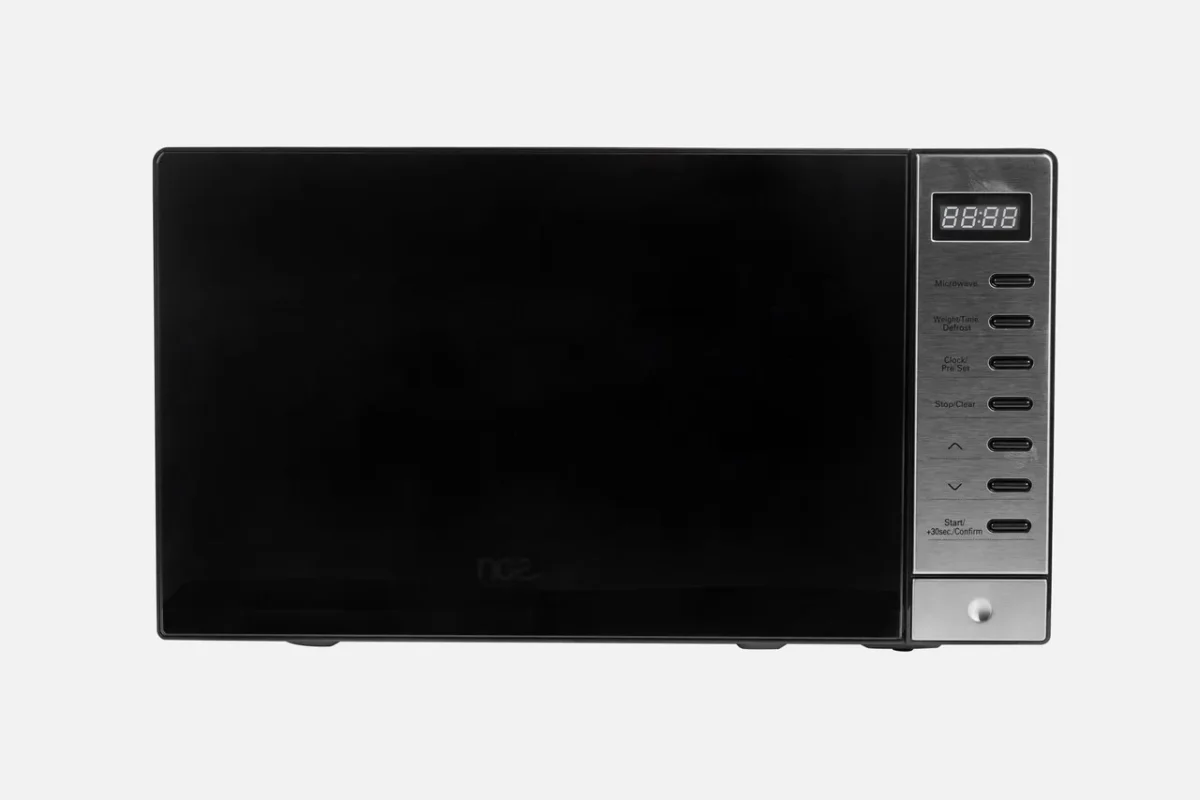
NCE 20L Stainless Steel Microwave
A compact option for caravanners who want a straightforward microwave for reheating, drinks and simple meals. The NCE 20L model includes a positive door lock designed to prevent the door opening during travel.
Best for: compact vans, couples, simple touring kitchens.
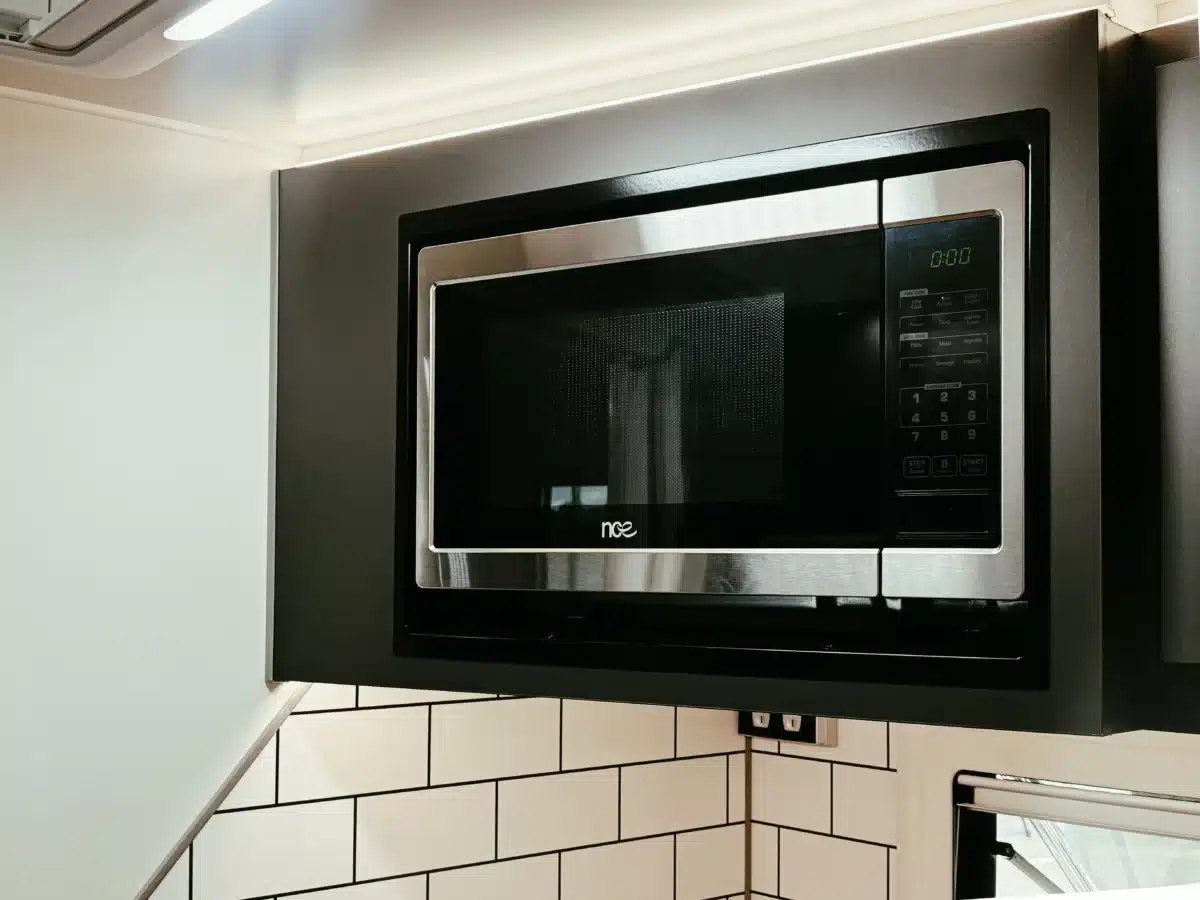
NCE 23L Flatbed Microwave
The flatbed design removes the turntable and gives more usable internal cooking space. This can be useful when you want a compact microwave that still works with larger plates or awkward dishes.
Best for: travellers who want better use of internal microwave space.
NCE 25L Stainless Steel Microwave
A larger option with 25L capacity, 900W cooking power, five power levels and auto menu functions.
Best for: families, regular microwave users and larger caravan kitchens.
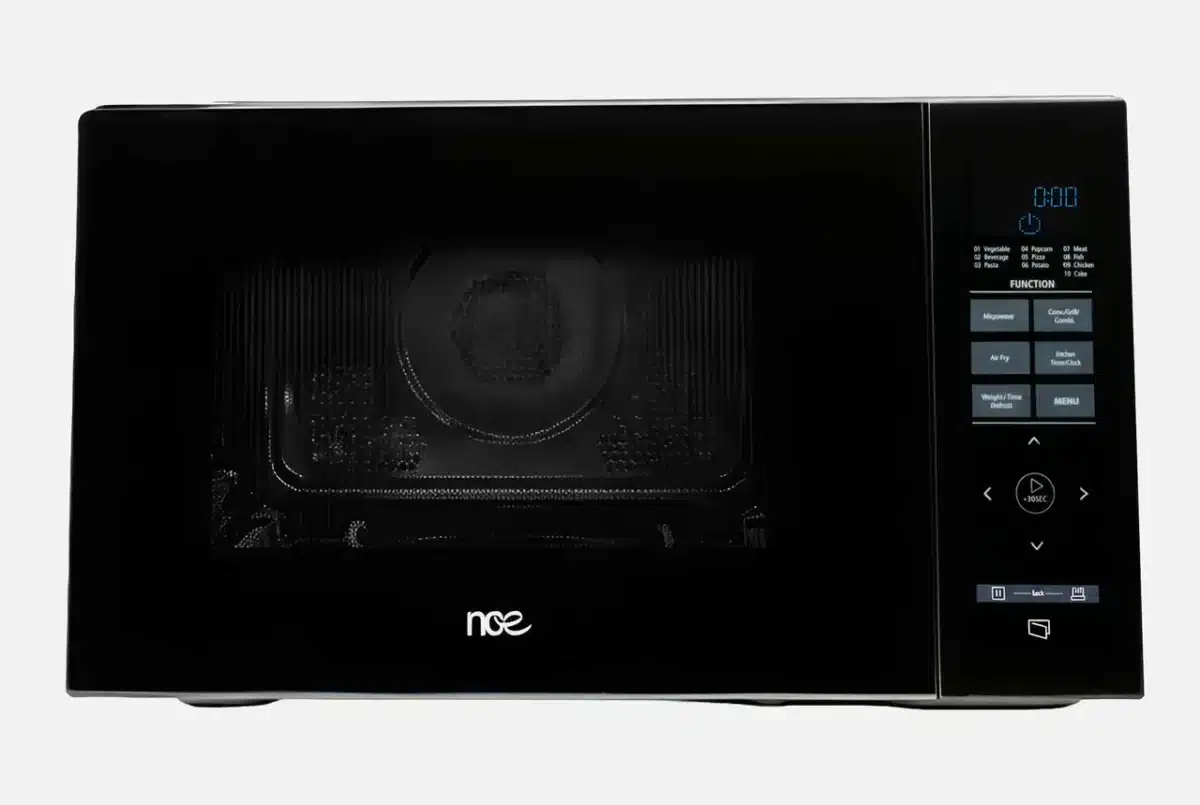
NCE 29L Convection Microwave
A built-in style appliance that combines microwave, convection, grill and air fryer functions. It is designed for caravan owners who want more cooking flexibility without adding multiple appliances.
Best for: long-term touring, new builds and travellers who want one appliance to do more.
Common Mistakes When Buying a Caravan Microwave
Buying only on litre size – A 23L flatbed microwave may be more useful than a larger turntable model if it gives better usable space.
Ignoring ventilation – A microwave that fits tightly into a cupboard may still be a poor choice if heat cannot escape.
Assuming any household microwave will do – Caravans move. A microwave needs to be secured properly and suited to the installation.
Forgetting the power system – If you want to use the microwave off-grid, check your inverter and battery setup before buying.
Reusing the old bracket without checking – A new microwave may need a different bracket or trim kit. Do not assume the existing setup will suit.
Final Word
The best caravan microwave is not always the biggest or most expensive model. It is the one that fits your van, suits your cooking style, has the right ventilation and works with your power system.
For some travellers, that will be a compact 20L microwave for quick reheating. For others, a flatbed model will make better use of limited space. Families may prefer a larger 25L option, while long-term travellers may get more value from a 29L convection microwave that can grill, bake, air fry and reheat in one built-in appliance.
Before you buy, measure the space, check the ventilation, think about how you camp and make sure your power setup can support the way you want to cook.
A caravan microwave should make life easier on the road, not create another problem to solve later.
FAQ:
What size microwave is best for a caravan?
For most caravans, a 20L to 25L microwave is enough. A 20L microwave suits couples, compact vans and light use, while a 25L microwave gives more room for families or regular meal prep. A 23L flatbed microwave can be a good middle option because it offers more usable internal space without needing a large cabinet.
Can you use a normal microwave in a caravan?
You can, but it is not always the best option. A caravan microwave needs to fit securely, have proper ventilation and stay in place while travelling. A standard household microwave may work for some setups, but it still needs to be safely mounted and matched to your caravan’s power supply.
What is the difference between a flatbed microwave and a turntable microwave?
A turntable microwave uses a rotating glass plate to move food while it heats. A flatbed microwave does not have a turntable, which can make the internal space easier to use and clean. In a caravan, a flatbed design can be handy because you can fit larger or more awkward dishes inside.
Does a caravan microwave need ventilation?
Yes. Ventilation is essential. Microwaves create heat, and if that heat is trapped inside tight cabinetry, the appliance may overheat or perform poorly. Always check the manufacturer’s installation instructions and allow enough space around the microwave for airflow.
Can you run a caravan microwave off-grid?
Yes, but only if your caravan’s electrical system is designed for it. A microwave is a high-draw appliance, so you may need a suitable lithium battery system, inverter, cabling, fusing and charging setup. If you mainly stay at powered caravan parks, this is less of an issue because the microwave can run from 240V mains power.
What size inverter do you need to run a caravan microwave?
It depends on the microwave’s input power, not just the cooking wattage shown on the front. For example, a microwave advertised as 900W may draw more than that from the system when operating. Before running a microwave from an inverter, check the appliance specifications and speak with a qualified caravan electrical specialist.
Is a convection microwave worth it in a caravan?
A convection microwave can be worth it if you want one appliance that can reheat, bake, grill and cook more like a small oven. This can be useful for long-term touring or compact kitchens where space is limited. For simple reheating, drinks and quick meals, a standard microwave may be enough.
Do caravan microwaves need mounting brackets?
In many built-in setups, yes. A caravan microwave should be secured so it does not move while towing. Mounting brackets or trim kits can help hold the microwave in place, support the installation and create a cleaner built-in finish.
What should I check before replacing an old caravan microwave?
Measure the existing cavity carefully, including width, height and depth. Check the power point location, ventilation space, door clearance, mounting bracket, trim kit and microwave weight. A new microwave may not fit the same way as the old one, even if the litre capacity is similar.
What is the best caravan microwave for off-grid travel?
The best caravan microwave for off-grid travel is one that matches your power system. Smaller models are generally easier to manage, but the key is checking the actual input power and making sure your inverter and battery setup can support it. Regular microwave use while free camping should be planned as part of the whole caravan electrical system.