

There’s a moment most Aussie campers know well. It’s somewhere just before sunrise, the canvas is stiff with frost, and the kettle feels a long way away. For years, the answer was an extra blanket and a hopeful look at the sky. Not anymore.
The reason is simple. They sip fuel, run on a single 12V battery, and turn a freezing camper into a warm cabin in under ten minutes. They don’t need 240V power, they don’t drain your house battery overnight, and they’re cheap to run compared to gas or electric alternatives.
But the market is now flooded with options, from sub-$300 generic units off eBay to $2,000-plus European premium brands. Picking the right one depends on what you’re heating, how often you’ll use it, and how much faith you have in your own spanner skills.
Here are the three diesel heaters worth your attention this winter, one for each end of the budget, and one that hits the sweet spot in the middle.
What a Diesel Heater Actually Does
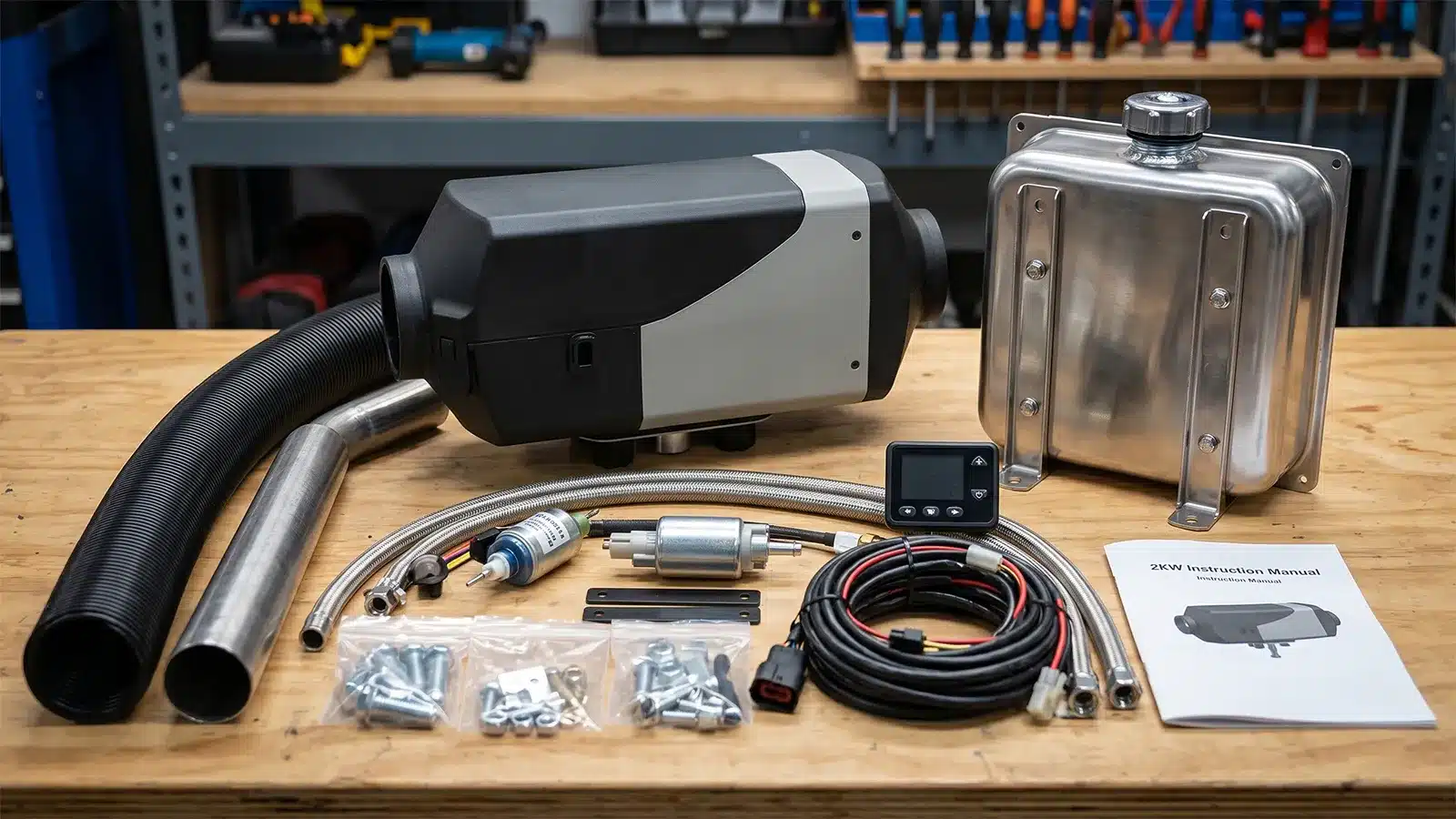
Before we get to the picks, a quick refresher. A diesel heater is a small, sealed combustion unit that burns diesel fuel in a chamber separate from your living space. A fan blows air across a heat exchanger, sending warm, dry air into your camper. The exhaust vents safely outside.
Most units run off 12V power, drawing about 5-10 amps for the first few minutes while the glow plug fires up, then settling at a much lower 0.7-0.9 amps for the fan and fuel pump once it’s combusting on its own. Fuel use is typically between 0.1 and 0.3 litres per hour depending on output. A 5L tank will easily get you through several cold nights.
The big advantage over gas or electric alternatives is dry heat. Diesel heaters reduce the condensation that makes pop-tops and camper trailers feel damp in the morning, because they’re pulling outside air, warming it, and pushing it inside.
Tip: Most experts agree that for vans and campers under 6 metres, a 2kW unit is plenty. The temptation is to oversize, but bigger isn’t better. Oversized heaters tend to overshoot temperature, run on low all the time, and develop carbon build-up faster.
What to Look For Before You Buy
Not all diesel heaters are equal. The cheap units that flood eBay and Amazon often look identical to premium models, but the difference shows up in three places: build quality, safety features, and after-sales support.
Here’s what matters when you’re comparing options:
- Power rating matched to your space. 2kW for vans, camper trailers and small caravans up to 6 metres. 4-5kW for larger caravans, motorhomes, or canvas camper trailers with a big annexe.
- LiFePO4-friendly low draw. Look for units that idle at under 1 amp once running, so they pair cleanly with modern lithium battery setups.
- Bluetooth or app control. Not essential, but a game-changer for pre-warming the camper from your sleeping bag.
- Australian after-sales support. This is the biggest single differentiator. A heater is only as good as the warranty backing it.
- Safety certifications. RCM and EMC certification matter. So do features like overheat protection, low-voltage cut-off, and a sealed combustion chamber.
- Quality fuel pump and muffler. Cheap units fail here first. A noisy fuel pump can ruin a quiet bush camp.
Diesel Heaters
Use a 2kW unit for vans and trailers up to 6 metres. Only step up to 4-5kW for large motorhomes; oversizing a heater causes carbon build-up.
Expect a brief 5-10A draw on startup, settling to a lithium-friendly ~0.8A. Burns roughly 0.1-0.3 litres of diesel per hour ($2-4 per night).
Vevor for budget/portable use, AU Focus for the best value with Aussie support, or Webasto for premium full-time living.
Prioritise units with Australian RCM and EMC compliance. Regardless of the brand, fitting a CO alarm is non-negotiable for safety.
Our Top 3 Diesel Heaters for 2026
These three picks cover the full spectrum: a budget portable for tent campers and weekenders, a mid-range Aussie-supported unit for serious touring, and a premium European model for full-time travellers who want set-and-forget reliability.
1. Best Budget Option: Vevor 5kW Portable All-In-One
Approximate price: $140-250 Best for: Tent campers, swag setups, weekend warriors, occasional users
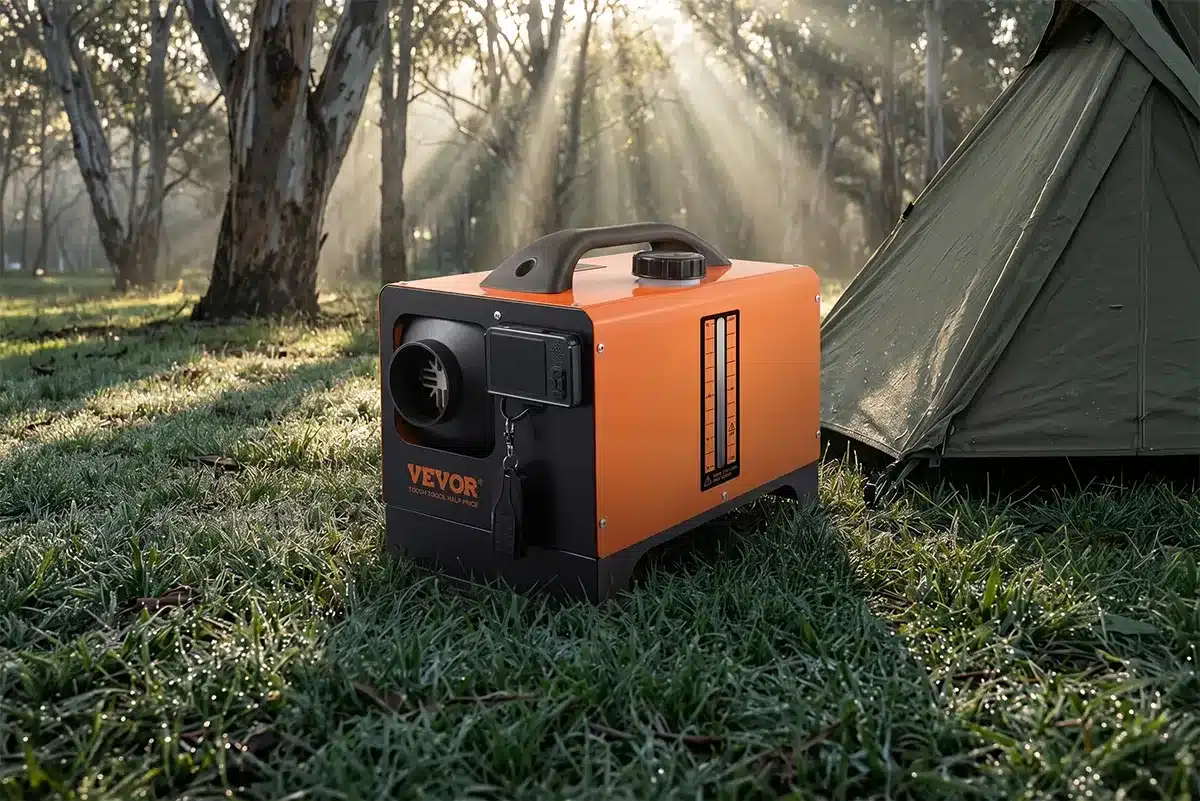
The Vevor (and a parade of similar generic-branded units sold through eBay and Amazon) has earned a cult following among Aussie campers for one simple reason: it works, and it’s cheap.
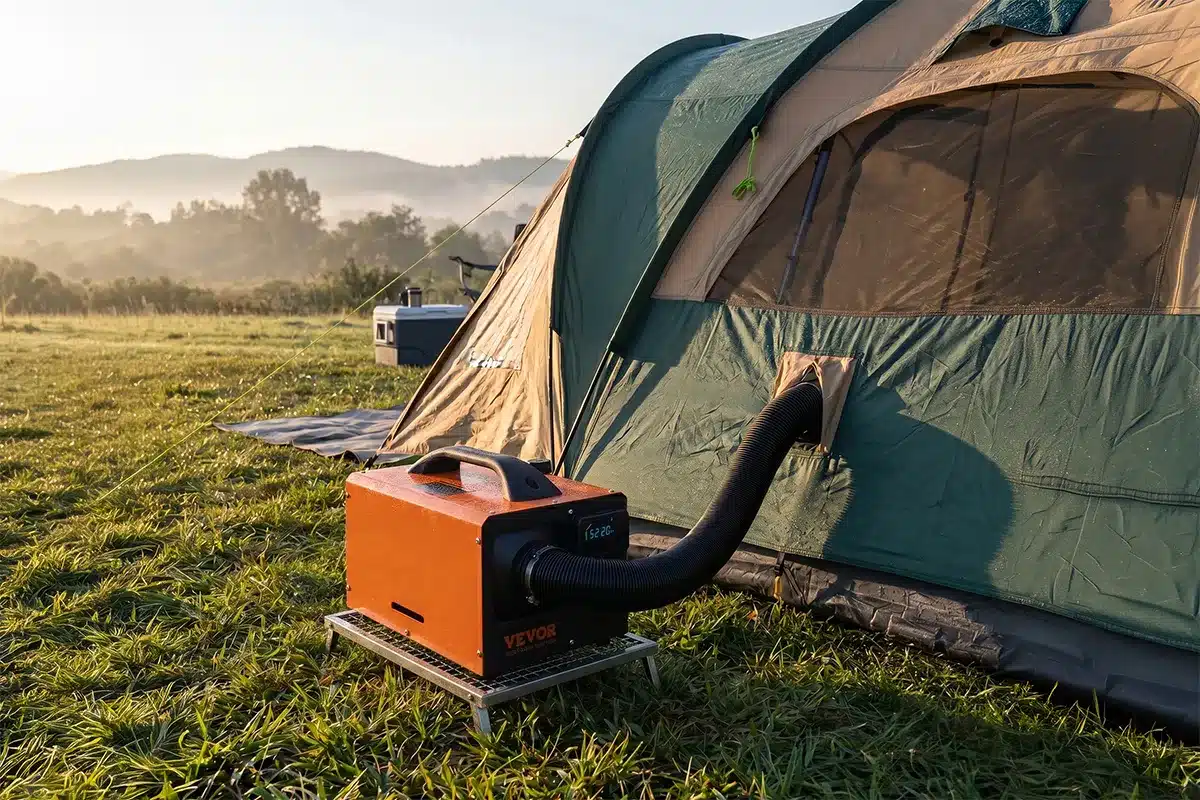
These all-in-one portable units come with the heater, fuel tank, fuel pump, controller and exhaust all packaged into a single metal box. You can carry it in the tray of the ute, set it down outside your tent or camper, and run a duct hose into the canvas. No drilling, no wiring loom to chase through cabinetry, no install bill from a workshop.
That makes them genuinely useful for tent campers and people with soft-floor camper trailers where a permanent install isn’t practical. The portable format also means you can reuse it at home, in a shed, or in a garage workshop.
The trade-offs are real, though. Build quality is variable. After-sales support is essentially nonexistent. Programming the controller can be a frustrating exercise in YouTube tutorials. And while they’ll absolutely heat your space, they’re noisier than premium units and the fuel pump tick is more noticeable.
The verdict: If you camp 5-15 nights a year, want flexibility, and don’t want to commit to a permanent install, a Vevor or similar all-in-one is excellent value. Just go in with eyes open about the lack of warranty.
Tip: If you go this route, watch for units sold by Australian-based sellers with a local return address. It won’t get you proper warranty support, but it’ll save you weeks of waiting if a part fails.
2. Best Value: AU Focus 2kW Bluetooth (Gen 4)
Approximate price: $600-800 Best for: Camper trailers, vans, small to mid-size caravans, regular off-grid users
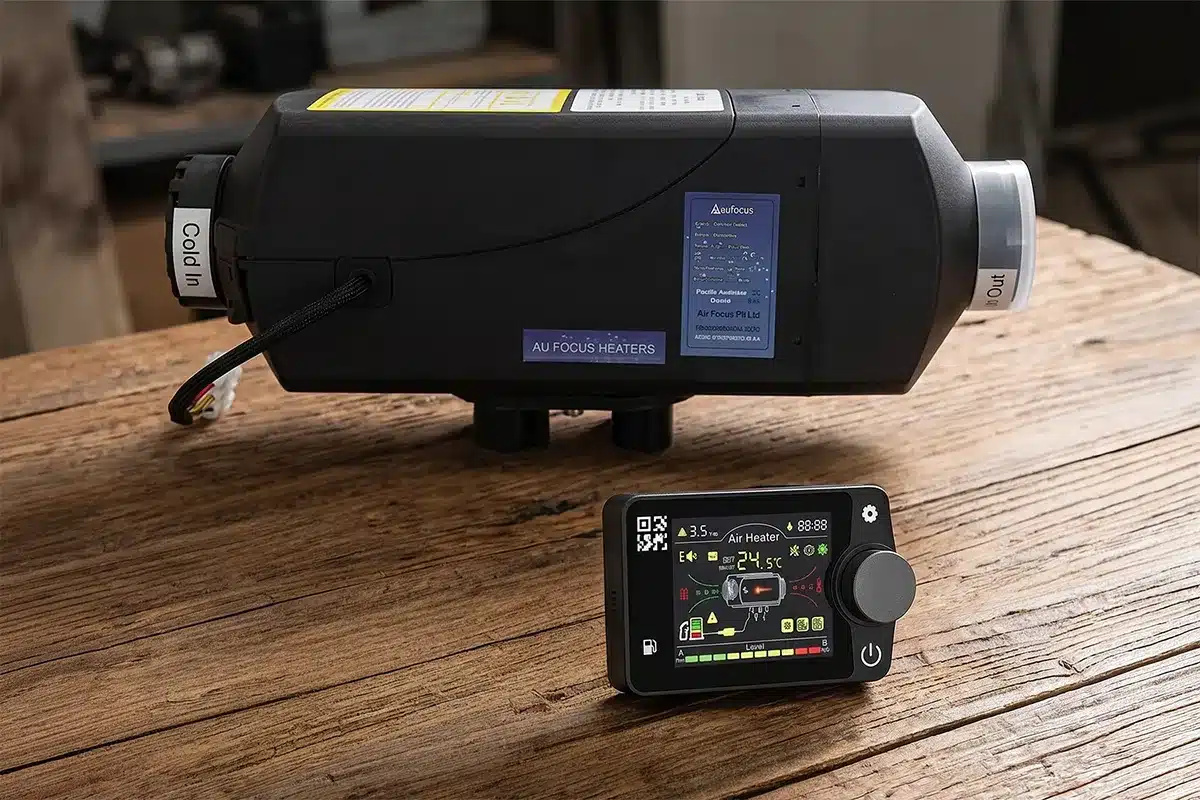
This is the heater we’d put in our own van. AU Focus is an Australian-owned and operated brand that’s now used by over 90 caravan manufacturers in Australia, including Millard, Lumberjack, Kokoda and Star Vision. That kind of OEM acceptance doesn’t happen by accident.
The 4th-generation 2kW Bluetooth model is the sweet spot in their range. It runs from 1kW to 2kW adjustable, sips fuel at 0.1-0.3 litres per hour, and idles at just 5-35 watts once it’s combusting (with a peak of 90-150 watts during the glow-plug startup phase). That’s a draw most lithium house batteries won’t even notice.
What sets it apart from the cheap eBay units is the support package. Two-year warranty. Australian-based phone support. Easy DIY install manual with clear photos. And it’s RCM and EMC certified, which matters for compliance and insurance.
The kit includes a 5L stainless steel fuel tank with a lockable cap, a heavy-duty fuel pump (the quiet kind), an LCD panel, a remote, and the Bluetooth app for phone control. The wiring loom is conduit-wrapped with Anderson plugs, so the install is genuinely plug-and-play if you’re handy.
Real-world owner feedback consistently mentions two things: the install instructions are some of the clearest in the category, and the after-sales support is responsive when something goes wrong. That second point matters when you’re 1,500km from home and the heater won’t fire.
The verdict: For most Aussie camper trailer and van owners, the AU Focus 2kW is the heater to buy. Local support, fair price, proven reliability, and OEM-grade quality without the European brand premium.
Upgrading your off-grid 12V setup? Once your heating is sorted, make sure your food storage is just as efficient. Read our full Dometic CFX5 Portable Fridge/Freezer Range Review for 4WD Touring.
3. Best Premium Option: Webasto Air Top 2000 STC
Approximate price: $1,700-2,200 Best for: Full-timers, motorhomes, premium caravans, set-and-forget reliability
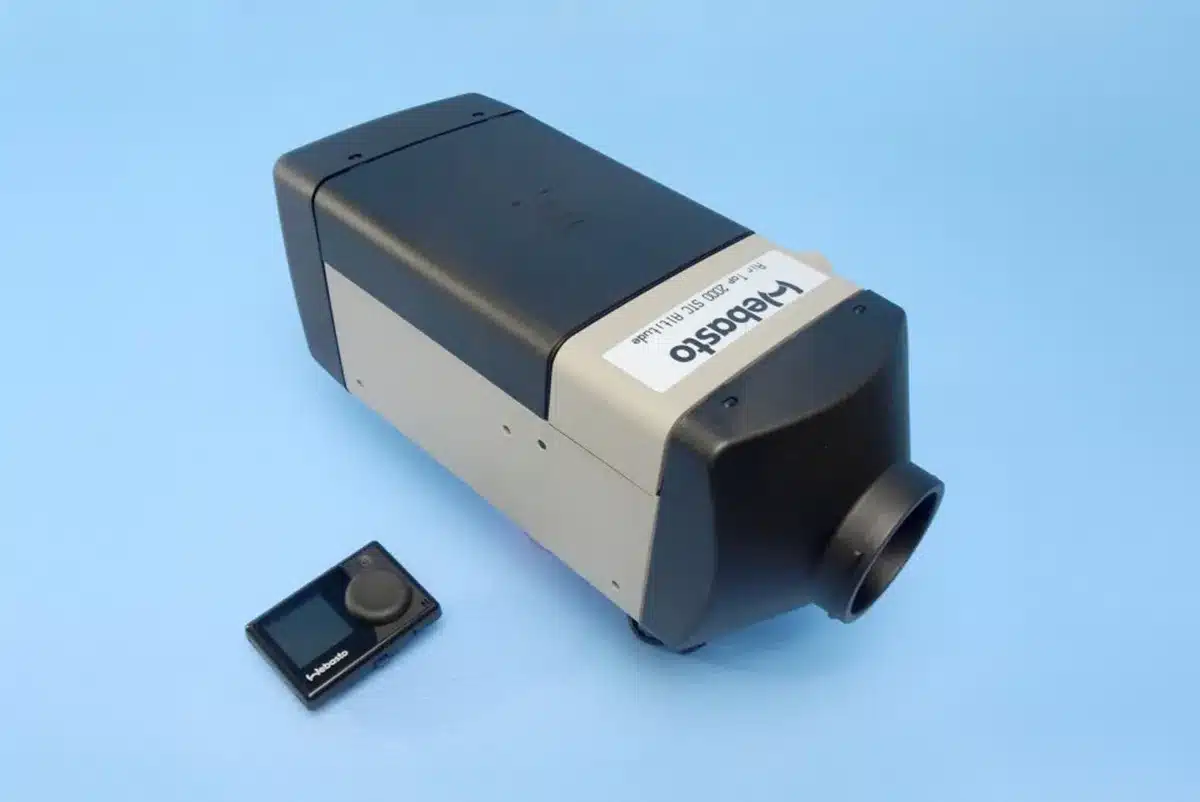
If your budget allows it, the Webasto Air Top 2000 STC is the gold standard. The German brand has been making these for decades, and it shows in every detail.
What you’re paying for is stepless modulation (the heater continuously adjusts output to match the cabin temperature rather than cycling on and off), genuinely whisper-quiet operation, and the kind of build quality that survives a decade of Big Lap punishment. Webasto units routinely log 10,000-plus hours of service life.
This isn’t a heater you buy for occasional weekend trips. It’s the heater you buy if you’re living in your rig, doing the Big Lap properly, or running a high-end caravan where the rest of the fitout is premium and you don’t want a budget heater letting the side down.
The downsides are price and install complexity. At nearly three times the cost of an AU Focus and four to five times the cost of a Vevor, it’s a serious investment. Professional installation is also strongly recommended, which adds another $500-800 to the total.
The verdict: Overkill for most users. Worth every dollar for full-timers and serious touring caravans where reliability is non-negotiable.
Installation: DIY or Pay a Pro?
This is the question every diesel heater buyer wrestles with. Here’s the honest answer.
If you’re confident with hand tools, comfortable cutting a hole in your floor, and prepared to read the manual properly, a 2kW heater install is well within DIY range. Plenty of caravanners do it in a weekend. The AU Focus and Vevor units are designed with DIY in mind.
If any of those sentences made you hesitate, pay a professional. A botched install can cause carbon monoxide leaks, fuel line failures, or fires. None of those are worth saving a few hundred dollars. Workshop installs typically run $400-800 depending on complexity and your location.
Either way, fit a CO alarm. Always. Even with a perfect install, it’s the cheapest insurance you’ll ever buy.
Safety reminder: Never run a portable diesel heater inside a sealed tent without proper ventilation and a working CO alarm. The exhaust must vent fully outside. This is non-negotiable.
Running Costs and Real-World Use
For most users, a 5L fuel tank will last 2-3 nights of overnight use plus morning warmups. At current Australian diesel prices, you’re looking at roughly $2-4 per night to keep your camper toasty. Compared to running a generator or burning through gas bottles, it’s significantly cheaper.
Power draw is the other big consideration. After the first few minutes of glow-plug startup, a typical 2kW unit settles into a steady 0.7-0.9 amp draw. A modest 100Ah lithium battery will run a heater all night without breaking a sweat, even on the coldest evenings.
Related Read: Wondering how far your battery capacity will actually go? Check out our guide: Is 1kWh Enough for Caravan Touring? What the Numbers Say
Final Thoughts
Diesel heaters have crossed the line from luxury upgrade to genuine essential for anyone serious about year-round Aussie camping. They’re cheap to run, simple to use once installed, and they fundamentally change what cold-weather travel feels like.
If you’re a tent camper or weekender, the Vevor-style portable will serve you well for the price. If you’re touring regularly in a van or camper trailer, the AU Focus 2kW Bluetooth is the smart middle-ground pick with proper Aussie support behind it. And if you’re doing the Big Lap or living full-time on the road, the Webasto is worth every dollar.
Whichever you choose, you’ll wonder how you ever camped without one.