
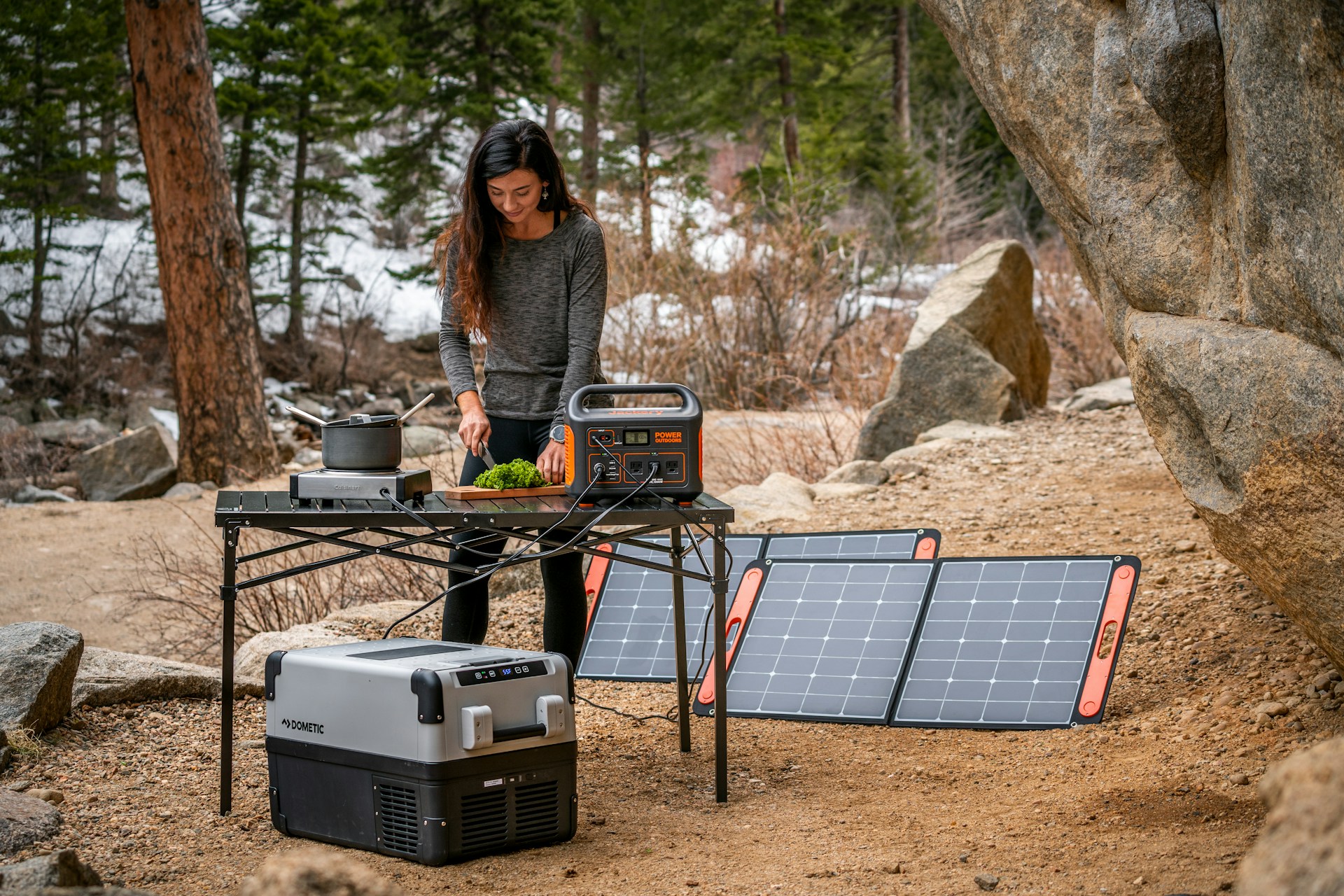

A balanced caravan power system is not about installing the biggest battery or covering the roof in solar panels. It is about matching storage, charging and consumption so your setup suits the way you actually travel.
Lithium batteries, solar panels, inverters, DC-DC chargers and 240V chargers all work together as one system. If one component is oversized or undersized, performance suffers. In some cases money is wasted. In others reliability becomes an issue when you need power most.
This guide explains how these components work together and what different traveller profiles should realistically consider.
Power Balancer
Calculate the ideal solar and charging setup for your battery bank.
The Golden Rule: A balanced system generates more than it consumes. If using an inverter for high-draw appliances, consider doubling solar to a 4:1 ratio.
The Three Core Parts of a Caravan Power System
Every balanced caravan power system performs three essential functions:
- Store energy through a battery
- Generate or receive energy from solar, vehicle alternator or 240V mains
- Use energy through 12V appliances or 240V appliances via an inverter
Everything else exists to manage or regulate those flows safely.
Battery: The Storage Component
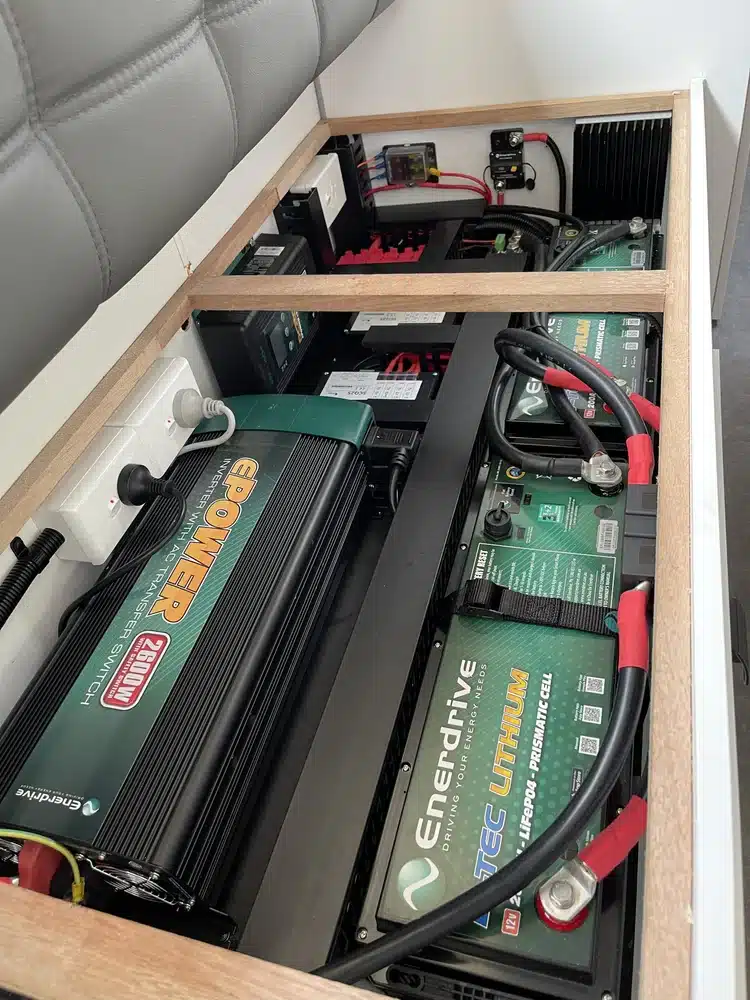
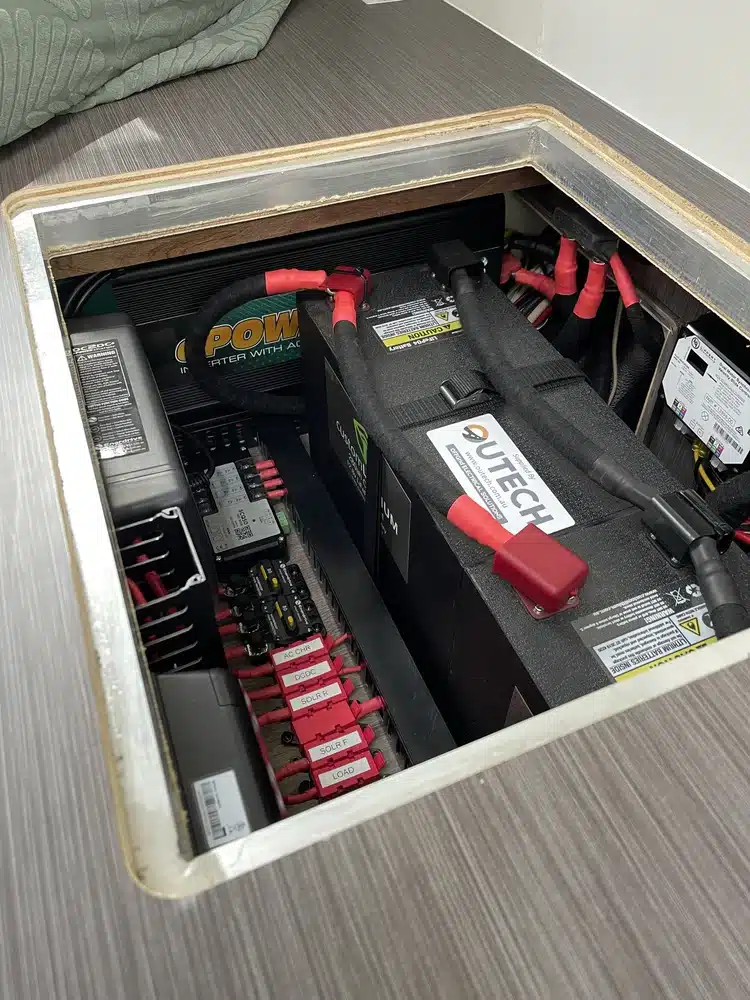
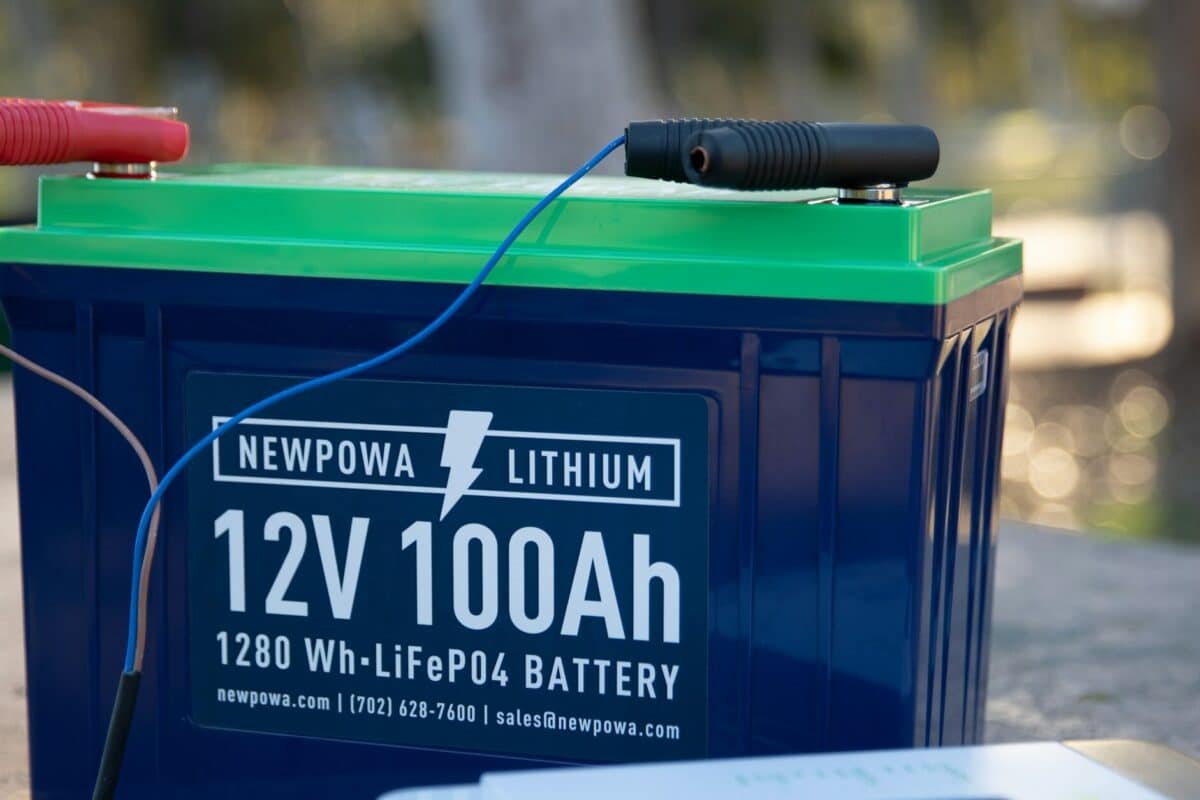
Most modern upgrades involve lithium batteries rather than AGM batteries. Lithium batteries provide higher usable capacity, faster charging and lower weight compared with traditional lead-acid options.
Capacity must be considered alongside daily energy use, charging input, discharge rates and seasonal conditions. A 200Ah battery does not mean 200 hours of power. It depends entirely on how much energy you draw each day.
Lithium batteries rely on an internal Battery Management System, known as a BMS. The BMS protects against overcharging, over-discharging and extreme temperatures. If the charging equipment is incompatible, the system may shut down.
Charging Sources: How Energy Gets In
Solar Panels
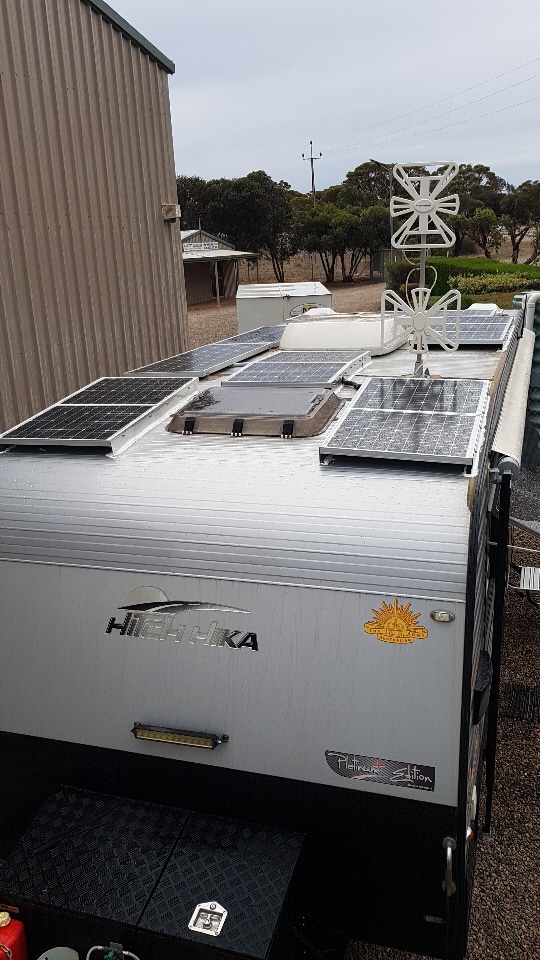
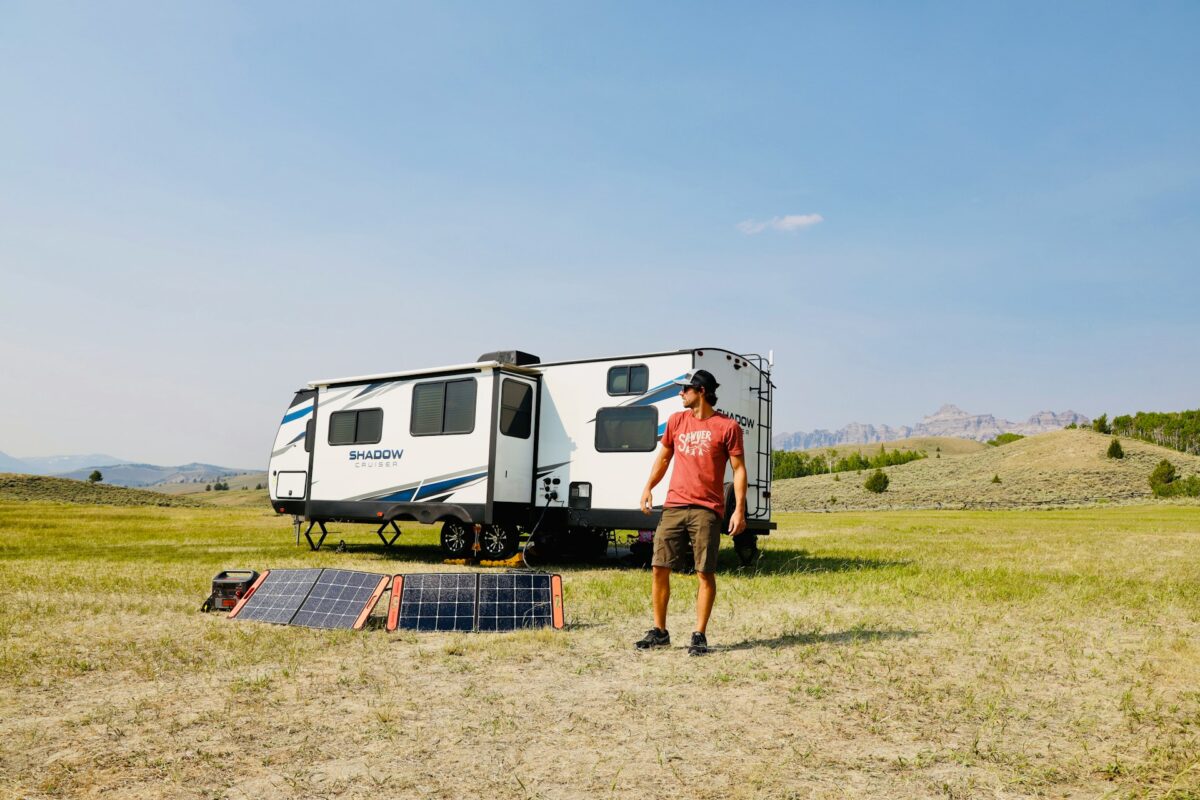
Roof-mounted solar panels provide passive charging during daylight hours. Output depends on panel wattage, sun angle, shading and regulator efficiency. Winter performance in southern states can be significantly lower than summer output.
DC-DC Charger
A DC-DC charger regulates power from the tow vehicle’s alternator to safely charge lithium batteries. Modern vehicles with smart alternators generally require this regulation to achieve proper charging.
240V Mains Charger
When connected to a powered site or home supply, a 240V charger replenishes the battery. For travellers who regularly use caravan parks, this is often the primary charging source.
Inverter: Converting 12V to 240V
An inverter converts 12V battery power into 240V AC to run appliances such as coffee machines, induction cooktops and laptops. Inverters draw high current. A 2000W inverter at full load can draw more than 160 amps from a battery.
Installing a large inverter without increasing battery capacity and cabling can result in voltage drop or system shutdown. Inverter sizing should reflect realistic appliance use rather than occasional peak loads.
Traveller Profiles: What a Balanced System Looks Like
Holiday Park User
Travellers who stay primarily on powered sites may only require modest battery capacity. A 100 to 150Ah lithium battery and moderate solar is often sufficient. Large inverter systems may provide limited benefit.
Weekend Free Camper
Short off-grid stays require enough storage to run a fridge, lighting and small appliances for two to three nights. Around 150 to 200Ah lithium paired with 300 to 400W of solar is common in this profile.
Extended Off-Grid Tourer
Longer remote stays demand higher storage and stronger solar input. Systems commonly include 200 to 300Ah lithium, 400 to 600W solar and a robust DC-DC charger to support recovery while driving.
Grey Nomad Northbound Traveller
Travellers who move frequently often rely on alternator charging combined with solar support. Battery capacity of 200Ah or more paired with effective DC-DC charging provides flexibility between destinations.
Common Power System Imbalances
- Large inverter paired with small battery capacity
- High battery capacity without adequate solar input
- Incompatible lithium charging equipment
- Undersized cabling creating voltage drop
- Oversizing for appliances rarely used
Balancing Your Caravan Power
1. Generation (Solar)
Aim for a 2:1 ratio of solar watts to battery amp-hours to ensure a recharge even on overcast days.
2. Storage (Batteries)
Lithium (LiFePO4) is the standard, offering 90% usable capacity vs only 50% for traditional AGM.
3. Management (BMS)
The “brain” of your system. A smart BMS protects cells and provides real-time data via smartphone apps.
4. Conversion (Inverters)
Use a 2000W–3000W Pure Sine Wave unit if you plan to run coffee machines or air conditioning.
Always conduct a “Power Audit” by listing your daily appliance wattage to ensure your system isn’t under-sized for your travel style.
Final Thoughts
A balanced caravan power system is defined by suitability rather than size. Matching storage, charging and consumption to your touring style provides predictable and sustainable power.
For most travellers, the goal is not maximum output. It is reliable power that supports the way they travel without unnecessary complexity or cost.