
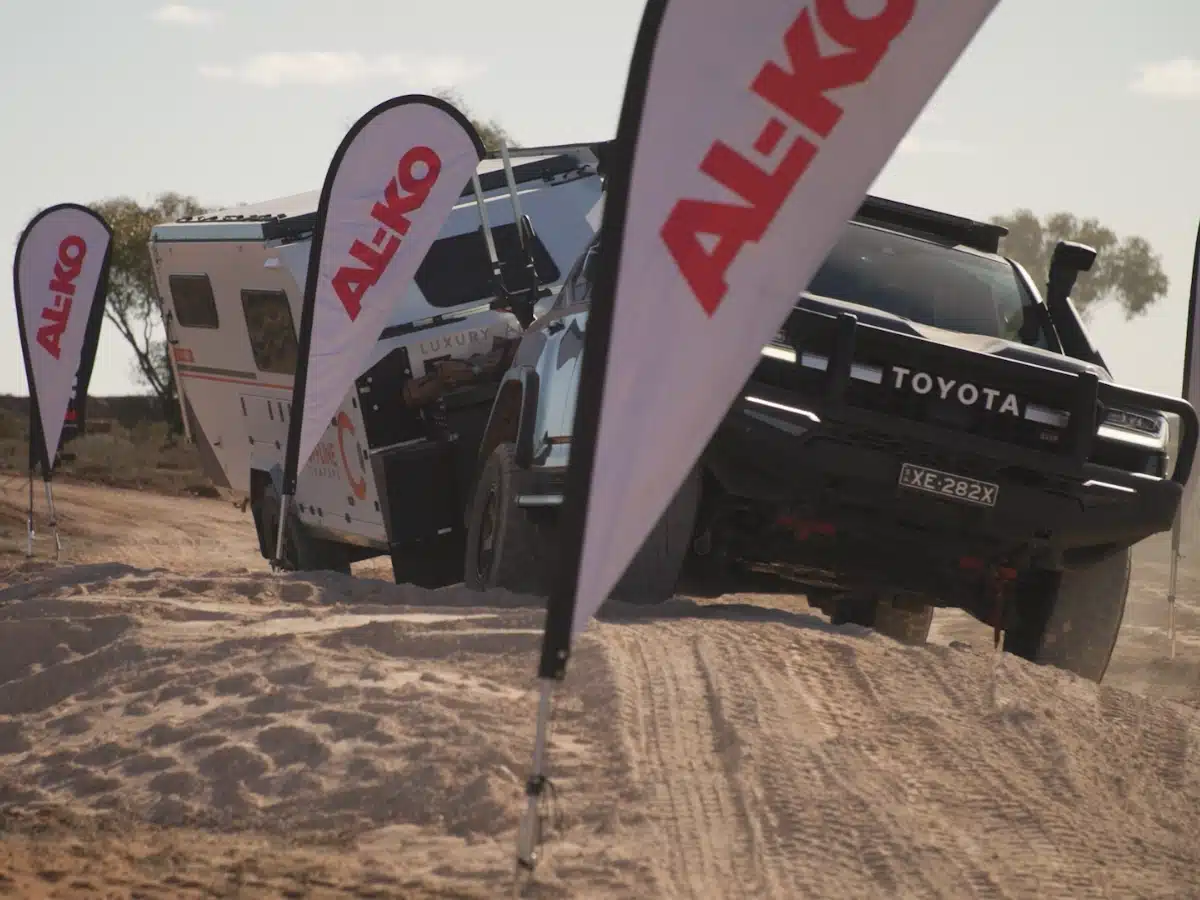

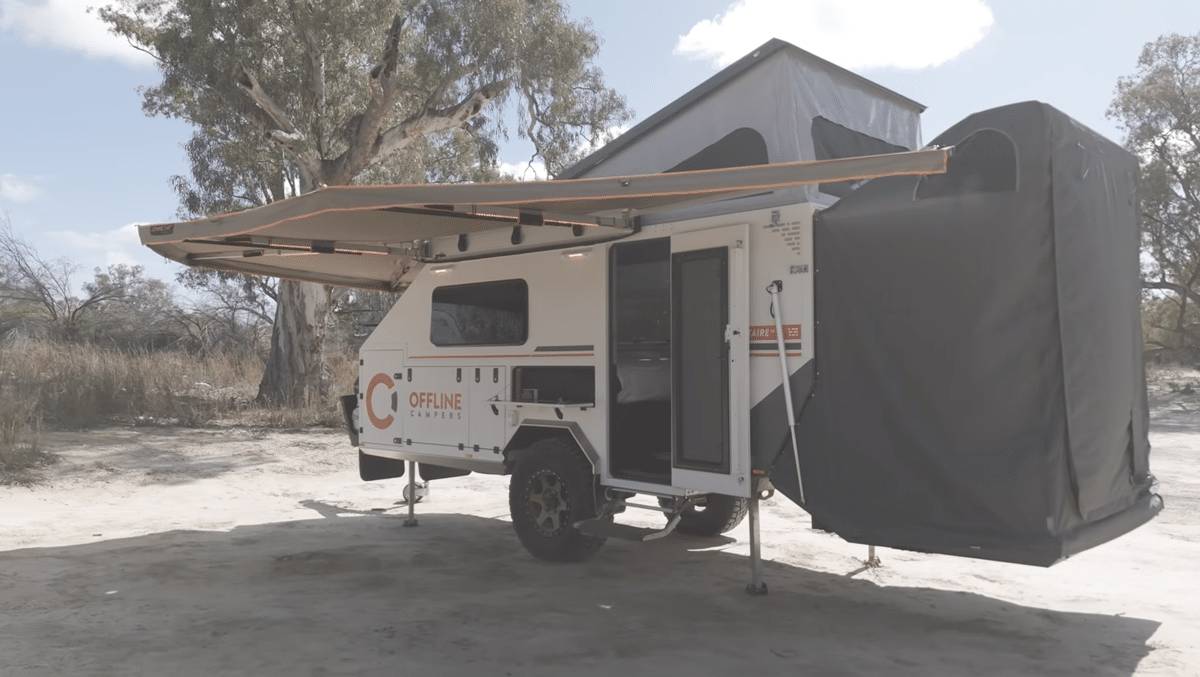
More space isn’t always the answer when travelling off-road. Sometimes, a narrower body and less weight make the journey easier, as shown by the Offline Campers Solitaire 14, which is designed for tough conditions.
That is the appeal of the Offline Campers Solitaire 14. At Loveday 4WD Park, its compact proportions quickly become a talking point as Charlie joins Sam at the wheel and Peter aboard for a course of tight turns, deep holes, water, side slopes and soft sand.
The test also delivers a reminder that even a nimble camper benefits from measured driving—and that the smallest trailer can still spill the challenge cup.
Overview
The Solitaire 14 is a South Australian-built hybrid camper. During the introduction, the team says production takes place in the former Holden factory.
Its narrow towing profile and adjustable air suspension feature throughout the drive. Sam explains that ride height can be adjusted for travelling and the camper levelled at camp.
He also reports a previous camping-trip weight of approximately 2200kg with water and equipment for a family of five. This is his account of an earlier loaded configuration, rather than a measurement taken during Tough Tested.
Challenges: Initial uneven track | Tight-turn section | Caravan Graveyard | Water crossing | The Abyss | Lean | Sand dunes
Test location: Loveday 4WD Park, South Australia
Driver: Sam, Offline Campers
Driving-test presenter: Charlie
Also aboard: Peter
Is the Offline Campers Solitaire 14 right for me?
The Solitaire 14 will appeal to travellers who prioritise manageable towing dimensions and access along narrower tracks.
Throughout the test, its width and relatively modest weight are repeatedly linked to its manoeuvrability. Sam describes it as easy to tow through tight corners, while Charlie contrasts its behaviour with the larger caravans tested on the course.
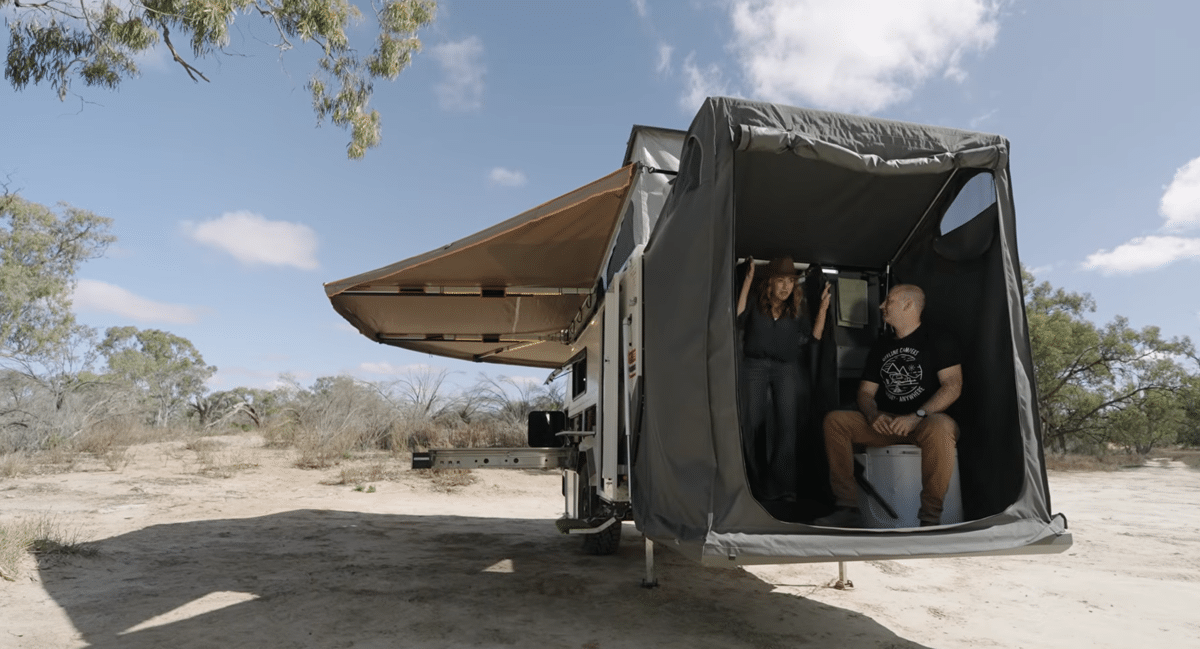
The hybrid format also suits travellers who enjoy spending time outside. Those wanting a full-height caravan with every facility permanently accessible should compare the setup routine and selected interior configuration before choosing.
Layout, Comfort & Liveability – Will it fit my lifestyle?
Interior layout
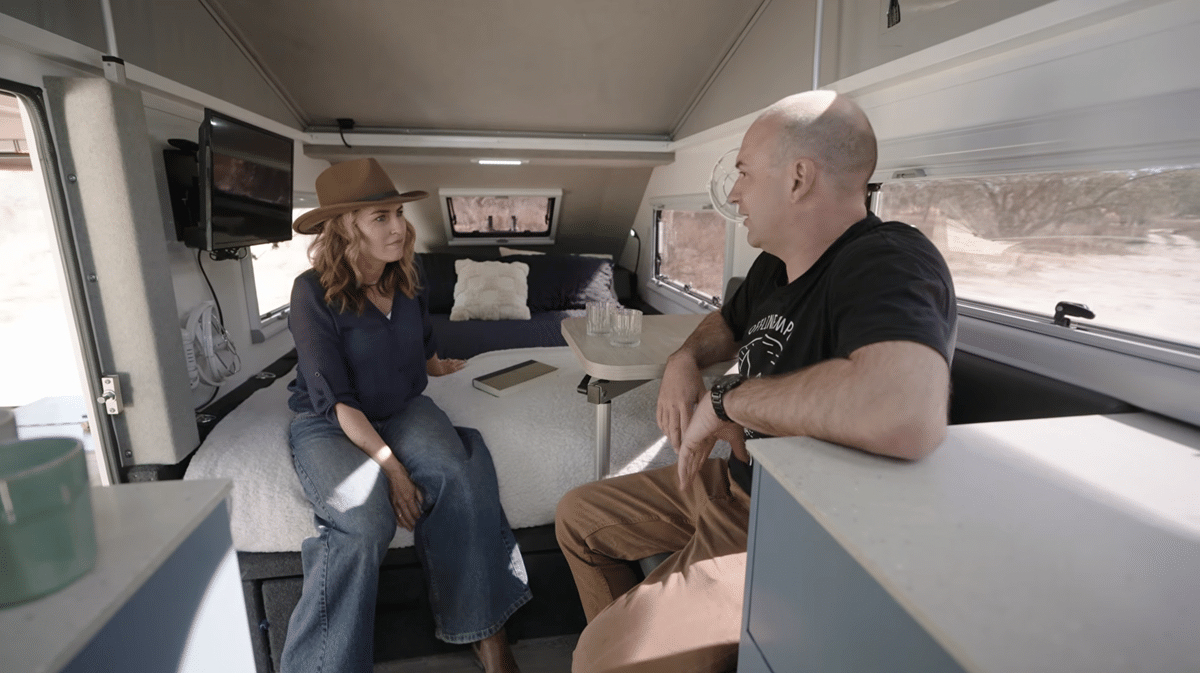
Offline’s published design includes a queen bed with access around it, while lounge and ensuite arrangements depend on configuration. The supplied footage covers the driving assessment, so the exact interior fitted to this test camper remains to be established.
The key buying consideration is how the compact travelling footprint converts into usable space at camp. A walkthrough should include access with the camper closed, the opening sequence and the sleeping arrangements required for your travelling party.
Comfort & practicality
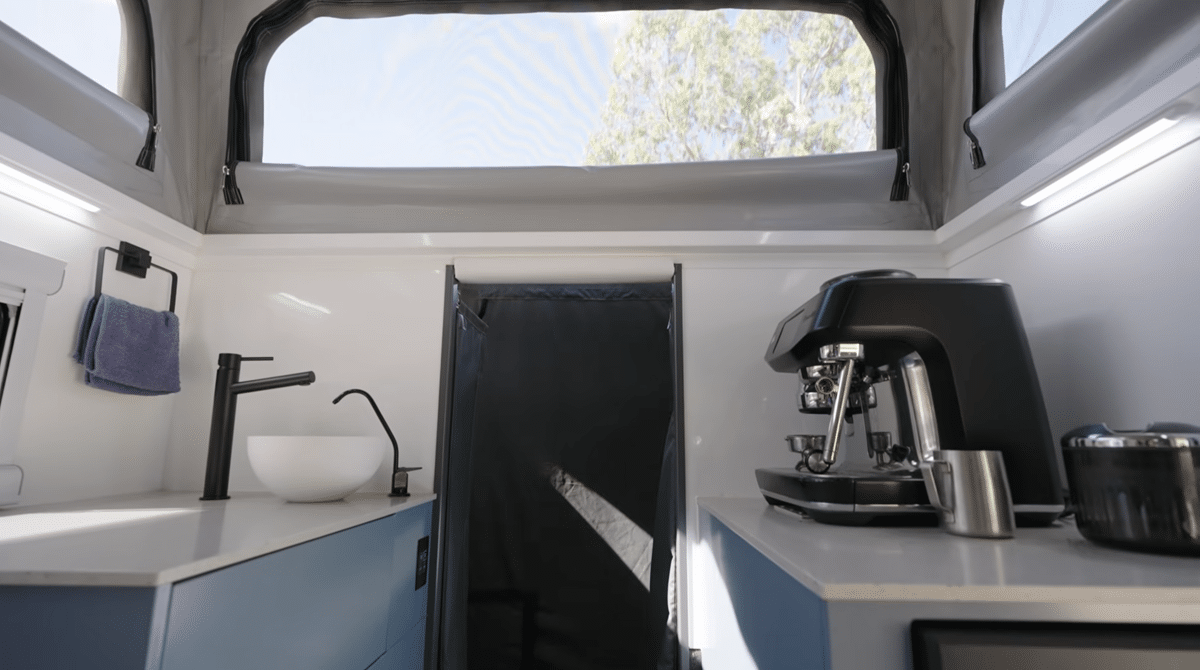
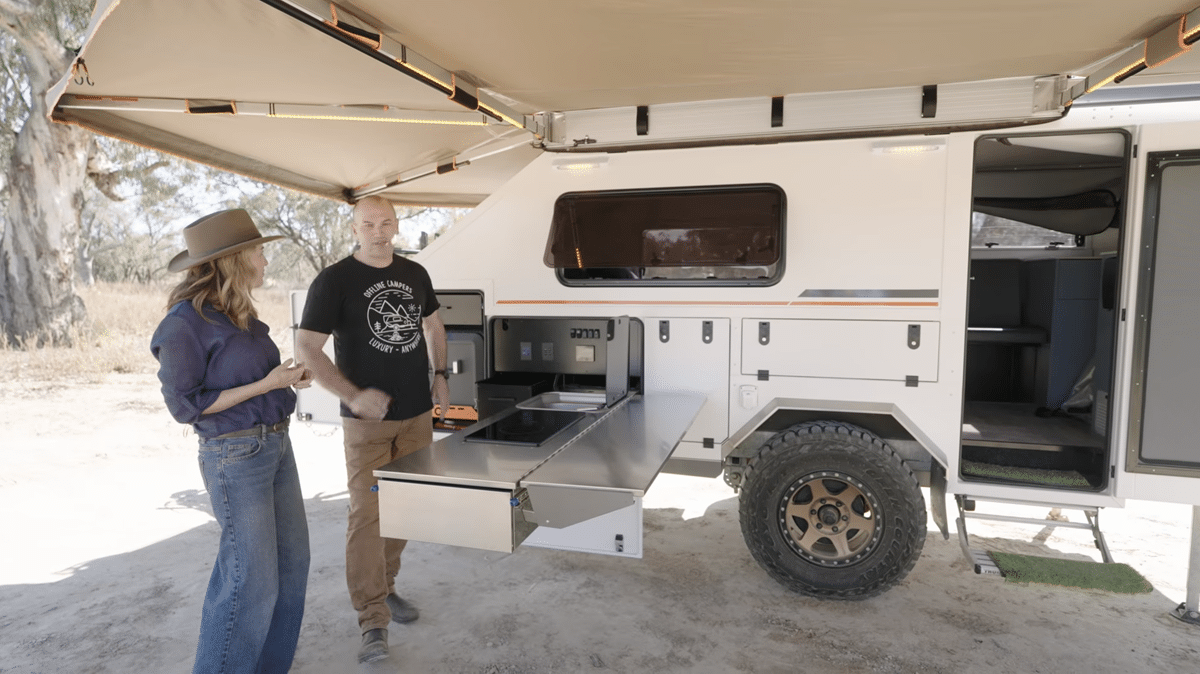
Offline lists an external stainless-steel kitchen with a 95L fridge/freezer, three-burner stove, sink and plumbed hot water. Electric opening systems and an onboard compressor support setup.
During the driving test, the team specifically notes that this camper has no roof-mounted air conditioner. Sam links the lack of heavy equipment high on the trailer to its low centre of gravity.
That becomes particularly relevant when the course reaches the Lean obstacle.
Build, Features & Self-Sufficiency – Can it handle my adventures?
The Solitaire’s compact size makes an immediate impression, but the course still exposes it to sharp transitions, significant angles and soft sand.
The following assessments follow the driving sequence.
Initial Humps & Uneven Track
Objective
Assess suspension response and the combination’s behaviour over repeated humps and sharp changes in track height.
Observations
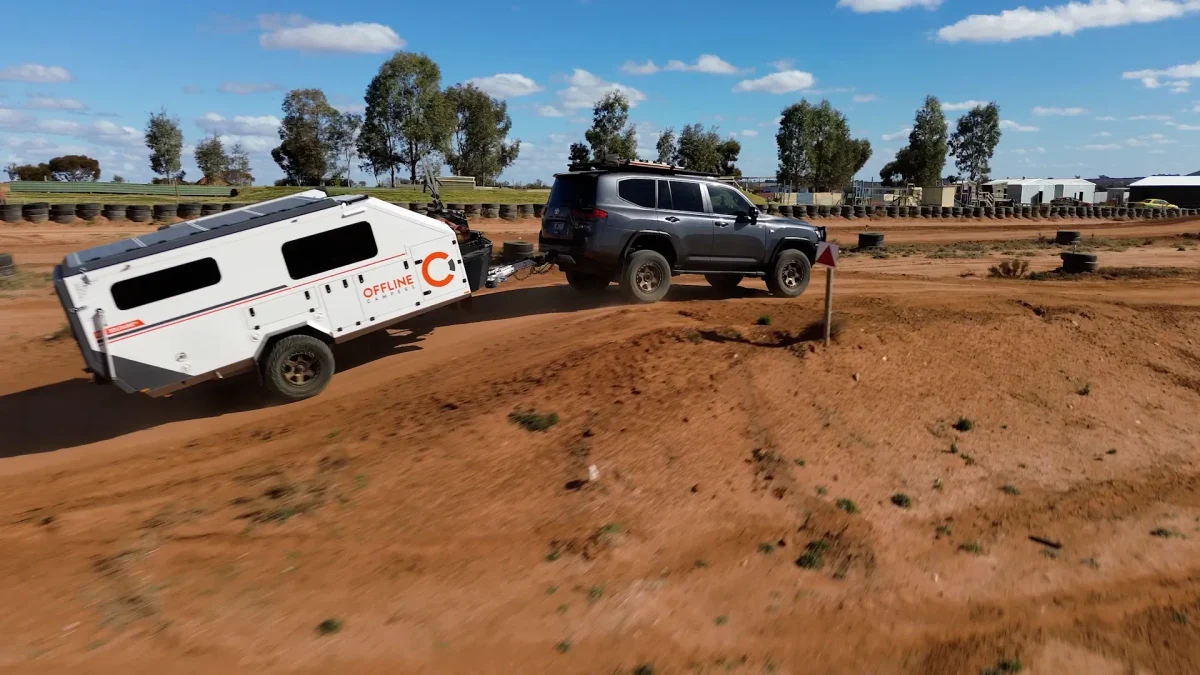
The Solitaire handles the opening section with little difficulty reported from inside the vehicle.
Sam discusses the air suspension’s adjustable height as the combination follows the track. A sharper transition prompts a reminder that excessive speed would change the experience substantially.
The section is completed with positive comments about how readily the camper negotiates the terrain.
Initial Humps – What We Found
- Component damage: No damage was reported.
- Caravan reaction: The camper completed the opening uneven section without a reported interruption.
- Component response: Adjustable air suspension was discussed, but travel and clearance were not measured.
Tight-Turn & Slalom Section
Objective
Assess manoeuvrability and tracking through successive corners.
Observations
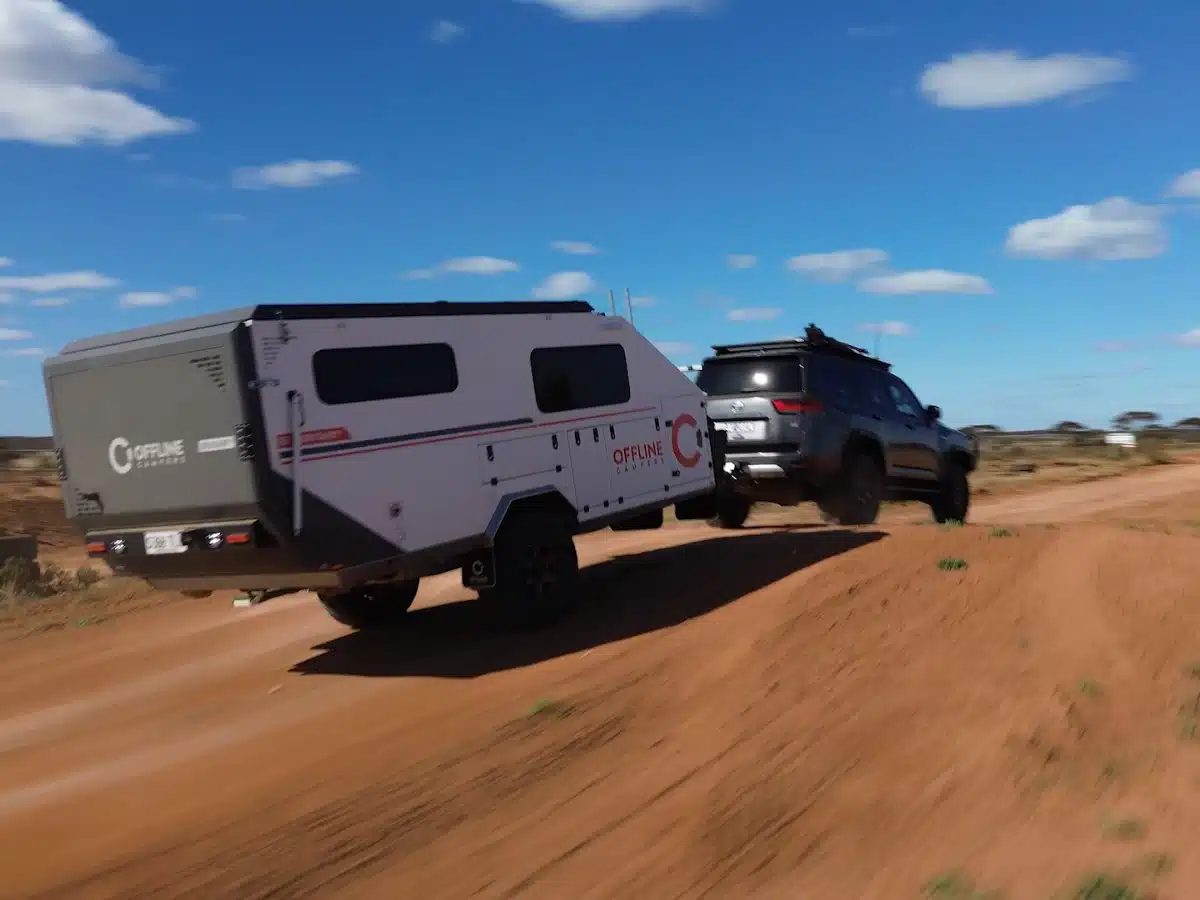
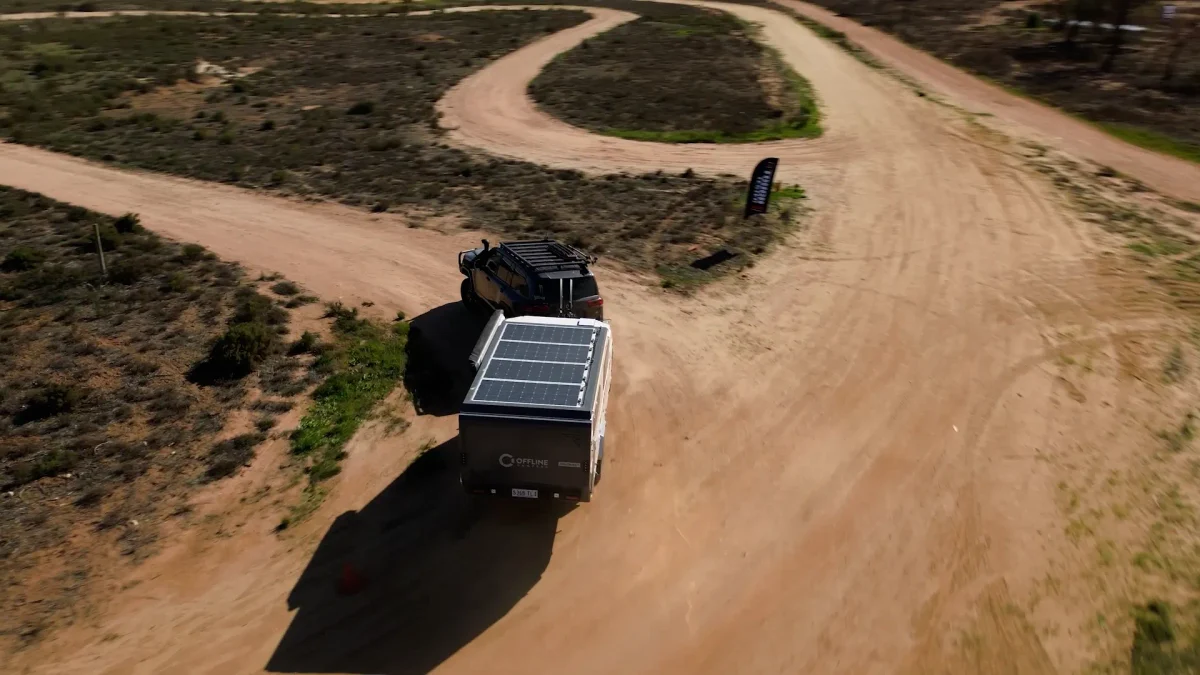
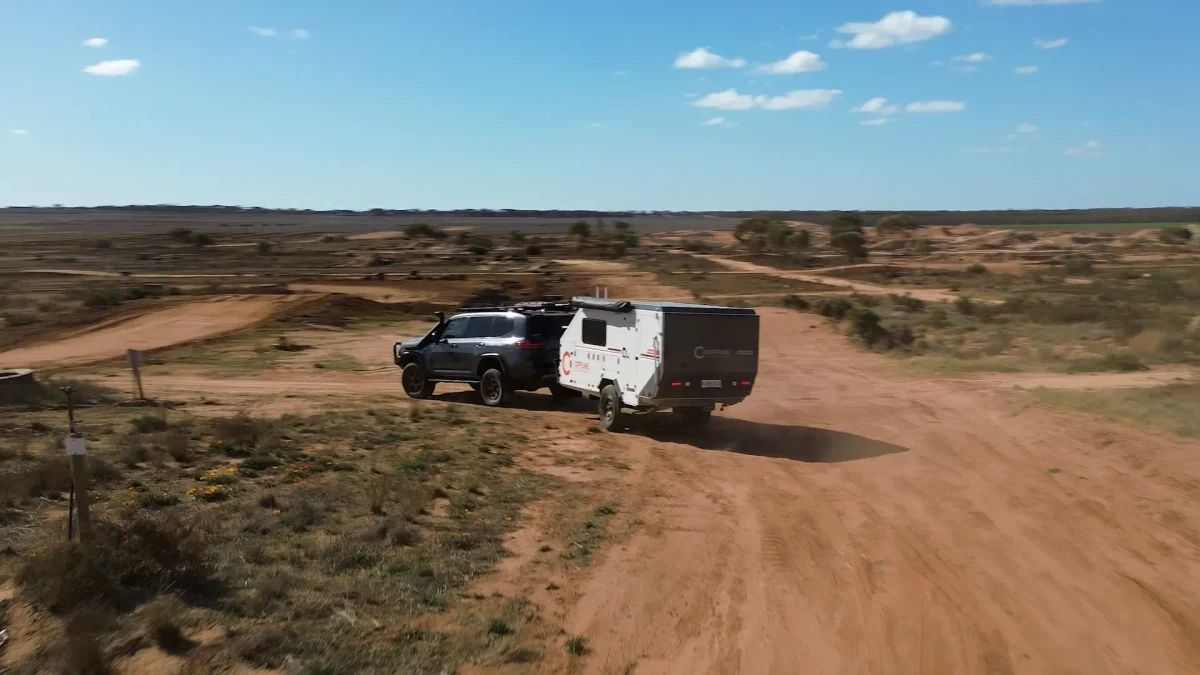
The camper’s narrow body becomes a clear advantage through the tighter turns.
Sam describes the Offline Camper Solitaire 14 as easy to tow around corners, while Charlie comments on its nimble feel compared with the larger vans.
One tighter corner produces a sideways movement and an immediate acknowledgement that the approach was too fast. The exchange reinforces the need to moderate speed even when the trailer feels easy to tow.
Tight Turns – What We Found
- Component damage: No damage was reported.
- Caravan reaction: The camper followed the combination through tight corners; one turn prompted comments about sideways movement.
- Component response: Compact dimensions supported manoeuvrability. The sequence did not establish measured stability limits.
Caravan Graveyard Test
Objective
Assess clearance and articulation through a steep entry and deep hole.
Observations
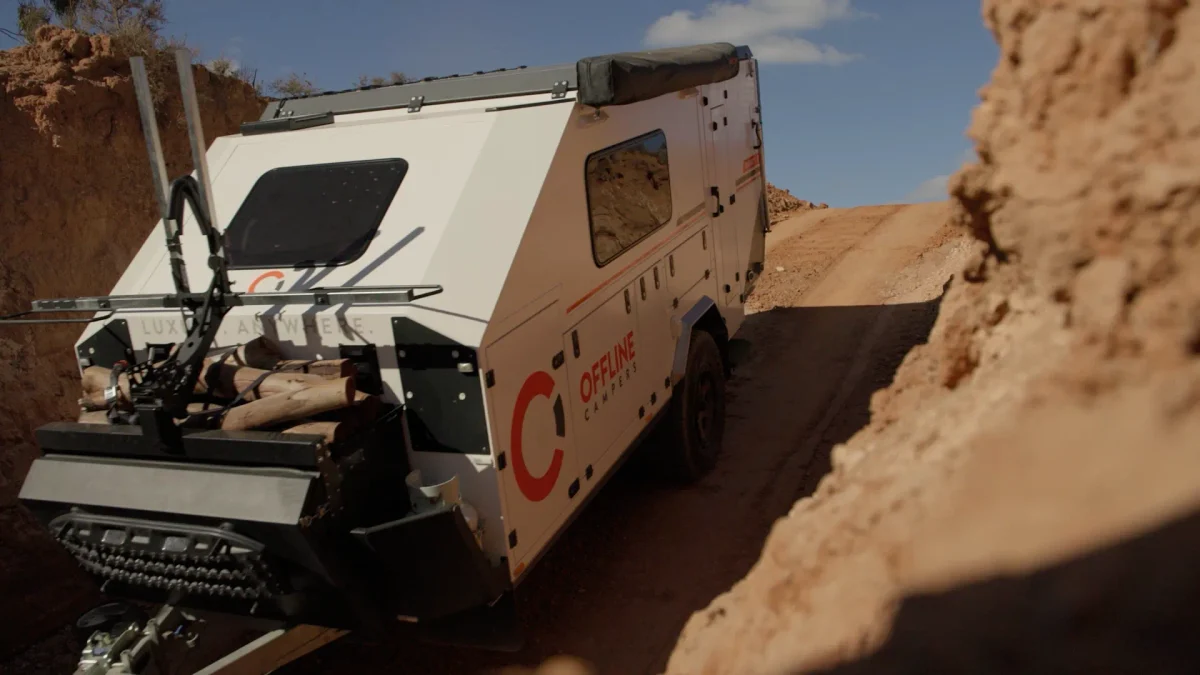
The Caravan Graveyard introduces a steep approach that temporarily limits the driver’s view of the track.
The depth of the hole draws a strong reaction from those aboard, but Sam guides the combination through at a controlled pace.
After clearing it, the team describes the obstacle as easy for the Solitaire and moves on to the water crossing.
Caravan Graveyard – What We Found
- Component damage: No contact or damage was reported.
- Caravan reaction: The combination completed the steep entry and deep-hole sequence without a reported recovery.
- Component response: The available clearance and articulation allowed passage; an underbody inspection was not recorded.
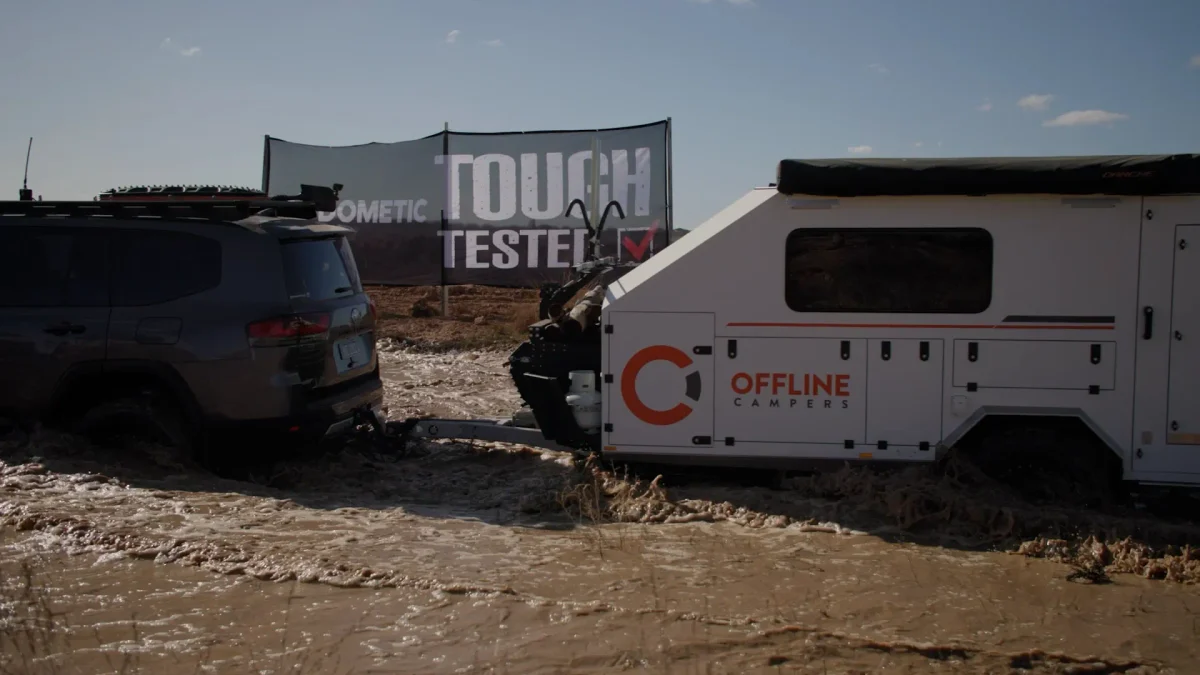
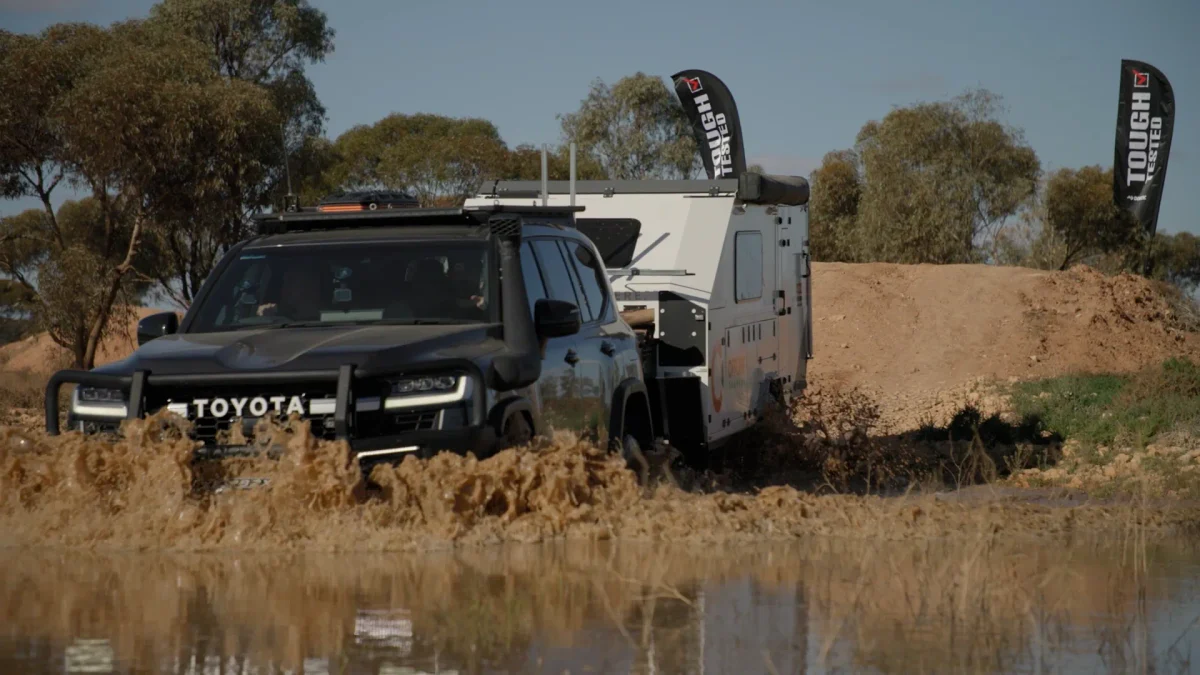
Offline Campers Water Crossing Test
Objective
Observe passage through water, with subsequent checks needed to assess ingress and component condition.
Observations
The team approaches the crossing discussing its depth. The sequence then progresses to The Abyss without a reported crossing-related problem.
Water depth, seal performance and post-crossing braking checks are not documented in the supplied commentary.
Water Crossing – What We Found
- Component damage: No damage was reported; inspection findings were not supplied.
- Caravan reaction: No crossing-related difficulty was reported.
- Component response: Water sealing and post-crossing component operation were not established.
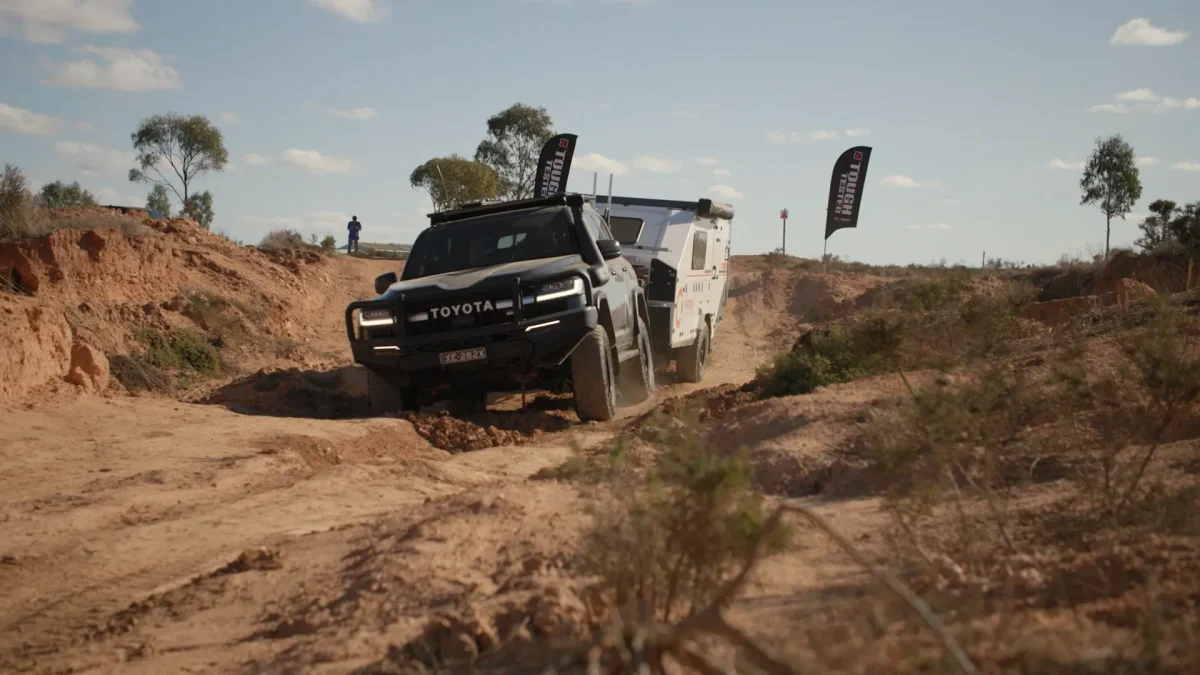
The Abyss – Articulation Test
Objective
Assess behaviour through alternating undulations, sharp transitions and changes in angle.
Observations
The Abyss brings more demanding terrain and introduces the water-filled cup as an informal smoothness challenge.
The Solitaire continues through the undulations, with those aboard commenting on how readily it negotiates the course. One transition produces a noticeable flick and discussion about whether the pace was too high.
Although the dialogue initially suggests the water remained contained, later commentary confirms that some water was spilled during the challenges. Its exact point of loss is unclear.
The Abyss – What We Found
- Component damage: No damage was reported.
- Caravan reaction: The camper completed the section, with a noticeable flick discussed at one transition.
- Component response: The combination negotiated the articulation obstacles. The cup result cannot be assigned confidently to this section alone.
Lean Test
Objective
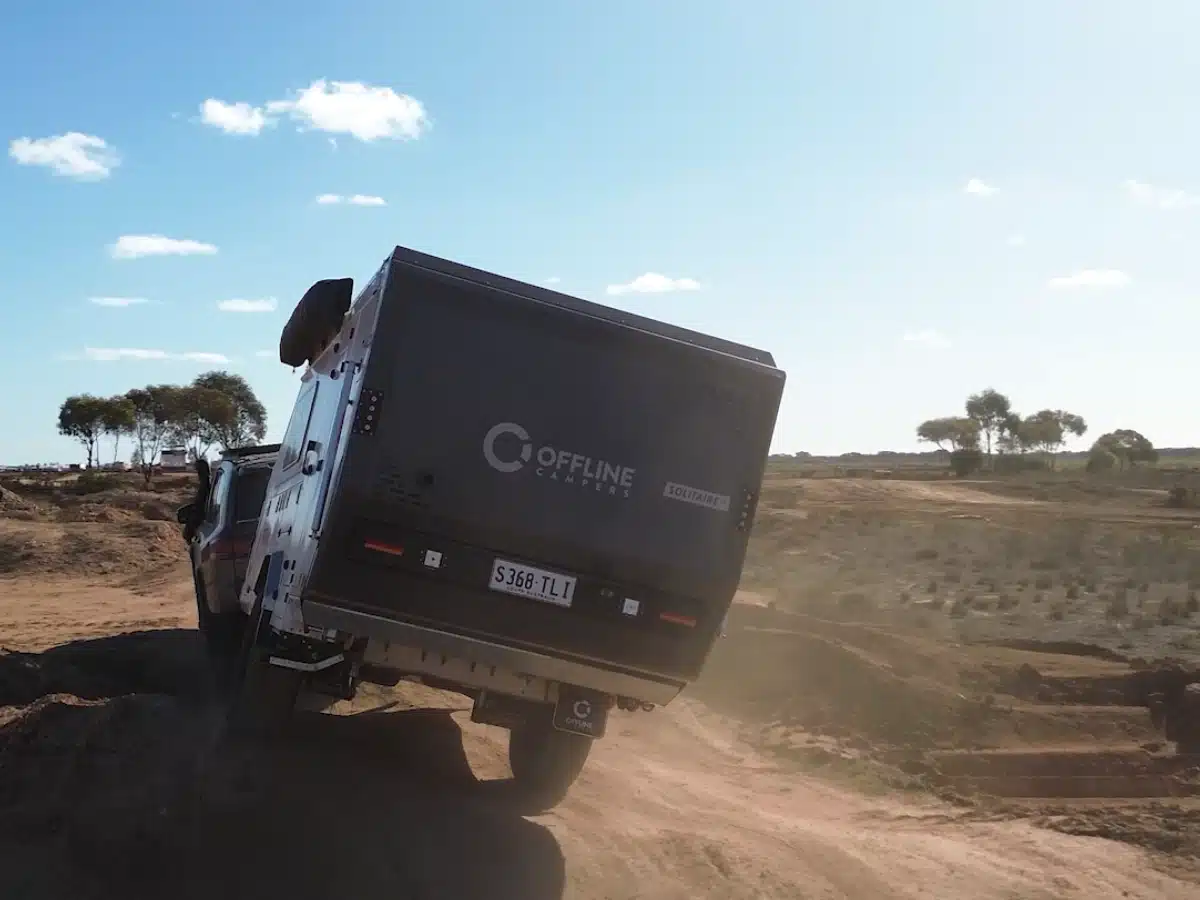
Observe the combination’s response to pronounced side angles.
Observations
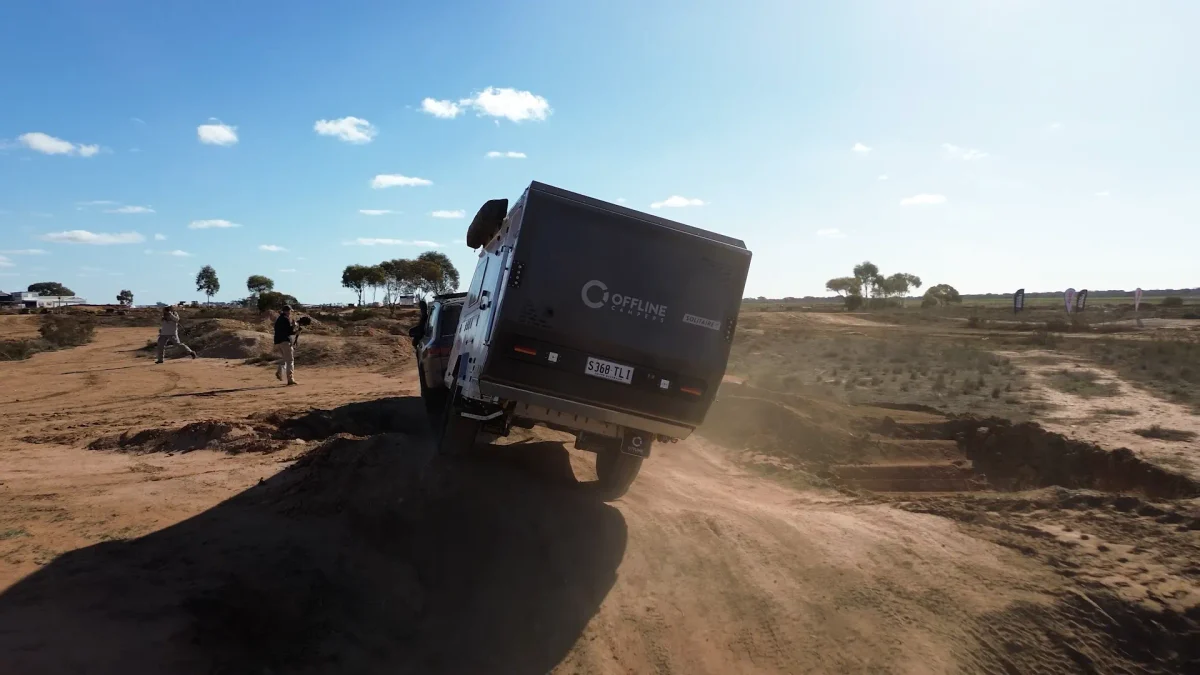
Before entering Lean, the team discusses choosing a line and avoiding sudden movements.
The angles draw increasingly strong reactions. Sam remains confident in the trailer’s low centre of gravity, specifically noting the absence of roof-mounted air conditioning or other heavy equipment high on the camper.
The combination completes the obstacle. Later conversation identifies Lean as a possible point where water escaped from the challenge cup.
Lean – What We Found
- Component damage: No damage was reported.
- Caravan reaction: Pronounced lean was observed and discussed; the combination completed the obstacle.
- Component response: Low-mounted weight was cited as a favourable design characteristic. No lean angle or stability threshold was measured.
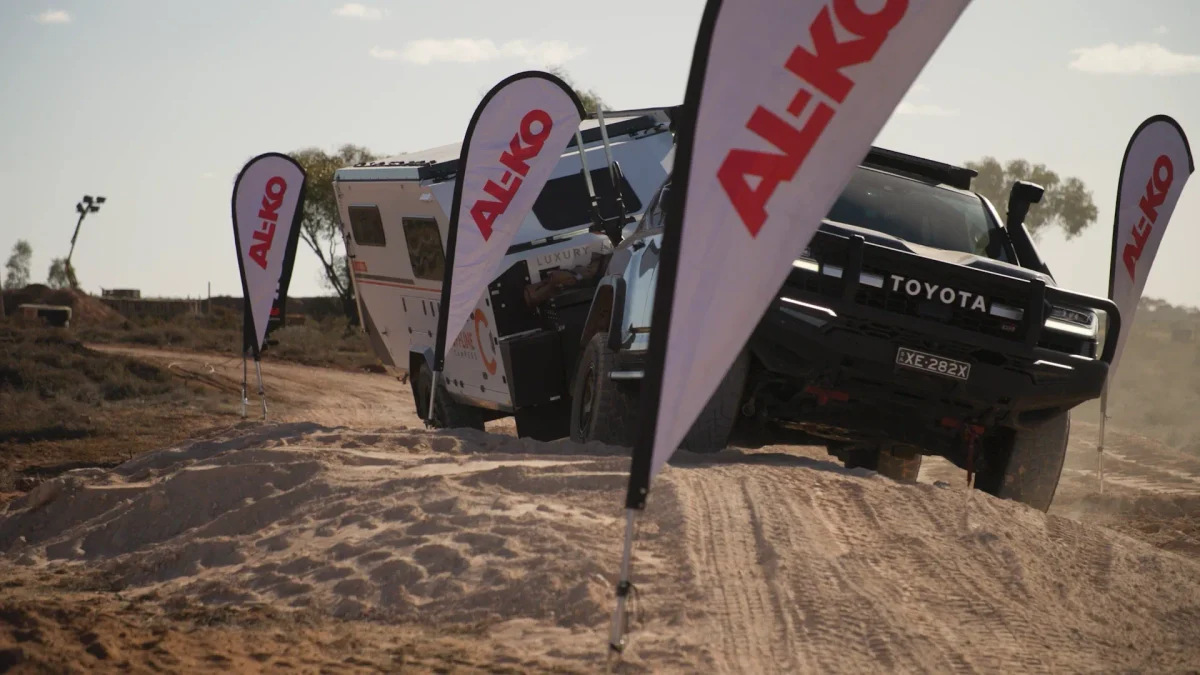
Sand Dunes Test
Objective
Assess progress through soft sand and the influence of tyre preparation, momentum and track conditions.
Observations
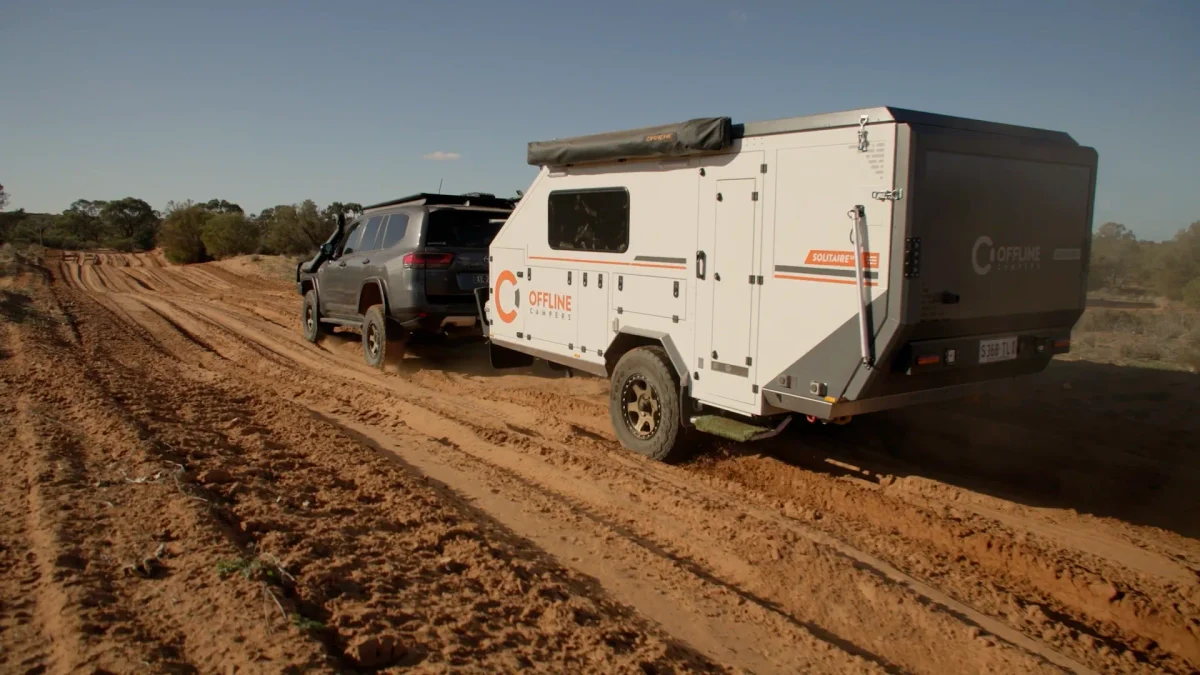
Before entering the dunes, Sam acknowledges that tyre pressures have not been reduced, although he would normally prefer to lower them for sand.
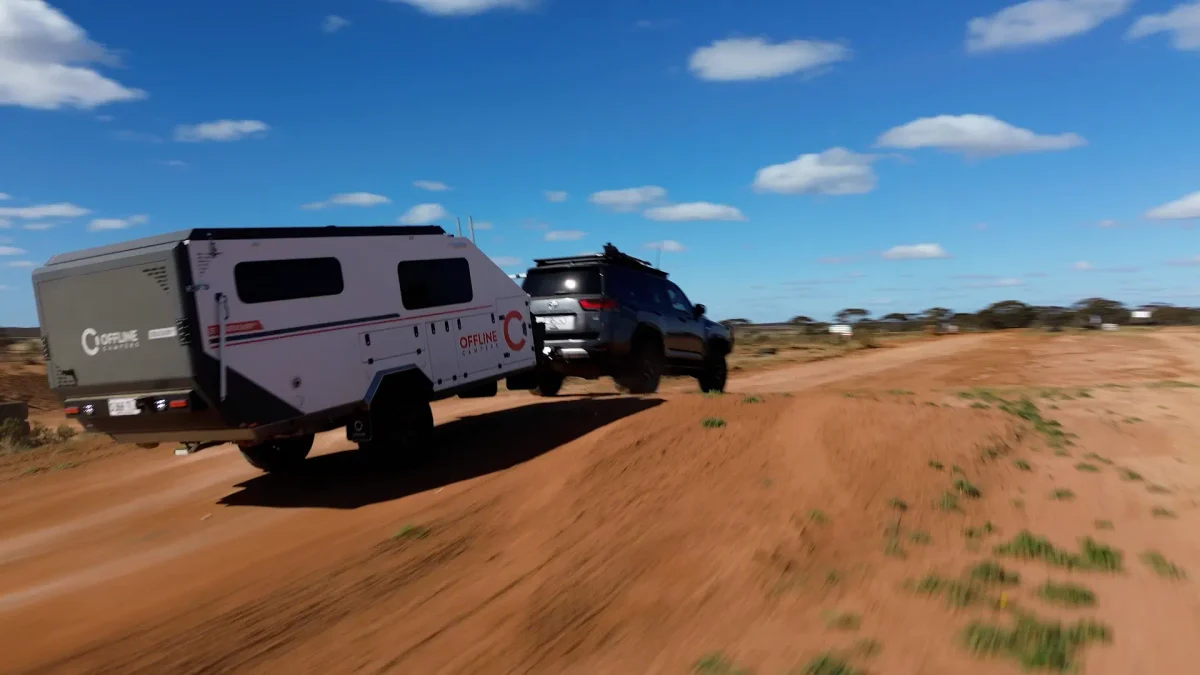
He explains that the camper’s track is intended to follow a 200 Series LandCruiser’s wheel tracks. Its compact size again becomes a talking point as the combination progresses.
Softer sections require more throttle and momentum. Sam comments that a little more speed would have made one section easier, while the team also discusses the benefit of reducing pressures and having a compressor for reinflation.
The sequence ends with the combination completing the course. No reversing recovery or second approach is reported.
Sand Dunes – What We Found
- Component damage: No damage was reported.
- Caravan reaction: The combination completed the sand section without a reported recovery.
- Component response: Progress continued through the softer areas. Tyre pressures were not reduced, and their actual values were not stated.
Chassis, suspension & build
Offline lists a hot-dip-galvanised Australian steel chassis, ATX airbag suspension, an onboard compressor, 12in electric brakes and recovery points. Published width is 1800mm, with a travelling height of 2350mm. Adelaide, AU
The test supports the practical appeal of that compact profile, particularly through corners. Suspension adjustment also provides flexibility between driving and campsite setup.
Power & water
| System | Published Solitaire 14 specification |
|---|---|
| Battery | 200Ah lithium |
| Solar | 350W |
| Inverter | 2600W |
| Water | 210L |
| Solar upgrade | Up to 800W listed |
These are manufacturer-listed specifications, rather than a confirmed inventory of the test camper.
Value, Warranty & Safety – Can I afford it with confidence?
Price & inclusions
The Solitaire range is advertised from $146,900. A quote identifying the model, layout and options is needed to establish the featured camper’s price as tested.
Its value rests on the combination of compact dimensions, adaptable accommodation and equipment for remote touring. Buyers should compare the complete configuration rather than the model name alone.
Warranty & ownership
Offline advertises five years of chassis and suspension warranty. The applicable terms and separate component cover should be checked for the individual build.
Safety & towing considerations
The driving sequence shows that a light, narrow camper still requires careful line selection and speed control.
The tight-corner correction, abrupt movement through The Abyss and tyre-pressure discussion in the dunes all provide useful context. Easy towing should encourage measured progress, with setup matched to the load and terrain.
Verdict – Which option is best for me?
The Offline Campers Solitaire 14 makes a convincing case for keeping an off-road camper compact.
Its narrow profile helps through tight corners, while the combination completes the deep-hole, articulation, side-slope and sand challenges without a reported recovery. The air suspension’s adjustable height adds practical flexibility.
The drive also includes a corner taken too quickly, noticeable movement over an abrupt transition and some spilled water. Those details reinforce that technique still matters, even with a nimble trailer.
For travellers who prioritise manageable towing dimensions and outdoor living, the Solitaire 14 deserves a closer look. The next step is choosing an interior and equipment package that fits the people—and the trips—it needs to accommodate.


