
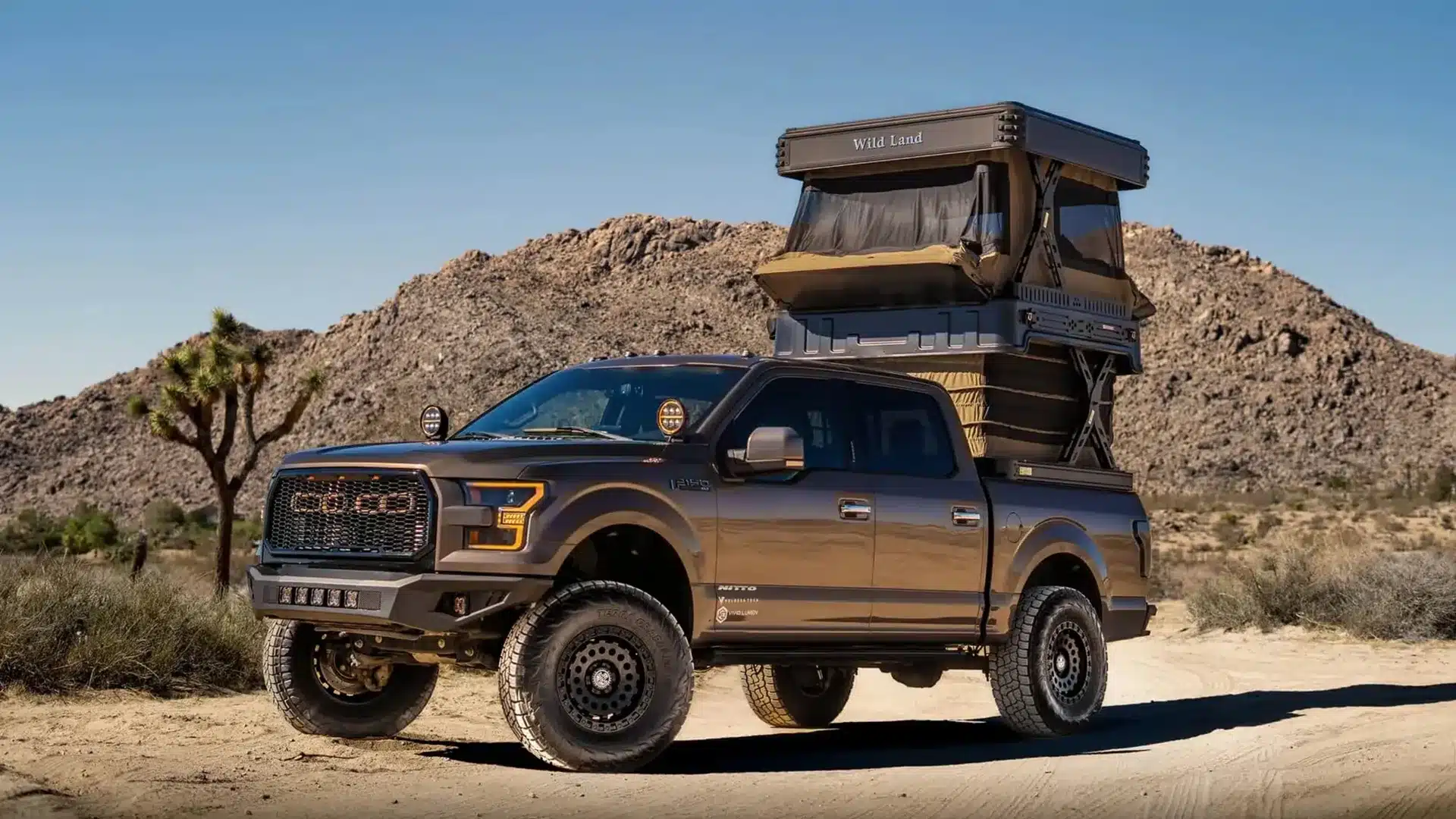

Every so often a piece of gear turns up that makes you stop scrolling and say the quiet part out loud: “Wait, is that a two-storey tent on the back of a ute?” The Cinch Outdoors Wingman is that piece of gear. It scissor-lifts a full two-level base camp onto a pickup tray at the push of a button, and it has just gone on sale in the United States for a price that undercuts plenty of far simpler campers. It is not sold in Australia yet, but the story behind it is worth a look, because the company that actually builds it already ships rooftop tents to our shores.
This is a spotlight, not a hands-on review. We have not slept in one. What we have done is dig through the launch details and the product’s history so you know exactly what it is, where it came from, and whether it is the clever bit of kit it looks like or just a very tall novelty.
What the Wingman Actually Is
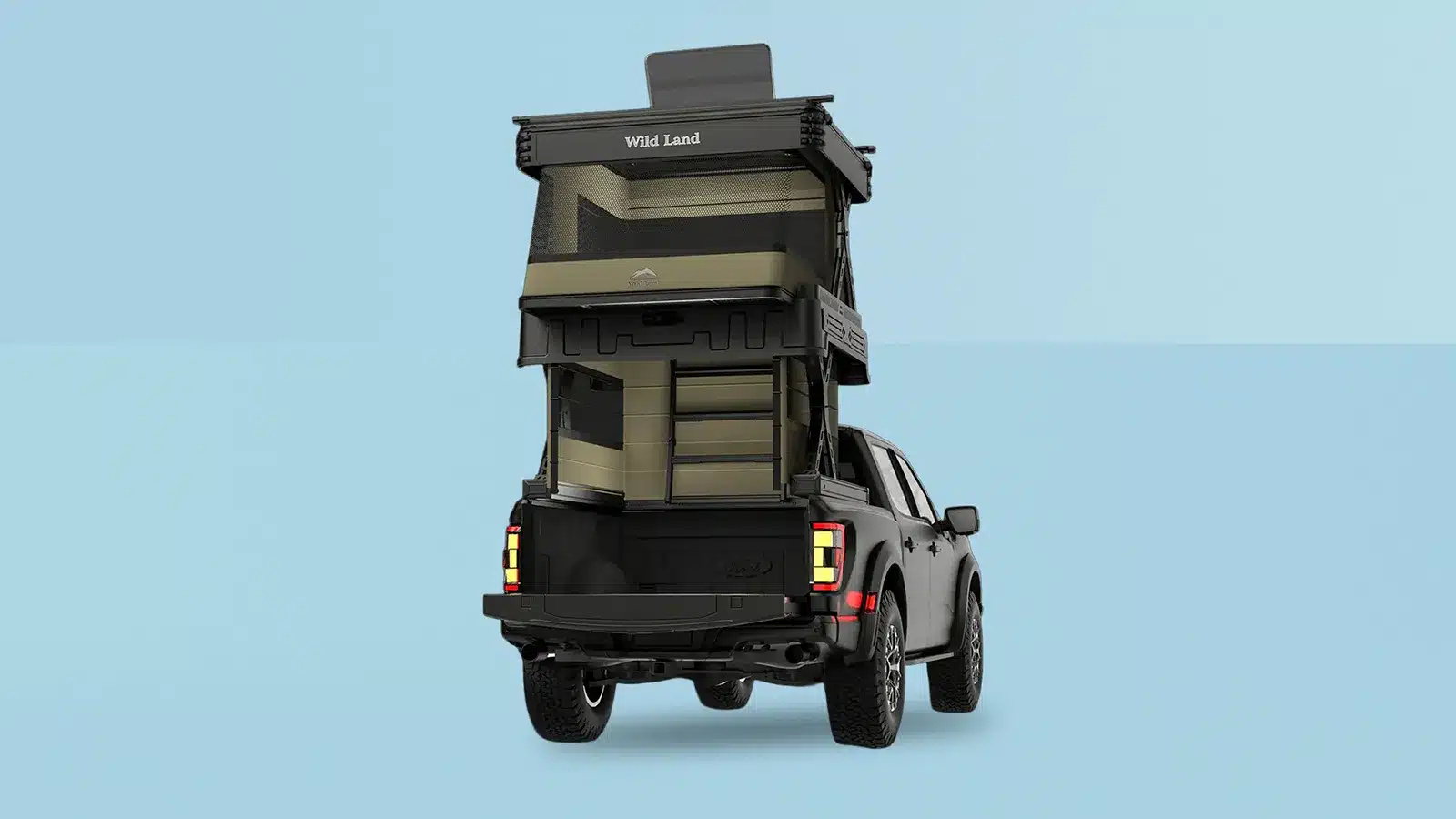
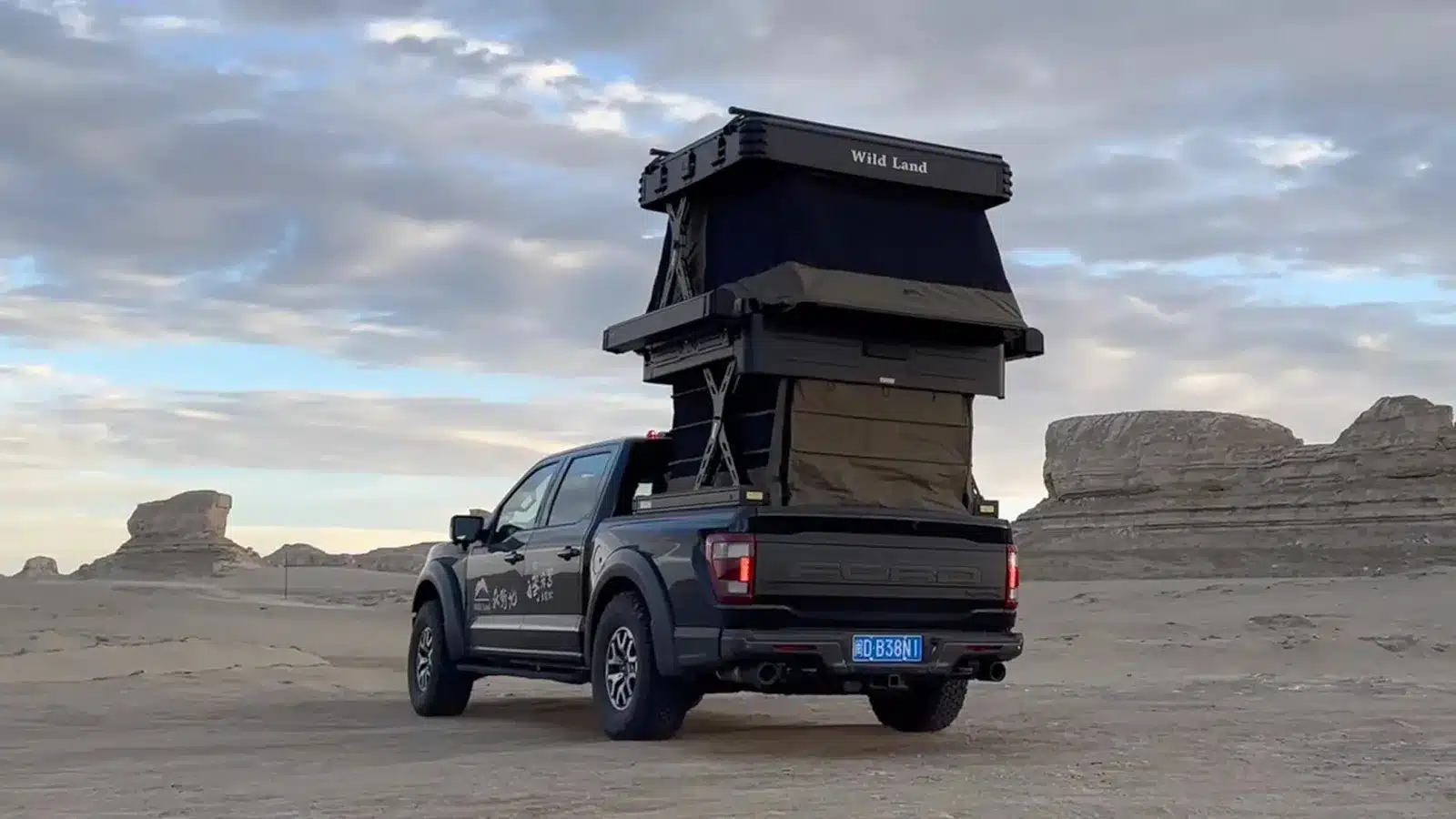
The Wingman is a hard-shell camping topper that mounts to the bed rails of a pickup, or a ute in our language. If you are new to the category, our rooftop tent buying guide covers the basics of hard-shell versus soft-shell setups. Closed, the Wingman sits as a low box a touch above cab height, leaving the tray open underneath. Press a button on the remote or the companion app, and two tiers of electric scissor lifts raise it into a two-storey tower in a matter of seconds. No poles, no clips, no wrestling with fabric in the wind.
The result is a camper with genuine downstairs and upstairs living space, plus a rooftop hatch you can poke your head out of for a look around. It is theatrical, and it is meant to be.
Downstairs: The Ute Tray Becomes a Room
Because the Wingman sits on the bed rails rather than dropping into the tray, the tray floor itself becomes the ground floor. Cinch treats it as a flexible base-camp zone. There is a foldaway bamboo worktop that doubles as a bench or small table, slim MOLLE panels wrapping the perimeter for hanging gear, and detachable magnetic LED light bars you can pull off and use around camp.
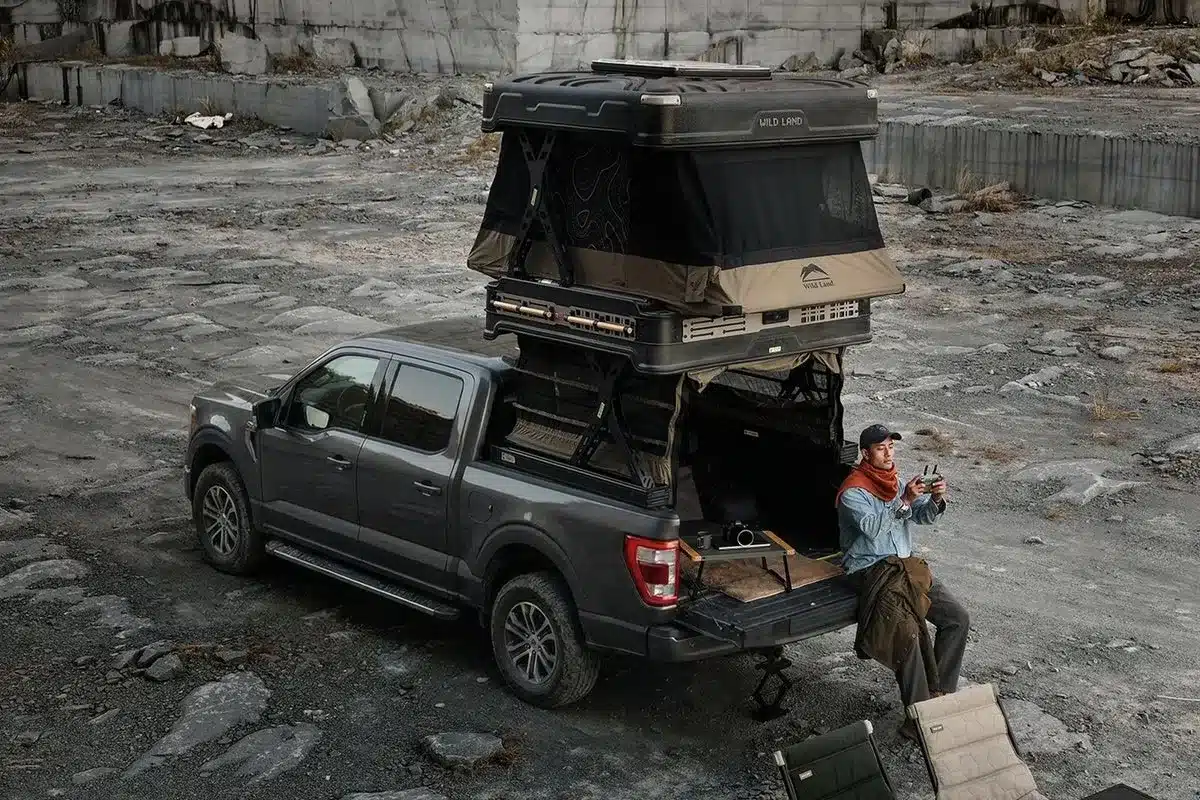
You get roughly 147 cm of height from the tray floor to the first-floor ceiling, depending on your ute’s box height. That is not quite adult standing height, but it is plenty for kids to stand and get changed, or for an adult to duck in out of the rain, brew a coffee, and sit down at the bench. The rear fabric panel can stay open for airflow or zip shut for weather and insect protection. You can also use the downstairs space on its own for a quick shady lunch stop without deploying the whole upstairs. And because the unit sits on the rails rather than in the tray, the bed stays open for cargo on the drive, so you load your fridge, firewood and gear as normal and clear the deck when you make camp.
Upstairs: The Bedroom With a Lookout
The second floor is where you sleep. Climb the included ladder through a cushioned hatch (the hatch cover slots in to complete the mattress) and you reach a cube-shaped sleeping space with an 89 x 58 inch, roughly 226 x 97 cm, high-density foam mattress. That comfortably fits two, with room for a third at a squeeze.
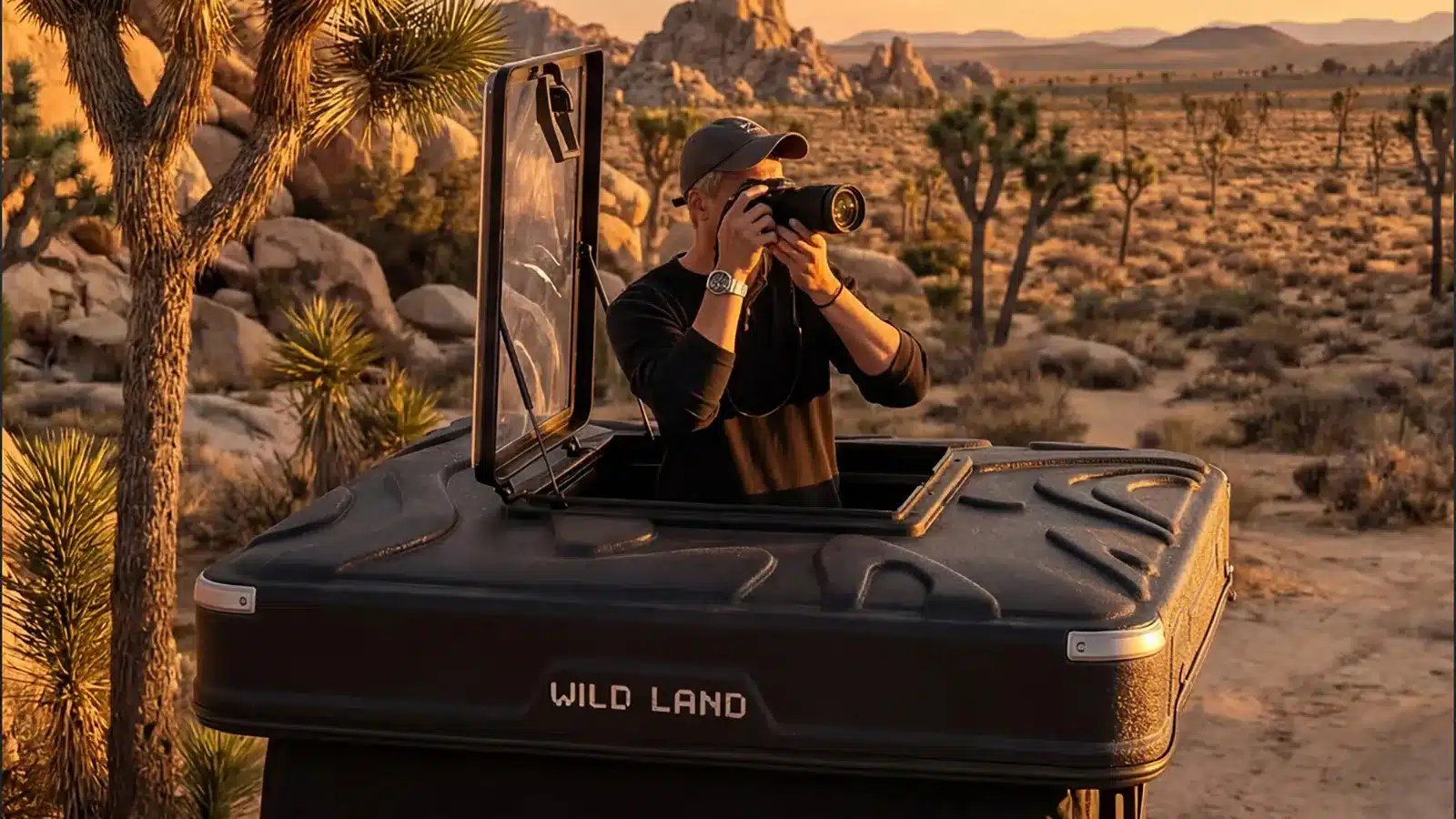
Headroom upstairs is just under 107 cm, enough to sit up properly rather than commando-crawl. The walls are 270 degrees of mesh for panoramic views, with zippable weatherproof panels for cold, wet or windy nights. Up top there is a skylight hatch for stargazing and ventilation, and it opens far enough to stand your head and shoulders out the roof for photos, wildlife spotting or just taking in the scenery from the highest point in camp.
The Tech Onboard
This is where the Wingman separates itself from a standard rooftop tent. The whole thing runs off your vehicle’s 12V port. Both floors get integrated lighting, and there is a Bluetooth 5.0 speaker on each level, which is more built-in audio than some far pricier campers include. The same remote and smartphone app that raises the tent also controls the lights and the deployment.
There is even a set of powered hydraulic legs. These lift the closed unit up above tray height so you can reverse the ute underneath, then lower it down onto the rails, which makes mounting and demounting a solo job rather than a four-mate favour.
The Numbers That Matter
Closed, the Wingman measures about 180 x 160 cm and sits roughly 64 cm high, low enough to cut wind drag on the highway. Construction is all-metal with blackout insulation and a 190 gsm polycotton canopy rated to PU2000 mm for water resistance. Cinch says it fits more than 80 percent of pickups, naming the Ford F-150, Chevrolet Silverado, GMC Sierra, Toyota Tacoma and Jeep Gladiator, along with global platforms like the Ford Ranger and Toyota HiLux.
Now the number to pay attention to: weight. The Wingman tips the scales at 250 kg, or 551 lb. That is a lot, roughly on par with an ultralight full-floor slide-in camper, and it is all carried on the bed rails. If one of these ever landed here, bed stiffeners and a hard look at your ute’s roof and payload ratings would be non-negotiable, and our 4WD and ute setup guides are worth a read before you add anything this heavy.
The Wingman at a Glance
A two-storey camp that scissor-lifts onto a ute tray at the push of a button.
By the Numbers
Two Floors, Two Jobs
Build & Materials
Where It Came From
The Wingman did not appear out of nowhere. British brand Cinch Outdoors made its name on quick-pitch pop-up tents, then teamed up with Chinese manufacturer Wild Land to crowdfund the inflatable Air Cruiser rooftop tent. That partnership was Cinch’s move off the ground and onto the vehicle, and it has since focused on bringing Wild Land’s designs to the US market.
The Wingman is the American version of a product Wild Land launched back in 2024 as the Safari Cruiser. Mechanically it is much the same twin-lift tower. The difference is the trim: where the 2024 Safari Cruiser wore a 270-degree awning and a shower tent, the Wingman swaps in the MOLLE panels and a leaner accessory set aimed at the US overlanding crowd.
The Price Surprise
Here is the part that raised eyebrows. Cinch launched the Wingman at an early-bird price of US$6,999, listed on its Wingman product page. For a powered, two-storey camper with onboard tech, that undercuts a lot of smaller, simpler single-storey toppers on the US market. For context, Wild Land’s own US arm lists an MSRP of US$12,999 with discounting around US$9,990, so the early-bird figure looks like a genuine launch play rather than the long-term price. Cinch ships from a US warehouse across the lower 48 states and backs it with a two-year guarantee.
Could It Ever Reach Australia?
Right now, no. The Wingman is a US launch, sold and shipped domestically there. But the interesting wrinkle is that Wild Land, the company that actually manufactures it, already sells rooftop tents into Australia through Drifta and Drifta Stockton, whose Wild Land models have been tested across dust, corrugations, high wind and rain here. So the hardware pedigree is not foreign to Australian conditions, even if this particular unit is not on an Aussie order form. Whether a 250 kg powered tower clears our payload, towing and weight rules is a separate question, and a big one. For now, file the Wingman under “watch this space.”
Worth Watching?
The Wingman is one of the most genuinely interesting camping toppers to surface in years. The push-button two-storey trick is clever, the downstairs-as-living-room idea is smart use of a ute tray, and the price at launch is hard to argue with. The catch is that 250 kg of weight on the bed rails, and the fact that none of this is available or compliance-checked here yet. It is a brilliant conversation starter and a real look at where vehicle-based camping is heading. Just don’t clear space on the driveway for one just yet.