
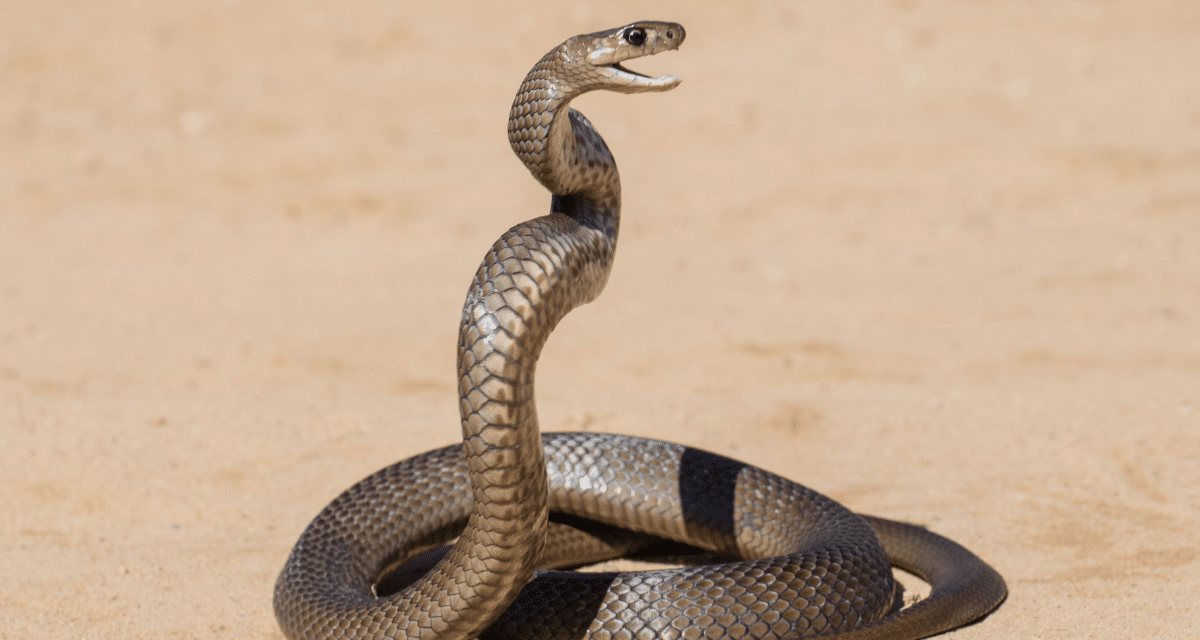
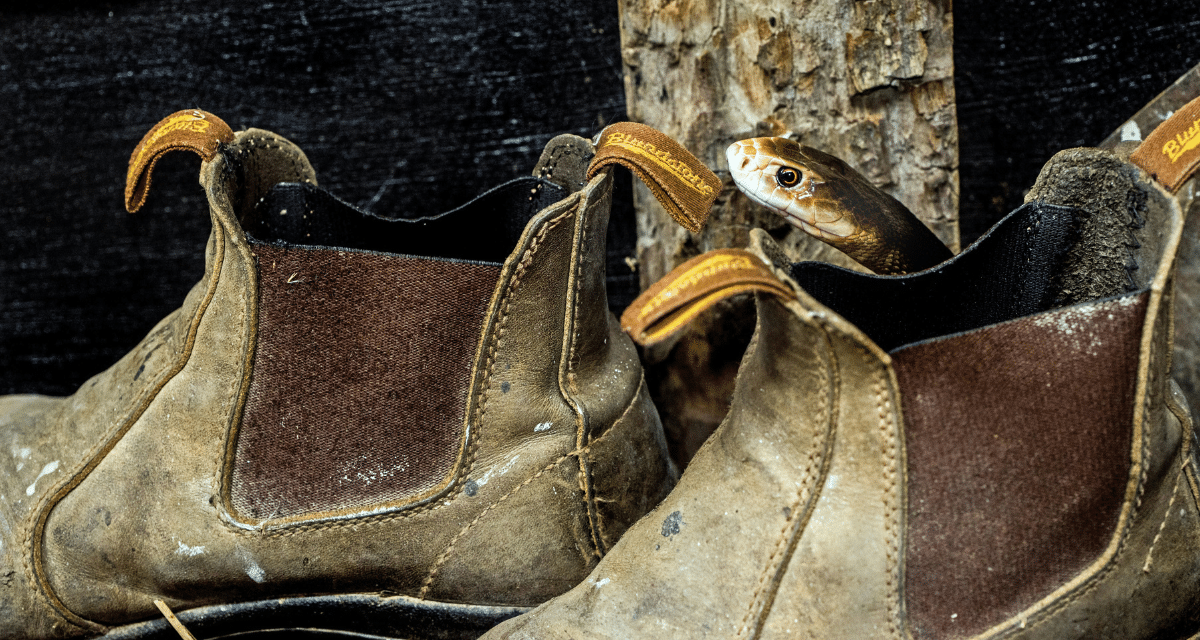

Collapse with cardiac arrest is the most common cause of death from snake bite. The Australian Resuscitation Council (ARC) guideline says it can happen within 10 to 60 minutes of a bite that injects venom, usually before the person reaches hospital, and that it needs immediate CPR.
So this guide runs on a clock. Every first aid step follows the ARC guidelines on snake bite and pressure immobilisation (published with New Zealand as ANZCOR Guidelines 9.4.1 and 9.4.8), cross-checked against the Victorian Government’s Better Health Channel on 16 November 2026.
The first minute
Get the person away from the snake, and leave the snake alone. The ARC strongly recommends no attempt to kill it, given the risk of more bites, and notes many Australian snakes are protected species. Take a photo only if it is safe.
Call Triple Zero (000) for an ambulance, which the ARC says to do for any suspected snake bite. If 000 will not connect on a mobile, Healthdirect says to try 112. Then lie the person down and keep them still.
Do not wait for proof. The ARC notes a bite may be painless and leave no visible marks, and Better Health says symptoms may not appear for an hour or more. A child who says something bit them in the long grass gets the full treatment.
The next few minutes
The ARC says bandage as soon as possible, and explains that most snake venom reaches the bloodstream through the lymphatic system, which pressure and stillness slow. For an arm or leg, the ARC method runs like this.
Remove rings or bracelets on that limb if you can (Better Health). Wrap a broad elasticised bandage, 10 to 15cm wide, firmly over the bite. The ARC test: you should be unable to easily slide a finger between the bandage and the skin. No bandage? The ARC says use clothing or other material.
Next, a second bandage starts at the fingers or toes and works up the limb, covering as much of it as possible, over clothing if you can. The ARC also allows a single bandage: start at the fingers or toes and run it up the limb as far as possible, covering the bite.
Splint the limb, including the joints on either side of the bite. Better Health suggests any hard object, such as a plank of wood or a magazine. For an arm, the ARC adds a sling.
Mark the bite with an X on the bandage and write down when the bite happened and when you bandaged (Better Health). Keep checking the colour, warmth and feeling of the fingers or toes.
A bite on the body, head or neck cannot be wrapped this way. The ARC says firm direct pressure on the site may help, but never restrict breathing or chest movement, and do not press firmly on the neck or head.
Watch out: the ARC is blunt about what not to do. Do not wash the bite: Healthdirect explains that venom left on skin and clothing can help identify the snake. Do not cut it or try to suck the venom out. Do not use an arterial tourniquet, which the ARC calls potentially dangerous and not recommended for any bite or sting in Australia.
If the person becomes unresponsive and is not breathing normally, start CPR. The ARC states there is no risk of venom passing to the rescuer.
One leg, two bandages, one splint
Where each bandage goes, which way it runs and what to carry beyond camp.
Bandage map: bite on the lower leg
-
Bandage over the bite first Use a broad elasticised bandage, 10 to 15cm wide. Apply firmly: a finger should not slide easily underneath.
-
Second bandage from the toes up Cover as much of the leg as possible, over clothing if you can.
-
Splint past the joints either side For a calf bite, that means the knee and ankle. For an arm bite, add a sling.
-
Mark the bite, note the time Draw an X on the bandage over the bite. Record when the bite happened and when you bandaged.
-
Keep the person lying still Bring transport to them where possible. Leave bandages and splint in place until assessed in hospital.
Call Triple Zero (000) for any suspected snake bite. If the person becomes unresponsive and is not breathing normally, start CPR. Do not wash the bite, cut it, suck out venom or apply an arterial tourniquet.
Pack it: SURVIVAL Snake Bite Kit
Keep the bandages, splint and instructions together
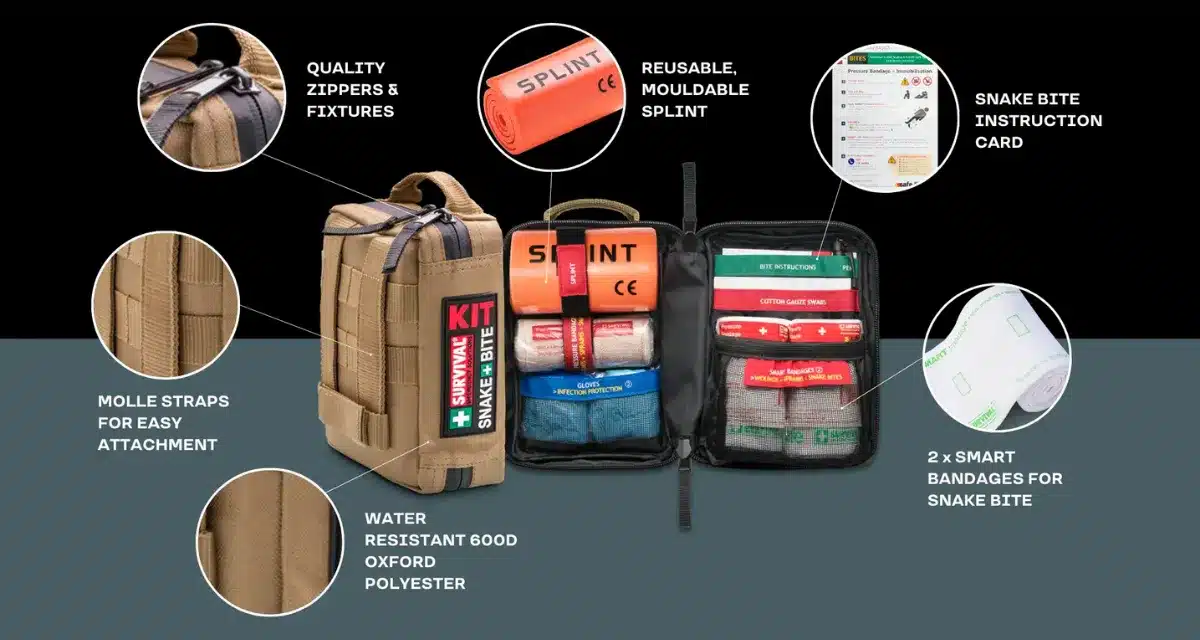
The SURVIVAL Snake Bite Kit brings key supplies together in a portable, colour-coded kit. Its two SMART pressure bandages have printed tension indicators designed to help guide application.
Pressure bandages with printed tension indicators.
A splint to help immobilise the bitten limb.
For marking the bite location and recording times.
Printed snake bite guidance to keep with the equipment.
Other supplies include gloves, an emergency blanket, a whistle and a resuscitation face shield. Open the kit before your trip and familiarise yourself with its contents.
Take it beyond the caravan. Transfer the kit to your pack for bushwalks, fishing trips and other outings. Show your travelling companions where it lives. Learn and practise pressure immobilisation before your trip.
Diagram illustrative; shows the two-bandage method. Guidance: ANZCOR 9.4.1 and 9.4.8. Check the selected kit’s current contents before purchase. Equipment supports first aid training. For a suspected snake bite, call Triple Zero (000).
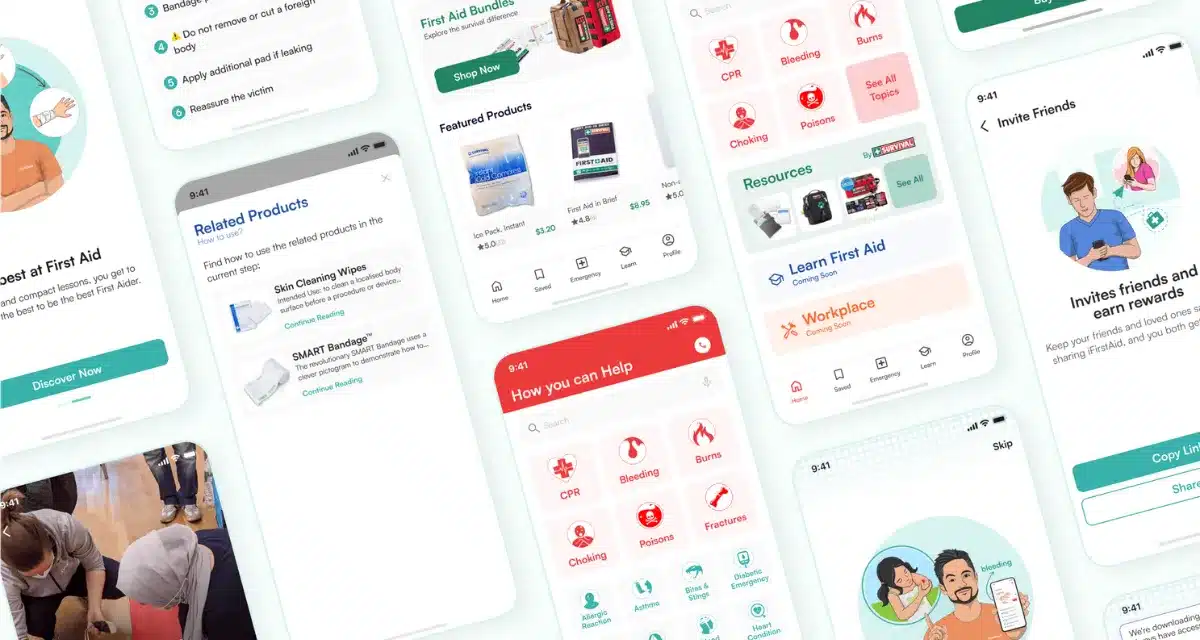
First aid guidance in your pocket
Download the free iFirstAid app before your next trip.
Free app · iPhone and Android · Offline guidance
SURVIVAL’s iFirstAid app provides illustrated, step-by-step guidance for emergencies including bites, CPR, bleeding, burns and choking. Its first aid information can be accessed without mobile reception.
Set it up before leaving home so you can find the information when you need it.
- Download and explore the app before departure.
- Check that its first aid information opens offline.
- Encourage other adults travelling with you to install it.
- Keep your phone charged and accessible.
Offline instructions do not provide an emergency connection. You still need a way to raise the alarm, such as a phone with service, a satellite communicator or a personal locator beacon. Do not delay calling 000 or starting CPR to open an app.
App guidance supports first aid training. In an emergency, call Triple Zero (000). Download links for iPhone and Android are available on the iFirstAid website.
Waiting for help, maybe for hours
Now the job is stillness. The ARC says to keep the person and the limb completely at rest and bring transport to them if possible. Better Health puts it plainly: do not make them walk to the vehicle. The ARC also says the bandages and splint stay on until the person is assessed in hospital.
Out of mobile range, the Australian Maritime Safety Authority (AMSA) lists 000 or 112 for emergencies from a satellite phone. A personal locator beacon is built for this moment: AMSA’s instruction is to activate it in a life-threatening situation, and registration is free online. Using a satellite messenger? Learn its SOS before you go. Our PLB review and outback communications guide cover the hardware.
The Royal Flying Doctor Service has its own emergency numbers for people without local hospital access; everywhere else, its page says dial 000. Save your region’s number before you go.
Bitten and alone? The ARC says bandage as completely as you can and stay still until help arrives. Only if help cannot come to you should you use local pressure and move to get help.
While you wait, watch. The ARC flags an occasional brown snake pattern: early collapse or confusion, then apparent partial or complete recovery. That is not the all-clear. Tell the paramedics, because the guideline says it may be the only evidence of envenomation. Our remote touring guide covers planning for long response times.
What happens at hospital
Healthdirect says snake bites should always be checked by a doctor, even if the person seems well, and that the doctor decides on antivenom with a clinical toxicologist. The ARC says antivenom is available for all venomous snakes native to Australia, but must be given in a properly equipped medical facility.
Diagnosis rests on history, examination and blood tests. The Royal Children’s Hospital Melbourne guideline, written for children, says a venom detection kit is not used to diagnose envenomation, and that serial blood tests and examinations take at least 12 hours after the bite.
Deaths are rare. A coronial study covering 2000 to 2016 counted 35 deaths linked to snake bite, about two a year, with snake bite recorded as the direct cause in 16 of them.
Cutting the odds at camp
Healthdirect notes snakes come out by day and at night. Its prevention advice reads like a campsite routine: a torch when walking outside at night, thick clothing such as jeans and boots, and care where you walk, sit and put your hands, especially near water, long grass and leaf litter.
At camp, that means enclosed shoes for the night walk to the amenities and a careful look before reaching into a firewood stack. See a snake? Healthdirect says back away and let it move off.
If the dog is bitten
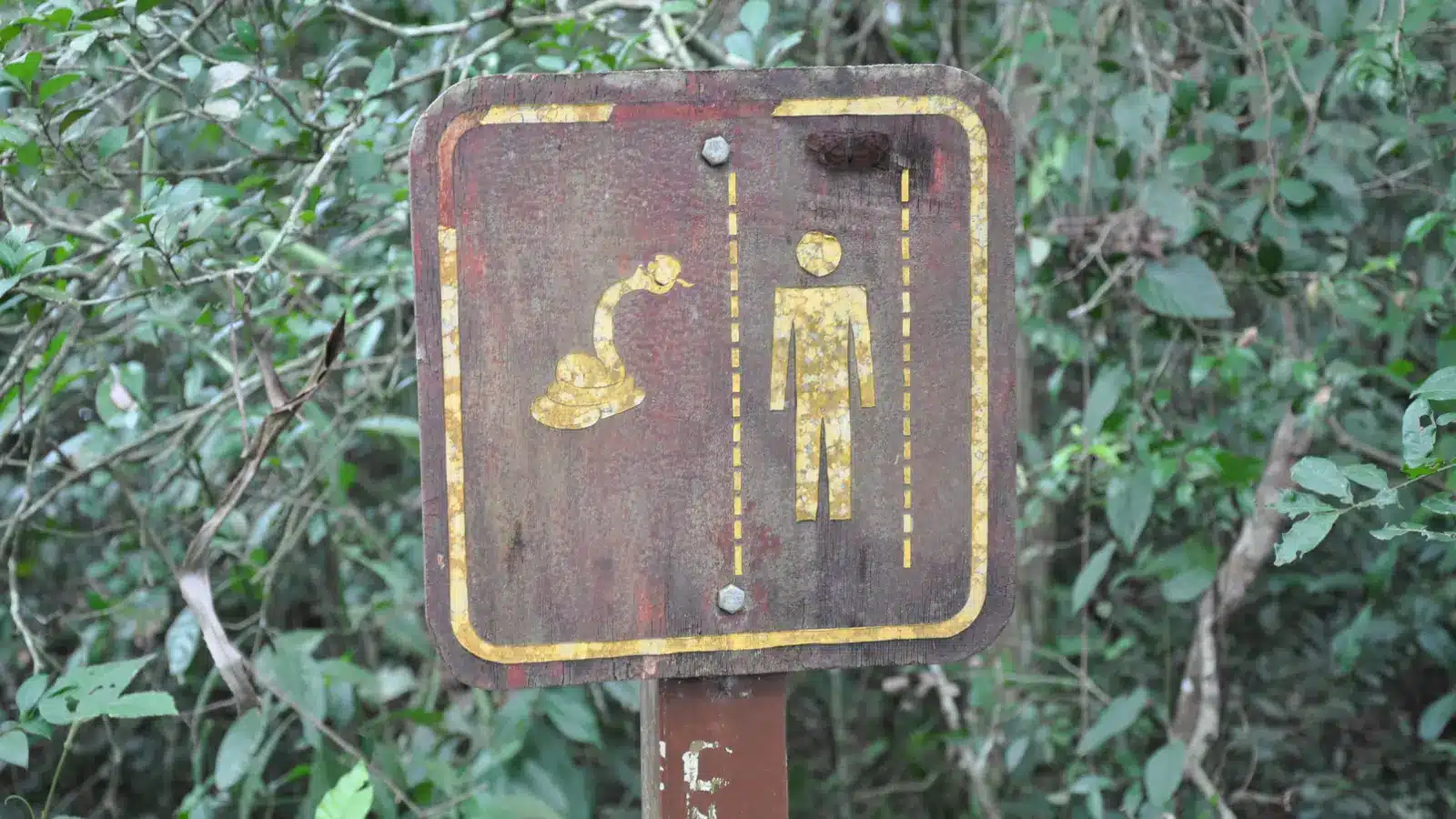
Tiger and brown snakes cause most venomous bites in Australian cats and dogs, says the RSPCA. Its advice is to keep the dog calm and quiet and get to a vet immediately, calling ahead so the clinic can prepare. If possible, apply a firm bandage above, over and below the bite, if you know where it is. Remove the collar if the bite is on the face or neck, and do not wash the wound or apply a tourniquet.
The RSPCA’s listed signs include sudden weakness and collapse, sometimes followed by apparent recovery. Find the nearest after-hours vet when you check in, including at our dog-friendly holiday parks.
Pack this tonight
- At least two heavy elastic bandages, 10 to 15cm wide: one over the bite and one for the whole limb, as the ARC describes. We carry a third as a spare.
- Something rigid for a splint, plus a triangular bandage for an arm sling.
- A permanent marker to draw the X over the bite and write the times on the bandage.
- A head torch for every person, kids included.
- A registered personal locator beacon if you are travelling beyond mobile coverage.
- A spare bandage for the dog, and the number of a vet near where you are staying.
The ARC itself says a correct pressure bandage is difficult to achieve, so practise on each other tonight. Our packing guide covers the rest of the van.
This is general first aid information, not medical advice: in an emergency call Triple Zero (000), and do a first aid course before your next trip.
Images: Matt from Melbourne and Jorge Láscar via Wikimedia Commons (CC BY 2.0).


