
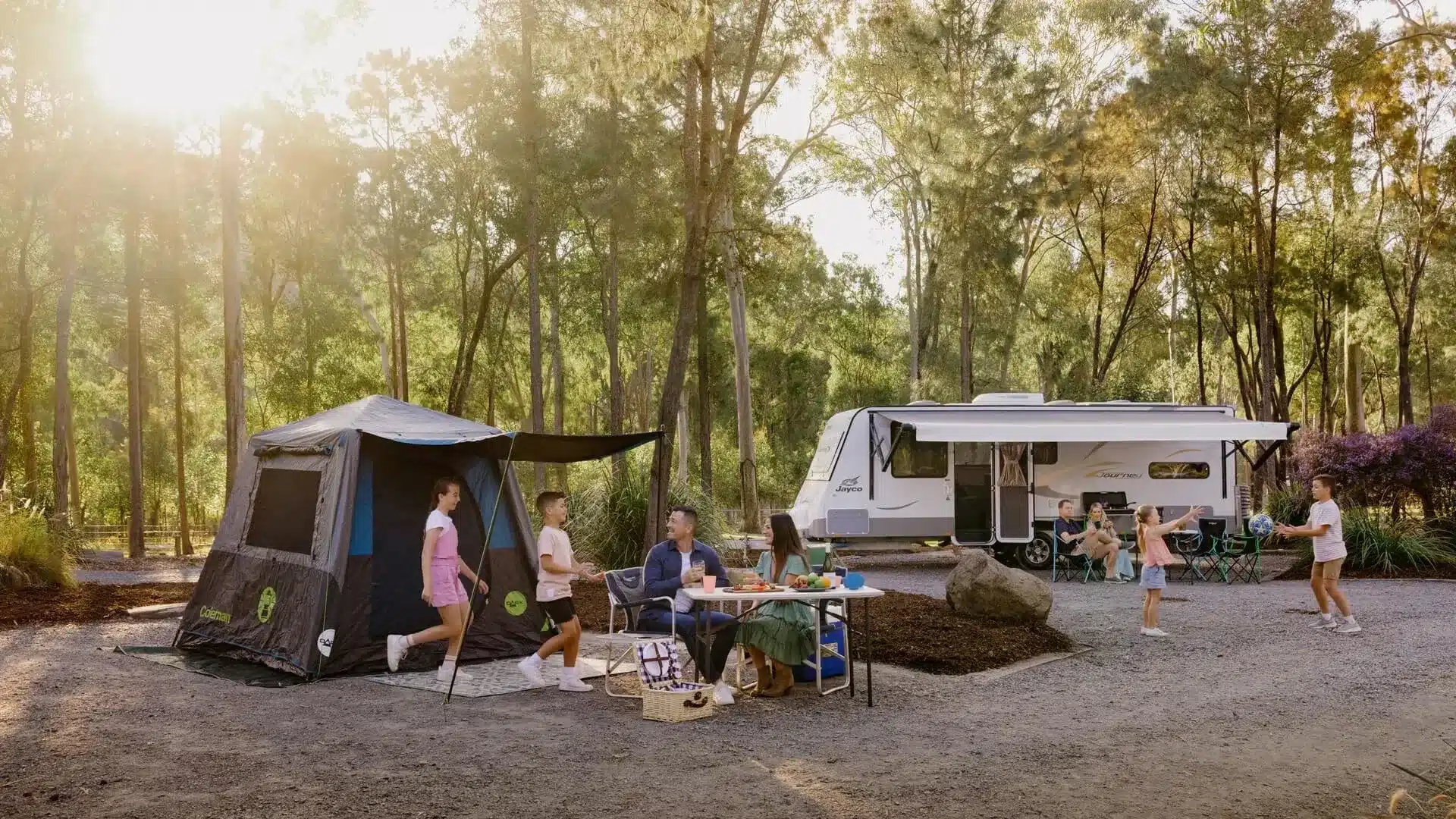

There is a particular kind of magic that happens in an Aussie caravan park just as the sun begins to dip. The smell of woodsmoke starts drifting from the communal fire pits, the kookaburras start their evening ruckus, and the clinking of ice in glasses marks the official start of “Happy Hour.” For ages, this ritual has been the heartbeat of our travel community. It was the time to swap stories about road conditions, share tips on the best hidden gems, and pass on the unwritten rules that keep us all moving in the same direction.
But if you have pulled into a holiday park lately, you might have noticed the vibe is a bit different. The rigs are getting bigger, the tech is getting cleverer, and the faces in the parks are often a fair bit younger. It got us thinking: are the old rules of caravan and camping etiquette still the go, or are we witnessing the birth of a totally new code of the road?
Whether it’s tech-savvy families or seasoned travellers in bigger rigs, understanding the range of modern caravan reviews helps explain why expectations and behaviours in parks are shifting
The New Crowd: From Grey Nomads to Digital Nomads
For decades, the “Grey Nomad” was the undisputed king of the highway. These legends had the time, the patience, and the ingrained knowledge of park protocol. They knew you never roll in after dark if you can help it, and you certainly do not leave your awning lights on all night to blind the neighbours.
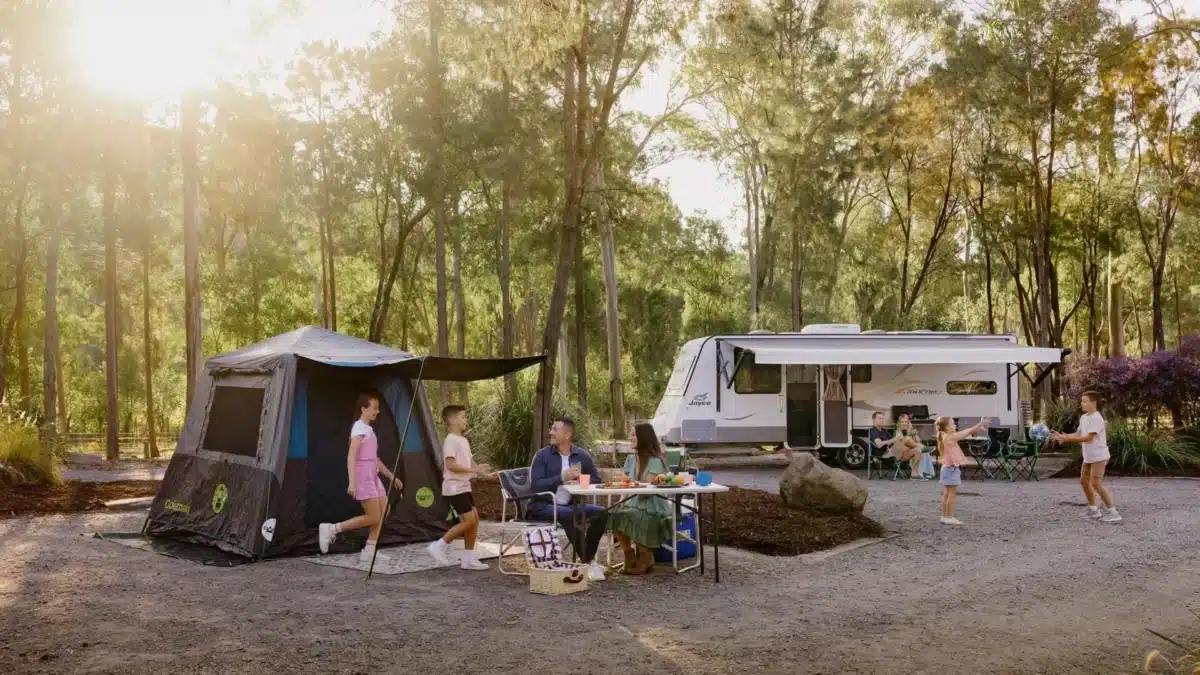
Fast forward to today, and the “Big Lap” has well and truly gone mainstream. Since 2020, we have seen a massive influx of “New Wave” campers. We are talking about young families who have swapped the suburban backyard for a brand new off-road caravan, and “Digital Nomads” who are working 40 hours a week from a folding desk under their awning.
This shift isn’t just about age; it is about a whole different lifestyle. A digital nomad might be on a high-stakes work call at ten in the morning on a Tuesday. To them, a barking dog or a noisy neighbour isn’t just a bit of a nuisance; it is a real problem for their job. This “clash of needs” is where most of the modern friction seems to start.
The “Shortcut Sin” and the Battle for Your Patch
One of the most sacred rules of Aussie camping has always been the sanctity of the “site.” In the eyes of a seasoned traveller, that patch of grass or concrete slab you have paid for is your private castle. Walking through someone else’s site to get to the amenities block-commonly known as the “Shortcut Sin”-is still the quickest way to get a sideways look from your neighbours.
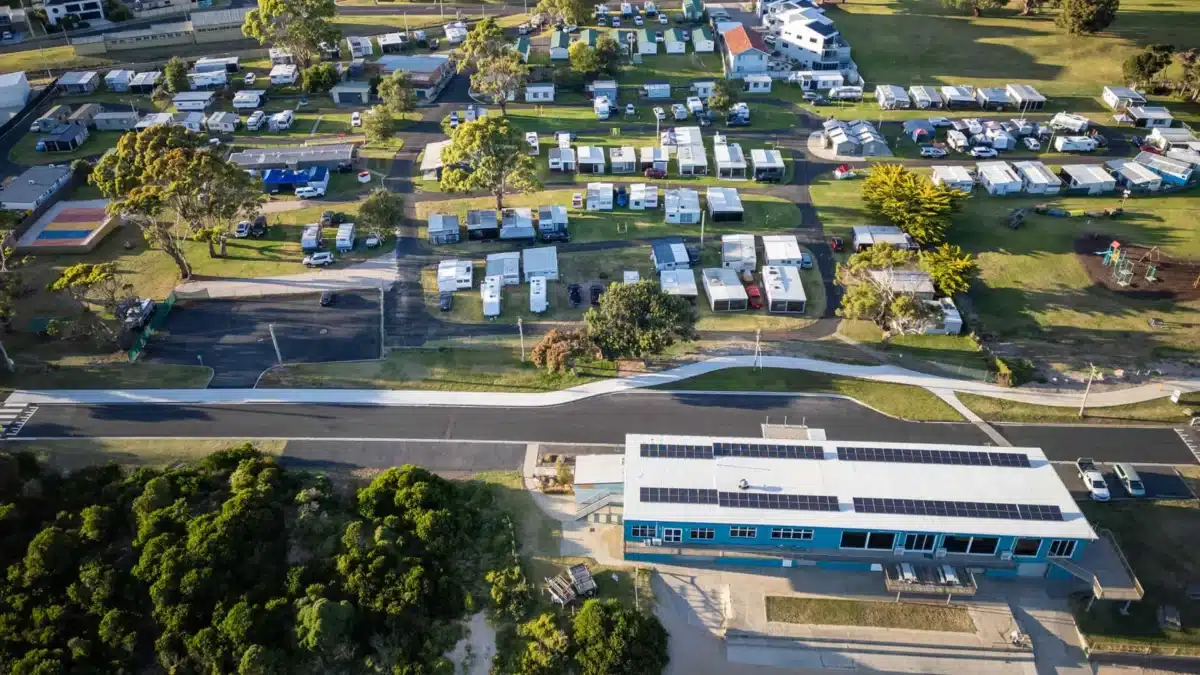
As parks get busier and sites feel a bit tighter to fit in those massive 24-footers, spatial awareness has become a huge topic. It is not just about where you walk; it is about where your gear ends up. Whether you are travelling with pets or just setting up a massive outdoor kitchen, keeping your footprint within your own boundaries is vital.
Understanding how much room a rig really takes up and how to responsibly set up – including caravan slide-out space and maintenance – avoids encroaching on neighbours sites
What Grinds Our Gears Most?
While we all like to think we are easy-going, certain things consistently pop up as “deal-breakers” in the community. Interestingly, it isn’t always the loud music that causes the most strife anymore.
The “Grinds Our Gears” Snapshot
Common friction points observed across Australian camping discussions
We are seeing more bickering about “awning encroachment” lately. When your slide-out or your awning guy-ropes cross that invisible line into the next site, you are basically shrinking someone else’s holiday.
Is the “Caravan Wave” on the Way Out?
If there is one classic symbol of our community, it is the wave. That simple flick of the fingers from the steering wheel says, “G’day, hope the road is treating you well.”
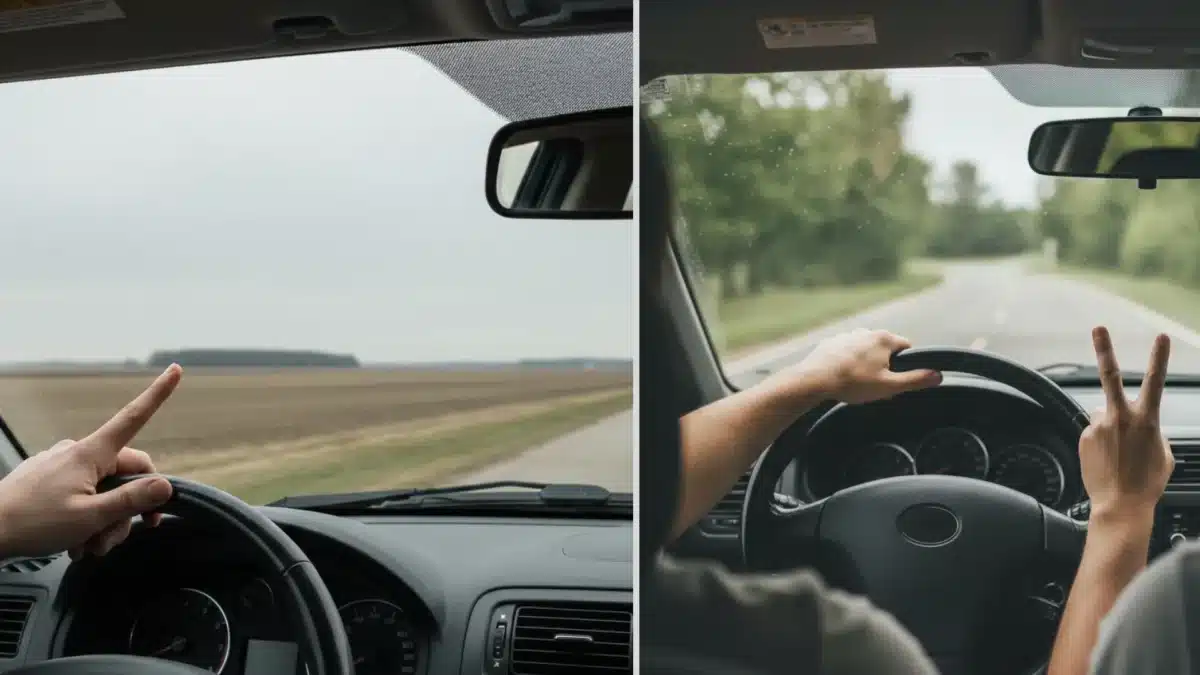
But if you are heading down the Newell Highway these days, you might find your wave goes unreturned more often than not. Some reckon the sheer volume of vans on the road is the culprit; if you are passing fifty rigs an hour, your arm is going to get a workout. Others reckon the newer crowd simply doesn’t know the tradition exists.
Does it matter? To a lot of us, it does. The wave represents a promise that you will stop and help if someone is stuck with a flat tyre. If we stop waving, do we stop being a community and just become a bunch of individual tourists?
Tech in the Scrub: Starlink and Generators
Technology is a bit of a double-edged sword for us. On one hand, lithium batteries and solar panels have made camping heaps quieter. On the other hand, new gadgets are creating some tricky social situations.
Take Starlink. A few years back, “getting away from it all” meant being completely off the grid. Today, seeing a satellite dish on a pole is as common as seeing a jockey wheel. While the tech is silent, it changes how we socialise. Instead of heading over to the camp kitchen, more people are staying inside to stream a movie.
And don’t even get us started on generators. The modern rule is pretty straightforward: if you have a neighbour nearby, the generator should be your absolute last resort. If you’re looking for ways to stay powered up without the noise, check out our latest features on solar and battery tech.
The Golden Rules of the Park
So, how do we keep everyone happy? We’ve put together a quick guide to the lifecycle of a perfect park stay.
The Arrival
Roll in before sunset so you aren’t blinding neighbours with high beams while reversing. Keep the speed to a walking pace-there are kids and pets about.
The Setup
Respect the boundaries. Keep your guy-ropes, matting, and gear on your own slab. Positioning your exhaust away from the neighbour’s annex is a total legend move.
The Stay
Avoid the “Shortcut Sin”-don’t walk through other sites. Keep the noise down after 9 PM, and if you must use a generator, stick strictly to the park’s hours.
The Departure
Leave the site cleaner than you found it. At the dump point, rinse everything down and don’t hold up the queue with a twenty-minute chinwag.
What Do You Reckon?
The “Whats Up Downunder” community has always been about sharing the journey. As our parks get busier and our rigs get flashier, how do we make sure the spirit of the road stays alive?
We want to hear from you in the comments:
- Do you reckon the new crowd is changing things for the better, or do you miss the old ways?
- Is the caravan wave a “must-do” for you, or is it a bit of a relic?
- What is the one thing a neighbour can do that makes them a “legend” in your books?
- Is tech making us too isolated when we should be connecting with the bush?
Let us know your thoughts below. The road belongs to all of us, and the better we understand each other, the better the trip will be for everyone.
Further Reading