


Introduction
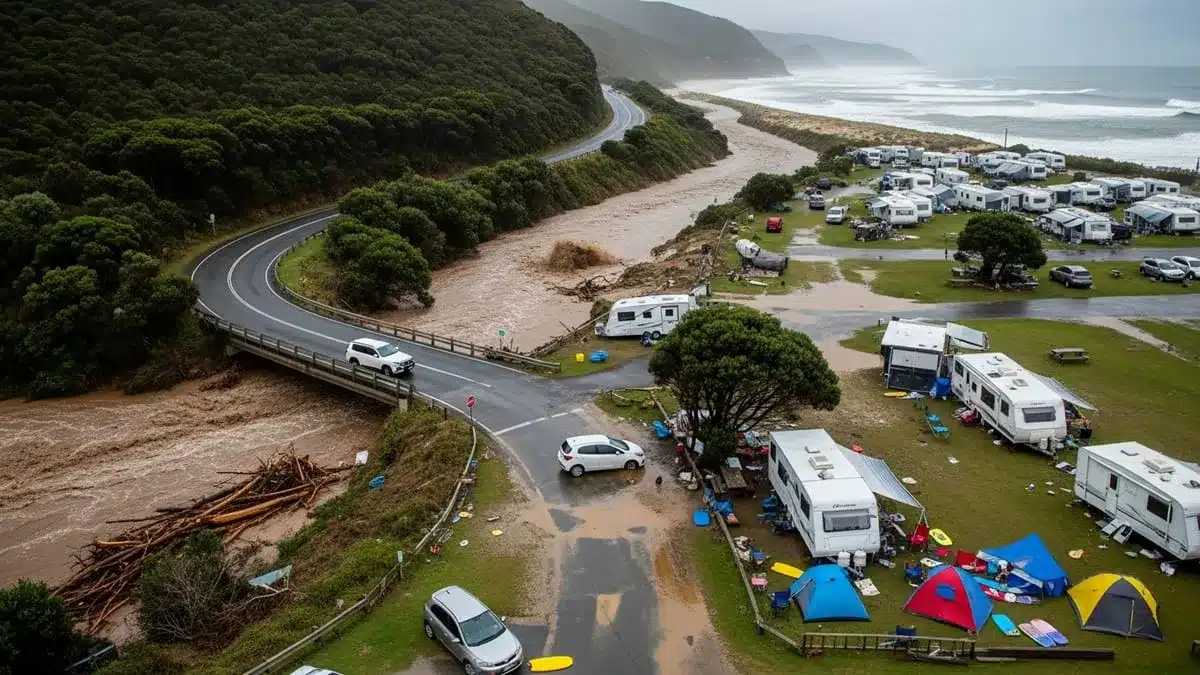
In mid-January 2026, a historic deluge along Victoria’s iconic Great Ocean Road turned holiday plans upside down. Record-breaking rain, about 180 mm falling within just a few hours, triggered flash floods that swept away cars, caravans, and tents. Between 200 and 400 people in low-lying coastal areas were displaced, many of them caravan park campers enjoying the summer break.
Remarkably, there were no serious injuries despite the chaos. For caravan and RV owners, this freak weather event is a stark reminder of how quickly nature can disrupt a journey. Below, we outline what travellers should learn from the Great Ocean Road flooding, from safety tips and route planning to understanding risk and insurance coverage.
The Great Ocean Road Deluge: A Wake-Up Call for Travellers
Communities along the Great Ocean Road experienced the worst flooding in decades during the 15 January 2026 storm. In a matter of minutes, tranquil streams turned into raging torrents. Flash floodwaters surged down steep Otway Ranges catchments without warning, sweeping vehicles into the ocean and inundating caravan parks.
Holiday-makers described terrifying scenes: “People were sort of rushing around, people yelling, get as high as you can. It was pretty scary,” recalled one camper, after his family barely escaped a campground at Wye River where their car and belongings were washed away.
Emergency texts were sent to around 10,000 people in the area as the flood unfolded. About 400 locals and tourists were evacuated from low-lying campsites and foreshore areas. Some caravan parks flooded so rapidly that staff and guests had only 10 minutes to evacuate once the river broke its banks.
By the time the waters receded, thick mud and debris covered roads and campgrounds. Several vehicles and vans lay strewn on beaches or wedged in rivers. Authorities noted it was “extraordinary” that there were no fatalities given the ferocity of the event. This close call underscores that even in popular tourist regions, extreme weather can strike with little warning, especially as a warmer atmosphere increases the intensity of downpours.
Safety Tips for Extreme Weather on the Road
Staying safe during sudden natural disasters starts before you hit the road. Here are some practical tips:
Sign up for VicEmergency SMS warnings and monitor the Bureau of Meteorology. Flash floods can occur between forecast updates.
Avoid sites near rivers or creek beds. Know the nearest solid shelter or elevated road before you need it.
If water is rising or authorities issue an evacuation, leave immediately. Escape routes can be cut off fast.
Even shallow water can sweep away a caravan. During the storm, parts of the Great Ocean Road itself were submerged.
Include a first aid kit, torch, food, water, medications, waterproof documents and phone chargers. Evacuees in Lorne and Apollo Bay required all of these as they waited out the aftermath.
Detours and Route Planning When Nature Strikes
Floods and landslides closed the Lorne–Skenes Creek section for days. Use VicRoads or VicTraffic for alerts.
The Princes Highway and Otways backroads can bypass coastal closures. Keep a physical map and offline GPS in case mobile signal drops.
Some backroads are unsuitable for towing. Stick to official detours recommended by safety crews.
If there’s no safe route, wait it out at a secure location. Towns like Aireys Inlet offered safe havens during the January flood.
Caravan Parks: Vulnerability and Preparedness
- Understand the terrain.
Wye River’s steep catchment and riverside park saw water rise within minutes. Entire vans were washed away. This is not uncommon, similar floods struck the same area in 1985. - Check emergency procedures.
Ask managers how you’ll be warned, where to evacuate, and what support systems exist. - Choose your pitch wisely.
Relocate uphill if severe weather is forecast. Even with a warning, one Lorne park saw water reach waist height in minutes. - Be cautious after the storm.
Flooded areas may have debris, sinkholes or unstable ground. Obey park closures and signage. - Respect the environment.
Floods can cause erosion, new hazards and landslides. Stay off closed tracks and support recovery efforts.
Insurance Matters: Covering the Unexpected
Extreme weather events don’t just test your nerves, they test your insurance coverage. Use events like these to review your policies.
- Vehicle and Caravan Cover
Comprehensive policies often cover flood and storm damage, but definitions vary. Ask your insurer directly: “Am I covered if my van is damaged or swept away in a flash flood?” - Contents Insurance
Caravan contents, appliances, gear, even bikes, can be valuable. Confirm if your caravan insurance or home policy extends to these items on the road. - Travel Disruption Support
If you incur hotel or transport costs due to evacuation or closures, your caravan or travel insurance or premium roadside memberships may help. - Keep Records
Store photos, receipts, documents and backups in waterproof containers. This can help speed up claims after the event. - Know the Process
Insurers often deploy special disaster teams. Lodge claims promptly, even if some documents follow later.
Final Thoughts: Travel Smart, Support Local
The Great Ocean Road remains a treasured route, and floods are a reminder to plan for the unexpected.
Whether you travel in a motorhome, tow a hybrid camper, or camp with a fifth wheeler, being prepared helps protect your trip and your vehicle. Insurance is one part of travelling confidently.
Travellers who returned soon after the storm played a role in local recovery.
“We decided not to cancel our trip because we want to support the local businesses,” said one Melbourne couple.
Every journey has unknowns, but preparation makes all the difference. Safe and happy caravanning.
This article was produced with support from CIL Caravan Insurance. What’s Up Downunder maintains full editorial independence.
Disclaimer: CIL Insurance is a trading division of AAI Limited ABN 48 005 297 807 AFSL 230859, the issuer of the insurance. Any advice has been prepared without taking into account your particular objectives, financial situations or needs, so you should consider whether it is appropriate for you before acting on it. Read the Product Disclosure Statement before making a decision about this product. The Target Market Determination is also available.