


For a lot of caravanners, the day does not end when the awning goes in. After a day of exploring, setting up camp, or tackling a long drive, winding down with some entertainment is often on the cards. That’s where a reliable 12V smart TV comes into its own.
A dedicated 12V smart TV is designed for the specific challenges of caravan life, from power fluctuations to vibration. This guide will help you understand what to look for when upgrading or installing a new TV in your rig, with a focus on NCE’s caravan-specific solutions.
Why a 12V Smart TV Matters for Caravanners
A 12V smart TV is purpose-built for the unique demands of caravan travel, offering stable power consumption, enhanced durability, and integrated smart features that a standard household TV cannot reliably provide on the road.
Household TVs are designed for a stable 240V power supply and a stationary environment. In a caravan, you’re dealing with 12V battery power, voltage fluctuations, and constant movement. A dedicated 12V unit, like those from NCE, handles these conditions better, preventing damage and ensuring consistent performance. They are engineered to be more robust, resisting the bumps and vibrations of touring Australia’s diverse road conditions.
Quick checklist
What To Ask Before You Buy
A 12V Smart TV
Before you buy or install a new 12V smart TV for your caravan, check the power draw, mounting setup, entertainment features and connectivity options.
A caravan TV needs to suit more than the screen size. Check how it is powered, how it is mounted, what you can watch offline, and whether your internet setup can support streaming on the road.
12V vs. Household TVs: What’s the Difference?
The primary difference lies in power input and durability; 12V caravan TVs run directly off your van’s battery system and are built to withstand travel, unlike 240V household TVs that require an inverter and are not designed for movement.
Running a 240V household TV in your caravan requires a power inverter, which converts 12V DC battery power to 240V AC. This conversion process is inefficient, leading to significant power loss and faster battery drain. A true 12V TV plugs directly into your caravan’s DC system, optimising power usage and reducing the strain on your batteries.
Power Consumption: Keeping Your Batteries Happy
Optimising power consumption is crucial for off-grid caravanning, and 12V smart TVs are designed to draw significantly less power than their 240V counterparts, extending your battery life and reducing reliance on external power.
A typical 12V smart TV, such as an NCE 24-inch model, might draw around 2-3 amps per hour. In contrast, a similar-sized 240V TV running through an inverter could draw 5-8 amps from your 12V battery system due to conversion losses. This difference is substantial, especially when free camping or relying on solar power. For more on managing your power, check out WUDU’s guide on a balanced caravan power system.
Mounting Options and Durability
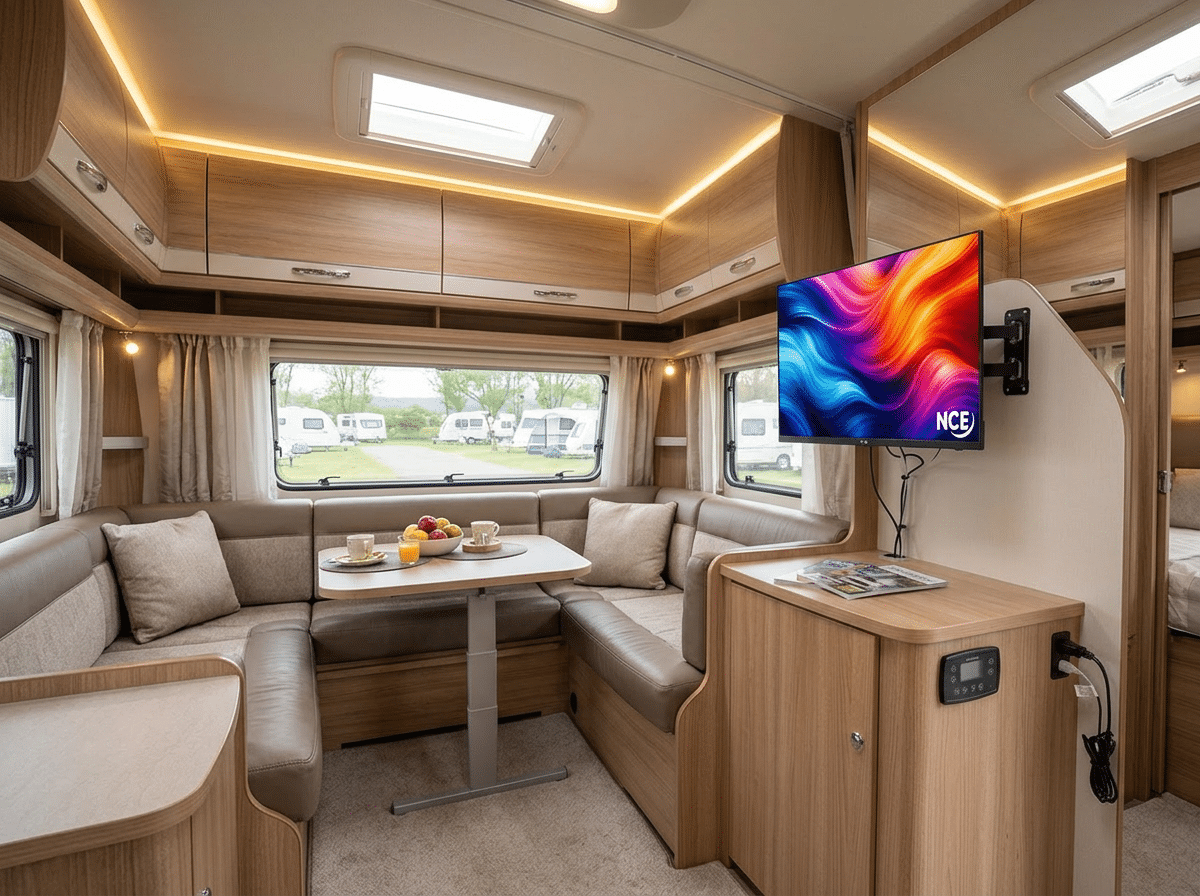
Mounting a TV securely in a caravan is critical to prevent damage during travel and ensure safe viewing. Caravan TVs come with various mounting solutions, from fixed brackets to swivel arms.
NCE TVs often feature VESA mounting patterns, allowing for flexible installation with a wide range of brackets. Consider a sturdy, lockable swivel arm bracket so you can adjust the viewing angle and secure the TV firmly when on the move. The construction of a caravan TV is also more robust, designed to absorb vibrations and minor impacts that would easily damage a standard home television.
Streaming On The Road: Connectivity Considerations
Accessing smart TV features like Netflix, YouTube, or Stan while caravanning requires a reliable internet connection. This can be achieved through various methods, each with its own pros and cons.
Many caravanners use their mobile phone as a hotspot, but this can quickly chew through data and signal strength can be inconsistent. Dedicated caravan Wi-Fi routers, often paired with an external antenna, offer a more stable connection. Satellite internet solutions, like Starlink, are also becoming popular for remote areas; read our Starlink Mini guide for more information.
Choosing The Right Screen Size
Bigger is not always better in a caravan. The right screen size depends on your caravan’s layout, viewing distance, and available wall space.
Most caravanners opt for TVs between 22 and 32 inches. A 24-inch screen is a popular choice, offering a good balance of viewing comfort and compact size. Measure your available space carefully, considering how the screen will sit when mounted and how it might impact walk-through areas or other features.
NCE: Your Caravan TV Solution
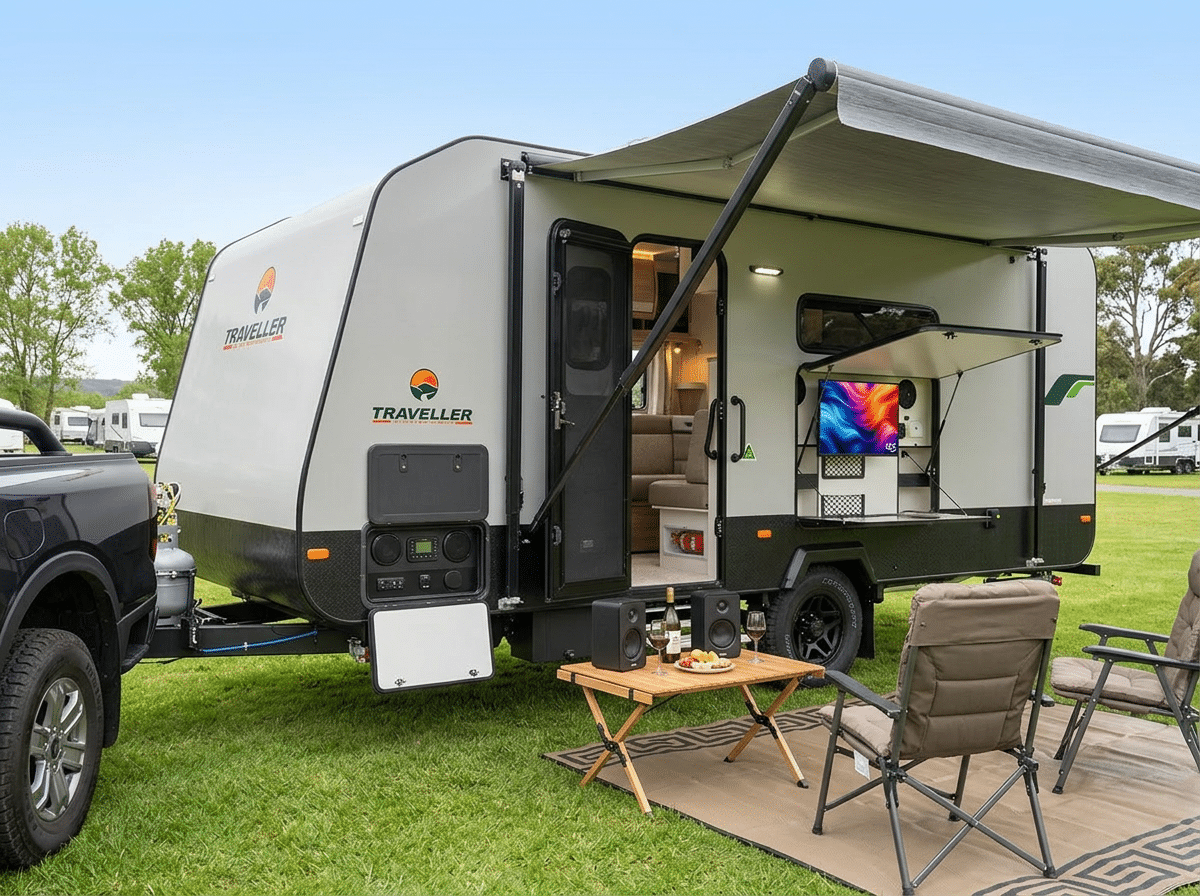
NCE is a well-known name in Australian caravanning, specialising in robust 12V audio-visual equipment designed specifically for RVs. Their range of 12V smart TVs offers features tailored to the touring lifestyle.
NCE TVs typically include built-in DVD players, which is handy for those times when internet connectivity is scarce. They also feature multiple input options like HDMI and USB, allowing you to connect various devices. Their commitment to durability and low power consumption makes them a practical choice for Aussie caravanners. You can explore their range of 12V caravan TVs directly on their website: https://nce.com.au/audio-visual/caravan-12v-tvs
Common Mistakes To Avoid
Even experienced caravanners can make simple mistakes when it comes to TV setups. Avoiding these pitfalls will save you headaches and expense.
- Using a household TV without an inverter: This will not work correctly and risks damaging the TV or your caravan’s electrical system.
- Overlooking power draw: Not accounting for the TV’s power consumption can lead to flat batteries, especially when free camping. This is a common issue WUDU readers ask about; consider how your TV fits into your overall caravan power system upgrade.
- Inadequate mounting: A poorly mounted TV can become a projectile during travel, causing damage or injury.
- Forgetting about antenna reception: A smart TV still needs a good antenna for free-to-air channels when streaming isn’t an option.
- Ignoring heat and dust: Household TVs are not sealed against the dust and temperature extremes common in Australian conditions.
Final Word
Choosing the right 12V smart TV for your caravan is about more than just screen size. It’s about selecting a unit that’s built for the road, efficient with your precious battery power, and durable enough to handle Australia’s varied touring conditions. By opting for a dedicated caravan TV from a trusted brand like NCE, you’re investing in reliable entertainment that won’t let you down, whether you’re parked up in a holiday park or enjoying a remote free camp. Consider your power setup, mounting needs, and connectivity, and you’ll be enjoying your favourite shows and movies on the road in no time.
Frequently Asked Questions
Can I use a normal 240V TV in my caravan?
You can, but it requires a 12V to 240V inverter, which significantly increases power draw and puts more strain on your battery system. Household TVs are also not built to withstand the vibrations and temperature fluctuations of caravan travel.
How much power does a 12V smart TV use?
A typical 24-inch 12V smart TV uses around 2-3 amps per hour. This is considerably less than a 240V TV running through an inverter, making 12V TVs much more efficient for caravan use.
What size TV is best for a caravan?
Most caravanners find that TVs between 22 and 32 inches are ideal. The best size depends on your caravan’s layout, available space, and typical viewing distance.
Do 12V smart TVs have Free-to-Air?
Yes, most quality 12V smart TVs designed for caravans, including NCE models, come with a built-in DVB-T tuner, allowing you to receive free-to-air digital television channels with a suitable antenna.