
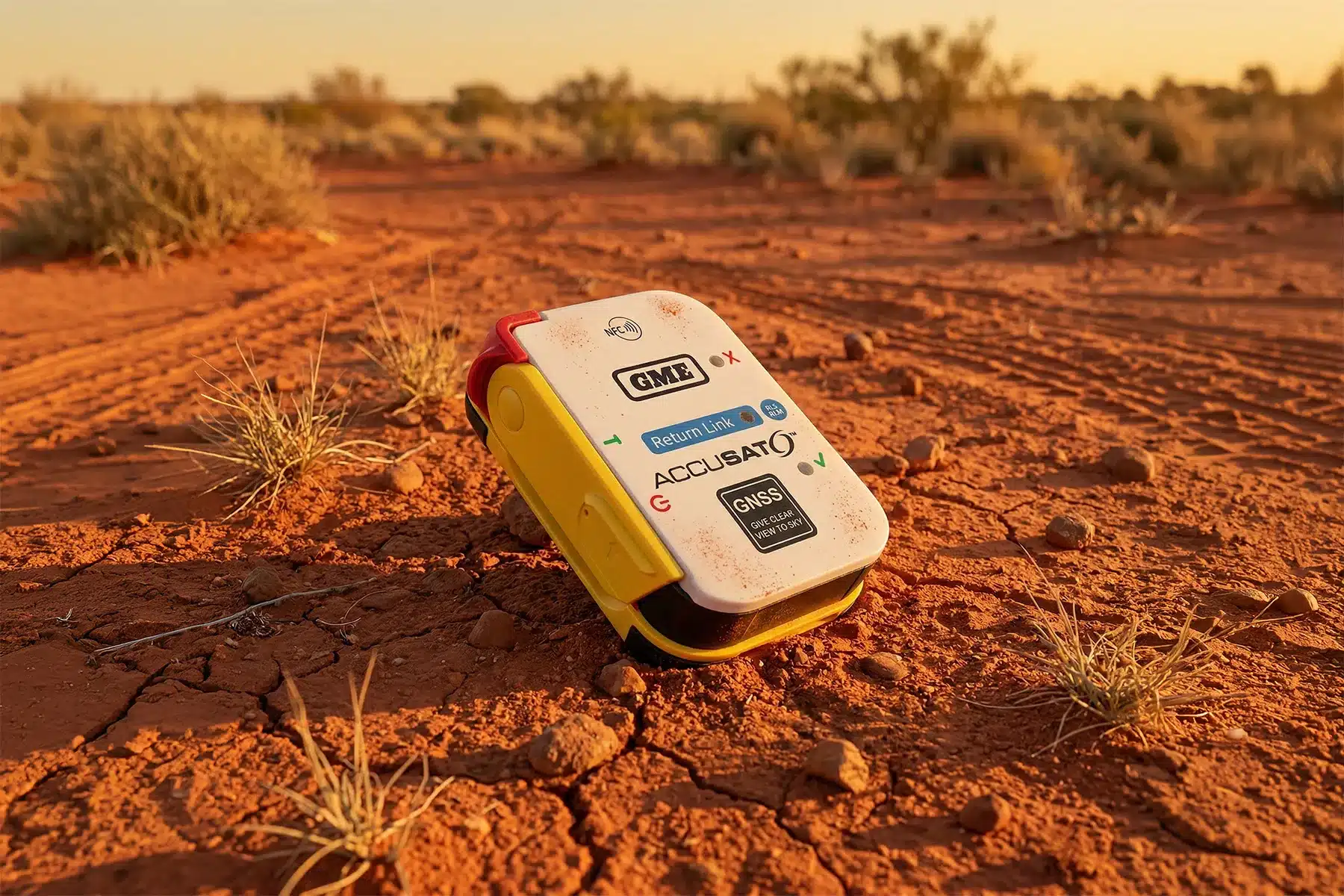

If you head bush in Australia, past the bitumen and past mobile range into places where the nearest town might be 200 kilometres away, you need a way to call for help when everything else fails. A personal locator beacon, or PLB, is that device. It is a small, battery-powered unit you carry on you. In a genuine emergency, you extend the antenna and press a button. It transmits your GPS coordinates to a network of rescue satellites, rescue authorities are alerted, and help is sent. No phone signal required. No subscription. No app. Just one action.
GME‘s new MT620GR is the latest and most capable PLB the company has ever made. Designed and built in Western Sydney, it introduces one genuinely important upgrade over anything else on the Australian market: Return Link Service, which sends a confirmation signal back to your beacon once your distress alert has been received. At $569 with no ongoing costs and a seven-year battery life, it sets a new benchmark for remote safety gear in 2026. Here is what you need to know.
GME MT620GR GNSS PLB
with Return Link Service
The Basics
Tech & Performance
Durability & Power
Specs & Certifications
What Makes the MT620GR Different: Return Link Service
Every PLB on the market will transmit your location to rescue authorities. The problem that has always existed is that the beacon itself gets no reply. You press the button, the LEDs flash, and then you wait with no way of knowing whether the signal got through. Satellite geometry, terrain, and atmospheric conditions can all affect transmission. It has always been a one-way street.
Return Link Service changes that. When the MT620GR transmits a distress signal, the COSPAS-SARSAT satellite infrastructure returns a confirmation message back down to your beacon. The unit indicates that your alert has been received by a Rescue Coordination Centre and that your location has been detected. For anyone who has sat in a remote location waiting and wondering, that confirmation is not a minor feature. It is the single most meaningful upgrade a PLB has had in years.
GME is the only Australian PLB manufacturer, and the MT620GR is the first PLB they have released with this capability. The technology runs on the Galileo MEOSAR satellite constellation and typically delivers the return confirmation within minutes of activation.
Build, Design, and What You Get for $569
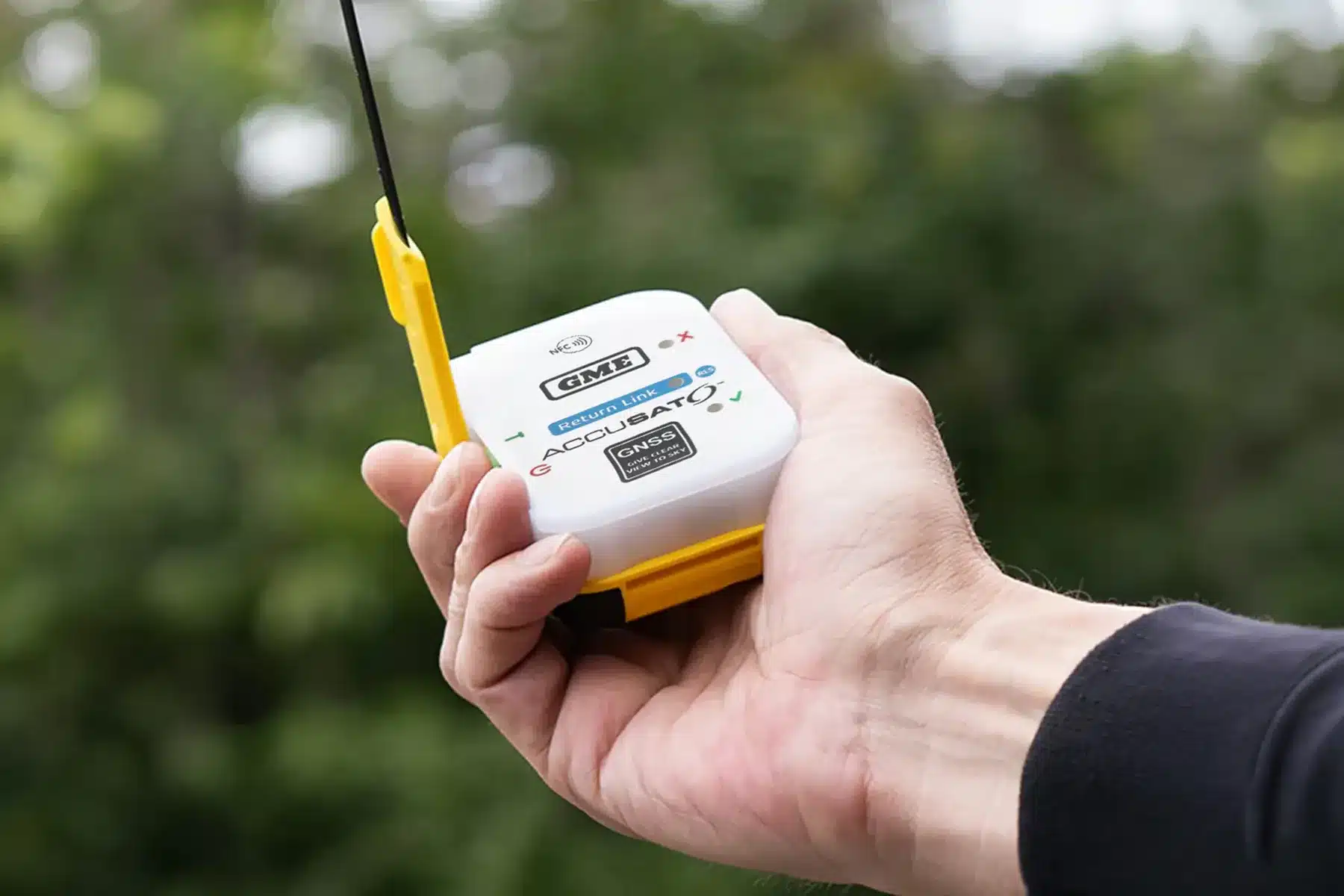
The MT620GR is compact and light for what it does. At 91g and 97 x 37 x 29mm, it clips to a grab handle, slips into a shirt pocket, or mounts in a dash bracket without taking up meaningful space. The housing is IP68 rated for full dust protection and submersion to 10 metres for one hour. The design is also inherently buoyant, meaning it floats if dropped in water and keeps transmitting from the surface.
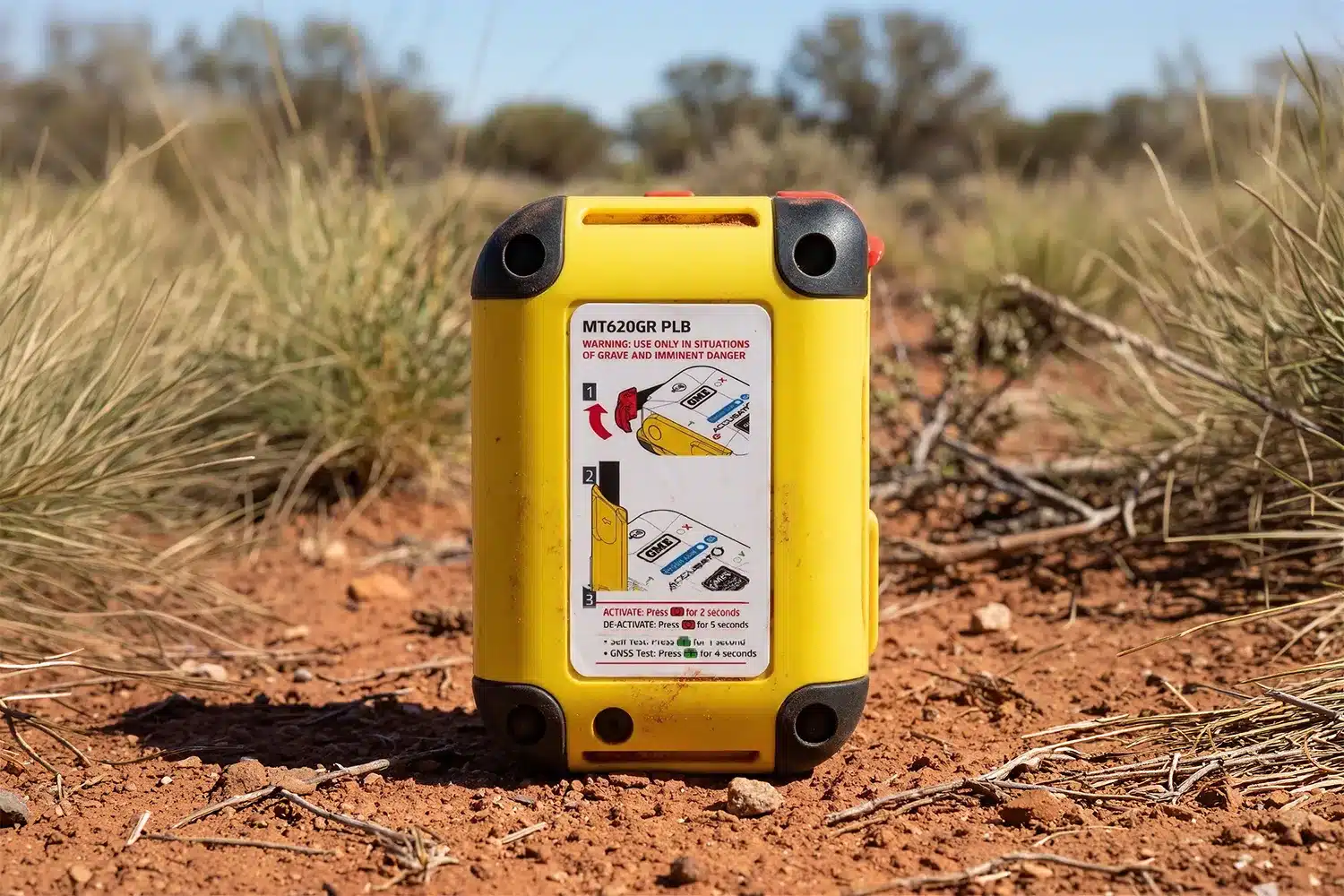
Activation is a deliberate two-step process: extend the telescoping antenna, then pull the orange lever. The beacon starts transmitting immediately with no warm-up, no PIN, and no app pairing required. For a device that exists to be used under extreme stress, that simplicity is exactly right.
The GNSS receiver is a genuine upgrade over the GPS-only system in the previous MT610G model. Where GPS relies on US satellites alone, GNSS draws from multiple constellations including GLONASS, Galileo, and BeiDou. The practical result is faster location acquisition and better accuracy in dense bush, steep gorges, or anywhere a GPS-only unit struggles for a clean fix.
The Accusat Connect companion app connects via NFC. Tap a compatible phone against the beacon before a trip and it displays battery status, the last self-test date and result, and registration details. Early user feedback notes the app is functional but limited in scope, covering status monitoring rather than richer features. That is worth knowing, though it has no bearing on how the device performs when it matters. The six-year warranty is longer than most competitors in this category.
MT620GR vs MT610G vs Garmin inReach Mini 2
GME MT620GR vs MT610G
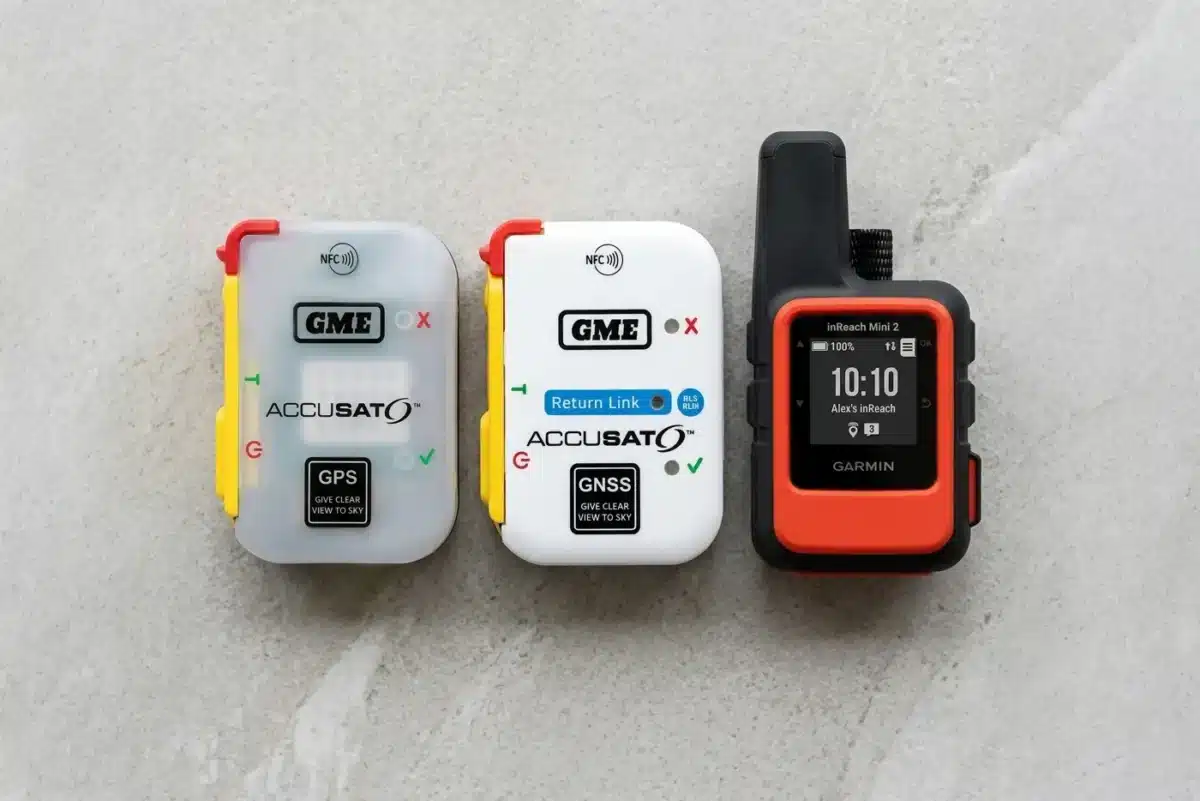
GME’s previous flagship, the MT610G, is still available for around $399 to $449. Both are Australian-made, both are COSPAS-SARSAT certified, and both will get rescuers to you in an emergency. The MT610G is a perfectly capable beacon and the right choice for anyone who is budget-conscious or rarely ventures into truly remote terrain. The MT620GR is worth the extra outlay for travellers heading deep into the outback, the Kimberley, Cape York, or anywhere that rescue response times are measured in hours. Return Link Service and faster GNSS positioning are both meaningful upgrades in those conditions.
GME MT620GR vs Garmin inReach Mini 2
These are different tools solving different problems. The inReach Mini 2 costs $540 to $599 plus a subscription starting from around $17 per month. It offers two-way messaging, live GPS tracking, weather updates, and the ability to communicate back and forth with rescue services. The MT620GR costs $569 with zero ongoing fees. The inReach suits people who want regular communication while travelling remote. The MT620GR suits people who want a dedicated, subscription-free emergency device that works regardless of whether a plan is active, a phone is charged, or the person using it has any familiarity with technology. Many experienced remote travellers carry both.
Is it Right for you?
The GME MT620GR is the best no-subscription emergency beacon available in Australia right now. Return Link Service is a real and meaningful upgrade, GNSS positioning improves on its predecessor, and six years of warranty backed by Australian manufacture adds genuine long-term confidence. At $569 with no ongoing costs, it is the beacon we would point any serious remote traveller toward in 2026.
Find your nearest stockist and check current pricing at gme.net.au. Subscribe to the WUDU newsletter for weekly free camping updates and gear guides delivered straight to your inbox.
Note: The GME MT620GR is currently on sale at Anaconda for $490 AUD — $79 below the RRP at time of publication.