
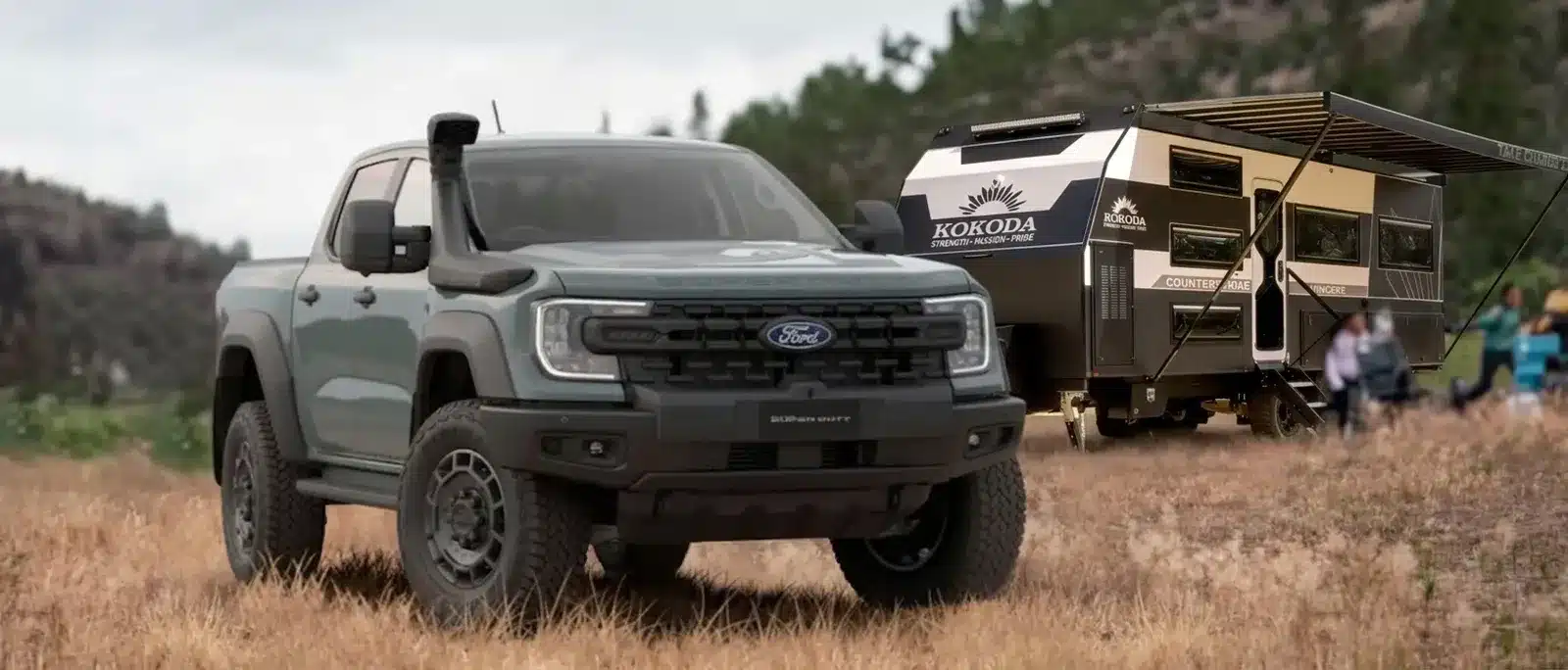

The 2026 Ford Ranger Super Duty is here, and the headline number – a factory-rated 4,500kg braked towing capacity – isn’t just a marketing claim. It’s a genuine step change in what’s possible without handing over six figures for a LandCruiser 300 Series or importing an American truck.
For years, if you wanted to pull a serious van – something north of 3,500kg ATM – your options were limited and expensive. The 300 Series. A Ram 1500. A heavy-duty import with a waiting list and a price tag to match. The Ford Ranger Super Duty is now sitting in that conversation, and it starts from $82,990. That changes the maths considerably for a lot of Australian caravanners.
Here’s what it means in practice – for the ute, and for the vans it can now pull.
What Ford Actually Built Here
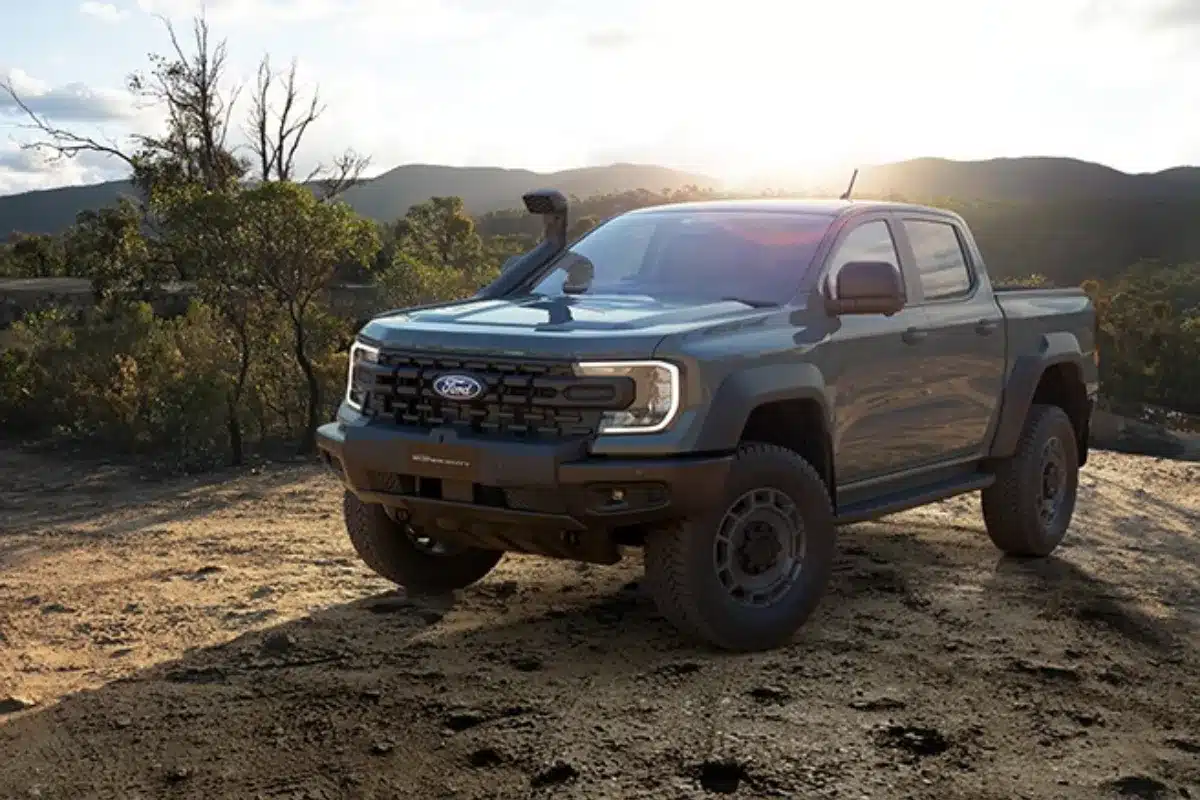
This isn’t a badge job. Ford hasn’t taken a standard Ranger and wound up the tow rating on paper – the Super Duty is built on a reinforced chassis with upgraded axles, thicker driveshafts, and heavy-duty suspension engineered specifically for the extra load. The platform has been reworked from the ground up to handle weights that would stress a standard mid-size ute frame.
Under the bonnet is Ford’s 3.0-litre V6 turbo-diesel producing 154kW and 600Nm – the same engine found in the top-spec Ranger Wildtrak and Platinum, but now paired with hardware that can actually put those numbers to work without compromise. The result is a ute that feels purposeful at heavy weights rather than strained.
The Numbers That Actually Matter
These are the core towing and weight limits – but understanding how they work together is what separates a safe setup from one that’s pushing the edge.
Braked Towing
4,500kg
GVM
4,500kg
GCM
8,000kg
Payload
Up to 1,982kg
Tow Ball
450kg
Why GCM Is The Number To Watch
The 8,000kg GCM is the total allowable weight of your fully loaded ute and fully loaded caravan combined. This is the real limiter in the real world — not just towing capacity alone. At 8,000kg, there’s genuine flexibility across a wide range of caravan sizes, giving you room to load properly without immediately running into weight limits.
The Ford Super Duty Tech – Makes it work
The hardware is one thing. What makes the Super Duty genuinely liveable as a towing platform is what Ford has packed in around it.
An integrated trailer brake controller comes standard – no aftermarket unit, no extra wiring, just a clean factory setup that talks directly to the vehicle’s braking system. At these weights, that’s not a nice-to-have, it’s essential.
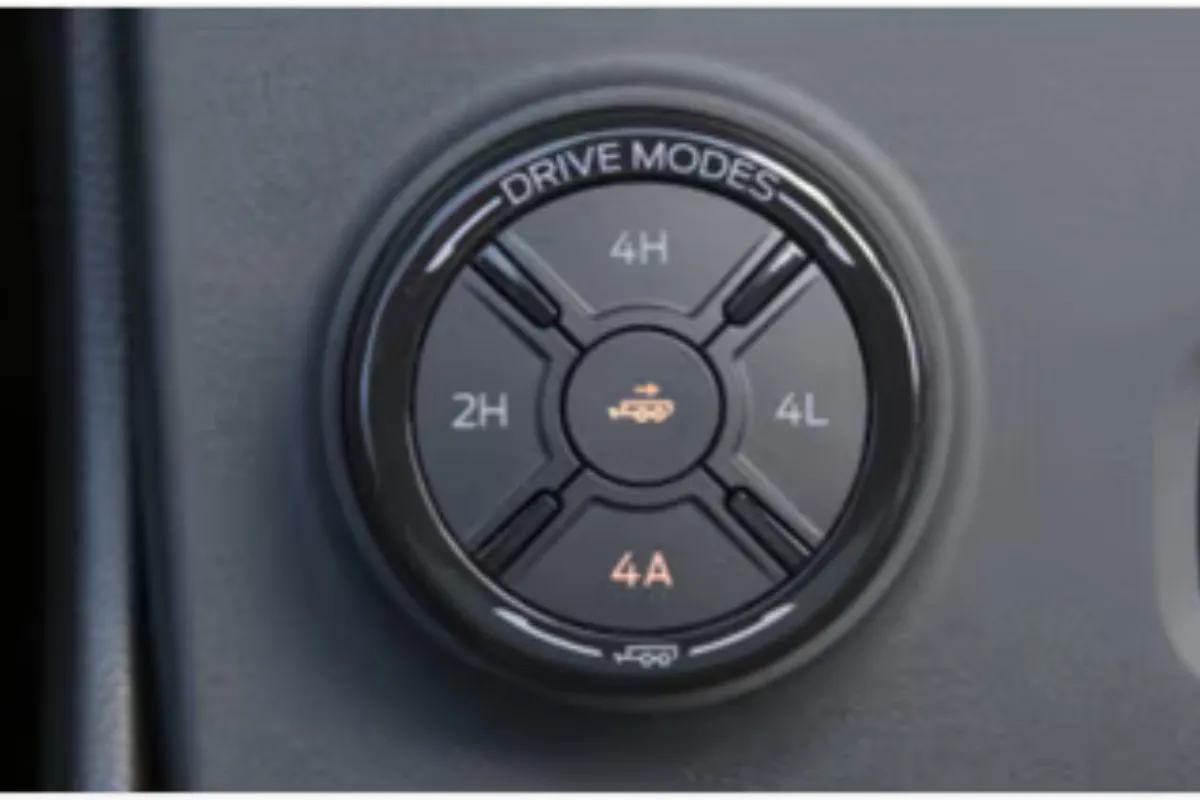
Pro-Trailer Backup Assist is the other standout. Using a rotary knob on the dash to steer the trailer while reversing sounds like a gimmick until you’re trying to slot a 10-metre van into a tight campsite with people watching. It’s one of those features that earns its keep the moment you actually need it.
Ford’s Pro Power Onboard adds a 400W inverter for running gear at camp – handy for a site without power, though serious off-gridders will still want their own solar and battery setup sorted independently.
So What Can the Super Duty 2026 Actually Tow?
This is the question that matters most for caravanners, and the answer spans a meaningful range of Australian-built vans across some of the country’s best manufacturers. Here’s how it breaks down by weight tier.
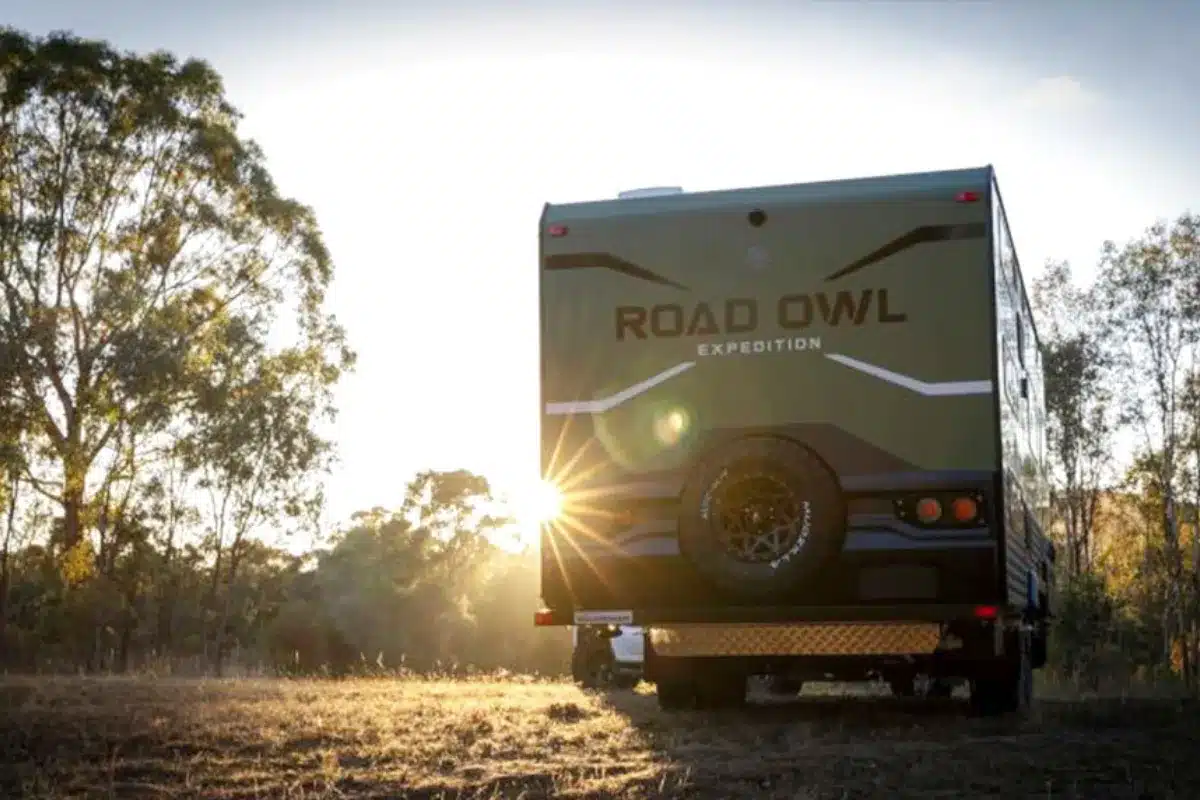
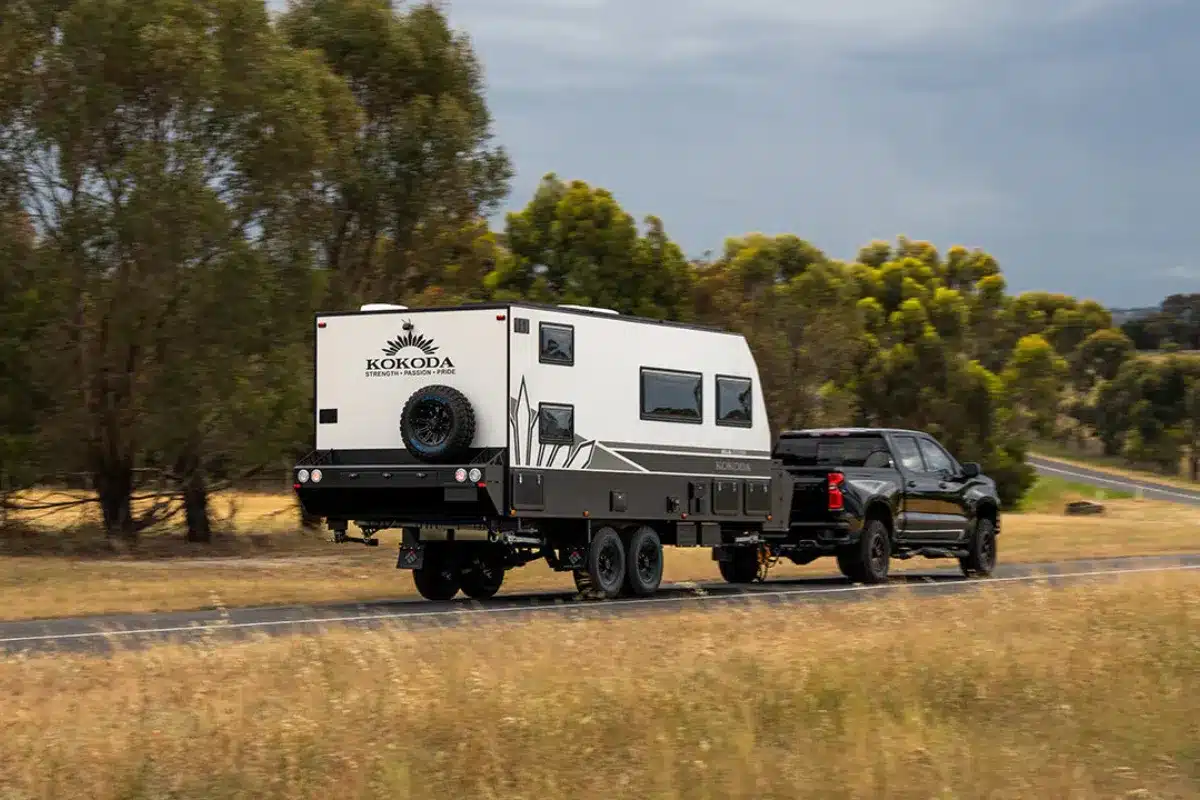
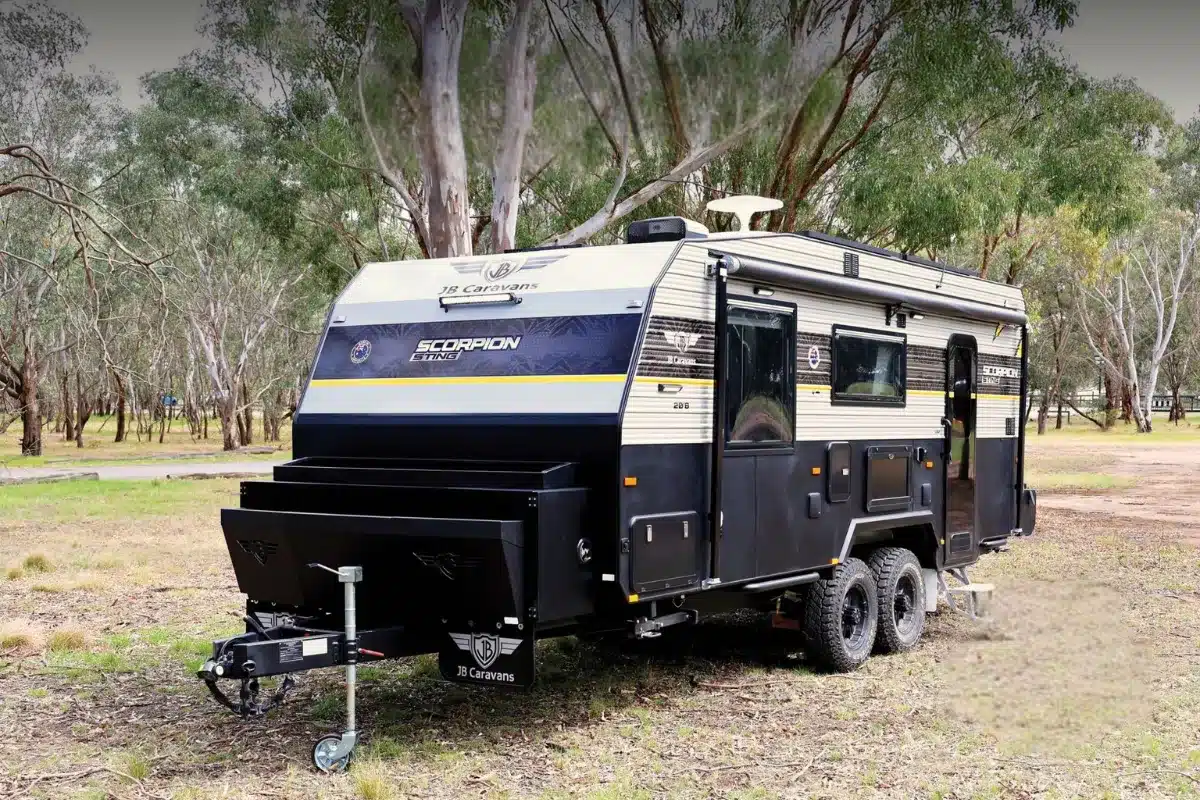
At 3,500kg ATM – Kokoda XCore M.I.A., JB Scorpion Sting, New Age Road Owl Expedition
At this weight you’re in genuinely capable touring territory, and this is where the Super Duty’s headroom starts paying dividends in real terms.
The Kokoda XCore M.I.A. 19’6 sits right at 3,500kg ATM with a 2,880kg tare. With around 850kg of payload and a 200kg ball weight at tare, it’s a van plenty of mainstream towers can handle – but the Super Duty’s extra rating means you can actually load that payload without doing sums at the weighbridge.
From JB Caravans, the Scorpion Sting is a 23ft long-hauler with a 3,500kg ATM – a rig that until now was really pointing at American pickup territory. The Super Duty brings it back into reach without the import price tag.
From New Age, the Road Owl Expedition hits exactly 3,500kg ATM with a 2,885kg tare and tandem independent suspension, backed by Walkinshaw’s engineering experience and robotic chassis welding – a level of manufacturing rigour that’s genuinely uncommon at this price point.
At 4,000kg ATM – Kokoda C220 XC2, Lotus Trooper, Kedron XC-5
This is the tier where options evaporate fast for most mid-size ute buyers. Until now, you needed a LandCruiser 300 Series key to seriously consider a van at this weight. The Super Duty opens it up – and there are more strong options here than most people realise.
The Kokoda C220 XG sits at exactly 4,000kg ATM with a 2,960kg tare, a 300kg ball weight, and a very usable 1,040kg payload. At 22ft and loaded with 860W of solar, 600Ah of lithium, Level 4 self-levelling airbag suspension and a 5L diesel heater, this is a serious long-haul machine. Previously it was firmly LandCruiser territory – now a Super Duty buyer can spec it and drive away.
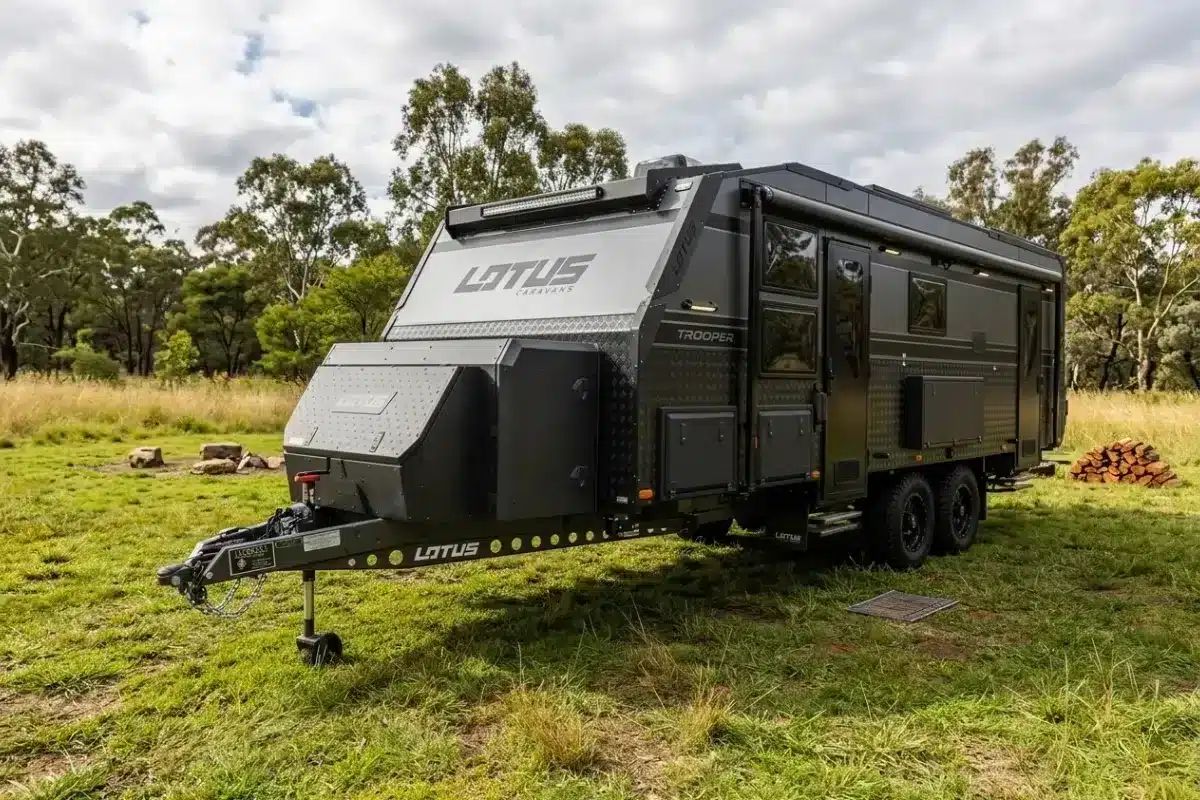
From Lotus Caravans, the Trooper 235 lands at 4,000kg ATM across its 7.24m body, and can be ordered up to 4,500kg ATM for buyers wanting the full ceiling.
Then there’s Kedron – the Queensland institution that’s been building serious off-road caravans since 1962. The XC-5 Cross Country and AT5 both come in at 3,990kg ATM with tares around 3,085–3,150kg, sitting fractionally under the 4,000kg mark but firmly in this tier in terms of build quality, intent, and price. Kedron’s engineering extends to 6,000kg ATM on custom builds with truck air brakes – these aren’t vans that stumbled into heavy territory, they were purpose-built for it from the start.
At the full 4,500kg ATM – Kokoda Counterstrike Vincere, Titanium TS1, Ti22 S4 & S3, Lotus Trooper
At 4,500kg, the club gets exclusive – but it’s bigger than it used to be, and the Super Duty can take on all of it.
The Kokoda Counterstrike Vincere sits at 4,490kg ATM – just under the threshold requiring truck air brakes – with a tare of 3,880kg. At 23ft with 7.3kW of solar, a 10kW lithium battery bank and an incinerator toilet, the off-grid capability borders on the extraordinary. The sheer size warrants consideration on tight remote tracks, but paired with a Super Duty, you’d have one of the most capable long-haul touring rigs available anywhere in Australia.
Titanium has a strong presence at this ceiling. The TS1 toy hauler sits at 4,500kg ATM and brings a genuinely different layout – a proper caravan up front with a rear garage for bikes, quads, or gear, accessed via a novel two-part door and loading ramp. The Ti22 S4 226CL and S3 220 Rear Club are also both rated to 4,500kg ATM, meaning Titanium covers this weight class across multiple body styles and use cases – one of the few manufacturers that does.
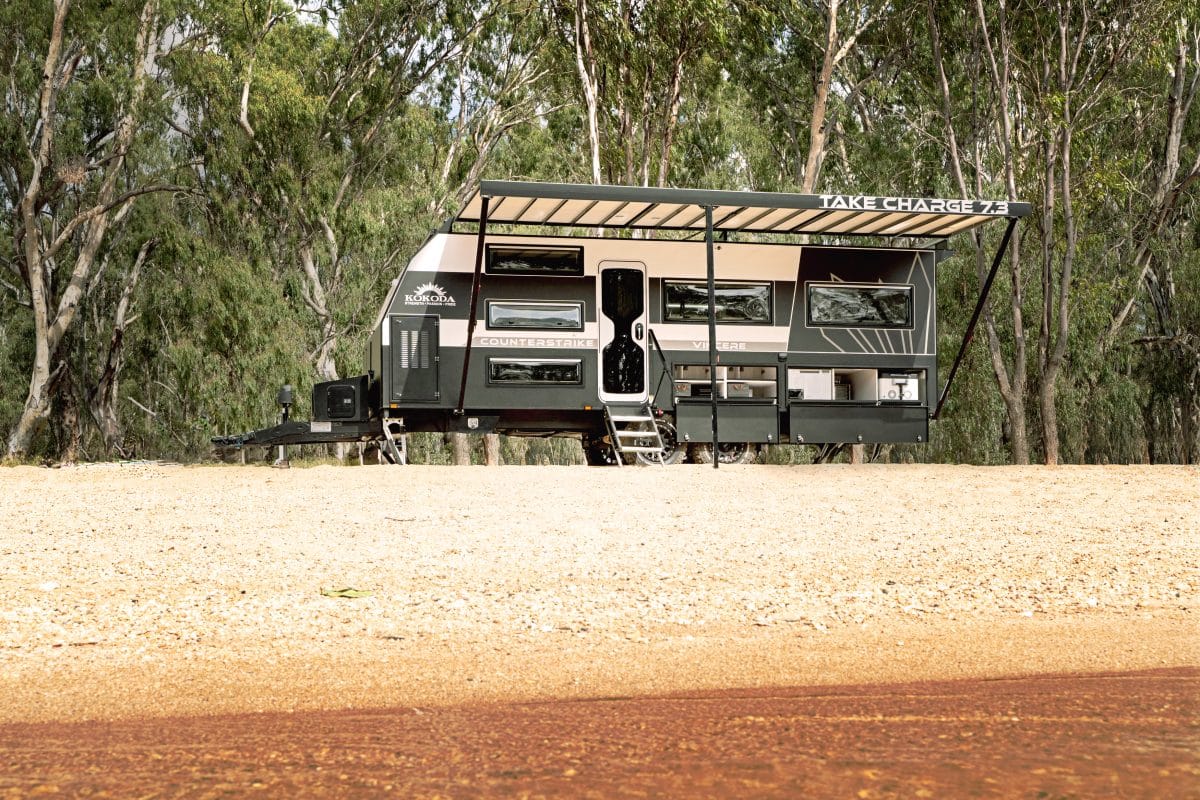
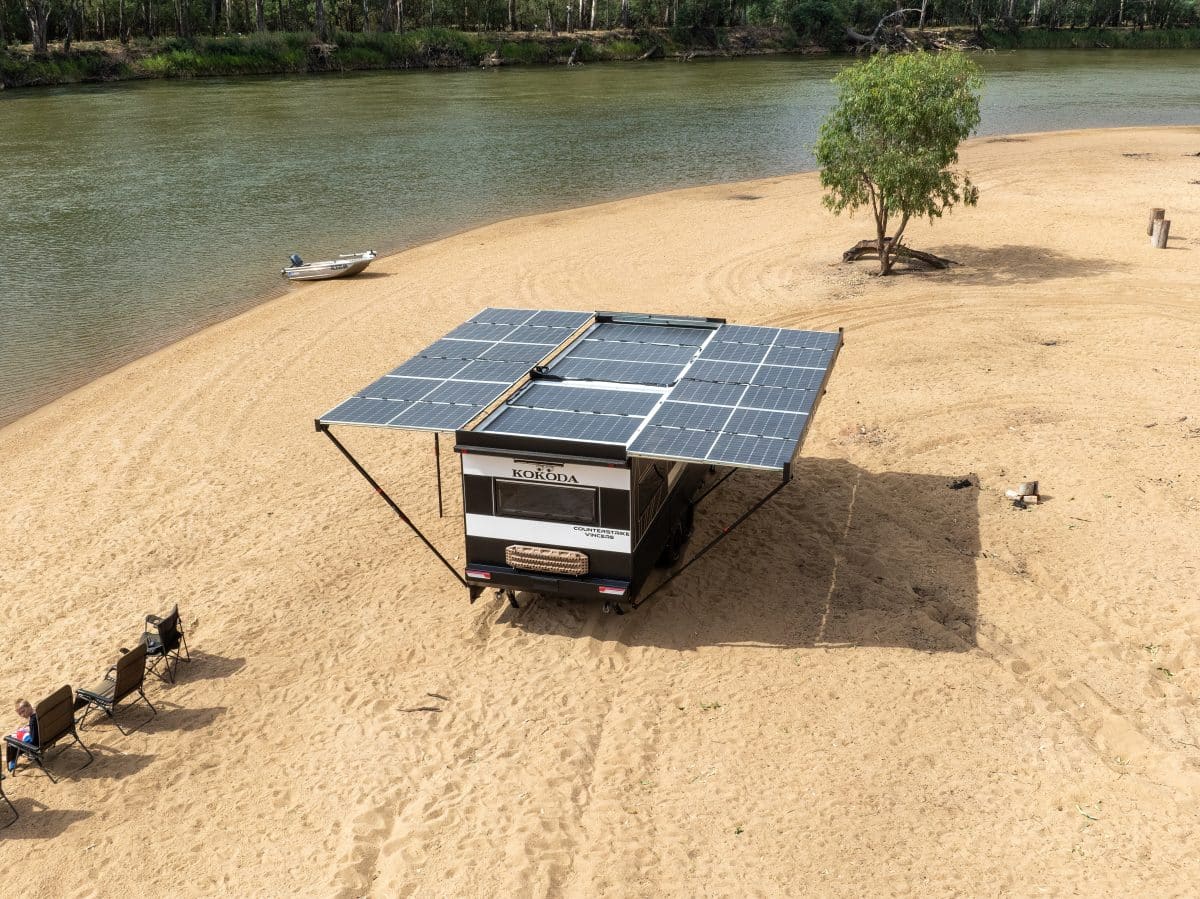
The Ford Super Duty 2026 doesn’t just unlock one tier of van – it opens up a genuine progression across some of Australia’s best caravan builders. From the Kokoda XCore M.I.A. and New Age Road Owl Expedition at 3,500kg, through to the Lotus Trooper, and Kedron XC-5 at 4,000kg, all the way up to statement builds like the Kokoda Counterstrike Vincere and Titanium TS1 at the full 4,500kg – the Ford 2026 Super Duty can handle the lot. That’s a broader menu than any mid-size ute has ever offered Australian caravanners before.
Off-Road Capability to Back It Up
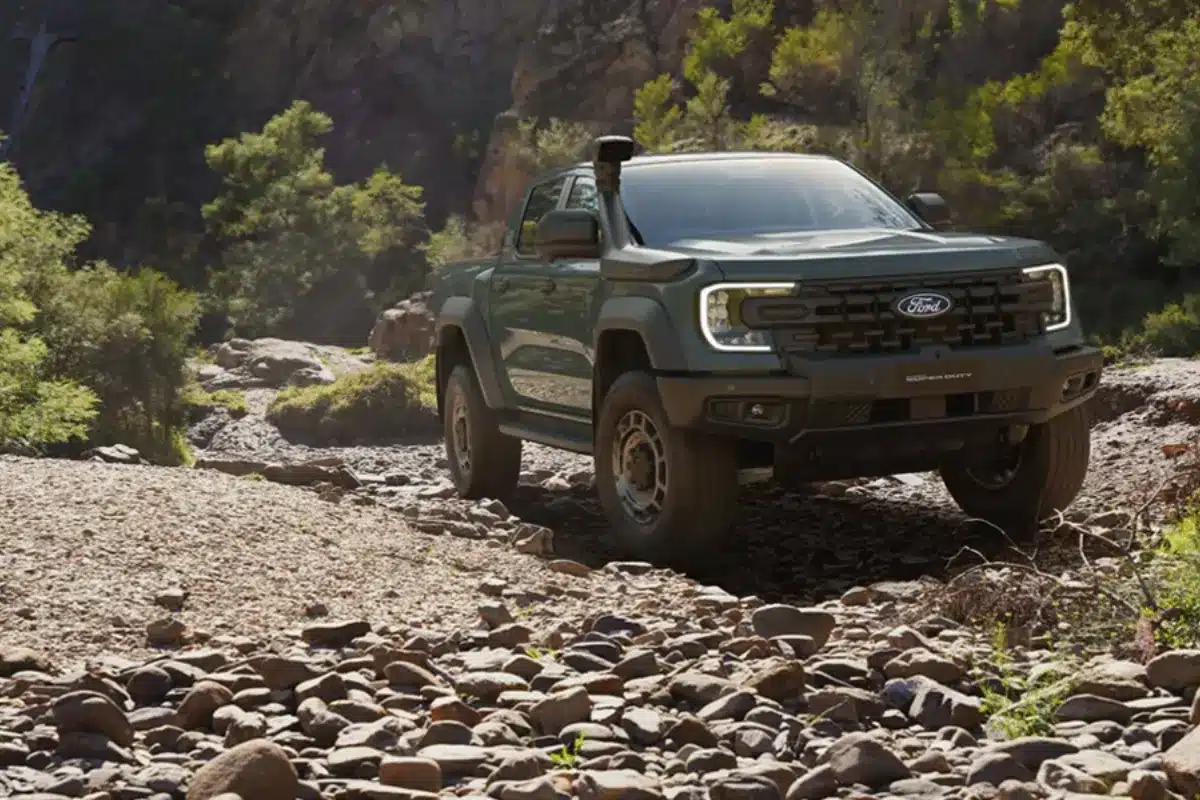
A 4,500kg tow rating is only useful if you can actually reach the places you want to go. Ford hasn’t sacrificed off-road ability to hit the towing numbers – the Super Duty ships with locking front and rear differentials, 299mm of ground clearance, and 850mm of wading depth as standard.
For the vast majority of Australian touring – dirt tracks, station stays, gravel roads to national parks, fire trails to remote camp spots – that’s more than adequate. The Super Duty isn’t a babied highway hauler; it’s built to go where the people towing these vans actually want to go.
How the Ford Super Duty 2026 Pricing Stacks Up
The Ranger Super Duty is available in three body styles, with pricing before on-road costs:
- Single Cab – from $82,990
- Super Cab – from $86,490
- Double Cab – from $89,990
- Double Cab Pick-Up and XLT – from $93,990
A new Toyota LandCruiser 300 Series starts above $100,000 and remains notoriously hard to get. American trucks push well into six figures before accessories and on-roads. The Super Duty sits meaningfully below both.
For caravanners already spending $80,000–$100,000 on a tow vehicle just to access this class of van, the Super Duty doesn’t just compete – it’s genuinely compelling.
Who The Super Duty Ute Is For
The Ford Super Duty 2026 isn’t the right ute for everyone, and it doesn’t need to be. If you’re towing a camper trailer or a van under 2,500kg, a standard Ranger, HiLux, or Prado does that job beautifully for a lot less money.
But if you’re eyeing a Kokoda XCore M.I.A. or a New Age Road Owl Expedition and wondering whether your current tow vehicle is genuinely up to the task – or if you’re ready to step into a Lotus Trooper, or a Kedron XC-5 and just need a mid-size ute that can match it – the Super Duty is the first time that combination has been possible at this price point.
For the serious touring couple, the grey nomad ready to invest in a proper long-haul rig, or the family going all-in on a big off-road van, the Ranger Super Duty opens up a menu of Australian-built caravans that simply wasn’t accessible before.
The Bottom Line
The 2026 Ford Ranger Super Duty is a landmark for Australian caravanners – not because of the number on a spec sheet, but because of what that number unlocks across the full range of Australian caravan manufacturing. Factory 4,500kg towing, proper integrated technology, genuine off-road hardware, and a competitive price in a mid-size platform. That combination hasn’t existed before.
For the caravanner who’s been quietly waiting for a tow vehicle that matches their ambitions without demanding a six-figure commitment to get there, the Super Duty is worth a serious look before you settle on anything else.