
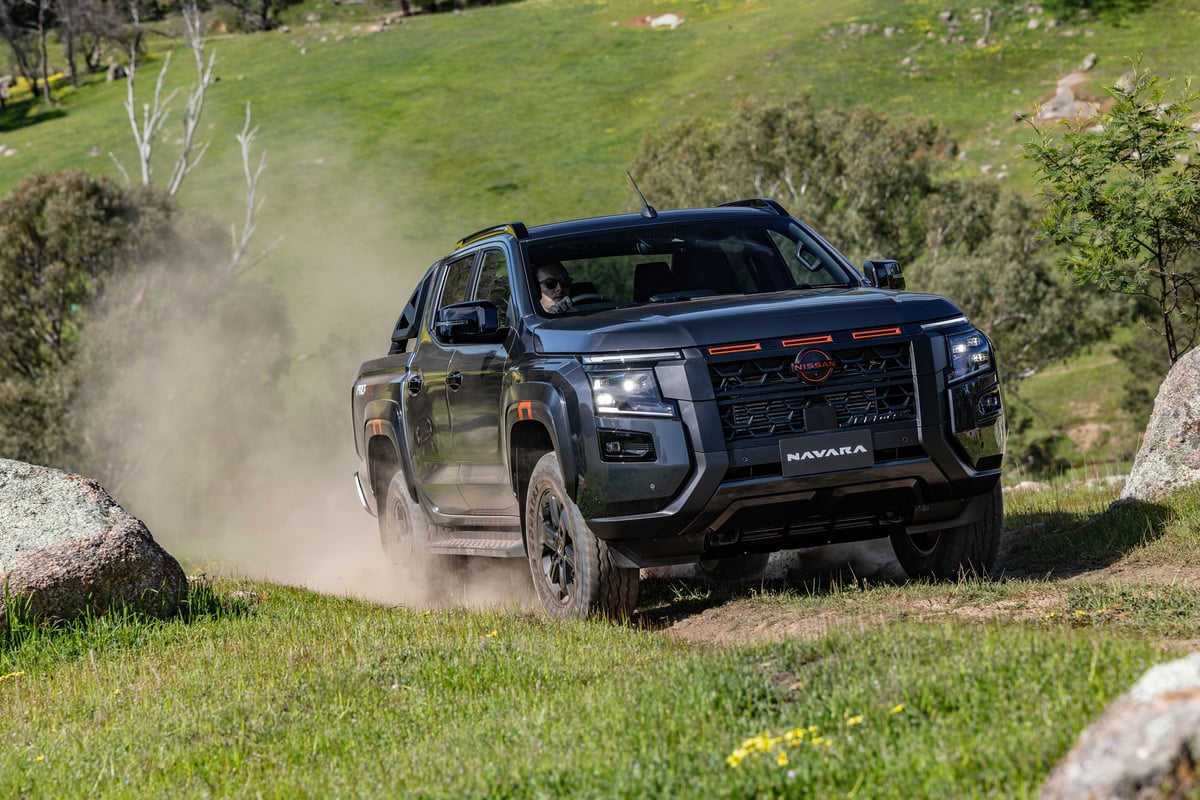
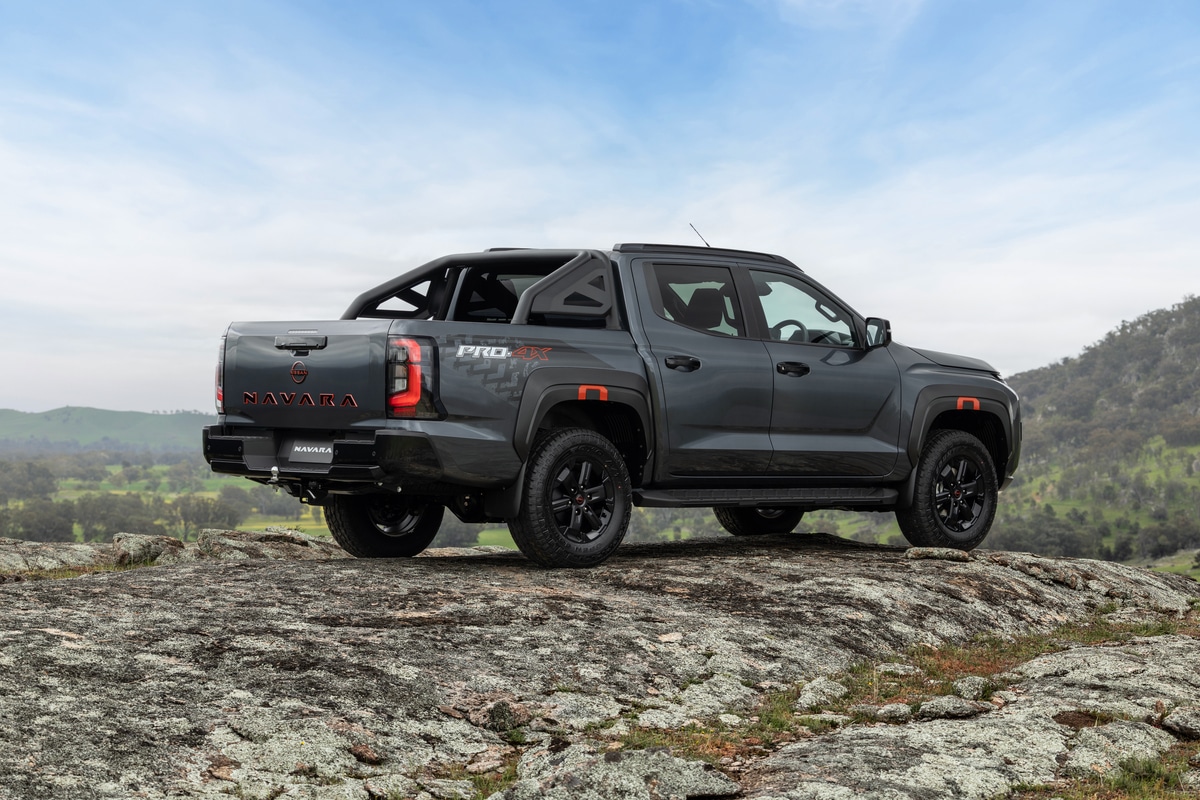

Tested where Australians actually tow. The new 2026 Nissan Navara hasn’t just been tuned locally – it’s been tested across some of the toughest touring routes in Australia, under load and in real world towing conditions.
There’s no big power play to outgun the Ranger, no headline towing tech to grab attention, and no attempt to rewrite the spec sheet. But that might be exactly the point.
Because the new 2026 Nissan Navara looks less like a showroom hero – and more like a ute designed for real-world towing and touring across Australia.
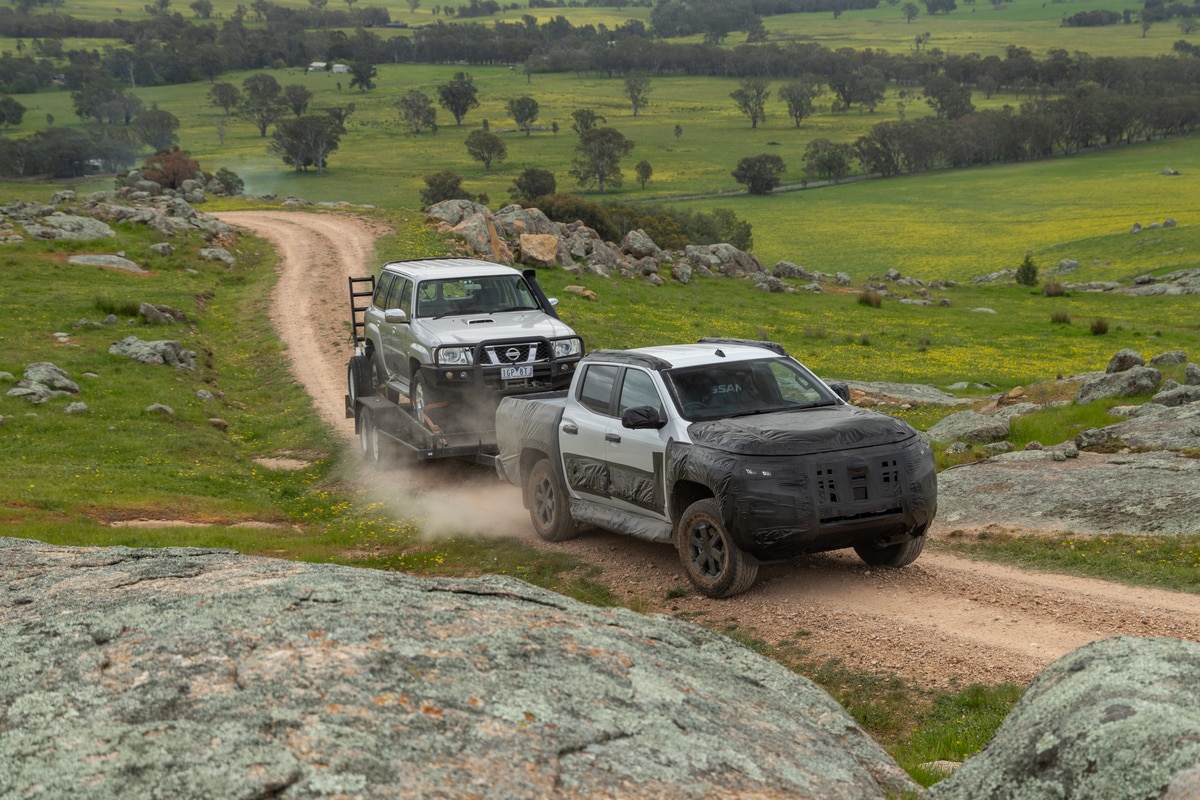
Key Testing Locations
Testing sites across South Australia, Queensland, and the Northern Territory across remote, regional, and off-road environments really push the new Nissan Navara to it’s limits.
01. South Australia
- • Loveday 4×4 Adventure Park
- • Innamincka
- • Oodnadatta Track
02. Queensland
- • Birdsville
- • Plenty Highway (QLD-SA corridor)
03. Northern Territory
- • Alice Springs
- • Finke
This isn’t a ute validated in a lab or overseas proving ground.
It’s been tested on corrugated outback tracks, across long-distance touring routes with real load scenarios.
Steph’s insight: Anyone can build a ute that tows 3.5 tonnes. Not every ute is tested doing it between Birdsville and the Oodnadatta Track.
Premcar suspension tuning – this is the real story
Nissan’s partnership with Premcar is more than just a badge. This is, now, a full-scale Australian engineering program, and it’s one of the most detailed tuning efforts we’ve seen in this segment.
Lets break it down. The program ran for 12 months and signed off after 18,500kms (accelerated durability conditions)
This included 137 damper codes evaluated and over 550 internal shim changes. The Navara also sees the introduction of an internal rebound spring in the front dampers and is tested across all grades and all loading conditions.

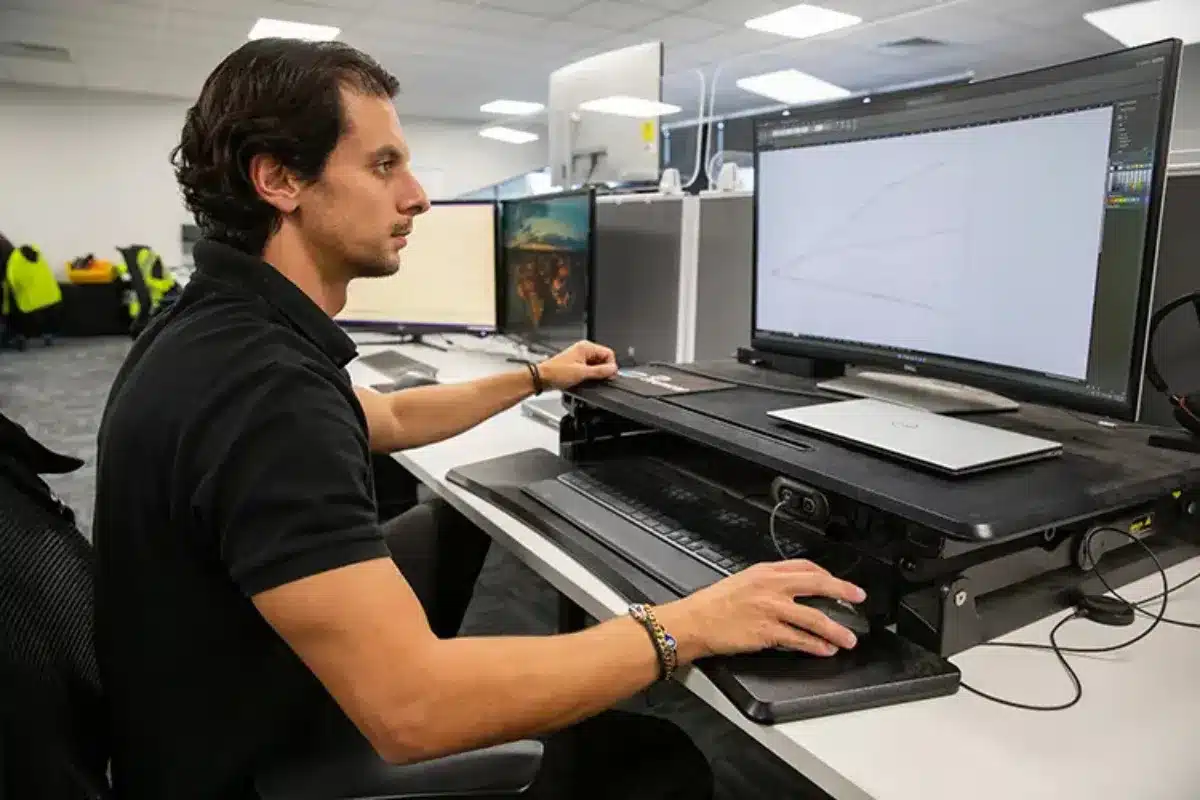
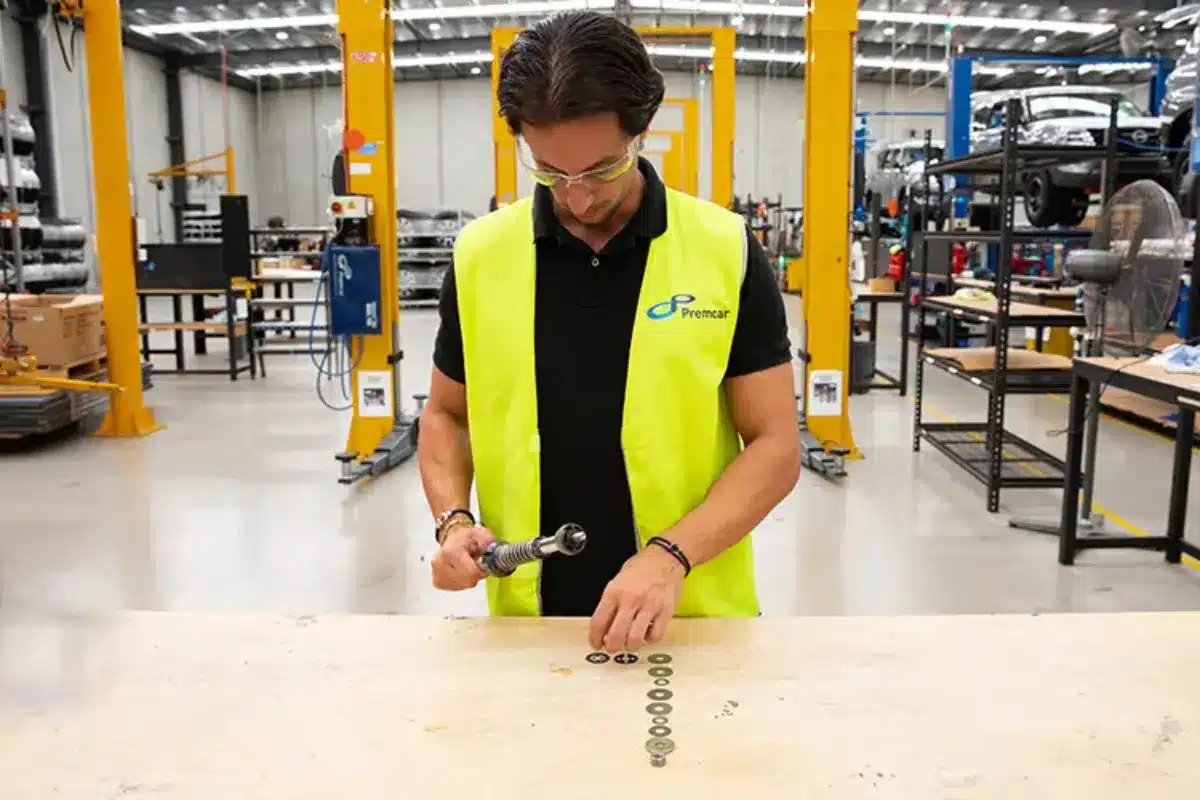
The result? 3 distinct suspension calibrations:
1. SL/ST – Built for working loads
2. ST-X – Controlled & predictable towing
3. PRO-4X – Articulation & comfort
Why?
“We made a deliberate decision to develop three distinct suspension calibrations rather than a single compromise, because a tradesman loading a tonne of gear every morning has fundamentally different needs to a family towing a caravan or boat on the weekends.”
– Andrew Humberstone, Managing Director, Nissan Oceania – Nissan Australia’s release
Why this matters for towing
This level of tuning isn’t about marketing.
It’s about controlling body movement under load, reducing bounce on corrugations and improving stability when towing.
Premcar tuning isn’t just a nice extra – it’s arguably the biggest reason this Navara could feel better to tow with than its spec sheet suggests.
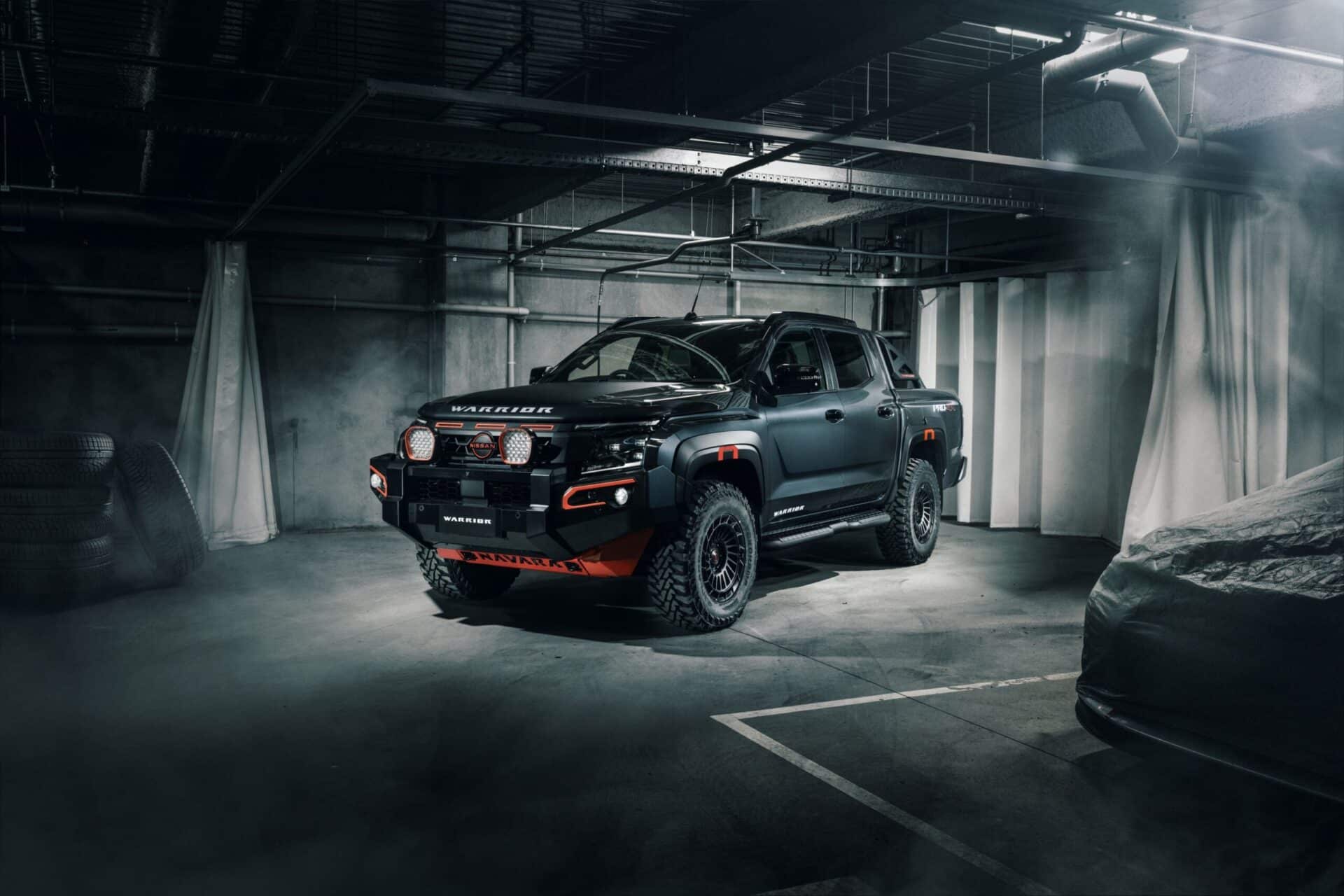
Steph’s insight: Premcar used to be reserved for the Warrior models – the upgrades on the Navara, pre-rego lift, bulllbar etc. Now, their engineering work runs through the entire range, which means every Nissan Navara 2026 from the same Australian-focused tuning.
Same towing numbers – but a stronger foundation underneath. On paper, the numbers are familiar: 3500kg braked towing with around 1000kg payload.
But underneath, this is a very different Navara. It now sits on a stronger ladder chassis shared with the new Triton, designed for increased rigidity, better load handling and improved stability.
For touring, that translates to more confidence at highway speeds, less chassis flex and better control when conditions deteriorate.
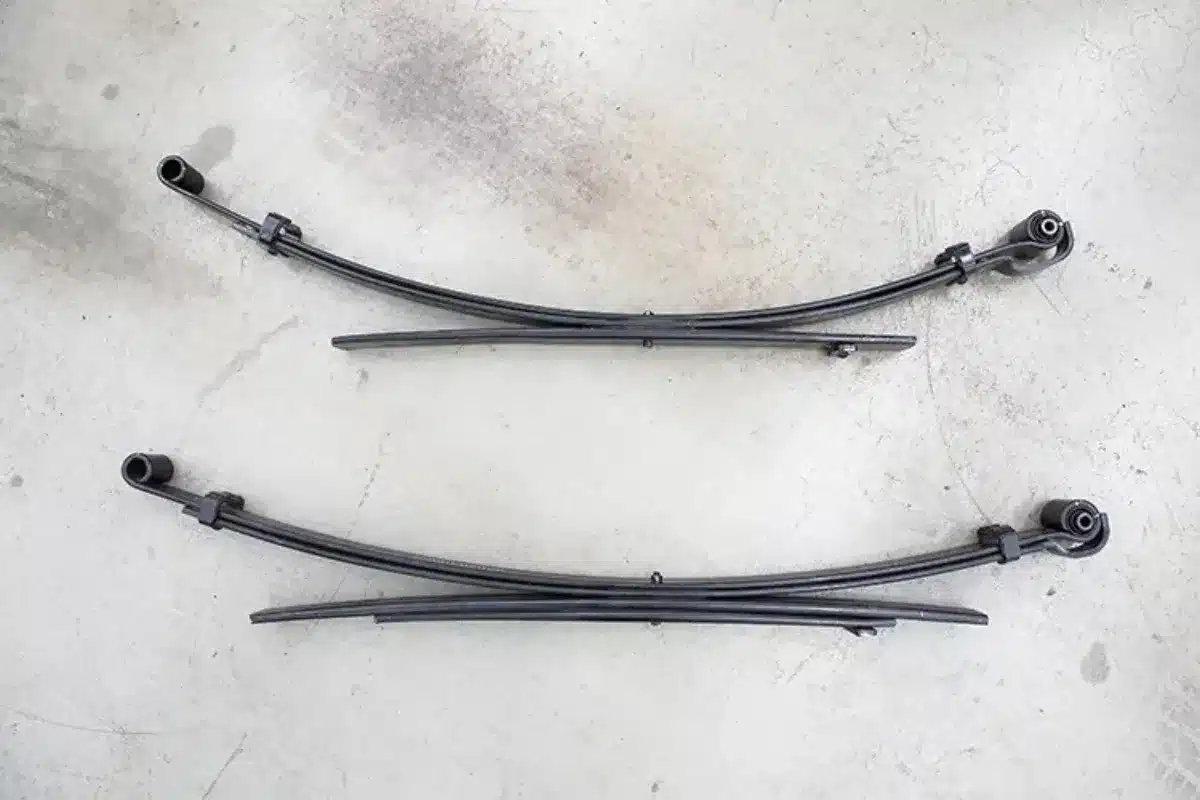
Leaf spring rear suspension is back – and that’s good news
The new Nissan Navara 2026 returns to leaf spring rear suspension, replacing the previous coil setup.
For towing, that’s a clear win. Leaf springs provide better load support, more predictable behaviour with heavy ball weight along with improved durability under constant load.
This is a shift away from lifestyle comfort and toward touring capability.
Real-world towing advantage – capable, but still uncomplicated
While competitors chase complexity, the Navara strikes a more practical balance – combining proven mechanicals with smart, usable 4WD tech.
At its core, it keeps things familiar:
- Proven 2.4L twin-turbo diesel
- 6-speed automatic
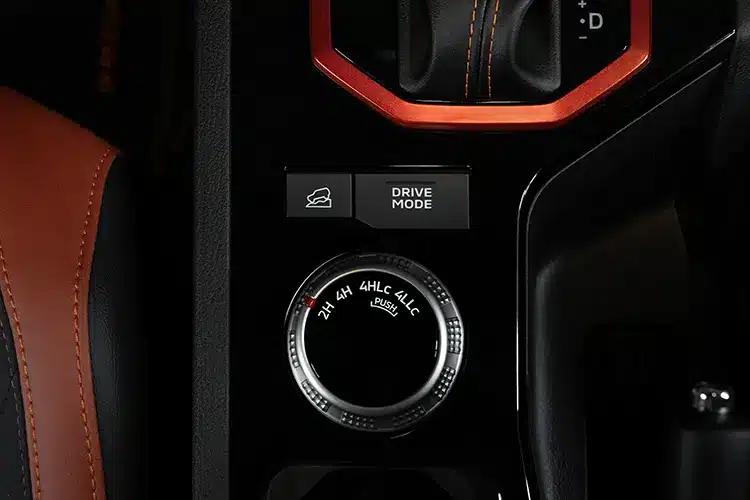
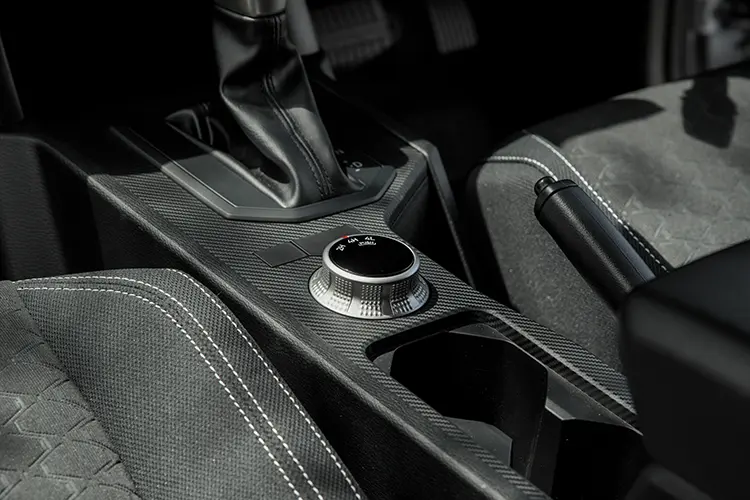
- Dual-range 4WD with low range and rear diff lock standard across all grades
But layered over that is a more refined traction package than you might expect.
All models feature Active Brake Limited Slip (ABLS), helping distribute torque to the wheels with grip, while higher grades step up to a more advanced Super 4WD system with a Torsen® centre differential. That means the vehicle can automatically adjust torque front-to-rear – particularly useful when towing on wet roads or variable surfaces.
There’s also shift-on-the-fly 4WD engagement, allowing drivers to move between 2H and 4H at speed – a small detail that makes a big difference when conditions change quickly on regional roads.
Why that matters in remote Australian towing
- Systems remain intuitive and easy to use
- Core driveline is still mechanically proven
- Added tech works in the background, not against you
- Capability improves without adding unnecessary complexity
Compared to modern multi-speed transmissions and overly digitised drivetrains, the Navara still feels refreshingly straightforward. Fewer gears can mean less constant shifting under load, more consistent torque delivery, and more predictable behaviour on long climbs.
At the same time, features like torque-sensing all-wheel drive and terrain modes add confidence where it counts – without requiring the driver to constantly manage it.
It’s not trying to be the most high-tech ute in the segment.
But it may be one of the easiest to live with when you’re towing long distances across changing conditions.
Steph’s take: When you’re a long way from help, capability matters – but so does knowing the system isn’t working against you. The Navara gets that balance right.
Suspension built for load, not just lifestyle.
The Navara’s payload sits around 1000kg.
On paper, that sounds like plenty for a ute. But once you break it down for real-world touring, that number disappears quickly.
In reality, you can easily be using 600 to 900kg of payload before you even consider accessories.
And that’s where many setups run into trouble. Because anything added to the vehicle also counts: Bull bars, roof racks, canopies, long range fuel or extra batteries. It all comes off that same 1000kg limit.
When you’re towing a caravan, payload becomes just as important as towing capacity. You might be within the 3500kg tow rating, but overloading payload or exceeding GVM can make the setup unsafe or illegal.
Where the new Navara changes the story. The key difference here isn’t the number – it’s how the vehicle handles it.
With a stronger chassis, leaf spring rear suspension, extensive local tuning through Premcar. The 2026 Navara has been engineered to carry weight more consistently, stay level under load and maintain stability when close to its limits.
Steph’s takeaway: Anyone can quote a one-tonne payload. The real question is how the vehicle behaves when you’re actually using it – fully loaded, with a van on the back, a few hundred kilometres into the trip in 40 degree aussie heat.
Where the 2026 Nissan Navara now sits
The new Navara doesn’t try to dominate the segment. Instead, it focuses on stability under load and real-world ride quality.
It’s not the most powerful.
It’s not the most high-tech.
But it may be one of the most deliberately engineered for Australian touring conditions.
The 2026 Navara isn’t trying to win the spec sheet battle. But it might win where it matters.
Because when you’re towing across Australia, it’s not about how much you can pull once – it’s about how well you can keep pulling it, day after day, across every terrain.
And this Navara looks like it’s been built for exactly that.