
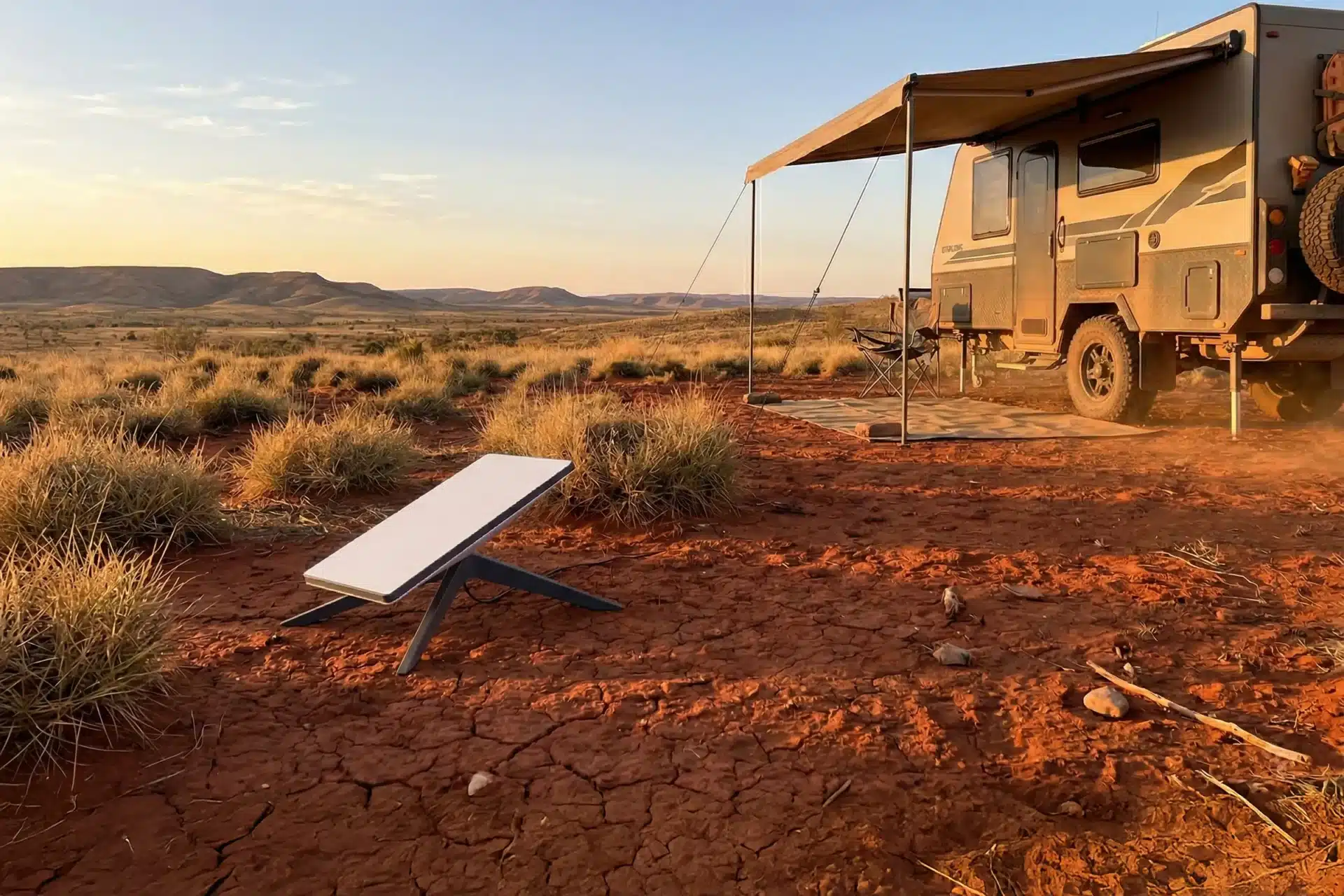

Australia’s off-grid travellers are paying attention to one piece of gear more than ever this year: the Starlink Mini satellite internet system. Once a premium curiosity, this compact device is fast becoming part of the gear list for caravanners heading deep into the bush or relying on connectivity away from campgrounds and townships.
Below we unpack what’s changed, what’s driving interest and what travellers need to know before they pack it for the trip.
What’s New with Starlink Mini
After launching locally in 2024, the Starlink Mini has seen price adjustments that make it more attractive to road-trippers this year. Retail prices for the hardware have dropped significantly from around $600 to closer to $399 AUD, putting it closer in reach for caravanners weighing connectivity needs against budget.
That price change has sparked fresh discussion within Australian touring communities online, with travellers sharing both excitement about reduced cost and questions about real-world performance and plan value.

Why Caravanners Are Interested
Starlink’s appeal for caravanning comes down to connectivity where mobile networks don’t reach. Traditional mobile coverage in Australia leaves large tracts of regional and outback roads without reliable service. Satellite broadband fills that gap. External bodies such as telcos and regulators are also exploring satellite solutions to improve national reach, signalling broader industry movement toward low-earth-orbit connectivity.
For caravanners this matters because:
- Remote work while travelling is more common, requiring stable internet access.
- Location sharing and navigation tools rely on data.
- Streaming and communications are part of holiday routines for many families.
- Emergency connectivity can be vital in remote regions.
Starlink Mini for Caravans
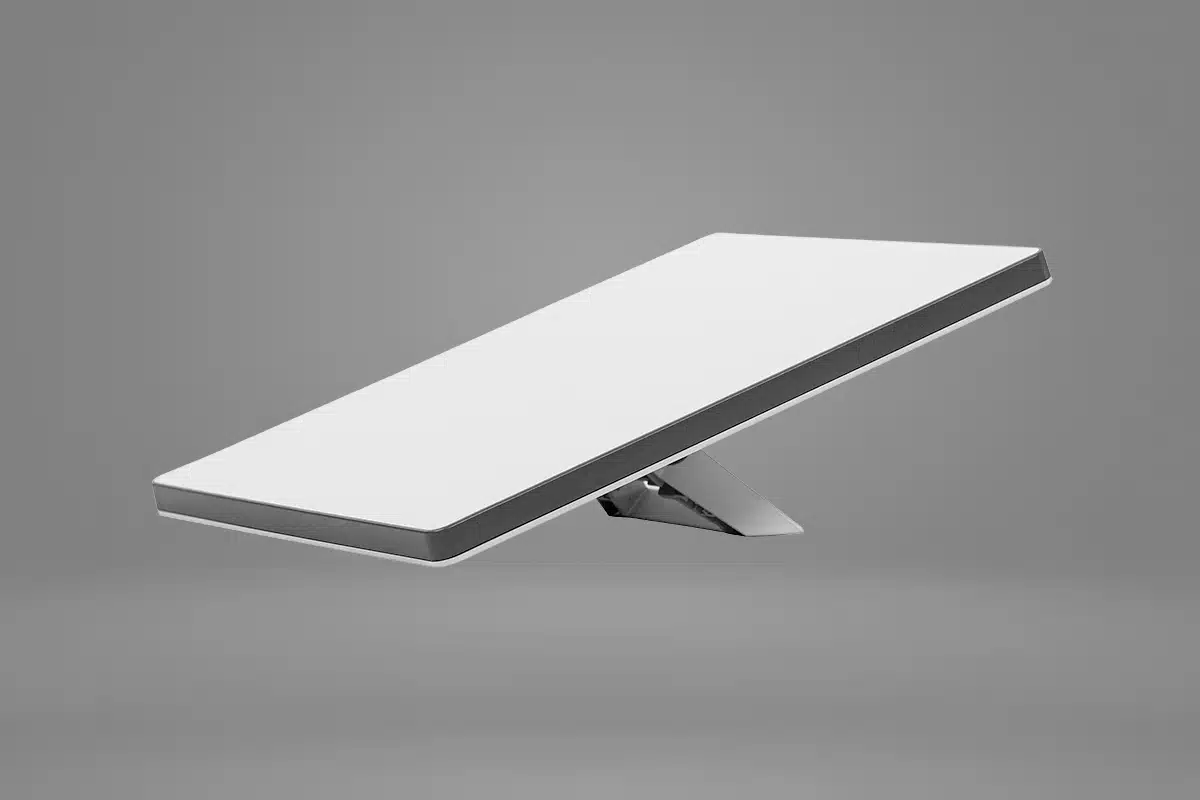
The ultimate compact connectivity solution for remote touring. Below are the verified technical requirements for weight, size, and 12V power integration.
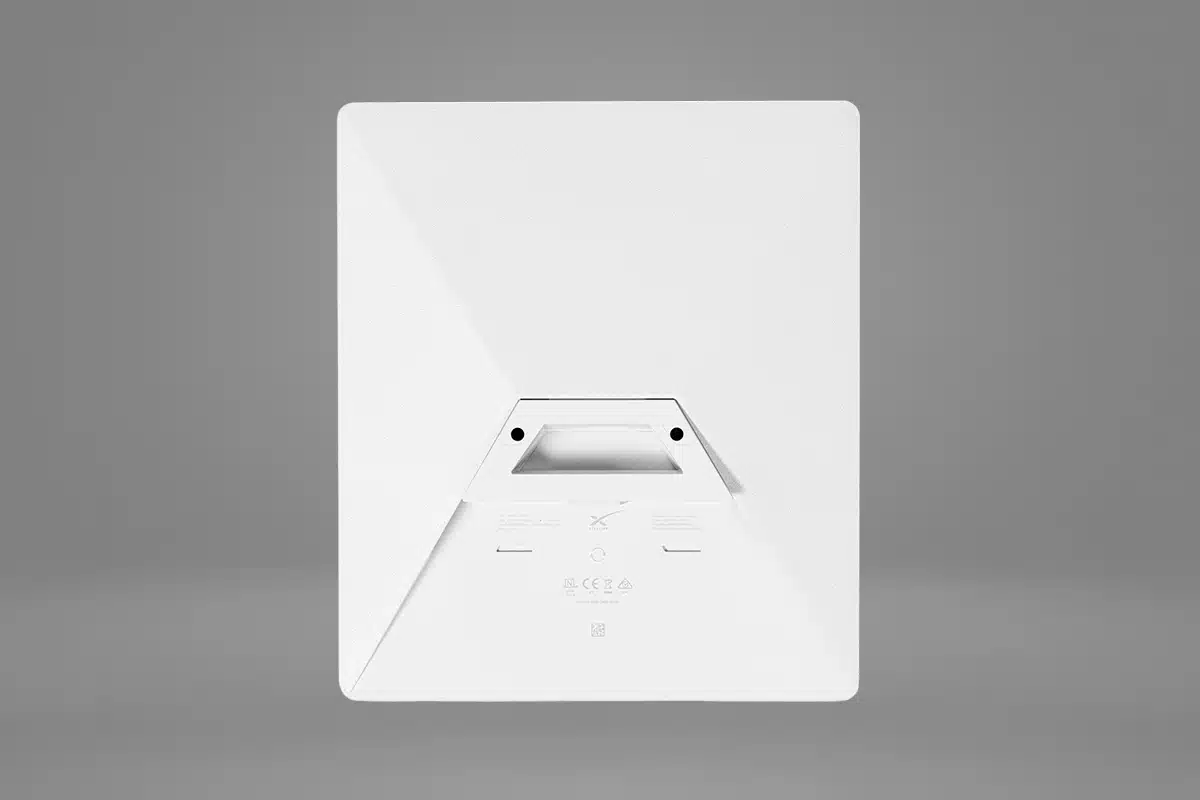
01. Hardware Snapshot
Includes integrated WiFi router. Environmental rating: IP67 (Dust/Water immersion).
02. Power Reality
- • Avg. Power Draw: 20–40 Watts
- • Input Rating: 12V to 48V DC (60W max)
- • 12V Battery Impact: ~1.6–3.3 Ah per hour
- • USB-C Option: 100W PD (20V/5A) minimum
Best Suited For
- ✔ Remote workers (Stable zoom/comms)
- ✔ Outback travellers (Off-grid safety)
- ✔ Families needing streaming/education
- ✔ Weight-sensitive packing setups
Touring Checklist
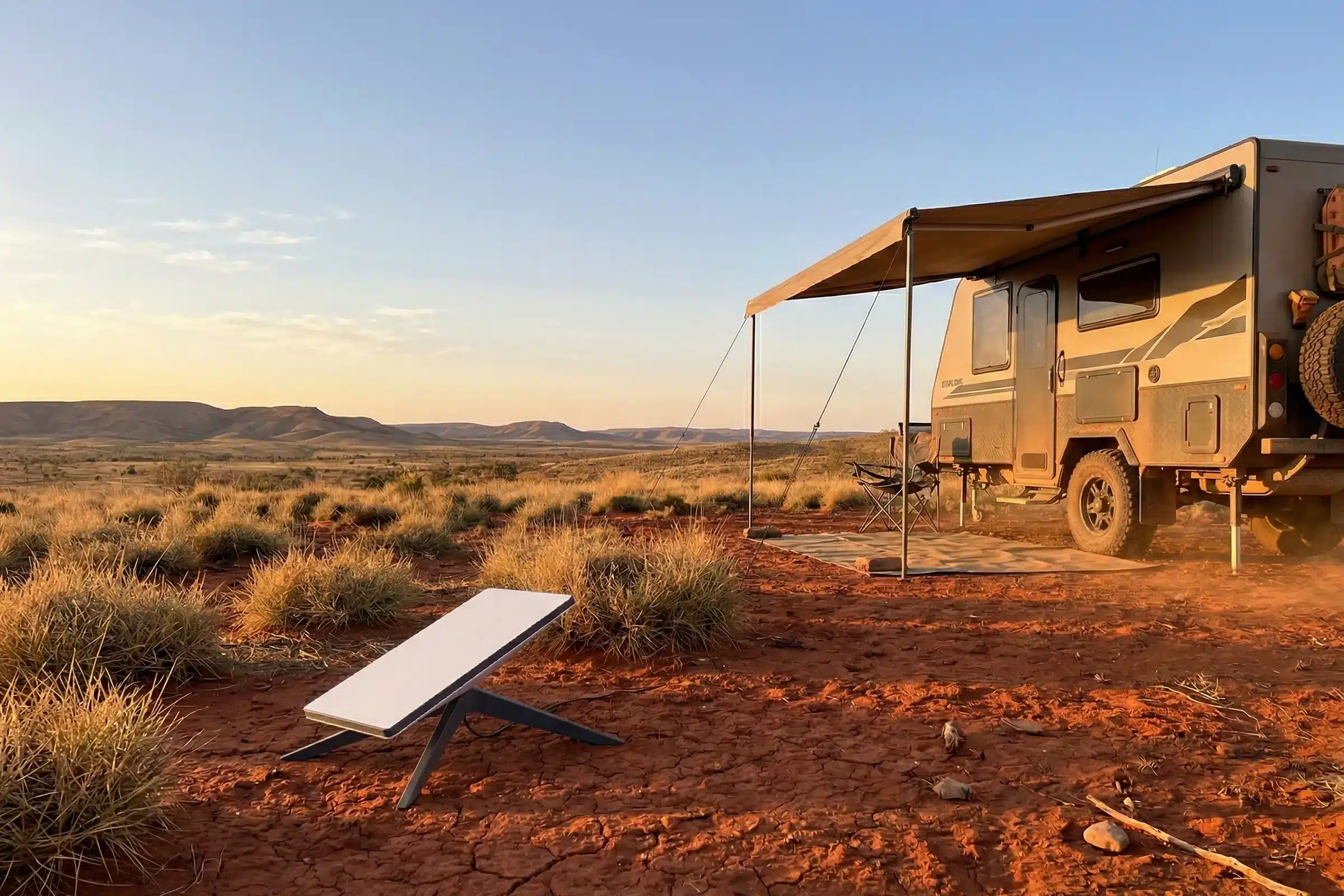
Technical Note: Starlink Mini performance is heavily dependent on an unobstructed view of the sky. Nearby trees, caravan awnings, or high-profile adjacent vehicles can significantly impact connection stability and speeds.
Real-World Use: What Travellers Report
On community forums and trip blogs, the Starlink Mini gets mixed but generally positive feedback:
- Some travellers report usable internet in open-sky campgrounds and remote sites, with signal extending beyond the immediate van area.
- Users note that clear line of sight to the sky matters for reliable reception. Trees, structures and local terrain can affect performance.
- Caravan and camper communities are now actively discussing mounting systems and accessories to make the Mini easier to set up on the road.
An accessory trend gaining traction is the 12-volt integration kits, which let caravanners power the Starlink Mini directly from their 12V battery systems. That reduces reliance on inverters or generators and can simplify off-grid setups.
Connectivity Plans and Practical Costs
While the hardware price has softened, travellers still face ongoing subscription costs. Starlink’s plans typically range from data-capped roaming packages to more expensive unlimited options. However the flexibility to pause roaming plans when not in use has become a frequently cited benefit among caravan communities.
Travellers should weigh:
- How often they’ll need satellite broadband.
- Whether they can combine it with mobile data when in range.
- The extra gear they might purchase to mount and power the system effectively.
What Travellers Should Know Before They Pack It
- Clear sky matters: The satellite system works best with a direct view of the sky above the dish. Obstructions can hit performance.
- Plan your power: If you’re off-grid, invest in proper 12V power integration so you’re not draining battery or relying on an inverter.
- Subscription costs are ongoing: Hardware is one thing, but data plans are another. Decide how much connectivity you need before signing up.
- Community feedback is valuable: Other caravanners’ experiences can help set expectations and avoid common setup issues.
Bottom Line: A Practical Tool for the Road
Starlink Mini isn’t for every traveller. For those who rarely leave network coverage, it may be unnecessary. But for those seeking reliable connectivity deep into regional and remote Australia, this gear is becoming a practical part of the touring toolkit in 2026.
For caravanners balancing comfort, safety and connectivity, the Starlink Mini and its growing accessory ecosystem are worth a close look as part of your gear planning this year.