
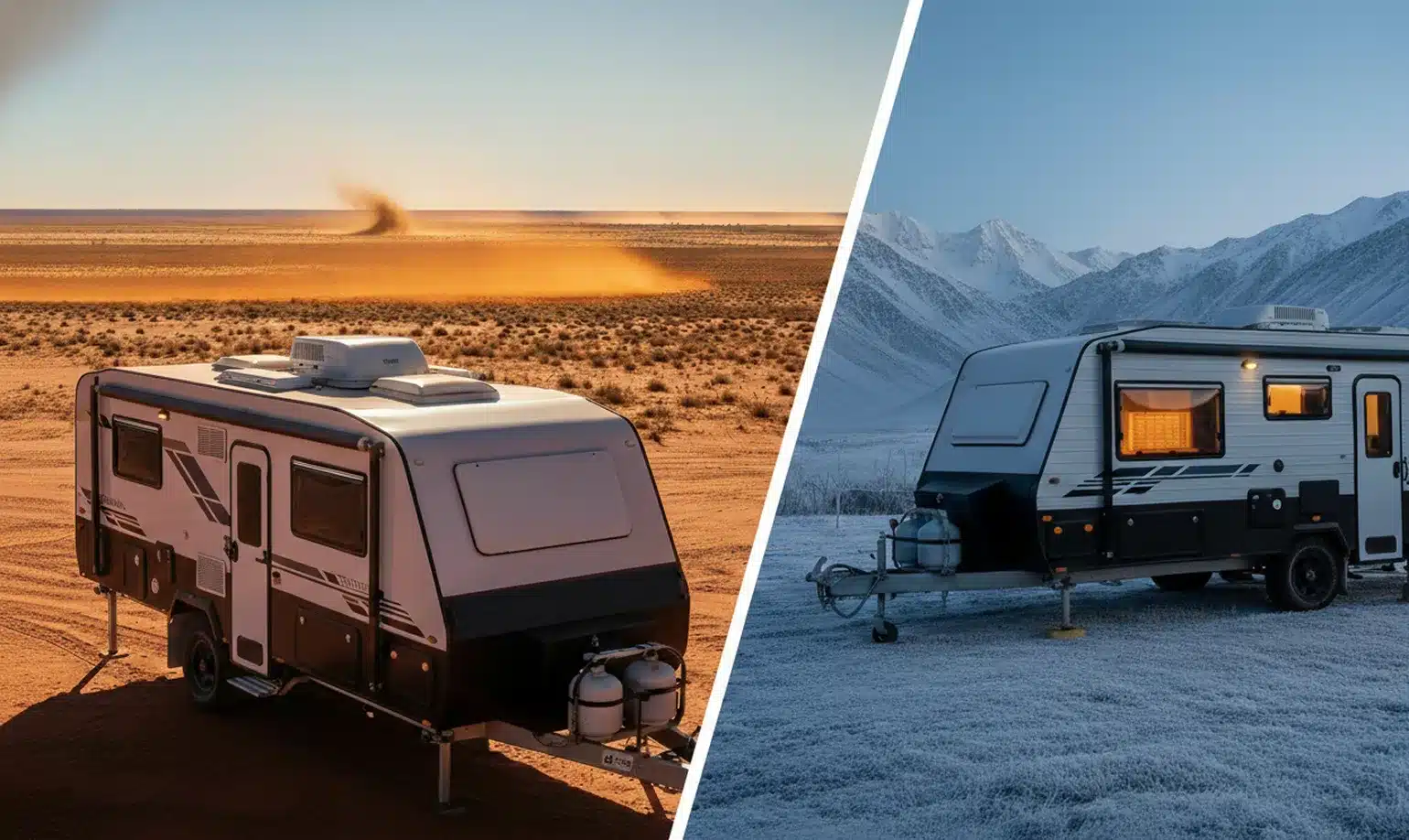


Spend a summer afternoon in inland Queensland or the Top End and you will quickly realise an air conditioner in your caravan is not a luxury. It is essential. The same goes for crisp alpine mornings, where reverse cycle heating turns a cold van into a comfortable base.
With more Australians travelling year-round, interest in RV and caravan air conditioners continues to grow. The real question for many owners is not whether to install one, but which size makes sense. If you are choosing a rooftop system, is 2.5kW enough, or should you step up to 3.5kW?
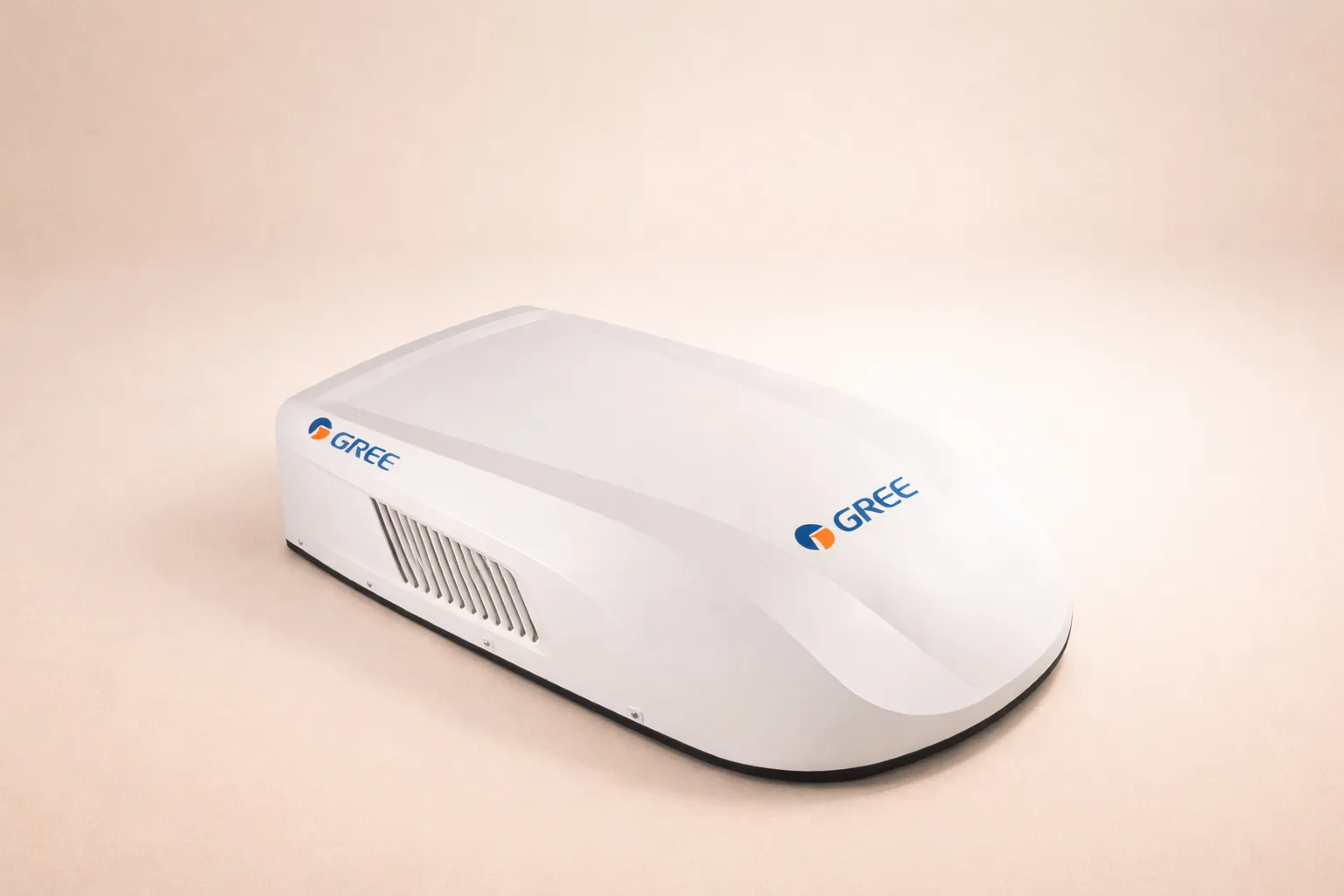
Using the GREE 2.5kW and 3.5kW Rooftop Air Conditioners as a case study, here is what you need to know before making the call.
Portable vs Rooftop Air Conditioners: What Suits a Caravan?
Portable air conditioners are widely available and often considered by caravan owners looking for a simple solution. They can work in certain situations, particularly for short stays on powered sites.
However, caravans are very different environments to homes.
Portable units typically require window venting kits, take up valuable floor space and need to be secured properly during travel. Condensation management can also become an issue.
A rooftop caravan air conditioner is purpose-built for RV use. It mounts through a standard roof cut-out, preserves internal space and distributes air through a ceiling plenum. For most regular travellers, a rooftop RV air conditioner provides a more integrated and practical long-term solution.
Designed for Australian Conditions
Australian travel can mean sustained heat, humidity, dust and long highway stretches. Climate control systems need to cope with real-world extremes.
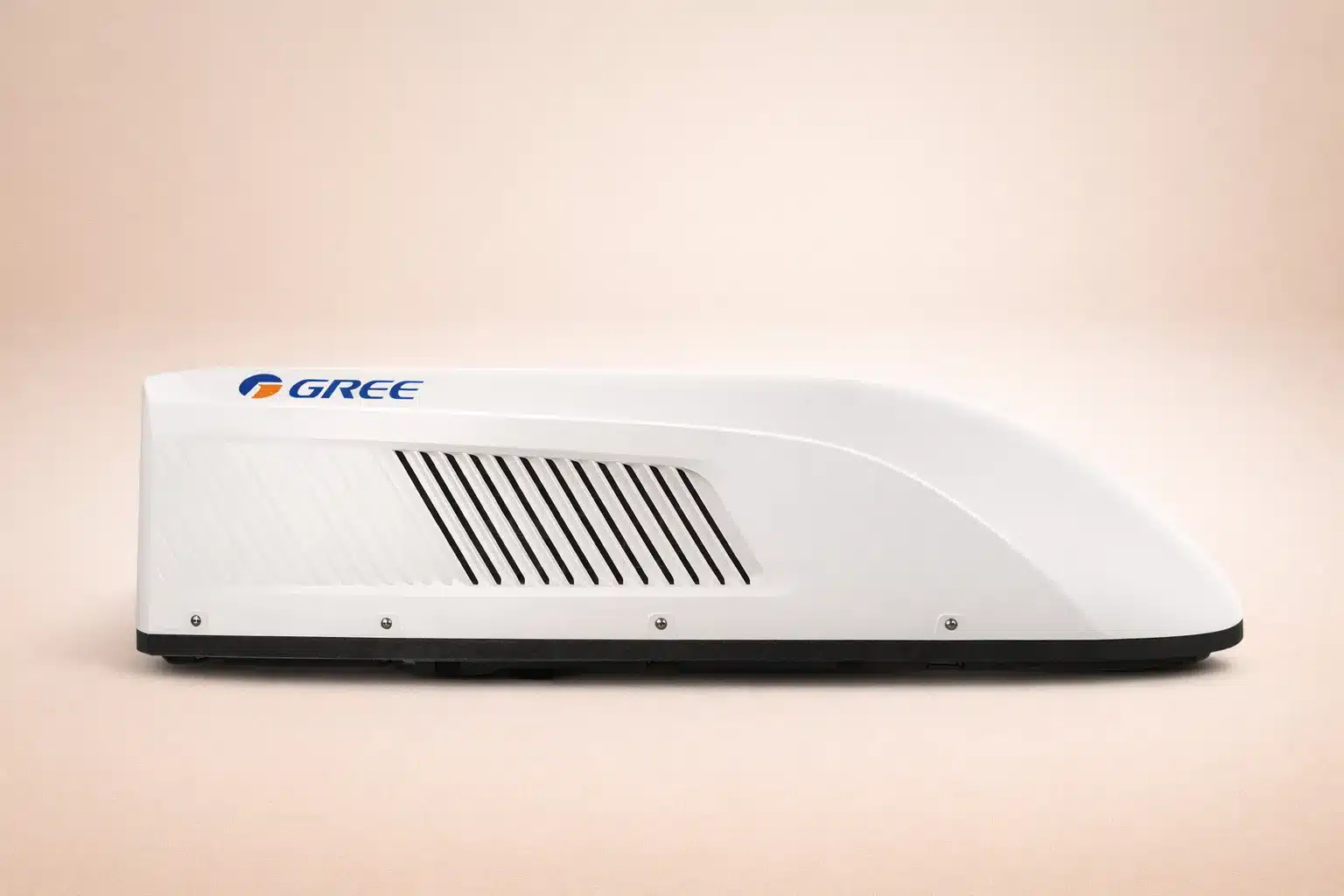
The GREE 2.5kW and 3.5kW rooftop air conditioners are designed specifically for caravans and RVs operating in harsh Australian conditions. Both models provide reverse cycle heating and cooling in one unit, allowing you to manage both summer heat and winter chill.
The system is rated to operate in temperatures ranging from -5°C to 52°C, with an adjustable set temperature range between 16°C and 30°C. That operating range makes it suitable for high-country winters as well as inland summer conditions.
Both models use inverter technology, helping regulate compressor speed and manage power draw more smoothly than traditional fixed-speed systems. For caravan owners running modern lithium batteries or generators, this supports more stable performance.
The unit is constructed using AES weatherproof materials designed to resist UV exposure and carries an IPX4 moisture protection rating for outdoor durability.
2.5kW vs 3.5kW: Which Size Do You Need?
Correct sizing is critical. Choosing the right caravan air conditioner depends on van size, insulation and how you travel.
Air Con Size Guide
A fast way to choose between 2.5kW and 3.5kW based on van length, occupancy, and your typical touring climate.
2.5kW Rooftop
Sweet spot: ≤18ft layouts
- Van size: Campers, Pop-tops, Single Axle
- Occupancy: Couples / 1–2 people
- Climate: Mild to moderate temps
- Power: Smaller gensets / limited sites
3.5kW Rooftop
Sweet spot: 21ft+ layouts
- Van size: Tandem, Full-height, Family vans
- Occupancy: Families / 3+ people
- Climate: Sustained heat / tropical humidity
- Heat Load: High internal volume / many windows
Caravan Size & Capacity Guide
Reference TableTechnical Tip: Proper insulation and using your awnings strategically can be as effective as adding 1kW of cooling capacity. Always match your unit to your specific inverter/generator peak output.
GREE 2.5kW – Ideal for Smaller Vans
2.5kWThe 2.5kW model is suited to:
- Single axle caravans
- Pop-tops
- Compact motorhomes
- Vans with more modest internal space
For couples travelling in smaller vans and primarily using powered sites, 2.5kW may provide sufficient cooling and heating without unnecessary excess capacity.
GREE 3.5kW – Extra Capacity for Larger Rigs
3.5kWThe 3.5kW model suits:
- Larger tandem axle caravans
- Full-height vans
- Motorhomes with greater internal volume
The 3.5kW system delivers a cooling capacity of 3600W and a heating capacity of 3400W, with a rated current of 6.2A. In larger vans exposed to sustained heat, that additional capacity can offer greater comfort.
The 3.5kW model also includes WiFi connectivity and control via the GREE+ app, allowing you to adjust temperature settings from your smart device. The app supports iOS 7.0 and above, and Android 4.4 and above.
Choosing the Right Caravan Air Conditioner for Hot Weather
If you regularly travel in high temperatures, consider more than just output. Think about:
- Internal van volume
- Insulation quality
- Window exposure
- Shade and awnings
- Airflow inside the van
In larger vans travelling through consistently hot regions, 3.5kW may offer more comfortable performance. In smaller, well-insulated vans, 2.5kW can still be highly effective.
Matching the system to your specific setup is more important than simply choosing the larger model.
Power Consumption and Off-Grid Use
A common question is whether a rooftop RV air conditioner will run on solar.
Both GREE rooftop models operate on 220 to 240V, 50Hz power. They are compatible with powered sites and can run via appropriately sized generators. They may also operate with lithium battery and inverter systems, depending on overall system capacity.
Air conditioning is one of the most power-intensive appliances in a caravan. Extended off-grid operation depends on battery storage, inverter rating and available solar input. For most travellers, rooftop air conditioners are primarily used on powered sites or alongside a generator.
The system includes soft start functionality, which helps reduce initial startup load, along with auto restart capability following power interruptions.
Noise and Smart Protection Features
When you are sleeping directly beneath the unit, noise matters.
The GREE rooftop air conditioners are engineered for quiet operation, making them suitable for caravan parks and close camping environments. Inverter systems can also provide smoother cycling compared to older fixed-speed units.
Protection and control features include:
- Compressor overload protection
- Low voltage protection
- Intelligent defrosting
- Self-diagnosis
- Filter dirty alarm
- Automatic defrosting method
- Intelligent preheating
- Turbo cooling
These features are designed to support safe and stable operation across a range of conditions.
Installation and Fit
Before upgrading, confirm your roof cut-out dimensions.
The GREE rooftop air conditioners are designed to suit standard 360mm x 360mm or 400mm x 400mm roof openings and roof thicknesses between 30 and 80mm.
Dimensions and Weight
Outdoor Unit Size: 1077mm long x 720mm wide x 283mm high
Outdoor Unit Weight: 29.5kg
Plenum Size: 610mm long x 485mm wide x 49mm high
Plenum Weight: 2.7kg
Total weight is approximately 32.2kg.
Professional installation is recommended to ensure correct sealing, structural integrity and electrical compliance.
Key Features at a Glance
Engineering designed for the Australian environment, combining high-efficiency cooling with intelligent off-grid compatibility.
Climate & Performance
- • Reverse Cycle Heating & Cooling
- • Inverter Technology
- • Dehumidifying function
- • Eco-friendly R32 Refrigerant
- • IntelligentDefrosting System
Build Quality
- • AES Weatherproof Material
- • IPX4 Moisture Protection
- • Soft Start function
- • Designed for Australian Conditions
- • Automatic Fault Self-Diagnosis
Smart Features
- • WiFi Control via GREE+ App (3.5kW)
- • Built-in LED Halo Lighting on Plenum
- • 24-Hour Programmable Timer
- • Auto-Restart function
Peace of Mind Coverage
Five-Year Manufacturer Warranty
Applicable for all purchases made from 1 July 2025 onwards. Units purchased prior to this date remain covered under the original manufacturer terms.
Is It Right for You?
A rooftop caravan air conditioner may be a strong fit if you:
- Travel in extreme heat or cold
- Want a permanent, integrated climate solution
- Stay on powered sites or run a generator
- Are upgrading from an older system
You may need to assess your setup carefully if you rely solely on limited solar capacity or travel in a very compact van with minimal cooling needs.
Choosing between 2.5kW and 3.5kW ultimately comes down to van size, climate and how you manage power on the road. When matched correctly to your setup, a rooftop RV air conditioner can significantly improve comfort, whether you are chasing summer coastlines or exploring cooler regions in winter.
Frequently Asked Questions About Caravan Air Conditioners
A caravan air conditioner can run on solar if you have a high-capacity lithium battery and a suitably sized inverter. However, air conditioning has continuous power demand, so most travellers use rooftop units on powered sites or with a generator. Extended off-grid operation depends on battery storage, inverter rating and available solar input.
A 2.5kW air conditioner generally suits camper trailers, pop-tops and smaller caravans up to around 18ft with lower internal volume. It is typically adequate for couples travelling in mild to moderate climates, especially when staying on powered sites or managing tighter power setups.
A 3.5kW air conditioner is usually better suited to larger caravans over 21ft, tandem axle vans and motorhomes with greater internal space. The higher capacity helps manage sustained heat loads, particularly in hot regions or during summer travel.
Rooftop air conditioners are designed specifically for caravans. They mount through a standard roof opening, preserve internal space and distribute air more evenly. Portable units can work in some situations, but they require venting, take up floor space and are generally less integrated for long-term RV travel.