
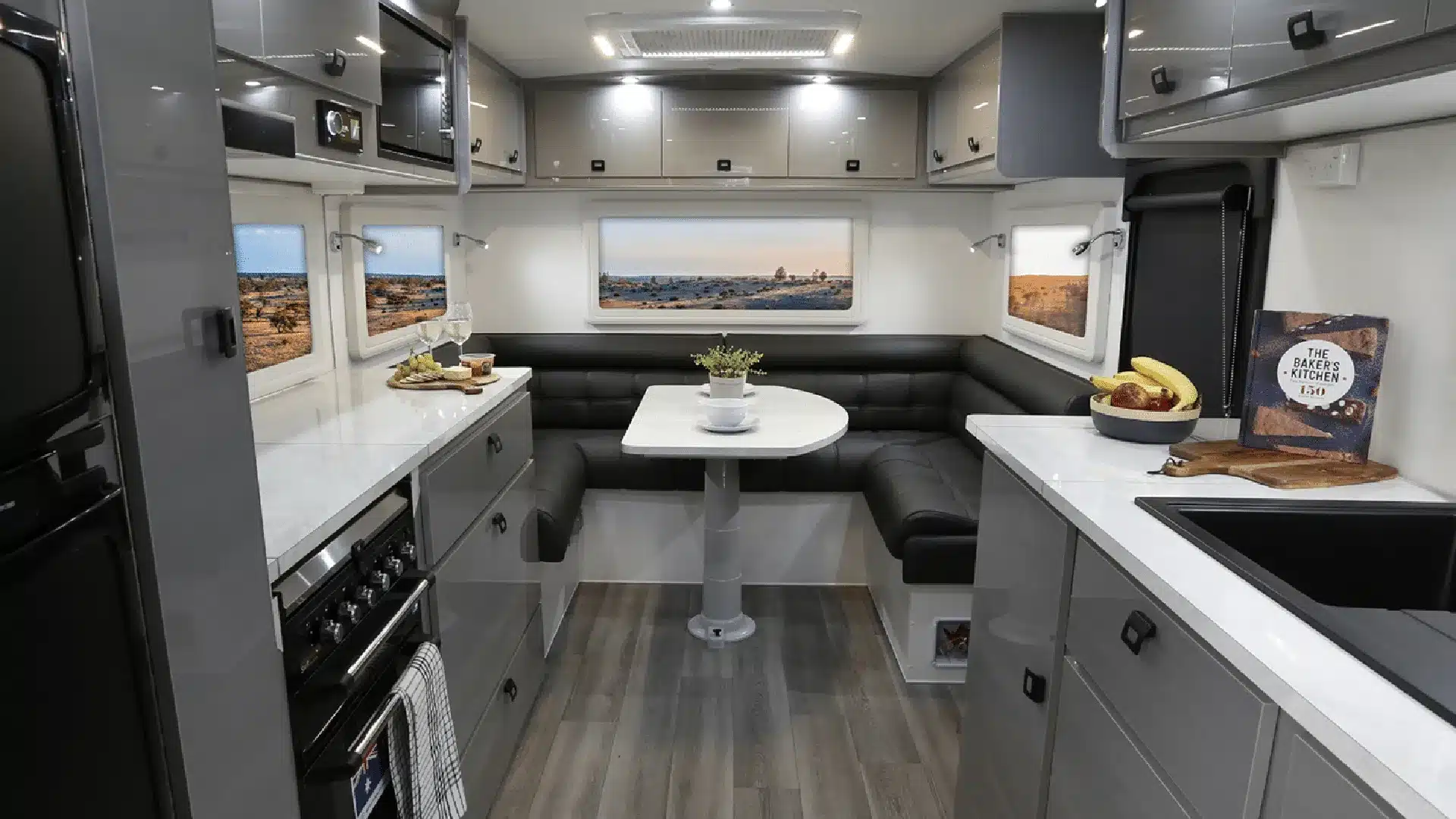


A modern van can feel very close to home, especially with the right caravan appliances to make life easier. You can keep food cold, make coffee, heat leftovers, run a TV, charge devices, cool the van, wash clothes, cook meals and enjoy a level of comfort that would have seemed unlikely in older touring setups.
But appliances on the road live a harder life than appliances at home.
They deal with vibration, dust, heat, moisture, limited space, changing power supply, storage movement and long periods of non-use. Some appliances handle that well. Others are often the first to show signs of trouble.
That does not mean caravan owners should avoid appliances. It means they need to choose, install, use and maintain them properly.
The best appliance is not always the one with the most features. It is the one that suits the van, the power system, the way you travel and the conditions you expect to face.
Why caravan appliances fail differently
A household appliance usually sits still. Caravan appliances do not.
It may travel thousands of kilometres over rough roads. It may sit inside a hot van in summer. It may be exposed to dust, humidity, voltage changes, poor ventilation or overloaded storage spaces. It may be used heavily for a few weeks, then sit unused for months.
That creates a different kind of wear.
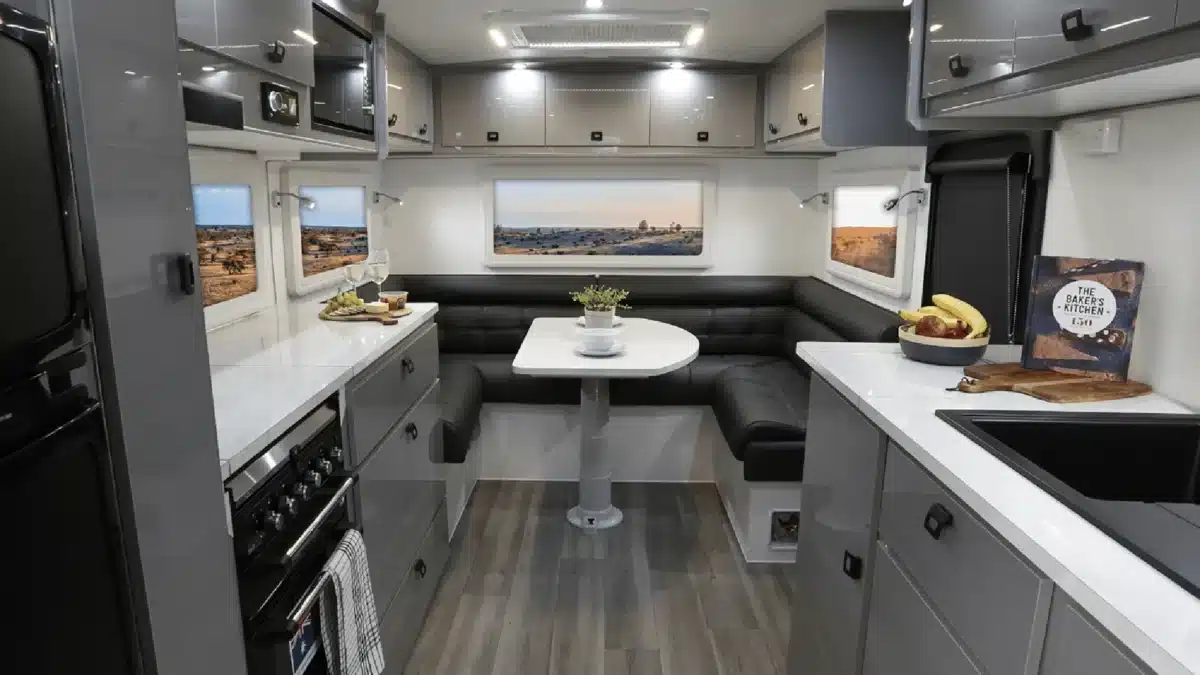
Common issues include:
- loose connections
- blocked vents
- cracked fittings
- incorrect storage
- worn seals
- poor airflow
- moisture damage
- appliances moving during travel
- dust build-up
- vibration damage
- overloaded circuits
Some failures are simply age and use. Others come from poor installation, wrong appliance choice or using gear in ways it was not designed for.
For caravan owners, the key question is not just “does it work?” It is: Will it keep working after heat, vibration, storage, travel days and real touring conditions?
What tends to work long-term
The appliances that usually work best in caravans are the ones designed for the job, installed correctly and used within their limits.
That sounds obvious, but it is where many owners go wrong.
A caravan-rated fridge is usually a better long-term choice than trying to force a household-style setup into a space not designed for it. A properly mounted microwave is safer than one sitting loose in a cupboard. A low-draw 12V appliance may suit the van better than a high-draw 240V appliance that pushes the inverter too hard.
Long-term reliability usually comes down to five things: correct appliance for caravan use, proper installation, good ventilation, suitable power supply, regular checks and cleaning. Appliances that are easy to inspect, easy to clean and easy to secure generally have a better chance of lasting.
What often fails first
The first appliance problems often appear in the areas owners forget to check.
Fridge vents get dusty. Door seals wear. Microwave mounts loosen. Air conditioner filters clog. Water pumps work harder than expected. Portable appliances bounce around in cupboards. Power boards are overloaded. Outdoor appliances are left exposed to weather.
The early warning signs can be small:strange noises, weaker cooling, longer cooking times, appliance cut-outs, hot plugs or leads, water leaks, poor water pressure, movement in mounting points.
Ignoring those signs can turn a simple service or repair into a much bigger problem.
Fridges: the hardest-working caravan appliance
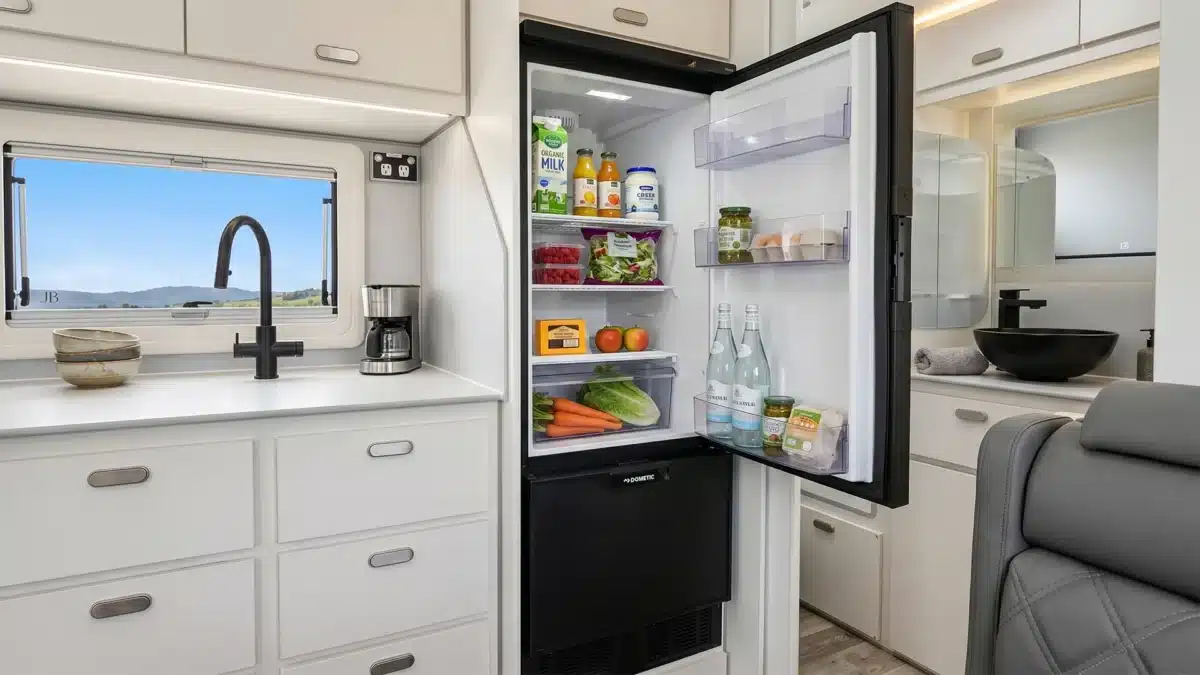
The caravan fridge is often the appliance that works the hardest. It may run for days or weeks at a time, often in hot conditions, inside a van that may be parked in full sun. It also needs airflow around the unit to perform properly.
A fridge that is poorly ventilated, overloaded or parked on a strong angle may struggle. Dusty vents, worn seals or blocked airflow can make it work harder than it should.
To help a caravan fridge last: keep vents clear, check door seals, avoid overpacking, allow food to cool before loading, keep the van as shaded as practical, check that the fridge is suited to the power source being used, secure fridge contents before travel.
If the fridge starts struggling, do not assume it is just hot weather. It may be a sign that airflow, seals, power supply or servicing needs attention.
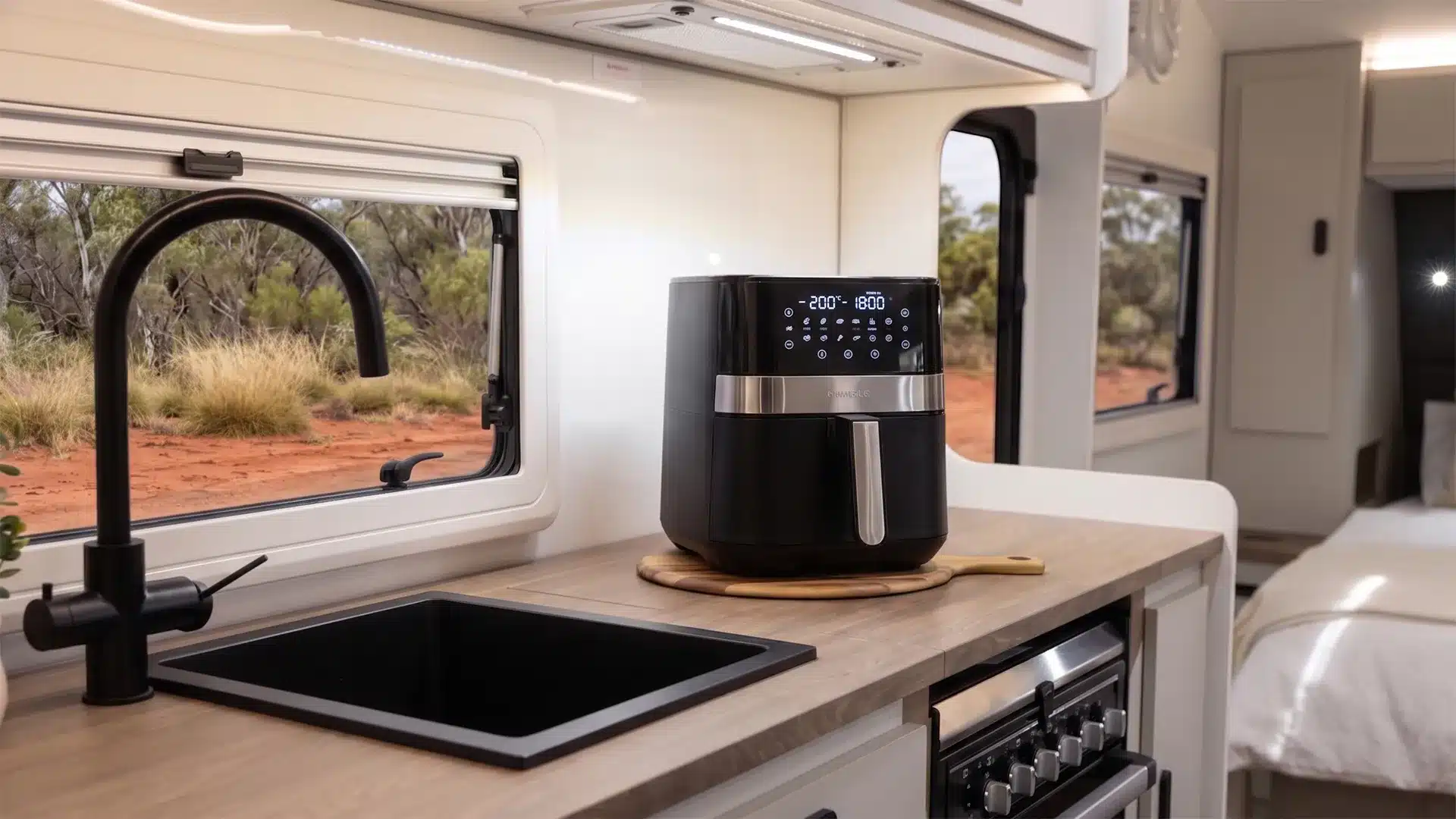
Microwaves and air fryers: convenient, but power-hungry caravan appliances
Microwaves and air fryers are popular because they make meals quicker and easier. But they can also be demanding appliances in a caravan setup.
These appliances usually need a suitable 240V supply, either from mains power or an inverter system that has been designed to handle the load. The issue is not just whether the appliance turns on. It is whether the full system can support it safely and reliably.
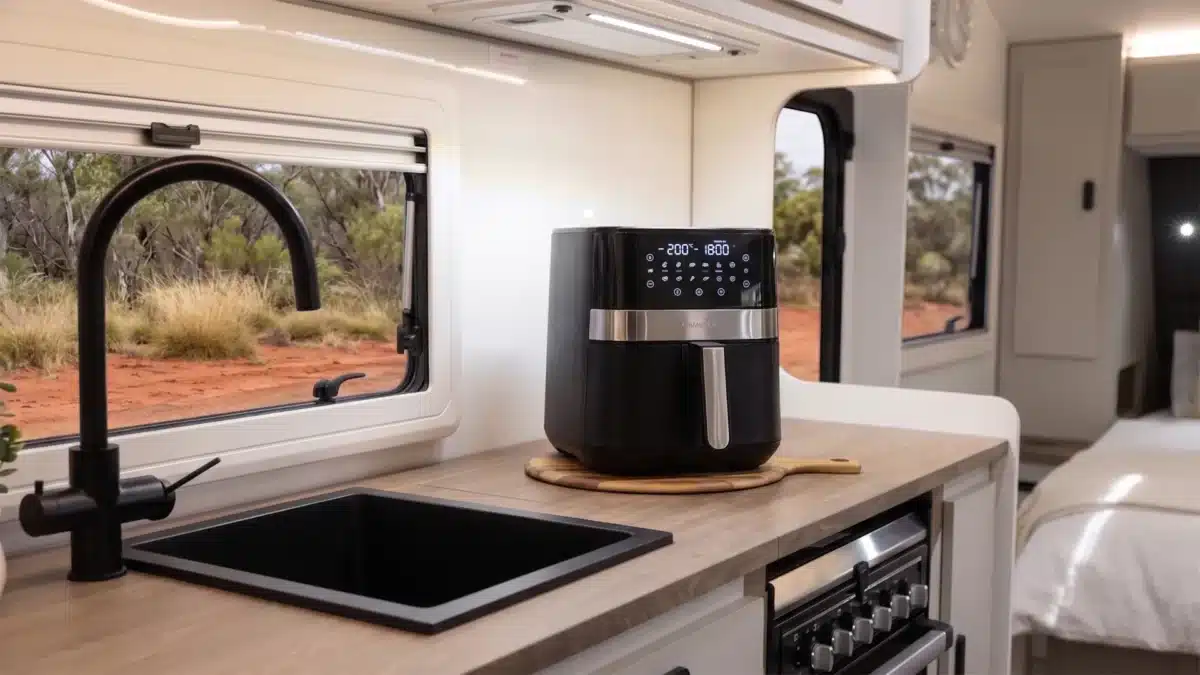
Before relying on a microwave, air fryer, coffee machine or induction cooker, owners should check: appliance wattage, inverter size, battery capacity, wiring suitability, ventilation, mounting or storage whether multiple high-draw appliances are being used at once.
A common mistake is upgrading one part of the system and assuming everything else will cope. A bigger inverter does not automatically mean the battery, charger, wiring and protection devices are suited to the demand.
Air conditioning: comfort with a big load
Air conditioning can make a huge difference, especially in hot or humid conditions. It can also place a major load on the power system.
For many owners, air conditioning is best used on mains power at a powered site. Running it off-grid requires a carefully designed battery, inverter and charging setup, and even then, expectations need to be realistic.
Air conditioners also need maintenance. Filters can clog. Roof-mounted units can collect debris. Seals and drainage areas should be checked. If the unit smells musty, drips water, struggles to cool or becomes noisy, it may need attention.
To help avoid problems:
- clean filters regularly
- check roof seals
- keep airflow clear
- avoid running the unit with poor ventilation
- understand the power demand
- have the unit serviced if performance changes
Comfort matters, but so does knowing what the system can actually support.
Water pumps and hot water systems: small parts, big inconvenience
Water systems are easy to ignore until they stop working. A water pump may be small, but if it fails, the impact on daily comfort is immediate. The same goes for hot water systems, taps, hoses, fittings and filters.
Water-related appliance problems often show up as:
- weak pressure
- pump cycling when taps are off
- water leaks
- strange pump noises
- hot water cutting out
- slow heating
- damp cupboards
- water marks near fittings
A pump that cycles when no tap is open may indicate a leak or pressure issue. A damp cupboard can be a warning sign that a fitting needs attention. Owners should regularly check under sinks, around the shower, near the hot water unit, around external access panels and inside storage compartments where plumbing runs.
Small water issues are worth fixing early.
TVs, routers and charging gear: low draw does not mean no hazards
TVs, routers, tablets, laptops, phones, cameras, battery chargers and communication gear are now part of many touring setups. Most are not heavy-draw appliances compared to cooking or cooling gear, but they still need sensible use.
The main hazards are clutter, heat, overloaded outlets, poor cable management and gear being left unsecured during travel.
Before towing, make sure:
- screens are secured
- chargers are unplugged where appropriate
- cables are not pinched
- devices are not left loose on benches
- power boards are not overloaded
- ventilation around electronics is adequate
- expensive devices are packed away when the van is unattended
Electronics also add value to what is carried inside the caravan. If they travel with you regularly, include them in your contents record.
Portable appliances: useful, but easy to forget
Portable appliances are often the most flexible items in the van. They can include kettles, coffee machines, induction cooktops, portable fridges, fans, heaters, toasters, blenders, air fryers and outdoor cooking gear.
Because they are portable, owners sometimes forget they still need to be secured, stored and recorded. A loose appliance can become a hazard during towing. A poorly stored item can damage cabinetry or break from vibration. Outdoor appliances can be exposed to rain, dust or theft.
Before travelling, ask:
- where is it stored?
- is it secured?
- does it need ventilation?
- how much power does it draw?
- does it live in the caravan permanently?
- is it included in your contents record?
- is it suitable for caravan use?
Convenience gear is only helpful if it does not create problems elsewhere.
Appliance mistakes to avoid
Some of the most common appliance mistakes are simple ones.
Avoid:
- using household appliances that are not suited to caravan conditions
- blocking fridge or appliance ventilation
- running too many high-draw appliances at once
- assuming a bigger inverter solves every power issue
- leaving portable appliances loose during travel
- ignoring small leaks around water systems
- failing to clean filters and vents
- storing electronics where they can overheat
- leaving outdoor appliances exposed to weather
- forgetting to document fitted or high-value appliances
Most appliance issues are easier to manage when caught early.
The Bottom Line
Caravan appliances can make touring more comfortable, but they need to suit life on the road.
The appliances that last are usually the ones chosen for the right reason, installed correctly, ventilated properly, powered safely, secured for travel and checked regularly.
The ones that fail first are often pushed too hard, poorly ventilated, incorrectly stored, overloaded, exposed to weather or forgotten until something goes wrong.
Before adding another appliance, think beyond convenience. Ask how it will be powered, where it will sit, how it will travel, how much weight it adds and whether it should be documented.
A well-equipped caravan is not just full of appliances.
It is set up so those appliances can keep working when the road gets rough, the weather changes and the trip becomes real.
See more travelling tips here
This article was produced with support from CIL Caravan Insurance. What’s Up Downunder maintains full editorial independence.
Disclaimer: This content has been prepared by CIL Insurance, a trading division of AAI Limited ABN 48 005 297 807 AFSL 230859, and is intended to provide general information only. It does not take into account your objectives, financial situation or needs. Before making any decision, consider whether the product is right for you and read the relevant Product Disclosure Statement. The Target Market Determination is also available.
The information is intended to be of a general nature only. Subject to any rights you may have under any law, we do not accept any legal responsibility for any loss or damage, including loss of business or profits or any other indirect loss, incurred as a result of reliance upon it – please make your own enquiries.